

Consumer Insights
Uncover trends and behaviors shaping consumer choices today
Procurement Insights
Optimize your sourcing strategy with key market data
Industry Stats
Stay ahead with the latest trends and market analysis.
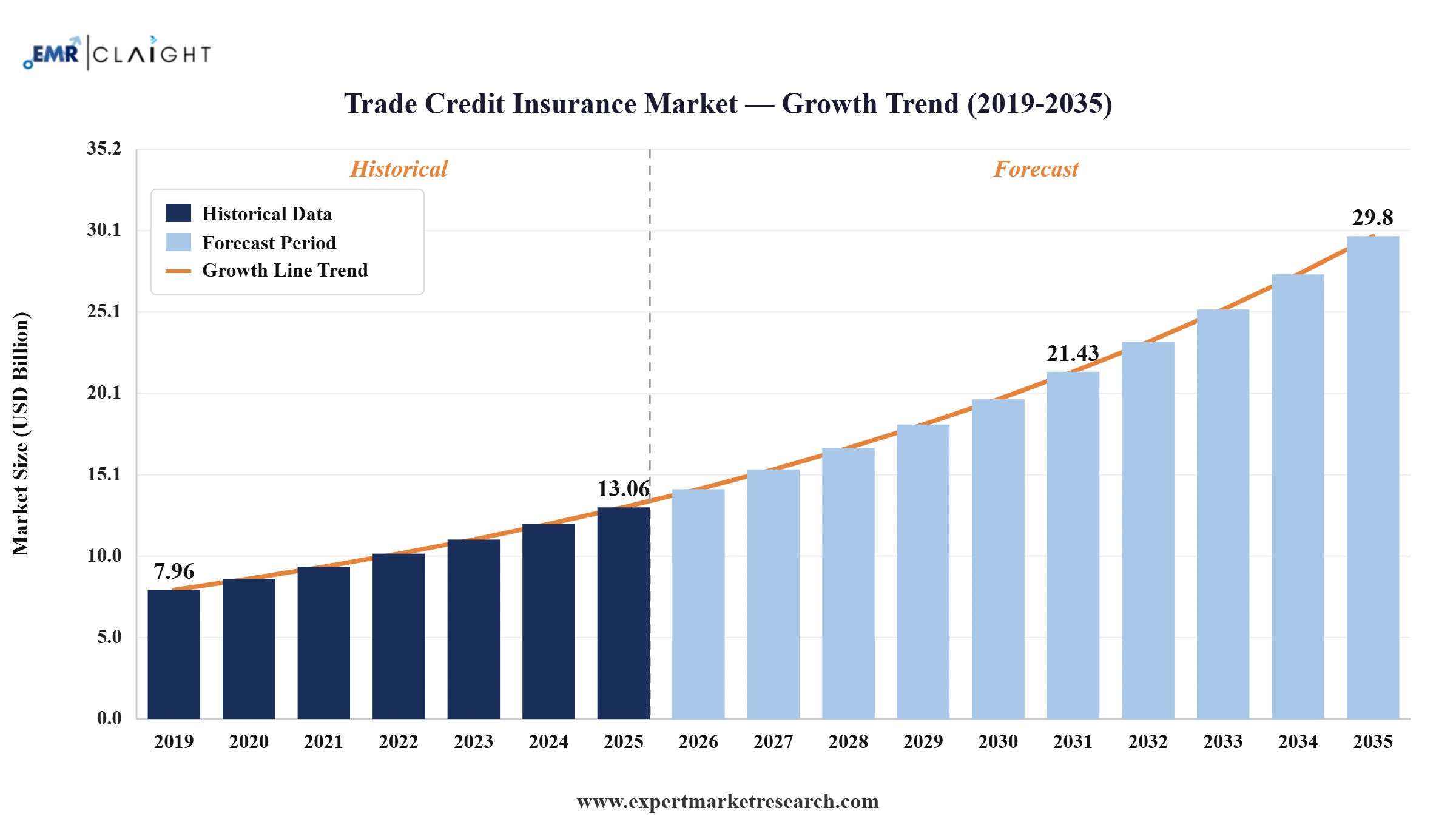
The global trade credit insurance market value reached USD 13.06 Billion in 2025. The market is expected to grow at a CAGR of 8.60% between 2026 and 2035, reaching almost USD 29.80 Billion by 2035. This growth is supported by expanding global trade volumes, with the World Trade Organization reporting that global goods trade grew by 2.7% in 2024 and merchandise trade volumes projected to rise a further 3% in 2025. A prolonged insolvency cycle is further reinforcing demand, with Allianz Trade forecasting a 6% rise in global business failures in 2026, marking a fifth consecutive annual increase and pushing insolvency counts approximately 24% above pre-pandemic norms.
The trade credit insurance market refers to the global industry encompassing the underwriting, distribution, and management of insurance policies that protect businesses against financial losses arising from the failure of customers to pay for goods or services delivered on credit terms. Trade credit insurance covers a range of non-payment events including customer insolvency, protracted default, political risk in cross-border transactions, and bankruptcy, providing policyholders with indemnification against receivables losses that would otherwise impair cash flow, working capital, and profitability. The market spans both domestic and international trade applications and serves manufacturers, exporters, traders, distributors, and service providers across industries including food and beverages, healthcare, automotive, energy, metals and mining, and information technology.
The market is segmented by component into products and services, by enterprise size into large enterprises and small and medium-sized enterprises, by coverage into whole turnover and single buyer policies, by industry vertical, and by application into domestic and international trade. Key players operating in the market include Allianz Trade, Atradius N.V., Coface, Credendo, American International Group Inc., Zurich Insurance Company Ltd., Chubb Group Holdings Inc., QBE Insurance Group Ltd., Aon plc, and Great American Insurance Company, among others.
Read more about this report - REQUEST FREE SAMPLE COPY IN PDF
| Global Trade Credit Insurance Market Report Summary | Description | Value |
| Base Year | USD Billion | 2025 |
| Historical Period | USD Billion | 2019-2025 |
| Forecast Period | USD Billion | 2026-2035 |
| Market Size 2025 | USD Billion | 13.06 |
| Market Size 2035 | USD Billion | 29.80 |
| CAGR 2019-2025 | Percentage | XX% |
| CAGR 2026-2035 | Percentage | 8.60% |
| CAGR 2026-2035 - Market by Region | Asia Pacific | 10.8% |
| CAGR 2026-2035 - Market by Country | India | 11.3% |
| CAGR 2026-2035 - Market by Country | Canada | 10.0% |
| CAGR 2026-2035 - Market by Component | Product | 10.8% |
| CAGR 2026-2035 - Market by Industry Vertical | Food and Beverages | 9.8% |
The global trade credit insurance market is growing due to escalating geopolitical tensions, expanding cross-border trade volumes, rising corporate insolvency rates in key economies, and increasing awareness among businesses of the financial risks associated with credit-based commercial transactions. The World Trade Organization confirmed in 2024 that global goods trade grew and commercial services volumes expanded significantly across all major regions, directly increasing the volume of trade receivables exposed to non-payment risk and driving demand for credit insurance coverage. Businesses operating in volatile trade environments including energy, metals, and food commodities are particularly active purchasers of trade credit insurance as a risk management tool for managing buyer concentration and counterparty credit exposure across domestic and international customer portfolios.
Digital transformation and regulatory evolution are additional structural growth drivers. Insurers including American International Group, Aon plc, and Zurich Insurance Company are deploying AI-driven credit risk assessment tools, blockchain-based policy management platforms, and digital underwriting systems that improve the speed, accuracy, and accessibility of trade credit insurance products, enabling broader adoption among small and medium-sized enterprises that previously found coverage too complex or expensive. India's approval of 100% foreign direct investment in the insurance sector in February 2026 is opening one of the world's fastest-growing trade credit insurance markets to full international insurer participation, while the expansion of trade finance in Asia Pacific, led by China, India, and Southeast Asia, is sustaining the region's position as the fastest-growing market with a projected CAGR of 10.8% through 2035
“Trade Credit Insurance Market Report and Forecast 2026-2035” offers a detailed analysis of the market based on the following segments:
Market Breakup by Component
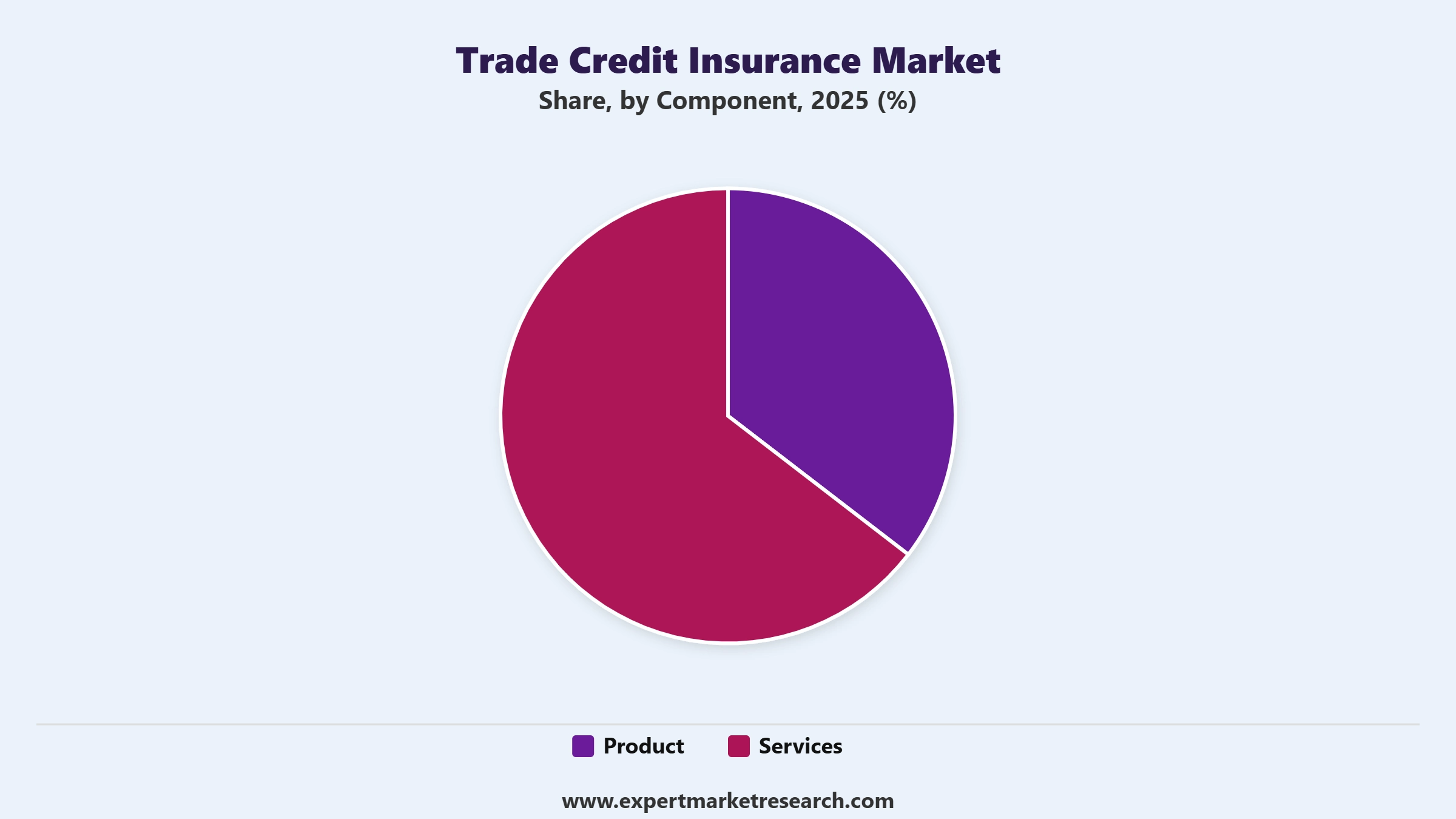
Key Insight: The product segment is the dominant component in the global trade credit insurance market, encompassing whole turnover insurance, single buyer insurance, political risk insurance, and export credit insurance policies that directly shield trade receivables from credit risk. Businesses across manufacturing, retail, and export-oriented sectors rely on these structured products to maintain cash flow stability and support credit management operations, particularly in environments where buyer insolvency risk is elevated. The services segment, which includes risk assessment, claims management, debt collection, and consulting and advisory services, is growing steadily as insurers move beyond policy issuance to offer integrated risk intelligence platforms. Major carriers including Allianz Trade, Atradius, and Coface have invested in proprietary buyer databases and digital API-based data services that allow policyholders to assess counterparty risk in real time, making the services layer an increasingly important source of differentiation and revenue alongside core product sales.
Market Breakup by Enterprise Size
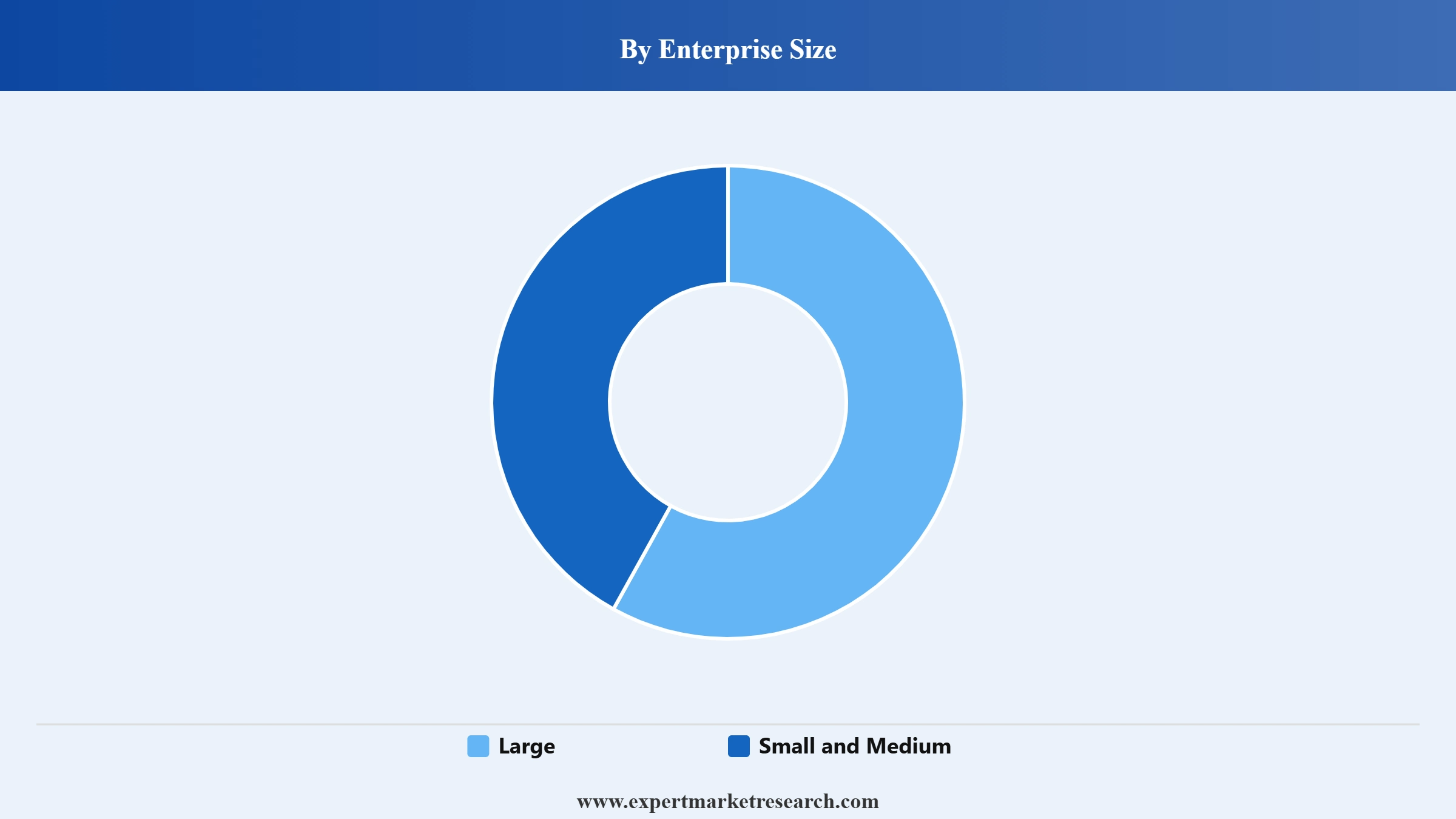
Key Insight: Large enterprises hold the dominant share of the global trade credit insurance market by enterprise size, with established treasury functions managing receivables risk at scale across diversified buyer books and multiple geographies. These organisations typically purchase whole turnover policies aligned with bank collateral requirements and board-level risk mandates, creating stable and predictable premium volumes for carriers. However, small and medium enterprises are the fastest-growing segment, driven by the emergence of embedded digital broker platforms that have significantly reduced the friction associated with policy origination, credit limit management, and claims submission. Governments have also played an active role in supporting SME access to trade credit protection, with India's Export Credit Guarantee Corporation introducing a scheme in 2022 to insure up to 90% of credit risk in export finance, and the European Commission's Late Payment Regulation reform reinforcing payment discipline awareness among smaller EU businesses, collectively broadening the accessible policyholder base for this segment.
Market Breakup by Coverages
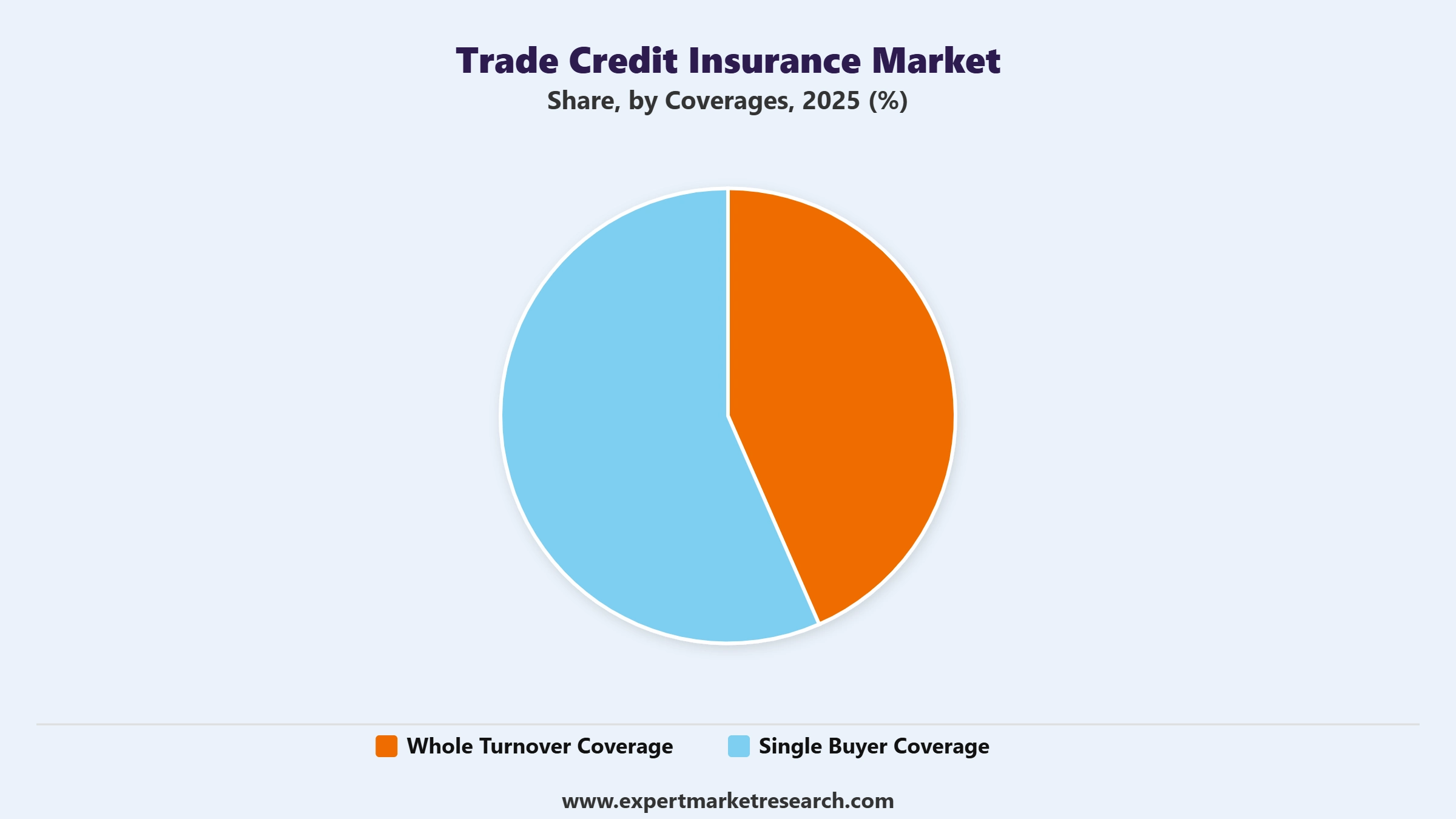
Key Insight: Whole turnover coverage is the dominant coverage structure in the global trade credit insurance market, accounting for the majority of global premiums in 2025, as it addresses the fundamental corporate treasury requirement of protecting the entire receivables ledger rather than selected counterparties, eliminating adverse selection risk for underwriters and simplifying policy administration for buyers. This coverage type is particularly well suited to businesses with large and diversified buyer books, where comprehensive portfolio protection is more practical and cost-effective than individually assessed single-buyer limits. Single buyer coverage is the fastest-growing coverage type, driven by financial institutions seeking targeted protection for specific high-value receivables pools, structured trade finance transactions, and export arrangements where the creditworthiness of a specific counterparty is the primary concern. The rise in tariff-related buyer stress and concentrated supply chain exposures is further accelerating demand for single buyer coverage among corporates managing key account risk with precision.
Market Breakup by Industry Vertical
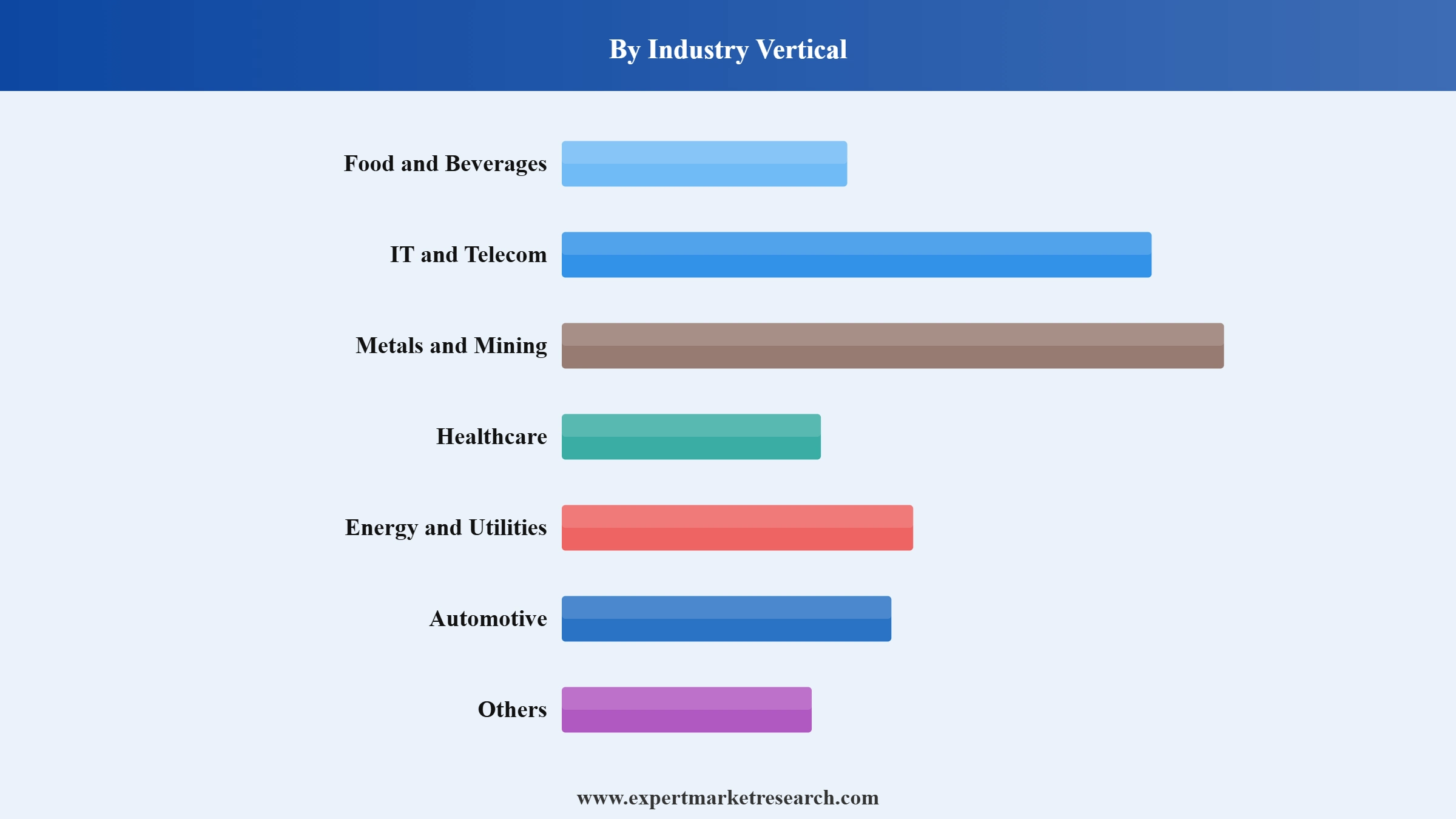
Key Insight: The food and beverages segment held the largest share of the global trade credit insurance market by industry vertical in 2025, driven by the sector's reliance on extended payment terms across large networks of distributors, wholesalers, and retailers, combined with thin operating margins that make non-payment events particularly damaging to business continuity. IT and telecom and healthcare sectors contribute significant premium volumes through their complex buyer relationships and high average invoice values, while metals and mining generate demand from the commodity trade finance sector where receivables are large in value and buyers are often located in emerging markets with elevated country risk. The automotive segment is the fastest-growing vertical, driven by the elevated insolvency risk facing global automotive supply chains amid production contractions forecast by Atradius in key economies including the United States, Germany, Mexico, and South Korea as new import tariffs raise manufacturing costs, prompting tier-one suppliers and OEM partners to seek formal receivables protection across their customer bases.
Market Breakup by Application
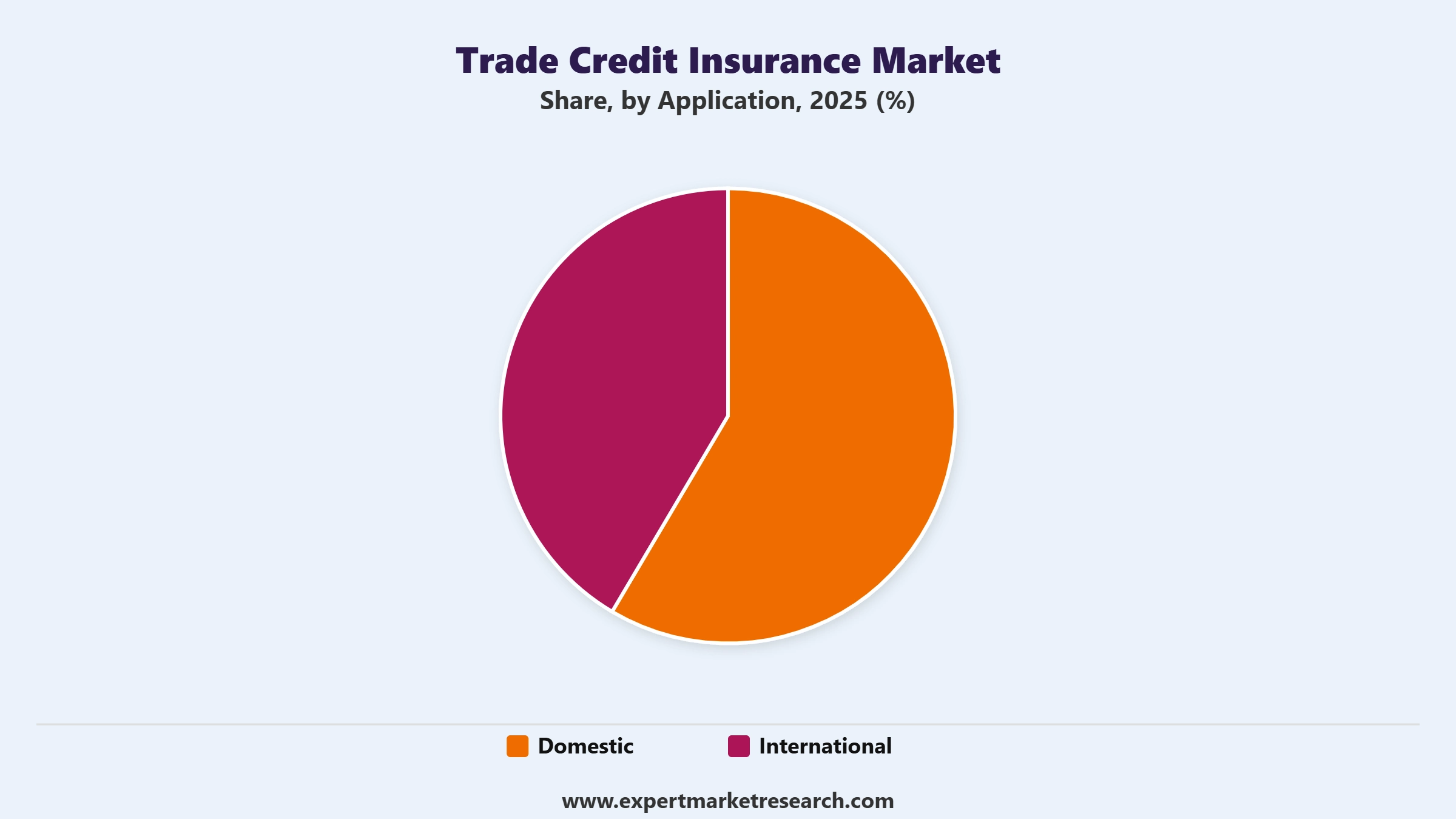
Key Insight: The international application segment held the dominant share of the global trade credit insurance market in 2025, reflecting the higher credit risk inherent in cross-border trade transactions where buyers operate under different legal systems, insolvency regimes, currency environments, and political risk frameworks. The complexity of recovering unpaid receivables from foreign buyers, combined with longer payment terms and larger transaction sizes associated with export-oriented deals, makes trade credit insurance a standard risk management tool for exporters and multinational corporations. As domestic insolvency risk rises, more businesses are treating trade credit insurance as an essential cash flow protection tool for home-market transactions rather than restricting it to export-only applications.
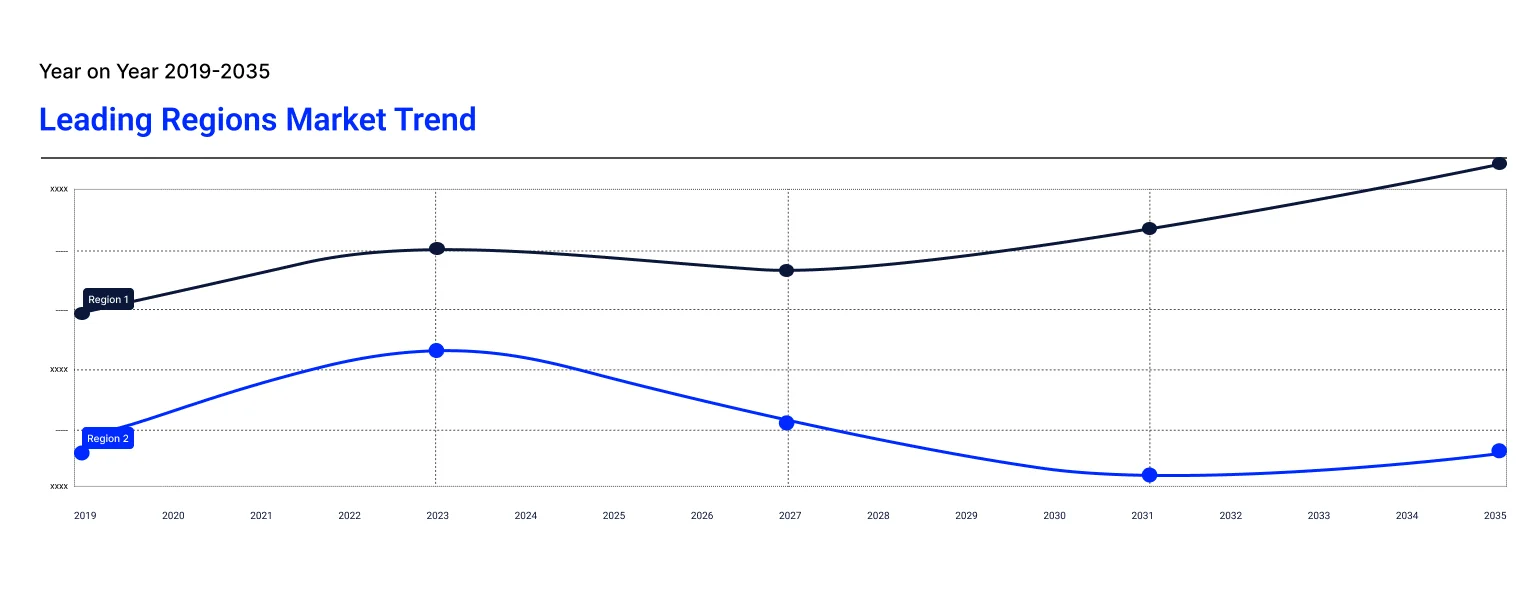
Market Breakup by Region
Read more about this report - REQUEST FREE SAMPLE COPY IN PDF
By Component: Product Segment Leads While Services Record Steady Growth
The product segment holds the dominant share of the global trade credit insurance market by component, driven by sustained demand for structured trade credit solutions covering country risk, non-payment from insolvency, and political risk across both domestic and cross-border transactions. The services segment, encompassing risk assessment, claims management, debt collection, and consulting, contributes a smaller but growing share as insurers increasingly differentiate on value-added advisory capabilities alongside core policy coverage.
Read more about this report - REQUEST FREE SAMPLE COPY IN PDF
By Enterprise Size: Large Enterprises Dominate While SMEs Are the Fastest-Growing Segment
Large enterprises held a dominant share of the global trade credit insurance market in 2025, supported by high-volume receivables portfolios, treasury-level risk mandates, and established relationships with the three major carriers. Small and medium enterprises represent the fastest-growing segment, driven by embedded digital broker platforms that are significantly reducing policy origination friction, enabling smaller exporters and domestic sellers to access receivables protection at price points and application speeds previously unavailable through traditional broker channels.
Read more about this report - REQUEST FREE SAMPLE COPY IN PDF
By Coverage: Whole Turnover Coverage Leads While Single Buyer Coverage Grows Fastest
Whole turnover coverage held the largest share of the global trade credit insurance market by coverage type in 2025, as businesses prefer comprehensive protection across their entire debtor book to support credit control management and maintain consistent cash flow stability. Single buyer coverage is the fastest-growing coverage type, driven by financial institutions and corporates seeking targeted protection for specific high-value receivables pools, structured credit transactions, and export finance arrangements where counterparty-specific risk assessment is critical.
Read more about this report - REQUEST FREE SAMPLE COPY IN PDF
By Application: International Segment Dominates While Domestic Coverage Grows Rapidly
The international application segment held the dominant share of the global trade credit insurance market in 2025, reflecting the higher credit risk exposure associated with cross-border trade, where buyers operate under different legal systems, currency environments, and insolvency regimes. The domestic application segment is the fastest-growing category, driven by elevated corporate bankruptcy activity in key markets, tighter lending conditions pushing businesses toward formal receivables protection, and the growing awareness of domestic trade credit risk in economies where insolvency rates are rising above pre-pandemic norms.
Read more about this report - REQUEST FREE SAMPLE COPY IN PDF
By Industry Vertical: Food and Beverages Leads While Automotive Records Fastest Growth
The food and beverages segment held the largest share of the global trade credit insurance market by industry vertical in 2025, reflecting the sector's reliance on extended credit terms across large and geographically dispersed buyer networks, combined with thin operating margins that make non-payment risk particularly damaging to cash flow. The automotive segment is projected to record the fastest growth rate through the forecast period, supported by the complexity of global automotive supply chains and the elevated credit risk environment facing the sector, with Atradius projecting global motor vehicle and parts production to contract by 1.2% in 2026 as new US import tariffs raise production costs across major manufacturing economies.
Read more about this report - REQUEST FREE SAMPLE COPY IN PDF
Elevated Bankruptcy Activity and Tariff-Driven Buyer Stress Accelerate North America's Trade Credit Insurance Market
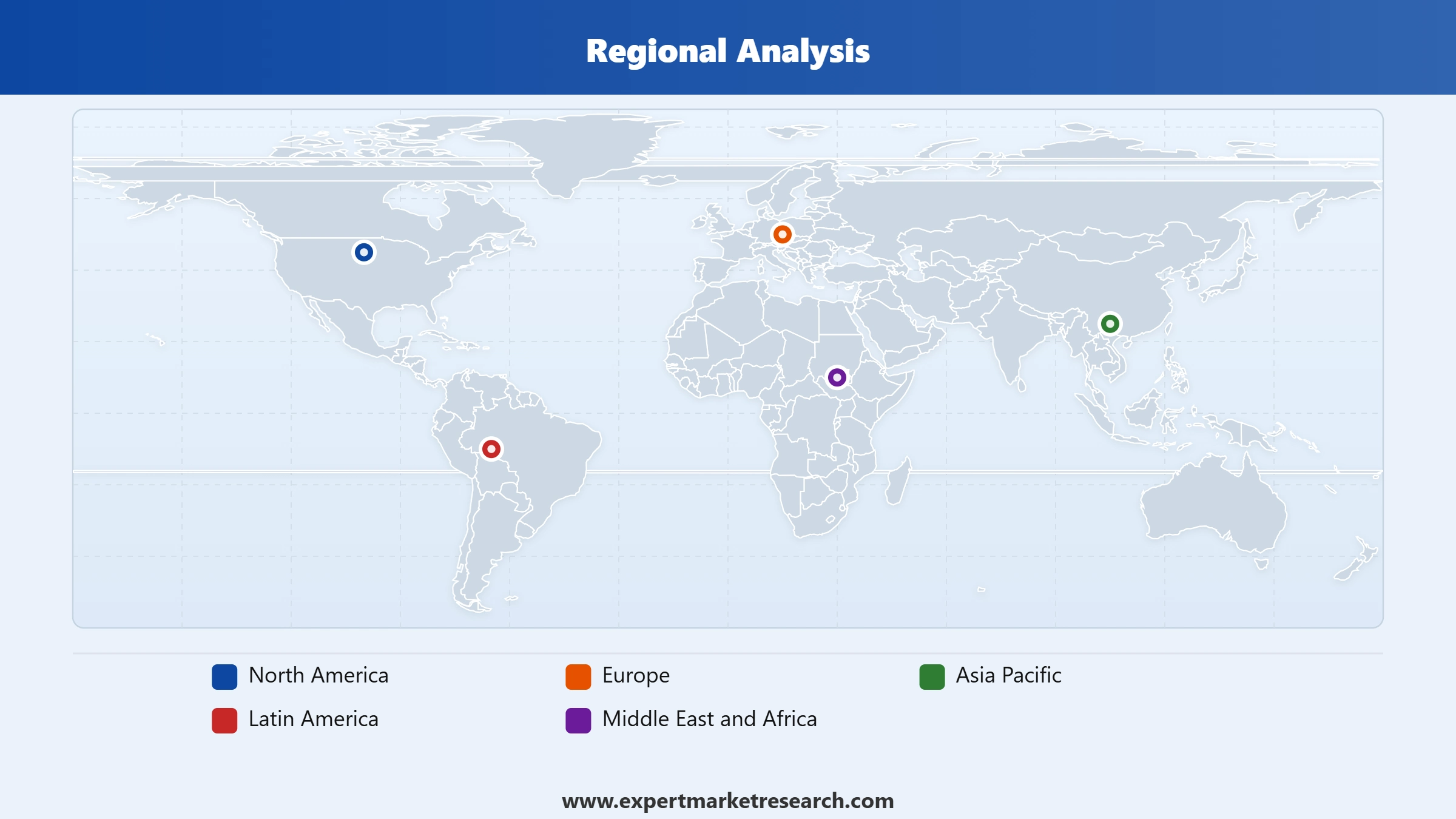
North America is the second-largest region in the global trade credit insurance market, with the United States accounting for the dominant share of regional demand driven by a sustained and worsening insolvency cycle, rising tariff-related buyer stress, and deep integration of trade credit insurance into bank collateral and receivables-based financing structures. Canada contributes meaningful regional premium volumes, particularly among exporters exposed to US-Canada trade flows under the Canada-US-Mexico Agreement, which is due for renegotiation in 2026, creating additional uncertainty that is prompting Canadian exporters to reassess unsecured open-account arrangements and seek formal trade credit insurance coverage for the first time.
SME Digitisation and Export Credit Agency Expansion Drive Asia Pacific as the Fastest-Growing Region
Asia Pacific is the fastest-growing region in the global trade credit insurance market, driven by rapid economic expansion, growing SME adoption of credit insurance, expanding export credit agency capacity, and rising corporate insolvency risk across China and India, the two largest national markets within the region. China and India together account for the majority of regional premium volumes, with China's Sinosure and India's Export Credit Guarantee Corporation playing central roles in supporting cross-border trade protection for exporters alongside private sector carriers. India is projected to record the highest national CAGR of 11.3% through 2035 within the global trade credit insurance market, supported by strong merchandise and services export growth, with India's total trade reaching USD 133.61 billion in April to May 2024, according to the Government of India Department of Commerce, up from USD 122.35 billion in the same period in 2023, creating a rapidly expanding pool of receivables requiring credit protection across the country's growing exporter community.
Brazil's Export Premium Growth and Rising Trade Volumes Anchor Latin America's Trade Credit Insurance Market
Latin America is a growing region in the global trade credit insurance market, anchored by Brazil and Mexico as the two largest national markets, with Colombia, Chile, and Argentina contributing additional demand across export-oriented manufacturing, agricultural commodities, and energy sectors. Brazil is the most significant driver of regional growth, with trade credit insurance premiums rising in 2025 as exporters sought protection on increasingly volatile trade routes, particularly for shipments to markets affected by tariff disruption and currency instability. Mexico's trade credit insurance demand is expanding alongside its growing role as a nearshoring hub, with manufacturers relocating production from Asia driving new cross-border receivables exposures that require formal insurance coverage, while the Canada-US-Mexico Agreement renegotiation scheduled for 2026 is creating near-term uncertainty that is prompting Mexican exporters to reassess their credit risk management arrangements across North American and global buyer relationships.
Economic Diversification and Cross-Border Trade Growth Drive the Middle East and Africa's Trade Credit Insurance Market
The Middle East and Africa is an emerging but steadily growing region in the global trade credit insurance market, supported by economic diversification initiatives across Gulf Cooperation Council states, expanding cross-border trade flows, and growing corporate awareness of receivables protection as a cash flow management tool. According to Atlas Magazine, the total volume of trade credit insurance premiums written across the Middle East and Africa region reached approximately USD 1 billion, with Gulf Cooperation Council states alone accounting for nearly 50% of that total, reflecting the concentration of trade and financial activity in Saudi Arabia, the UAE, Qatar, and Kuwait. Saudi Arabia's Vision 2030 programme is diversifying the economy beyond oil revenues and expanding non-oil exports, creating new trade credit insurance demand as Saudi exporters and importers engage with a broader range of international counterparties across manufacturing, tourism, and technology sectors, while Sub-Saharan African markets are growing through increased international development institution support for export finance and trade risk management across agricultural and resource commodity export sectors.
Read more about this report - REQUEST FREE SAMPLE COPY IN PDF
The companies provide a diverse array of insurance options including property-casualty, life insurance, retirement products, and various financial services tailored for both commercial enterprises and individual clients.
The global trade credit insurance market is navigating a structurally complex challenge environment shaped by a prolonged insolvency cycle that is simultaneously increasing policyholder demand and putting pressure on underwriting margins. Allianz Trade forecasts that global business failures will rise by 6% in 2026, marking a fifth consecutive annual increase, with insolvency counts sitting approximately 24% above pre-pandemic norms according to the insurer's May 2026 economic outlook. Atradius senior economist Theo Smid has publicly warned that many businesses are still carrying COVID-related tax liabilities while absorbing higher energy, labour, and material costs, creating a vulnerability pool that is wider than insolvency statistics alone suggest. Claims activity rose sharply in late 2025, with the collapse of US auto parts supplier First Brands Group exposing carriers to a complex web of receivables claims that tested underwriting resilience and highlighted concentration risk within structured trade credit programmes.
A persistent structural restraint is the low penetration of trade credit insurance relative to total global trade volumes. According to Risk Management Magazine, only approximately 15% of global trade is currently insured against credit risk, leaving the vast majority of cross-border and domestic receivables unprotected. Low awareness among small and medium-sized enterprises, the perceived complexity of policy terms and credit limit management processes, and premium affordability constraints all restrict market expansion beyond established corporate policyholders. Morningstar DBRS has also cautioned that in a material economic downturn, reinsurance capacity could be rapidly restricted, transferring underwriting risk back to primary insurers and potentially prompting carriers to reduce credit limits precisely when policyholders need protection most, replicating the procyclical dynamic that damaged market credibility during the COVID-19 period.
Despite these pressures, the market holds substantial growth opportunities anchored by three converging forces: digital distribution expansion, SME market penetration, and the African Continental Free Trade Area. Embedded digital broker platforms are reducing policy origination friction for smaller buyers, while Hokodo and similar fintech-led platforms are integrating trade credit coverage directly into B2B payment and invoicing workflows, reaching micro-exporters previously outside the traditional broker channel. The African Continental Free Trade Area is creating more structured intra-regional trade flows across Sub-Saharan Africa, with Allianz Trade's 2026 Country Risk Atlas identifying improving risk profiles in several African economies including Ghana, Kenya, and Tunisia, signalling new addressable markets for carriers willing to build local underwriting infrastructure and export credit agency co-insurance partnerships across the continent.


Upto 15% Off
USD
$2499 $2249
$3999 $3599
$4999 $4249
$5999 $5099


*While we strive to always give you current and accurate information, the numbers depicted on the website are indicative and may differ from the actual numbers in the main report. At Expert Market Research, we aim to bring you the latest insights and trends in the market. Using our analyses and forecasts, stakeholders can understand the market dynamics, navigate challenges, and capitalize on opportunities to make data-driven strategic decisions.*
The market was estimated to be valued at USD 13.06 Billion in 2025.
The global Trade credit insurance market is assessed to grow at a CAGR of 8.60% between 2026 and 2035.
The revenue generated from the trade credit insurance market is expected to reach USD 29.80 Billion in 2035.
Digital transformation, rising demand, tailored solutions, and the integration of ESG factors are driving the trade credit insurance market growth.
Based on the components, the market is divided into products and services.
The competitive landscape consists of American International Group, Inc., Aon plc, Atradius N.V., Credendo, Allianz Trade, QBE Insurance Group Ltd., Zurich Insurance Company Ltd, Coface, Chubb Group Holdings Inc., and Great American Insurance Company among others.
Based on the coverages, the trade credit insurance market is divided into whole turnover coverage and single buyer coverage.
The market is broken down into North America, Europe, Asia Pacific, Latin America, the Middle East, and Africa.
Explore our key highlights of the report and gain a concise overview of key findings, trends, and actionable insights that will empower your strategic decisions.
| REPORT FEATURES | DETAILS |
| Base Year | 2025 |
| Historical Period | 2019-2025 |
| Forecast Period | 2026-2035 |
| Scope of the Report |
Historical and Forecast Trends, Industry Drivers and Constraints, Historical and Forecast Market Analysis by Segment:
|
| Breakup by Component |
|
| Breakup by Enterprise Size |
|
| Breakup by Coverages |
|
| Breakup by Industry Vertical |
|
| Breakup by Application |
|
| Breakup by Region |
|
| Market Dynamics |
|
| Competitive Landscape |
|
| Companies Covered |
|
Datasheet
One User
USD 2,499
USD 2,249
tax inclusive*
Single User License
One User
USD 3,999
USD 3,599
tax inclusive*
Five User License
Five User
USD 4,999
USD 4,249
tax inclusive*
Corporate License
Unlimited Users
USD 5,999
USD 5,099
tax inclusive*
*Please note that the prices mentioned below are starting prices for each bundle type. Kindly contact our team for further details.*
Flash Bundle
Small Business Bundle
Growth Bundle
Enterprise Bundle
*Please note that the prices mentioned below are starting prices for each bundle type. Kindly contact our team for further details.*
Flash Bundle
Number of Reports: 3
20%
tax inclusive*
Small Business Bundle
Number of Reports: 5
25%
tax inclusive*
Growth Bundle
Number of Reports: 8
30%
tax inclusive*
Enterprise Bundle
Number of Reports: 10
35%
tax inclusive*
How To Order

Select License Type
Choose the right license for your needs and access rights.

Click on ‘Buy Now’
Add the report to your cart with one click and proceed to register.

Select Mode of Payment
Choose a payment option for a secure checkout. You will be redirected accordingly.
Strategic Solutions for Informed Decision-Making
Gain insights to stay ahead and seize opportunities.

Get insights & trends for a competitive edge.

Track prices with detailed trend reports.

Analyse trade data for supply chain insights.

Leverage cost reports for smart savings

Enhance supply chain with partnerships.

Connect For More Information
Our expert team of analysts will offer full support and resolve any queries regarding the report, before and after the purchase.
Our expert team of analysts will offer full support and resolve any queries regarding the report, before and after the purchase.
We employ meticulous research methods, blending advanced analytics and expert insights to deliver accurate, actionable industry intelligence, staying ahead of competitors.
Our skilled analysts offer unparalleled competitive advantage with detailed insights on current and emerging markets, ensuring your strategic edge.
We offer an in-depth yet simplified presentation of industry insights and analysis to meet your specific requirements effectively.




