

Consumer Insights
Uncover trends and behaviors shaping consumer choices today
Procurement Insights
Optimize your sourcing strategy with key market data
Industry Stats
Stay ahead with the latest trends and market analysis.
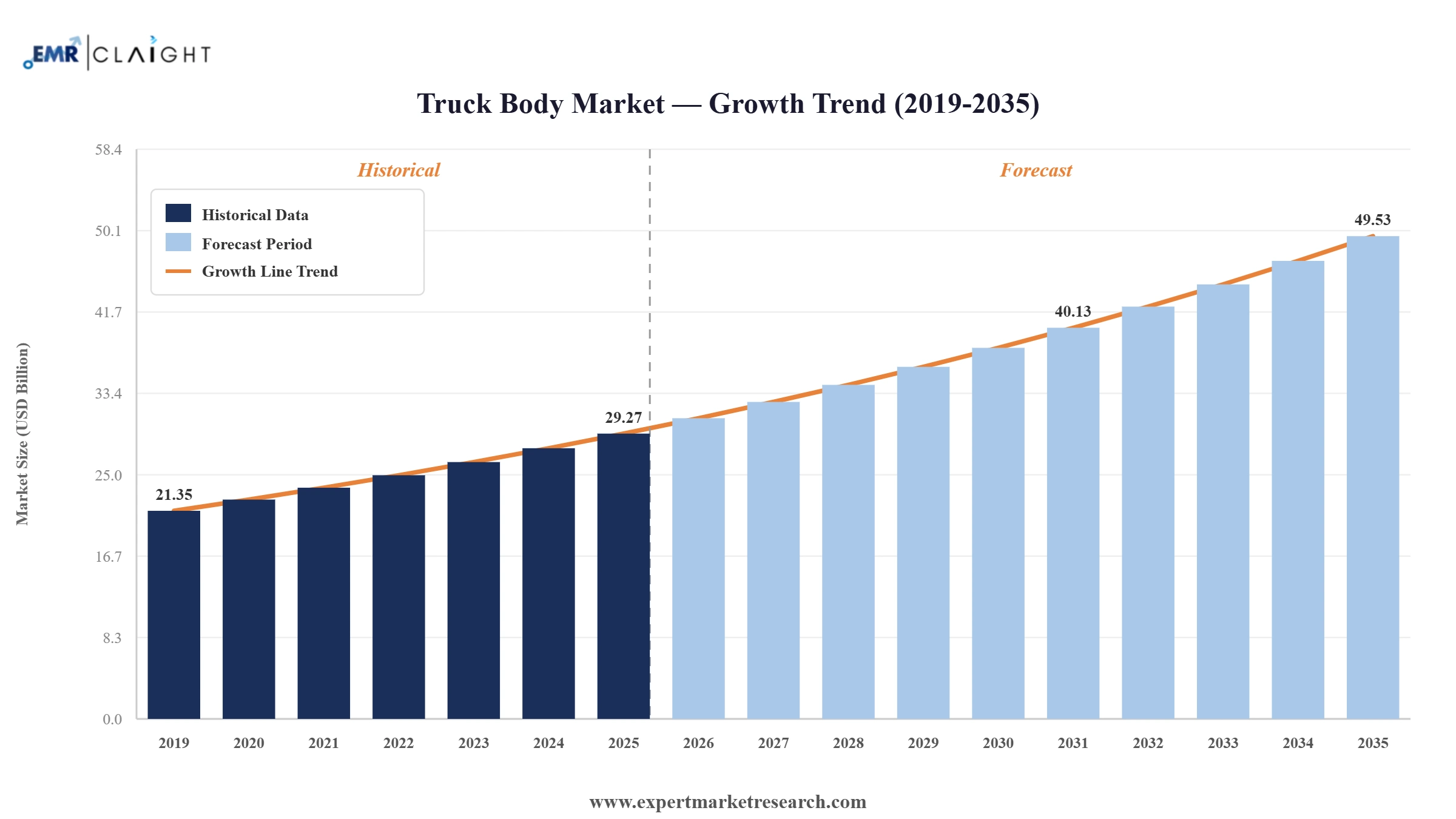
The Truck Body Market reached a value of USD 29.27 Billion at 2025 and is projected to expand at a CAGR of around 5.40% during the forecast period of 2026-2035. With the rapid growth of e-commerce and last-mile delivery logistics driving demand for dry freight and refrigerated truck bodies, expanding global infrastructure investment requiring dump trucks, concrete mixers, and flatbeds, the material transition toward lightweight aluminium and plastic composites to meet fuel efficiency and emissions standards, and the emergence of purpose-built electric truck bodies as fleet electrification accelerates, the market is expected to reach USD 49.53 Billion by 2035.
Read more about this report - REQUEST FREE SAMPLE COPY IN PDF
|
Global Truck Body Market Report Summary |
Description |
Value |
|
Base Year |
USD Billion |
2025 |
|
Historical Period |
USD Billion |
2019-2025 |
|
Forecast Period |
USD Billion |
2026-2035 |
|
Market Size 2025 |
USD Billion |
29.27 |
|
Market Size 2035 |
USD Billion |
49.53 |
|
CAGR 2019-2025 |
Percentage |
XX% |
|
CAGR 2026-2035 |
Percentage |
5.40% |
|
CAGR 2026-2035- Market by Region |
Asia Pacific |
6.0% |
|
CAGR 2026-2035 - Market by Country |
India |
6.2% |
|
CAGR 2026-2035 - Market by Country |
China |
5.9% |
|
CAGR 2026-2035 - Market by Material |
Aluminum |
6.1% |
|
CAGR 2026-2035 - Market by Capacity |
More than 33,000 pounds |
6.4% |
|
Market Share by Country 2025 |
Australia |
2.1% |
The key trends of the truck body market include electric power, advanced safety high-tech, e-commerce-based pressures building up in emerging markets for future growth and logistics.
During the NTEA Work Truck Week held in March 2025, Morgan Truck Body, the largest producer of light and medium-duty freight and refrigerated van and truck bodies in North America, officially announced the launch of its new online parts store. The e-commerce platform was designed to provide reliable, premium-quality replacement parts directly to box truck owners, fleet operators, and maintenance teams nationwide, reducing downtime by improving parts availability and ordering convenience. The launch reflects a growing industry trend toward digital after-sales service ecosystems, where truck body manufacturers extend their customer relationships beyond the initial sale to provide ongoing maintenance and parts support through direct digital channels.
In March 2025, Wabash National Corporation introduced its Ready-to-Mount quick build programme at the Work Truck Show in Indianapolis. The programme delivers pre-built dry freight and platform truck bodies to seven preferred upfitting locations distributed across the United States, enabling customers to receive a complete truck body installation in as little as two weeks. Company leadership noted that approximately 80% of dry van body orders would be fulfilled through the Ready-to-Mount network, dramatically reducing delivery lead times for fleet operators looking to expand capacity or replace damaged units rapidly. Wabash indicated plans to add two new upfitter locations annually to extend the programme's geographic coverage and reduce turnaround times further.
In 2025, both Morgan Truck Body and Knapheide announced investments in connected truck body technology platforms, integrating embedded sensor systems capable of communicating with fleet management software ecosystems. The connected body systems are designed to provide fleet managers with real-time visibility on cargo, body condition, temperature, and door status, enabling more proactive maintenance scheduling, cargo security monitoring, and regulatory compliance reporting. The investments reflect the broader industry direction toward smart commercial vehicles where the truck body itself becomes a data-generating and data-reporting asset within the wider fleet intelligence ecosystem, adding value for operators focused on efficiency, safety, and compliance.
In 2025, Victory Truck Body was established as a new business unit of Demountable Concepts, specifically created to address the anticipated surge in truck body demand across the North American market over the coming decade. The new unit was built around three core principles: placing customer requirements at the centre of product design decisions, manufacturing high-quality and durable truck bodies, and committing to on-time delivery as a core service standard. Victory's formation reflects the confidence among industry participants that North American demand for commercial truck bodies will grow materially through 2035, driven by the continued expansion of logistics and freight operations, e-commerce fulfilment networks, and construction activity.
In March 2024, GreenPower Motor Company launched a dedicated truck body business venture to provide integrated, end-to-end solutions for commercial customers purchasing its electric vehicles. The initiative was designed to address the growing market need for purpose-built truck bodies that are engineered and optimised for electric powertrains, where weight distribution, structural integration with battery systems, and specific payload requirements differ from conventional diesel truck body specifications. By establishing a dedicated truck body operation, GreenPower aimed to simplify the purchasing process for fleet operators transitioning to electric vehicles and to reduce the dependency on third-party body upfitters that can add cost and lead time to electric fleet conversion programmes.
The continuing expansion of global e-commerce, same-day and next-day delivery networks, and last-mile logistics is creating a sustained demand environment for dry freight van and refrigerated truck bodies. As consumers shift more of their purchasing online across food, grocery, electronics, fashion, and healthcare categories, the number of delivery vehicles required by logistics operators, retailers, and third-party fulfilment providers continues to grow. Cold chain compliance regulations in the food and pharmaceutical sectors are also driving demand for certified refrigerated truck bodies with precise temperature control capabilities. The Global Truck Body Market growth is closely aligned with e-commerce infrastructure investment cycles, which continue to accelerate in North America, Europe, and Asia Pacific. In 2024, the construction end-user segment led the global truck bodies market with a 33.8% share, while refrigerated and dry freight categories followed closely, reflecting the dual pull of infrastructure and logistics demand.
The trucking industry's growing focus on reducing operational costs and complying with fuel economy and emissions regulations is accelerating the shift toward lightweight truck body materials, particularly aluminium and advanced plastic composites. Aluminium truck bodies offer a meaningful weight reduction compared to steel equivalents, enabling operators to carry greater payloads within legal vehicle weight limits or to reduce fuel consumption per delivery. This is particularly important in North America and Europe, where emissions regulations are tightening and where freight operators face pressure to reduce their carbon footprint. Knapheide and Morgan Truck Body have both been investing in lighter-weight body designs and smart material combinations through 2025 to address this demand. The trend is reinforcing aluminium's market share gains within the global truck body material segment, with projected CAGR outpacing the overall market through 2035.
As electric commercial trucks enter fleet deployment at growing scale, truck body manufacturers are adapting their designs to accommodate the different structural and weight distribution requirements of battery-electric powertrains. Electric trucks typically have heavier chassis due to battery packs, which places greater importance on maximising body weight efficiency to retain competitive payload capacity. Purpose-built electric truck bodies use lightweight materials and optimised structural configurations to compensate for added chassis weight. GreenPower Motor Company's March 2024 truck body business venture launch illustrated how electric truck OEMs are bringing body manufacturing in-house or creating integrated body-vehicle solutions to control the full customer value proposition. Fleet operators evaluating total cost of ownership for electric trucks increasingly factor body design and weight into their purchase decisions.
The integration of embedded sensors, telematics interfaces, and IoT-compatible monitoring systems into commercial truck bodies is transitioning from a niche feature to a mainstream commercial expectation among large fleet operators. Connected truck bodies can transmit cargo condition data, door open and close events, body temperature readings, and structural diagnostics in real time to fleet management platforms, enabling remote monitoring, predictive maintenance, and compliance documentation with minimal manual intervention. Morgan Truck Body and Knapheide both announced connected body technology platform investments in 2025, reflecting the competitive imperative to offer smart-body solutions as fleet customers accelerate their digitisation programmes. The data generated by connected truck bodies is increasingly integrated with broader supply chain visibility and cargo tracking systems, adding intelligence across the entire freight delivery chain.
The EMR’s report titled “Truck Body Market Report and Forecast 2026-2035” offers a detailed analysis of the market based on the following segments:
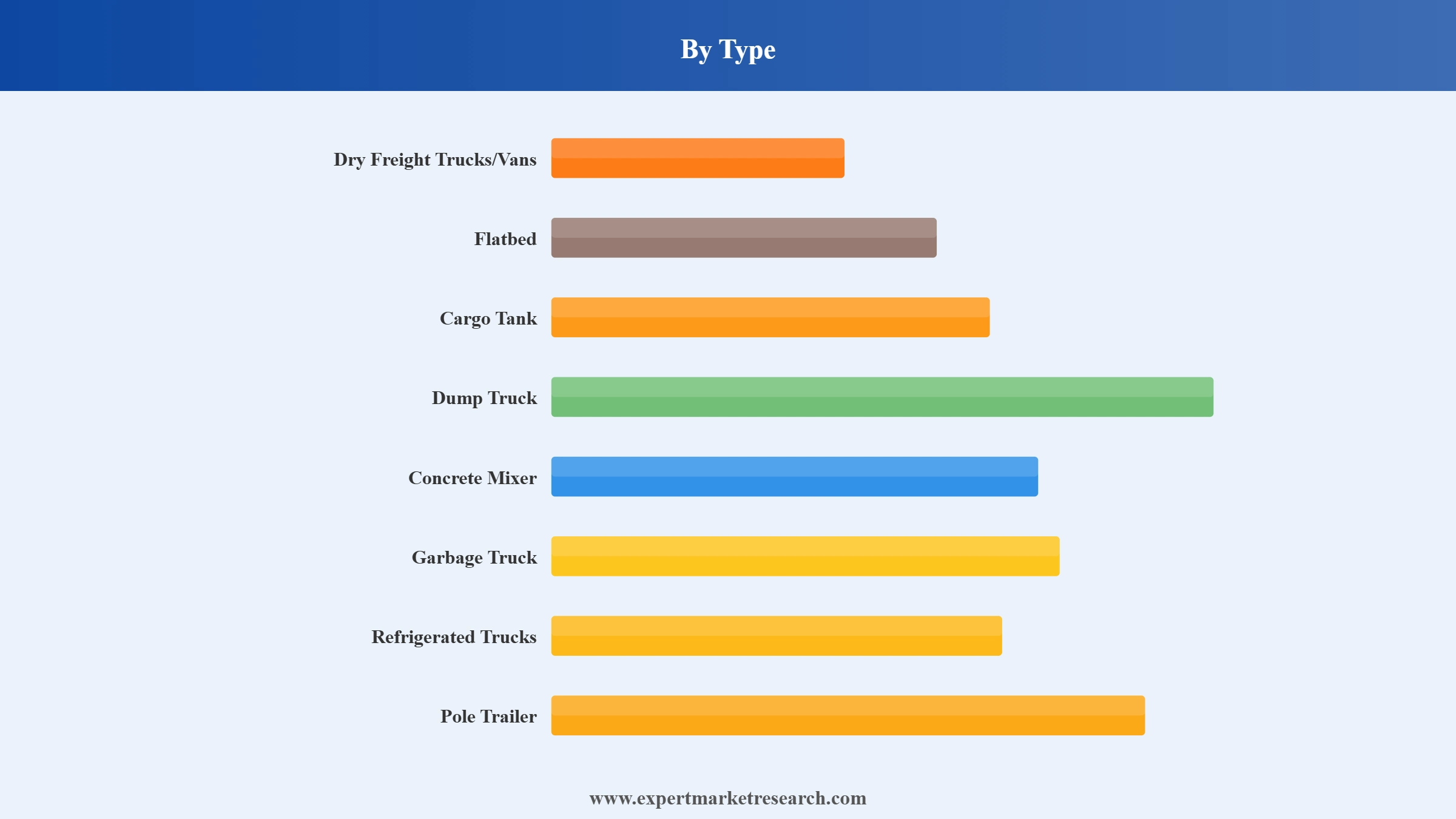
Market Breakup by Type
Key Insight: Dry freight trucks and vans represent the largest type segment in the global truck body market, driven by their fundamental role in general merchandise and e-commerce freight delivery across urban, suburban, and inter-city routes. The construction of these bodies in aluminium and composite materials is growing rapidly to improve payload efficiency. Refrigerated trucks are the fastest-growing type, with a projected CAGR of approximately 6.0%, driven by cold chain logistics expansion and food safety regulatory requirements. Dump trucks and concrete mixers serve the infrastructure and construction sectors and benefit from large-scale government infrastructure investment programmes globally. Flatbeds remain essential for industrial cargo, heavy equipment, and oversized load transport. Garbage trucks are growing in demand as municipalities invest in modernised waste management infrastructure, particularly in developing markets.
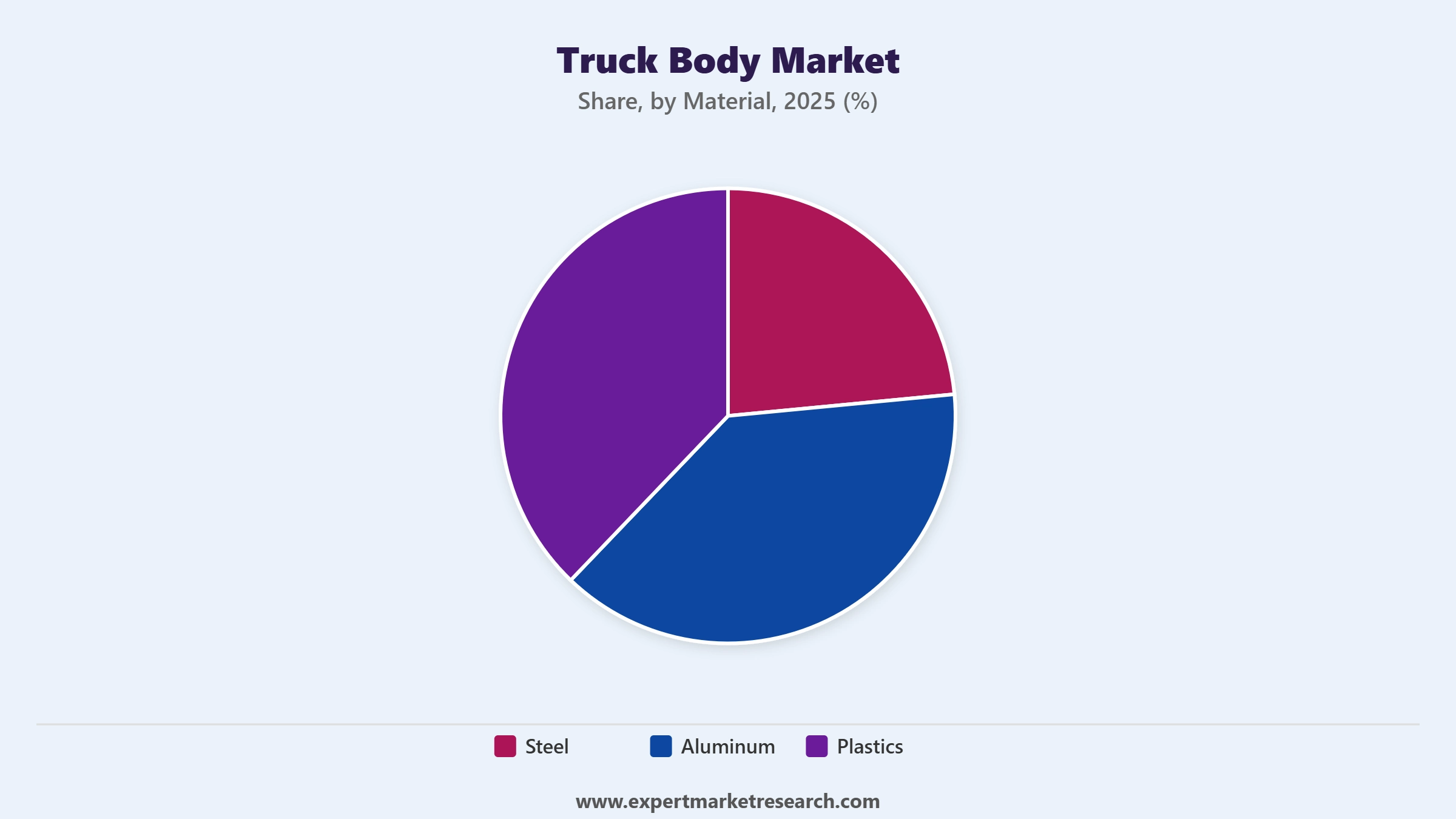
Market Breakup by Material
Key Insight: Steel remains the dominant material in the global truck body market given its structural strength, availability, and cost advantage in heavy-duty applications such as dump trucks, cargo tanks, and construction-related bodies where durability under load is the primary specification requirement. Aluminium is the fastest-growing material segment, posting a projected CAGR of approximately 6.2%, as the logistics and delivery sectors prioritise payload optimisation and fuel efficiency in high-utilisation fleet vehicles. Plastics and composite materials are growing in specific applications including refrigerated truck body insulation, interior linings, and light-duty van bodies where weight reduction and corrosion resistance are valued. The overall material mix is shifting toward lighter-weight options as emissions regulations tighten and electric powertrain adoption increases the premium on body weight reduction.
Market Breakup by Capacity
Key Insight: The 19,501 to 33,000 pounds capacity range represents the most commercially active segment globally, serving medium-duty commercial trucks used across logistics, last-mile delivery, retail distribution, and municipal services applications. This range combines meaningful payload capacity with the manoeuvrability needed for urban and suburban route operations. The more than 33,000 pounds heavy-capacity segment is the most value-significant per unit given the higher cost of heavy-duty dump truck, cargo tank, and flatbed bodies used in construction, mining, and industrial applications. The up to 10,000 pounds and 10,001 to 19,500 pounds light-duty ranges serve e-commerce parcel delivery, last-mile logistics, and service industry fleets, where demand is growing rapidly in line with the expansion of urban delivery operations globally.
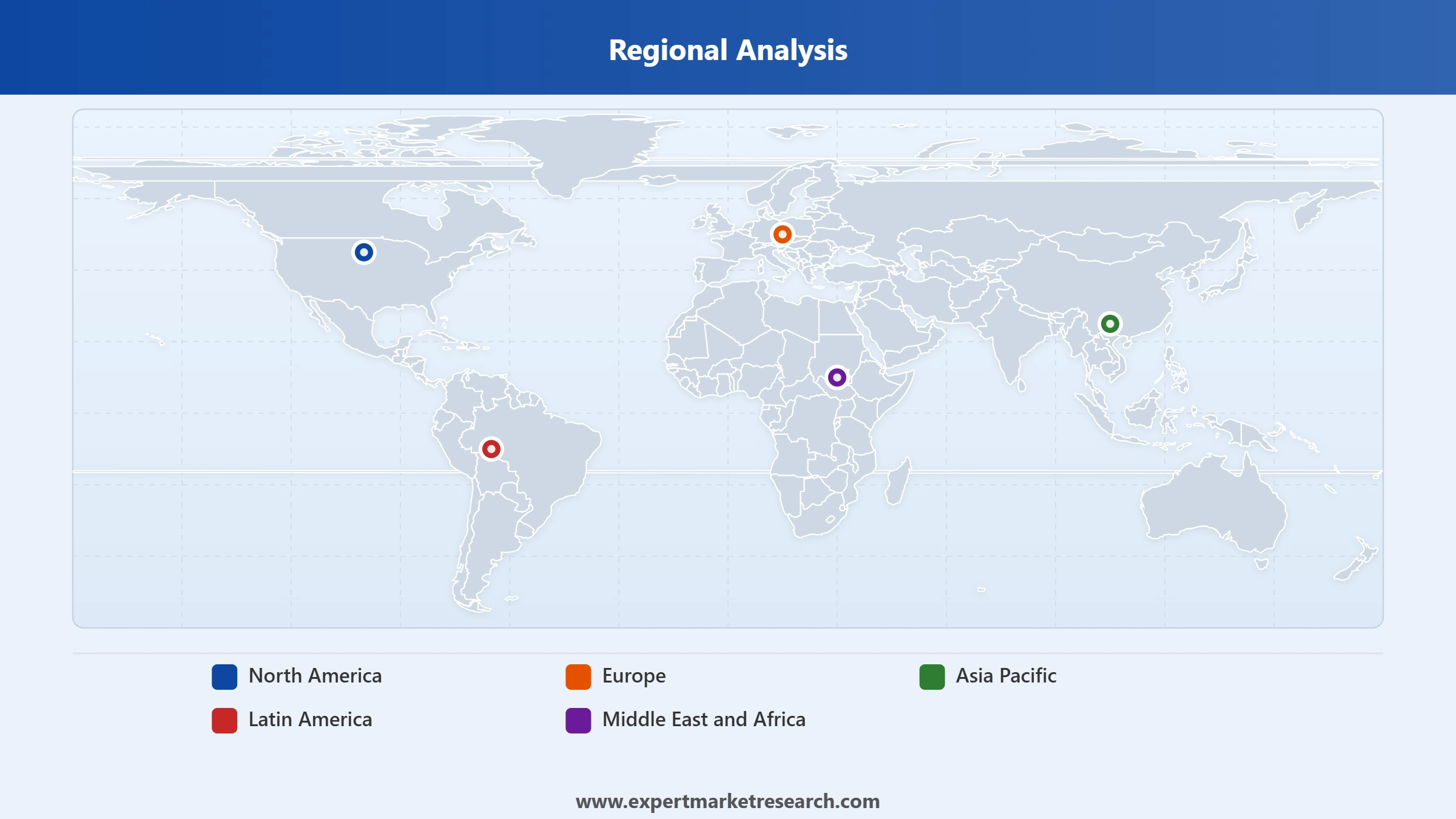
Market Breakup by Region
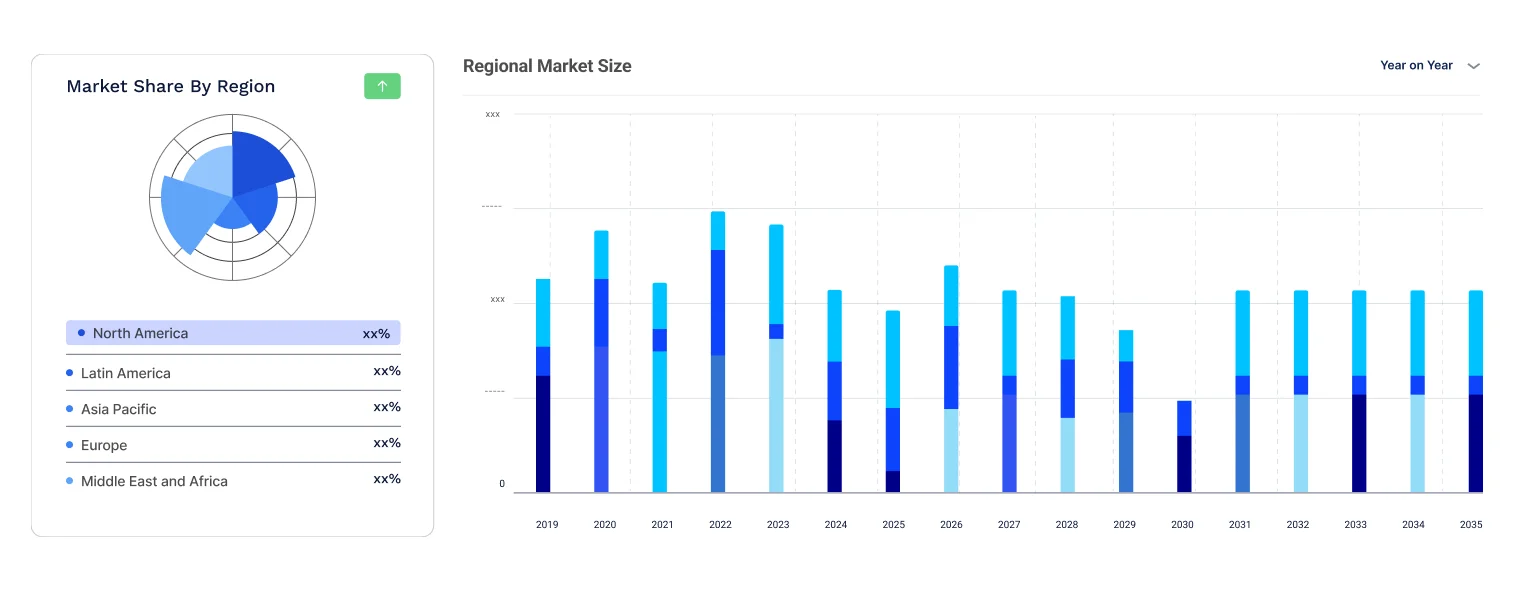
Key Insight: North America leads the global truck body market by value, supported by the world's largest and most sophisticated logistics network, robust construction activity, a large installed fleet base requiring regular body replacement cycles, and a dense concentration of leading truck body manufacturers. Asia Pacific is the fastest-growing region, with a projected CAGR of approximately 6.5%, driven by infrastructure investment in China and India, manufacturing expansion across ASEAN, and rapid e-commerce growth creating demand for delivery van and refrigerated truck bodies across the region's major urban markets. Europe is a mature but steady market characterised by strong demand for refrigerated and environmentally compliant truck bodies driven by stringent food safety and emissions regulations.

Read more about this report - REQUEST FREE SAMPLE COPY IN PDF
By Type, dry freight trucks and vans lead the global market in volume and value, a reflection of their centrality to freight logistics operations across virtually every country in the world. E-commerce growth has intensified this dominance by expanding the number of van deliveries made per day across urban and suburban areas. Refrigerated trucks are closing the gap as cold chain requirements become more widespread in food, pharmaceutical, and biotechnology supply chains. Leading manufacturers including Wabash National Corporation and Morgan Truck Body LLC have built their market positions primarily around dry freight and refrigerated van bodies, where their scale, distribution networks, and product depth give them significant competitive advantages over smaller regional players. Dump trucks and concrete mixers serve a parallel and substantial market anchored by infrastructure construction, where demand is strongly correlated with government capital expenditure cycles.
Read more about this report - REQUEST FREE SAMPLE COPY IN PDF
By Material, steel retains the largest share of the global truck body market given its ubiquity in heavy-duty construction, mining, and industrial applications where material strength requirements preclude lighter alternatives. However, aluminium's share is growing measurably in the dry freight, refrigerated, and light commercial body segments, where leading North American operators are specifying aluminium-bodied trucks to maximise payload within regulatory gross vehicle weight limits. The transition toward lighter materials is being reinforced by electric truck fleet growth, where every kilogram saved in body weight translates directly into extended range or increased payload for battery-electric vehicles. Wabash National's Ready-to-Mount programme, launched in March 2025, highlights how leading manufacturers are investing in faster fulfilment capabilities for their most popular dry freight body configurations, which increasingly feature lightweight material specifications.
Read more about this report - REQUEST FREE SAMPLE COPY IN PDF
North America is the world's leading truck body market by value, underpinned by the United States' position as the world's largest consumer goods economy and the scale of its freight and logistics network. The US market is characterised by high specialisation, with a range of distinct truck body types serving different sectors at significant volumes. The e-commerce fulfilment industry continues to drive strong and recurring demand for dry freight vans and last-mile delivery vehicles. The refrigerated truck body segment benefits from strict food safety regulations that require temperature-controlled transport for an expanding range of food, pharmaceutical, and biotechnology products. Wabash National Corporation's launch of the Ready-to-Mount programme in March 2025 illustrates the competitive focus on faster fulfilment and reduced customer lead times that characterises North America's mature and competitive truck body market. Sustainability considerations are also reshaping specifications, with fleet operators increasingly requesting aluminium-bodied or lightweight-composite vehicles to reduce fuel consumption and meet corporate emissions commitments.
Asia Pacific is the Global Truck Body Market's fastest-growing region, with a CAGR of approximately 6.5% projected over the 2026 to 2035 forecast period. China and India are the primary growth drivers, with China's continued industrial production and logistics expansion sustaining demand across dump truck, flatbed, and cargo van body categories, and India's large-scale infrastructure programmes under national development plans generating growing demand for concrete mixers, dump trucks, and construction-related truck bodies. ASEAN markets including Vietnam, Indonesia, and Thailand are experiencing logistics and e-commerce growth that is creating new demand for delivery van and refrigerated truck bodies as modern retail and food distribution infrastructure is built out. CIMC Vehicles (Group) Co., Ltd. is a major player in the Asia Pacific truck body market, with a broad product portfolio and manufacturing operations positioned to serve the region's diverse and fast-growing commercial vehicle market.
Read more about this report - REQUEST FREE SAMPLE COPY IN PDF
The global truck body market is moderately consolidated at the premium end but fragmented overall, with a large number of regional and local manufacturers serving domestic markets alongside a smaller set of global-scale players that compete across multiple truck body categories and geographies. Competitive differentiation is achieved through product range breadth, material innovation, manufacturing speed, aftermarket service capabilities, and the growing ability to deliver connected and smart truck body solutions that integrate with fleet management platforms.
The market's competitive dynamics are evolving as fleet electrification creates new product development imperatives, digital channels open new ways to serve aftermarket parts and service needs, and quick-build fulfilment programmes become a competitive differentiator. Major players including Wabash National and Morgan Truck Body are investing in both physical and digital capabilities to defend their leadership positions against emerging competitors and regional specialists.
Founded in 1985 and headquartered in Lafayette, Indiana, Wabash National Corporation is one of North America's largest manufacturers of commercial truck trailers and truck bodies. The company's product portfolio spans dry freight van bodies, refrigerated bodies, and platform bodies, with operations serving logistics, food and beverage distribution, and retail delivery markets. Wabash has invested in digital and service capabilities alongside its manufacturing operations and launched its Ready-to-Mount quick-build programme in March 2025 to address growing demand for faster delivery lead times. The company's scale and national distribution network make it a leading supplier to large fleet operators across North America.
CIMC Vehicles is a subsidiary of China International Marine Containers (Group) and is one of the world's largest manufacturers of commercial vehicle bodies and trailers. Headquartered in Shenzhen, China, the company operates manufacturing facilities across China and internationally, producing a comprehensive range of truck body types including dry freight vans, flatbeds, refrigerated truck bodies, and specialised cargo bodies. CIMC Vehicles leverages its parent company's global scale and manufacturing expertise to compete in both domestic Chinese and international markets, with a particularly strong position in the Asia Pacific region where infrastructure and logistics demand is growing rapidly.
Founded in 1901 and headquartered in Oak Brook, Illinois, Federal Signal Corporation manufactures specialty truck body solutions with a particular focus on municipal and infrastructure service vehicles including vacuum trucks, street sweepers, and refuse collection vehicles. The company's Environmental Solutions Group produces garbage truck bodies and other municipal service vehicle equipment that is sold to city and municipal fleet operators across North America and internationally. Federal Signal's specialisation in high-margin, mission-critical municipal truck bodies differentiates it from general freight body manufacturers and provides a relatively stable revenue base tied to public sector budgeting cycles.
Morgan Truck Body LLC is the largest producer of light and medium-duty freight and refrigerated van and truck bodies in North America, serving the parcel delivery, food distribution, and last-mile logistics industries. The company has a broad geographic footprint of manufacturing facilities across the US and offers a wide range of standard and custom truck body configurations. Morgan has been investing in connected body technology platforms that integrate sensor systems with fleet management software, and launched an online parts store during the NTEA Work Truck Week in March 2025, expanding its aftermarket service capabilities through digital channels. The company's scale, product breadth, and aftermarket infrastructure make it one of the most complete truck body solutions providers in the North American market.
Other key players in the market are Austin Engineering, Godwin Manufacturing Co., Inc., Collins Manufacturing Co., Ltd., Topolo - Trucks, GreenPower Motor Company, and Others.
*Please note that this is only a partial list; the complete list of key players is available in the full report. Additionally, the list of key players can be customized to better suit your needs.*
The global truck body market is entering a decade of meaningful transformation, from the electrification of commercial fleets to the digitisation of bodies with connected sensors. Our comprehensive 2026 report delivers the market data, segment analysis, competitive intelligence, and regional breakdowns that manufacturers, fleet operators, and investors need to make informed strategic decisions. Download your free sample today and discover the growth opportunities shaping the global truck body market through 2035.


Upto 15% Off
USD
$2499 $2249
$3999 $3599
$4999 $4249
$5999 $5099


*While we strive to always give you current and accurate information, the numbers depicted on the website are indicative and may differ from the actual numbers in the main report. At Expert Market Research, we aim to bring you the latest insights and trends in the market. Using our analyses and forecasts, stakeholders can understand the market dynamics, navigate challenges, and capitalize on opportunities to make data-driven strategic decisions.*
In 2025, the truck body market reached an approximate value of USD 29.27 Billion.
The market is projected to grow at a CAGR of 5.40% between 2026 and 2035.
The market is estimated to witness healthy growth in the forecast period of 2026-2035 to reach a value of around USD 49.53 Billion by 2035.
The major drivers of the market are the growing preference for leasing and renting, urbanization and infrastructure development, and the increased usage of lightweight and fuel-efficient materials.
The key trends of the market include electric power, advanced safety high-tech, e-commerce-based pressures building up in emerging markets for future growth and logistics.
The major regions in the market are North America, Europe, Asia Pacific, Latin America, and Middle East and Africa.
The various types considered in the market report are dry freight trucks/ vans, flatbed, cargo tank, dump truck, concrete mixer, garbage truck, refrigerated trucks, pole trailer.
The various materials considered in the market report are steel, aluminum, plastics, and others.
The capacities considered in the truck body market report are upto 10,000 pounds, 10,001-19,500 pounds, 19,501 – 33,000 pounds, and more than 33,000 pounds.
The major players in the market are Wabash National Corporation, Austin Engineering, CIMC Vehicles (Group) Co., Ltd., Godwin Manufacturing Co., Inc., Federal Signal Corporation, Morgan Truck Body LLC, Collins Manufacturing Co., Ltd., Topolo – Trucks, and GreenPower Motor Company, among others.
Explore our key highlights of the report and gain a concise overview of key findings, trends, and actionable insights that will empower your strategic decisions.
| REPORT FEATURES | DETAILS |
| Base Year | 2025 |
| Historical Period | 2019-2025 |
| Forecast Period | 2026-2035 |
| Scope of the Report |
Historical and Forecast Trends, Industry Drivers and Constraints, Historical and Forecast Market Analysis by Segment:
|
| Breakup by Type |
|
| Breakup by Material |
|
| Breakup by Capacity |
|
| Breakup by Region |
|
| Market Dynamics |
|
| Competitive Landscape |
|
| Companies Covered |
|
Datasheet
One User
USD 2,499
USD 2,249
tax inclusive*
Single User License
One User
USD 3,999
USD 3,599
tax inclusive*
Five User License
Five User
USD 4,999
USD 4,249
tax inclusive*
Corporate License
Unlimited Users
USD 5,999
USD 5,099
tax inclusive*
*Please note that the prices mentioned below are starting prices for each bundle type. Kindly contact our team for further details.*
Flash Bundle
Small Business Bundle
Growth Bundle
Enterprise Bundle
*Please note that the prices mentioned below are starting prices for each bundle type. Kindly contact our team for further details.*
Flash Bundle
Number of Reports: 3
20%
tax inclusive*
Small Business Bundle
Number of Reports: 5
25%
tax inclusive*
Growth Bundle
Number of Reports: 8
30%
tax inclusive*
Enterprise Bundle
Number of Reports: 10
35%
tax inclusive*
How To Order

Select License Type
Choose the right license for your needs and access rights.

Click on ‘Buy Now’
Add the report to your cart with one click and proceed to register.

Select Mode of Payment
Choose a payment option for a secure checkout. You will be redirected accordingly.
Strategic Solutions for Informed Decision-Making
Gain insights to stay ahead and seize opportunities.

Get insights & trends for a competitive edge.

Track prices with detailed trend reports.

Analyse trade data for supply chain insights.

Leverage cost reports for smart savings

Enhance supply chain with partnerships.

Connect For More Information
Our expert team of analysts will offer full support and resolve any queries regarding the report, before and after the purchase.
Our expert team of analysts will offer full support and resolve any queries regarding the report, before and after the purchase.
We employ meticulous research methods, blending advanced analytics and expert insights to deliver accurate, actionable industry intelligence, staying ahead of competitors.
Our skilled analysts offer unparalleled competitive advantage with detailed insights on current and emerging markets, ensuring your strategic edge.
We offer an in-depth yet simplified presentation of industry insights and analysis to meet your specific requirements effectively.




