

Consumer Insights
Uncover trends and behaviors shaping consumer choices today
Procurement Insights
Optimize your sourcing strategy with key market data
Industry Stats
Stay ahead with the latest trends and market analysis.
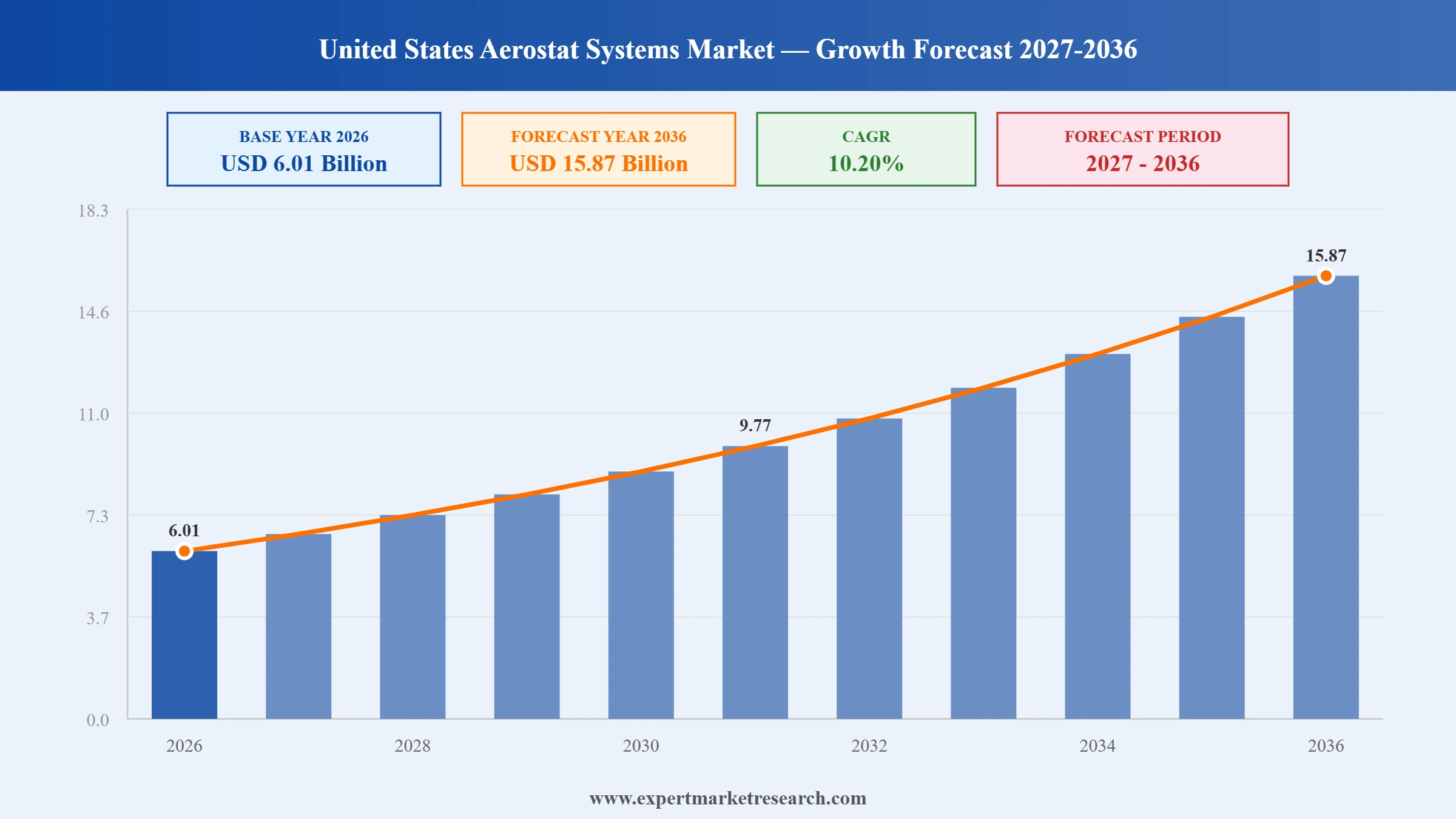
The United States aerostat systems market attained a value of USD 5.45 Billion in 2025 and is projected to expand at a CAGR of 10.20% through 2035. The market is further expected to reach USD 14.40 Billion by 2035. Rising demand for persistent border surveillance, growing defense budgets, and expanding interest in stratospheric communication platforms are helping suppliers differentiate their tethered and untethered systems. Growing government investment in intelligence, surveillance, and reconnaissance capabilities is further encouraging manufacturers to widen their aerostat and airship portfolios.
An aerostat is a lighter than air aircraft that gains its lift from a buoyant gas, typically tethered to the ground to carry surveillance and communication payloads to high altitudes. Balloon systems hold a substantial share of the market owing to their proven reliability and widespread use across long standing border surveillance programs. Rising government investment in persistent ISR capabilities continues to widen the buyer base for aerostat systems.
Demand is concentrating around suppliers able to combine proven tethered platform reliability with expanded multi-year contract capacity. In June 2026, Advanced Technology Systems Company was awarded a 114-million-dollar border protection contract by DHS Customs and Border Protection, supporting innovative border surveillance and autonomous ISR solutions. This contract driven positioning is converting rising demand for persistent surveillance capability directly into expanded adoption across the United States aerostat systems market.
Suppliers across the United States aerostat systems market are converging on a common development direction, widening from conventional tethered radar aerostats toward long endurance stratospheric platforms capable of communications and environmental monitoring missions. Suppliers are increasingly pursuing strategic investment and validation flights to demonstrate stratospheric endurance alongside their established tethered platform contracts. This shift is reshaping competitive dynamics among suppliers, favouring companies who can demonstrate both proven tethered reliability and emerging stratospheric capability.
Read more about this report - Request a Free Sample
Sceye's stratospheric platform completed a record-breaking roundtrip flight from New Mexico to Japan and back, demonstrating mobile broadband connectivity to unmodified devices through SoftBank Corp's core network. The Service Test 1 mission marked Sceye's first flight to Asia, advancing the platform toward commercial HAPS deployment across multiple markets. Suppliers across the United States aerostat systems market can use record flights to demonstrate stratospheric maturity ahead of commercial service launch.
TCOM secured a 447-million-dollar indefinite-delivery, indefinite-quantity contract from Army Contracting Command for production, fielding, sustainment, and lifecycle support of the Persistent Surveillance Systems-Tethered family. The contract runs through July 2031, building on the company's decades long role as the Army's aerostat engineering partner. Suppliers across the United States aerostat systems market can use long duration IDIQ contracts to secure sustained production visibility across multi-year defense programs and budget cycles.
World View and Sierra Nevada Corporation completed a record-breaking Gryphon high altitude balloon flight, validating transformative engineering upgrades across the stratospheric platform for future missions. The milestone mission set new endurance and performance records for the companies' joint stratospheric sensing capability across multiple flight parameters. Suppliers across the United States aerostat systems market can use record setting validation flights to demonstrate platform maturity to prospective government and commercial customers worldwide.
QinetiQ US was granted a prime position on a 4.2-billion-dollar Multiple Award Task Order Contract under the Army's Product Director Aerostats program, covering a full 10-year period. The contract encompasses system integration, hardware procurement, engineering support, and program management for tethered surveillance platforms across every deployment site. Suppliers can use large scale multi-award contract vehicles to secure long term participation in persistent surveillance programs.
Lighter than air aircraft manufacturers are increasingly transferring aerostat fabrication technology to international partners to expand global manufacturing capacity and market reach. This is reshaping supply chain structures across the United States aerostat systems market, favouring manufacturers who can license decades of engineering expertise to new production partners. In February 2025, Aeros signed an agreement with Dron Vayu, a leading Indian UAV manufacturer, enabling the transfer of Aeros aerostat fabrication technology.
Autonomous surveillance technology providers are increasingly winning international border security contracts that complement traditional tethered aerostat coverage with mobile aerial platforms. This is reshaping the broader border surveillance technology ecosystem, favouring providers who can offer layered detection capabilities alongside fixed elevated sensors. In November 2025, Redwire's Edge Autonomy subsidiary was contracted to deliver uncrewed aerial systems and gimbal camera payloads to the Croatian Border Patrol under a Frontex funded programme.
Telecommunications operators are increasingly investing directly in stratospheric connectivity platform developers to secure early access to next generation non-terrestrial network infrastructure ahead of competitors. This is reshaping funding sources across the United States aerostat systems market, favouring platform developers who can attract strategic telecom capital and long-term partnerships. In June 2025, Sceye received a strategic investment from SoftBank Corp as part of its Series C funding round, with SoftBank committing to a 2026 flight.
Aerostat manufacturers are increasingly showcasing integrated, multi-domain defense architectures at major industry exhibitions to demonstrate how lighter than air platforms complement emerging layered defense concepts. This is reshaping product positioning across the United States aerostat systems market, favouring manufacturers who can present a continuous shield concept spanning ground to stratosphere. In October 2025, TCOM showcased its Surface to the Stratosphere defense architecture at the AUSA Annual Meeting, positioning its platforms as a complementary element of the Golden Dome initiative.
Sensor and detection technology manufacturers are increasingly partnering with aerostat platform operators to demonstrate integrated counter-unmanned aircraft system capabilities. This is reshaping payload integration priorities across the United States aerostat systems market, favouring suppliers who can combine detection, tracking, and mitigation technologies on a single elevated platform. In October 2025, Honeywell and D-Fend Solutions partnered to demonstrate enhanced counter-UAS capabilities aboard a 17M class tethered aerostat platform.
The Expert Market Research's report titled "United States Aerostat Systems Market Report and Forecast 2026-2035" offers a detailed analysis of the market based on the following segments:
Market Breakup by Product Type
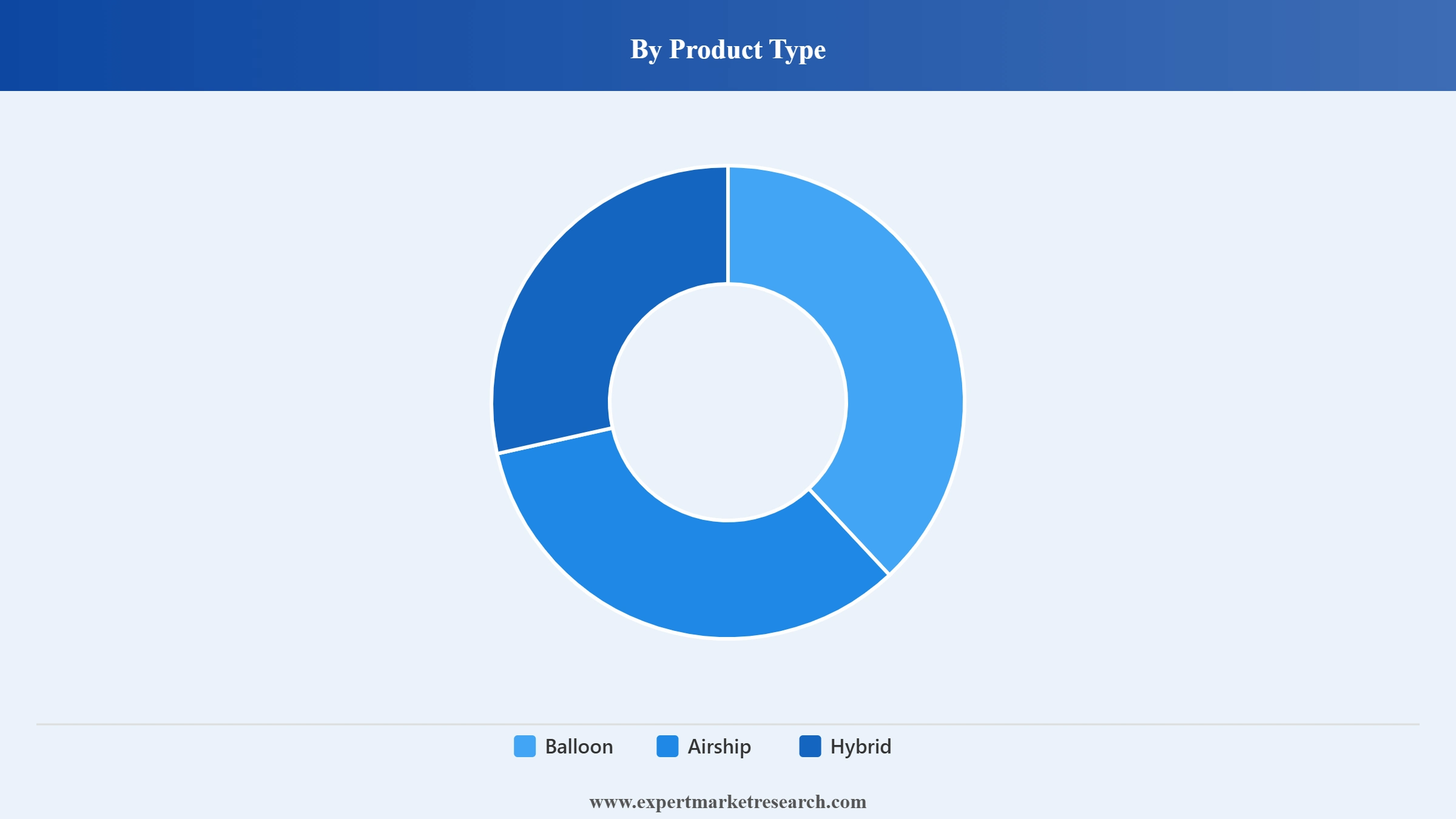
Key Insight: Balloon systems hold a substantial product type share in the United States aerostat systems market as their proven reliability and lower cost sustain widespread use across established border and military surveillance programs. Airship systems are registering the fastest growth as demand increases for platforms capable of longer endurance and heavier payload capacity, while hybrid systems continue to gain traction as operators seek platforms that combine tethered structural stability with limited untethered mobility for specialised surveillance missions.
Market Breakup by Sub-System
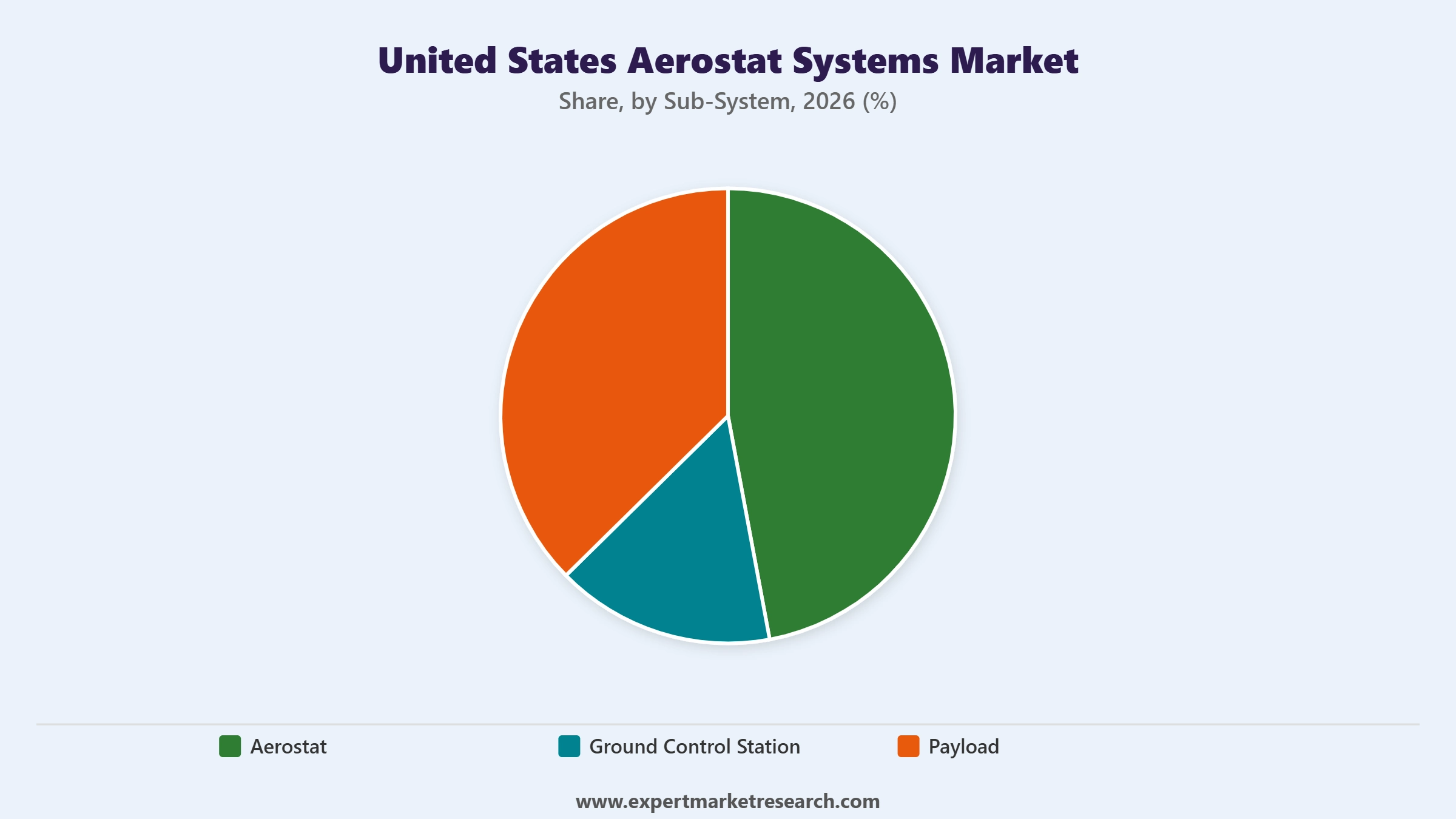
Key Insight: The aerostat envelope and hull sub-system accounts for the largest share in the United States aerostat systems market as it represents the core structural investment in every deployed system. Ground control stations are registering steady growth as operators increasingly demand advanced automation and remote monitoring capability, while payload sub-systems continue to expand alongside growing sensor sophistication.
Market Breakup by Class
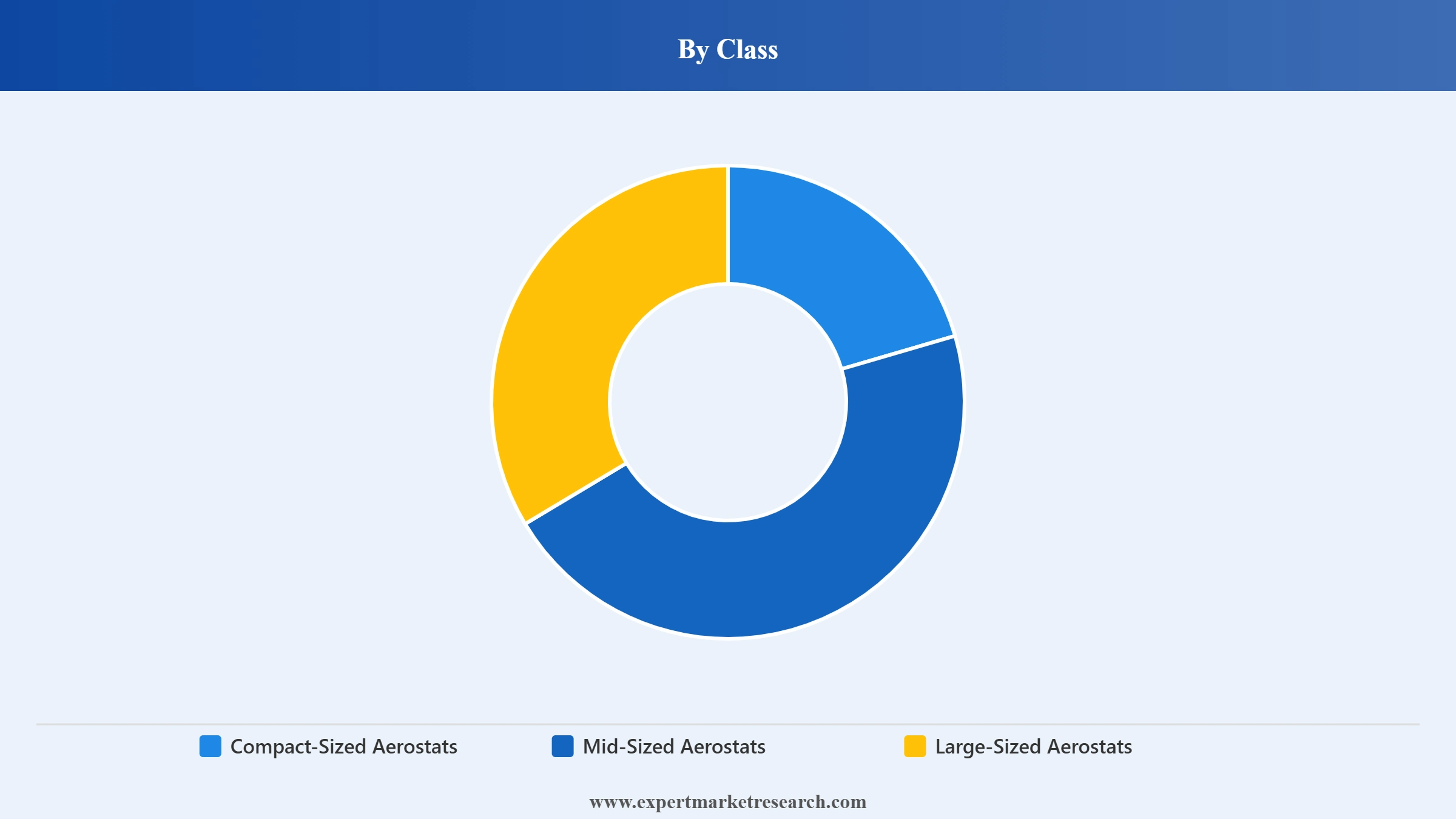
Key Insight: Large sized aerostats hold a substantial class share in the United States aerostat systems market as their greater lift capacity supports the heavier radar and sensor payloads required for long range border surveillance. Compact sized aerostats are registering strong growth given their lower cost and suitability for tactical, short deployment missions, while mid-sized platforms serve a range of intermediate surveillance requirements.
Market Breakup by Propulsion System
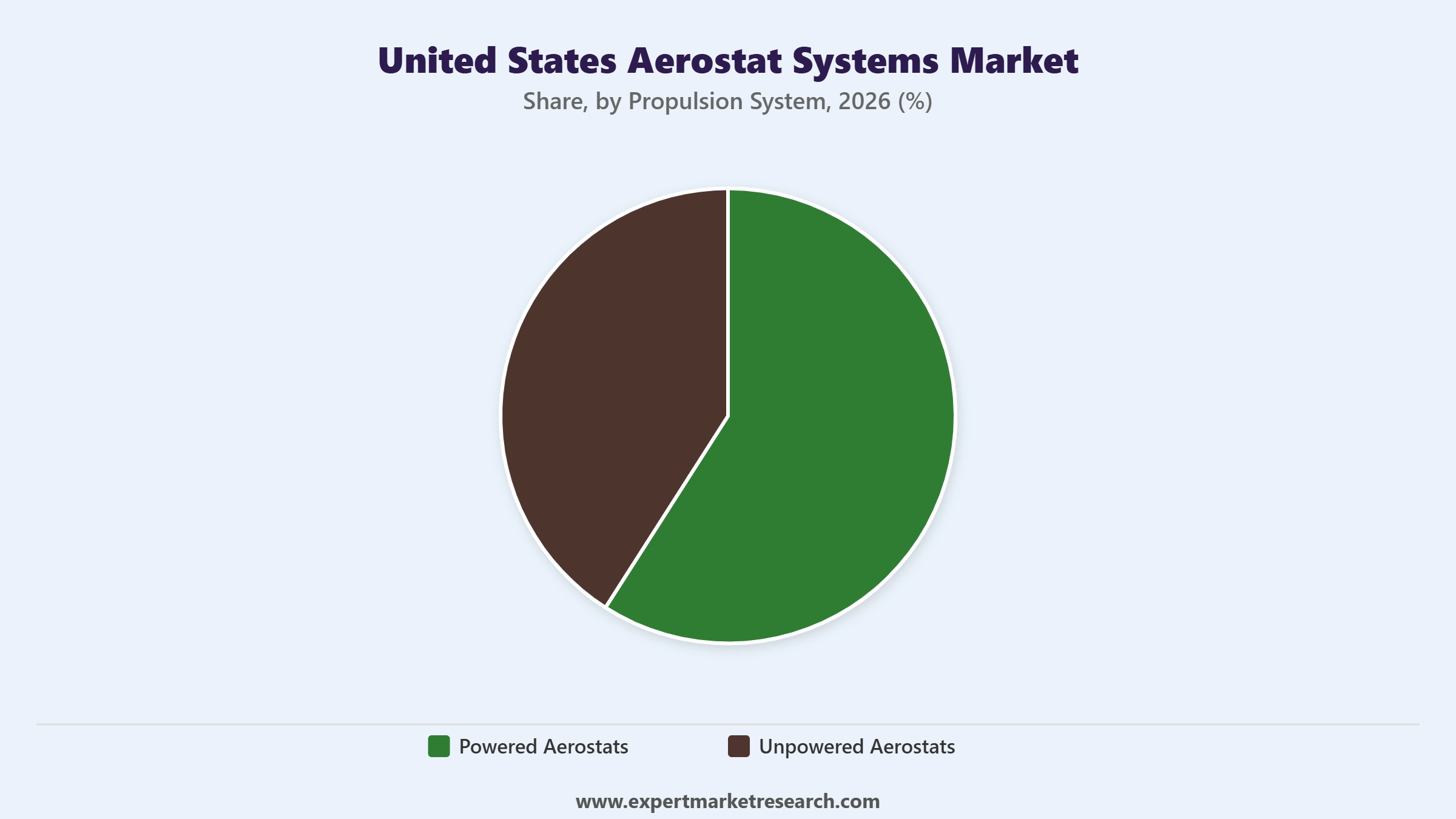
Key Insight: Unpowered, tethered aerostats account for the largest propulsion system share in the United States aerostat systems market given their simpler design and proven use across long standing surveillance contracts. Powered aerostats and airships are registering the fastest growth as stratospheric and long endurance missions increasingly require station keeping and manoeuvring capability.
Market Breakup by Payload
Key Insight: Surveillance radar payloads hold a substantial share as radar remains the primary sensor for long range border and maritime domain awareness missions. Electro-optic and infrared sensors are registering the fastest growth given rising demand for high resolution imaging in both daylight and low light conditions. In February 2025, RT LTA Systems unveiled a new cellular communications system for its Skystar family of tactical aerostat platforms at the IDEX defence exhibition. Camera payloads support close range visual confirmation and target identification alongside radar detection. Inertial navigation systems provide the precise positioning and stabilisation data required to maintain sensor accuracy on both tethered and untethered platforms. Communication intelligence payloads are gaining relevance as suppliers integrate signals monitoring capability into border and maritime surveillance missions. Electronic intelligence payloads round out the segment by enabling detection and classification of radar and electronic emissions across contested operating environments.
Market Breakup by Region
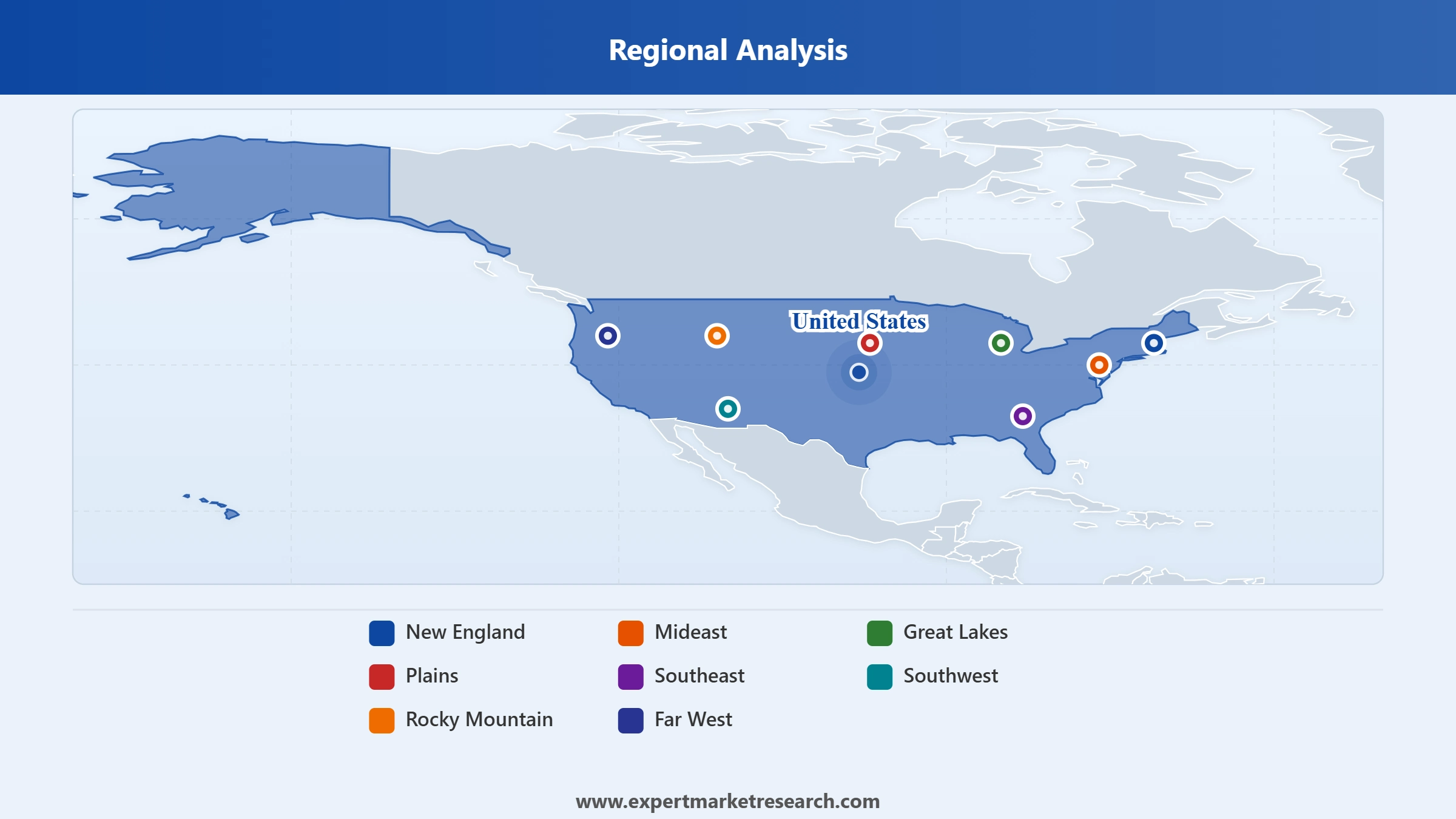
Key Insight: The Southwest holds a substantial regional share in the United States aerostat systems market, supported by extensive Tethered Aerostat Radar System deployments monitoring the United States-Mexico border. In October 2025, Altaeros announced a follow-on second year contract from DHS Customs and Border Protection for aerostat operations at Santa Teresa, New Mexico, extending its autonomous ST-Flex platform deployment along the border corridor. The Southeast is registering strong growth as tethered aerostat operations extend coverage across the Florida Straits and the Caribbean, supporting maritime domain awareness missions. The Mideast benefits from proximity to major defense procurement and engineering hubs including Aberdeen Proving Ground, Maryland. New England contributes through its concentration of aerospace engineering firms and coastal surveillance requirements along its Atlantic seaboard. The Great Lakes region supports demand through inland test and training ranges used for aerostat development and evaluation work. The Plains region sustains steady adoption tied to expansive open terrain suited for testing and tactical surveillance deployments. The Rocky Mountain region benefits from proximity to military training installations requiring elevated situational awareness across mountainous terrain. The Far West rounds out regional demand through coastal surveillance requirements and proximity to defense research and testing facilities along the Pacific coast.
By product type, balloon systems dominate the market owing to their proven reliability and lower cost across established surveillance programs
Balloon systems dominate the product type segment of the United States aerostat systems market owing to their proven reliability and lower cost across established border and military surveillance programs. Their minimal crew requirements and straightforward maintenance continue to sustain adoption across long-running government surveillance contracts. Set for launch in August 2026, the University of Chicago's PASCAL mission will use a stratospheric balloon to collect atmospheric particle samples at 37 kilometres altitude, illustrating the platform's expanding research applications.
Read more about this report - Request a Free Sample
Airship systems are registering the fastest product type growth in the United States aerostat systems market as demand increases for platforms capable of longer endurance and heavier payload capacity than conventional tethered balloons offer across every mission type and operational theatre. Suppliers serving this category continue to prioritise autonomous flight control systems accordingly, since airship platforms increasingly rely on automated station keeping to reduce ground crew staffing requirements across every deployment, extending mission duration for both government and commercial customers.
By sub-system, the aerostat envelope and hull accounts for the largest share owing to representing the core structural investment in every deployed system
The aerostat envelope and hull sub-system accounts for the largest share of the United States aerostat systems market as it represents the core structural investment underlying every deployed surveillance platform across every active program and installation. Suppliers serving this category continue to prioritise flexible material engineering accordingly, since envelope integrity directly determines platform endurance and mission reliability over extended, multi-week deployments in the field under demanding weather and terrain conditions encountered across every region and site.
Read more about this report - Request a Free Sample
Ground control station sub-systems are registering steady growth as operators increasingly demand advanced automation, remote monitoring, and cybersecurity hardened command interfaces across every deployment site today. In January 2026, Elevated Technologies was awarded a contract on the Missile Defense Agency's SHIELD IDIQ vehicle, expanding its ground systems and command interface support beyond its existing aerostat program work, reflecting growing government demand for integrated, remotely operable command and control infrastructure across every active government surveillance mission profile.
By class, large sized aerostats account for the largest share owing to their greater lift capacity supporting heavier radar and sensor payloads
Large sized aerostats hold a substantial class share of the United States aerostat systems market as their greater lift capacity supports the heavier radar and sensor payloads required for long range border surveillance missions across every deployed site. Suppliers serving this category continue to prioritise structural reinforcement engineering accordingly, since larger envelopes must maintain stability while carrying significantly heavier radar and sensor payloads aloft for extended operational periods and durations encountered across every mission and deployment theatre.
Read more about this report - Request a Free Sample
Compact sized aerostats are registering strong class growth in the United States aerostat systems market given their lower cost and suitability for tactical, short deployment missions requiring rapid setup and mobility across varied terrain and climates. In May 2025, Thunderbolt Solutions received a systems engineering contract supporting the Army's aerostat program, reflecting growing demand for specialised technical support across compact tactical platform deployments, particularly among units requiring rapidly relocatable surveillance capability across forward operating bases and remote contested regions.
By propulsion system, unpowered tethered aerostats account for the largest share owing to their simpler design and proven use across long standing surveillance contracts
Unpowered, tethered aerostats account for the largest propulsion system share of the United States aerostat systems market given their simpler design and proven use across long standing government surveillance contracts today across every active deployment site and program. Suppliers serving this category continue to prioritise tether and mooring system reliability accordingly, since unpowered platforms depend entirely on ground-based systems for positioning and safe recovery operations, particularly during periods of severe weather and high wind loading conditions.
Read more about this report - Request a Free Sample
Powered aerostats and airships are registering the fastest propulsion system growth in the United States aerostat systems market as stratospheric and long endurance missions increasingly require station keeping and manoeuvring capability across varied operating environments worldwide today. Suppliers serving this category continue to prioritise propulsion efficiency accordingly, since powered platforms must balance manoeuvring capability against overall payload and endurance performance across every mission profile and deployment scenario encountered across every theatre and operating region and mission theatre worldwide today.
By payload, surveillance radar accounts for the largest share owing to radar remaining the primary sensor for long range border and maritime domain awareness
Surveillance radar payloads hold a substantial share of the United States aerostat systems market as radar remains the primary sensor for long range border and maritime domain awareness missions today across every active program and deployment. In May 2025, RSC2 was awarded an 83-million-dollar task order under the Army's Responsive Strategic Sourcing for Services IDIQ to provide engineering and technical assistance support for Product Director Aerostats, reinforcing continued government reliance on radar as the primary detection sensor.

Read more about this report - Request a Free Sample
Electro-optic and infrared sensor payloads are registering the fastest growth in the United States aerostat systems market given rising demand for high resolution imaging in both daylight and low light surveillance conditions today. In May 2025, L3Harris marked the delivery of its 8,000th WESCAM MX-Series EO/IR system, a payload family deployed across fixed-wing, rotary-wing, UAV, and tactical aerostat platforms worldwide, underscoring sustained demand for high resolution imaging sensors across defense and commercial border and maritime surveillance missions.
Read more about this report - Request a Free Sample
The Southwest leads the market through extensive Tethered Aerostat Radar System border deployments
The Southwest holds a substantial share of the United States aerostat systems market, supported by extensive Tethered Aerostat Radar System deployments monitoring the United States-Mexico border across Arizona, New Mexico, and Texas nationwide today across every active surveillance site and installation. As of June 2026, CBP continued reviewing the number of tactical aerostats deployed along the southwest border, with a cluster of seven platforms watching over South Texas including five in the Rio Grande Valley.
The Southeast is registering strong regional growth as tethered aerostat operations extend coverage across the Florida Straits and the Caribbean, supporting broader maritime domain awareness missions nationwide today across every coastal site and installation. Suppliers serving this region continue to benefit from sustained demand tied to ongoing maritime interdiction and air sovereignty missions across the region's coastal waters, where persistent aerial coverage complements existing naval and coast guard assets.
Read more about this report - Request a Free Sample
United States aerostat systems companies range from legacy defense primes with decades of tethered radar experience to newer stratospheric platform developers backed by telecom investment and venture capital. Aerostat players increasingly compete on multi-year government contract positioning and stratospheric endurance validation as much as on conventional tethered engineering, with large scale Army task order vehicles reshaping how suppliers secure long term revenue visibility across the industrial base.
Established suppliers in the United States aerostat systems market continues to hold ground through decades of border surveillance program experience and deep government relationships, while newer entrants pursue stratospheric validation flights and strategic telecom partnerships to build credibility from scratch. This split between proven tethered reliability and emerging stratospheric ambition defines competitive dynamics heading into the next decade, as both camps compete for a growing pool of government and commercial surveillance contracts.
Founded in 1995 and headquartered in Bethesda, Maryland, United States, Lockheed Martin supports the aerostat systems market through its role as prime contractor and systems integrator for the Tethered Aerostat Radar System serving US border surveillance missions. The company continues to expand its aerostat and airborne sensor integration capabilities. Lockheed Martin draws on decades of large-scale defense systems integration expertise to serve government customers across critical surveillance programs.
Founded in 1956 and headquartered in Sioux Falls, South Dakota, United States, Raven Industries supports the aerostat systems market through its historical Aerostar segment, which designed and manufactured high altitude balloons and tethered aerostats for military applications. The company continues to be recognised for its early contributions to persistent ground surveillance system platforms. Raven Industries drew on decades of high-altitude balloon engineering expertise before its 2021 acquisition by CNH Industrial.
Founded in 1980 and headquartered in Columbia, Maryland, United States, TCOM supports the aerostat systems market as a leading provider of intelligence, surveillance, and reconnaissance tethered aerostat platforms for air, maritime, and land applications. The company continues to expand its portfolio into autonomous, long endurance platforms and integrated sensing capabilities. TCOM draws on more than four decades of lighter than air engineering expertise to serve US and foreign government customers.
Founded in 1947 and headquartered in Frederica, Delaware, United States, ILC Dover supports the aerostat systems market through its manufacture of aerostat envelopes using high-performance flexible materials for government surveillance programs. The company continues to expand its lighter than air structures portfolio alongside its aerospace and life sciences engineering work. ILC Dover draws on decades of flexible materials engineering expertise dating back to its early high altitude airship development work.
Other key players in the market include Worldwide Aeros Corp., Drone Aviation Corp., Israel Aerospace Industries (IAI) Ltd., Altaeros, Peraton Corp., and Carolina Unmanned Vehicles Inc., among others.
*Please note that this is only a partial list; the complete list of key players is available in the full report. Additionally, the list of key players can be customized to better suit your needs.*
Unlock the latest insights with our United States aerostat systems market trends 2026 report. Discover regional growth patterns, product type adoption, and key industry players. Stay ahead of competition with trusted data and expert analysis. Download your free sample report today.


Upto 15% Off
USD
$2499 $2249
$3999 $3599
$4999 $4249
$5999 $5099


*While we strive to always give you current and accurate information, the numbers depicted on the website are indicative and may differ from the actual numbers in the main report. At Expert Market Research, we aim to bring you the latest insights and trends in the market. Using our analyses and forecasts, stakeholders can understand the market dynamics, navigate challenges, and capitalize on opportunities to make data-driven strategic decisions.*
In 2025, the market reached an approximate value of USD 5.45 Billion.
The market is projected to grow at a CAGR of 10.20% between 2026 and 2035.
The market is estimated to witness a healthy growth in the forecast period of 2026-2035, reaching a value of around USD 14.40 Billion by 2035.
Securing multi-year government IDIQ and task order contract vehicles, pursuing joint validation flights to demonstrate stratospheric endurance, attracting strategic telecom investment for connectivity platforms, and expanding beyond tethered systems into autonomous, long endurance platform development.
The key trends of the market include increased utilisation of aerostat systems for border control and surveillance, growing usage of aerostats such as hot-air balloons for aerial advertising, rising deployment of aerostat systems for network coverage, and increased integration of electro-optic and infrared sensors in tethered aerostat systems.
The market is broken down into New England, Mideast, Great Lakes, Plains, Southeast, Southwest, Rocky Mountain, and Far West.
Based on product types, the market is broken down into balloon, airship, and hybrid.
The key players in the market include Lockheed Martin Corporation, Raven Industries, Inc., TCOM Holdings, LLC, ILC Dover, LP, Worldwide Aeros Corp., Drone Aviation Corp., Israel Aerospace Industries (IAI) Ltd., Altaeros, Peraton Corp., and Carolina Unmanned Vehicles Inc., among others.
Based on the propulsion systems, the market is divided into powered aerostats and unpowered aerostats.
Companies face rising costs of advanced sensor integration, a shortage of engineers skilled in lighter than air platform design, lengthy government procurement cycles, and the ongoing challenge of demonstrating stratospheric endurance capability ahead of full scale commercial and defense adoption.
Explore our key highlights of the report and gain a concise overview of key findings, trends, and actionable insights that will empower your strategic decisions.
| REPORT FEATURES | DETAILS |
| Base Year | 2025 |
| Historical Period | 2019-2025 |
| Forecast Period | 2026-2035 |
| Scope of the Report |
Historical and Forecast Trends, Industry Drivers and Constraints, Historical and Forecast Market Analysis by Segment:
|
| Breakup by Product Type |
|
| Breakup by Sub-System |
|
| Breakup by Class |
|
| Breakup by Propulsion System |
|
| Breakup by Payload |
|
| Breakup by Region |
|
| Market Dynamics |
|
| Competitive Landscape |
|
| Companies Covered |
|
Datasheet
One User
USD 2,499
USD 2,249
tax inclusive*
Single User License
One User
USD 3,999
USD 3,599
tax inclusive*
Five User License
Five User
USD 4,999
USD 4,249
tax inclusive*
Corporate License
Unlimited Users
USD 5,999
USD 5,099
tax inclusive*
*Please note that the prices mentioned below are starting prices for each bundle type. Kindly contact our team for further details.*
Flash Bundle
Small Business Bundle
Growth Bundle
Enterprise Bundle
*Please note that the prices mentioned below are starting prices for each bundle type. Kindly contact our team for further details.*
Flash Bundle
Number of Reports: 3
20%
tax inclusive*
Small Business Bundle
Number of Reports: 5
25%
tax inclusive*
Growth Bundle
Number of Reports: 8
30%
tax inclusive*
Enterprise Bundle
Number of Reports: 10
35%
tax inclusive*
How To Order

Select License Type
Choose the right license for your needs and access rights.

Click on ‘Buy Now’
Add the report to your cart with one click and proceed to register.

Select Mode of Payment
Choose a payment option for a secure checkout. You will be redirected accordingly.
Strategic Solutions for Informed Decision-Making
Gain insights to stay ahead and seize opportunities.

Get insights & trends for a competitive edge.

Track prices with detailed trend reports.

Analyse trade data for supply chain insights.

Leverage cost reports for smart savings

Enhance supply chain with partnerships.

Connect For More Information
Our expert team of analysts will offer full support and resolve any queries regarding the report, before and after the purchase.
Our expert team of analysts will offer full support and resolve any queries regarding the report, before and after the purchase.
We employ meticulous research methods, blending advanced analytics and expert insights to deliver accurate, actionable industry intelligence, staying ahead of competitors.
Our skilled analysts offer unparalleled competitive advantage with detailed insights on current and emerging markets, ensuring your strategic edge.
We offer an in-depth yet simplified presentation of industry insights and analysis to meet your specific requirements effectively.




