

Consumer Insights
Uncover trends and behaviors shaping consumer choices today
Procurement Insights
Optimize your sourcing strategy with key market data
Industry Stats
Stay ahead with the latest trends and market analysis.
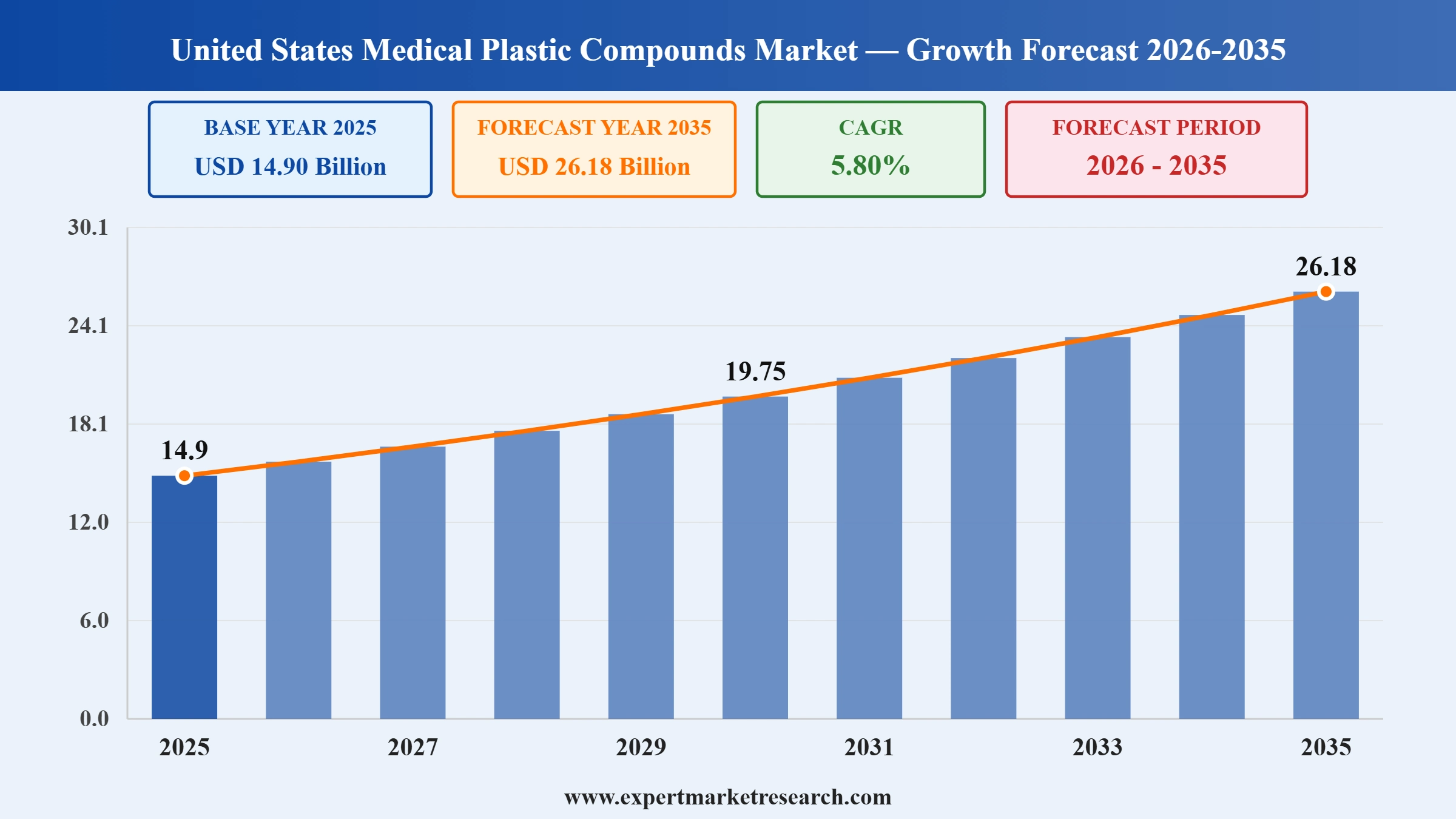
The United States medical plastic compounds market was valued at USD 14.90 Billion in 2025 and is expected to grow at a CAGR of 5.80%, reaching USD 26.18 Billion by 2035. The market benefits from advanced healthcare infrastructure and high adoption of innovative medical devices. The increasing demand for lightweight, durable, and biocompatible plastics in surgical instruments and implants continues to support the market growth. Rising investment in the research and development of novel polymer compounds for medical applications is anticipated to further expand the market value during the forecast period.
Rising demand for lightweight, durable, and biocompatible materials in medical devices, along with increasing surgical procedures and technological advancements, is significantly boosting the market, supporting strong and sustained market growth.
The growing shift toward high-performance polymers, recyclable compounds, and advanced antimicrobial materials, combined with increased adoption of 3D printing-compatible plastics, is shaping market evolution and accelerating innovation-driven growth in the market.
Leading manufacturers are strengthening market growth through continuous R and D investments, product portfolio enhancement, and collaboration with medical device companies. These efforts ensure the delivery of high-quality, regulatory-compliant plastic compounds tailored to evolving healthcare applications and technological needs.
Read more about this report - REQUEST FREE SAMPLE COPY IN PDF
Medical plastic compounds are becoming vital to the evolution of modern medical devices, enabling intricate designs that maintain dependable performance under demanding clinical conditions. Their flexibility supports innovations in diagnostic platforms, patient monitoring technologies, and minimally invasive treatment tools. These materials also help manufacturers meet growing expectations for safety, durability, and production efficiency. In the United States, the market was valued at USD 14.90 Billion in 2025, supported by strong research ecosystems, rapid integration of engineered polymers, and continuous improvements in precision manufacturing. Increasing regulatory focus on high-quality materials further strengthens national demand and encourages ongoing technological advancement across the medical device industry.
Sustainability-Driven Advancements Poised to Boost Market Demand
The growing adoption of sustainable, high-performance materials that align with healthcare’s increasing environmental commitments is a key growth driver in the market. For example, in October 2024, TekniPlex Healthcare introduced the first ISCC PLUS-certified, medical-grade bio-based PVC compounds that match the performance, composition, and regulatory profile of conventional PVC. This innovation, capable of reducing CO₂ emissions by up to 90%, offers a drop-in replacement for tubing, films, and various medical components. Such advancements significantly strengthen the market outlook by supporting both sustainability objectives and reliable clinical performance.
Read more about this report - REQUEST FREE SAMPLE COPY IN PDF
Some of the trends in the market include an increasing emphasis on fluoropolymer safety and tighter regulatory oversight of vinyl-based materials.
Growing Focus on Material Safety to Propel the Market Value
The heightened emphasis on evaluating the safety and long-term performance of fluoropolymer-based materials used in medical devices is a key trend shaping the market. In August 2025, the U.S. Food and Drug Administration referenced an independent safety review conducted with ECRI, which analyzed extensive clinical data and over 1,750 peer-reviewed studies. The findings indicated no conclusive evidence of patient harm linked to fluoropolymers such as PTFE, reaffirming their critical role in cardiovascular, implantable, and minimally invasive devices. This growing validation of fluoropolymer safety is expected to strengthen confidence among manufacturers and support sustained market growth.
Strengthening Regulatory Oversight to Elevate the United States Medical Plastic Compounds Market
The rising emphasis on stricter regulatory oversight to ensure safer production and use of vinyl-based materials is a key trend shaping the market. This shift is driven by heightened attention to chemical safety and environmental compliance. For example, in January 2025, the U.S. Environmental Protection Agency released a draft scope document for the risk evaluation of vinyl chloride under the Toxic Substances Control Act, reflecting its commitment to assessing exposure risks and improving industry safeguards. Such developments are expected to encourage innovation, support safer material formulations, and strengthen long-term market growth.
Read more about this report - REQUEST FREE SAMPLE COPY IN PDF
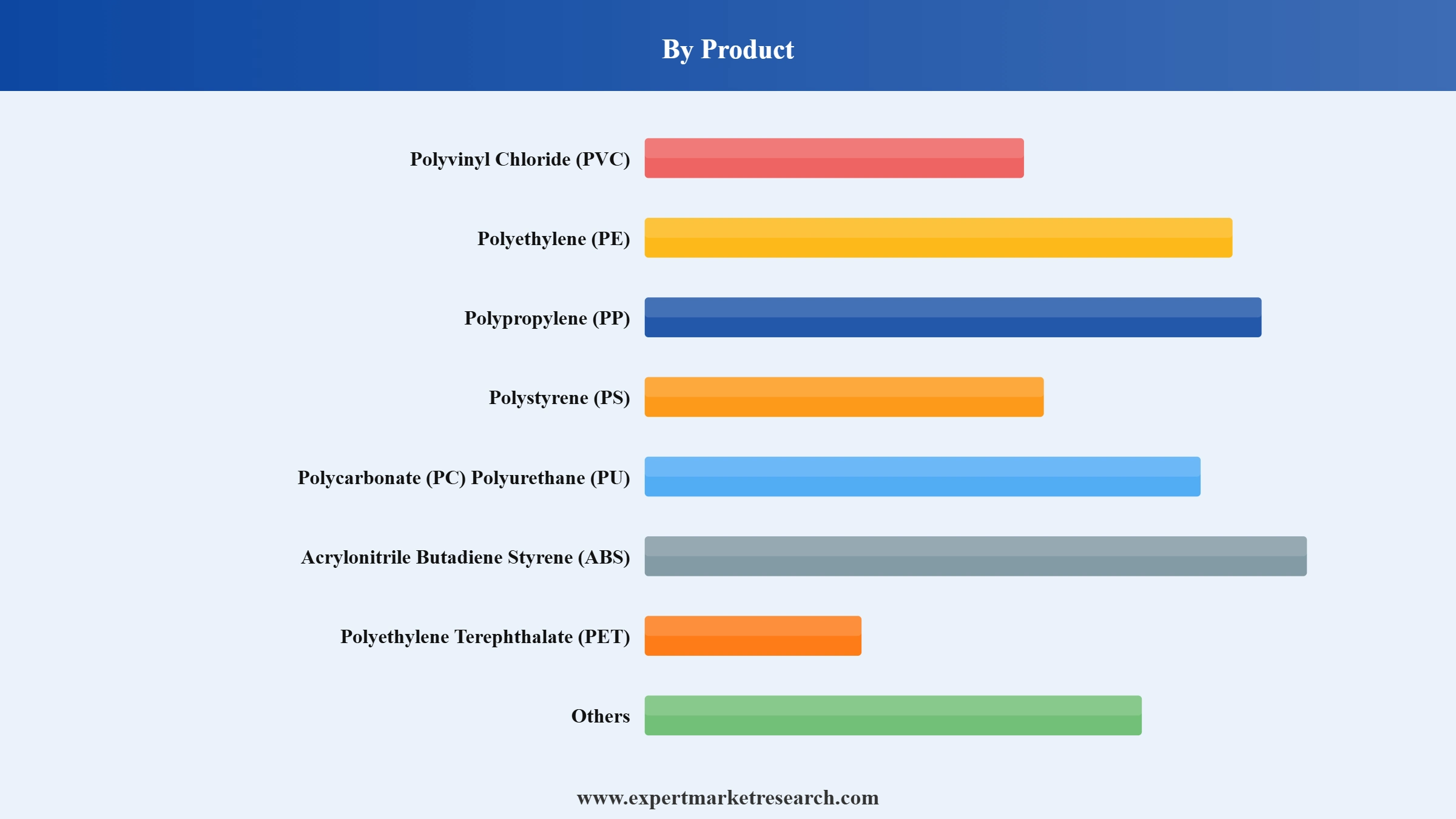
Polyvinyl Chloride (PVC) Expected to Dominate the Market Share by Product
The product segmentation includes polyvinyl chloride (PVC), polyethylene (PE), polypropylene (PP), polystyrene (PS), polycarbonate (PC), polyurethane (PU), acrylonitrile butadiene styrene (ABS), polyethylene terephthalate (PET), and others. Among these, polyvinyl chloride (PVC) is expected to remain the leading segment, supported by its historical market share of approximately 30%. Its dominance is driven by extensive use in medical tubing, IV sets, blood bags, and disposable components requiring durability, clarity, and effective sterilization. Increasing focus on infection control, rising surgical and diagnostic volumes, and demand for cost-efficient materials continue to reinforce its leadership. Overall, PVC is positioned to sustain its strong market hold due to its versatility and proven clinical performance.
Read more about this report - REQUEST FREE SAMPLE COPY IN PDF
The key features of the market report include funding and investment analysis and strategic initiatives by leading players. The major companies in the market are as follows:
BASF SE, a globally recognized leader in material science and high-performance polymers, delivers advanced solutions tailored to medical manufacturers. The company’s Ultraform® PRO (POM) plays a central role due to its exceptional dimensional precision, stable tribological behavior, and formulation consistency. These characteristics make it well suited for critical components in drug delivery devices, diagnostic platforms, and fluid-handling units. Its compliance readiness and long-term material stability support producers in maintaining rigorous safety, reliability, and regulatory standards across high-value medical applications.
Evonik Industries AG, a leading global specialty chemicals provider, strengthens its contribution to the United States medical plastic compounds market through its significant expansion of precipitated silica production in Charleston. This investment increases domestic access to high-purity silica essential for medical films, diagnostic housings, and high-precision polymer components. By improving material uniformity and enhancing processing stability, Evonik’s U.S.-manufactured precipitated silica supports medical compounders seeking reliable performance, consistent quality, and improved supply security within the American healthcare materials sector.
Celanese Corporation is a leading global supplier of engineered materials known for its technical expertise in medical polymers. In the United States medical plastic compounds market, the company supports device manufacturers through its advanced materials used in orthopedic implant systems, high-precision surgical tools, and modern drug delivery platforms. Its U.S. collaborations often focus on improving performance, biocompatibility, and design flexibility, allowing healthcare developers to accelerate innovation and introduce safer, more reliable medical technologies.
Founded in 1926 and headquartered in Tokyo, Japan, Kuraray has grown from a synthetic fiber manufacturer into a global leader in advanced polymers and specialty materials. The company offers high-performance resins and medical-grade elastomers known for their safety, flexibility, and regulatory compliance. In the market, Kuraray contributes by supplying biocompatible and durable materials used in tubing, catheters, drug-delivery systems, and other medical devices, helping manufacturers meet evolving healthcare standards and performance requirements.
*Please note that this is only a partial list; the complete list of key players is available in the full report. Additionally, the list of key players can be customized to better suit your needs.*
Other key players in the market include DuPont, Mitsubishi Chemical Group Corporation, Otsuka Chemical Co., Ltd., Inabata & Co., Showa Kasei Kogyo, and ATP Polymer (ATPchem).
The market report offers a detailed analysis of the market based on the following segments:
Market Breakup by Product
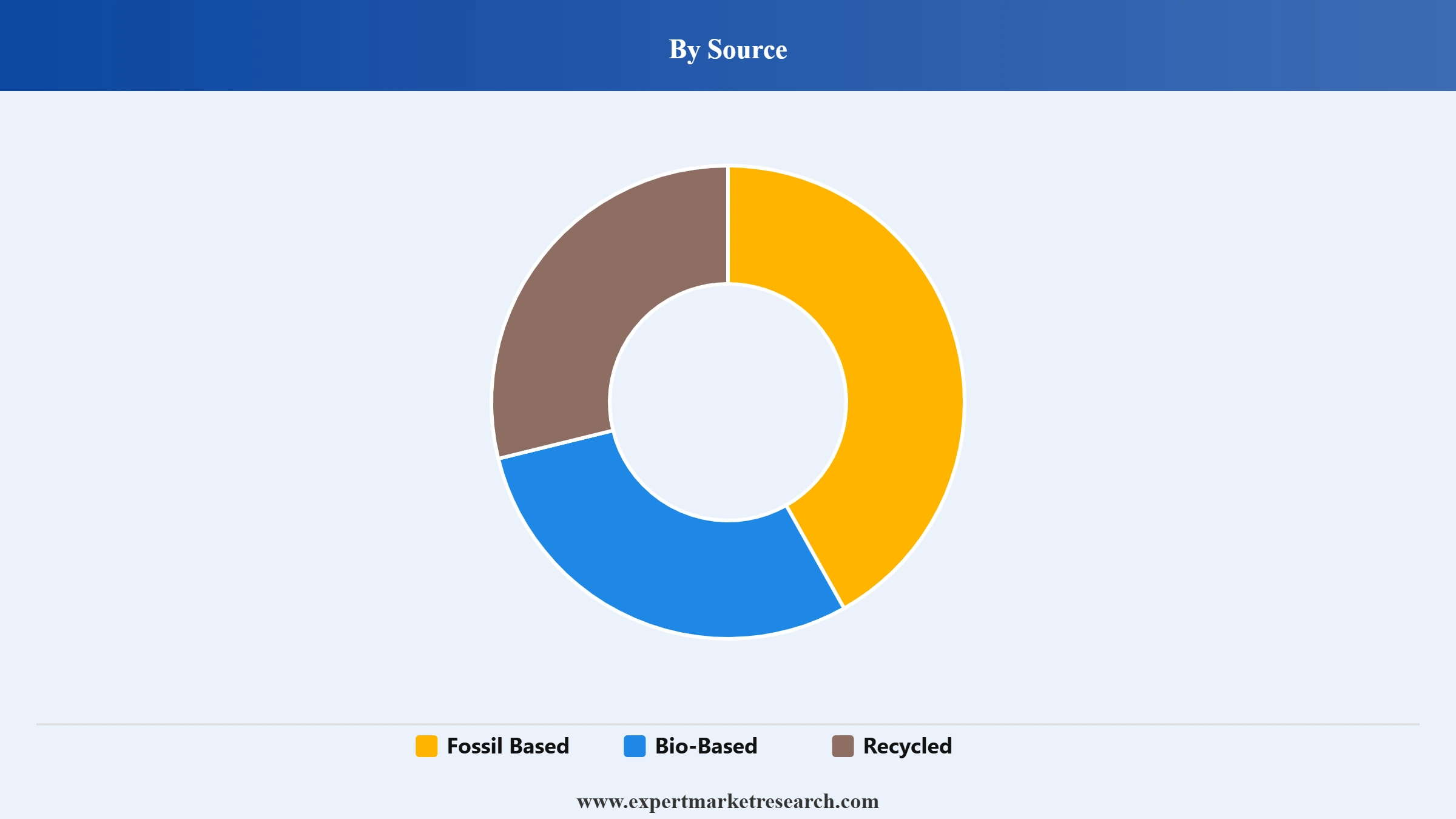
Market Breakup by Source
Market Breakup by Application


Upto 15% Off
USD
$1999 $1799
$3099 $2789
$4599 $3909
$5999 $5099


*While we strive to always give you current and accurate information, the numbers depicted on the website are indicative and may differ from the actual numbers in the main report. At Expert Market Research, we aim to bring you the latest insights and trends in the market. Using our analyses and forecasts, stakeholders can understand the market dynamics, navigate challenges, and capitalize on opportunities to make data-driven strategic decisions.*
Explore our key highlights of the report and gain a concise overview of key findings, trends, and actionable insights that will empower your strategic decisions.
| REPORT FEATURES | DETAILS |
| Base Year | 2025 |
| Historical Period | 2019-2025 |
| Forecast Period | 2026-2035 |
| Scope of the Report |
Historical and Forecast Trends, Industry Drivers and Constraints, Historical and Forecast Market Analysis by Segment:
|
| Breakup by Product |
|
| Breakup by Source |
|
| Breakup by Application |
|
| Market Dynamics |
|
| Supplier Landscape |
|
| Companies Covered |
|
Datasheet
One User
USD 1,999
USD 1,799
tax inclusive*
Single User License
One User
USD 3,099
USD 2,789
tax inclusive*
Five User License
Five User
USD 4,599
USD 3,909
tax inclusive*
Corporate License
Unlimited Users
USD 5,999
USD 5,099
tax inclusive*
*Please note that the prices mentioned below are starting prices for each bundle type. Kindly contact our team for further details.*
Flash Bundle
Small Business Bundle
Growth Bundle
Enterprise Bundle
*Please note that the prices mentioned below are starting prices for each bundle type. Kindly contact our team for further details.*
Flash Bundle
Number of Reports: 3
20%
tax inclusive*
Small Business Bundle
Number of Reports: 5
25%
tax inclusive*
Growth Bundle
Number of Reports: 8
30%
tax inclusive*
Enterprise Bundle
Number of Reports: 10
35%
tax inclusive*
How To Order

Select License Type
Choose the right license for your needs and access rights.

Click on ‘Buy Now’
Add the report to your cart with one click and proceed to register.

Select Mode of Payment
Choose a payment option for a secure checkout. You will be redirected accordingly.
Strategic Solutions for Informed Decision-Making
Gain insights to stay ahead and seize opportunities.

Get insights & trends for a competitive edge.

Track prices with detailed trend reports.

Analyse trade data for supply chain insights.

Leverage cost reports for smart savings

Enhance supply chain with partnerships.

Connect For More Information
Our expert team of analysts will offer full support and resolve any queries regarding the report, before and after the purchase.
Our expert team of analysts will offer full support and resolve any queries regarding the report, before and after the purchase.
We employ meticulous research methods, blending advanced analytics and expert insights to deliver accurate, actionable industry intelligence, staying ahead of competitors.
Our skilled analysts offer unparalleled competitive advantage with detailed insights on current and emerging markets, ensuring your strategic edge.
We offer an in-depth yet simplified presentation of industry insights and analysis to meet your specific requirements effectively.




