

Consumer Insights
Uncover trends and behaviors shaping consumer choices today
Procurement Insights
Optimize your sourcing strategy with key market data
Industry Stats
Stay ahead with the latest trends and market analysis.
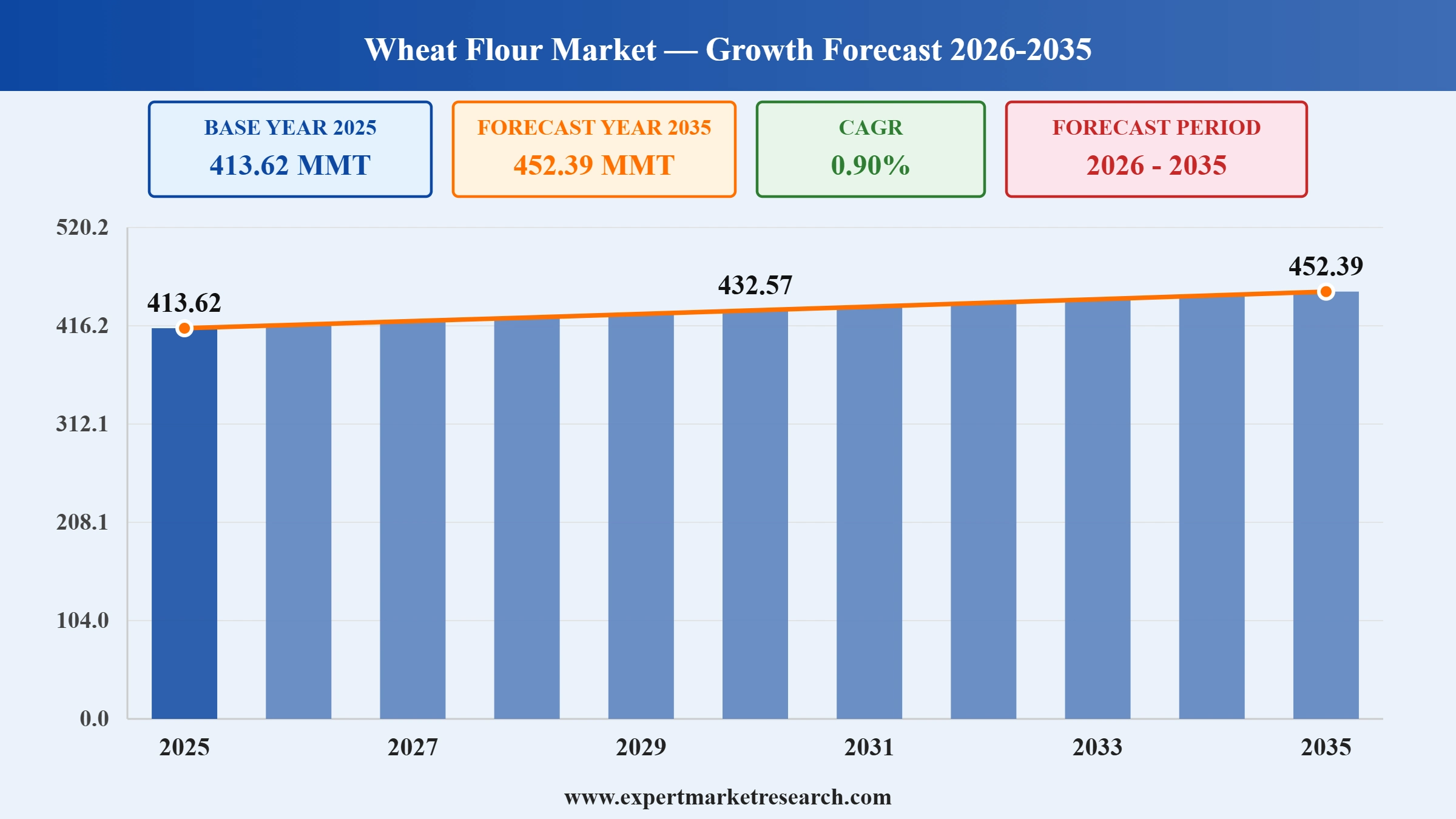
The global wheat flour market reached a volume of 413.62 MMT in 2025 and is expected to reach 452.39 MMT by 2035, growing at a CAGR of 0.90% between 2026 and 2035.
Read more about this report - REQUEST FREE SAMPLE COPY IN PDF
Health-driven product shifts, capacity investments from major millers, and fortification programs in developing markets are all reshaping this industry. It's not only about making more flour - it's about making the right kind of flour for markets that are moving in different directions at the same time.
Ardent Mills expanded its Commerce City flour mill in January 2026, to be specific adding 9,500 hundredweights of daily milling capacity. That makes it a meaningful bump for a single facility and signals confidence in North American flour demand.
Cargill launched a clean-label flour range in September 2025 which basically aimed at food manufacturers hunting for a simpler ingredient declaration. It's a direct response to retailer and consumer pressure on ingredient transparency.
ADM ramped up milling output at its Mendota, Illinois facility in May 2025, basically focusing on the high-protein and specialty grades that fetch better margins than commodity general-purpose flour.
Conagra Brands announced a manufacturing expansion in Fayetteville, Arkansas, in March 2025, to increase the production capacity to meet the growing demand from foodservice operators and packaged food manufacturers in the region.
Demand for artisan, organic, and high-protein wheat flour is substantially picking up speed all across North America and Europe. Foodservice operators and home bakers alike are paying more for flour that delivers specific results.
Major millers are investing real money in roller-milling upgrades, optical sorting, and digital process controls. The payoff is a far better flour consistency with less waste, and the ability to meet tighter quality specs for premium customers.
Milling companies in India, China, and Southeast Asia are scaling up output to match the pace of bakery and noodle manufacturing growth. In some markets, capacity additions are outpacing current demand - which tells you where producers expect growth to come from.
Wheat flour fortification is gaining real momentum in the developing areas, with governments mandating or incentivizing the addition of iron, folic acid, and zinc. It's both a public health initiative and also a product differentiation opportunity for millers.
Leading millers are rolling out sustainability programs which are covering water recycling, renewable energy use, and zero-waste operations. These aren't just PR moves - they're increasingly tied to procurement requirements from large food companies.
The report of Expert Market Research's titled "Global Wheat Flour Market Report and Forecast 2026-2035" offers a detailed analysis of the market based on the following segments:
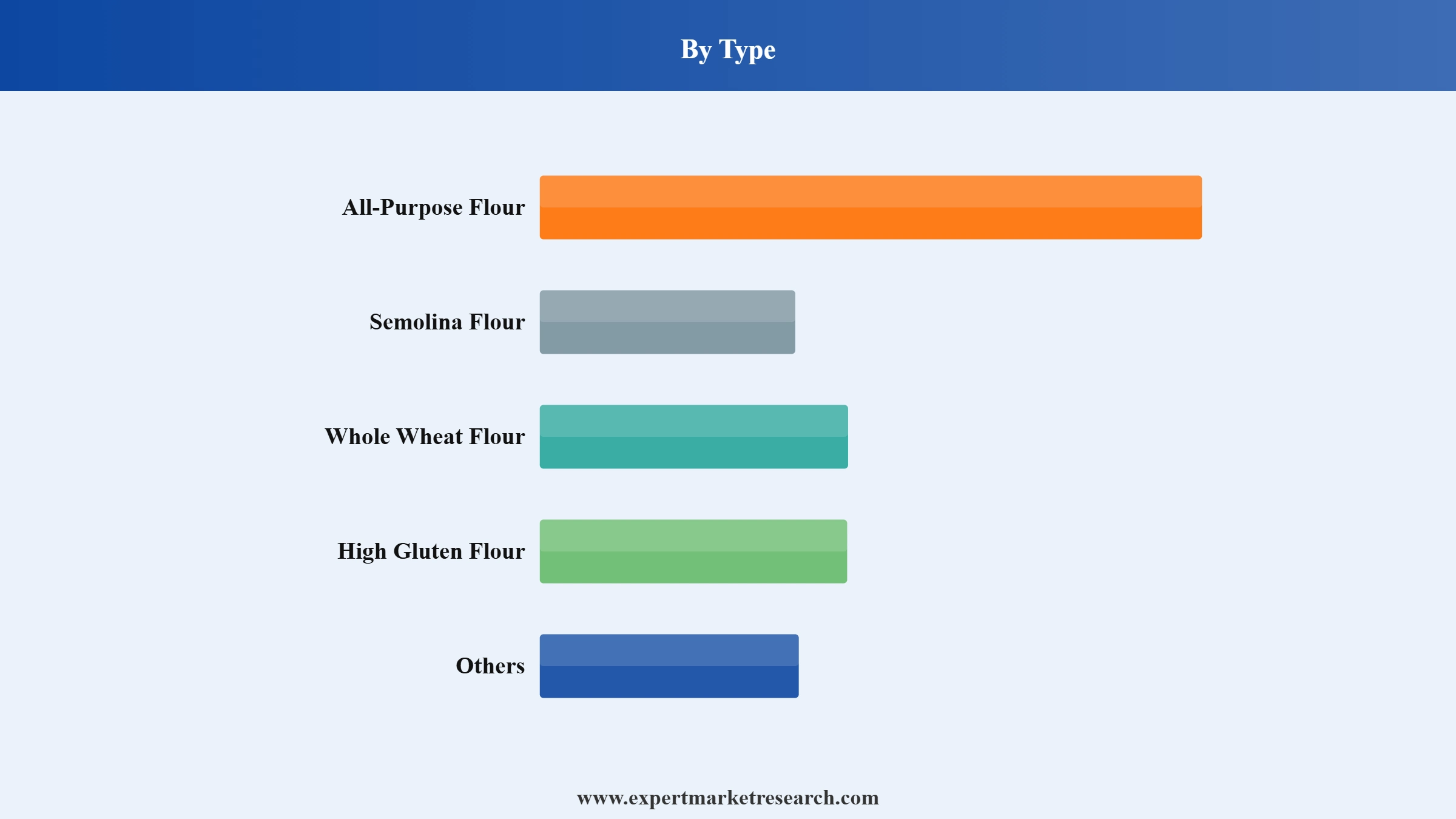
Market Breakup by Type
Key Insight: All-purpose flour sits at the top of the market by share, and for good reason: it works across almost every baking application. From bread and pizza to cakes and sauces, it's balanced protein profile covers a lot of ground without requiring the miller or the baker to specialize.
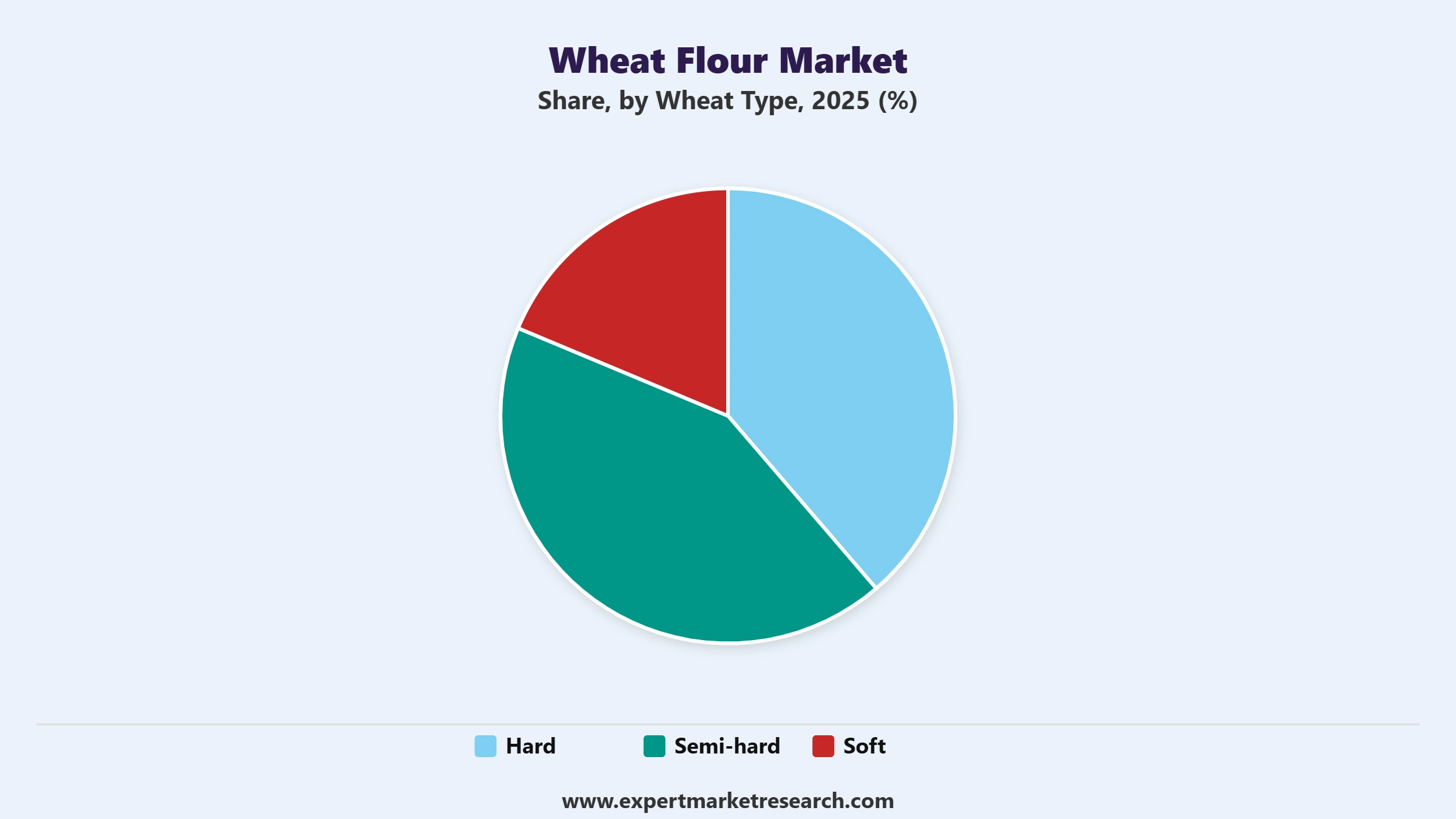
Market Breakup by Wheat Type
Key Insight: Hard wheat is built for structure. Its high protein content creates the gluten networks that bread and pasta need to hold together under heat and handling. Commercial bread manufacturers and pasta producers worldwide default to it for this reason.
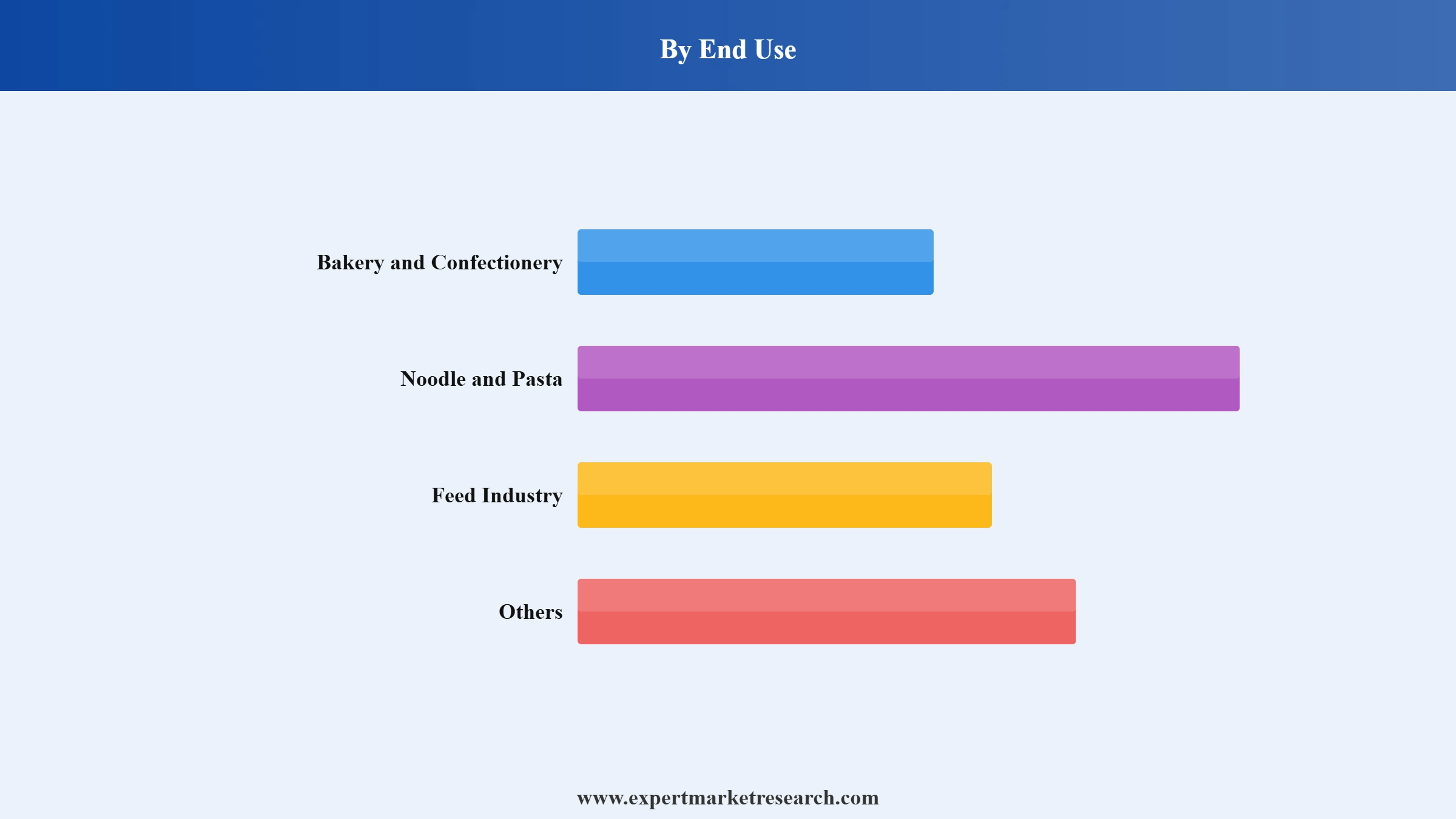
Market Breakup by End Use
Key Insight: Bakery and confectionery is where the bulk of wheat flour ends up, and that's unlikely to change. Rising incomes and urbanization in Asia, Africa, and Latin America are steadily expanding the pool of consumers who regularly buy packaged baked goods.
Market Breakup by Region
Key Insight: Asia Pacific carries this segment, with more than half of global demand tied to China, India, and Southeast Asia, where wheat flour is a daily staple across noodles, flatbreads, and steamed buns.
Read more about this report - REQUEST FREE SAMPLE COPY IN PDF
By Type, general-purpose flour dominates the global wheat flour market, accounting for the largest revenue share due to its wide use across bakery, foodservice, and retail channels.
All-purpose wheat flour's hold on the market comes down to its balanced protein content - not too high, not too low - which makes it workable for bread, pizza, pastry, and sauces without requiring separate SKUs for each. Retailers stock it, home bakers buy it, and foodservice operators default to it for bulk applications. That breadth is hard to dislodge, even as specialty flours gain shelf space.
Read more about this report - REQUEST FREE SAMPLE COPY IN PDF
Whole wheat flour is climbing steadily as consumers seek fiber-rich, nutrient-dense options. Health food retailers, specialty bakeries, and direct-to-consumer brands are all expanding their whole wheat ranges.
By Wheat Type, hard wheat holds the leading share, given its high protein concentration and superior gluten-forming properties, that are necessary for bread and pasta manufacturing.
Hard wheat is the backbone of commercial bread and pasta production globally. The United States, Canada, and Russia are the primary suppliers, and their output feeds mills across Europe, Asia, and the Middle East. It's the default choice when protein content and gluten strength matter - which, for most commercial baking applications, they do.
Read more about this report - REQUEST FREE SAMPLE COPY IN PDF
Semi-hard wheat is finding a growing niche in multipurpose flour blends, where the goal is versatility rather than extreme performance in any single application. Millers are increasingly using it to hit cost and quality targets simultaneously. It's not replacing hard wheat in high-end applications, but it's taking a bigger share of mid-tier product lines.
By End Use, bakery and confectionery leads the market, accounting for the highest global consumption of wheat flour, supported by the expanding packaged food industry.
Bakery and confectionery growth is solid in both mature and emerging markets, though for different reasons.In Europe and North America, it's about premium products, clean labels, and artisan positioning. In Asia, Africa, and Latin America, it's about rising incomes and more consumers joining the packaged food economy for the first time. Both tailwinds are real.
Read more about this report - REQUEST FREE SAMPLE COPY IN PDF
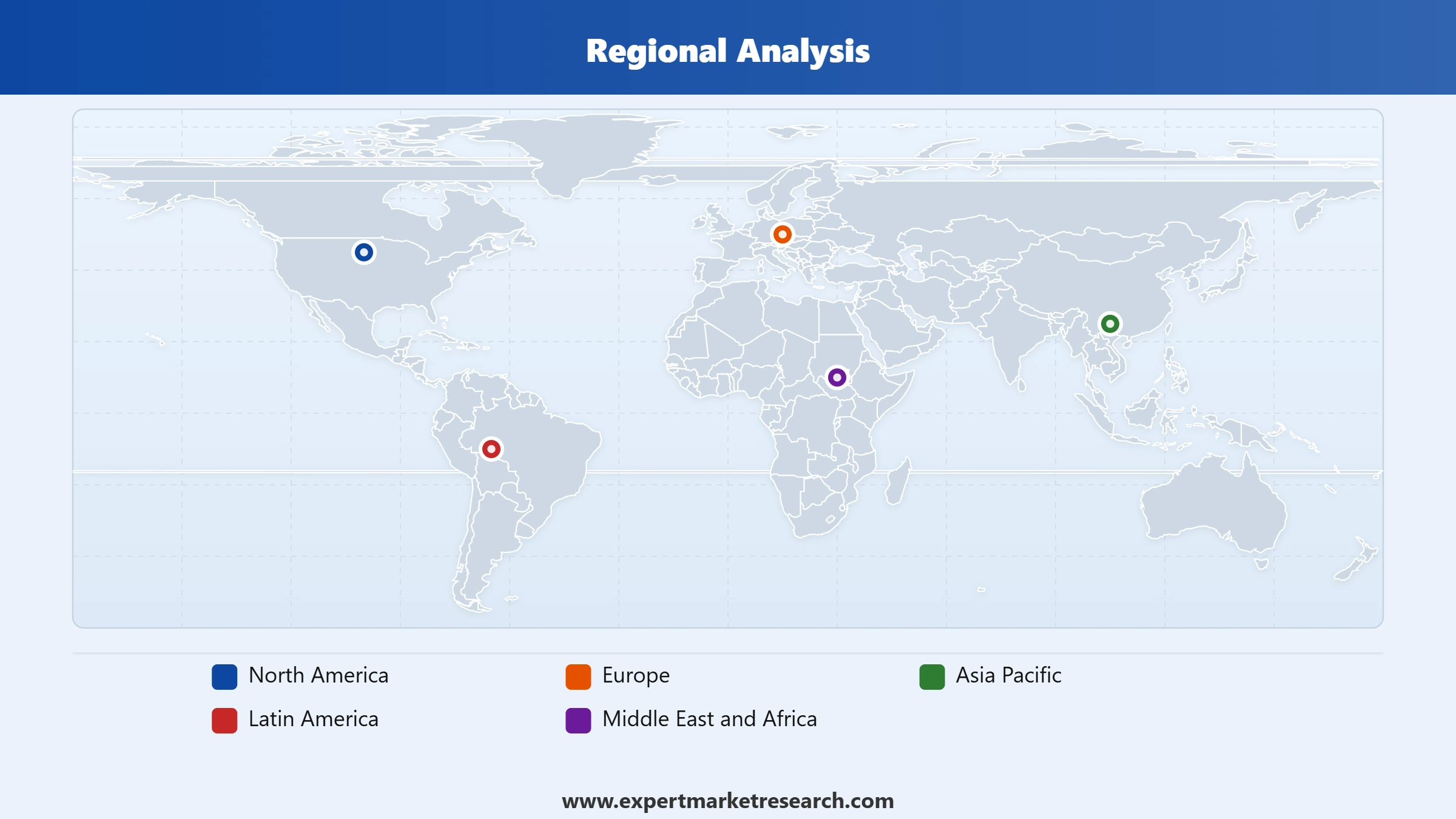
Asia Pacific is the dominant region in the global wheat flour market, accounting for over 50% of total market share, supported by large consumer populations and established flour milling industries in China, India, and Southeast Asia.
Asia Pacific's position at the top of this market reflects consumption patterns that go deep within daily life - noodles in China, flatbreads in India, steamed buns across Southeast Asia. China and India alone account for enormous volumes, and their combined population base means even incremental per capita gains translate into significant demand. Regional milling capacity is expanding in step with that demand, particularly in India and Vietnam.
Read more about this report - REQUEST FREE SAMPLE COPY IN PDF
North America and Europe are mature markets but far from static. Premiumization - clean-label, organic, high-protein, ancient grain - is where the growth is happening, and it's driving margin improvement even without big volume gains. Both regions are also seeing technology investment in milling, with sustainability and energy efficiency becoming competitive differentiators for suppliers serving large food manufacturers.
The global wheat flour market sits somewhere between fragmented and consolidated - a few multinationals command significant share in developed markets, while hundreds of regional millers serve local demand in Asia, Africa, and Latin America. Ardent Mills, ADM, Cargill, and Conagra Brands are the dominant names in North America. Globally, no single company controls the market, which keeps competition across most segments fairly active.
Capacity expansion, milling technology upgrades, and sustainability credentials are the main competitive levers right now. Specialty and clean-label products are also differentiators - particularly for suppliers targeting large food manufacturers who are reformulating products and want documented ingredient provenance. Price still matters, but it's no longer the only thing.
Conagra Brands is one of North America's largest food companies, with wheat flour as a core ingredient input for its commercial food division. Its Arkansas expansion in 2025 shows continuing confidence in demand from food manufacturing customers. The company's scale gives it procurement advantages and the ability to invest in milling technology improvements that smaller operators can't match.
ADM is a global agri-business giant with flour milling operations spread across North America and major international markets. It combines upstream grain procurement with downstream milling and distribution - a vertically integrated model that keeps input costs competitive. ADM's Mendota facility has been a focus of recent capacity investment targeting specialty flour growth.
Cargill is one of the world's largest privately held food and agriculture companies, with flour milling as an important piece of its food ingredients business. Its 2025 clean-label flour launch reflects where the market is moving - away from generic commodity product toward formulations that food manufacturers can market with particular claims. Cargill's global sourcing network gives it real flexibility for managing wheat costs.
Ardent Mills is the largest flour miller in North America by capacity, operating dozens of mills across the United States and Canada. It focuses on serving commercial bakeries, foodservice chains, and consumer packaged goods companies that need reliable, consistent supply at scale. Its 2026 Commerce City expansion underlines its pledge to growing in a market where capacity is increasingly tied to specialty grades.
Other key players in the global wheat flour market include The King Milling Company and others.
*Please note that this is only a partial list; the complete list of key players is available in the full report. Additionally, the list of key players can be customized to better suit your needs.*
Want a clear picture of where the global wheat flour market is heading? Our comprehensive report covers the full market through the forecast period, with segment-level detail, competitive analysis, and regional breakdowns that go well beyond headline numbers. Talk to our team to find out what's included or to request a version customized to your needs.


Upto 15% Off
USD
$2499 $2249
$3999 $3599
$4999 $4249
$5999 $5099


*While we strive to always give you current and accurate information, the numbers depicted on the website are indicative and may differ from the actual numbers in the main report. At Expert Market Research, we aim to bring you the latest insights and trends in the market. Using our analyses and forecasts, stakeholders can understand the market dynamics, navigate challenges, and capitalize on opportunities to make data-driven strategic decisions.*
The global wheat flour market reached a volume of 413.62 MMT in 2025.
The global wheat flour market is assessed to grow at a CAGR of 0.90% between 2026 and 2035.
The global wheat flour market is projected to increase its volume by 452.39 MMT by the year 2035.
Organic and natural, fortification, artisanal and speciality varieties, sustainability, and traceability enhance the global wheat flour market demand.
The rising demand from the gluten-allergic population and the rising awareness towards convenient staple foods are the key trends boosting the market growth.
The market is broken down into North America, Europe, Asia Pacific, Latin America, the Middle East, and Africa.
The wheat flour market is categorised according to the type, which includes all-purpose flour, semolina flour, whole wheat flour, high gluten flour and others.
The major application sectors include noodles and pasta, bakery and confectionery, and feed industry, among others.
The wheat flour market is categorised according to the wheat type, which includes hard, semi-hard and soft.
The competitive landscape consists of Conagra Brands, Inc., Archer Daniels Midland Company, Cargill, Incorporated, Ardent Mills LLC and The King Milling Company among others.
The Asia-Pacific region is the fastest-growing region in the global wheat flour market, driven by the growing number of uses in animal feed and food industry.
Explore our key highlights of the report and gain a concise overview of key findings, trends, and actionable insights that will empower your strategic decisions.
| REPORT FEATURES | DETAILS |
| Base Year | 2025 |
| Historical Period | 2019-2025 |
| Forecast Period | 2026-2035 |
| Scope of the Report |
Historical and Forecast Trends, Industry Drivers and Constraints, Historical and Forecast Market Analysis by Segment:
|
| Breakup by Type |
|
| Breakup by Wheat Type |
|
| Breakup by End Use |
|
| Breakup by Region |
|
| Market Dynamics |
|
| Competitive Landscape |
|
| Companies Covered |
|
| Report Price and Purchase Option | Explore our purchase options that are best suited to your resources and industry needs. |
| Delivery Format | Delivered as an attached PDF and Excel through email, with an option of receiving an editable PPT, according to the purchase option. |
Datasheet
One User
USD 2,499
USD 2,249
tax inclusive*
Single User License
One User
USD 3,999
USD 3,599
tax inclusive*
Five User License
Five User
USD 4,999
USD 4,249
tax inclusive*
Corporate License
Unlimited Users
USD 5,999
USD 5,099
tax inclusive*
*Please note that the prices mentioned below are starting prices for each bundle type. Kindly contact our team for further details.*
Flash Bundle
Small Business Bundle
Growth Bundle
Enterprise Bundle
*Please note that the prices mentioned below are starting prices for each bundle type. Kindly contact our team for further details.*
Flash Bundle
Number of Reports: 3
20%
tax inclusive*
Small Business Bundle
Number of Reports: 5
25%
tax inclusive*
Growth Bundle
Number of Reports: 8
30%
tax inclusive*
Enterprise Bundle
Number of Reports: 10
35%
tax inclusive*
How To Order

Select License Type
Choose the right license for your needs and access rights.

Click on ‘Buy Now’
Add the report to your cart with one click and proceed to register.

Select Mode of Payment
Choose a payment option for a secure checkout. You will be redirected accordingly.
Strategic Solutions for Informed Decision-Making
Gain insights to stay ahead and seize opportunities.

Get insights & trends for a competitive edge.

Track prices with detailed trend reports.

Analyse trade data for supply chain insights.

Leverage cost reports for smart savings

Enhance supply chain with partnerships.

Connect For More Information
Our expert team of analysts will offer full support and resolve any queries regarding the report, before and after the purchase.
Our expert team of analysts will offer full support and resolve any queries regarding the report, before and after the purchase.
We employ meticulous research methods, blending advanced analytics and expert insights to deliver accurate, actionable industry intelligence, staying ahead of competitors.
Our skilled analysts offer unparalleled competitive advantage with detailed insights on current and emerging markets, ensuring your strategic edge.
We offer an in-depth yet simplified presentation of industry insights and analysis to meet your specific requirements effectively.




