

Consumer Insights
Uncover trends and behaviors shaping consumer choices today
Procurement Insights
Optimize your sourcing strategy with key market data
Industry Stats
Stay ahead with the latest trends and market analysis.
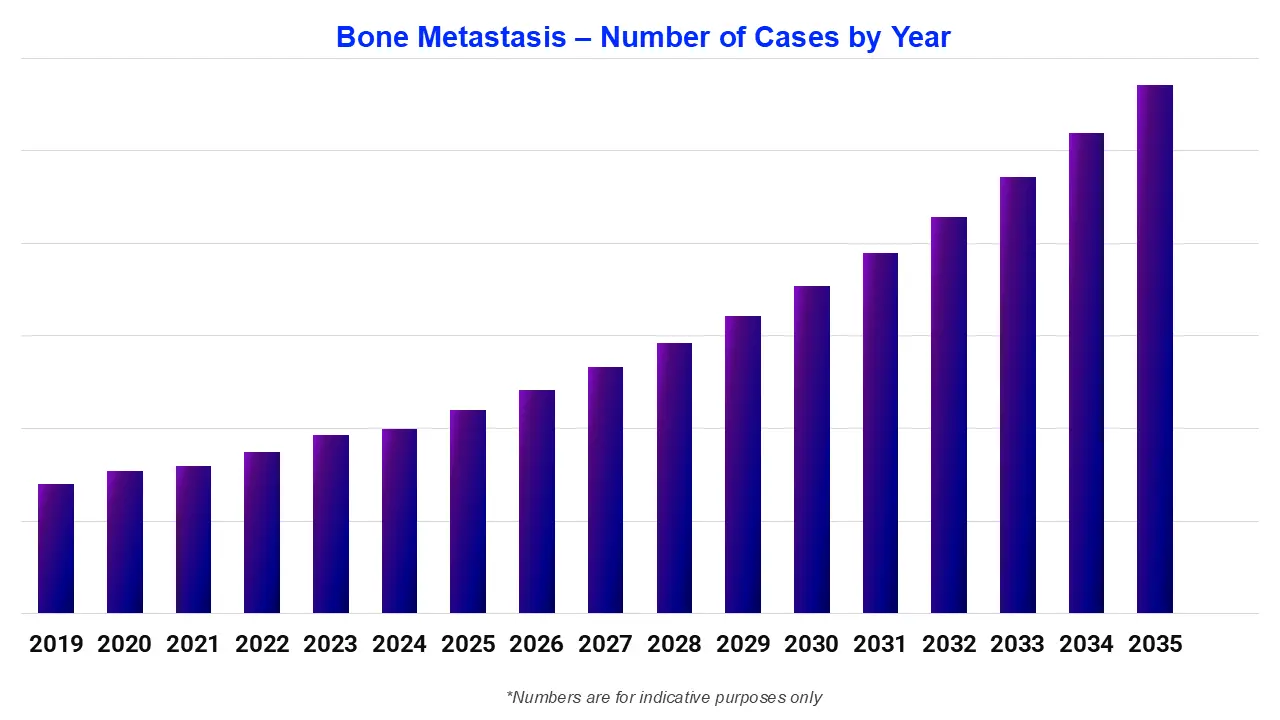
Bone metastasis occurs when cancer cells spread from a primary tumor to the bones, disrupting normal bone function. According to Veronica Garbar et al. (2024), approximately 280,000 new cases occur annually in the United States. According to the bone metastasis epidemiology forecast by Expert Market Research, bone metastases affect advanced malignancies globally, highlighting a substantial cancer burden.
Base Year
Historical Period
Forecast Period
Read more about this report - Request a Free Sample
Expert Market Research's “Bone Metastasis Epidemiology Forecast Report 2026-2035” offers comprehensive information on the prevalence and demographics of bone metastasis. It projects the future incidence and prevalence rates of bone metastasis cases across various populations. The study covers age, gender, and type as major determinants of the bone metastasis population. The report highlights patterns in the prevalence of bone metastasis over time and projects future trends based on multiple variables.
The report provides a comprehensive overview of the disease, as well as historical and projected data on the epidemiology of bone metastasis in the 8 major markets.
Regions Covered
Bone metastasis occurs when cancer cells originating from a primary tumor in another part of the body spread to the bones through the bloodstream or lymphatic system and establish secondary tumors. It commonly develops from breast, prostate, lung, kidney, and thyroid cancers. Bone metastases are classified as osteolytic, osteoblastic, or mixed, depending on their effects on bone tissue. Osteolytic lesions cause bone destruction, whereas osteoblastic lesions promote abnormal bone formation. The condition can cause bone pain, fractures, spinal cord compression, and hypercalcemia, affecting patient quality of life. Skeletal metastases are therefore an important complication of advanced cancer.
|
Parameter |
Insight |
|
Largest Patient Pool |
United States |
|
Fastest Growing Region |
India |
|
High-Risk Population |
Older adults and patients with advanced breast, prostate, lung, kidney, or thyroid cancers |
|
Key Diagnostic Method |
Bone imaging, particularly bone scintigraphy, computed tomography, magnetic resonance imaging, and positron emission tomography |
|
Major Risk Factor |
Advanced or metastatic primary cancer, particularly breast, prostate, and lung cancer |
|
Major gap in the market |
Delayed detection and inconsistent access to advanced imaging and multidisciplinary bone metastasis management |
The bone metastasis epidemiology division offers information on the patient pool from history to the present as well as the projected trend for each of the 8 major markets. Expert Market Research provides both current and predicted trends for the bone metastasis epidemiology scenario by examining a wide range of studies. Additionally, the report covers the diagnosed patient pool for bone metastasis and their trends. The data is broken down into specific categories, such as total prevalent cases in males and females, and total diagnosed cases across different age groups and patient pools.
|
Epidemiology Segment |
Key Insights |
|
Diagnosed Prevalent Cases of the Disease |
According to Veronica Garbar et al., 2024, approximately 280,000 new cases of bone metastases occur annually in the United States. According to Yuni Artha Prabowo Putro et al., 2024, approximately 600,000 new metastatic bone disease cases are identified annually worldwide. |
|
Gender-Specific Cases of the Disease |
Gender-specific epidemiological data are reflected through primary cancers associated with bone metastasis. According to Veronica Garbar et al., 2024, breast cancer shows bone metastasis rates of 65% to 75%, while prostate cancer shows rates of 65% to 90%. |
|
Age-Specific Cases of the Disease |
According to Antonio Tufano et al., 2023, bone metastases were associated with younger age, specifically patients younger than 65 years, among Caucasian patients with urothelial cancer, with an odds ratio of 1.34 (p = 0.046). |
|
Ethnicity-Wise Cases of the Disease |
According to Antonio Tufano et al., 2023, bone metastases ranked second in prevalence among Caucasian patients, with a prevalence of 32.6%. The findings indicate variation in bone metastasis prevalence across patient populations. |
|
Mortality and Survival Analysis of the Disease |
According to Cagatay Ozsoy et al., 2026, bone metastasis occurs in approximately 10% of patients at presentation and increases to 80% in advanced stages. According to Antonio Tufano et al., 2023, bone metastasis indicates unfavorable oncological outcomes. |
|
Disease Type |
Prevalence |
|
Osteolytic Bone Metastasis |
Osteolytic lesions represent a major type of bone metastasis and are characterized by bone destruction. According to Yuni Artha Prabowo Putro et al., 2024, metastatic bone disease occurs across several primary cancers, including breast, lung, kidney, thyroid, melanoma, and colorectal cancers. |
|
Osteoblastic Bone Metastasis |
Osteoblastic lesions constitute a major bone metastasis pattern and involve abnormal new bone formation. They are particularly associated with prostate cancer, while other primary cancers can also contribute to this pattern. |
|
Mixed Osteolytic–Osteoblastic Bone Metastasis |
Mixed lesions represent another important pattern in which bone destruction and abnormal bone formation occur together. They may occur across different primary cancers and form part of the broader spectrum of metastatic bone disease. |
|
Other Types |
Other less commonly distinguished patterns include radio-occult bone metastases, while the distribution of lesion characteristics can vary according to the primary cancer and disease progression. |
Read more about this report - Request a Free Sample
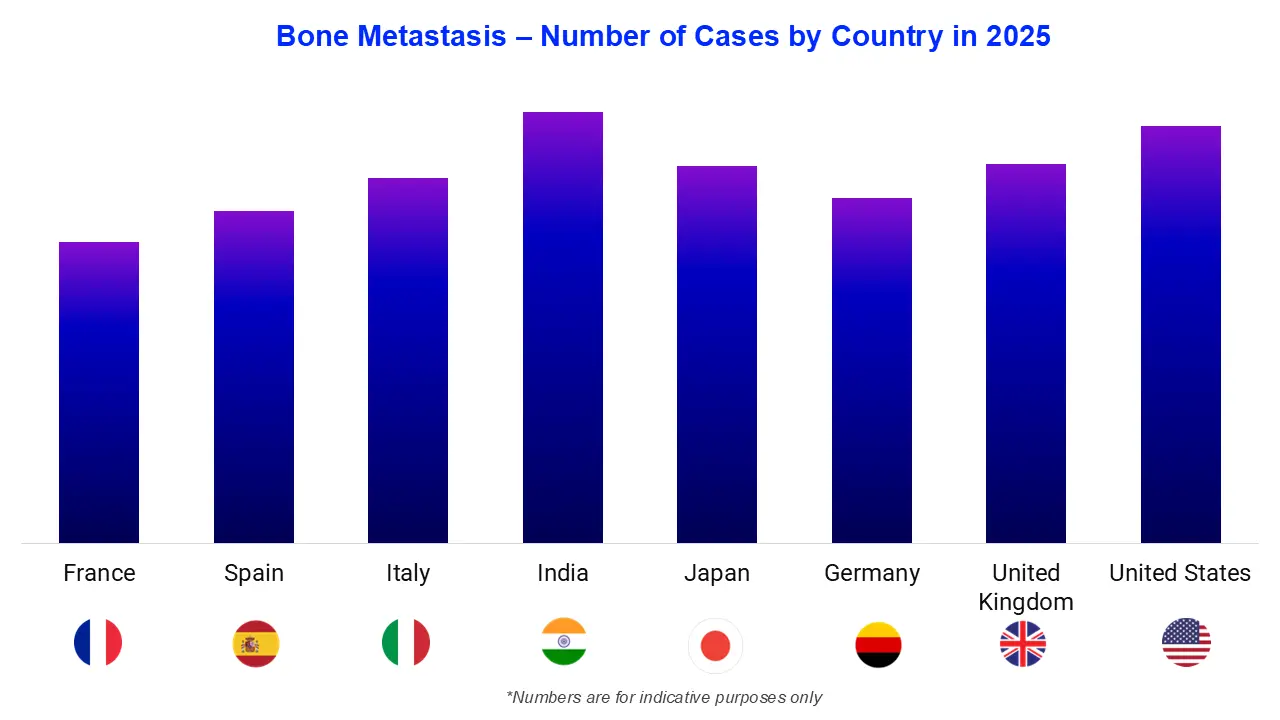
The bone metastasis epidemiology data and findings for the United States, Germany, Spain, Italy, France, the United Kingdom, Japan, and India are also provided in the epidemiology section.
|
Country |
Key Insights |
|
United States |
According to Veronica Garbar et al., 2024, approximately 280,000 new cases of bone metastases occur annually in the United States. Breast, prostate, lung, bladder, thyroid, melanoma, kidney, and colorectal cancers are reported as major primary cancers associated with bone metastasis. |
|
Germany |
The epidemiological burden of bone metastasis is shaped by the prevalence of advanced malignancies and the growing number of patients living longer after cancer diagnosis. The aging population and increasing cancer survivorship can contribute to a larger population at risk of skeletal metastasis. |
|
France |
Bone metastasis patterns are influenced by the regional burden of cancers with substantial metastatic potential. Breast, prostate, and lung cancers are particularly relevant, while improvements in cancer diagnosis and prolonged survival can increase the number of patients living with advanced disease. |
|
Italy |
The burden of skeletal metastasis is closely linked to cancer progression and the increasing survival of patients with advanced malignancies. Breast and prostate cancers remain important contributors, while lung, kidney, thyroid, melanoma, and colorectal cancers also have potential for skeletal involvement. |
|
Spain |
According to IRB Barcelona, 2025, 296,103 new cancer cases are expected in Spain during 2025, a 3.3% increase from 2024. The rising cancer incidence expands the population potentially progressing to metastatic disease, including bone involvement. |
|
United Kingdom |
Epidemiological trends in bone metastasis are influenced by the number of patients surviving longer with advanced cancer. Breast and prostate cancers are important contributors to skeletal metastatic disease, with the burden also affected by cancer incidence, diagnosis, and treatment patterns. |
|
Japan |
Japan's aging population contributes to a substantial population living with cancer, potentially increasing the number of patients at risk of metastatic progression. Bone involvement is particularly relevant among cancers such as breast, prostate, lung, kidney, and thyroid malignancies. |
|
India |
The increasing cancer burden and presentation of cancers at advanced stages can contribute to the population at risk of bone metastasis. Breast, prostate, lung, kidney, and thyroid cancers are relevant primary malignancies associated with skeletal metastatic spread. |
Major gaps in the epidemiology of bone metastasis include delayed identification of skeletal involvement and unequal access to advanced diagnostic imaging and specialized oncology care. These challenges are particularly relevant in emerging healthcare markets, where cancer diagnosis and treatment infrastructure can vary substantially. An important opportunity exists for earlier detection of bone involvement through improved imaging pathways and risk-based monitoring of patients with advanced cancers. Growing cancer incidence and aging populations may further expand the addressable patient population. Increased adoption of bone-modifying therapies, radiation oncology, minimally invasive procedures, and multidisciplinary care represents an emerging growth area across the covered markets.
Treatment for bone metastasis primarily aims to control cancer progression, relieve symptoms, prevent skeletal complications, and maintain mobility and quality of life. Management may include systemic therapies such as chemotherapy, hormone therapy, targeted therapy, immunotherapy, or treatments directed at the primary cancer. Bone-modifying agents, including bisphosphonates and denosumab, can reduce skeletal-related events. External beam radiation therapy is commonly used to relieve localized bone pain and treat selected complications. Surgery may be considered for unstable or fractured bones, while vertebral procedures can help manage spinal instability. Palliative care may also support pain control and overall quality of life.


Upto 15% Off
USD
$1999 $1799
$2999 $2699
$4399 $3739
$5799 $4929


*While we strive to always give you current and accurate information, the numbers depicted on the website are indicative and may differ from the actual numbers in the main report. At Expert Market Research, we aim to bring you the latest insights and trends in the market. Using our analyses and forecasts, stakeholders can understand the market dynamics, navigate challenges, and capitalize on opportunities to make data-driven strategic decisions.*
Explore our key highlights of the report and gain a concise overview of key findings, trends, and actionable insights that will empower your strategic decisions.
|
Report Features |
Details |
|
Base Year |
2025 |
|
Historical Period |
2019-2025 |
|
Forecast Period |
2026-2035 |
|
Epidemiology Statistics Provided |
|
|
Segmentation Provided |
|
|
Geographies Covered |
|
Datasheet
One User
USD 1,999
USD 1,799
tax inclusive*
Single User License
One User
USD 2,999
USD 2,699
tax inclusive*
Five User License
Five User
USD 4,399
USD 3,739
tax inclusive*
Corporate License
Unlimited Users
USD 5,799
USD 4,929
tax inclusive*
*Please note that the prices mentioned below are starting prices for each bundle type. Kindly contact our team for further details.*
Flash Bundle
Small Business Bundle
Growth Bundle
Enterprise Bundle
*Please note that the prices mentioned below are starting prices for each bundle type. Kindly contact our team for further details.*
Flash Bundle
Number of Reports: 3
20%
tax inclusive*
Small Business Bundle
Number of Reports: 5
25%
tax inclusive*
Growth Bundle
Number of Reports: 8
30%
tax inclusive*
Enterprise Bundle
Number of Reports: 10
35%
tax inclusive*
How To Order

Select License Type
Choose the right license for your needs and access rights.

Click on ‘Buy Now’
Add the report to your cart with one click and proceed to register.

Select Mode of Payment
Choose a payment option for a secure checkout. You will be redirected accordingly.
Strategic Solutions for Informed Decision-Making
Gain insights to stay ahead and seize opportunities.

Get insights & trends for a competitive edge.

Track prices with detailed trend reports.

Analyse trade data for supply chain insights.

Leverage cost reports for smart savings

Enhance supply chain with partnerships.

Connect For More Information
Our expert team of analysts will offer full support and resolve any queries regarding the report, before and after the purchase.
Our expert team of analysts will offer full support and resolve any queries regarding the report, before and after the purchase.
We employ meticulous research methods, blending advanced analytics and expert insights to deliver accurate, actionable industry intelligence, staying ahead of competitors.
Our skilled analysts offer unparalleled competitive advantage with detailed insights on current and emerging markets, ensuring your strategic edge.
We offer an in-depth yet simplified presentation of industry insights and analysis to meet your specific requirements effectively.




