

Consumer Insights
Uncover trends and behaviors shaping consumer choices today
Procurement Insights
Optimize your sourcing strategy with key market data
Industry Stats
Stay ahead with the latest trends and market analysis.
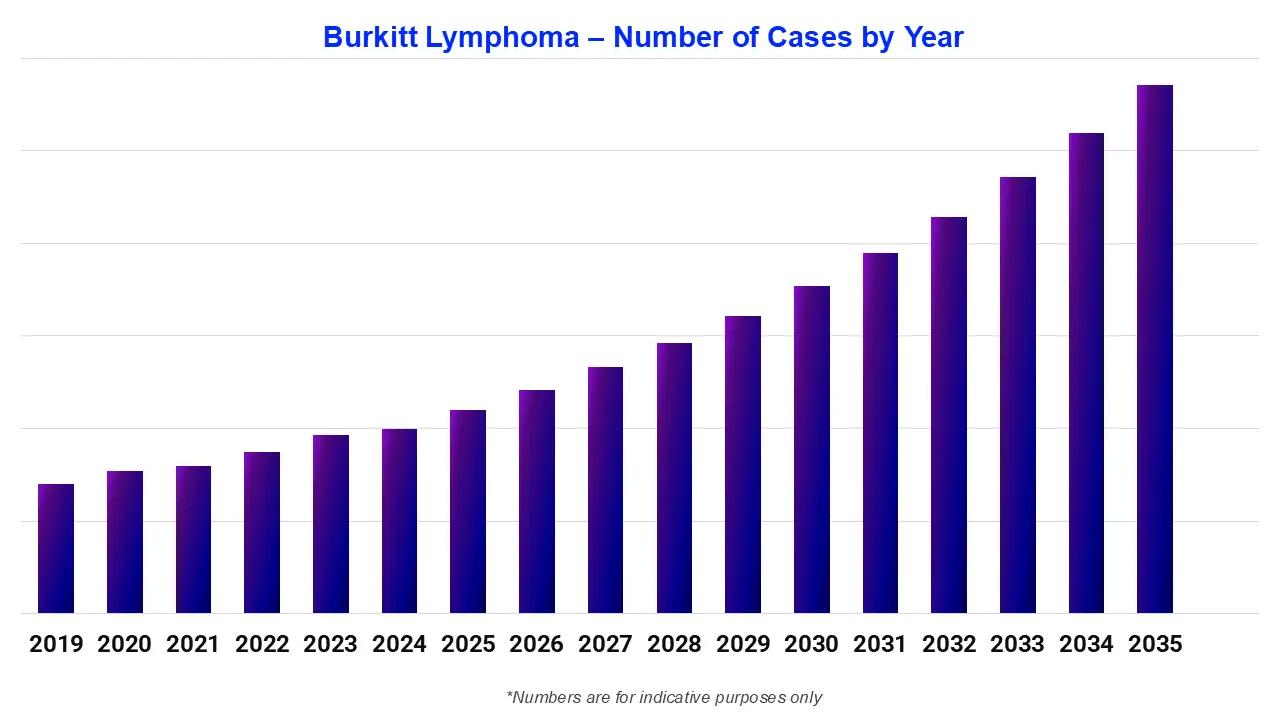
Burkitt lymphoma is a highly aggressive B-cell lymphoma characterized by the rapid proliferation of malignant B lymphocytes. According to Guoqian Ma et al. (2025), an estimated 4,083 incident Burkitt lymphoma cases occurred globally in 2021, with an incidence rate of 0.20 per 100,000 population. According to Burkitt lymphoma epidemiology forecast by Expert Market Research, the disease burden is expected to evolve with improving diagnosis and treatment, supporting continued advances in disease management.
Base Year
Historical Period
Forecast Period
Read more about this report - Request a Free Sample
Expert Market Research's “Burkitt Lymphoma Epidemiology Forecast Report 2026-2035” offers comprehensive information on the prevalence and demographics of Burkitt lymphoma. It projects the future incidence and prevalence rates of Burkitt lymphoma cases across various populations. The study covers age, gender, and type as major determinants of the Burkitt lymphoma population. The report highlights patterns in the prevalence of Burkitt lymphoma over time and projects future trends based on multiple variables.
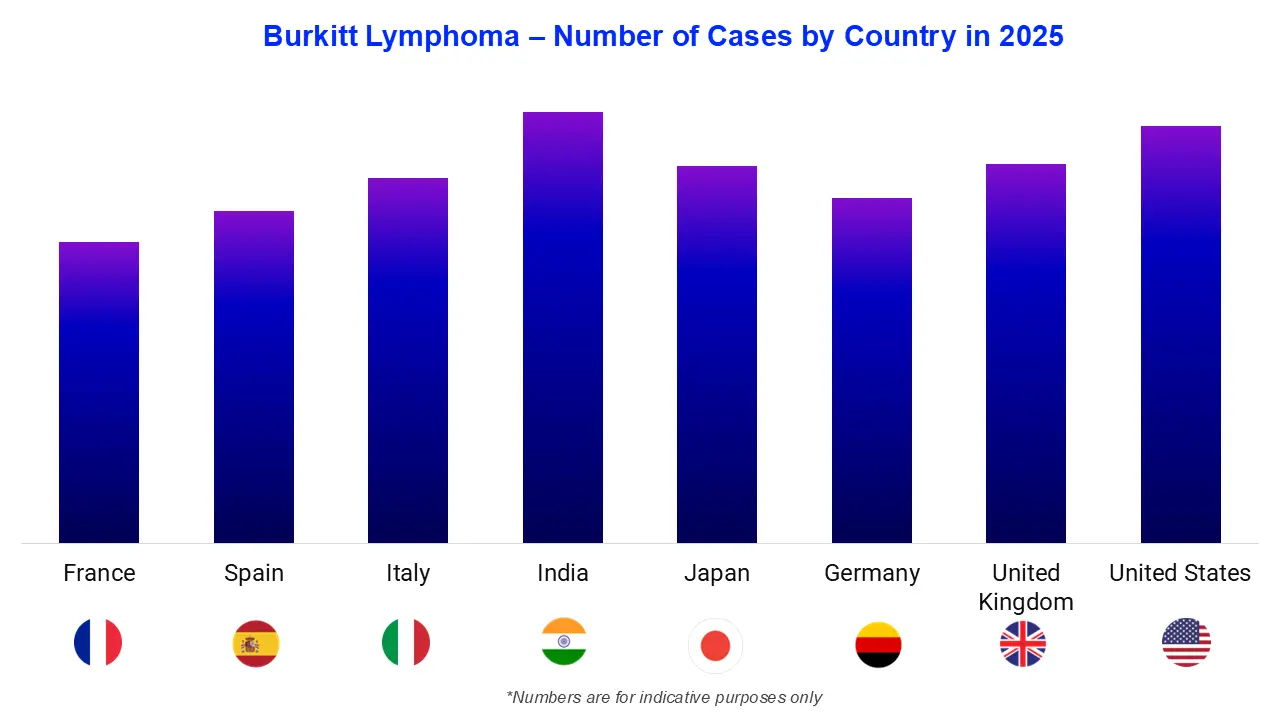
The report provides a comprehensive overview of the disease, as well as historical and projected data on the epidemiology of Burkitt lymphoma in the 8 major markets.
Regions Covered
Burkitt lymphoma is a highly aggressive form of non-Hodgkin lymphoma that develops from mature B lymphocytes. It is characterized by an extremely rapid cell proliferation rate and often presents as a rapidly enlarging tumor involving the abdomen, lymph nodes, bone marrow, or central nervous system. The disease is strongly associated with chromosomal translocations involving the MYC gene, which drives uncontrolled cell growth. Burkitt lymphoma is classified into three major types: endemic, sporadic, and immunodeficiency-associated, each differing in geographic distribution, underlying risk factors, and clinical presentation.
|
Parameter |
Insight |
|
Largest Patient Pool |
India |
|
Fastest Growing Region |
India |
|
High-Risk Population |
Children, adolescents, immunocompromised individuals, and people living with Human Immunodeficiency Virus (HIV). |
|
Key Diagnostic Method |
Histopathological examination with immunophenotyping and fluorescence in situ hybridization (FISH) for MYC rearrangement. |
|
Major Risk Factor |
Epstein–Barr virus infection and immunodeficiency. |
|
Major gap in the market |
Delayed diagnosis and limited access to advanced molecular diagnostic testing. |
The Burkitt lymphoma epidemiology division offers information on the patient pool from history to the present as well as the projected trend for each of the 8 major markets. Expert Market Research provides both current and predicted trends for the Burkitt lymphoma epidemiology scenario by examining a wide range of studies. Additionally, the report covers the diagnosed patient pool for Burkitt lymphoma and their trends. The data is broken down into specific categories, such as total prevalent cases in males and females, and total diagnosed cases across different age groups and patient pools.
|
Epidemiology Segment |
Key Insights |
|
Diagnosed Prevalent Cases of the Disease |
As per Guoqian Ma et al., 2025, Burkitt lymphoma accounted for 4,083 incident cases globally in 2021 (95% uncertainty interval: 2,688–5,171), with a global incidence rate of 0.20 per 100,000, compared with 0.16 per 100,000 in 1990. Based on findings by Chengyun Dou et al., 2025, there were 19,072 incident Burkitt lymphoma cases globally in 2021, representing a 207% increase from 1990 to 2021, reflecting the rising global disease burden. |
|
Gender-Specific Cases of the Disease |
According to Radiopaedia, Burkitt lymphoma demonstrates a strong male predominance, with a male-to-female ratio of 4:1 in childhood cases. As highlighted by The Leukaemia Foundation, males are four times more likely to develop Burkitt lymphoma than females. Reported by Chengyun Dou et al., 2025, males consistently experienced higher incidence and mortality than females across all age groups. |
|
Age-Specific Cases of the Disease |
As noted by Radiopaedia, Burkitt lymphoma is the most common childhood non-Hodgkin lymphoma, accounting for 40% of childhood non-Hodgkin lymphoma, with a median age of 8 years, while representing only 1–2% of adult lymphomas. According to The Leukaemia Foundation, approximately 30% of non-Hodgkin lymphoma cases among children aged 5–10 years are Burkitt lymphoma, whereas adults 30–40 years of age are also commonly affected. Chengyun Dou et al., 2025 further reported that the 0–14 years and 50–74 years age groups accounted for the highest incidence and mortality. |
|
Ethnicity-Wise Cases of the Disease |
As per The Leukaemia Foundation, sporadic Burkitt lymphoma is most commonly observed in individuals of European descent, whereas endemic Burkitt lymphoma predominantly affects children in Africa. Radiopaedia also reported that endemic Burkitt lymphoma occurs at rates up to 50 times higher in parts of Africa than in the United States, demonstrating substantial geographic and population-based variation. |
|
Mortality and Survival Analysis of the Disease |
According to Guoqian Ma et al., 2025, the low sociodemographic index region reported the highest mortality rate of 0.43 per 100,000, with the global mortality rate projected to decline to 0.10 per 100,000 by 2035. Reported by Chengyun Dou et al., 2025, Burkitt lymphoma-associated deaths increased from 3,843 in 1990 to 6,525 in 2021. As documented by Clare M. Wieland et al., 2024, patients with HIV-associated Burkitt lymphoma had a 55% higher risk of death between 3 and 60 months after diagnosis than patients without HIV. |
|
Disease Type |
Prevalence |
|
Sporadic Burkitt Lymphoma |
According to The Leukaemia Foundation, sporadic Burkitt lymphoma is the predominant subtype outside endemic regions, particularly among people of European descent, and accounts for around 30% of childhood non-Hodgkin lymphoma cases. In India, Akhil Rajendra et al., 2025 reported that sporadic Burkitt lymphoma is among the major disease subtypes. |
|
Endemic Burkitt Lymphoma |
As highlighted by The Leukaemia Foundation, endemic Burkitt lymphoma primarily affects children in Africa and is closely associated with Epstein–Barr virus infection. Radiopaedia reported that incidence in endemic African regions is up to 50 times higher than in the United States, reflecting its substantial regional burden. |
|
Immunodeficiency-Related Burkitt Lymphoma |
As per The Leukaemia Foundation, immunodeficiency-related Burkitt lymphoma mainly affects individuals with human immunodeficiency virus or other immunodeficiency conditions. Reported by Clare M. Wieland et al., 2024, Burkitt lymphoma accounts for 10–35% of AIDS-defining lymphomas, while Akhil Rajendra et al., 2025 identified this subtype as one of the predominant forms reported in India. |
Read more about this report - Request a Free Sample
The Burkitt Lymphoma epidemiology data and findings for the United States, Germany, Spain, Italy, France, the United Kingdom, Japan, and India are also provided in the epidemiology section.
|
Country |
Key Insights |
|
United States |
As documented by Clare M. Wieland et al., 2024, approximately 1.2 million people are living with human immunodeficiency virus in the United States, and Burkitt lymphoma accounts for 10–35% of AIDS-defining lymphomas. According to Chengyun Dou et al., 2025, the contribution of high body mass index to the Burkitt lymphoma burden reached 0.06 disability-adjusted life-years in the United States. |
|
Germany |
As noted by Zentrum für Krebsregisterdaten, Burkitt lymphoma accounted for approximately 6.2% of non-Hodgkin lymphoma cases within the reported lymphoma population, reflecting its contribution to the national lymphoma burden. |
|
France |
Burkitt lymphoma contributes to the overall burden of non-Hodgkin lymphoma in France, with epidemiological assessments focusing on disease occurrence, demographic distribution, and long-term population trends to support healthcare planning and disease surveillance. |
|
Italy |
Epidemiological monitoring in Italy evaluates Burkitt lymphoma through incidence patterns, demographic characteristics, and disease burden, supporting continued improvements in diagnosis, surveillance, and healthcare resource allocation. |
|
Spain |
Burkitt lymphoma remains an uncommon subtype of non-Hodgkin lymphoma in Spain, with epidemiological evaluations emphasizing incidence patterns, demographic characteristics, and overall disease burden across the population. |
|
United Kingdom |
Based on findings by Chengyun Dou et al., 2025, the United Kingdom recorded a disability-adjusted life-year contribution of 0.05 from high body mass index to the Burkitt lymphoma burden. Continued epidemiological surveillance monitors disease incidence and mortality trends across the country. |
|
Japan |
Burkitt lymphoma remains a rare lymphoma subtype in Japan, where epidemiological assessments focus on disease incidence, age distribution, and long-term burden to support effective healthcare planning and patient management. |
|
India |
According to Akhil Rajendra et al., 2025, sporadic and human immunodeficiency virus-related Burkitt lymphoma are the predominant subtypes reported in India. As per Chengyun Dou et al., 2025, the contribution of high body mass index to the Burkitt lymphoma burden was relatively low, at 0.005 disability-adjusted life-years. |
Despite advances in Burkitt lymphoma diagnosis and treatment, substantial gaps remain across regional epidemiology landscapes. Delayed disease recognition, inadequate access to molecular diagnostic technologies, and disparities in specialized oncology care continue to affect timely diagnosis and patient outcomes, particularly in developing regions. Emerging opportunities include expanding genomic testing capabilities, strengthening early referral pathways, improving disease surveillance systems, and increasing access to standardized treatment protocols. Greater investment in precision diagnostics, biomarker-based risk stratification, and collaborative research initiatives is expected to enhance disease management and support more accurate epidemiological assessments.
Burkitt lymphoma treatment primarily involves intensive combination chemotherapy regimens, which have significantly improved survival outcomes when initiated promptly. Multi-agent chemotherapy protocols are often combined with central nervous system prophylaxis because of the high risk of disease spread to the brain and spinal cord. Targeted therapies, such as anti-CD20 monoclonal antibodies, may be incorporated for eligible patients to improve treatment response. Supportive care, including tumor lysis syndrome prevention, infection management, and hematologic monitoring, is essential to minimize treatment-related complications and optimize patient outcomes.


Upto 15% Off
USD
$2699 $2429
$4299 $3869
$5799 $4949
$6999 $5949


*While we strive to always give you current and accurate information, the numbers depicted on the website are indicative and may differ from the actual numbers in the main report. At Expert Market Research, we aim to bring you the latest insights and trends in the market. Using our analyses and forecasts, stakeholders can understand the market dynamics, navigate challenges, and capitalize on opportunities to make data-driven strategic decisions.*
Explore our key highlights of the report and gain a concise overview of key findings, trends, and actionable insights that will empower your strategic decisions.
|
Report Features |
Details |
|
Base Year |
2025 |
|
Historical Period |
2019-2025 |
|
Forecast Period |
2026-2035 |
|
Epidemiology Statistics Provided |
|
|
Segmentation Provided |
|
|
Geographies Covered |
|
Datasheet
One User
USD 2,699
USD 2,429
tax inclusive*
Single User License
One User
USD 4,299
USD 3,869
tax inclusive*
Five User License
Five User
USD 5,799
USD 4,949
tax inclusive*
Corporate License
Unlimited Users
USD 6,999
USD 5,949
tax inclusive*
*Please note that the prices mentioned below are starting prices for each bundle type. Kindly contact our team for further details.*
Flash Bundle
Small Business Bundle
Growth Bundle
Enterprise Bundle
*Please note that the prices mentioned below are starting prices for each bundle type. Kindly contact our team for further details.*
Flash Bundle
Number of Reports: 3
20%
tax inclusive*
Small Business Bundle
Number of Reports: 5
25%
tax inclusive*
Growth Bundle
Number of Reports: 8
30%
tax inclusive*
Enterprise Bundle
Number of Reports: 10
35%
tax inclusive*
How To Order

Select License Type
Choose the right license for your needs and access rights.

Click on ‘Buy Now’
Add the report to your cart with one click and proceed to register.

Select Mode of Payment
Choose a payment option for a secure checkout. You will be redirected accordingly.
Strategic Solutions for Informed Decision-Making
Gain insights to stay ahead and seize opportunities.

Get insights & trends for a competitive edge.

Track prices with detailed trend reports.

Analyse trade data for supply chain insights.

Leverage cost reports for smart savings

Enhance supply chain with partnerships.

Connect For More Information
Our expert team of analysts will offer full support and resolve any queries regarding the report, before and after the purchase.
Our expert team of analysts will offer full support and resolve any queries regarding the report, before and after the purchase.
We employ meticulous research methods, blending advanced analytics and expert insights to deliver accurate, actionable industry intelligence, staying ahead of competitors.
Our skilled analysts offer unparalleled competitive advantage with detailed insights on current and emerging markets, ensuring your strategic edge.
We offer an in-depth yet simplified presentation of industry insights and analysis to meet your specific requirements effectively.




