

Consumer Insights
Uncover trends and behaviors shaping consumer choices today
Procurement Insights
Optimize your sourcing strategy with key market data
Industry Stats
Stay ahead with the latest trends and market analysis.
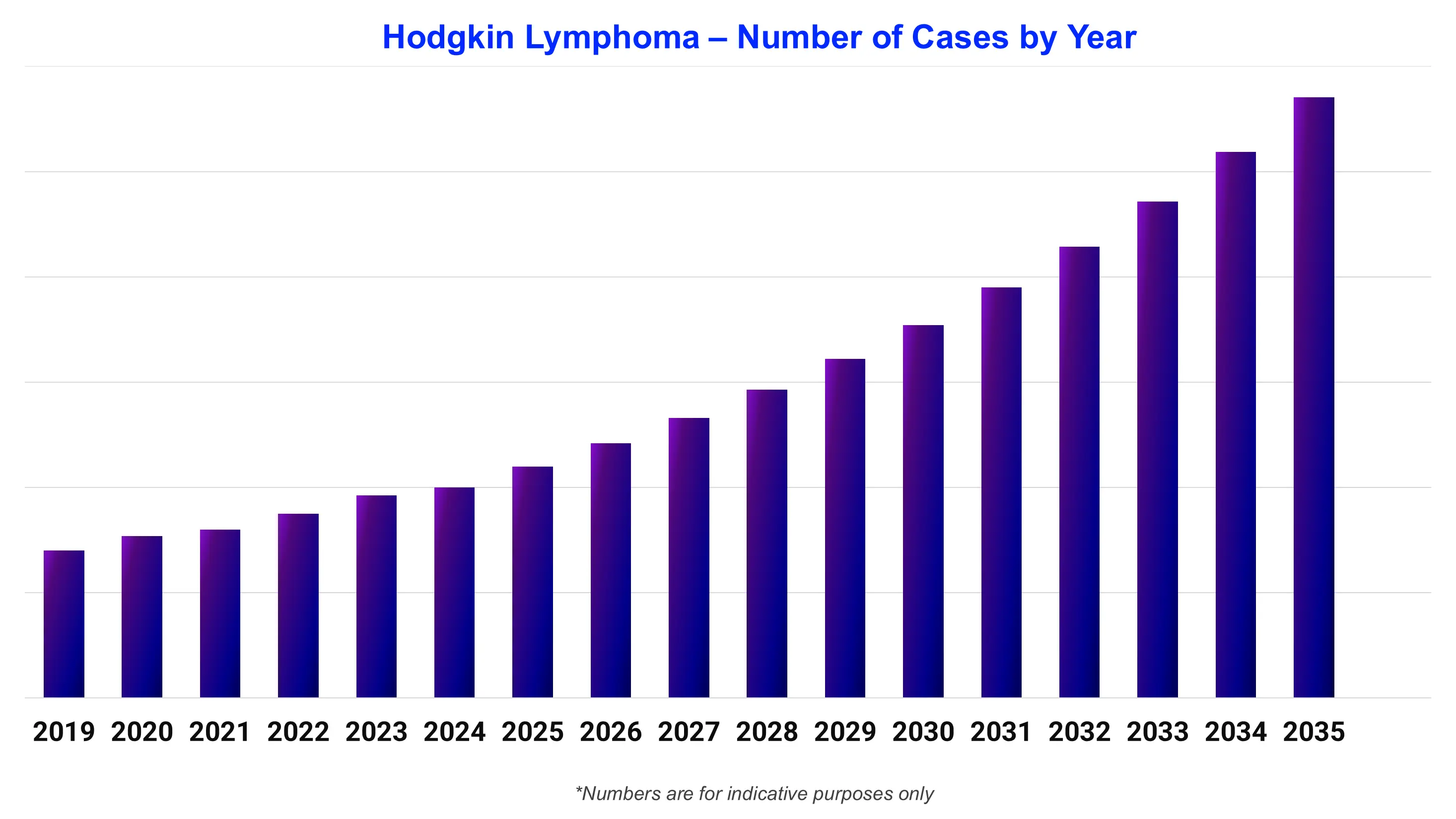
Hodgkin lymphoma is a cancer of the lymphatic system that affects lymphocytes, a type of white blood cell. According to the American Cancer Society, an estimated 8,920 new cases are expected in the United States in 2026. As per the Hodgkin lymphoma epidemiology forecast by Expert Market Research, disease burden trends inform the assessment of the global lymphoma treatment landscape.
Base Year
Historical Period
Forecast Period
Read more about this report - REQUEST FREE SAMPLE COPY IN PDF
Expert Market Research's “Hodgkin Lymphoma Epidemiology Forecast Report 2026-2035” offers comprehensive information on the prevalence and demographics of Hodgkin lymphoma. It projects the future incidence and prevalence rates of Hodgkin lymphoma cases across various populations. The study covers age, gender, and type as major determinants of the Hodgkin lymphoma population. The report highlights patterns in the prevalence of Hodgkin lymphoma over time and projects future trends based on multiple variables.
The report provides a comprehensive overview of the disease, as well as historical and projected data on the epidemiology of Hodgkin lymphoma in the 8 major markets.
Regions Covered
Hodgkin lymphoma is a type of cancer that originates in the lymphatic system, which is part of the body's immune system. It is characterized by the presence of abnormal lymphocytes, particularly Reed–Sternberg cells, in affected lymph nodes. The disease commonly begins in lymph nodes in the neck, chest, or underarms and may spread to other lymphatic tissues or organs. The two main types are classical Hodgkin lymphoma, which accounts for most cases, and nodular lymphocyte-predominant Hodgkin lymphoma. Symptoms may include painless lymph node swelling, fever, night sweats, and unexplained weight loss, collectively associated with lymphoproliferative disorders.
|
Parameter |
Insight |
|
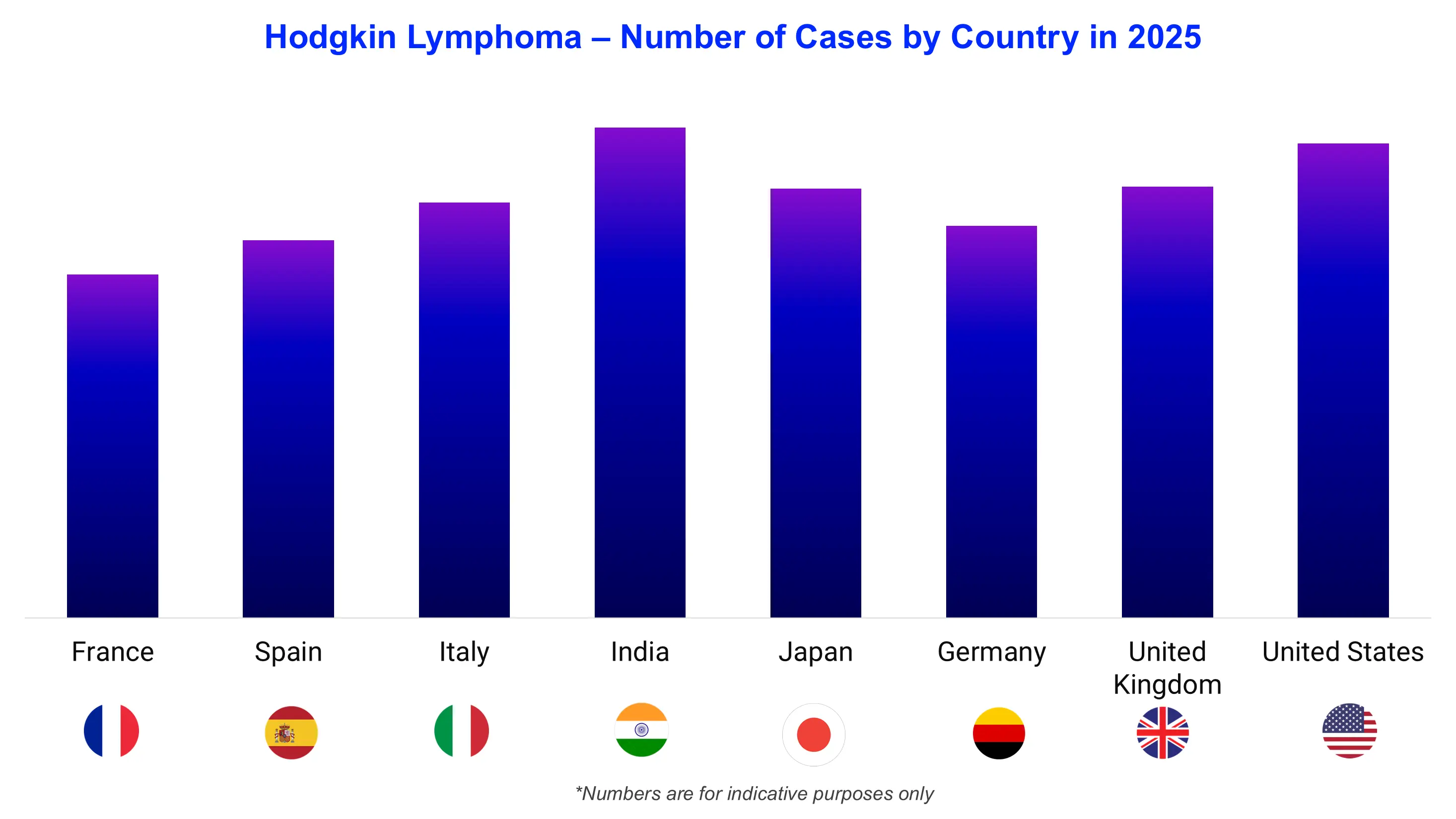
Largest Patient Pool |
India |
|
Fastest Growing Country |
Japan |
|
High-Risk Population |
People in early adulthood and those aged 65 years or older, males, individuals with a history of Epstein–Barr virus infection, and people with a first-degree relative with Hodgkin lymphoma. |
|
Key Diagnostic Method |
Lymph node biopsy, preferably excisional biopsy, with histopathological examination; positron emission tomography–computed tomography (PET-CT) is used for staging and treatment-response assessment. |
|
Major Risk Factor |
Older or early-adult age groups, male sex, previous Epstein–Barr virus infection, and family history. These factors increase risk but do not determine whether an individual will develop the disease. |
|
Major gap in the market |
Unequal access to specialist pathology, advanced imaging, and timely diagnosis may delay disease confirmation and staging. Country-specific evidence is needed to quantify these gaps across the selected markets. |
The Hodgkin lymphoma epidemiology division offers information on the patient pool from history to the present as well as the projected trend for each of the 8 major markets. Expert Market Research provides both current and predicted trends for the Hodgkin lymphoma epidemiology scenario by examining a wide range of studies. Additionally, the report covers the diagnosed patient pool for Hodgkin lymphoma and their trends. The data is broken down into specific categories, such as total prevalent cases in males and females, and total diagnosed cases across different age groups and patient pools.
|
Epidemiology Segment |
Key Insights |
|
Diagnosed Prevalent Cases of the Disease |
According to Harahap et al. (2024), Hodgkin lymphoma accounts for approximately 80,000 cases worldwide annually and causes around 25,000 deaths. The disease burden reflects the need for timely diagnosis and appropriate treatment. |
|
Gender-Specific Cases of the Disease |
According to the American Cancer Society (2026), the United States is expected to record 4,890 new cases among males and 4,030 among females. NHS England reported that 50% of female patients and 42% of male patients were diagnosed at stages 1 and 2. |
|
Age-Specific Cases of the Disease |
According to the American Cancer Society (2026), the average age at diagnosis in the United States is 39 years. Hodgkin lymphoma is most common in people in their 20s, with risk rising again after age 55. It is rare in children younger than five years. |
|
Ethnicity-Wise Cases of the Disease |
Epidemiological patterns may vary across populations because of differences in age distribution, environmental exposures, socioeconomic circumstances, and access to diagnostic services. The supplied sources do not provide specific ethnicity-based prevalence figures for Hodgkin lymphoma. |
|
Mortality and Survival Analysis of the Disease |
According to the American Cancer Society (2026), approximately 1,100 Hodgkin lymphoma deaths are expected in the United States, including 680 among males and 420 among females. Harahap et al. (2024) estimated approximately 25,000 deaths worldwide annually. |
|
Disease Type |
Prevalence |
|
Classical Hodgkin Lymphoma (cHL) |
According to Barrett et al. (2023), classical Hodgkin lymphoma has an incidence of 2.4 cases per 100,000 people annually in the United Kingdom. It is more common in males and shows a bimodal age distribution, with peaks in adolescence and older adulthood. |
|
Nodular Lymphocyte-Predominant Hodgkin Lymphoma (NLPHL) |
Nodular lymphocyte-predominant Hodgkin lymphoma is a distinct subtype of Hodgkin lymphoma. Its epidemiological assessment considers incidence, age distribution, and gender patterns separately from classical Hodgkin lymphoma. |
Read more about this report - REQUEST FREE SAMPLE COPY IN PDF
The Hodgkin lymphoma epidemiology data and findings for the United States, Germany, Spain, Italy, France, the United Kingdom, Japan, and India are also provided in the epidemiology section.
|
Country |
Key Insights |
|
United States |
According to the American Cancer Society (2026), approximately 8,920 new Hodgkin lymphoma cases are expected in the United States, including 4,890 among males and 4,030 among females. Approximately 1,100 deaths are projected. The average age at diagnosis is 39 years, with the disease most common in people in their 20s and risk rising again after age 55. Incidence rates have declined by approximately 1% annually since the mid-2000s. |
|
Germany |
According to Kinderkrebsinfo, approximately 170 children and adolescents younger than 18 years are diagnosed with Hodgkin lymphoma annually in Germany. The disease accounts for approximately 7.4% of pediatric malignancies. Incidence increases with age, peaks at around 15 years among children and adolescents aged 0–17 years, and is slightly higher among boys than girls, with a gender ratio of 1.2:1. |
|
France |
Hodgkin lymphoma epidemiology in France can be assessed through national cancer surveillance, with incidence patterns considered across age groups and genders. Age-specific diagnosis patterns and the distribution of cases among younger and older adults are relevant to understanding the disease burden and planning diagnostic and treatment services. |
|
Italy |
According to De Re et al. (2023), Italy has a reported Hodgkin lymphoma incidence of 64.6 cases per 1,000,000, compared with 29.7 cases per 1,000,000 elsewhere in the cited comparison. The disease accounts for approximately 6% of childhood cancers, with a higher incidence among adolescents and young adults aged 15–25 years than among younger children. |
|
Spain |
Clínica Universidad de Navarra reports approximately 10,000 new lymphoma cases annually in Spain. This figure covers lymphoma overall and should not be interpreted as Hodgkin lymphoma-specific incidence. The source also notes improvements in lymphoma prognosis over recent decades, supported by advances in molecular diagnosis and newer treatment approaches. |
|
United Kingdom |
According to Barrett et al. (2023), classical Hodgkin lymphoma has an incidence of 2.4 cases per 100,000 people annually in the United Kingdom and is more common among males. Approximately 20% of patients are older than 60 years. Incidence among people aged 60–69 years is 1.9 per 100,000 annually, increasing to 2.18 per 100,000 among those aged 70 years and older. The overall incidence has risen by 37% since the early 1990s. |
|
Japan |
According to Takata et al. (2024), classical Hodgkin lymphoma accounts for approximately 5% of all malignant lymphomas in Japan, compared with around 30% in Europe and North America. This lower proportion reflects regional differences in the distribution of lymphoma subtypes. |
|
India |
According to HealthCare Global Enterprises Ltd., Hodgkin lymphoma incidence is described as fewer than one million cases annually in India. This broad figure is not a precise Hodgkin lymphoma-specific incidence estimate and should be interpreted cautiously. Disease burden assessment requires distinguishing Hodgkin lymphoma from other lymphoma types and considering differences in diagnosis and reporting. |
Across the United States, Germany, France, Italy, Spain, the United Kingdom, Japan, and India, opportunities exist to improve timely Hodgkin lymphoma diagnosis, access to specialist pathology, and appropriate disease staging. Lymph node biopsy and PET-CT are important for diagnosis and staging, respectively, while differences in diagnostic capacity may affect care pathways. Japan also warrants attention because published registry analyses reported increasing Hodgkin lymphoma incidence in both males and females between 2003 and 2017. However, country-specific access gaps and current growth rates require further validation.
Hodgkin lymphoma treatment depends on the disease stage, subtype, patient age, overall health, and response to previous therapy. Common approaches include combination chemotherapy, radiation therapy, and combined-modality treatment. Immunotherapy, including immune checkpoint inhibitors such as nivolumab and pembrolizumab, may be used in selected patients, particularly those with relapsed or refractory disease. Targeted therapy, including brentuximab vedotin, is another option for appropriate patients. High-dose chemotherapy followed by autologous stem cell transplantation may be considered for eligible patients whose disease returns or does not respond adequately to initial treatment. These approaches support individualized oncology treatment strategies.
Epstein Barr Virus Epidemiology Forecast
Epstein-Barr Virus Pipeline Analysis
Relapsed/Refractory Epstein‑Barr Virus Epidemiology Forecast


Upto 15% Off
USD
$2699 $2429
$4299 $3869
$5799 $4949
$6999 $5949


*While we strive to always give you current and accurate information, the numbers depicted on the website are indicative and may differ from the actual numbers in the main report. At Expert Market Research, we aim to bring you the latest insights and trends in the market. Using our analyses and forecasts, stakeholders can understand the market dynamics, navigate challenges, and capitalize on opportunities to make data-driven strategic decisions.*
Explore our key highlights of the report and gain a concise overview of key findings, trends, and actionable insights that will empower your strategic decisions.
|
Report Features |
Details |
|
Base Year |
2025 |
|
Historical Period |
2019-2025 |
|
Forecast Period |
2026-2035 |
|
Epidemiology Statistics Provided |
|
|
Segmentation Provided |
|
|
Geographies Covered |
|
Datasheet
One User
USD 2,699
USD 2,429
tax inclusive*
Single User License
One User
USD 4,299
USD 3,869
tax inclusive*
Five User License
Five User
USD 5,799
USD 4,949
tax inclusive*
Corporate License
Unlimited Users
USD 6,999
USD 5,949
tax inclusive*
*Please note that the prices mentioned below are starting prices for each bundle type. Kindly contact our team for further details.*
Flash Bundle
Small Business Bundle
Growth Bundle
Enterprise Bundle
*Please note that the prices mentioned below are starting prices for each bundle type. Kindly contact our team for further details.*
Flash Bundle
Number of Reports: 3
20%
tax inclusive*
Small Business Bundle
Number of Reports: 5
25%
tax inclusive*
Growth Bundle
Number of Reports: 8
30%
tax inclusive*
Enterprise Bundle
Number of Reports: 10
35%
tax inclusive*
How To Order

Select License Type
Choose the right license for your needs and access rights.

Click on ‘Buy Now’
Add the report to your cart with one click and proceed to register.

Select Mode of Payment
Choose a payment option for a secure checkout. You will be redirected accordingly.
Strategic Solutions for Informed Decision-Making
Gain insights to stay ahead and seize opportunities.

Get insights & trends for a competitive edge.

Track prices with detailed trend reports.

Analyse trade data for supply chain insights.

Leverage cost reports for smart savings

Enhance supply chain with partnerships.

Connect For More Information
Our expert team of analysts will offer full support and resolve any queries regarding the report, before and after the purchase.
Our expert team of analysts will offer full support and resolve any queries regarding the report, before and after the purchase.
We employ meticulous research methods, blending advanced analytics and expert insights to deliver accurate, actionable industry intelligence, staying ahead of competitors.
Our skilled analysts offer unparalleled competitive advantage with detailed insights on current and emerging markets, ensuring your strategic edge.
We offer an in-depth yet simplified presentation of industry insights and analysis to meet your specific requirements effectively.




