

Consumer Insights
Uncover trends and behaviors shaping consumer choices today
Procurement Insights
Optimize your sourcing strategy with key market data
Industry Stats
Stay ahead with the latest trends and market analysis.
Diabetic macular edema (DME) is a major vision-threatening complication of diabetes caused by fluid accumulation in the macula following disruption of the inner blood-retinal barrier. A 2026 systematic review and meta-analysis by Marques-Couto et al., covering 63 studies and 20,074 patients, estimated DME prevalence among people with type 1 diabetes at 11.1% (95% CI: 7.9–14.3%), with very low evidence certainty and substantial heterogeneity. According to the diabetic macular edema epidemiology forecast by Expert Market Research, DME remains a substantial healthcare burden due to progressive visual impairment, diabetes-related comorbidities, repeated intravitreal injections, treatment discontinuation, specialist capacity constraints and associated economic costs.
Base Year
Historical Period
Forecast Period
Read more about this report - Request a Free Sample
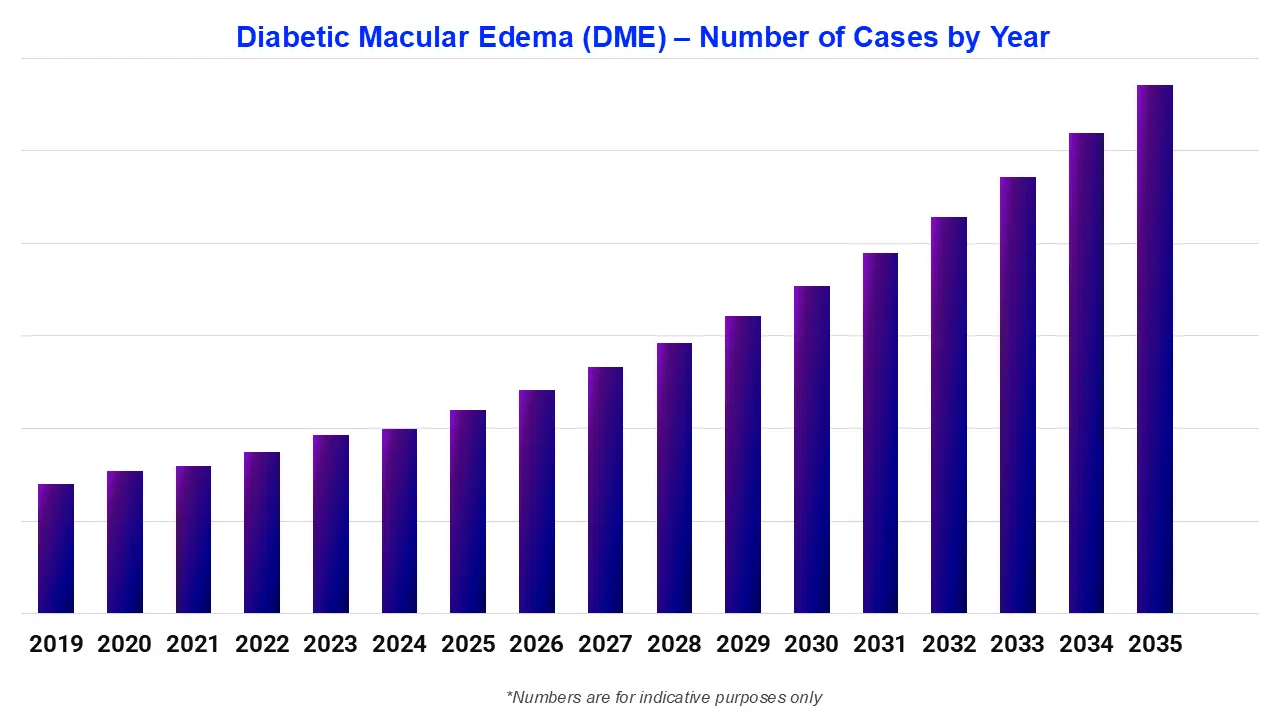
Expert Market Research's “Diabetic Macular Edema (DME) Epidemiology Forecast Report 2026-2035” offers comprehensive information on the prevalence and demographics of Diabetic Macular Edema (DME). It projects the future incidence and prevalence rates of Diabetic Macular Edema (DME) cases across various populations. The study covers age, gender, and type as major determinants of the Diabetic Macular Edema (DME) population. The report highlights patterns in the prevalence of Diabetic Macular Edema (DME) overtime and projects future trends based on multiple variables.
The report provides a comprehensive overview of the disease, as well as historical and projected data on the epidemiology of Diabetic Macular Edema (DME) in the 8 major markets.
Regions Covered
Diabetic macular edema (DME) remains a major vision-threatening microvascular complication of diabetes mellitus characterized by accumulation of extracellular and intracellular fluid within the macula following disruption of the inner blood-retinal barrier. Hyperglycemia-induced oxidative stress, pericyte dysfunction, endothelial injury, inflammatory signalling, leukostasis and vascular endothelial growth factor (VEGF) overexpression contribute to vascular permeability and macular thickening. DME can occur in both type 1 and type 2 diabetes and may develop at different stages of diabetic retinopathy. Contemporary clinical assessment increasingly distinguishes center-involving DME (CI-DME) from non-center-involving disease because involvement of the foveal center has major implications for visual function and treatment selection.
|
Parameter |
Insight |
|
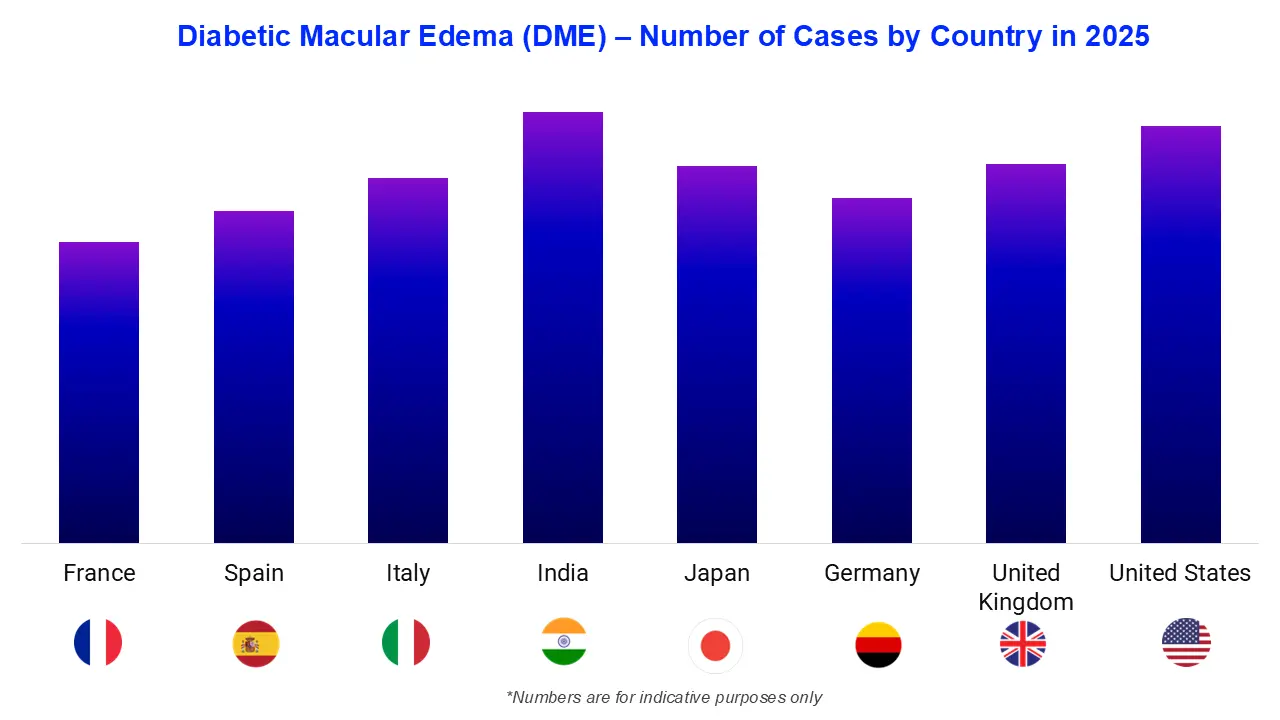
Largest Patient Pool |
United States |
|
Fastest Growing Country |
India |
|
High-Risk Population |
Patients with long diabetes duration, poor glycemic control, hypertension, nephropathy, dyslipidemia, anemia, diabetic retinopathy and previous DME, |
|
Key Diagnostic Method |
Optical coherence tomography (OCT) |
|
Major Risk Factor |
Longer diabetes duration and inadequate glycemic control |
|
Major gap in the market |
Frequent injection requirements, treatment non-adherence, variable anti-VEGF response, persistent DME, incomplete visual recovery, limited predictive biomarkers and high treatment costs |
The Diabetic Macular Edema (DME) epidemiology division offers information on the patient pool from history to the present as well as the projected trend for each of the 8 major markets. Expert Market Research provides both current and predicted trends for the Diabetic Macular Edema (DME) epidemiology scenario by examining a wide range of studies. Additionally, the report covers the diagnosed patient pool for Diabetic Macular Edema (DME) and their trends. The data is broken down into specific categories, such as total prevalent cases in males and females, and total diagnosed cases across different age groups and patient pools.
|
Epidemiology Segment |
Key Insights |
|
Diagnosed Prevalent Cases of the Disease |
According to Marques-Couto et al., the 2026 systematic review and meta-analysis estimated pooled DME prevalence at 11.1% among people with type 1 diabetes, based on 20,074 patients across 63 studies, although the evidence had very low certainty and substantial heterogeneity. |
|
Gender-Specific Cases of the Disease |
Contemporary evidence does not demonstrate a uniform strong sex predominance. The 2026 U.S. meta-analysis reported higher age-standardized DME prevalence in males than females, but sex differences should be interpreted in conjunction with diabetes type, duration, treatment exposure and healthcare access rather than as an independent biological determinant. |
|
Age-Specific Cases of the Disease |
DME can occur across adulthood, but risk generally increases with longer diabetes duration, which correlates with older age in many clinical populations. The 2026 type 1 diabetes meta-analysis found diabetes duration to be a significant predictor of DME prevalence, with each additional year of diabetes associated with an average increase of 1.2 percentage points in prevalence in its meta-regression. |
|
Ethnicity-Wise Cases of the Disease |
Contemporary U.S. evidence demonstrates pronounced disparities. The 2026 meta-analysis found DME prevalence more than four times higher among Black individuals than White individuals and approximately 3.7 times higher among Hispanic individuals than White individuals after age standardization. These differences may reflect diabetes burden, disease control, social determinants, healthcare access and treatment disparities rather than ethnicity itself. |
|
Mortality and Survival Analysis of the Disease |
DME is primarily a vision-threatening complication of diabetes rather than a direct cause of death. However, diabetic retinopathy and clinically significant macular edema have been associated with increased all-cause mortality, with studies reporting a 1.55-fold to 2.37-fold higher mortality risk. |
|
Disease Type |
Prevalence |
|
Center-Involving Diabetic Macular Edema (CI-DME) |
CI-DME affects the central subfield of the macula and is particularly important because foveal involvement can cause clinically significant visual impairment. OCT is central to diagnosis and quantitative monitoring. Anti-VEGF therapy is generally the principal pharmacological treatment for eyes with center-involving edema and visual impairment. |
|
Non-Center-Involving DME |
Non-center-involving DME produces retinal edema outside the central subfield. Depending on severity and visual impact, observation, systemic metabolic optimization and focal/grid laser can be considered. Contemporary imaging allows more precise differentiation between center-involving and non-center-involving disease. |
|
Mild / Early DME |
Early DME may have limited visual consequences and can occur alongside non-proliferative diabetic retinopathy. Risk-factor modification, appropriate retinal surveillance and prompt treatment when edema threatens central vision are important to prevent progression. |
|
Persistent / Refractory DME |
Persistent DME describes edema that remains despite adequate anti-VEGF exposure or recurs repeatedly. It is one of the most important treatment gaps because fluid may persist despite anatomical improvement and vision may remain suboptimal. Contemporary literature increasingly supports switching mechanisms or incorporating corticosteroid therapy in selected cases. |
Read more about this report - Request a Free Sample
The Diabetic Macular Edema (DME) epidemiology data and findings for the United States, Germany, Spain, Italy, France, the United Kingdom, Japan, and India are also provided in the epidemiology section.
|
Country |
Key Insights |
|
United States |
A 2026 U.S. meta-analysis estimated an age-standardized DME prevalence of 317 per 100,000 population, with markedly higher prevalence among Black and Hispanic populations. Because the underlying prevalence datasets were collected through 2022, the figure is not represented as a current 2023–2026 observation. |
|
Germany |
Contemporary German real-world evidence demonstrates a substantial treatment burden. The 2025 university-hospital study characterized 176 treated eyes among 114 patients and found that 71.59% had already received previous DME treatment; patients required an average of 3.91 intravitreal injections per eye during the study period. |
|
France |
France represents a mature European retinal-care market with established access to anti-VEGF therapy and increasing emphasis on treatment durability. French centres contributed to the 2026 RHONE-X four-year faricimab study, which demonstrated sustained visual and anatomical improvement and approximately 80% of patients reaching dosing intervals of at least 12 weeks. |
|
Italy |
Italy represents an important European DME market with increasing economic interest in extended-duration anti-VEGF therapy. A 2026 Italian cost-minimization analysis evaluated aflibercept 8 mg against other anti-VEGF options and specifically identified high treatment burden, healthcare-resource utilization and patient adherence as important issues in DME care. |
|
Spain |
A 2025 Spanish real-world study evaluated 105 eyes from 79 patients treated with faricimab between January 2024 and January 2025, including treatment-naïve and previously treated eyes. The study demonstrated the practical use of faricimab in contemporary Spanish retinal practice and supports its role in both initial and switch populations. |
|
United Kingdom |
A 2026 Liverpool real-world study evaluated centre-involving DME treated with faricimab and reported clinically meaningful one-year outcomes while identifying evidence of undertreatment in routine practice. The 2025 FARWIDE-DMO study also provides contemporary UK evidence on real-world faricimab use and treatment patterns. |
|
Japan |
A 2026 Japanese real-world study of 380 treatment-naïve patients with centre-involving DME found that 14.5% discontinued anti-VEGF treatment themselves. Younger age and poorer baseline visual acuity were associated with discontinuation, demonstrating that adherence is a significant determinant of real-world outcomes. |
|
India |
India represents a major growth market for DME because of its large diabetes population and expanding retinal-care infrastructure. A 2026 randomized controlled study conducted in India between January 2024 and June 2025 found comparable 48-week efficacy between faricimab and aflibercept in treatment-naïve patients, while faricimab provided significantly longer dosing intervals of 12.86 versus 9.47 weeks. |
According to contemporary 2023–2026 evidence, significant gaps remain in the epidemiological characterization, early detection, treatment adherence and long-term visual management of diabetic macular edema. The principal challenge is that DME prevalence varies substantially according to diabetes type, disease duration, retinopathy severity and the diagnostic modality used. The 2026 type 1 diabetes meta-analysis estimated pooled prevalence at 11.1%, but very high heterogeneity and very low certainty of evidence demonstrate the limitations of applying a single prevalence estimate across all diabetic populations. A major opportunity therefore exists in systematic retinal screening and earlier OCT detection. DME can produce clinically important macular changes before patients recognize substantial visual deterioration. Integration of retinal imaging into diabetes-management pathways and more rapid referral of patients with macular involvement can potentially shorten the interval between structural disease and treatment.
The management of diabetic macular edema primarily focuses on preventing or reversing retinal fluid accumulation, preserving or improving visual acuity, limiting structural retinal damage, reducing progression of diabetic retinopathy and minimizing the long-term burden of repeated treatment. Contemporary management combines ophthalmic treatment with optimization of systemic diabetes and cardiovascular risk factors. The current therapeutic framework is increasingly based on the distinction between center-involving and non-center-involving DME, baseline visual acuity, previous treatment exposure, persistent retinal fluid, diabetic retinopathy severity and patient-specific treatment burden. Systemic metabolic control remains fundamental. Glycemic control, blood-pressure management, lipid management and treatment of renal disease are important components of DME prevention and long-term retinal protection.


Upto 15% Off
USD
$2699 $2429
$4299 $3869
$5799 $4949
$6999 $5949


*While we strive to always give you current and accurate information, the numbers depicted on the website are indicative and may differ from the actual numbers in the main report. At Expert Market Research, we aim to bring you the latest insights and trends in the market. Using our analyses and forecasts, stakeholders can understand the market dynamics, navigate challenges, and capitalize on opportunities to make data-driven strategic decisions.*
Explore our key highlights of the report and gain a concise overview of key findings, trends, and actionable insights that will empower your strategic decisions.
|
Report Features |
Details |
|
Base Year |
2025 |
|
Historical Period |
2019-2025 |
|
Forecast Period |
2026-2035 |
|
Epidemiology Statistics Provided |
|
|
Segmentation Provided |
|
|
Geographies Covered |
|
Datasheet
One User
USD 2,699
USD 2,429
tax inclusive*
Single User License
One User
USD 4,299
USD 3,869
tax inclusive*
Five User License
Five User
USD 5,799
USD 4,949
tax inclusive*
Corporate License
Unlimited Users
USD 6,999
USD 5,949
tax inclusive*
*Please note that the prices mentioned below are starting prices for each bundle type. Kindly contact our team for further details.*
Flash Bundle
Small Business Bundle
Growth Bundle
Enterprise Bundle
*Please note that the prices mentioned below are starting prices for each bundle type. Kindly contact our team for further details.*
Flash Bundle
Number of Reports: 3
20%
tax inclusive*
Small Business Bundle
Number of Reports: 5
25%
tax inclusive*
Growth Bundle
Number of Reports: 8
30%
tax inclusive*
Enterprise Bundle
Number of Reports: 10
35%
tax inclusive*
How To Order

Select License Type
Choose the right license for your needs and access rights.

Click on ‘Buy Now’
Add the report to your cart with one click and proceed to register.

Select Mode of Payment
Choose a payment option for a secure checkout. You will be redirected accordingly.
Strategic Solutions for Informed Decision-Making
Gain insights to stay ahead and seize opportunities.

Get insights & trends for a competitive edge.

Track prices with detailed trend reports.

Analyse trade data for supply chain insights.

Leverage cost reports for smart savings

Enhance supply chain with partnerships.

Connect For More Information
Our expert team of analysts will offer full support and resolve any queries regarding the report, before and after the purchase.
Our expert team of analysts will offer full support and resolve any queries regarding the report, before and after the purchase.
We employ meticulous research methods, blending advanced analytics and expert insights to deliver accurate, actionable industry intelligence, staying ahead of competitors.
Our skilled analysts offer unparalleled competitive advantage with detailed insights on current and emerging markets, ensuring your strategic edge.
We offer an in-depth yet simplified presentation of industry insights and analysis to meet your specific requirements effectively.




