

Consumer Insights
Uncover trends and behaviors shaping consumer choices today
Procurement Insights
Optimize your sourcing strategy with key market data
Industry Stats
Stay ahead with the latest trends and market analysis.
Epilepsy represents a major global neurological disorder affecting nearly 50 million individuals worldwide, with higher burden in low- and middle-income regions due to limited diagnostic access and treatment gaps. Epidemiological patterns show bimodal incidence peaks in childhood and older age groups, driven by developmental and vascular etiologies. The Epilepsy epidemiology forecast by Expert Market Research underscores evolving surveillance, improved case detection, and growing focus on reducing the substantial unmet care burden across diverse healthcare systems. Global incidence of epilepsy by region highlights persistent geographic disparities in disease burden and healthcare accessibility.
Base Year
Historical Period
Forecast Period
Read more about this report - Request a Free Sample
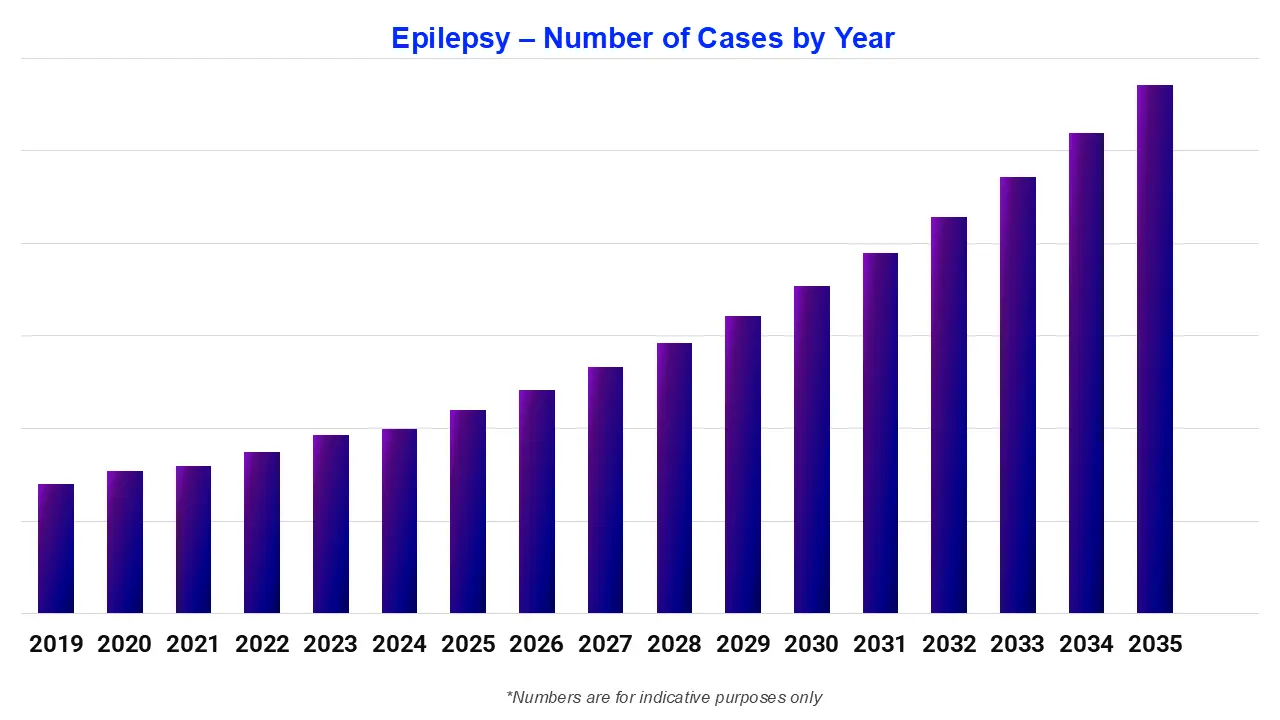
Expert Market Research's “Epilepsy Epidemiology Forecast Report 2026-2035” offers comprehensive information on the prevalence and demographics of epilepsy. It projects the future incidence and prevalence rates of epilepsy cases across various epilepsy populations. The study covers age, gender, and type as major determinants of the population. The report highlights patterns in the prevalence of epilepsy over time and projects future trends based on multiple variables.
The report provides a comprehensive overview of the disease, as well as historical and projected data on epidemiology in the region.
Countries Covered
Epilepsy is a chronic neurological disorder characterized by recurrent unprovoked seizures resulting from abnormal electrical activity in the brain. It affects both pediatric and adult populations, with manifestations including focal epilepsy and generalized seizure types that may vary in severity and frequency. Common clinical presentations include tonic-clonic seizures and absence seizures, often requiring long-term antiseizure medication management such as levetiracetam or lamotrigine. In more severe cases, patients may develop drug-resistant epilepsy (DRE), where seizures persist despite optimal therapy. The condition is also associated with cognitive impairment, injury risk, and significant epilepsy comorbidities, contributing to long-term neurological burden. Management strategies often rely on epilepsy drugs for seizure control and long-term disease stabilization.
Key Report Insights
| Parameter | Insight |
| Largest Patient Pool | Low- and middle-income countries account for nearly 80% of global epilepsy cases, reflecting higher structural brain injury, infections, and limited access to neurological care services. ) |
| Fastest Growing Region | Sub-Saharan Africa and South Asia show rising epilepsy incidence due to neuroinfections, perinatal complications, and improved diagnosis reporting systems over the last decade. |
| High-Risk Population | Highest incidence is observed in children under five and adults above 60 years, linked to developmental brain vulnerability and age-related cerebrovascular and degenerative conditions. |
| Key Diagnostic Method | Diagnosis depends on clinical seizure history supported by EEG and MRI imaging, though underdiagnosis remains common in resource-limited regions lacking neurological infrastructure. |
| Major Risk Factor | Major drivers include stroke, traumatic brain injury, CNS infections, perinatal injury, and genetic abnormalities causing abnormal neuronal excitability and seizure susceptibility. |
| Major gap in the market | Underdiagnosis |
The epilepsy epidemiology report provides comprehensive insights into the historical, current, and forecasted patient population trends across the regional markets. Expert Market Research provides both current and forecast trends for the epilepsy epidemiology scenario by examining a wide range of studies. Additionally, the report covers the diagnosed patient pool for epilepsy and its trends. The epilepsy detailed epidemiology segmentation is broken down into specific categories, such as total prevalent cases in males and females, and total diagnosed cases across different age groups and patient pools.
| Epidemiology Segment | Key Insights |
| Diagnosed Prevalent Cases of Epilepsy | Approximately 50 million people globally live with epilepsy, though diagnosed prevalence is lower due to underreporting, especially in low-resource regions with limited neurological access. |
| Gender-Specific Cases of Epilepsy | Slight male predominance is observed in epilepsy prevalence, largely attributed to higher exposure to head trauma and occupational risks affecting seizure susceptibility patterns. |
| Age-Specific Cases of Epilepsy | Incidence shows a bimodal pattern, highest in children under five and adults over sixty, driven by developmental disorders and cerebrovascular disease respectively. |
| Ethnicity-Wise Cases of Epilepsy | Epilepsy-related mortality shows significant disparities across racial and ethnic groups, with non-Hispanic Black populations experiencing the highest age-adjusted mortality rates, reflecting differences in healthcare access, comorbidity burden, and treatment outcomes rather than disease biology. |
| Mortality and Survival Analysis of Epilepsy | Epilepsy increases mortality risk due to sudden unexpected death in epilepsy (SUDEP), status epilepticus, and comorbid conditions, though survival improves with effective seizure control. |
| Disease Type | Subtype Distribution in % |
| Focal Epilepsy | Focal epilepsy represents the most common epilepsy subtype, accounting for 55-65% of total epilepsy cases across 8MM, consistently the most prevalent subtype in US, EU5, Japan, and India due to higher structural causes like stroke, trauma, and infections. |
| Generalized epilepsy | Generalized epilepsy represents the second most common epilepsy subtype, accounting for ~20-30% of epilepsy cases across developed regions; includes idiopathic generalized epilepsies such as absence and juvenile myoclonic epilepsy. |
Read more about this report - Request a Free Sample
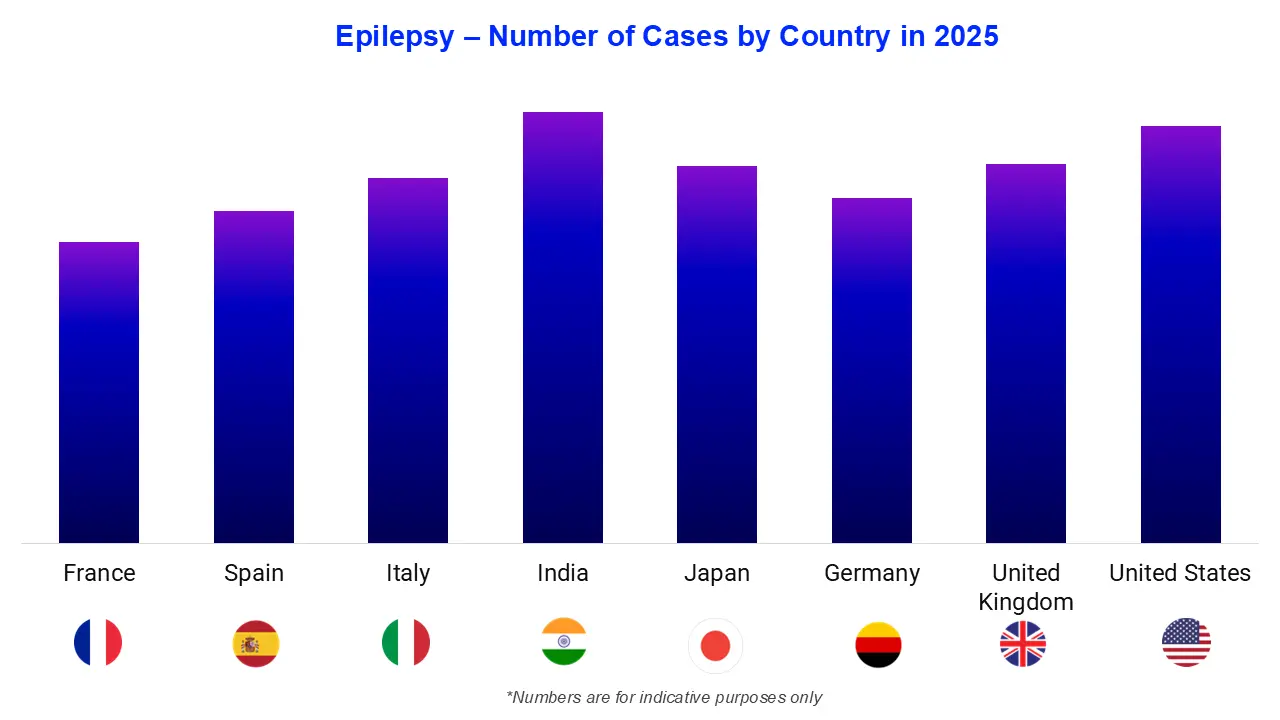
The epilepsy epidemiology data and findings for the region-specific countries are also provided in the epidemiology section.
| Country | Key Insights |
| United States | The US has 3 million adults with active epilepsy. Incidence is higher in older adults due to stroke and TBI, while disparities persist in access to neurologists and long-term seizure control. |
| Germany | Epilepsy prevalence is stable but higher in elderly populations, driven by cerebrovascular disease and neurodegeneration. Focal epilepsy dominates clinical cases, reflecting structural etiologies in aging demographics. |
| France | Prevalence estimated at ~10.2 per 1,000 population, with higher burden in males after age 65. Long-term treated epilepsy registry shows significant healthcare utilization and increasing elderly focal epilepsy burden. |
| Italy | National and regional registry studies (post-2019 updates) show prevalence ~6-8 per 1,000. Adult-onset epilepsy is strongly linked to stroke and traumatic brain injury, making focal structural epilepsy the dominant subtype in elderly populations. |
| Spain | Epilepsy prevalence remains moderate and stable, with increasing diagnosis in aging populations. Structural and post-stroke epilepsy accounts for a significant proportion of adult-onset cases. |
| United Kingdom | In the UK, epilepsy prevalence is 9.37 per 1,000 persons, with incidence of 42.68 per 100,000 person-years, higher in Scotland, Wales, and Northern Ireland than England. |
| Japan | Nationwide insurance claims data (≈10 million cohort) report prevalence ~6.0 per 1,000 (2019 endpoint). Highest incidence occurs in infants and elderly, reflecting developmental and cerebrovascular etiologies, with slight upward trend over time. |
| India | India has a pooled epilepsy prevalence of 4.7 per 1,000 population (95% CI: 3.8–5.6) based on meta-analysis of community-based studies conducted between 1980 and 2019. |
Key Market Gaps
Significant gaps persist in epilepsy epidemiology due to inconsistent case ascertainment methods across registries, leading to underestimation of focal epilepsy and drug-resistant epilepsy (DRE) burden. Pediatric epilepsy tracking remains fragmented, while real-world antiseizure medication response data is limited, reducing precision in long-term outcome modeling and resource allocation accuracy.
Untapped Opportunities
There is strong opportunity in integrating wearable EEG-based monitoring with real-world epidemiology datasets to capture seizure frequency patterns beyond clinical settings. Expansion of population-level screening for recurrent unprovoked seizures in high-risk groups, along with AI-assisted stratification of epilepsy comorbidities, can improve early identification and targeted intervention pathways.
Emerging Growth Areas
Emerging growth is concentrated in genotype-driven epilepsy classification, particularly for refractory epilepsy linked to channelopathies. Multi-omics integration with longitudinal seizure registries is enabling refined phenotyping of generalized epilepsy subtypes. Additionally, real-time seizure forecasting models combined with digital therapeutics are advancing precision epilepsy care delivery frameworks.
Epilepsy treatment involves a combination of pharmacological and emerging investigational approaches aimed at reducing seizure frequency and improving neurological outcomes. Standard care relies on antiseizure medications such as levetiracetam, lamotrigine, and cenobamate, often adjusted based on seizure type and patient response. In refractory cases, surgical intervention, neurostimulation, and dietary strategies may be considered for improved control. A Phase 4 interventional study (NCT06967012) is currently evaluating adjunct therapies like zonisamide in focal epilepsy, assessing changes in seizure frequency and responder rates to optimize add-on treatment outcomes. Patients with partial epilepsy often require individualized long-term management due to variability in seizure patterns and treatment response.


Upto 15% Off
USD
$2699 $2429
$4299 $3869
$5799 $4949
$6999 $5949


*While we strive to always give you current and accurate information, the numbers depicted on the website are indicative and may differ from the actual numbers in the main report. At Expert Market Research, we aim to bring you the latest insights and trends in the market. Using our analyses and forecasts, stakeholders can understand the market dynamics, navigate challenges, and capitalize on opportunities to make data-driven strategic decisions.*
Explore our key highlights of the report and gain a concise overview of key findings, trends, and actionable insights that will empower your strategic decisions.
|
Report Features |
Details |
|
Base Year |
2025 |
|
Historical Period |
2019-2025 |
|
Forecast Period |
2026-2035 |
|
Epidemiology Statistics Provided |
|
|
Segmentation Provided |
|
|
Geographies Covered |
|
Datasheet
One User
USD 2,699
USD 2,429
tax inclusive*
Single User License
One User
USD 4,299
USD 3,869
tax inclusive*
Five User License
Five User
USD 5,799
USD 4,949
tax inclusive*
Corporate License
Unlimited Users
USD 6,999
USD 5,949
tax inclusive*
*Please note that the prices mentioned below are starting prices for each bundle type. Kindly contact our team for further details.*
Flash Bundle
Small Business Bundle
Growth Bundle
Enterprise Bundle
*Please note that the prices mentioned below are starting prices for each bundle type. Kindly contact our team for further details.*
Flash Bundle
Number of Reports: 3
20%
tax inclusive*
Small Business Bundle
Number of Reports: 5
25%
tax inclusive*
Growth Bundle
Number of Reports: 8
30%
tax inclusive*
Enterprise Bundle
Number of Reports: 10
35%
tax inclusive*
How To Order

Select License Type
Choose the right license for your needs and access rights.

Click on ‘Buy Now’
Add the report to your cart with one click and proceed to register.

Select Mode of Payment
Choose a payment option for a secure checkout. You will be redirected accordingly.
Strategic Solutions for Informed Decision-Making
Gain insights to stay ahead and seize opportunities.

Get insights & trends for a competitive edge.

Track prices with detailed trend reports.

Analyse trade data for supply chain insights.

Leverage cost reports for smart savings

Enhance supply chain with partnerships.

Connect For More Information
Our expert team of analysts will offer full support and resolve any queries regarding the report, before and after the purchase.
Our expert team of analysts will offer full support and resolve any queries regarding the report, before and after the purchase.
We employ meticulous research methods, blending advanced analytics and expert insights to deliver accurate, actionable industry intelligence, staying ahead of competitors.
Our skilled analysts offer unparalleled competitive advantage with detailed insights on current and emerging markets, ensuring your strategic edge.
We offer an in-depth yet simplified presentation of industry insights and analysis to meet your specific requirements effectively.




