Consumer Insights
Uncover trends and behaviors shaping consumer choices today
Procurement Insights
Optimize your sourcing strategy with key market data
Industry Stats
Stay ahead with the latest trends and market analysis.
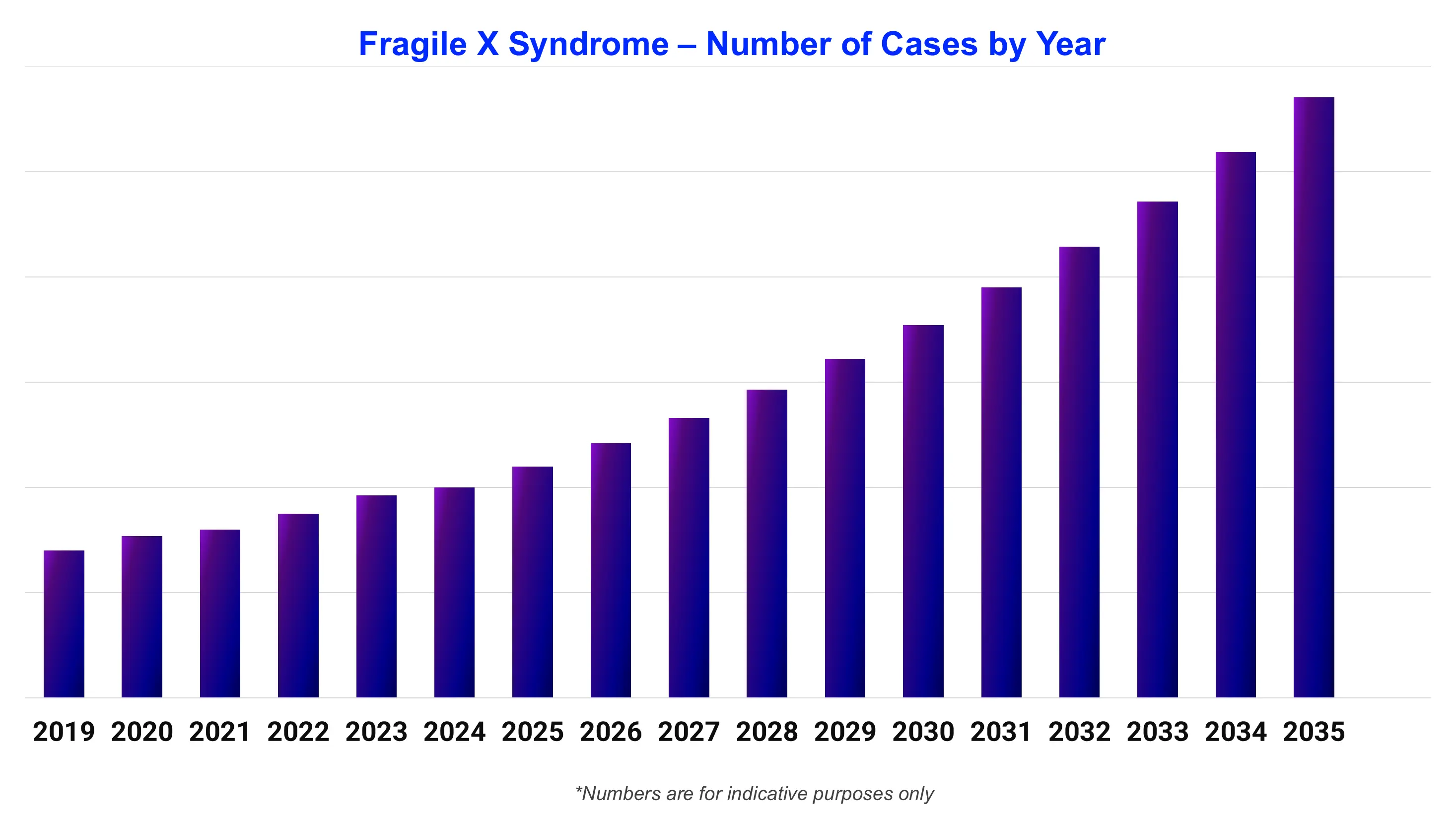
Fragile X syndrome (FXS) is a genetic disorder caused by changes in the FMR1 gene and is a leading inherited cause of intellectual disability. A review of research studies estimated that about 1 in 7,000 males and about 1 in 11,000 females have been diagnosed with FXS. According to the Fragile X syndrome epidemiology forecast by Expert Market Research, ongoing epidemiological assessment supports continued evaluation of disease burden.
Base Year
Historical Period
Forecast Period
Read more about this report - REQUEST FREE SAMPLE COPY IN PDF
Expert Market Research's “Fragile X Syndrome Epidemiology Forecast Report 2026-2035” offers comprehensive information on the prevalence and demographics of Fragile X syndrome. It projects the future incidence and prevalence rates of Fragile X syndrome cases across various populations. The study covers age, gender, and type as major determinants of the Fragile X syndrome population. The report highlights patterns in the prevalence of Fragile X syndrome over time and projects future trends based on multiple variables.
The report provides a comprehensive overview of the disease, as well as historical and projected data on the epidemiology of Fragile X syndrome in the 8 major markets.
Regions Covered
Fragile X syndrome (FXS) is a genetic neurodevelopmental disorder and one of the most common inherited causes of intellectual disability. It is primarily caused by a CGG trinucleotide repeat expansion in the FMR1 gene, which can lead to methylation and silencing of the gene and loss of fragile X messenger ribonucleoprotein (FMRP), a protein important for brain development. A full mutation generally contains more than 200 CGG repeats. Clinical severity varies, particularly between males and females. FMR1 gene expansion can also occur as a premutation, which is associated with other fragile X-associated disorders. Nutritional support, including dietary supplements, may be considered when clinically indicated, but supplements do not treat the underlying genetic cause.
|
Parameter |
Insight |
|
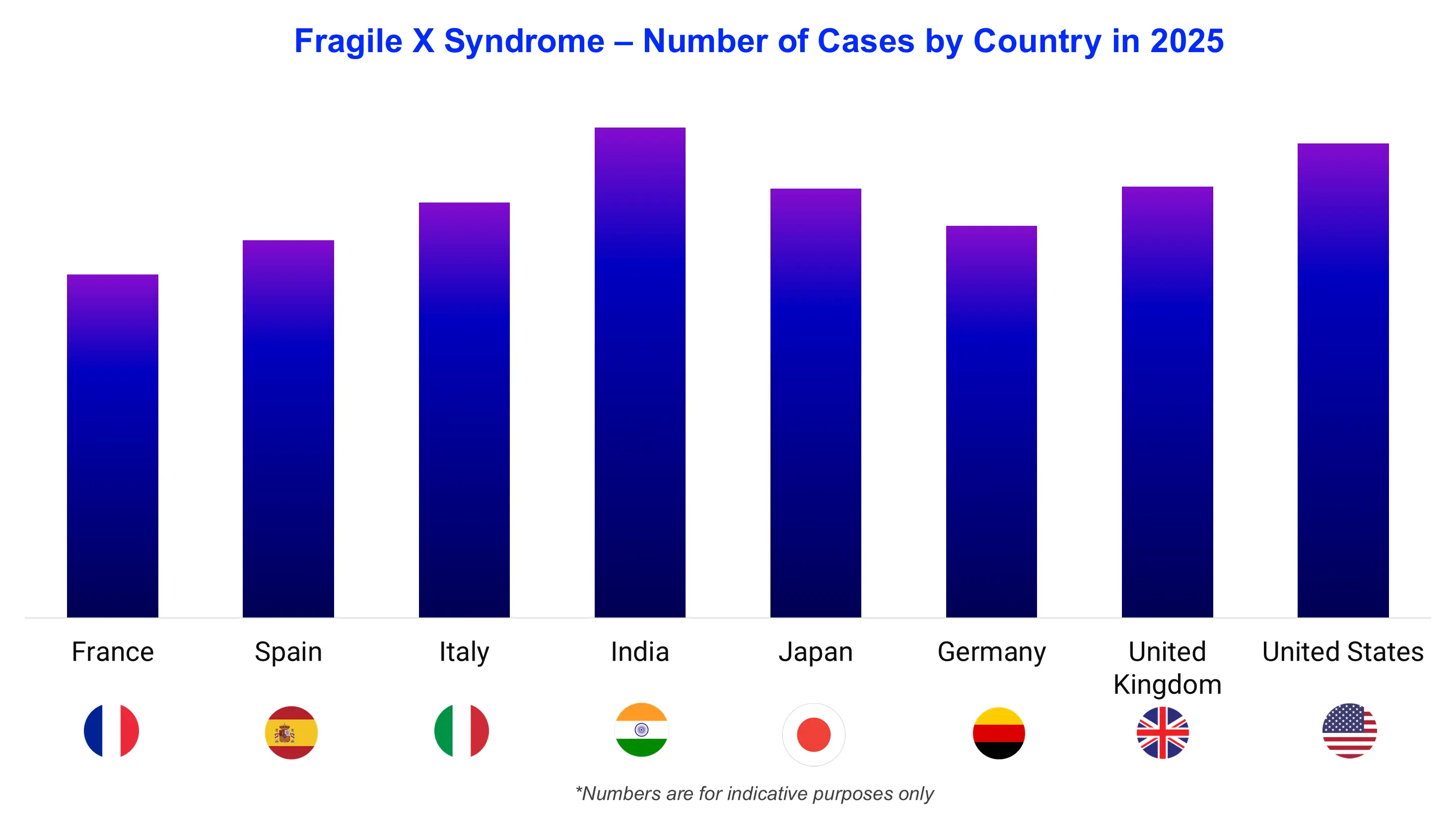
Largest Patient Pool |
United States |
|
Fastest Growing Country |
India |
|
High-Risk Population |
Children and individuals with unexplained developmental delay, intellectual disability, or autism spectrum disorder, particularly when an FMR1 variant is present in the family |
|
Key Diagnostic Method |
Molecular genetic testing for FMR1 CGG repeat expansion, primarily PCR-based testing |
|
Major Risk Factor |
Inheritance of an FMR1 expanded allele, particularly transmission of a maternal premutation that can expand to a full mutation |
|
Major gap in the market |
Underdiagnosis and delayed genetic diagnosis |
The Fragile X syndrome epidemiology division offers information on the patient pool from history to the present as well as the projected trend for each of the 8 major markets. Expert Market Research provides both current and predicted trends for the Fragile X syndrome epidemiology scenario by examining a wide range of studies. Additionally, the report covers the diagnosed patient pool for Fragile X syndrome and their trends. The data is broken down into specific categories, such as total prevalent cases in males and females, and total diagnosed cases across different age groups and patient pools.
|
Epidemiology Segment |
Key Insights |
|
Diagnosed Prevalent Cases of the Disease |
According to the National Fragile X Foundation, approximately 1 in 7,000 males and 1 in 11,000 females have been diagnosed with Fragile X syndrome. The condition has been detected across all populations and ethnic groups, indicating a broad population distribution. |
|
Gender-Specific Cases of the Disease |
Fragile X syndrome shows a higher diagnosed prevalence among males than females. As per the National Fragile X Foundation, approximately 1 in 7,000 males compared with 1 in 11,000 females are diagnosed with the condition, demonstrating a consistent gender difference. |
|
Age-Specific Cases of the Disease |
According to the Centers for Disease Control and Prevention, Fragile X syndrome affects both children and adults, with the FORWARD database containing clinical and demographic information on more than 1,700 affected individuals enrolled through specialty clinics in the United States. |
|
Ethnicity-Wise Cases of the Disease |
Fragile X syndrome occurs across ethnic groups. In the US FORWARD registry, White participants accounted for 88.7% of males and 87.1% of females, followed by African American (7.2% and 8.4%) and Asian participants (2.0% and 2.6%), respectively. |
|
Mortality and Survival Analysis of the Disease |
The epidemiological profile is influenced by the identification and diagnosis of affected individuals, including population screening and specialized clinical databases. According to the Centers for Disease Control and Prevention, the rarity of Fragile X syndrome can make recruitment of sufficient affected individuals for research challenging. |
Read more about this report - REQUEST FREE SAMPLE COPY IN PDF
The Fragile X syndrome epidemiology data and findings for the United States, Germany, Spain, Italy, France, the United Kingdom, Japan, and India are also provided in the epidemiology section.
|
Country |
Key Insights |
|
United States |
Fragile X syndrome is considered a rare disorder in the United States. According to the Centers for Disease Control and Prevention, the FORWARD database includes clinical, demographic, and behavioral information on more than 1,700 children and adults with Fragile X syndrome enrolled through specialty clinics. |
|
Germany |
In Germany, the epidemiological burden of Fragile X syndrome is influenced by the X-linked inheritance pattern, which results in a greater likelihood of clinically apparent disease among males. Differences in genetic background, including population-specific haplotype frequencies and founder effects, can also contribute to variation in prevalence. |
|
France |
In France, Fragile X syndrome is particularly relevant among populations evaluated for developmental and intellectual disabilities. Recognition of affected individuals is supported by genetic assessment of children and adults with unexplained developmental difficulties, while differences in clinical referral patterns can influence the identified disease burden. |
|
Italy |
The epidemiological burden of Fragile X syndrome in Italy is influenced by genetic transmission through the FMR1 gene and the presence of premutation carriers who can transmit expanded CGG repeats to subsequent generations. Greater recognition of inherited causes of developmental disability can support diagnosis. |
|
Spain |
In Spain, Fragile X syndrome is influenced by its genetic inheritance and its association with developmental and intellectual disabilities. Population-specific genetic characteristics, clinical evaluation of individuals with unexplained developmental difficulties, and recognition of inherited causes of intellectual disability can contribute to identification of affected individuals. |
|
United Kingdom |
According to Aminath Fazna et al. (2024), reported Fragile X syndrome prevalence in the United Kingdom ranges from 1 in 1,818 to 1 in 3,553, depending on the study. The variation reflects differences between individual epidemiological studies. |
|
Japan |
As per NIPT Hiro Clinic, information citing Japan's Center for Intractable Disease Information reports a frequency of approximately 1 in 4,000 males and 1 in 8,000 females. The reported frequency therefore differs by sex. |
|
India |
The epidemiological burden of Fragile X syndrome in India is influenced by the large and genetically diverse population, differences in clinical referral patterns, and identification of the condition among individuals with unexplained intellectual or developmental disabilities. Genetic evaluation and greater recognition of inherited causes can support diagnosis. |
Fragile X syndrome presents a substantial unmet need in early genetic diagnosis, particularly among individuals presenting with unexplained developmental delay, intellectual disability, autism spectrum disorder, or behavioral abnormalities. Limited recognition of FXS and variable clinical presentation can contribute to delayed testing and diagnosis. Expanded access to FMR1-specific molecular testing, genetic counseling, and multidisciplinary developmental services represents an important opportunity across the United States, Europe, Japan, and India. India offers additional potential for improved case identification as genetic testing capacity expands. Greater family-based cascade testing may also help identify premutation carriers and enable appropriate reproductive and clinical counseling.
There is currently no curative treatment for Fragile X syndrome, so management focuses on reducing symptoms, supporting development, and improving functional abilities. Treatment generally combines behavioral and developmental interventions with symptom-specific pharmacological management. Speech and language therapy, occupational therapy, physical therapy, behavioral intervention, individualized educational support, and early intervention can address developmental and functional challenges. Medications may be used when clinically appropriate to manage behavioral symptoms, attention difficulties, anxiety, sleep problems, seizures, or other associated conditions. Supportive care is individualized according to age, symptoms, developmental needs, and associated medical conditions.


Upto 15% Off
USD
$2699 $2429
$4299 $3869
$5799 $4949
$6999 $5949


*While we strive to always give you current and accurate information, the numbers depicted on the website are indicative and may differ from the actual numbers in the main report. At Expert Market Research, we aim to bring you the latest insights and trends in the market. Using our analyses and forecasts, stakeholders can understand the market dynamics, navigate challenges, and capitalize on opportunities to make data-driven strategic decisions.*
Explore our key highlights of the report and gain a concise overview of key findings, trends, and actionable insights that will empower your strategic decisions.
|
Report Features |
Details |
|
Base Year |
2025 |
|
Historical Period |
2019-2025 |
|
Forecast Period |
2026-2035 |
|
Epidemiology Statistics Provided |
|
|
Segmentation Provided |
|
|
Geographies Covered |
|
Datasheet
One User
USD 2,699
USD 2,429
tax inclusive*
Single User License
One User
USD 4,299
USD 3,869
tax inclusive*
Five User License
Five User
USD 5,799
USD 4,949
tax inclusive*
Corporate License
Unlimited Users
USD 6,999
USD 5,949
tax inclusive*
*Please note that the prices mentioned below are starting prices for each bundle type. Kindly contact our team for further details.*
Flash Bundle
Small Business Bundle
Growth Bundle
Enterprise Bundle
*Please note that the prices mentioned below are starting prices for each bundle type. Kindly contact our team for further details.*
Flash Bundle
Number of Reports: 3
20%
tax inclusive*
Small Business Bundle
Number of Reports: 5
25%
tax inclusive*
Growth Bundle
Number of Reports: 8
30%
tax inclusive*
Enterprise Bundle
Number of Reports: 10
35%
tax inclusive*
How To Order

Select License Type
Choose the right license for your needs and access rights.

Click on ‘Buy Now’
Add the report to your cart with one click and proceed to register.

Select Mode of Payment
Choose a payment option for a secure checkout. You will be redirected accordingly.
Strategic Solutions for Informed Decision-Making
Gain insights to stay ahead and seize opportunities.
Get insights & trends for a competitive edge.
Track prices with detailed trend reports.
Analyse trade data for supply chain insights.

Leverage cost reports for smart savings
Enhance supply chain with partnerships.
Connect For More Information
Our expert team of analysts will offer full support and resolve any queries regarding the report, before and after the purchase.
Our expert team of analysts will offer full support and resolve any queries regarding the report, before and after the purchase.
We employ meticulous research methods, blending advanced analytics and expert insights to deliver accurate, actionable industry intelligence, staying ahead of competitors.
Our skilled analysts offer unparalleled competitive advantage with detailed insights on current and emerging markets, ensuring your strategic edge.
We offer an in-depth yet simplified presentation of industry insights and analysis to meet your specific requirements effectively.