

Consumer Insights
Uncover trends and behaviors shaping consumer choices today
Procurement Insights
Optimize your sourcing strategy with key market data
Industry Stats
Stay ahead with the latest trends and market analysis.
Pitt-Hopkins syndrome (PTHS) is a rare neurodevelopmental disorder caused by TCF4 gene haploinsufficiency at chromosome 18q21.2. The September 2023 PHRF census identified 405 individuals in the United States, while the June 2026 global census reported 1,744 individuals across 78 countries. According to Pitt-Hopkins syndrome (PTHS) Epidemiology Forecast by Expert Market Research (EMR), the epidemiology of PTHS remains poorly quantified because the disorder is rare and diagnosis depends heavily on recognition of a characteristic but variable phenotype followed by molecular confirmation.
Base Year
Historical Period
Forecast Period
Read more about this report - REQUEST FREE SAMPLE COPY IN PDF
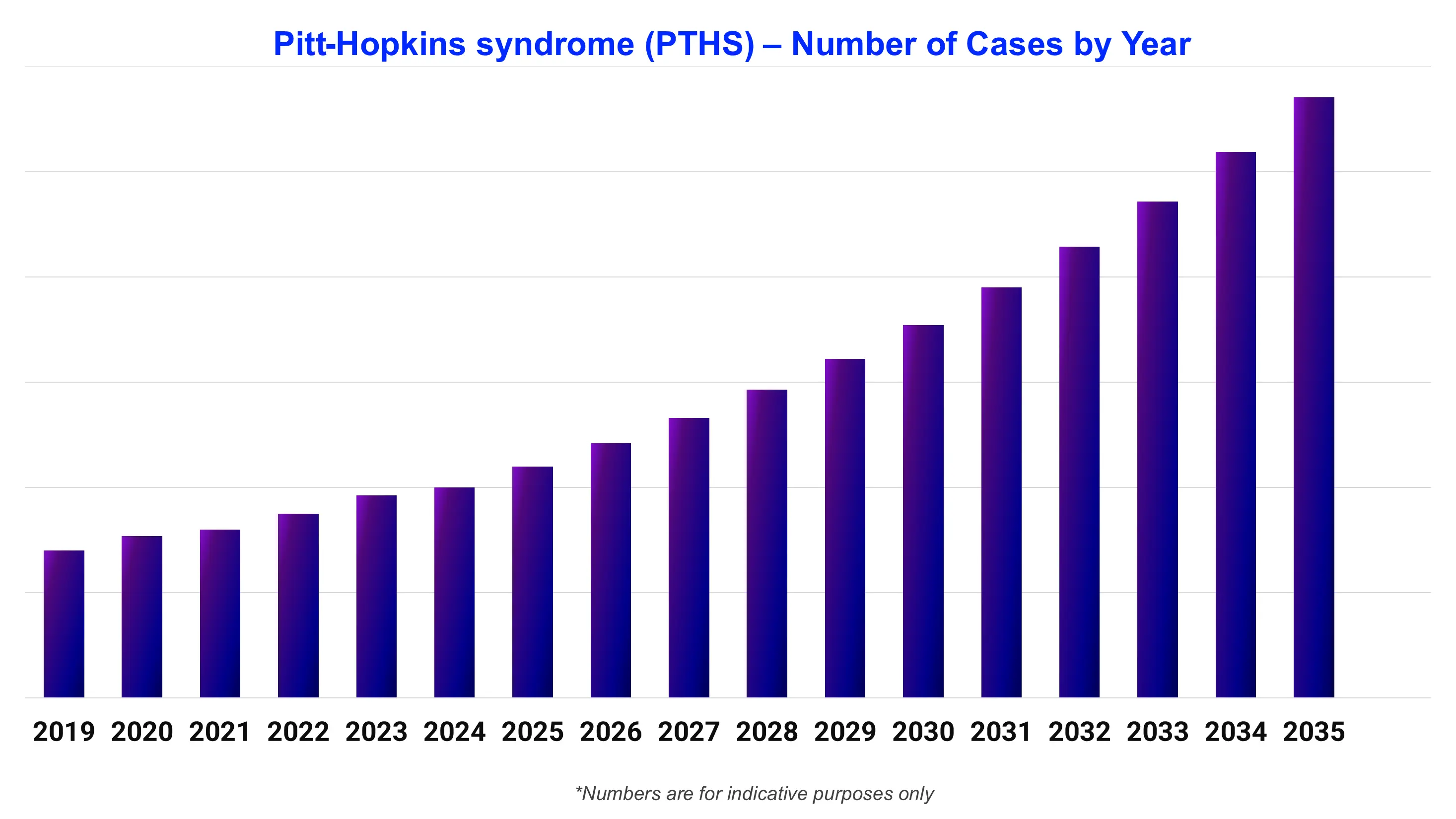
Expert Market Research's “Pitt-Hopkins syndrome (PTHS) Epidemiology Forecast Report 2026-2035” offers comprehensive information on the prevalence and demographics of Pitt-Hopkins syndrome (PTHS). It projects the future incidence and prevalence rates of Pitt-Hopkins syndrome (PTHS) cases across various populations. The study covers age, gender, and type as major determinants of the Pitt-Hopkins syndrome (PTHS) population. The report highlights patterns in the prevalence of Pitt-Hopkins syndrome (PTHS) over time and projects future trends based on multiple variables.
The report provides a comprehensive overview of the disease, as well as historical and projected data on the epidemiology of Pitt-Hopkins syndrome (PTHS) in the 8 major markets.
Regions Covered
Pitt-Hopkins syndrome (PTHS) is a rare neurodevelopmental disorder caused by haploinsufficiency of the TCF4 gene at chromosome 18q21.2. The syndrome is characterized by severe developmental delay, moderate-to-profound intellectual disability, markedly impaired speech, distinctive facial features, hypotonia, autistic or stereotypic behaviors, and autonomic dysfunction, particularly episodic hyperventilation and/or breath-holding while awake. Constipation, gastrointestinal dysmotility, seizures, severe myopia or strabismus, sleep disturbance, scoliosis, and feeding difficulties are frequent associated manifestations. The current estimate places the overall prevalence of PTHS as unknown; an older laboratory-based estimate for 18q21.2 deletions was 1 in 34,000-41,000, while the disorder could theoretically reach approximately 1 in 11,000 if TCF4 deletions represented about one third of all cases. These are estimates rather than contemporary population-based prevalence measurements.
|
Parameter |
Insight |
|
Largest Patient Pool |
United States |
|
Fastest Growing Country |
Germany |
|
High-Risk Population |
Infants and children with severe global developmental delay, absent or markedly limited speech, hypotonia, distinctive facial features, seizures, autism-spectrum manifestations, severe constipation, episodic hyperventilation/apnea, or unexplained multisystem neurodevelopmental disease. |
|
Key Diagnostic Method |
Molecular testing of TCF4, combined with deletion/duplication analysis or chromosomal microarray when sequence analysis is negative. Exome or genome sequencing can identify sequence variants, while chromosomal microarray is important for TCF4-containing deletions. |
|
Major Risk Factor |
Heterozygous pathogenic alteration causing TCF4 haploinsufficiency. Most cases are de novo; parental gonadal or somatic-gonadal mosaicism accounts for a small recurrence risk. |
|
Major gap in the market |
Underdiagnosis, absence of population-based prevalence surveillance, limited adult natural-history data, fragmented management of respiratory and gastrointestinal dysfunction, and no approved disease-modifying therapy. |
The Pitt-Hopkins syndrome (PTHS) epidemiology division offers information on the patient pool from history to the present as well as the projected trend for each of the 8 major markets. Expert Market Research provides both current and predicted trends for the Pitt-Hopkins syndrome (PTHS) epidemiology scenario by examining a wide range of studies. Additionally, the report covers the diagnosed patient pool for Pitt-Hopkins syndrome (PTHS) and their trends. The data is broken down into specific categories, such as total prevalent cases in males and females, and total diagnosed cases across different age groups and patient pools.
|
Epidemiology Segment |
Key Insights |
|
Diagnosed Prevalent Cases of the Disease |
The June 2026 PHRF census contained 1,658 genetically diagnosed PTHS individuals worldwide, plus 14 clinical diagnoses; this should not be interpreted as global prevalence. Contemporary population-based prevalence remains unknown. |
|
Gender-Specific Cases of the Disease |
PTHS affects males and females. A 2024 Polish study included eight families, while a U.S./Canadian caregiver study included 30 caregivers reporting on affected individuals, with a 50% male / 50% female distribution. The available evidence does not establish a population-level sex difference. |
|
Age-Specific Cases of the Disease |
Developmental abnormalities generally become apparent during infancy or early childhood. The 2024 Polish cohort reported childhood cases, while the 2026 PHRF census included individuals ranging from 1 to 53 years. In the U.S./Canadian caregiver study, the mean affected-person age was 11.6 years, with a range of 1-43 years. |
|
Ethnicity-Wise Cases of the Disease |
PTHS has been documented across multiple ethnic populations and is not restricted to a particular ancestry. The PHRF census spans 78 countries, while the 2024 molecular episignature study included genetically confirmed cases from an international cohort. Available data are insufficient to calculate ethnicity-specific prevalence or relative risk. |
|
Mortality and Survival Analysis of the Disease |
Population-level survival estimates are unavailable. Two young adults with PTHS were reported in 2023 to have died unexpectedly from severe gastrointestinal complications associated with longstanding abdominal distension and constipation, demonstrating that gastrointestinal disease can rarely become life-threatening. |
Read more about this report - REQUEST FREE SAMPLE COPY IN PDF
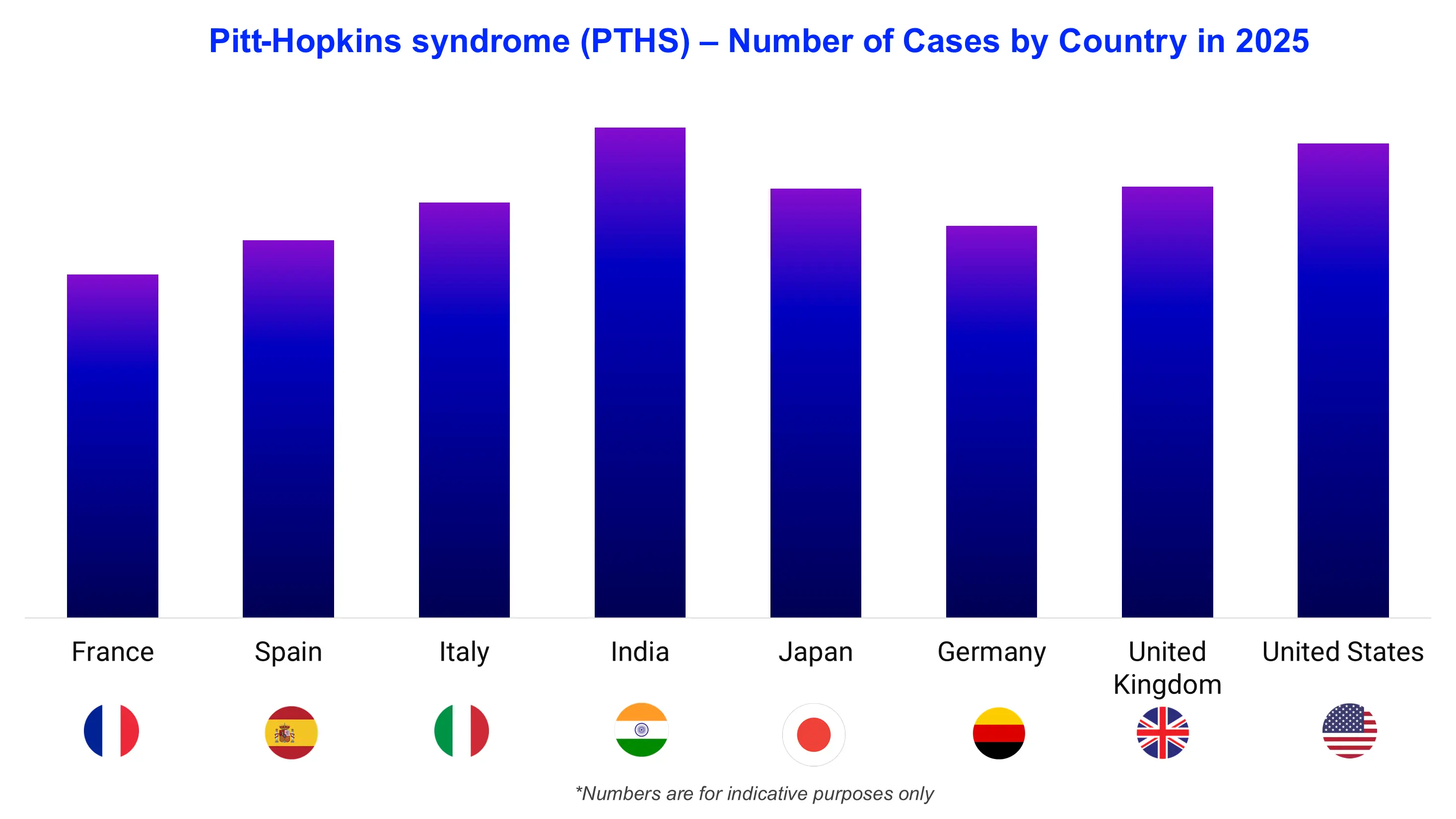
The Pitt-Hopkins syndrome (PTHS) epidemiology data and findings for the United States, Germany, Spain, Italy, France, the United Kingdom, Japan, and India are also provided in the epidemiology section.
|
Country |
Key Insights |
|
United States |
The September 2023 PHRF country census recorded 405 individuals in the United States, the largest identified 8MM country count in that snapshot. By June 2026, the global census had expanded to 1,744 individuals across 78 countries, but the publicly reported update did not provide a new U.S. country total. |
|
Germany |
The September 2023 PHRF census recorded 62 individuals in Germany. A 2024 report from University Hospital Essen described skeletal-muscle vulnerability in a child with PTHS, adding to the characterization of neuromuscular manifestations. A 2025 German case report from the Technical University of Munich described exploratory nicardipine repurposing in a young patient; this remains individual-case evidence rather than efficacy evidence. |
|
France |
The September 2023 PHRF census recorded 56 individuals in France. No contemporary French population-based prevalence estimate was identified in the 2023–2026 literature reviewed. |
|
Italy |
The September 2023 PHRF census recorded 17 individuals in Italy. Italian research has also contributed to the characterization of PTHS and related phenotypes, including a 2024 analysis distinguishing NRXN1-related disorders from Pitt-Hopkins-like presentations and ongoing PTHS gastrointestinal research. |
|
Spain |
The September 2023 PHRF census recorded 29 individuals in Spain. No contemporary Spanish population-based prevalence estimate was identified. Spain was initially planned as a site for the MZ-1866 gene-therapy study, but the sponsor reported in April 2026 that the Spanish regulatory authority requested additional data before the study could proceed there. |
|
United Kingdom |
The September 2023 PHRF census recorded 50 individuals in the United Kingdom. Pitt Hopkins UK subsequently reported contact with more than 120 families in the UK and Ireland in 2024 and estimated approximately 300 diagnosed UK families; this is a patient-organization estimate rather than a national epidemiological count. |
|
Japan |
The September 2023 PHRF census recorded 1 individual in Japan. This very low census count should not be interpreted as prevalence and is likely affected by voluntary international-census participation. A 2026 Japanese case report described seasonal worsening of respiratory dysregulation in a patient with PTHS and evaluated response to topiramate. |
|
India |
The September 2023 PHRF census recorded 7 individuals in India. A 2024 Indian case report described a 10-year-old girl with an 11.7-Mb deletion involving 18q21.2–q22.1 and TCF4, identified by chromosomal microarray, with severe developmental and cognitive impairment and autistic features. This provides contemporary Indian molecular evidence but does not support a national prevalence estimate. |
The main epidemiological opportunity is improved case ascertainment, as the PHRF’s known population suggests substantial underdiagnosis. Wider access to exome/genome sequencing and chromosomal microarray is important, as 20–30% of molecular diagnoses may involve chromosome-level deletions. The 2024 DNA-methylation episignature provides an additional diagnostic and variant-reclassification tool, although negative results in some TCF4 variants show it does not detect every molecular presentation. The clinical burden extends beyond developmental disability. A 2025 U.S.-based immunology study identified a high prevalence of eosinophilic esophagitis and hypogammaglobulinemia in PTHS, while a 2025 Italian report described pediatric gastric volvulus and wandering spleen. These findings reinforce the need for systematic gastrointestinal and immune surveillance rather than management focused solely on neurological and developmental manifestations.
Management of Pitt-Hopkins syndrome remains multidisciplinary and supportive. Developmental, physical, occupational and speech therapies are required from early childhood, with alternative and augmentative communication particularly important because expressive speech is frequently severely restricted. Seizures are managed with standard antiseizure medications, while respiratory dysregulation requires individualized assessment. Gastrointestinal care focuses on proactive management of constipation, reflux, aerophagia, and abdominal distension. Gastrointestinal complications warrant particular attention because impaired communication can delay recognition of pain and abdominal deterioration. Reports of gastrointestinal complications, including gastric volvulus, highlight the need to investigate persistent abdominal distension, severe constipation, vomiting, or acute behavioral changes. In February 2026, the first participant received MZ-1866, an AAV9-based TCF4 gene therapy, in a Phase 1/2 trial. The open-label study initially enrolls patients aged 12–25 years, with a younger cohort planned for 2026. No efficacy conclusions are yet available.


Upto 15% Off
USD
$2699 $2429
$4299 $3869
$5799 $4949
$6999 $5949


*While we strive to always give you current and accurate information, the numbers depicted on the website are indicative and may differ from the actual numbers in the main report. At Expert Market Research, we aim to bring you the latest insights and trends in the market. Using our analyses and forecasts, stakeholders can understand the market dynamics, navigate challenges, and capitalize on opportunities to make data-driven strategic decisions.*
Explore our key highlights of the report and gain a concise overview of key findings, trends, and actionable insights that will empower your strategic decisions.
|
Report Features |
Details |
|
Base Year |
2025 |
|
Historical Period |
2019-2025 |
|
Forecast Period |
2026-2035 |
|
Epidemiology Statistics Provided |
|
|
Segmentation Provided |
|
|
Geographies Covered |
|
Datasheet
One User
USD 2,699
USD 2,429
tax inclusive*
Single User License
One User
USD 4,299
USD 3,869
tax inclusive*
Five User License
Five User
USD 5,799
USD 4,949
tax inclusive*
Corporate License
Unlimited Users
USD 6,999
USD 5,949
tax inclusive*
*Please note that the prices mentioned below are starting prices for each bundle type. Kindly contact our team for further details.*
Flash Bundle
Small Business Bundle
Growth Bundle
Enterprise Bundle
*Please note that the prices mentioned below are starting prices for each bundle type. Kindly contact our team for further details.*
Flash Bundle
Number of Reports: 3
20%
tax inclusive*
Small Business Bundle
Number of Reports: 5
25%
tax inclusive*
Growth Bundle
Number of Reports: 8
30%
tax inclusive*
Enterprise Bundle
Number of Reports: 10
35%
tax inclusive*
How To Order

Select License Type
Choose the right license for your needs and access rights.

Click on ‘Buy Now’
Add the report to your cart with one click and proceed to register.

Select Mode of Payment
Choose a payment option for a secure checkout. You will be redirected accordingly.
Strategic Solutions for Informed Decision-Making
Gain insights to stay ahead and seize opportunities.

Get insights & trends for a competitive edge.

Track prices with detailed trend reports.

Analyse trade data for supply chain insights.

Leverage cost reports for smart savings

Enhance supply chain with partnerships.

Connect For More Information
Our expert team of analysts will offer full support and resolve any queries regarding the report, before and after the purchase.
Our expert team of analysts will offer full support and resolve any queries regarding the report, before and after the purchase.
We employ meticulous research methods, blending advanced analytics and expert insights to deliver accurate, actionable industry intelligence, staying ahead of competitors.
Our skilled analysts offer unparalleled competitive advantage with detailed insights on current and emerging markets, ensuring your strategic edge.
We offer an in-depth yet simplified presentation of industry insights and analysis to meet your specific requirements effectively.




