

Consumer Insights
Uncover trends and behaviors shaping consumer choices today
Procurement Insights
Optimize your sourcing strategy with key market data
Industry Stats
Stay ahead with the latest trends and market analysis.
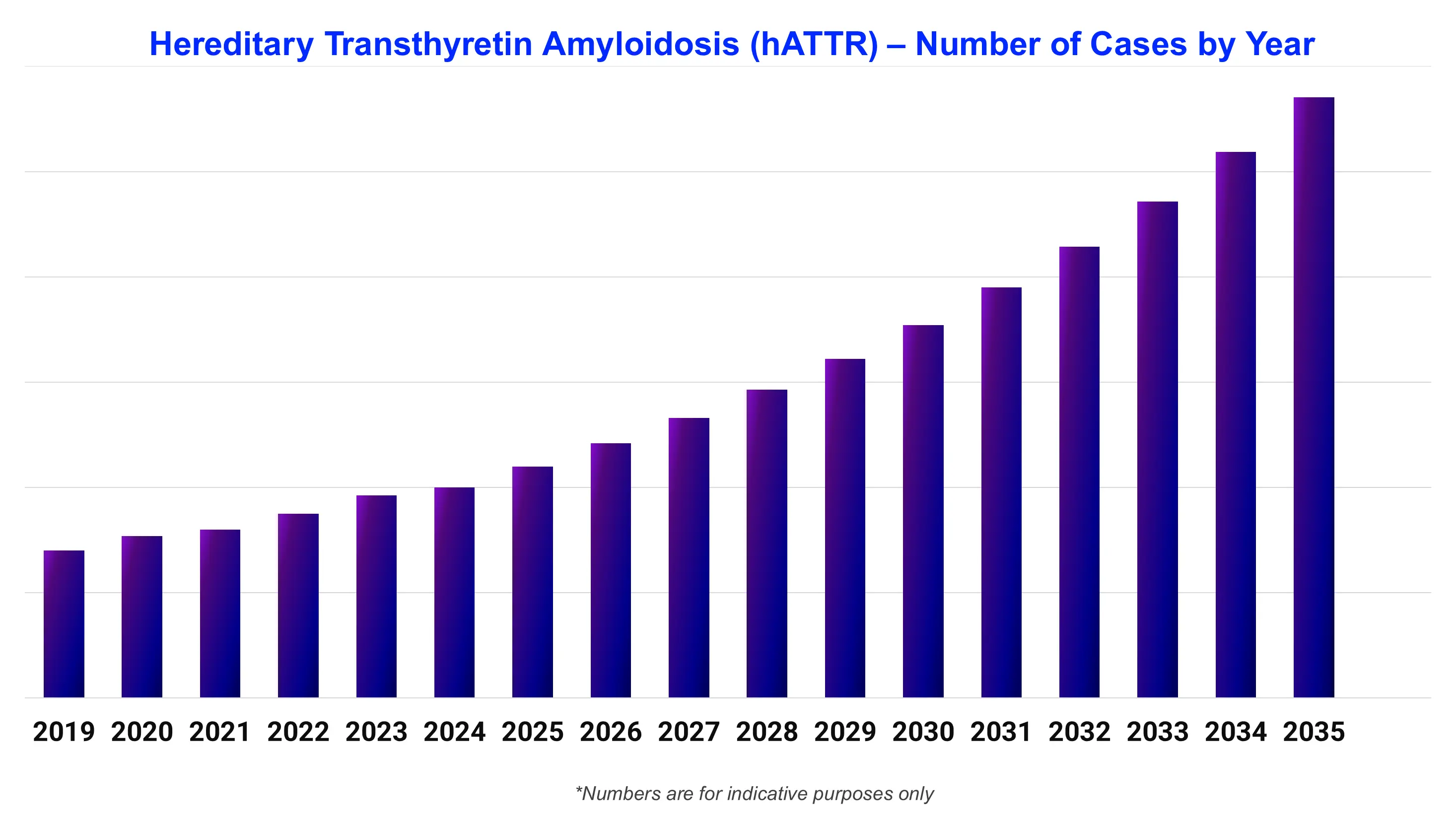
Hereditary Transthyretin Amyloidosis (hATTR) is a rare, progressive and potentially fatal multisystem disease caused by pathogenic variants in the transthyretin (TTR) gene, resulting in the deposition of misfolded transthyretin amyloid fibrils in peripheral nerves, heart and other organs. A 2025 systematic literature review reported substantial heterogeneity in ATTR epidemiology, with prevalence estimates ranging from 6.1 to 232 cases per million across available studies, while recent US real-world analyses estimated 15.1 prevalent ATTR-polyneuropathy cases per million in 2022. According to Hereditary Transthyretin Amyloidosis (hATTR) Epidemiology Forecast by Expert Market Research (EMR), hATTR is a rare multisystem disorder, with improved genetic diagnosis, awareness, and targeted therapies enabling earlier diagnosis and treatment.
Base Year
Historical Period
Forecast Period
Read more about this report - REQUEST FREE SAMPLE COPY IN PDF
Expert Market Research's “Hereditary Transthyretin Amyloidosis (hATTR) Epidemiology Forecast Report 2026-2035” offers comprehensive information on the prevalence and demographics of Hereditary Transthyretin Amyloidosis (hATTR). It projects the future incidence and prevalence rates of Hereditary Transthyretin Amyloidosis (hATTR) cases across various populations. The study covers age, gender, and type as major determinants of the Hereditary Transthyretin Amyloidosis (hATTR) population. The report highlights patterns in the prevalence of Hereditary Transthyretin Amyloidosis (hATTR) over time and projects future trends based on multiple variables.
The report provides a comprehensive overview of the disease, as well as historical and projected data on the epidemiology of Hereditary Transthyretin Amyloidosis (hATTR) in the 8 major markets.
Regions Covered
Hereditary Transthyretin Amyloidosis (hATTR) is a rare, progressive and potentially fatal multisystem disease caused by pathogenic variants in the transthyretin (TTR) gene, resulting in the deposition of misfolded transthyretin amyloid fibrils in peripheral nerves, heart and other organs. Clinical manifestations commonly include progressive sensorimotor and autonomic polyneuropathy, cardiomyopathy, gastrointestinal dysfunction, renal involvement, ocular disease and musculoskeletal complications.
|
Parameter |
Insight |
|
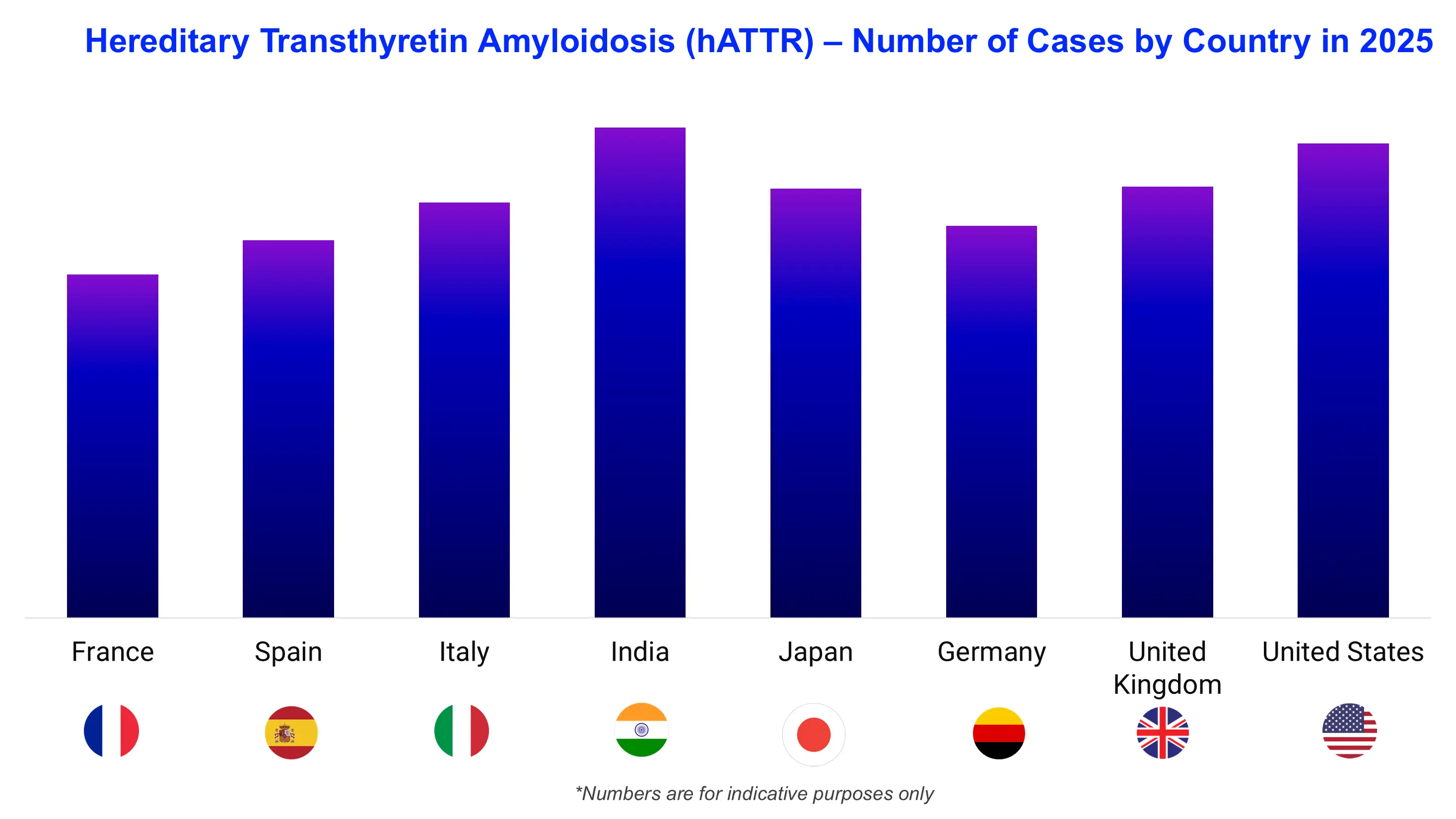
Largest Patient Pool |
Italy |
|
Fastest Growing Country |
Italy |
|
High-Risk Population |
Individuals with a pathogenic TTR variant and a family history of hereditary transthyretin amyloidosis, particularly adults entering the age range at which their specific variant typically manifests. |
|
Key Diagnostic Method |
TTR genetic testing (molecular genetic testing) combined with clinical phenotyping and amyloid typing. |
|
Major Risk Factor |
Inherited pathogenic variants in the TTR gene are the fundamental risk factor for hereditary transthyretin amyloidosis (ATTRv/hATTR). Disease risk varies substantially by variant, penetrance, age, and family background. |
|
Major gap in the market |
Delayed diagnosis and limited access to specialized multidisciplinary care remain major unmet needs in hATTR, particularly among patients without a recognized family history. |
The Hereditary Transthyretin Amyloidosis (hATTR) epidemiology division offers information on the patient pool from history to the present as well as the projected trend for each of the 8 major markets. Expert Market Research provides both current and predicted trends for the Hereditary Transthyretin Amyloidosis (hATTR) epidemiology scenario by examining a wide range of studies. Additionally, the report covers the diagnosed patient pool for Hereditary Transthyretin Amyloidosis (hATTR) and their trends. The data is broken down into specific categories, such as total prevalent cases in males and females, and total diagnosed cases across different age groups and patient pools.
|
Epidemiology Segment |
Key Insights |
|
Diagnosed Prevalent Cases of the Disease |
373 diagnosed ATTRv patients were alive and in active follow-up as of March 2024, corresponding to a national prevalence of 6.33 cases per million population. This represents a 50% increase from 4.33 cases per million in 2020 and is based on a national survey covering 16 Italian referral centres. |
|
Gender-Specific Cases of the Disease |
Male predominance; recent Italian ATTRv cohorts report 69–83.3% male patients, with females comprising approximately 16.7–31%. |
|
Age-Specific Cases of the Disease |
Predominantly adult-onset; mean age at symptom onset ~56.6 years globally, with early-onset disease occurring in some V30M families and late-onset disease commonly emerging after 50 years. |
|
Ethnicity-Wise Cases of the Disease |
Highest established genetic burden occurs among individuals of African ancestry, particularly for p.Val142Ile; Portuguese ancestry is strongly associated with p.Val50Met clusters, while Japanese populations also have established p.Val50Met-associated ATTRv clusters |
|
Mortality and Survival Analysis of the Disease |
In a 442-patient Spanish hATTR cardiac amyloidosis cohort, 21.9% died and 5-year event-free survival was 66.9% from diagnosis; cardiac disease severity, neurological involvement and delayed diagnosis were major adverse prognostic factors. Disease-modifying therapy was associated with improved survival. |
Read more about this report - REQUEST FREE SAMPLE COPY IN PDF
The Hereditary Transthyretin Amyloidosis (hATTR) epidemiology data and findings for the United States, Germany, Spain, Italy, France, the United Kingdom, Japan, and India are also provided in the epidemiology section.
|
Country |
Key Insights |
|
United States |
A 2025/2026 US analysis of electronic health records and claims estimated 2022 ATTRv-related phenotypes using narrow diagnostic definitions, but the reported phenotype-specific figures were for overall ATTR: ATTR-polyneuropathy (ATTR-PN) 15.1 cases per million, ATTR-cardiomyopathy 41.1 per million, and mixed ATTR 9.8 per million. These figures include patients whose ATTR subtype is not necessarily hereditary and therefore should not be entered as hATTR prevalence. |
|
Germany |
The most directly cited German estimate is approximately 1–5 cases per million population. German/Austrian expert recommendations reported about 400 known hATTR cases in Germany and Austria combined, while noting that additional patients and families were likely undiagnosed. |
|
France |
A 2025 nationwide French study in the European Journal of Neurology explicitly cites the European ATTRv prevalence range as 1/130,000 in France to 1/675,000 in Germany, while noting that prevalence is probably underestimated because of underdiagnosis. There is also much stronger recent French ascertainment evidence than this estimate alone. A nationwide retrospective survey identified 1,179 individuals with pathogenic or likely pathogenic TTR variants among 16,640 people tested between 2018 and 2023. |
|
Italy |
A 2025 national survey covering 16 Italian ATTR referral centres identified 373 living ATTRv patients in active follow-up as of March 2024. Using the Italian population denominator, the investigators calculated a national prevalence of 6.33/million, compared with 4.33/million in the previous 2020 national registry-a 50% increase over four years. |
|
Spain |
The strongest recent national evidence is the 2025 multicentre Spanish genetic study, which analysed 4,526 individuals across 48 of Spain's 52 provinces/regions and identified 393 carriers of pathogenic TTR variants. The study explicitly notes that national prevalence data remain scarce and that high-prevalence areas exist, including Mallorca. |
|
United Kingdom |
The 2024 UK Biobank study of 469,789 participants found 473 carriers of likely pathogenic/pathogenic TTR variants, corresponding to approximately 0.10% (about 1 in 1,000) of the study population. However, only 13 of these 473 carriers (2.8%) had hospital diagnostic codes compatible with cardiac or neurologic amyloidosis. Thus, the 1-in-1,000 figure represents pathogenic TTR-variant carrier prevalence, not clinically manifest hATTR prevalence. |
|
Japan |
0.87-1.1 cases per million; national estimate based on MHLW epidemiological survey, likely underestimated. |
|
India |
Recent Indian literature continues to describe the epidemiology as poorly characterized. The 2025 systematic review of amyloidosis in India found that most evidence comes from retrospective studies and emphasized substantial underdiagnosis; it did not establish a national ATTRv prevalence. |
The principal market gap is delayed and inconsistent diagnosis, particularly in patients presenting without a recognized family history or with nonspecific neuropathy, cardiomyopathy, autonomic dysfunction, or mixed manifestations. A 2025 study reported a median diagnostic delay of 1,262 days among apparently sporadic ATTRv patients. In France, experts have additionally identified non-standardized genetic-testing pathways, communication gaps and regulatory complexity as barriers to timely diagnosis. A major untapped opportunity is therefore systematic genetic and cascade screening of high-risk populations and relatives of confirmed patients. Contemporary evidence shows that screening can identify clinically silent carriers and early organ involvement before advanced disease develops. In a 2025 prospective cascade-screening study, 20.5% of asymptomatic relatives carried a pathogenic TTR variant without scintigraphic cardiac involvement, while 8.2% already had detectable cardiac amyloidosis. A 2026 Italian multicentre study similarly found that cascade testing of relatives identified hundreds of previously unrecognized carriers and enabled earlier clinical diagnosis.
Treatment of hereditary transthyretin amyloidosis (hATTR/ATTRv) has shifted from predominantly supportive management toward disease-modifying suppression of transthyretin production and stabilization of circulating TTR tetramers. Current international guidance recommends TTR gene silencers or tetramer stabilizers for appropriate symptomatic patients, with treatment selection determined primarily by the dominant phenotype polyneuropathy, cardiomyopathy, or mixed disease and by local regulatory approvals. Early treatment is important because existing therapies generally slow or stabilize progression rather than restore established organ damage. TTR gene silencers constitute the most important expanding treatment class for ATTRv. Small-interfering RNA (siRNA) therapies such as patisiran and vutrisiran and the antisense oligonucleotides inotersen and eplontersen reduce hepatic production of both mutant and wild-type TTR.


Upto 15% Off
USD
$2699 $2429
$4299 $3869
$5799 $4949
$6999 $5949


*While we strive to always give you current and accurate information, the numbers depicted on the website are indicative and may differ from the actual numbers in the main report. At Expert Market Research, we aim to bring you the latest insights and trends in the market. Using our analyses and forecasts, stakeholders can understand the market dynamics, navigate challenges, and capitalize on opportunities to make data-driven strategic decisions.*
Explore our key highlights of the report and gain a concise overview of key findings, trends, and actionable insights that will empower your strategic decisions.
|
Report Features |
Details |
|
Base Year |
2025 |
|
Historical Period |
2019-2025 |
|
Forecast Period |
2026-2035 |
|
Epidemiology Statistics Provided |
|
|
Segmentation Provided |
|
|
Geographies Covered |
|
Datasheet
One User
USD 2,699
USD 2,429
tax inclusive*
Single User License
One User
USD 4,299
USD 3,869
tax inclusive*
Five User License
Five User
USD 5,799
USD 4,949
tax inclusive*
Corporate License
Unlimited Users
USD 6,999
USD 5,949
tax inclusive*
*Please note that the prices mentioned below are starting prices for each bundle type. Kindly contact our team for further details.*
Flash Bundle
Small Business Bundle
Growth Bundle
Enterprise Bundle
*Please note that the prices mentioned below are starting prices for each bundle type. Kindly contact our team for further details.*
Flash Bundle
Number of Reports: 3
20%
tax inclusive*
Small Business Bundle
Number of Reports: 5
25%
tax inclusive*
Growth Bundle
Number of Reports: 8
30%
tax inclusive*
Enterprise Bundle
Number of Reports: 10
35%
tax inclusive*
How To Order

Select License Type
Choose the right license for your needs and access rights.

Click on ‘Buy Now’
Add the report to your cart with one click and proceed to register.

Select Mode of Payment
Choose a payment option for a secure checkout. You will be redirected accordingly.
Strategic Solutions for Informed Decision-Making
Gain insights to stay ahead and seize opportunities.

Get insights & trends for a competitive edge.

Track prices with detailed trend reports.

Analyse trade data for supply chain insights.

Leverage cost reports for smart savings

Enhance supply chain with partnerships.

Connect For More Information
Our expert team of analysts will offer full support and resolve any queries regarding the report, before and after the purchase.
Our expert team of analysts will offer full support and resolve any queries regarding the report, before and after the purchase.
We employ meticulous research methods, blending advanced analytics and expert insights to deliver accurate, actionable industry intelligence, staying ahead of competitors.
Our skilled analysts offer unparalleled competitive advantage with detailed insights on current and emerging markets, ensuring your strategic edge.
We offer an in-depth yet simplified presentation of industry insights and analysis to meet your specific requirements effectively.




