

Consumer Insights
Uncover trends and behaviors shaping consumer choices today
Procurement Insights
Optimize your sourcing strategy with key market data
Industry Stats
Stay ahead with the latest trends and market analysis.
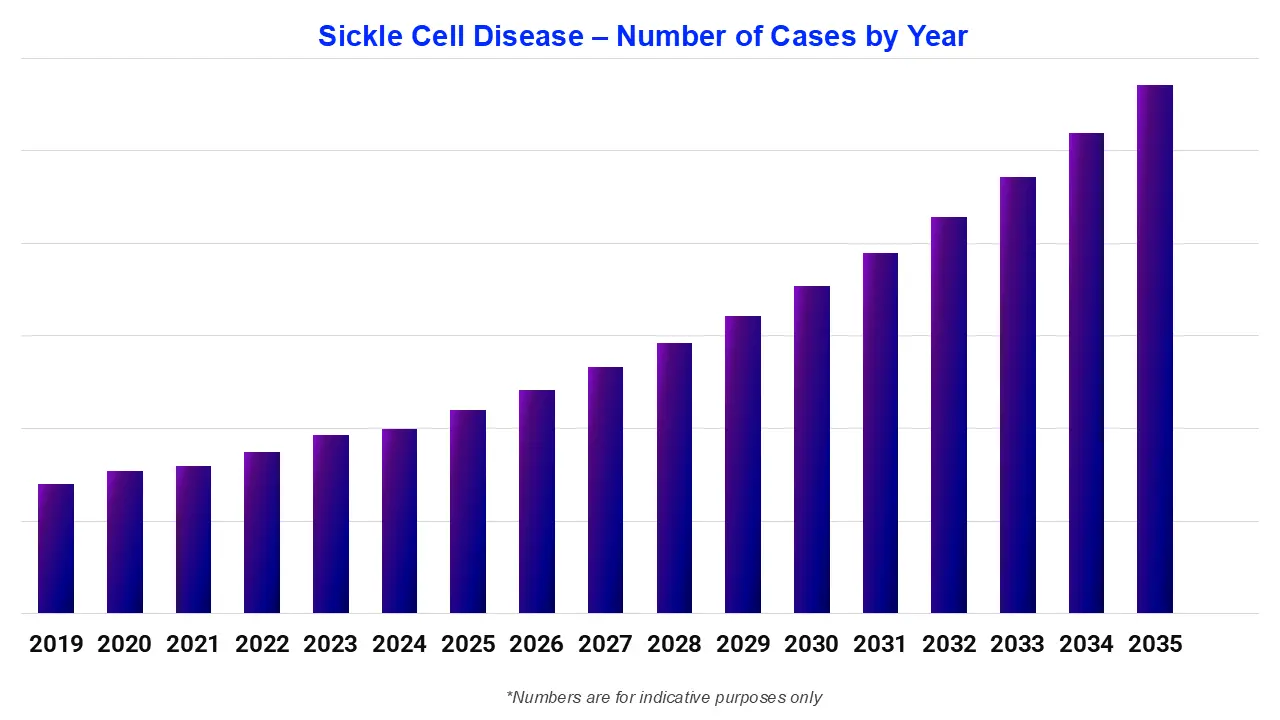
Sickle cell disease is a hereditary hemoglobin disorder characterized by abnormal, sickle-shaped red blood cells that lead to chronic anemia, pain crises, and organ damage. According to the World Health Organization 2025 report, approximately 7.74 million people were living with sickle cell disease globally in 2021, with nearly 515,000 new births recorded annually. As per Expert Market Research epidemiology forecast, the blood disorder burden is expected to continue rising due to increasing population susceptibility and improved diagnosis rates worldwide, especially in high-prevalence regions.
Base Year
Historical Period
Forecast Period
Read more about this report - Request a Free Sample
Expert Market Research's “Sickle Cell Disease Epidemiology Forecast Report 2026-2035” offers comprehensive information on the prevalence and demographics of Sickle Cell Disease. It projects the future incidence and prevalence rates of Sickle Cell Disease cases across various populations. The study covers age, gender, and type as major determinants of the Sickle Cell Disease population. The report highlights patterns in the prevalence of Sickle Cell Disease over time and projects future trends based on multiple variables.
The report provides a comprehensive overview of the disease, as well as historical and projected data on the epidemiology of sickle cell disease in the 8 major markets.
Regions Covered
Sickle cell disease is a genetic blood disorder in which red blood cells become abnormally shaped like a sickle or crescent due to a mutation in the hemoglobin gene. This altered shape reduces the cells’ flexibility, causing blockages in blood vessels and reduced oxygen delivery to tissues. It is inherited when both parents pass the defective gene. The major types include sickle cell anemia (HbSS), hemoglobin SC disease, and sickle beta-thalassemia. Symptoms often include pain crises, anemia, and organ damage. It is classified under hemoglobin disorders, which affect normal oxygen transport in the body.
| Parameter | Insight |
| Fastest Growing Region | India |
| High-Risk Population | African ancestry groups |
| Key Diagnostic Method | HPLC screening |
| Major Risk Factor | HbS gene mutation |
| Major gap in the market | Limited gene therapy access |
The Sickle Cell Disease epidemiology division offers information on the patient pool from history to the present as well as the projected trend for each of the 8 major markets. Expert Market Research provides both current and predicted trends for the Sickle Cell Disease epidemiology scenario by examining a wide range of studies. Additionally, the report covers the diagnosed patient pool for Sickle Cell Disease and their trends. The data is broken down into specific categories, such as total prevalent cases in males and females, and total diagnosed cases across different age groups and patient pools.
| Epidemiology Segment | Key Insights |
| Diagnosed Prevalent Cases of the Disease | According to Niyati Harshadkumar Zaveri et al., 2025, sickle cell disease shows the highest incidence in India and Africa, with a significant burden in tribal populations accounting for about 8.6% of India’s population (approximately 67.8 million people). In Gujarat, the sickle cell trait incidence is reported at 11.37%, indicating substantial undiagnosed and carrier-level prevalence within regional tribal communities and high-risk districts. |
| Gender-Specific Cases of the Disease | According to Sameer Kumar Majety et al., 2025, females show higher prevalence and incidence rates of sickle cell disease across most regions of the United States, though a few areas show male predominance. Incidence trends consistently indicate female predominance overall, while death rates vary by age, with male predominance in early adulthood and female predominance in older age groups. |
| Age-Specific Cases of the Disease | According to Sameer Kumar Majety et al., 2025, prevalence peaks in the 15–19 age group for both sexes, with 3,201.53 cases in females and 2,881.27 cases in males, showing adolescent concentration. Infants and neonates experience the highest incidence, mortality, and DALY rates, while children aged 5–14 years and individuals aged 75+ years show the lowest disease burden. |
| Ethnicity-Wise Cases of the Disease | According to Niyati Harshadkumar Zaveri et al., 2025, India’s tribal populations show disproportionately high sickle cell burden, especially in central and western regions such as Madhya Pradesh and Maharashtra. In Madhya Pradesh, sickle heterozygotes and homozygotes are substantial across 27 of 45 districts, with HbS incidence ranging from 10% to 33%, reflecting strong ethnic clustering. |
| Mortality and Survival Analysis of the Disease | According to Sameer Kumar Majety et al., 2025, crude deaths are concentrated in the 30–44 age group for both sexes, indicating a significant adult mortality burden from complications of sickle cell disease. DALY burden is highest among males aged 35–39 years (1,815.37) and females aged 30–34 years (1,962.98), while infants show the highest mortality and DALY rates overall. |
This section provides information on the types of Sickle Cell Disease, focusing on their classification and type-specific disease characteristics within the overall epidemiology framework.
| Disease Type | Prevalence |
| Hemoglobin SS | Most severe form; both beta-globin genes carry sickle mutation, leading to frequent complications and chronic anemia. |
| Hemoglobin Sβ Thalassemia | Sickle mutation with beta-thalassemia gene; severity varies from mild to severe depending on beta-globin production. |
| Hemoglobin SC Disease | One sickle gene and one hemoglobin C gene; generally milder but still causes vaso-occlusive complications. |
Read more about this report - Request a Free Sample
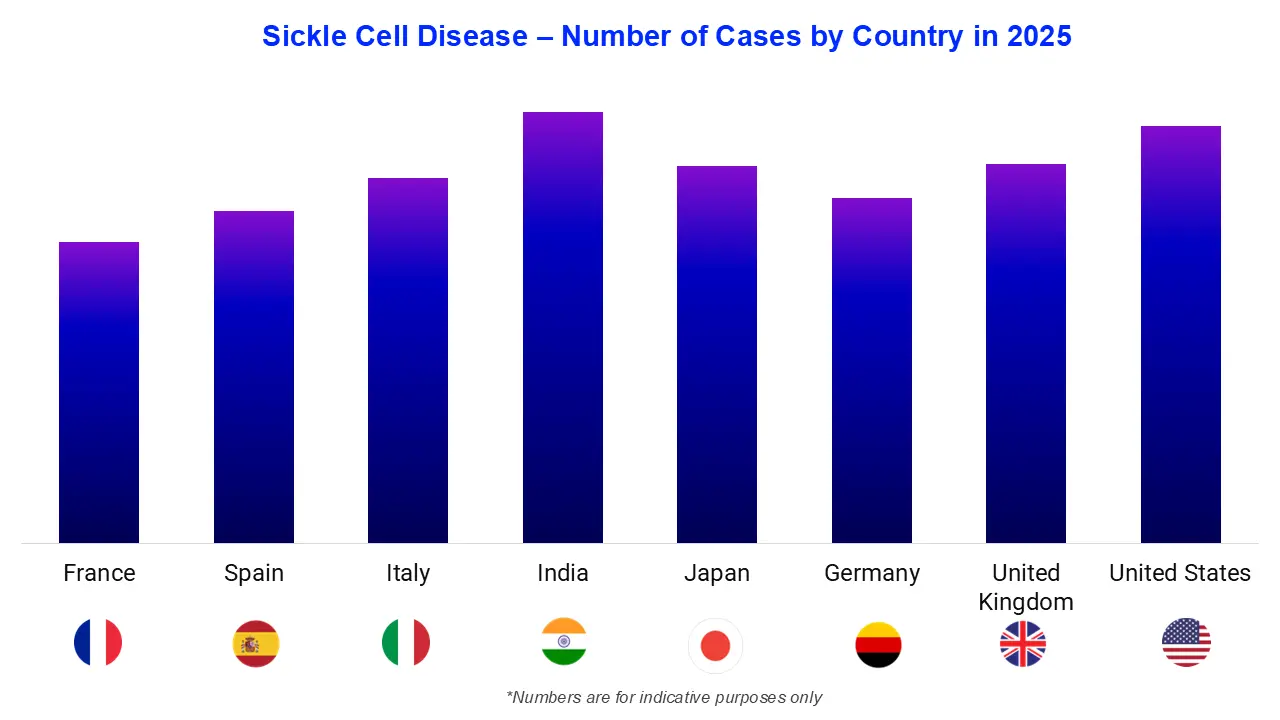
The Sickle Cell Disease epidemiology data and findings for the United States, Germany, Spain, Italy, France, the United Kingdom, Japan, and India are also provided in the epidemiology section.
| Country | Key Insights |
| United States | According to Giovanna Tedesco Barcelos et al., universal newborn screening programs indicate a crude birth prevalence of approximately 1 in 2,070 live births between 2016 and 2020. According to published estimates, nearly 100,000 individuals are living with this condition, with around 60% being adults aged 18 years and older. Epidemiology is concentrated in African American populations due to historical genetic distribution. |
| United Kingdom | Approximately 18,500 people are living with the condition nationwide, with around 300 babies born annually with sickle cell disease. Epidemiological data shows a steady increase in prevalence, driven largely by demographic shifts and migration from high-prevalence regions. The highest burden is observed in urban centers such as London. According to NHS England, improved survival and better clinical management have contributed to a growing adult patient population. |
| Germany | In Germany, sickle cell disease remains rare but is rising due to migration from high-prevalence regions. According to hematology registries, only a few thousand cases are estimated nationwide. Most patients are concentrated in urban centers, with improved diagnosis contributing to gradual increases in reported prevalence. |
| Spain | The disease in Spain is rare in the native population but is gradually increasing due to immigration, according to national hematology reports. Cases are mainly concentrated in major cities such as Madrid and Barcelona, with improved screening systems supporting earlier diagnosis and detection of imported cases. |
| Italy | In Italy, sickle cell disease remains uncommon but is increasing due to migration from Africa and the Middle East, according to clinical registries. Cases are mainly concentrated in urban regions such as Rome and Milan. Improved newborn screening has contributed to better detection and rising reported prevalence. |
| France | The disease in France is among the most prevalent genetic disorders in Europe, according to national surveillance data. Tens of thousands of individuals are affected, especially in Île-de-France. Prevalence is increasing due to migration and improved newborn screening, leading to better case identification and survival outcomes. |
| Japan | In Japan, sickle cell disease is extremely rare, with only sporadic cases reported according to hematology literature. There is no significant native prevalence, and most cases are linked to foreign ancestry. Overall disease burden remains minimal, with stable and very low epidemiological presence nationwide. |
| India | According to Suchitra Surve et al.(2025), the prevalence of sickle cell disease ranges from approximately 1% to 2% in high-burden districts, while the sickle cell trait is reported at 5.9% and HbS-beta-thalassemia at 0.37%. According to systematic reviews by Rao et al., prevalence is higher in tribal communities at 4.05% compared to 0.84% in non-tribal populations. Epidemiological distribution is heterogeneous across states such as Odisha, Chhattisgarh, and Maharashtra. |
Sickle cell disease treatment focuses on relieving symptoms, preventing complications, and improving quality of life. Common approaches include pain management during crises, hydration therapy, blood transfusions, and medications such as hydroxyurea to increase fetal hemoglobin production. Preventive care like vaccinations and antibiotics helps reduce infection risk. In severe cases, stem cells or bone marrow transplantation may offer a potential cure. Ongoing research is improving outcomes and survival rates. These strategies fall under anemia management, aiming to reduce complications and enhance oxygen delivery efficiency in affected patients.
The limited availability of granular, real-time surveillance data, which restricts early detection and accurate burden estimation, particularly in rural and underserved populations, is a key market gap in the disease epidemiology landscape. Another major unmet need is the weak integration of digital health tools and standardized reporting systems across healthcare providers, leading to fragmented datasets and delayed policy responses. These gaps create significant opportunities for investment in AI-driven epidemiological modeling, mobile health reporting platforms, and improved diagnostic access, which can enhance disease tracking, strengthen preventive strategies, and support more efficient healthcare resource allocation across the covered markets.


Upto 15% Off
USD
$2699 $2429
$4299 $3869
$5799 $4949
$6999 $5949


*While we strive to always give you current and accurate information, the numbers depicted on the website are indicative and may differ from the actual numbers in the main report. At Expert Market Research, we aim to bring you the latest insights and trends in the market. Using our analyses and forecasts, stakeholders can understand the market dynamics, navigate challenges, and capitalize on opportunities to make data-driven strategic decisions.*
Explore our key highlights of the report and gain a concise overview of key findings, trends, and actionable insights that will empower your strategic decisions.
|
Report Features |
Details |
|
Base Year |
2025 |
|
Historical Period |
2019-2025 |
|
Forecast Period |
2026-2035 |
|
Epidemiology Statistics Provided |
|
|
Segmentation Provided |
|
|
Geographies Covered |
|
Datasheet
One User
USD 2,699
USD 2,429
tax inclusive*
Single User License
One User
USD 4,299
USD 3,869
tax inclusive*
Five User License
Five User
USD 5,799
USD 4,949
tax inclusive*
Corporate License
Unlimited Users
USD 6,999
USD 5,949
tax inclusive*
*Please note that the prices mentioned below are starting prices for each bundle type. Kindly contact our team for further details.*
Flash Bundle
Small Business Bundle
Growth Bundle
Enterprise Bundle
*Please note that the prices mentioned below are starting prices for each bundle type. Kindly contact our team for further details.*
Flash Bundle
Number of Reports: 3
20%
tax inclusive*
Small Business Bundle
Number of Reports: 5
25%
tax inclusive*
Growth Bundle
Number of Reports: 8
30%
tax inclusive*
Enterprise Bundle
Number of Reports: 10
35%
tax inclusive*
How To Order

Select License Type
Choose the right license for your needs and access rights.

Click on ‘Buy Now’
Add the report to your cart with one click and proceed to register.

Select Mode of Payment
Choose a payment option for a secure checkout. You will be redirected accordingly.
Strategic Solutions for Informed Decision-Making
Gain insights to stay ahead and seize opportunities.

Get insights & trends for a competitive edge.

Track prices with detailed trend reports.

Analyse trade data for supply chain insights.

Leverage cost reports for smart savings

Enhance supply chain with partnerships.

Connect For More Information
Our expert team of analysts will offer full support and resolve any queries regarding the report, before and after the purchase.
Our expert team of analysts will offer full support and resolve any queries regarding the report, before and after the purchase.
We employ meticulous research methods, blending advanced analytics and expert insights to deliver accurate, actionable industry intelligence, staying ahead of competitors.
Our skilled analysts offer unparalleled competitive advantage with detailed insights on current and emerging markets, ensuring your strategic edge.
We offer an in-depth yet simplified presentation of industry insights and analysis to meet your specific requirements effectively.




