How Armoured Trucks Are Evolving in High-Risk Regions?
Armoured trucks continue to be indispensable for cash-in-transit (CIT) operations, particularly in markets where political instability, crime, or lack of urban infrastructure pose ongoing challenges. Given the escalating nature of security threats, CIT service providers are investing in next generation armoured vehicles with improved protection and technology in the interest of operational continuity and asset protection.
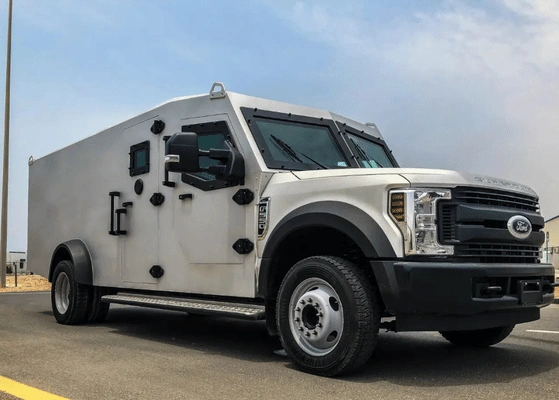
Across all high-risk regions, armoured vehicle fleet continues to be redesigned with composite plate armour, epaulet-type secure payload compartments, and AI-integrated CCTV monitoring systems. Both CIT service providers and armoured vehicle manufacturers have become more focused on vehicle resilience, predictive route planning, and situational awareness to reduce vulnerability to theft, hijacking, or passing attack scenarios. For banks, central monetary authorities and retail chains that rely on the movement of cash and currency, these enhancements have become strategic necessities.
Armoured vehicles are being increasingly fitted with telematics, geofences, and remote override systems, enabling operators to proactively respond to threats along urban and rural routes. Regions like Latin America, Sub-Saharan Africa, and limited parts of Southeast Asia, have become much more prone to threat. As a direct result, fleet customisation and integrated command solutions are quickly becoming the common base-standard of armoured transport logistics.
Technology and Risk Mitigation Driving Next-Generation Armoured Vehicle Design
Modern armoured vehicles are undergoing a radical change. Blast-resistant flooring, run-flat tires, and advanced locking systems have become key requirements as the result of new insurance standards and greater client expectations in high-risk working environments.
Electronic systems are increasingly playing a crucial role in protecting and securing operations. AI-powered cabin surveillance, for example, enable real-time detection of suspicious behaviour or facial anomalies, whereas biometric access controls help prevent unauthorised internal breaches. These technological developments are serving to protect both cargo and personnel with operational reliability and overall security during cash-in-transit trips.
Driver Safety and Training Are Evolving
Operating in high-risk areas requires more than just robust vehicles; it demands highly trained personnel. Cash-in-transit crews have now become specialised, receiving tactical driving and threat assessment training, as well as crisis communication training aimed at giving them the skills to both recognise and respond appropriately to a crisis under pressure.
To further bolster on-ground capabilities, some operators are deploying hybrid teams that include ex-military personnel, leveraging their field experience and tactical discipline. Onboard communications have also been enhanced with secure links to operational control centres in real-time, panic alerts, and radios designed to be resistant to jammers, all of which enhance the crew survivability in an incident and response time.
Operational Intelligence Is Driving Smarter Routine
- Historical data about previous incidents is used to identify ambush-prone routes.
- AI-supported software suggests the best routes based on traffic conditions, using risk heat-maps and time-of-day information.
- Weather and terrain alerts consolidated with digital maps provide companies with early warnings to avoid potential delays or vulnerabilities.
This shift toward intelligence-led operations provides companies a way to balance efficient logistics with safety, especially when transporting currency in areas with unpredictable violence.
For full market data and security trends, see our Cash in Transit Services Market
Cash Logistics Is Adapting to New-Age Risks
Armoured truck fleets operating in high-risk environments have surpassed the common understanding of trucks as fortified steel boxes with secure compartments. Armoured trucks are used as mobile franchises, utilising incredible protection, surveillance, and data systems to combat a growing range of threats from petty theft to organized armed assaults. Logistics companies that operate in high-risk environments like Pakistan, Afghanistan, and Iraq understand the value of innovation and continued flexibility in operations to meet client expectations and deliver safe and reliable services.











Share