How Europe’s Dairy Export and Trade Outlook Is Shaping Global Markets?
Today, Europe represents nearly one-third of global dairy exports and a number of countries make important contributions to this market share including Germany, France, the Netherlands, and Ireland.
However, the European dairy export landscape is changing. Emerging economies across Asia and Africa are demanding more dairy and the changing global geopolitical and climate dynamics are reshaping the landscape for European dairy export opportunities. Furthermore, while evolving trade agreements and sustainability standards are providing opportunities for European dairy exporters, they are also adding challenges.
As Europe responds to these developments, it has been continuing to set the global standard for quality, safety and innovation across the dairy sector.
Asia and the Middle East Drive Strong Demand
One of the biggest motivators of growth in the European dairy export market is the increasing demand in Asia. Markets including China, Vietnam and the Philippines are showing extraordinary demand for European milk powders, and infant nutrition products. More particularly, the European infant formula enjoys a premium reputation for safety and quality, making it a preferred choice among middle-class families in Asia.
In the Middle East, cheese and butter imports from Europe have been increasing at a steady pace, with Saudi Arabia and the UAE now emerging as significant trade partners. Demand is increasing because of population growth, rising incomes, and the impacts of Western diets.
For European exporters, these regions represent short-term demand and offer longer-term strategic growth opportunities.
Trade deals enhance Europe's position
European dairy exports have clearly been positively affected by trade deals that make accessing global markets easier. The EU-Japan Economic Partnership Agreement has reduced tariffs on European cheese providing new opportunities for exports. On the other hand, free trade deals with Canada and South Korea are also underpinned by strong dairy flows.
Negotiation with countries such as Australia and India, could shape future trade prospects. Trade deals and agreements that reduce and eliminate trade barriers enable European dairy producers to be competitive against competitors.
Nevertheless, the ongoing ramifications of Brexit continue to impede trade flows, particularly around the United Kingdom’s imports of EU dairy products and exports of dairy products from Ireland.
Sustainability Standards Affecting Trade Agreements
Sustainability appears to be an important emerging theme in Europe’s dairy trade outlook. Quite a number of international buyers are now looking for demonstrable standards of low-carbon production, animal welfare and traced supply chains.
European exporters have begun adopting green initiatives. Irish dairy exporters, for example, are marketing certified standards for grass-fed cows, and Dutch cooperatives have invested in different cow feed that reduces methane. These actions are modelled on consumer expectations, and appear to align with the targets of the EU’s Green Deal.
Supply Chain Difficulties and Global Geopolitical Risks
Despite persistent strong demand for dairy globally, dairy export flows from Europe are facing challenges getting into international trade. Current geopolitical conflict, such as the war in Ukraine, continues to affect supply chains and routes, while the elevated energy prices present challenges for milk production. Additional inputs have increased production costs for exporters, compressing their margin.
This, in addition to logistics costs due to shipping delays and bottlenecks, is combining to make it harder for European producers to sustain competitiveness. For exporters, the challenges of ensuring a reliable supply is forcing them to evaluate their balance of marginal gain per unit provided with cost efficiencies for the price of their services.
Innovation and Value-Added Products Boost Exports
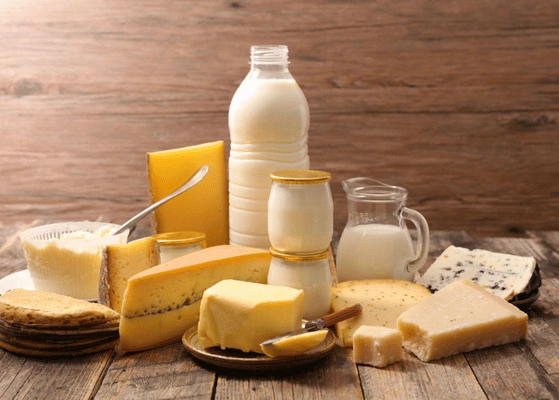
While bulk dairy commodities continue to be significant export facilitators, value-added products are proving to be the true export growth motivators. European cheese varieties, lactose free milk powders, and functional dairy proteins are grabbing niche demand in overseas markets.
For example, whey protein concentrate has been exported to Asian and North American markets, to meet the growing demand from the health supplement and sports nutrition industry. Additionally, European premium cheese (i.e., Parmigiano-Reggiano, Gouda, and Brie) continues to create its own luxury niche in urban Asian supermarket chains.
By focusing on high margin and differentiated products, European exporters are reducing their dependence on commodity pricing cycles, while increasing their global brand equity.
Digitalization Supports Trade Growth
Technology is continuing to play more of an impact on Europe’s dairy exporters. Digital traceability tools, blockchain enabled supply chain systems, and e-commerce trade platforms are opening new markets and enabling exporters to create transparency to build trust with buyers across the globe.
In addition, e-commerce opens up new sales channels. European dairy producers are selling directly to end-users in their Asian or Middle Eastern international markets through e-commerce platforms and avoiding traditional distributors. As a result, the digital wave is starting to provide smaller co-operatives and niche producers the ability to reach international markets that were previously dominated by larger exporters.
For complete analysis and detailed forecasts, explore our Europe Dairy Market
Europe’s Dairy Export Outlook Remains Strong
For a long time, Europe has kept its status as the pillar of international trade in milk, and current trends suggest it will continue along that path. There are immense markets in Asia and the Middle East, satisfactory trade policy initiatives, and increasing focus on sustainability, meaning Europe's exporters are well placed to continue being leaders.
But while uncertainty and geopolitical risk add pressure on the supply chain, successful producers will have to be innovative, look for value-added products, and invest in digital solutions.
In a world of ongoing increase in dairy consumption, Europe's trade outlook is not just about preserving the tradition and legacy of European dairy but is about using capabilities to influence global dairy consumption in the future.









Share