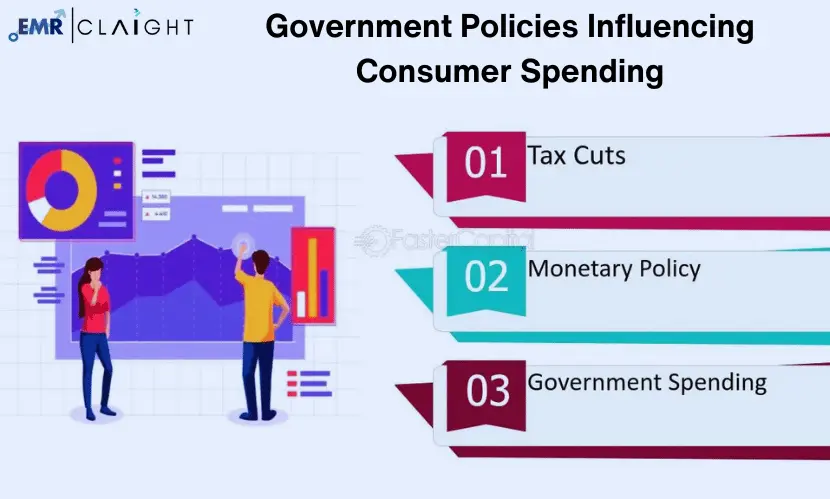
Government policies play a crucial role in shaping economic landscapes and influencing consumer behaviours and their spending habits. The survey by expert market research conducted across India including rural and urban demographics, offers a deep dive into how specific policies have altered spending patterns across multiple sectors.
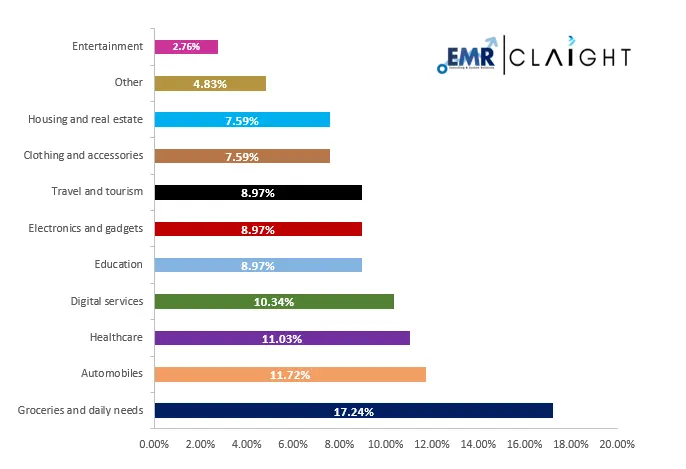
Impact of Government Policies on Daily Spending
The survey reveals that groceries and daily needs lead the changes, with 17.24% of respondents noting the most significant impact in this category. This could be linked to policy changes affecting food pricing and subsidies. The automobile sector follows with 11.72% citing changes, possibly due to adjustments in vehicle taxes and emissions standards. Healthcare (11.03%) and digital services (10.34%) also see substantial effects, reflecting policy reforms in medical service accessibility and digital infrastructure advancements. Spending in travel and tourism, education, and electronics and gadgets each account for 8.97%, suggesting moderate impact levels that could stem from policies on educational funding, travel restrictions, and import taxes on electronics. Lower down the scale, clothing and accessories, along with housing and real estate, both report changes by 7.59% of participants, indicating governmental influence through VAT adjustments and housing market regulations.

Governmental Influence Towards Enhancing Digital Infrastructure and Consumer Spending
The trend towards enhancing digital infrastructure and healthcare accessibility is poised to continue, driven by governmental prioritization of these sectors. With significant legislative support and financial backing, initiatives aimed at expanding digital connectivity, such as the National Broadband Mission, and healthcare services, especially under the Ayushman Bharat scheme, are key areas of focus. This emphasis is increasingly relevant in the aftermath of the global health crisis, which accelerated the adoption of digital platforms for a variety of services, from education to remote work.
There's also a growing movement towards integrating technology with traditional industries like agriculture and manufacturing. Policies promoting the use of digital technologies in these sectors are expected to influence consumer spending patterns further. The study also looks into examples and case studies such as the use of AI and IoT in agriculture for better crop management and yield prediction is likely to increase efficiency and reduce costs, potentially affecting prices and consumer spending on food products.
The survey's insights are crucial as they not only reflect current consumer responses but also hint at future economic directions. Prime Minister Narendra Modi's statement about the adaptability of society underscores the importance of responsive and flexible policy frameworks that can accommodate rapid technological advancements and shifting economic landscapes. For policymakers and businesses, understanding these dynamic consumer responses helps in crafting more effective strategies that align with both immediate needs and long-term objectives. It allows for a proactive approach in policy formulation and business planning, ensuring that both sectors are well-prepared to handle upcoming changes and can leverage these insights to foster innovation and competitiveness in the global market. These strategies, rooted in comprehensive data and forward-thinking policies, will be essential for driving the nation's development in the coming years.











Share