Growing Demand for Smart Refrigerators Across the Gulf Region
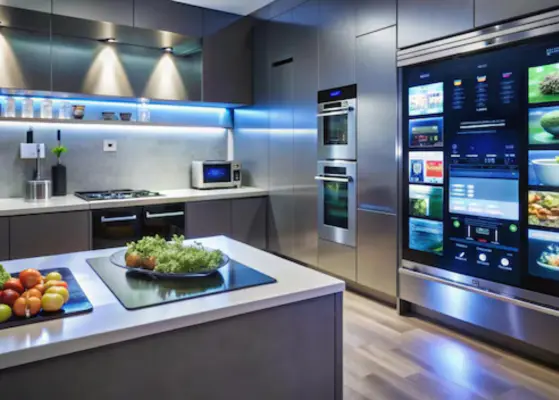
Smart refrigerators are evolving fast in Gulf households, and leading appliance companies are sharpening their product strategies in response. The Gulf region has become a promising zone for connected kitchen devices, supported by rising disposable incomes, modern housing layouts, and people’s interest in digital connectivity. Smart refrigerators are moving beyond novelty and becoming essential for premium kitchen upgrades. Their role is changing from basic cooling to guided food storage, household planning, and cross-device connectivity.
Major brands such as Samsung, LG, Bosch, Hisense, Midea, and Haier, are building product lines aimed to capitalize on this trend. Manufacturers see refrigerators as the ideal entry point because they have the highest usage frequency in the kitchen and the longest replacement cycle. Companies also see a strong B2B angle by partnering with real estate developers in Saudi Arabia, the UAE, and Qatar for premium residential projects.
Replacement Demand Picks Up
A large share of new purchases in the Gulf comes from replacement cycles, and that supports the smart kitchen category. Older refrigerators lack energy efficiency, cooling uniformity, and connected controls. As electricity prices rise, buyers rethink appliance running costs. Consumers in the UAE are particularly spending more time comparing power ratings before making a choice.
Regional consumers want appliances that are stylish, space-efficient, and operate without noise. In fact, design trends are shaping buying patterns almost as much as technology features. Stainless steel finishes, customizable panels, matte colors, and flat doors are gaining rapid popularity.
Cooling Performance and AI Features Lead Messaging
Cooling precision is the strongest selling point for companies like Hisense and Bosch. They are investing in multi-zone cooling layouts designed to help reduce temperature fluctuations. Samsung’s Bespoke models in the Gulf include AI-enabled temperature management and power saving algorithms. LG’s InstaView refrigerators are being marketed around intelligent air circulation and moisture balance.
Energy Efficiency as a Priority
Gulf buyers, in increasing numbers, are paying attention to running costs. Refrigerators run 24/7, so people look at kilowatt usage more closely. Brands understand this and respond with inverter compressors, upgraded insulation, and efficient lighting systems. Bosch markets its Gulf lineup with energy savings messaging tied to European performance standards. Midea highlights lower noise plus power reduction in its newer smart units.
Companies now display estimated energy consumption data more clearly in stores and online, since consumers are more aware of electricity tariffs. Smart cooling improves savings, and persistent app notifications help guide better usage.
Connectivity Drives Customer Retention
Most Gulf households adopting smart refrigerators also own other connected products such as air conditioners, washing machines, or smart speakers. Brands see the refrigerator as the anchor device in a connected home network. Samsung’s SmartThings platform links refrigerators to broader controls across home lighting and appliances. LG ThinQ enables remote operation, diagnostics, and usage tips. Once customers grow comfortable using these connectivity features, they may stay within the same ecosystem for future purchases. This is why companies increasingly invest in app design, not just cooling hardware.
Premium Demand Strengthens
Premium refrigerator formats including French door, four-door, and side-by-side, are gaining huge momentum in the Gulf region. Growing villa construction in Saudi Arabia and the UAE encourages larger layouts and built-in units. Miele, Liebherr, and Bosch target this premium layer with refrigeration systems that integrate seamlessly into cabinetry.
Retail and Distribution Strengthen Connected Sales
Retailers in the Gulf are updating their strategies to match buying behavior. Sharaf DG, Lulu Hypermarket, and Emax offer live demonstrations for smart refrigerators so customers can interact with touchscreens and app features. Retailers report that demo interaction drives higher conversion. Online sales have also picked up speed, as e-commerce platforms like Amazon and Noon highlight smart cooling, inverter technology, and energy savings through comparison grids, making it easier to choose remotely.
The connected kitchen category benefits from installation support, as many buyers prefer professional setup for Wi-Fi pairing and feature onboarding. Brands use this trend to position service reliability as part of the overall value. For example, Samsung and LG promote smart diagnostics through online service platforms, which reduce repair time.
B2B Demand Through Real Estate
There is growing traction from residential projects in Saudi Arabia’s Vision 2030 zones and Dubai’s new apartment clusters. Developers are integrating smart refrigerators into show units to attract premium buyers. Brands benefit from this model because one project may translate into hundreds of units. For manufacturers, B2B real estate partnerships reduce customer acquisition cost, especially in fast-growing suburbs.
Explore how connected appliances are shaping kitchens across the region in the Middle East & Africa Kitchen Appliances Market
Kitchen Appliances as Digital Assets
Smart refrigerators act like digital home assets that shape kitchen behavior in the present day. Cooling precision, energy savings, interior organization, and mobile monitoring are the key features that have made smart refrigerators almost indispensable. The Gulf region offers long-term value, as replacement demand stays active, building activity stays strong, and digital services continue to push brand loyalty.











Share