Industrial Lighting Solutions and Maintenance in Indian Factories
Indian factories depend extensively on good lighting to increase productivity, promote safety, and save on energy. Industrial operations require high, consistent, and stable lighting to support intricate operations, minimize accidents, and maximize workflow. With the growth of India's manufacturing industry, businesses are spending more on efficient and long-lasting lighting technologies. Understanding optimal practices for industrial lighting and maintenance enables factories to operate at their highest levels while saving on energy.
Significance of Proper Industrial Lighting
Industrial lighting is not nearly as much about visibility as it is about impacting the safety of workers, the precision of tasks, and overall productivity. Inefficient lighting can result in accidents, errors, and decreased productivity. Plants with solid, consistent lighting produce safer working conditions where staff can execute sensitive or repetitive jobs more efficiently. Good lighting also assists equipment inspection, quality control, and prevents wasteful downtime due to human error.
Transition to Energy Efficient Technologies
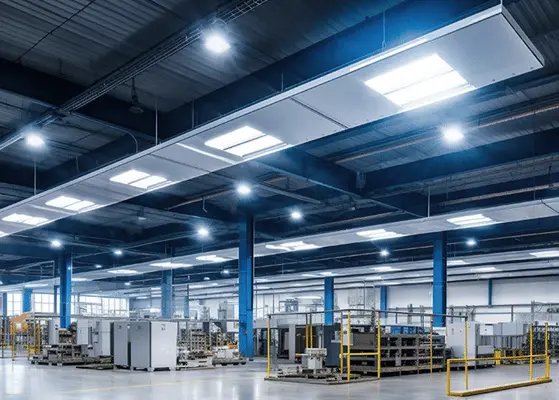
Energy efficiency has become a priority for Indian factories these days. LED lighting infrastructure is taking the place of old fluorescent and metal halide lights, reducing power consumption without decreasing their lifetimes. LEDs also maintain brightness over big production spaces uniformly without dark spots. Several factories accompany LED installations with motion detectors and timers, so lights are only on when required, reducing electricity bills without affecting safety.
Implementing energy-efficient lighting is an environmentally responsible move that helps achieve sustainability goals and enhances a business's image of social responsibility. Factories that use less energy also have reduced expenses, and therefore, superior lighting is a profitable investment for Indian industry.
Top Maintenance Tips for Industrial Lighting
Efficiency and safety are assured by well-maintained lighting. Keep the following practical tips in mind:
- Regular Cleaning: Dust and dirt can lower brightness; cleaning keeps illumination at its best.
- Regular Inspections: Inspect for dim bulbs, loose wires, and frayed fixtures to avoid accidents and downtime.
- Timely Replacement: Replace old or defective bulbs as soon as possible; quality replacement maintains performance consistent.
- Monitoring Energy Consumption: Monitor electricity usage to spot opportunities for optimization or automation.
- Professional Maintenance: Employ qualified electricians or service companies for intricate systems, particularly where high voltage is involved.
These maintenance practices prolong light life, reduce energy wastage, and improve work safety.
Smart and Automated Lighting Solutions
Smart controls of lighting are gaining common application in big Indian factory. Automation changes light levels according to occupancy, daylight, or schedules, providing equal lighting while conserving energy. Motion sensors switch on lights only in occupied or less-used spaces. Factories with high ceilings and large spaces are helped particularly by such systems by providing the highest lighting without human intervention.
Automation can also integrate with factory management platforms, providing insights on energy use and maintenance needs. This helps managers coordinate repairs, replacements, and energy-saving steps effectively.
Safety and Regulatory Considerations
Industrial lighting in India is regulated by safety regulations and labor legislation insisting on adequate lighting. Emergency lighting systems are a requirement in the majority of manufacturing plants to aid safe egress during loss of power or evacuations. More and more factories are now using backup lighting from batteries or solar panels to ensure business continuity when there are power outages.
Future of Industrial Lighting in India
As India's manufacturing sector expands, lighting will continue to be at the center of operations success. Factories are slowly adopting smart lighting and LEDs to enhance energy savings, provide consistent illumination, and save money. Energy monitoring and automated controls enable managers to maximize usage and maintenance, eliminating waste and increasing productivity.
Worker safety and regulatory compliance also shape lighting decisions. Growth in Tier 2 and Tier 3 cities is propelling demand for scalable and reliable lighting systems. Factories are putting money into energy-saving, affordable systems that reduce energy consumption without compromising long-term performance. Industrial lighting is increasingly emerging as a strategic resource that maximizes safety, efficiency, and overall productivity.
For more in-depth analysis of industrial lighting trends, regional adoption & market forecasts, refer to our India Lighting Market Report
Industrial Lighting is Vital to The Success Of Indian Factories
By embracing energy-efficient LEDs, smart technologies, and a robust maintenance culture, factories can enhance safety, productivity, and operating efficiency. Encouraging government initiatives and industry movements toward energy efficiency also make further investments in sophisticated lighting solutions more appealing.
As India's manufacturing grows, high-performance industrial lighting will be the key to competitiveness and sustainability. Factories that invest in the proper lighting now will enjoy reduced energy expenses, healthier workplaces, and better performance later.











Share