The Influence of K-Beauty in Vietnam’s Skin Care Scene
Korean beauty, also known as K-beauty, has emerged to become a significant force in the Vietnam skin care products market. Vietnamese consumers have enthusiastically embraced K-beauty products and regimens over the past 10 years.
The impact is beyond product sales; K-beauty is transforming the way many people perceive skincare and skin ingredients, as well as beauty culture itself. K-beauty has gained popularity in Vietnam because it emphasizes healthy, glowing skin. Young Vietnamese consumers, women mostly in urban cities like Ho Chi Minh City, Hanoi, and Da Nang, have always looked up and respected the strict skincare regimen promoted by K-beauty brands. The practice has accounted for increasingly booming sales for sheet masks and essences, serums, and sun protection products.
Why K-Beauty Appeals to Vietnamese Consumers?
K-beauty appeals to Vietnamese consumers for a variety of reasons. To begin with, it prioritises skincare as an everyday practice and not merely a beauty practice. This resonates with Vietnam's increasing wellness culture, where taking care of oneself is appreciated.
K-beauty products rely on mild, natural ingredients. Vietnamese customers welcome this since a lot of them have sensitive skin and guard against harsh chemicals. Green tea, snail mucin, centella asiatica, and hyaluronic acid are all commonly used. Korean brands continuously launch new textures, delivery systems, and formulas.
Social media and K-pop culture are also instrumental. Korean celebrities and influencers endorse beauty products, with beauty trends spreading fast in Vietnam. Fans tend to emulate their idols' smooth skin, boosting product popularity.
Popular K-Beauty Products in Vietnam
Sheet masks are one of the most popular-selling K-beauty products in Vietnam. They are inexpensive, convenient to apply, and offer immediate hydration. Serums and essences are also in favor, particularly those that are brightening and anti-ageing. Quickly absorbed lightweight textures work well with Vietnam's hot weather. Non-greasy-finished sunscreens designed for regular use have been gaining popularity.
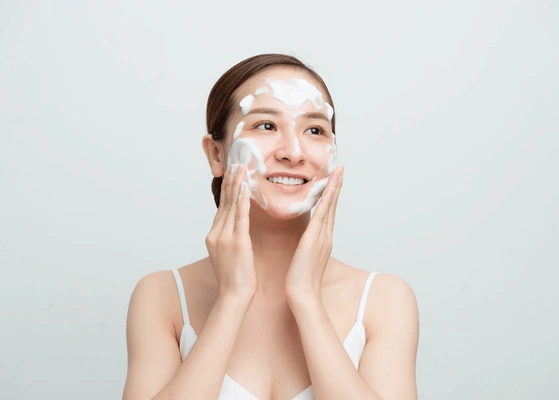
Oil-based and foam cleansers from Korea are the preferred products for their gentle ability to remove cosmetics without dehydrating the skin. Soothing toners and moisturizers complete the routine.
Effect on Local Skincare Brands
The K-beauty trend has impacted Vietnamese companies to innovate and enhance product quality. Numerous local firms now use Korean ingredients and production processes. They also emphasize good-looking packaging and marketing that resembles Korean style.
Vietnamese brands are also increasingly collaborating with Korean distributors and research labs to gain access to high-end formulas, elevating market standards and increasing product choices. Consumer behavior has also been transformed by the impact of K-beauty, with more consumers now looking for complete sets of skincare products consisting of cleansers, toners, treatments, and moisturizers.
Growth of K-Beauty Products Online and Offline
K-beauty products are also readily available in Vietnam in beauty chains such as Watsons and Guardian, pharmacies, and supermarkets. Online platforms such as Shopee, Lazada, and Tiki have further spread the reach, with numerous brands having official stores and using influencer marketing. Home delivery and affordability have made K-beauty accessible even to consumers in rural areas and outside the big cities.
Social media marketing also plays a significant role. Live streams, tutorials, and unboxing videos assist consumers in learning how to use K-beauty products. This engagement content boosts brand loyalty as well as repeat purchases.
Challenges and Adaptations
Notwithstanding its popularity, K-beauty companies encounter some difficulties in Vietnam. One of the challenges is price sensitivity among some groups of consumers. High-end Korean products are costly for most customers, and this has created room for cheap Korean-inspired domestic products.
A second challenge is to reformulate products for Vietnam's humid climate. Some rich textures or heavy creams that are trendy in Korea will not be as suitable for Vietnamese skin, particularly in warmer weather.
Lastly, counterfeits are an issue. Buyers are encouraged to purchase through authorised retailers or official websites to guarantee product authenticity and safety.
Future Prospects for K-Beauty in Vietnam
Customers always look for new, effective, and still gentle skincare products. Korean companies that localize their products and have a high digital presence will gain the most. Vietnamese beauty consumers are conscious and try out what they purchase. This is driving product developments and emerging trends like clean beauty, natural ingredients, and simple routines.
Even more Korean and Vietnamese brands will join hands to create hybrid products with the best of both. Overall, K-beauty will remain the key driver in propelling Vietnam skin care product growth in future years.
For complete insights and predictions, read our Vietnam Skin Care Products Market
K-Beauty's Lasting Impact on Vietnam's Skincare
K-beauty has turned the Vietnam skin care products industry on its head with new products, soft ingredients, and trend-setting routines. The trend of blending tradition and technology speaks to consumers domestically and continues to influence beauty trends domestically. Brands that can evolve and transform are the brands best positioned to win.











Share