Comparing PVDF and PTFE in Chemical Resistance Applications
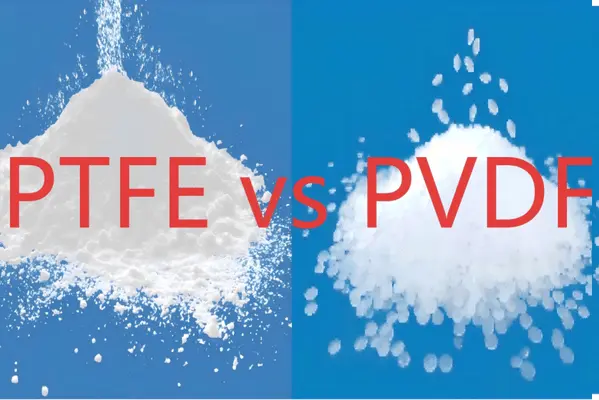
When industries are faced with handling aggressive chemicals and need advanced material solutions, fluoropolymers are usually among the first choices. The two most popular fluoropolymers are polyvinylidene fluoride (PVDF) and polytetrafluoroethylene (PTFE). Although both PVDF and PTFE are known for being chemically resistant, they have several differences in how they process, cost, and ability to perform in end-use conditions.
The decision to choose one over the other depends on their response to chemical exposure, heat, and physical stress under operational conditions.
PVDF Offers Good Chemical Resistance With Better Processability
PVDF has extremely high resistance to acids, bases, alcohols, and halogenated solvents. They are lighter, and less dense than PTFE, which allows for easier processing into various forms such as sheets, rods, coatings and flexible tubing.
Where PVDF is Exceptional:
- Chemical resistance in the range of 120 to 150 °C
- Strong mechanical and impact properties
- Available in both homopolymer and copolymer grades
- Can be welded, extruded, or injection moulded using conventional equipment
It can be used for chemical storage tanks, linings, filter housings, wire insulation, and more.
PTFE Excels in Extreme Chemical and Temperature Environments
PTFE has a wider range of chemical resistance and can handle slightly higher temperatures (usually up to 260°C). However, PTFE is difficult to bond or weld, has special processing requirements, and is weaker in mechanical strength compared to PVDF.
It is typically used in:
- High-temperature gaskets & seals
- Non-stick coatings
- Aerospace and lab equipment using aggressive chemicals
The trade-offs are price and limited fabrication options.
For more on market trends and industrial applications, visit our PVDF Resin Market
Each Resin Has a Clear Role in Industry Based on Use Case
PVDF and PTFE are both top contenders when it comes to chemical resistance but operate with different strengths. PVDF is more versatile and has better processability for industrial applications. PTFE has more layers of performance for extreme environments but also has its share of fabrication difficulties.
Understanding the differences helps engineers and procurement teams decide what material is right for their project based on performance, budget and application needs.











Share