LPG Versus Natural Gas for Modern Energy Needs
As countries seek reliable and cleaner energy solutions, liquefied petroleum gas and natural gas often emerge as leading options. Both fuels offer advantages over coal and oil, yet they differ in availability, infrastructure requirements, and adoption patterns. Understanding these differences helps households, businesses, and policymakers make informed energy choices.
While natural gas dominates in regions with established pipeline networks, LPG plays a critical role where infrastructure is limited. Each fuel supports specific use cases, shaped by geography, economics, and development priorities. Their coexistence highlights how diverse energy systems respond to local needs.
Infrastructure Shapes Accessibility
One of the most important distinctions between LPG and natural gas lies in how they reach end users. Natural gas relies on extensive pipeline networks that require high capital investment and long development timelines. This model works well in mature markets with dense populations but remains challenging in rural or rapidly growing regions.
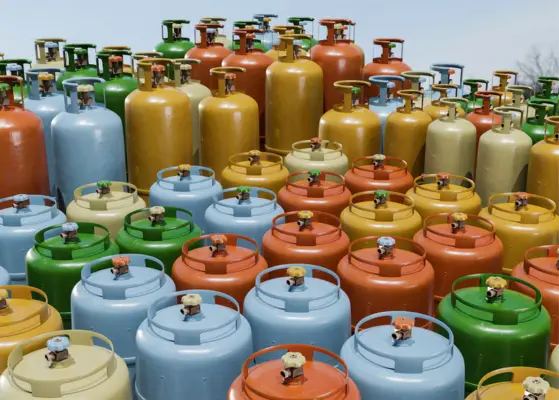
LPG offers greater flexibility. It can be stored in cylinders or tanks and transported by road, rail, or sea. This makes LPG accessible even in areas without gas grids. For many developing economies, this portability allows faster deployment of clean energy solutions without waiting for pipeline expansion. It is not unusual that, in such cases, LPG becomes the main source of energy for the families and small businesses in the villages and towns of the countryside.
Investment in infrastructure also has an impact on the pricing. On the one hand, natural gas might prove to be cheap after the pipelines have been set up, but the initial costs for the installation are very high. LPG does not require such major investments. Thus, the producers can enter the market faster, and the product reaches more people.
Cost Considerations and Energy Economics
Cost is still a major aspect that determines the type of fuel used. The price of natural gas is usually cheaper in the areas that have an abundant supply and well-developed infrastructure. Nevertheless, the users have to consider the charges of connection and regular maintenance of the pipeline. The price of LPG depends on international energy markets and is influenced by transportation costs, which may cause price changes.
For those who do not have a gas grid in their area, LPG will be more convenient even though its prices go up and down. With the cylinder refills, it is possible to pay as you use, which gives more room to low-income families. Moreover, a unit cost increase is still acceptable for businesses, which are also great beneficiaries of LPG because it is very reliable and can be stored easily.
In the case of LPG, it is an economic choice of fuel that promotes decentralized systems of energy. This decentralization leads to the creation of opportunities for the local distributors and retailers. Thus, at the same time, it is increasing energy access and making local supply chains stronger.
Adoption Trends Across Sectors
The residential sector continues to be a major driver of demand for both fuels. Natural gas is the preferred cooking and heating fuel in cities with pipes. However, in off-grid areas and new towns, LPG is preferred. This pattern is mostly about where the infrastructure is available, rather than just about what people prefer to use.
Commercial and industrial customers weigh the two options to see which is best based on their working needs. Restaurants, hotels, and food processors regularly opt for LPG, as it offers a steady supply of heat, and the use of pipelines is not a requirement. Small manufacturers choose LPG for pretty much the same reasons, while large industries lean towards natural gas in the areas where networks are available. Transport is another area that further sets the two apart. Autogas, made of LPG, is a choice for vehicle fleets in several countries, as it is less polluting and causes less wear and tear to engines. There are also vehicles running on natural gas, but their number is limited since they are dependent on having a special refueling station, which is not available everywhere.
Explore the Global LPG Market Report for insights on regional demand, infrastructure, and future projections.
Environmental Impact and Transition Strategies
Both fuels, LPG and natural gas, when compared to coal and diesel, produce less carbon. Thus, they are considered transitional fuels in many energy strategies. Natural gas tends to get more spotlight when it comes to large-scale power generation, whereas LPG is instrumental in household energy transitions and small-scale commercial use.
Furthermore, in communities where deforestation is a serious problem due to the use of biomass for cooking, LPG can be a real lifesaver. Its use of firewood and charcoal means less forest is cut, and the household is less polluted. Besides, Bio-LPG and other renewable versions of it can be a great boost in making LPG more environmentally sound.
Hence, decision-makers in the energy sector are no longer seeing these two fuels as rivals but rather as partners. Natural gas is a good match for centralized systems, and LPG is perfect for distributed energy systems. By tandem, they can satisfy the current energy demand and at the same time be aligned with the long-term renewable energy target.
Choosing the Right Fuel for a Changing Energy Landscape
It is a question of infrastructure, cost structures, and user requirements when deciding between LPG and natural gas. In areas connected by pipelines, natural gas is the most efficient option, while LPG can be used in areas where network access is limited. Both the fuels are leading the way to the adoption of clean energy, each one furthering a different sector of the global energy system.
As countries work to increase the availability of modern fuels, LPG still plays a major role in residential, commercial, and industrial sectors. Due to its portability and easy deployment, it is especially useful in the developing world. On the other hand, natural gas is the main source of energy for large-scale consumption in urban and industrial centres.
Basically, these two fuels how how energy solutions that are adaptable can be used to support development and at the same time lower the negative impact on the environment. If governments and consumers make their fuel choices in accordance with the local conditions, they will be taking steps towards a more balanced and sustainable energy future.











Share