Rise of Hyperlocal Delivery Logistics Across Vietnam’s Online Food Ecosystem
Hyperlocal delivery has become one of the most transformative developments in Vietnam’s online food delivery sector. As platforms compete for faster delivery times and predictable fulfilment, companies are scaling up their hyperlocal networks toward an edge in both operational accuracy and customer trust. The food delivery business that was initially heavily reliant on the availability of riders and manual routing is now moving to become more integrated and technology-backed. Companies like GrabFood, ShopeeFood, and Baemin have redesigned logistics frameworks to support narrower radii of delivery, micro-fulfilment models, and route-optimization technologies. With the demand across the metropolitan centers of Vietnam continuing to surge, hyperlocal delivery is building the new competitive backbone in this industry.
Growth in Demand for Quicker Delivery
Vietnam's consumers, based in major cities like Ho Chi Minh City and Hanoi, are particularly time-sensitive. Food delivery platforms have been reporting shorter acceptable wait times, with users expecting deliveries within 20–25 minutes for most everyday meals. This behavioral shift is forcing platforms to shrink their service radiuses and build hyperlocal clusters that match consumer expectations.
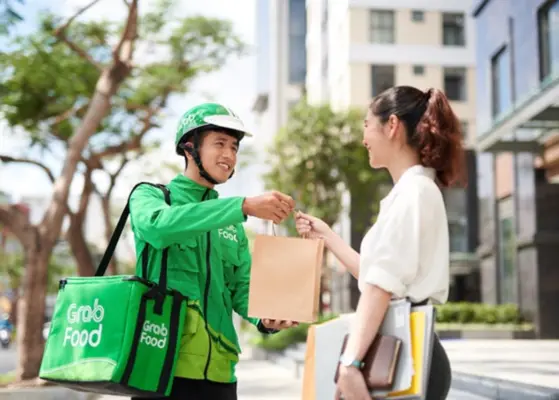
GrabFood launched its chains in more than 12 new provinces as a part of its hyperlocal strategy, where orders are automatically routed to restaurants within a 1–1.5 km radius to improve delivery speed. Brands are launching neighborhood-level batching in busy districts, allowing riders to cover multiple orders in the same area during peak hours. These changes may seem operational, but they significantly improve order throughput and reduce delivery cost per kilometer. The demand for hyperlocal fulfilment is pushing food platforms to rethink their city-planning strategies, especially in districts with dense restaurant networks.
AI-Driven Routing Systems Strengthen Competitive Advantage
The major shift toward hyperlocal logistics is not just about geographical proximity but about advanced routing capabilities as well. More companies are investing in AI-driven dispatch systems that help optimize delivery routes and smart-assign orders based on distance, predicted traffic, and the availability of riders.
Grab utilizes machine learning models to forecast real-time congestion in heavily jammed districts like District 1 and Thu Duc. This minimizes the time riders spend waiting for customers and decreases failed or late deliveries. Firms are investing in algorithm-based batching, which enables a single rider to pick up two or three orders from the same neighborhood, lowering the cost per order and stabilizing the rider's income.
Meanwhile, Gojek has been testing route-prediction layers in its GoFood operations, which enable riders to avoid roads that are flagged as high-risk zones during peak hours. These layers help make delivery ETAs more precise and give restaurants more predictable prep times. AI-enhanced logistics systems are becoming a crucial differentiator for food delivery platforms trying to retain high-frequency urban customers.
Micro-Fulfilment Models and Kitchen Hubs Gain Traction
Hyperlocal delivery is also driving structural shifts among restaurant partners. Many brands are moving toward micro-kitchen setups and satellite prep hubs to support rapid delivery within tight radiuses. The concept is not entirely new, but its adoption has accelerated as food delivery apps highlight hyperlocal fulfilment as a competitive lever.
Several Vietnamese F&B chains, including The Coffee House and Pizza 4P’s, increased their network of small-format satellite kitchens to get closer to high-density residential clusters. These kitchens operate with minimal seating, focusing entirely on fast-prep and quick dispatch.
Micro-fulfilment kitchens are reducing delivery times. For restaurants, this model also decreases overhead costs and increases demand predictability. Hyperlocal fulfilment is becoming an essential pathway for F&B operators looking to expand quickly without heavy brick-and-mortar investments.
Rider Optimization Improves Fleet Efficiency and Reliability
Hyperlocal delivery relies heavily on the stability and predictability of the rider network. Previously, food delivery companies in Vietnam faced fluctuations, whether by seasonal changes in demand, increases in fuel prices, or due to rider churn. To stabilize operations, companies are rolling out flexible incentive schemes and equipping riders with better tools.
Companies like ShopeeFood are helping experienced riders stay within restricted hyperlocal zones where they can achieve higher order density and shorter travel distances. This strategy helped increase order-per-hour metrics for riders, while improving unit economics for the platform.
Grab and Gojek are also expanding their rider analytics dashboards, showing riders hourly forecasts, demand heatmaps, and neighborhood-level insights that help them plan their shifts more efficiently. These transparency upgrades also reduce rider frustration and increase fulfilment reliability for restaurants. Thus, hyperlocal rider management is quickly becoming a foundational requirement for scaling delivery volumes without compromising service quality.
Partnerships Strengthen the Hyperlocal Delivery Landscape
The rise of hyperlocal logistics in Vietnam is driven by partnerships that cut across delivery platforms, restaurant chains, payment gateways, and urban mobility startups. Most of these collaborations have been centered around optimizing supply chains with the aim of improving service reliability across small, high-density neighborhoods.
Firms are partnering with several location-analytics providers and installing geofenced pickup zones around popular malls and office districts to reduce friction in pickup times for riders and hasten restaurant handoffs. ShopeeFood collaborated with VNPost Logistics to test hybrid delivery support during holiday peaks, ensuring hyperlocal areas remain adequately staffed.
Several restaurant chains are integrating with route-optimization APIs offered by platform partners. This gives them real-time estimates on peak demand windows, helping them prepare better and reduce order cancellations. Such collaborations are strengthening the structural foundations of Vietnam’s hyperlocal food delivery ecosystem and creating new standards for operational readiness.
Explore insights on how hyperlocal logistics is reshaping Vietnam’s food delivery landscape Vietnam Online Food Delivery Market
Hyperlocal Delivery Becomes the Competitive Engine of Vietnam’s Food Delivery Market
Hyperlocal delivery logistics are now shaping the future of Vietnam’s food ecosystem. As delivery companies move toward smaller radiuses, AI-powered routing, micro-kitchens, and refined rider operations, the entire sector is becoming more agile and customer-centric. This evolution is also about building a deeply integrated neighborhood-based infrastructure that supports sustainable, data-driven expansion across Vietnam’s online food landscape.











Share