

Consumer Insights
Uncover trends and behaviors shaping consumer choices today
Procurement Insights
Optimize your sourcing strategy with key market data
Industry Stats
Stay ahead with the latest trends and market analysis.
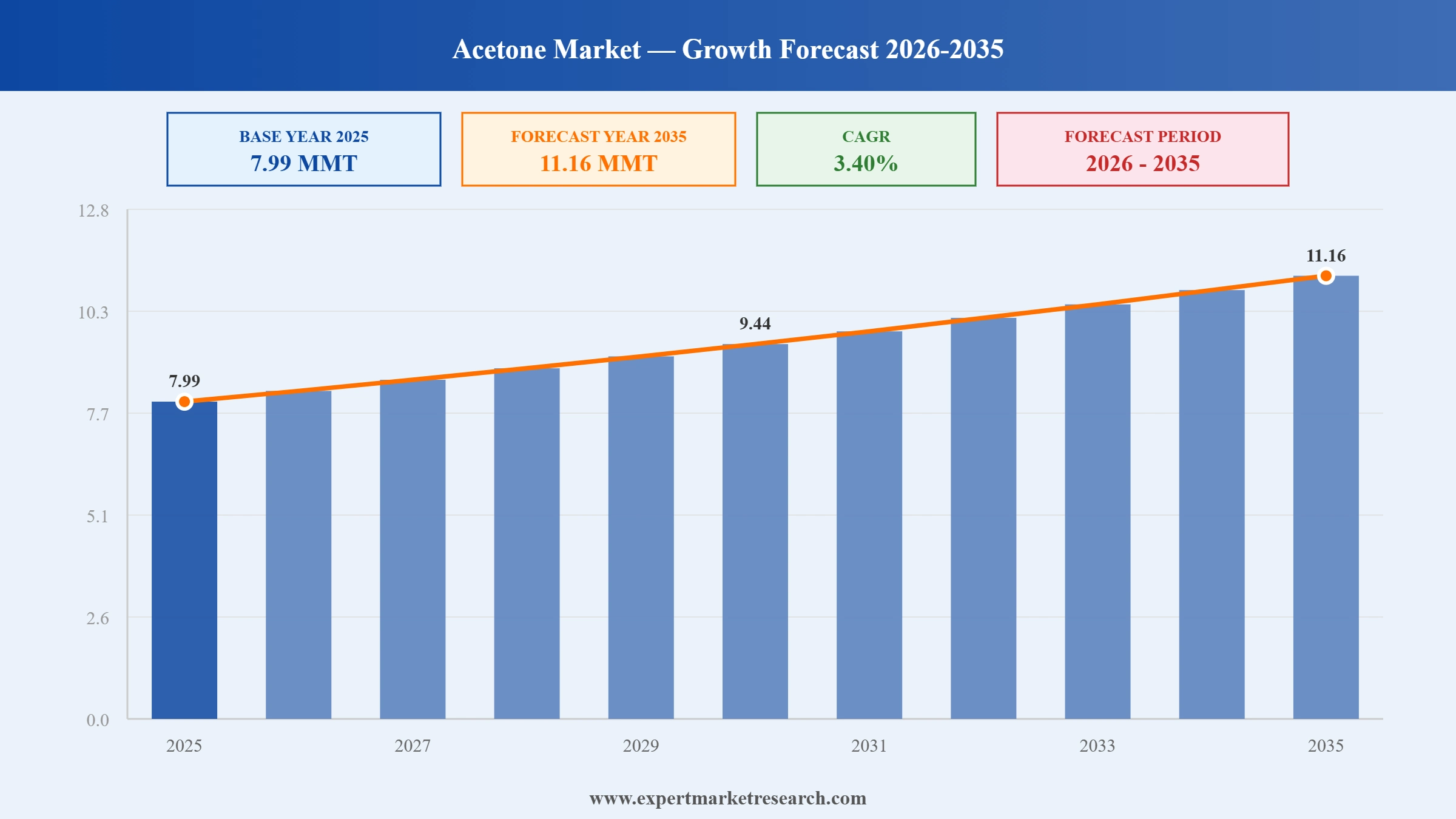
The acetone market attained a volume of 7.99 MMT in 2025 and is projected to expand at a CAGR of 3.40% through 2035. The market is further expected to achievea volume of 11.16 MMT by 2035. An increase in the need for biomass-based chemicals, as well as local petrochemical integration, is prompting manufacturers to focus on producing low carbon acetones, ensuring security in terms of their feedstocks, and meeting the demands of their downstream sectors of coating, resin, adhesive, and electronics.
There are two particular aspects that are driving demand in the acetone market. First, increasing electronics and automotive manufacturing is leading to an increase in the demand for polycarbonate and epoxy products, and thus indirectly driving demand via phenol and BPA processes. Secondly, increased solvent-based operations in pharmaceuticals are driving up high purity acetone demand. Manufacturers are addressing this challenge by focusing on quality and batch consistency, as well as supply programs.
The acetone market is at a stage where producers are becoming more integrated as they are investing in upstream integration, supply assurance, and greener feedstock. The latest example of this development would be Haldia Petrochemicals' phenol and acetone complex in Haldia, announced in October 2023, which includes the first-ever dedicated propylene unit with the help of Olefin Conversion Technology in India. The project is nearing commissioning, with a focus on strengthening domestic phenol and acetone supply while increasing feedstock availability for resins, coatings, adhesives, and other chemicals.
From a sustainability standpoint, the movement is from pilot projects to supply strategy, boosting growth in the acetone market. In January 2025, Mitsui Chemicals and Nan Ya Plastics started working together on biomass-based plastic development by using biomass-based acetone provided by Taiwan Mitsui Chemicals via ISCC PLUS certification through the mass balance route. Nan Ya plans to use this to develop bio-based bisphenol A and go further to develop epoxy and polycarbonate resins.
Read more about this report - REQUEST FREE SAMPLE COPY IN PDF
An initiative from Braskem and Lallemand led to the creation of a platform called bio-acetone that allows ethanol producers to produce renewable acetone as a co-product. Businesses have an opportunity to produce their renewable acetone products as well as establish partnerships with biofuel producers.
Hindustan Organic Chemicals raised domestic acetone prices in India due to a shift in supply-demand and pricing potential. Local manufacturers can increase their capacity to produce acetone domestically to capitalize on the favorable acetone market dynamics.
Borouge and LANXESS developed mass-balanced acetone with waste-based feedstocks, focusing on sustainable lower carbon chemical manufacturing without compromising product performance. Companies can invest in circular feedstocks, mass balance acetone, and low carbon acetone products to cater to the needs of consumers.
India launched a probe against acetone imports from Singapore, South Korea, Taiwan, and Thailand, thus impacting global supply chain dynamics. Indian manufacturers can enhance their production capabilities while exporters can diversify markets to deal with any such barriers, boosting the overall acetone market development.
Acetone derived from bio sources is becoming a differentiating growth opportunity for the acetone market players in a bid to lower their carbon footprint without having the downstream manufacturers alter their existing manufacturing process. Companies are having ISCC PLUS certification and facilitating traceability through mass balance throughout the supply chain. In addition, in February 2025, IPP leased a 40-million-gallon fermentation plant to Nuol Green Chemistry, supporting renewable acetone and bio-based chemical production.
Integration within the phenol-acetone value chain is becoming a key competitive strategy for producers as they try to gain more control of their feedstock and minimize imports. As of reports published in February 2026, Haldia Petrochemicals is nearing completion of INR 6,000 crore phenol and acetone complex at Haldia, comprising India's first propylene plant based on Olefin Conversion Technology and the biggest phenol manufacturing unit in India. Aligning with this trend in the acetone market, in January 2025, Mitsui Chemicals and Mitsubishi Chemical launched a joint study to strengthen stable supply of acetone and phenol-related products.
As new capacity comes online across Asia, increasing pressure on phenol-based chemical chains is prompting acetone suppliers to focus more on asset efficiency and supply reliability. For example, in April 2025, Deepak Chem Tech planned a 300,000-ton/year phenol unit, a 185,000-ton/year acetone plant, and a 100,000-ton/year IPA line at Dahej, India. Such trends in the acetone market strengthen domestic production capacity and supporting downstream chemical industries. In addition to Mitsui Chemicals' decision to close its 190,000-ton phenol plant at Ichihara by fiscal 2026. Currently, firms are considering shared logistical efforts, tank utilization, and contingency supplies to boost competitiveness and decrease greenhouse gas emissions.
The demand in the high-quality acetone market is becoming more significant with increased need for strict impurity control and uniform solvent properties from producers of advanced materials. Acetone is utilized in various chains linked to polycarbonate, epoxy resin, paints and many other industries; thus, reliable supply becomes critical for buyers of chemicals. The key raw materials for polycarbonate, phenolic resins, methyl methacrylate, epoxy resins and paints identified by Mitsui Chemicals and Mitsubishi Chemical include acetone and phenol and derivatives. On the other hand, in July 2026, SABIC launched advanced thermoplastic compounds designed to improve safety, durability, and performance in next-generation high-voltage electronic applications.
Industrial localization strategies are making chemical firms build localized plants with reduced vulnerability to imported feedstock. For instance, in July 2026, the Indian government launched the “Scheme of Chemical Parks” worth INR 3,030 crores, which is geared towards fostering domestic production, infrastructure, and investments. Such trends in the acetone market may motivate manufacturers to set up integrated plants that are close to downstream customers.
The Expert Market Research's report titled “Acetone Market Report and Forecast 2026-2035” offers a detailed analysis of the market based on the following segments:
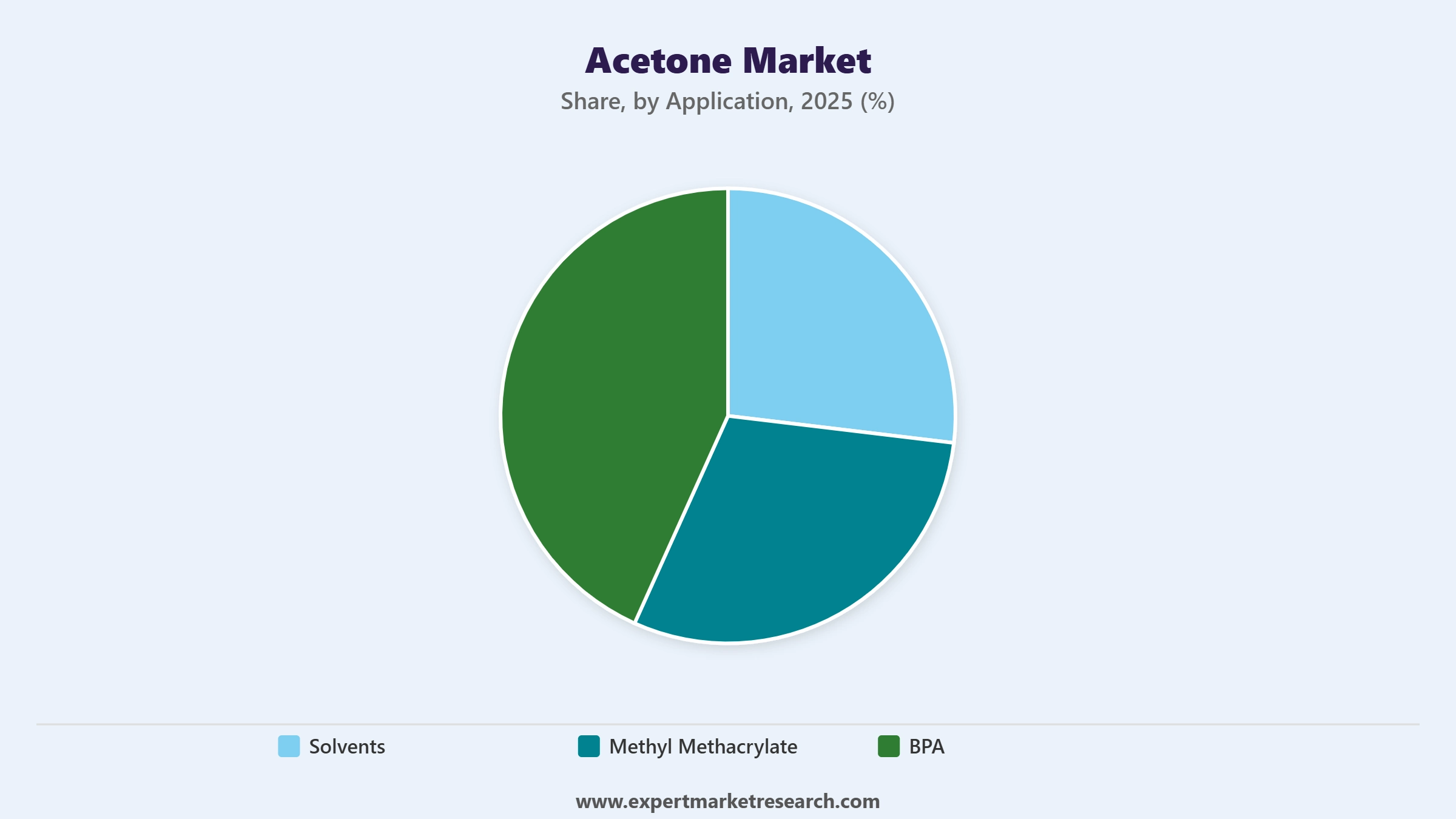
Market Breakup by Application
Key Insight: As per the acetone market report, the use of solvents is gaining more prominence due to the need for quick evaporation and reliable solvency in industries such as coatings, adhesives, pharmaceuticals, cleaners, and other industrial products. The use of methyl methacrylate is on the rise due to the growth in the use of acrylic resins in the construction industry, automobiles, signs, and specialty applications. The demand for BPA is associated with polycarbonate and epoxy resin productions, where acetone usage follows the phenol-chain cycle.
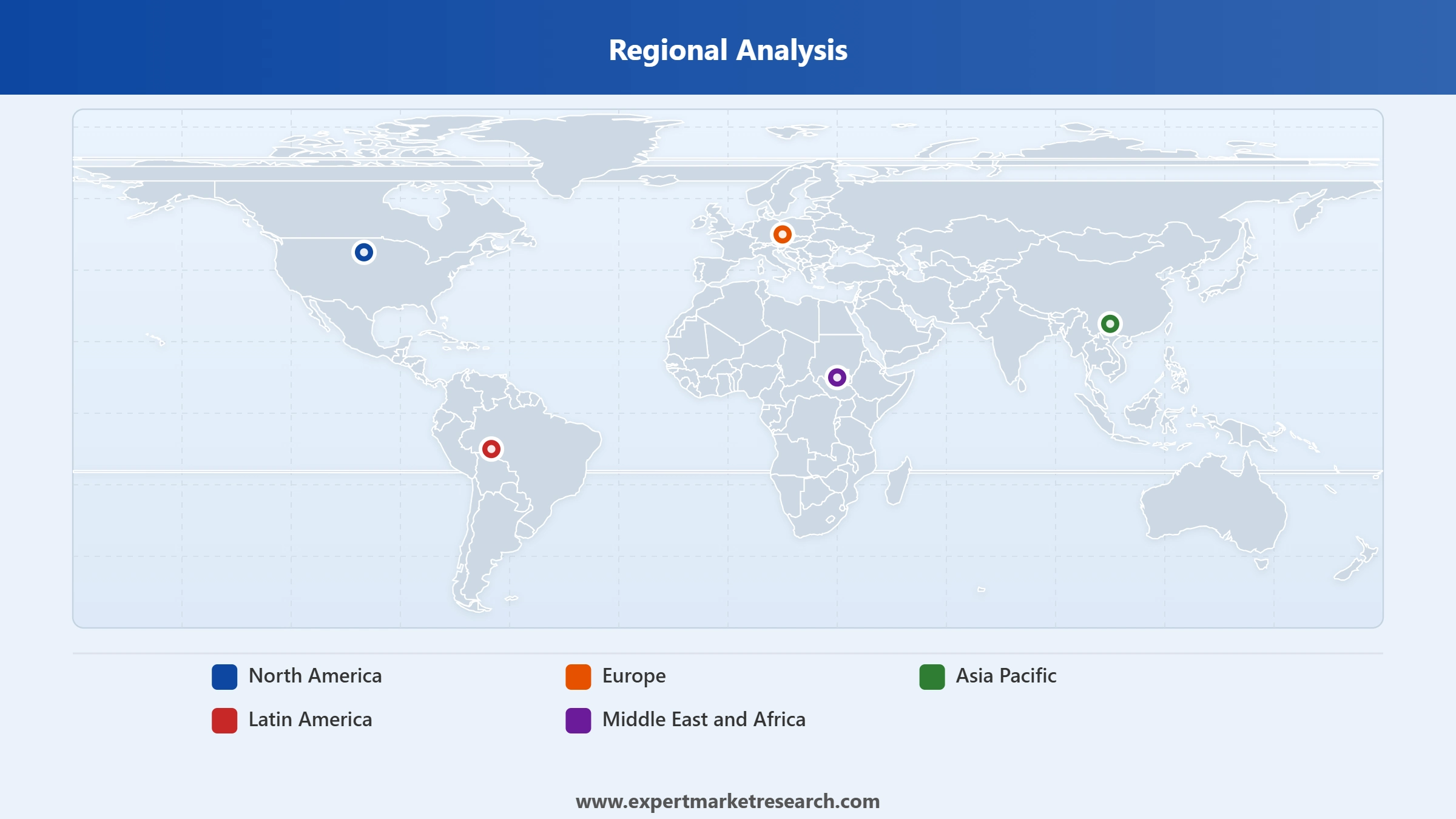
Market Breakup by Region
Key Insight: The regional demand in the acetone market vary depending on various industrial setups and supply chain considerations. North America is helped by existing coatings, plastics, pharmaceuticals and specialty chemicals manufacturing. Europe has the advantage of materials manufacturing and strict product performance specifications. Asia Pacific dominates the global market owing to highly specialized phenol, MMA, BPA, electronics, automobile and plastics capacity. Latin America relies on construction, coatings, and chemical manufacturing activities. Middle East and Africa regions are exhibiting notable growth due to petrochemical integration, further product diversification, infrastructure improvements, and improved logistics geared towards industrial customers.
Read more about this report - REQUEST FREE SAMPLE COPY IN PDF
By application, solvents lead acetone applications due to broad industrial formulation demand
Solvents account for the largest share of the acetone industry revenue, being widely used in coatings, adhesives, cleaning agents, pharmaceutical processes, and industrial extractions. The fast evaporation, powerful solvency, and compatibility of acetone with various formulations make it useful for manufacturers who look for processing efficiency and residue reduction. Suppliers pay more attention to purity, supply reliability, and handling issues, thus enabling industrial buyers to keep formulation consistency amid production capacity and safety needs at various locations around the globe. In July 2026, Kailing Chemical lowered acetone prices in China, reflecting shifting market conditions and potentially influencing regional supply and procurement strategies.
Read more about this report - REQUEST FREE SAMPLE COPY IN PDF
Methyl methacrylate records notable demand in the acetone market as the fastest growing application due to growing demand in acrylic sheets, coatings, adhesives, automotive parts, and transparent engineering materials. Acetone acts as an essential component in MMA production and, hence, its consumption depends on the capacity expansion in acrylic value chains. Integrated production, feedstocks, and process optimization are becoming the key factors for producers' competitiveness. Growing demand in lightweight materials and durable transparent parts contributes to MMA-based consumption of acetone.
Read more about this report - REQUEST FREE SAMPLE COPY IN PDF
Asia Pacific leads acetone demand due to extensive chemical manufacturing
Asia Pacific is the leading regional acetone industry on account of the large phenol, BPA, MMA, coatings, and chemicals capacity in this region. Countries like China, Japan, South Korea, and India are important downstream customers for acetone. Increased petrochemical integration provides additional supply advantages for regional suppliers, and they focus on feedstock availability, production capacities, and exports in an increasingly complex regional dynamics environment. Downstream industries in this region include plastics, electronics, automotive, pharmaceutical, and construction. These industries generate diversified applications of acetone, and suppliers benefit by providing large quantities, good quality, and logistics facilities. In January 2024, Haldia Petrochemicals began its INR 3,000-crore phenol-acetone project, targeting 300,000-ton phenol and 185,000-ton acetone capacity.
Middle East and Africa represent the fastest-growing regional acetone market in terms of consumption because of petrochemical diversification, increased downstream chemicals capacity, and efforts to add value from the regional feedstocks. Gulf producers are establishing integrated chemical ecosystems that lead to additional demand for solvents and intermediates including those used in coatings, plastics, and specialty chemicals. The region's infrastructure development in construction and manufacturing sectors leads to diversified downstream applications. Buyers look for reliable imports, reduced supply chain distances, and locally supported distribution.
Integrated production, feedstocks, specialty-grade production, and lower-carbon chemistry are becoming the key concern areas of the acetone market players. Their focus is shifting to phenol-acetone chain integration and creating ties with MMA, BPA, polycarbonate, epoxy, and solvent buyers. Businesses are increasingly prioritizing integrated production, reliable regional supplies, technical grade product lines, and better downstream integration to build up positions in the market.
Acetone companies can distinguish themselves through high purity, pharmaceutical, low water content, and bio circular acetone product types given the increasing demands from consumers for specifications, traceability, and quality assurance. Another avenue of business opportunity would be the localization of the supply chain, specifically in Asia, where players can set up regional production and distribution systems while collaborating with resin, electronics, coatings, pharmaceutical, and specialty chemical businesses.
Shell Chemicals was founded in 1929 and is based in Netherlands through Shell plc. Shell Chemicals produces acetone as an intermediate chemical in the production of acrylic plastics, polycarbonates, and epoxy resins. Acetone is produced along with phenol and cumene at Deer Park plant by Shell Chemicals.
Founded in 1998, INEOS Group Holdings S.A.'s headquarters is located in Belgium. INEOS Phenol is a top acetone producer and produces acetone along with phenol in various grades including chemicals, food industry, low water content, and pharmaceutical grade.
Cepsa Química was incorporated in 1929 and is based in Madrid, Spain. The company has been involved in the production of phenol and acetone along with the refining process from the company's inception. The company manufactures phenol and acetone in their Palos de la Frontera facility, and overseas distribution assists the company to serve its customers abroad.
LG Chem was founded in 1947 and is headquartered in Seoul, South Korea. The company is involved in manufacturing acetone along with phenol and BPA, forming an integrated value chain of polycarbonate and epoxy. LG Chem has developed ISCC PLUS certified bio-circular balanced acetone that targets sustainable feedstock for its customers.
Other key players in the market include Honeywell International Inc., Versalis S.p.A., Mitsui Chemicals Group, Formosa Chemicals and Fibre Corporation, Altivia, Hindustan Organic Chemicals Limited, and SI Group, Inc., among others.
*Please note that this is only a partial list; the complete list of key players is available in the full report. Additionally, the list of key players can be customized to better suit your needs.*
Unlock the latest insights with our acetone market trends 2026 report. Discover regional growth patterns, consumer preferences, and key industry players. Stay ahead of competition with trusted data and expert analysis. Download your free sample report today and drive informed decisions in the market.


Upto 15% Off
USD
$2499 $2249
$3999 $3599
$4999 $4249
$5999 $5099


*While we strive to always give you current and accurate information, the numbers depicted on the website are indicative and may differ from the actual numbers in the main report. At Expert Market Research, we aim to bring you the latest insights and trends in the market. Using our analyses and forecasts, stakeholders can understand the market dynamics, navigate challenges, and capitalize on opportunities to make data-driven strategic decisions.*
In 2025, the market reached an approximate volume of nearly 7.99 MMT.
The market is estimated to grow at a CAGR of 3.40% between 2026 and 2035.
Stakeholders are strengthening integrated supply chains, developing certified low-carbon grades, expanding high-purity portfolios, securing feedstocks, optimizing logistics, and partnering with downstream resin and electronics manufacturers.
The key trends aiding the market include the growing applications of acetone in the pharmaceutical sector, the growth of the personal care and cosmetic sectors, advancements in the acetone production process, and regulations guiding the use of acetone.
The major regions in the industry are North America, Latin America, the Middle East and Africa, Europe, and the Asia Pacific, with the Asia Pacific accounting for the largest share in the market.
Solvents, methyl methacrylate (MMA), and BPA, among others are the leading applications of acetone in the industry.
The major players in the market are Shell Chemicals, INEOS Group Holdings S.A., Cepsa Química, S.A., LG Chem, Honeywell International Inc., Versalis S.p.A., Mitsui Chemicals Group, Formosa Chemicals and Fibre Corporation, Altivia, Hindustan Organic Chemicals Limited, and SI Group, Inc., among others.
Companies face feedstock-price volatility, Asian capacity pressure, stringent emissions requirements, hazardous-material handling obligations, logistics disruptions, and rising customer demand for traceable lower-carbon acetone.
Explore our key highlights of the report and gain a concise overview of key findings, trends, and actionable insights that will empower your strategic decisions.
| REPORT FEATURES | DETAILS |
| Base Year | 2025 |
| Historical Period | 2019-2025 |
| Forecast Period | 2026-2035 |
| Scope of the Report |
Historical and Forecast Trends, Industry Drivers and Constraints, Historical and Forecast Market Analysis by Segment:
|
| Breakup by Application |
|
| Breakup by Region |
|
| Market Dynamics |
|
| Competitive Landscape |
|
| Companies Covered |
|
Datasheet
One User
USD 2,499
USD 2,249
tax inclusive*
Single User License
One User
USD 3,999
USD 3,599
tax inclusive*
Five User License
Five User
USD 4,999
USD 4,249
tax inclusive*
Corporate License
Unlimited Users
USD 5,999
USD 5,099
tax inclusive*
*Please note that the prices mentioned below are starting prices for each bundle type. Kindly contact our team for further details.*
Flash Bundle
Small Business Bundle
Growth Bundle
Enterprise Bundle
*Please note that the prices mentioned below are starting prices for each bundle type. Kindly contact our team for further details.*
Flash Bundle
Number of Reports: 3
20%
tax inclusive*
Small Business Bundle
Number of Reports: 5
25%
tax inclusive*
Growth Bundle
Number of Reports: 8
30%
tax inclusive*
Enterprise Bundle
Number of Reports: 10
35%
tax inclusive*
How To Order

Select License Type
Choose the right license for your needs and access rights.

Click on ‘Buy Now’
Add the report to your cart with one click and proceed to register.

Select Mode of Payment
Choose a payment option for a secure checkout. You will be redirected accordingly.
Strategic Solutions for Informed Decision-Making
Gain insights to stay ahead and seize opportunities.

Get insights & trends for a competitive edge.

Track prices with detailed trend reports.

Analyse trade data for supply chain insights.

Leverage cost reports for smart savings

Enhance supply chain with partnerships.

Connect For More Information
Our expert team of analysts will offer full support and resolve any queries regarding the report, before and after the purchase.
Our expert team of analysts will offer full support and resolve any queries regarding the report, before and after the purchase.
We employ meticulous research methods, blending advanced analytics and expert insights to deliver accurate, actionable industry intelligence, staying ahead of competitors.
Our skilled analysts offer unparalleled competitive advantage with detailed insights on current and emerging markets, ensuring your strategic edge.
We offer an in-depth yet simplified presentation of industry insights and analysis to meet your specific requirements effectively.




