

Consumer Insights
Uncover trends and behaviors shaping consumer choices today
Procurement Insights
Optimize your sourcing strategy with key market data
Industry Stats
Stay ahead with the latest trends and market analysis.
The global arc welding equipment market attained a value of USD 5.05 Billion in 2025 and is projected to expand at a CAGR of 6.10% through 2035. The market is further expected to achieve USD 9.13 Billion by 2035. The growth in adoption of inverter-based arc welding machines by mid-scale fabrication units is enhancing energy efficiency and minimizing operational downtime, thereby accelerating the replacement cycles of the equipment in industrial clusters globally.
Rapid infrastructure developments and the push towards manufacturing localized products are the main factors responsible for continuous equipment upgrades. Concurrently, the need for skilled welding consistency is leading the way towards the usage of smart welding interfaces with preset parameters, accelerating the arc welding equipment market value. Besides merely selling machines, companies are now providing integrated welding ecosystems comprising software layers, training modules, and after-sales diagnostics, thereby deepening customer relations gradually.
A marked trend in the arc welding equipment market was demonstrated in August 2025 when ESAB launched Fabricator EM series with smart features, 100% duty cycle, improved efficiency, and cloud-enabled monitoring, enhancing productivity and stability in industrial welding applications. Such units are now being rolled out within the production clusters where the tracking of output is at the core of operations. Industry insiders are of the opinion that the use of digitally enabled welding systems could increase the arc-on time by as much as 25%. Such a statistic is discreetly shaping the buying behavior of the metal fabricators on a large scale.
Moreover, the global arc welding equipment market is undergoing a transformation with changes being made in precision-led fabrication and energy-efficient systems. Companies are now considering product performance over time, consistency of welds, as well as the ability of the product to adapt to the automated production lines. Similarly, manufacturers are refining their product portfolios to meet the demands of hybrid welding setups, where manual processes integrate with semi-automated controls. For example, in September 2025, Lincoln Electric launched Flex Lase handheld laser welding system, delivering 2kW power, faster welding speeds, improved precision, reduced distortion, and easier operator onboarding.
Compound Annual Growth Rate
6.1%
Value in USD Billion
2026-2035
ESAB launched a SubArc Hercules system that increased deposition rates by 30%, reduced welding times, and provided consistent high-speed submerged arc welding in heavy fabrication environments. Companies in the arc welding equipment market can also work on high-productivity systems that will be used in large-scale fabrication projects, where savings in time will result in increased profitability for a contract.
Illinois Tool Works launched enhanced welding systems that emphasized durability and stability in high-performance applications and increased efficiency in various industrial applications. Such innovations illustrate that other companies can be working on high-performance systems that will be used in various fabrication projects, especially in environments that require high-stress operations and long durations.
Miller introduced ArcCapture weld camera systems, which enable real-time weld monitoring, improving visibility, reducing defects, and training operators in complex welding environments. This indicates arc welding equipment market opportunities for companies to incorporate visual monitoring technologies, helping their clients improve weld quality while reducing costs in a labor shortage situation.
Fronius launched the Ignis 250 MMA system, delivering up to 250 amps with a stable arc and improved usability for challenging manual welding applications in all industries. This indicates opportunities for creating advanced and easy-to-use equipment, particularly in industries where manual welding is the primary process but efficiency is a growing requirement.
Arc welding equipment is evolving to incorporate digital intelligence, with most modern systems offering real-time monitoring and data feedback capabilities. One example is Lincoln Electric Holdings, Inc. which is already using cloud-based weld tracking to allow management to have a view of the work on the shop floor. Manufacturers continue to invest in connected welding systems that facilitate predictive maintenance and parameter optimization, propelling the arc welding equipment market growth. For example, in April 2023, Kemppi launched AX MIG robotic welding machine with seamless integration, 24/7 automation capability, advanced connectivity, and precise seam tracking for consistent high-quality welds.
One of the stimulating factors for overall market growth is the development of large-scale infrastructure projects. India and Southeast Asian countries are increasing their investments for railways, bridges, and urban housing projects. According to the arc welding equipment market analysis, the India National Infrastructure Pipeline facilitated investments of more than USD 1.4 trillion till 2025, which indirectly drives the demand for fabrication across steel-intensive sectors. ESAB Corporation and other companies are modifying their equipment offerings to heavy-duty welding applications that are compatible with these types of projects. In March 2026, ORNL and Lincoln Electric advanced robotic wire-arc additive manufacturing, enabling faster production of complex metal parts with multi-robot systems and 100 pounds per hour deposition rates.
Energy efficiency is increasingly becoming a major consideration for buying decisions, rather than just a regulatory compliance issue. Arc welding machines based on inverters are becoming popular as they use far less electricity than typical transformer-based welding machines. Industry reports suggest that upgrading industrial equipment could reduce electricity use by up to 20% in heavy fabrication industries. For this reason, companies like Miller Electric Mfg. LLC are increasing their inverter range, aligning with this arc welding equipment market trend. In October 2025, EWM launched Picotig 180 puls DC welding machine featuring lightweight design, multi-volt capability, energy-efficient PFC technology, and stable performance for versatile industrial and construction applications.
Automation in welding is not replacing manual work entirely. Instead, hybrid machines are gaining popularity, combining human control with automated support for better flexibility and efficiency. These systems can switch back and forth from manual to robotic operations by using programmable controls for facilitating higher welding quality while relying on manual arc welding for some operations. The European Commission, through its Industry 5.0 initiative, promotes greater use of automation in manufacturing by advocating the development of production systems that are capable of easily adapting to changes, reshaping the entire arc welding equipment market dynamics. In December 2025, ESAB expanded its automation welding portfolio with the launch of Tracfinder welding tractors and the ROBBI Mobile cobot welding system.
Manufacturers are increasingly localizing production to reduce lead times and handle supply chain disruptions. This trend in the arc welding equipment market is being observed in India where the government's "Make in India" policy is driving local manufacturing capabilities in various industrial equipment segments. To serve regional demand more effectively, Panasonic Corporation has increased its welding equipment production capacity in Asia. Local assembly and distribution channels are enabling companies to be more agile when facing a sudden demand for project-based products. For example, in March 2025, Miller launched Copilot Builder cobot featuring modular, reconfigurable design, touch sensing, seam tracking, and multipass programming, improving flexibility and weld quality across complex industrial applications.
Read more about this report - REQUEST FREE SAMPLE COPY IN PDF
The EMR’s report titled “Global Arc Welding Equipment Market Report and Forecast 2026-2035” offers a detailed analysis of the market based on the following segments:
Market Breakup by Process
Key Insight: Shielded metal arc welding retains its dominant share in the arc welding equipment market owing to the ability of working in rough environments, however, gas metal arc welding is growing popular as it is more flexible with automation and its ability to deliver more environmentally efficient outcomes. In December 2025, Turnkey Welders integrated arc welding into service operations, enabling faster on-site repairs, improved equipment uptime, and streamlined maintenance workflows for industrial customers. Flux core welding continues to be an ideal choice for performing heavy work in outdoor locations.
Market Breakup by Automation
Key Insight: Manual welding has gained major momentum within the arc welding equipment market scope as it is more flexible and the cost of launching it is relatively less. At the same time, industries demand greater precision and consistency, driving the gradual adoption of automated systems. Semi-automatic welding strikes a balance between these two extremes, as it allows partial automation of the processes and thereby results in larger output even without the investment of a complete system. Fabricators are not fully replacing manual processes with automation; instead, they are adopting hybrid approaches based on project scale. Workforce availability, budget constraints, and production requirements largely influence these decisions.
Market Breakup by Gases
Key Insight: As per the arc welding equipment market report, cost effectiveness makes carbon dioxide dominant in the market. Besides, argon has been on the rise for high-end welding applications. Helium is the ideal choice when the heat input level is high, while its price largely determines its consumption rate. Niche stainless steel welding processes may involve hydrogen, though its use is limited. Small amounts of oxygen are also often added to improve arc stability. Nitrogen retains comparatively smaller shares, but it is used in few welding applications where special alloys are found.
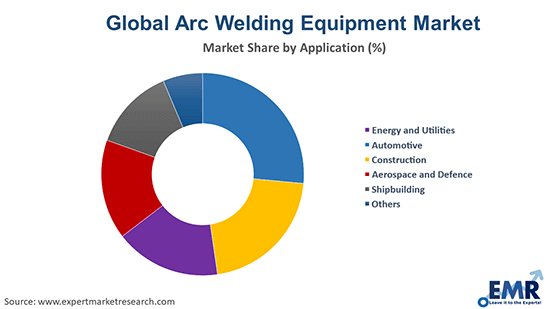
Market Breakup by Application
Key Insight: Construction sector dominates the demand for welding, driven by continuous infrastructure development. On the other hand, the automotive sector is growing through manufacturing automation and introduction of new materials. The energy and utilities industry mainly uses welding for pipelines and equipment maintenance, so this industry also propels continuous demand. Aerospace and defense industries are highly dependent on accurate welding processes. Shipbuilding relies heavily on welding large structures, with demand fluctuating in line with global trade cycles. Other industrial applications, such as general manufacturing, make up for a constant baseline demand in the arc welding equipment market.
Market Breakup by Region
Key Insight: Asia Pacific is leading the overall growth of the arc welding equipment market by a wide margin owing to its large-scale manufacturing and expanded infrastructures. North America is also gaining momentum through automation and technology adoption. Europe, with its focus on precision engineering and sustainability standards, is on a steady demand path. Latin America is indicating a moderate pace of growth, with its industrial recovery and construction activities boosting demand. Middle East and Africa regions, on the other hand, are relying on energy and infrastructure projects for growth.
By process, shielded metal arc welding captures the dominant share of the market due to low cost and versatility
Shielded metal arc welding continues to be dominant in the arc welding equipment market as it is capable of adapting to almost any working environment. The construction and repair fabricators especially rely on it when portability is the main concern even if it means accepting the lack of precision automation. Companies like ESAB Corporation are advancing the electrode technologies so that the arc stability is enhanced, and the spatter is reduced at the production level. In September 2025, Miller and Gullco launched Hercules welding system integrating automation, hot-wire MIG technology, and multi-component setup, delivering 30% higher deposition rates for heavy fabrication.
The gas metal arc welding keeps expanding its arc welding equipment market share as the whole industry is shifting to welding technologies that are faster and cleaner. Besides, it fits the automated and robotic systems in a feasible way, making it widely applied across automotive and heavy fabrication units. Firms like Lincoln Electric Holdings, Inc. are marketing high-end MIG machines with waveform control as a feature to provide the most consistent quality of welds.
By automation, the manual segment captures substantial share of the market due to workforce familiarity and lower investment barriers
Manual welding retains its dominance in the arc welding equipment market, especially through small and medium scale fabrication units that are mainly concerned with the control of capital investment. Instead of relying on programmed systems, operators use their experience which also gives them a chance to be flexible when treating different projects. Miller Electric Mfg. LLC has been consistently working on producing manual welding systems with better arc control, so that even semi-skilled workers find them quite easy to handle. In November 2025, CEA launched a new 2025 welding range featuring multi-process machines, advanced X Vision interfaces, high-speed low-heat welding technologies, and compact portable systems for industrial versatility.
Automatic welding is also contributing to the arc welding equipment market revenue as industries embark on precision-led manufacturing. This has become especially clear in the automotive and heavy engineering industries, which prioritize consistency rather than flexibility. Fronius International GmbH, for example, offers automated welding cells that come with sensors and adaptive controls to ensure the maintenance of weld quality. These kinds of solutions cut down the reliance on skilled labor, a concern that is growing in some developed markets.
By gases, carbon dioxide dominates the market due to affordability and widespread industrial usage
Carbon dioxide continues to be the dominant shielding gas around the world, largely because of its price and easy access. It is a frequent choice in gas metal arc welding when one needs a weld with great penetration. Air Liquide S. A. offers new gas mixtures that not only yield a better welding arc performance but also remain economically viable. Although carbon dioxide is not environmentally friendly, industries that give priority to production volume rather than finishing are using it. Heavy fabrication industries, including those manufacturing construction equipment, are relying on carbon dioxide mainly because of its efficient nature. For example, in February 2026, the Mig 315 IGBT Inverter CO2 MIG Welding Machine a high-performance welding solution widely adopted across various industrial sectors, was launched.
Argon, on the other hand, is gaining popularity in the arc welding equipment market, especially in those fields where weld aesthetics and accuracy are important. It ensures a stable welding arc while reducing spatter, resulting in a cleaner and higher-quality finish. Linde plc has further developed argon-based shielding gases that are made for more sophisticated welding operations. Manufacturers of aircraft and vehicles are going for argon or argon-based mixtures particularly when dealing with non-ferrous metals. Besides, it is also increasingly used in robotic welding environments where uniformity of results is the key factor.
By application, construction accounts for the substantial share of the market revenue due to large-scale infrastructure and structural welding demand
The construction industry leads the demand in the arc welding equipment market mainly due to the continuous infrastructures around the world. Kobelco Welding of America Inc. helps this part of the industry by providing tough welding machines that can handle the most demanding operations. Construction projects are often spread across multiple locations, creating demand for mobile and versatile welding equipment. Moreover, repair and maintenance work activities also necessitate the use of welding machines, giving rise to continuous and stable demand. In April 2024, Kemppi launched Minarc T 223 ACDC TIG machine with built-in weld cleaning, enabling welding and finishing in one step.
The automotive industry represents the fastest-growing application in the arc welding equipment market dynamics as its assembly and production lines get increasingly automated. Welding modern car body materials, which are lighter and thinner, requires precise heat control and high accuracy. Companies like Panasonic Corporation are producing robotic welding machines especially to work in automotive production lines. These machines significantly increase the uniformity of welds.
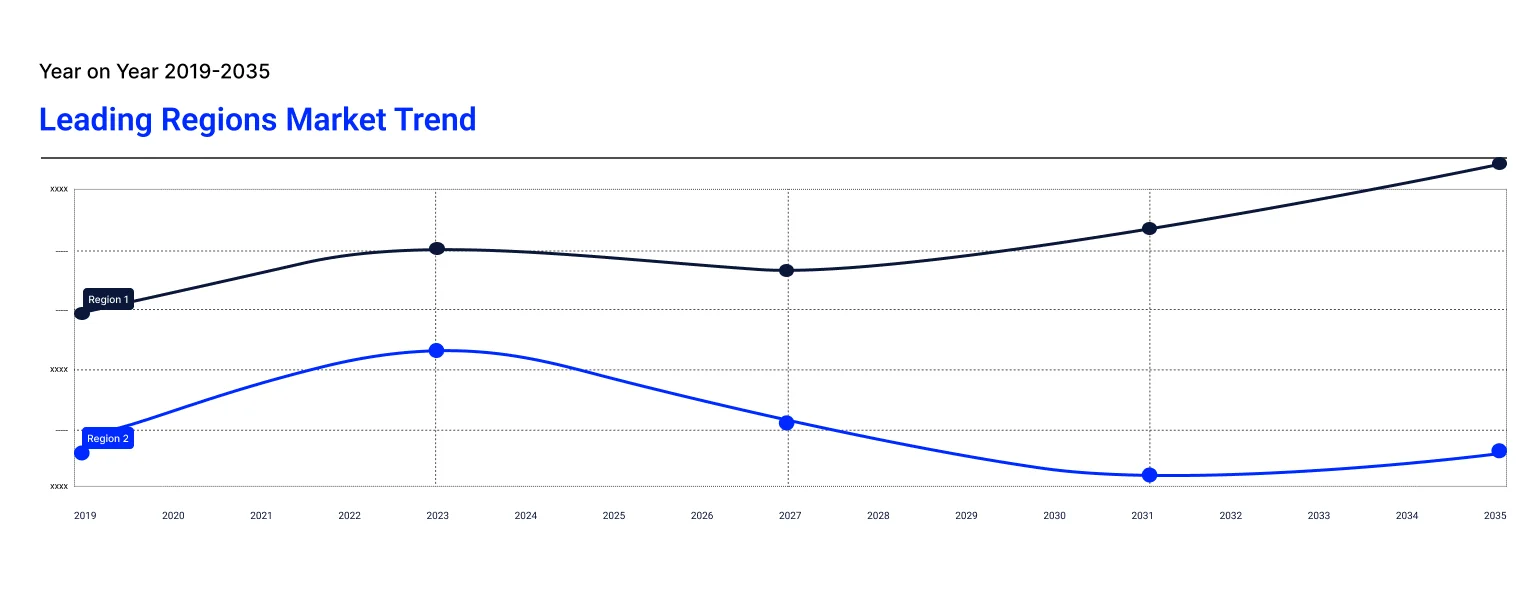
Asia Pacific registers the leading position in the market due to strong manufacturing base and infrastructure growth
Asia Pacific represents the largest arc welding equipment market, supported by a strong network of manufacturers and continued infrastructure development. Countries China and India are planning to expand their industrial production capacity which is a directly impacting the market growth. In May 2025, Panasonic launched smart factory welding solutions including TIG power source and cooling unit, supporting localized manufacturing, improved weld stability, safety, and productivity across industrial applications.
North America is on the verge of becoming the fastest-emerging arc welding equipment market, mainly because of the growing interest in automation of industrial processes and the adoption of the most advanced manufacturing methods. At the same time, the resurgence of localized manufacturing is driving demand for such equipment. Companies like Lincoln Electric Holdings, Inc. are continuing to introduce innovative, digitally enabled welding solutions in the region.
Leading arc welding equipment market players are more intent on producing capable and intelligent machines. Among the areas of growing emphasis are digital weld verification, energy-saving inverters, and compact versatile units capable of multiple welding processes. For example, The Lincoln Electric Company and Colfax Corporation are developing comprehensive welding solutions where software, consumables, and hardware are interconnected. In this way, they are securing their clientele for the long term.
Other arc welding equipment companies in emerging markets tend to upgrade their machines gradually rather than all at once. Those offering flexible payment plans and modular innovations are drawing more attention. Besides, companies such as AIR LIQUIDE S.A. have gone a step further in offering welding solutions instead of being mere gas suppliers.
Colfax Corporation was founded in 1997, and its main office is located in the United States. The company operates mainly through its fabrication technology segment. It offers advanced welding solutions mainly under the ESAB name/company/brand. It is leading the way through its digital welding systems and automation-ready equipment, focused on industries that are moving toward precision manufacturing and integrated production environments.
Telwin Spa was established in 1963, and its head office is in Villaverla, Italy. The company is well known for welding machines, battery chargers, and cutting systems. It is mainly addressing small workshops and light industrial users. Its product portfolio includes compact inverter welding machines which are not only easy to carry but also low power-consuming.
Founded in 1895 and based in Cleveland, United States, The Lincoln Electric Company is the global leader in welding solutions. It has launched connected welding technologies, including real-time data monitoring systems. The company is developing complete welding ecosystems that integrate equipment, software, and training services for industrial clients.
Founded in 1902 and having its main office in Paris, France, AIR LIQUIDE S.A. is a leading industrial gas company. It plays a part in welding through the provision of advanced welding gas solutions. The company is making tailored gas mixtures that not only improve welding quality but also minimize defects, especially in high-precision industrial applications.
*Please note that this is only a partial list; the complete list of key players is available in the full report. Additionally, the list of key players can be customized to better suit your needs.*
Other key players in the market include Arcon Welding Equipment, Automation International, Inc., and Miller Electric Mfg. LLC, among others.
Unlock the latest insights with our arc welding equipment market trends 2026 report. Discover regional growth patterns, consumer preferences, and key industry players. Stay ahead of competition with trusted data and expert analysis. Download your free sample report today and drive informed decisions in the market.


Upto 15% Off
USD
$2499 $2249
$3999 $3599
$4999 $4249
$5999 $5099


*While we strive to always give you current and accurate information, the numbers depicted on the website are indicative and may differ from the actual numbers in the main report. At Expert Market Research, we aim to bring you the latest insights and trends in the market. Using our analyses and forecasts, stakeholders can understand the market dynamics, navigate challenges, and capitalize on opportunities to make data-driven strategic decisions.*
In 2025, the market reached an approximate value of USD 5.05 Billion.
The market is projected to grow at a CAGR of 6.10% between 2026 and 2035.
The market is estimated to witness a healthy growth in the forecast period of 2026-2035 to reach about USD 9.13 Billion by 2035.
Investing in digital welding solutions, expanding modular product lines, targeting emerging markets, strengthening distributor networks, and developing energy-efficient systems are helping companies stay competitive and improve long-term customer retention.
The growing demand for automated arc welding equipment, the expanding national infrastructure, the rising use of arc welding equipment in manufacturing steel structures, the increasing demand for passenger cars, and the rising generation of renewable energy are the key trends guiding the market.
North America, Europe, the Asia Pacific, Latin America, and the Middle East, and Africa are the major regional markets for arc welding equipment.
The major segments on the basis of process considered in the market report are shielded metal arc welding, gas metal arc welding, flux core arc welding, gas tungsten arc welding, and submerged arc welding.
Manual, automatic, and semi-automatic are the various levels of automation considered in the market report.
The significant segments on the basis of gases considered in the market report are argon, helium, hydrogen, carbon dioxide, oxygen, and nitrogen, among others.
The several applications of arc welding equipment are energy and utilities, automotive, construction, aerospace and defence, and shipbuilding, among others.
The key players in the market include Colfax Corporation, Telwin Spa, The Lincoln Electric Company, AIR LIQUIDE S.A., Arcon Welding Equipment, Automation International, Inc., and Miller Electric Mfg. LLC, among others.
High equipment costs are limiting adoption among small manufacturers. Skilled labor shortages persist. Integration of digital systems remains uneven, and fluctuating raw material prices are creating uncertainty in production planning cycles.
Explore our key highlights of the report and gain a concise overview of key findings, trends, and actionable insights that will empower your strategic decisions.
| REPORT FEATURES | DETAILS |
| Base Year | 2025 |
| Historical Period | 2019-2025 |
| Forecast Period | 2026-2035 |
| Scope of the Report |
Historical and Forecast Trends, Industry Drivers and Constraints, Historical and Forecast Market Analysis by Segment:
|
| Breakup by Process |
|
| Breakup by Level of Automation |
|
| Breakup by Gases |
|
| Breakup by Application |
|
| Breakup by Region |
|
| Market Dynamics |
|
| Competitive Landscape |
|
| Companies Covered |
|
| Report Price and Purchase Option | Explore our purchase options that are best suited to your resources and industry needs. |
| Delivery Format | Delivered as an attached PDF and Excel through email, with an option of receiving an editable PPT, according to the purchase option. |
Datasheet
One User
USD 2,499
USD 2,249
tax inclusive*
Single User License
One User
USD 3,999
USD 3,599
tax inclusive*
Five User License
Five User
USD 4,999
USD 4,249
tax inclusive*
Corporate License
Unlimited Users
USD 5,999
USD 5,099
tax inclusive*
*Please note that the prices mentioned below are starting prices for each bundle type. Kindly contact our team for further details.*
Flash Bundle
Small Business Bundle
Growth Bundle
Enterprise Bundle
*Please note that the prices mentioned below are starting prices for each bundle type. Kindly contact our team for further details.*
Flash Bundle
Number of Reports: 3
20%
tax inclusive*
Small Business Bundle
Number of Reports: 5
25%
tax inclusive*
Growth Bundle
Number of Reports: 8
30%
tax inclusive*
Enterprise Bundle
Number of Reports: 10
35%
tax inclusive*
How To Order

Select License Type
Choose the right license for your needs and access rights.

Click on ‘Buy Now’
Add the report to your cart with one click and proceed to register.

Select Mode of Payment
Choose a payment option for a secure checkout. You will be redirected accordingly.
Strategic Solutions for Informed Decision-Making
Gain insights to stay ahead and seize opportunities.

Get insights & trends for a competitive edge.

Track prices with detailed trend reports.

Analyse trade data for supply chain insights.

Leverage cost reports for smart savings

Enhance supply chain with partnerships.

Connect For More Information
Our expert team of analysts will offer full support and resolve any queries regarding the report, before and after the purchase.
Our expert team of analysts will offer full support and resolve any queries regarding the report, before and after the purchase.
We employ meticulous research methods, blending advanced analytics and expert insights to deliver accurate, actionable industry intelligence, staying ahead of competitors.
Our skilled analysts offer unparalleled competitive advantage with detailed insights on current and emerging markets, ensuring your strategic edge.
We offer an in-depth yet simplified presentation of industry insights and analysis to meet your specific requirements effectively.




