

Consumer Insights
Uncover trends and behaviors shaping consumer choices today
Procurement Insights
Optimize your sourcing strategy with key market data
Industry Stats
Stay ahead with the latest trends and market analysis.
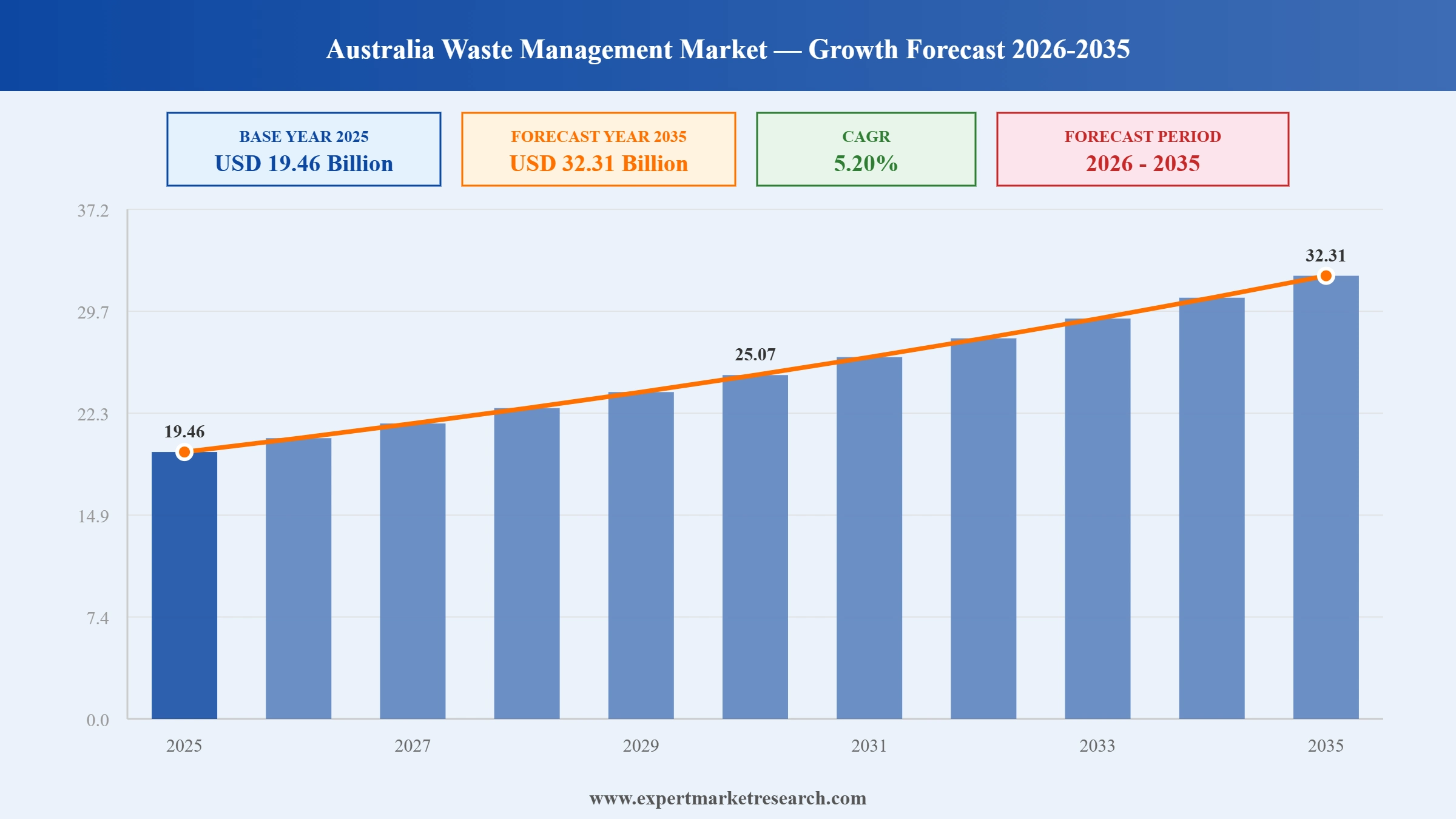
The Australia waste management market size was valued at USD 19.46 Billion in 2025. The industry is expected to grow at a CAGR of 5.20% during the forecast period of 2026-2035 to reach a value of USD 32.31 Billion by 2035. Waste-to-energy deployment and alternative fuel valorization are jointly emerging as core growth drivers boosting the market growth, as operators seek viable solutions for residual and non-recyclable waste streams.
The Australia waste management market is witnessing a notable boost from an increasing landfill levy and stricter compliance requirements, which are forcing companies to switch to more efficient waste segregation and treatment solutions to keep disposal costs under control. Moreover, as industries search for safer waste management solutions that are compliant with the law and lower operational and environmental risks, the facility is being forced to use advanced processing technologies and provide special treatment for hazardous and industrial waste.
Thermal treatment and fuel recovery technologies, which convert trash into energy, are becoming increasingly popular among waste management organizations as a result of landfill restrictions, decarbonization targets, and rising energy costs. Such approaches allow waste to be kept out of landfills and at the same time open up long-term growth opportunities in the Australia waste management market through the generation of electricity and the supply of industrial fuel. By adding energy recovery to their waste operations, market players are going beyond simply disposing of waste and are, through their actions, supporting the circular economy in both the municipal and industrial sectors. For instance, in 2025, Veolia was given the responsibility to run and maintain the long-term performance of Australia's first waste-to-energy facility at Kwinana that was fully financed, thus allowing large-scale conversion of residual waste into renewable power. Furthermore, in May 2024, Veolia ResourceCo entered a contract with Adbri Cement to deliver 1.48 million tonnes of refuse-derived fuel, thus playing a part in the industrial decarbonization while also taking waste away from landfills.
The USDA reports consumer food services span 65,866 independent and chain restaurants, offering a diverse dining landscape.
January 2024 saw the Australian Bureau of Statistics noting a 19.4% increase, totalling $7.14 billion in new residential construction values.
Australia's public hospitals in 2021–22, as noted by the Australian Institute of Health and Welfare, numbered 697.
Read more about this report - REQUEST FREE SAMPLE COPY IN PDF
TOMRA Cleanaway marked the eight-year anniversary since the launch of Australia's Container Deposit Scheme by revealing its Innovate Reconciliation Action Plan (RAP). Via the formalization of inclusive and community-focused practices in NSW, Victoria, and Tasmania, the program increases the involvement of stakeholders and the emphasis on social sustainability. Being responsible corporately in this manner not only helps to establish trust in the company's operations but also, in a way, it facilitates the expansion of Australia waste management market.
Waste Initiatives has introduced VERTECH, a high-performance waste processing equipment line specially designed for large-scale Australian recycling plants. The combination of state-of-the-art technologies from overseas with local support makes VERTECH operationally efficient, reliable, and high throughput. This move enables waste operators to implement advanced waste technology solutions and thus contributes to the development of the Australian waste management market in general through better waste processing capabilities and increased landfill diversion rates.
Pact Group has launched rFresh 100, a recycled HDPE resin that is US FDA compliant, for milk, juice, and personal care bottles. This resin is made at their Circular Plastics Australia (CPA) plant in Melbourne. By providing the option to use 100% recycled plastic, this new product not only promotes the circular economy and reduces the volume of waste going to landfill but also helps to build a robust waste management and recycling system in Australia.
Living Earth Australia purchased an EDGE TRM831 mobile trommel screen, which is the first in Australia, for their organic waste processing operation to increase the production of premium quality compost and mulch. The subdivision of organics into smaller pieces and therefore the enhancement of the processing facility capacity and efficiency are guaranteed to meet the requirements of the industrial and agricultural sectors and the demand for sustainable organics recycling, thus boosting the growth of Australia waste management industry in general.
Municipalities and institutions tend to outsource the entire range of waste services to the specialized providers who are capable of handling collection, sorting, and resource recovery at a large scale. The change contributes to the effectiveness of operations, achievement of regulatory compliance, and circular economy by reconciling the fragmented service delivery through long-term contracts. Many companies in the Australia waste management market are diversifying into big integrated contracts to grab secure revenues and get better infrastructure usage. For example, in December 2024, Cleanaway signed a six-year waste management and resource recovery contract with Defence in Queensland and Western Australia, increasing diversion to achieve national targets.
Companies are leveraging acquisitions to improve their service offerings, to step into the markets adjacent to their current ones, and to attract new customer segments in different parts of the waste value chain. By expanding their technical and service capabilities strategically, waste operators are able to offer full solutions and increase their market presence, especially in the industrial and decommissioning sectors. In March 2025, Cleanaway made public their intention to acquire Contract Resources Group Pty Ltd, a move that would enhance their technical services and decontamination capabilities in the complex waste sectors, thereby providing a solid foundation for future expansion.
The Australia waste management market is witnessing a surge in investments in up-to-date material recovery facilities (MRFs) that increases the amount of recycling while improving the quality of the recovered materials, which can serve as the secondary raw materials, thus furthering the circular economy objectives. Modern sorting and purification technologies integrated into new and renovated MRFs give operators the opportunity to process various waste fractions more effectively, reducing the need for landfilling. Major infrastructure investments permit companies to comply with the regulations, and at the same time, they can extend their services geographically. To increase the recycling accessibility and recover feedstock, Coca-Cola Europacific Partners (CCEP) Australia has equipped their production sites with reverse vending machines.
The Australia waste management industry is observing a growing trend of partnerships utilizing waste-to-energy (EfW) technologies, which reroute non-recyclable waste that would otherwise wind up in landfills and transform it into energy or material value. These collaborations extend the waste management value chain from disposal to energy production. Companies grouping with EfW facilities can thereby tackle non-recyclables more meaningfully while also helping with energy value chains in local setups. A case in point is the non-recyclables supply contract reached by Cleanaway with Acciona for its Kwinana Energy Recovery Facility based on EfW technology.
Collaborative efforts by companies in the Australia waste management market that combine collection, processing, and conversion technologies at the downstream are essential for addressing the difficult waste streams such as soft plastics. Jointly, waste managers and industrial processors can create hybrid systems that convert waste into valuable feedstocks, thereby enhancing circularity. Such partnerships also lessen the demand for new plastics and help in meeting the changing regulations on packaging and recycled content. In April 2025, a circular plastics solution was adopted after Cleanaway and Viva Energy conducted a pre-feasibility study for the advanced soft plastics recycling facility in Australia.
The EMR’s report titled “Australia Waste Management Market Report and Forecast 2026-2035” offers a detailed analysis of the market based on the following segments:
Market Breakup by Waste Type
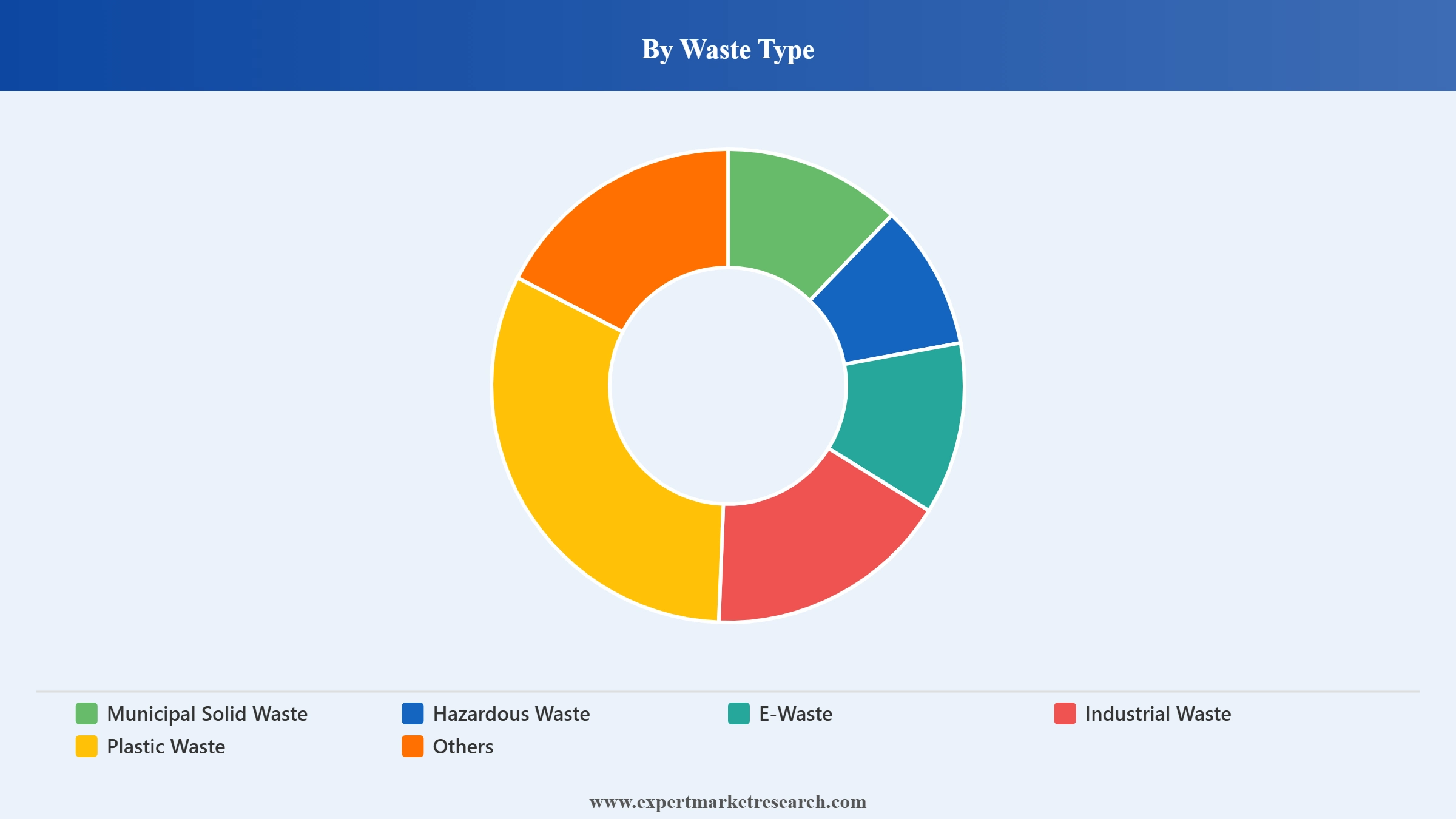
Key Insights: The Australia waste management market scope covers various types, including municipal solid waste, hazardous waste, e-waste, industrial waste, plastic waste, and others. Each segment contributes to the overall market growth via demand for specialized services and investment. The demand for the infrastructure of collection and recycling is sustained by municipal solid waste. Also, growth in the hazardous and industrial waste sectors is mainly due to regulatory compliance requirements and company-based specialized treatment services such as Cleanaway and Remondis Australia. In recycling electronics, Sims Metal Management focuses on metal recovery from e-waste. Plastic waste recovery efforts have been ramped up through the collaboration of CITIC Pacific Mining and Sodexo Australia to enhance container recycling in the WA mining sector, as disclosed in August 2024.
Market Breakup by Disposal Methods
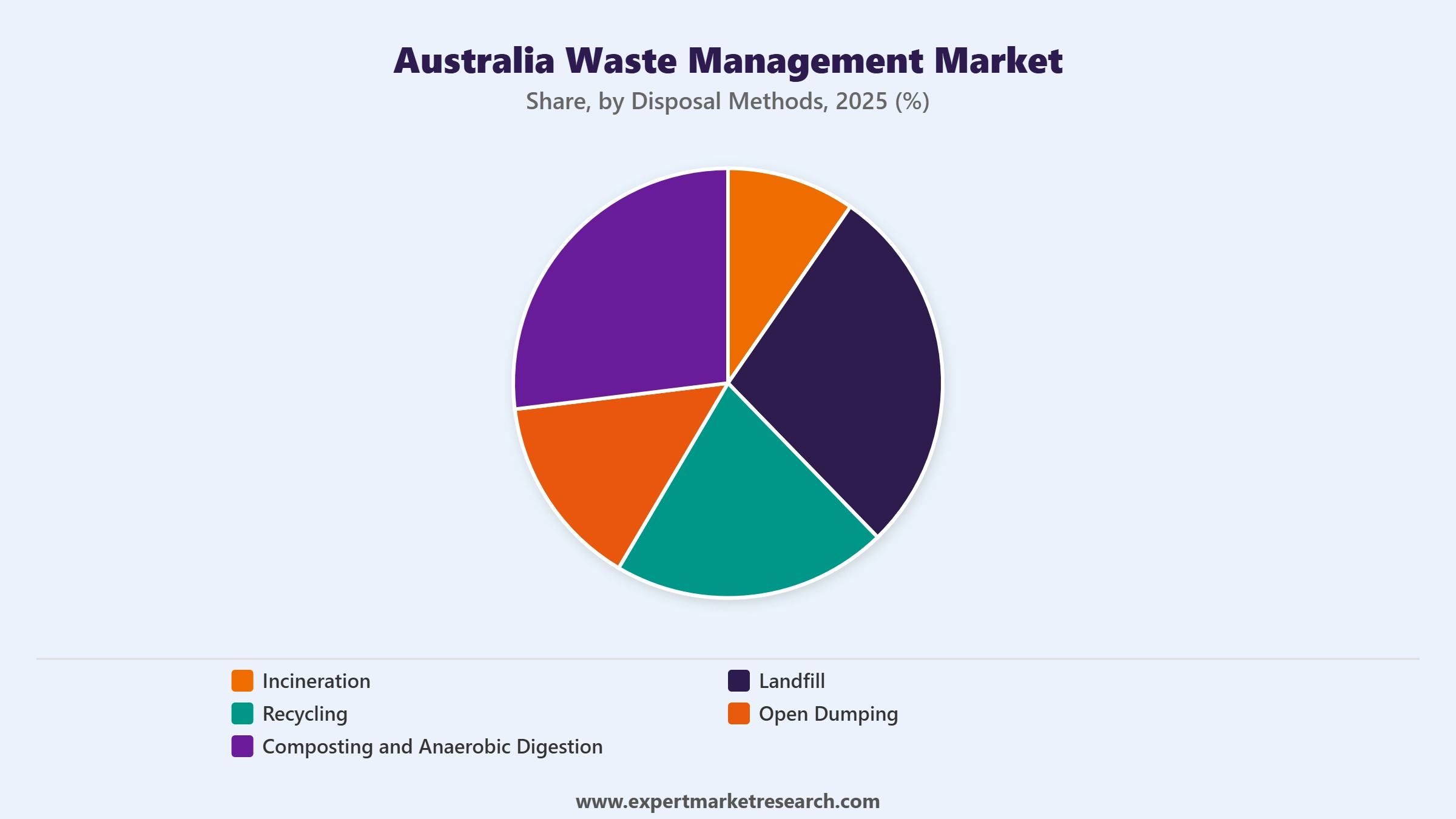
Key Insights: Waste disposal in Australia waste management market is accomplished through methods that include incineration, landfill, recycling, open dumping, and composting/anaerobic digestion. Each method has its impact on market dynamics. Recycling and composting technologies lessen the pressure on landfills while simultaneously creating a demand for sorting and organic processing technologies that are provided by companies like Cleanaway and JJ's Waste & Recycling. Incineration and waste-to-energy (WtE) options are considered alternative routes for final waste. This is being backed by several proposed projects aimed at reducing landfill use and increasing energy recovery.
Market Breakup by End Use
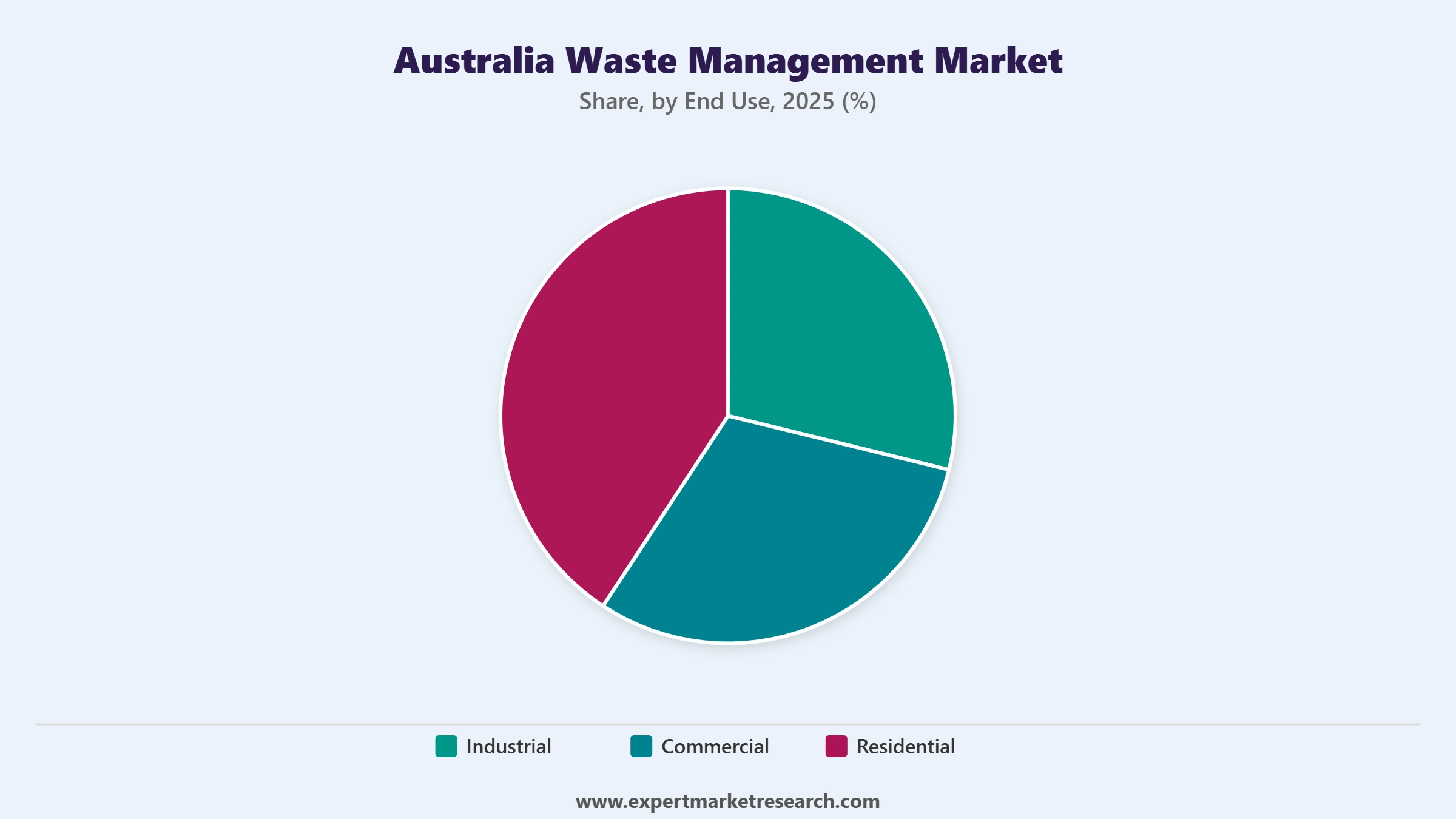
Key Insights: Markets for industrial, commercial, and residential end users together explain the demand trends in Australia waste management market. Industrial companies, on one hand, need special handling and compliance for large volumes of process and hazardous wastes, thus increasing the work of service providers such as Remondis Australia and Toxfree. On the other hand, commercial enterprises, by their nature, utilize recycling and resource recovery efficiently to cut expenses and comply with sustainability goals, hence leading to the building up of advanced sorting & recovery facilities. The residential demand mainly comes from curbside recycling, composting programs, and municipal waste processing, whereby private providers and local governments are broadening their service portfolios to raise diversion rates and enhance circularity.
Market Breakup by Region
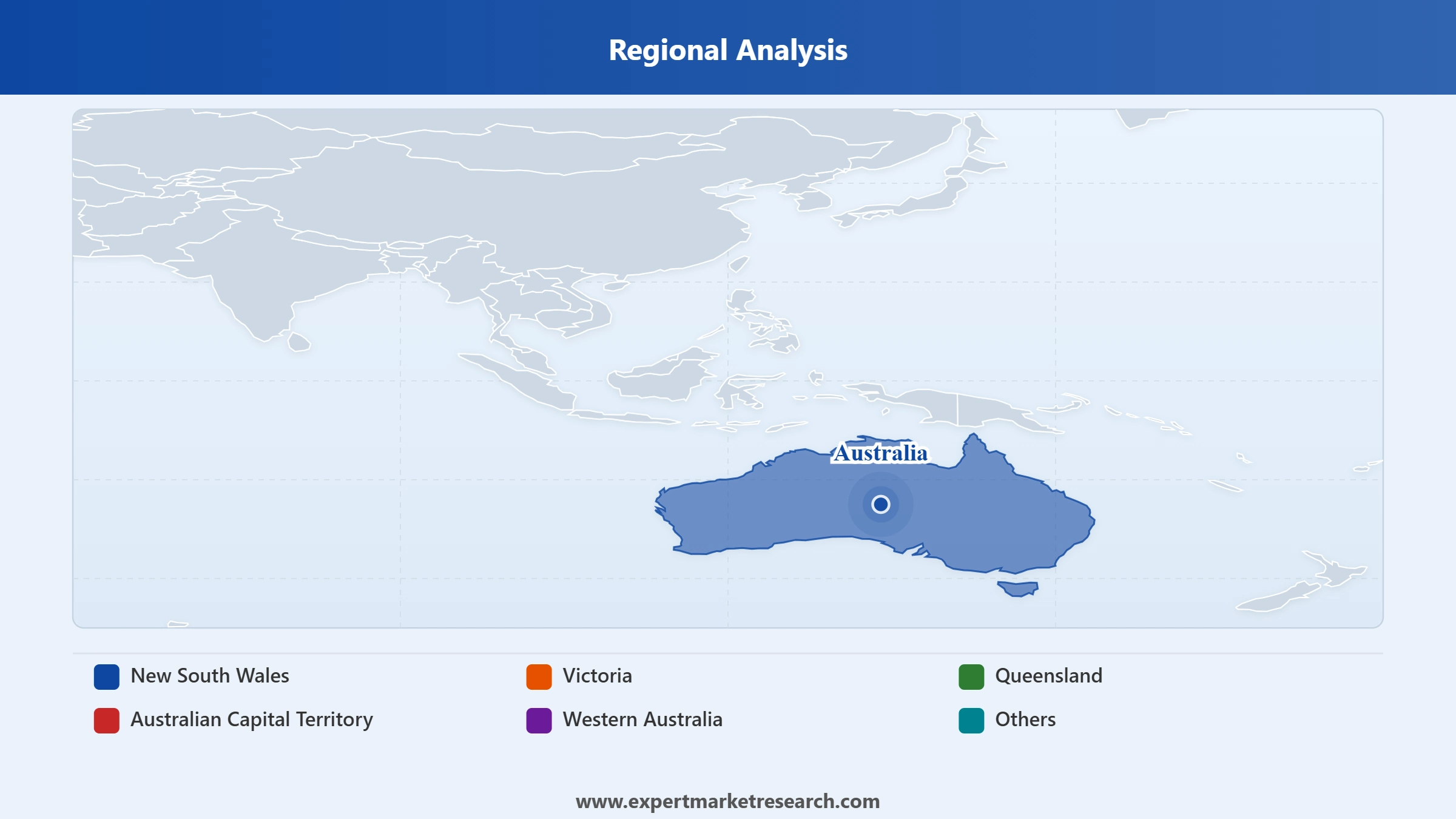
Key Insights: Regional segmentation of the Australia waste management market covers New South Wales, Victoria, Queensland, the Australian Capital Territory, Western Australia, and others, with each having different growth drivers. New South Wales and Victoria, as the states with the highest population, generate the largest volumes of municipal waste and, therefore, need a greater recycling and composting infrastructure, which has drawn investments from the likes of Cleanaway and Solo Resource Recovery. Queensland and Western Australia are investing in novel initiatives, such as the establishment of partnerships for container recycling and the undertaking of a waste-to-energy feasibility study, to effectively reduce their reliance on landfills. Smaller areas are also playing a vital role by offering niche services and specialized industrial waste processing, thereby contributing significantly to the overall national market growth.
By waste type, the municipal solid waste category generates significant revenue driven by Municipal Solid Waste (MSW) initiatives.
The municipal solid waste (MSW) category boosts the Australia waste management market expansion as rapid urbanization and increased household consumption lead to higher waste volumes, which, in turn, prompt local authorities to scale up their collection, segregation, and recycling systems. MSW initiatives trigger investments in sorting plants, community education on recycling, and the recovery of organics through curbside collections, thus helping to achieve waste disposal goals in an environmentally friendly manner. For instance, Queensland distributed nearly half a million green bins dedicated to organics recycling in August 2025 alone, which led to a significant increase in diversion from landfill and better utilization of the waste management infrastructure.
The plastic waste category accounts for a significant share of the Australia waste management market, supported by the ongoing focus on remanufacturing and high-value recovery of polymers. Increasingly stringent regulatory requirements and commitments by the industry to have recycled content drive the need for more advanced recycling technologies and sorting facilities. As an example, in December 2025, a national soft plastics recycling scheme was introduced by Soft Plastic Stewardship Australia, which was backed by major retailers to enhance the infrastructure and collection systems for plastics that are generally left out of the curbside collections.
Read more about this report - REQUEST FREE SAMPLE COPY IN PDF
By disposal methods, recycling leads the market growth driven by emerging recycling technologies
Expanding the capacity of recycling operations and improving the quality of recovered materials are boosting the demand in the Australia waste management market for recycling methods. As a result, materials' circularity is significantly improved. More raw materials are made accessible for industry, and less garbage is dumped in landfills when waste categories like plastics, glass, and paper are properly separated due to financial assistance and improved technologies. Through the Recycling Modernisation Fund, the Australian government is partnering with the private sector and other stakeholders to co-invest in the construction of new recycling facilities and the upgrade of the existing ones. Nationally, this investment will generate more than AUD 1 billion in new capacities aimed at meeting recovery targets.
Composting and Anaerobic Digestion (AD) adoption is increasing in the Australia waste management market, owing to the increasing food and yard waste volumes as well as municipalities setting diversion targets for such waste. These processes result in the production of soil amendments and biogas, thus increasing the value of waste fractions that were previously considered to be of low value. Additionally, these processes help in reducing methane emissions that are generated from landfills. Municipalities are increasingly entering into partnerships with technology providers for the large-scale deployment of AD systems that are in line with the dual objectives of renewable energy sourcing and reduction of organic waste.
Read more about this report - REQUEST FREE SAMPLE COPY IN PDF
By end use, the industrial category shows robust growth driven by resource recovery initiatives
The industrial sector plays a leading role in waste management innovations through the adoption of technology and resource recovery initiatives, which is fueling the Australia waste management market revenue. Through the development of methods to convert industrial residues, plastics, and organic waste into valuable materials and energy, companies and research institutions are setting the industrial sector on the verge of a circular economy. For instance, in December 2025, Monash University unveiled the ARC Research Hub for Value-Added Processing of Underutilized Carbon Waste (VAPUCW) to turn carbon-based industrial waste into high-value products, clean energy materials, and catalysts. This research is supported by USD 4.9 million in ARC funding and USD 4.8 million from industry partners.
The residential end-use segment contributes to the growth of the Australia waste management market through the expansion of municipal services such as curbside recycling, organic waste collection, and community education. An increase in consumer awareness of environmental sustainability and local governments' waste diversion targets are responsible for the demand for multi-material recycling and composting services to be more convenient. Providers use digital engagement tools and smart bin programs to their advantage to boost participation and improve operational efficiency, thus contributing to wide-scale recovery goals.
Read more about this report - REQUEST FREE SAMPLE COPY IN PDF
By region, New South Wales shows robust growth
New South Wales (NSW) continues to be a prominent area for Australia waste management market growth because of its densely populated urban regions, which generate large volumes of trash, and the state's progressive waste regulations, which stimulate waste recycling and recovery through the investment of new infrastructure. Strategic projects are changing the way residual waste is treated while at the same time producing energy and helping sustainability goals. For instance, in January 2026, Tadweer Group signed a Joint Development Agreement with Cleanaway Waste Management and Parkes Energy Recovery Company to build a world-class waste-to-energy facility in Parkes, NSW, which will divert 700,000 tons of waste annually from landfill and generate 70 megawatts of electricity.
Due to the considerable investments in advanced waste-to-energy (WtE) facilities and resource recovery projects, the Western Australia waste management market is experiencing a significant boom. These initiatives are aimed at solving the problem of landfills becoming full, supporting the generation of renewable energy, and improving diversion rates. For example, in July 2025, Acciona proposed to purchase the East Rockingham WtE Project, which will be a good addition to its existing Kwinana facility. Together, they will be the only WtE plants in the Perth and Peel region, which is an indication of the strategic capacity expansion and energy recovery potential there.
Read more about this report - REQUEST FREE SAMPLE COPY IN PDF
The Australia waste management market players are expanding and integrating their services as they look for growth opportunities. For instance, Cleanaway, Remondis Australia, and Toxfree are broadening their residential, industrial, and hazardous waste portfolios while offering a mixture of collection, sorting, recycling, and treatment services. Besides that, strategic acquisitions and partnerships with other technical businesses also double an operator's geographical reach while they gain technical know-how. Thus, operators are in a better position to meet the rapidly changing compliance regulations and also to back sustainability commitments of councils and corporates.
To enhance the rate of diversion and the recovery of the resources, many waste management market companies in Australia are setting up state-of-the-art material recovery facilities, composting, and anaerobic digestion systems, and also investigating the conversion of waste to energy. The development of plastics recycling and the supply chain of refuse-derived fuel is being facilitated through collaboration with industrial partners, thus significantly widening the circle. As a result, these targeted measures not only enhance the efficiency of operations but also bring about new streams of revenue in the Australia waste management market and make the range of services compatible with the national goals of waste reduction and environmental protection.
J.J. Richards & Sons Pty Ltd. is one of the largest privately owned waste management enterprises in Australia. The company was originally a family business established in 1932 in Sydney, New South Wales, where it continues to maintain its headquarters. It offers a wide range of services, such as waste collection, recycling, and resource recovery, to the municipal, commercial, and industrial sectors across Australia.
SUEZ is an international environmental service company that was originally established in 1858, and it has its head office in Paris, France. In Australia, SUEZ concentrates on sustainable waste and water management as well as circular economy solutions, thereby enabling both municipalities and industries to benefit from its recycling and recovery activities at an advanced level.
Veolia Environnement S.A. (Veolia) is a French multinational company that was established in 1853 and is based in Paris, France. Veolia has a significant presence in Australia through its waste, water, and energy management services. Its activities in the area of sustainability focus on resource recovery and the reduction of carbon footprint.
Grasshopper Environmental Pty Ltd. is a local company that specializes in organics recycling. It was established in 2015 and is located in Sydney, New South Wales. Its main products are derived from the process of composting and food/organic waste, which it sells as soil conditioners to urban and agricultural markets. In doing this, it also contributes to the circular economy concept that aims to reduce waste generation.
*Please note that this is only a partial list; the complete list of key players is available in the full report. Additionally, the list of key players can be customized to better suit your needs.*
Other players in the market include Nationwide Waste Solutions Pty Ltd., Sydney Waste Services, Ace Waste Pty Ltd., Cleanaway Waste Management Limited, and Australian Waste Management Pty Ltd., among others.
Explore the latest trends shaping the Australia Waste Management Market 2026-2035 with our in-depth report. Gain strategic insights, future forecasts, and key market developments that can help you stay competitive. Download a free sample report or contact our team for a customized consultation on Australia's waste management market trends 2026.


Upto 15% Off
USD
$2499 $2249
$3999 $3599
$4999 $4249
$5999 $5099


*While we strive to always give you current and accurate information, the numbers depicted on the website are indicative and may differ from the actual numbers in the main report. At Expert Market Research, we aim to bring you the latest insights and trends in the market. Using our analyses and forecasts, stakeholders can understand the market dynamics, navigate challenges, and capitalize on opportunities to make data-driven strategic decisions.*
In 2025, the Australia waste management market reached an approximate value of USD 19.46 Billion.
The market is projected to grow at a CAGR of 5.20% between 2026 and 2035.
The revenue generated from the waste management market is expected to reach USD 32.31 Billion in 2035.
The waste management market is categorised according to waste type, which includes municipal solid waste, hazardous waste, e-waste, industrial waste, plastic waste, and others.
The key players in the market include J.J. Richards & Sons Pty Ltd., SUEZ, Veolia Environnement S.A., Grasshopper Environmental Pty Ltd., Nationwide Waste Solutions Pty Ltd., Sydney Waste Services, Ace Waste Pty Ltd., Cleanaway Waste Management Limited, Australian Waste Management Pty Ltd., along with other regional and local service providers.
Based on the end use, the market is divided into industrial, commercial, and residential.
The market is broken down into New South Wales, Victoria, Queensland, Australian Capital Territory, Western Australia, and others.
Key strategies driving the market include expanding recycling capacity, investing in waste-to-energy technologies, adopting digital collection systems, and strengthening public private partnerships.
Major challenges include high capital costs, regulatory complexity, recyclable waste contamination, volatile commodity prices, and rising operational expenses.
Explore our key highlights of the report and gain a concise overview of key findings, trends, and actionable insights that will empower your strategic decisions.
| REPORT FEATURES | DETAILS |
| Base Year | 2025 |
| Historical Period | 2019-2025 |
| Forecast Period | 2026-2035 |
| Scope of the Report |
Historical and Forecast Trends, Industry Drivers and Constraints, Historical and Forecast Market Analysis by Segment:
|
| Breakup by Waste Type |
|
| Breakup by Disposal Methods |
|
| Breakup by End Use |
|
| Breakup by Region |
|
| Market Dynamics |
|
| Competitive Landscape |
|
| Companies Covered |
|
Datasheet
One User
USD 2,499
USD 2,249
tax inclusive*
Single User License
One User
USD 3,999
USD 3,599
tax inclusive*
Five User License
Five User
USD 4,999
USD 4,249
tax inclusive*
Corporate License
Unlimited Users
USD 5,999
USD 5,099
tax inclusive*
*Please note that the prices mentioned below are starting prices for each bundle type. Kindly contact our team for further details.*
Flash Bundle
Small Business Bundle
Growth Bundle
Enterprise Bundle
*Please note that the prices mentioned below are starting prices for each bundle type. Kindly contact our team for further details.*
Flash Bundle
Number of Reports: 3
20%
tax inclusive*
Small Business Bundle
Number of Reports: 5
25%
tax inclusive*
Growth Bundle
Number of Reports: 8
30%
tax inclusive*
Enterprise Bundle
Number of Reports: 10
35%
tax inclusive*
How To Order

Select License Type
Choose the right license for your needs and access rights.

Click on ‘Buy Now’
Add the report to your cart with one click and proceed to register.

Select Mode of Payment
Choose a payment option for a secure checkout. You will be redirected accordingly.
Strategic Solutions for Informed Decision-Making
Gain insights to stay ahead and seize opportunities.

Get insights & trends for a competitive edge.

Track prices with detailed trend reports.

Analyse trade data for supply chain insights.

Leverage cost reports for smart savings

Enhance supply chain with partnerships.

Connect For More Information
Our expert team of analysts will offer full support and resolve any queries regarding the report, before and after the purchase.
Our expert team of analysts will offer full support and resolve any queries regarding the report, before and after the purchase.
We employ meticulous research methods, blending advanced analytics and expert insights to deliver accurate, actionable industry intelligence, staying ahead of competitors.
Our skilled analysts offer unparalleled competitive advantage with detailed insights on current and emerging markets, ensuring your strategic edge.
We offer an in-depth yet simplified presentation of industry insights and analysis to meet your specific requirements effectively.




