

Consumer Insights
Uncover trends and behaviors shaping consumer choices today
Procurement Insights
Optimize your sourcing strategy with key market data
Industry Stats
Stay ahead with the latest trends and market analysis.
The global automotive dampers market attained a value of USD 16.83 Billion in 2025 and is projected to expand at a CAGR of 2.30% through 2035. The market is further expected to achieve USD 21.13 Billion by 2035. The increasing popularity of electrical and software-defined cars is driving up the demand for intelligent damping systems, prompting automotive component manufacturers to invest in developing smart suspensions systems that perform better than their traditional counterparts.
Tenneco's Monroe Ride Solutions announced its New Monroe DCx Valve breakthrough in passive damper valve technology on March 30, 2026, delivering superior comfort-handling balance and dramatic NVH reduction across passenger-vehicle applications, as reported by Aftermarket International. The launch reinforces accelerating premiumization, electrification-driven NVH demand, and competitive innovation reshaping the global automotive dampers market amid rising consumer expectations for ride quality.
ZF expanded its SACHS Continuous Damping Control (CDC) shock absorber line and broadened distribution across the TRW aftermarket portfolio in 2026, as reported by Counterman. The expansion strengthens ZF's competitive positioning against Tenneco's Monroe portfolio and reinforces accelerating semi-active damper adoption supported by ZF-NVIDIA partnership on AI predictive suspension control, expanding addressable opportunities across the global automotive dampers market.
There are two main drivers fueling the demand in the automotive dampers market. Manufactures of premium SUVs and luxury cars are experiencing a steady increase across the world. As a result, more car makers are looking into installing adaptive suspension systems that offer improved driving experience, including improved stability during high-speed maneuvers and improved vehicle controllability. On the other hand, as a consequence of the rising adoption of electric vehicles, there is a need to incorporate semi- and fully active damping systems in vehicles to accommodate the increased weight brought about by battery installation.
Electronically-controlled and adaptive suspension systems are increasingly gaining prominence in the automotive dampers market as car manufacturers are trying to achieve improved ride, stability, and energy management. A major breakthrough was made by ZF Group, which rolled out further applications for its innovative sMOTION active chassis, offering automatic damper adjustment by utilizing actuators controlled via software, in December 2024. The innovation demonstrates the current trend among carmakers towards software-based vehicle architecture. Modern chassis technologies allow carmakers to substantially improve the comfort of their vehicles and cater to the ever-growing demand for luxury and electric cars. With OEMs actively developing intelligent mobility solutions, demand for future dampers is expected to grow among passenger and commercial vehicle manufacturers.
Car manufacturers are incorporating adaptive dampers in their electric cars in order to tackle battery load balancing and to improve driving dynamics. Carmakers are relying on lighter weight components, electrically-controlled shocks, and adaptive suspensions that can react in accordance with road conditions. Additionally, developers are aligning the process of product creation with the needs of autonomous driving, redefining the automotive dampers market dynamics. For example, in October 2025, Astemo showcased next-generation motorcycle suspension systems and ADAS technologies, enhancing safety, comfort, stability, and riding performance.
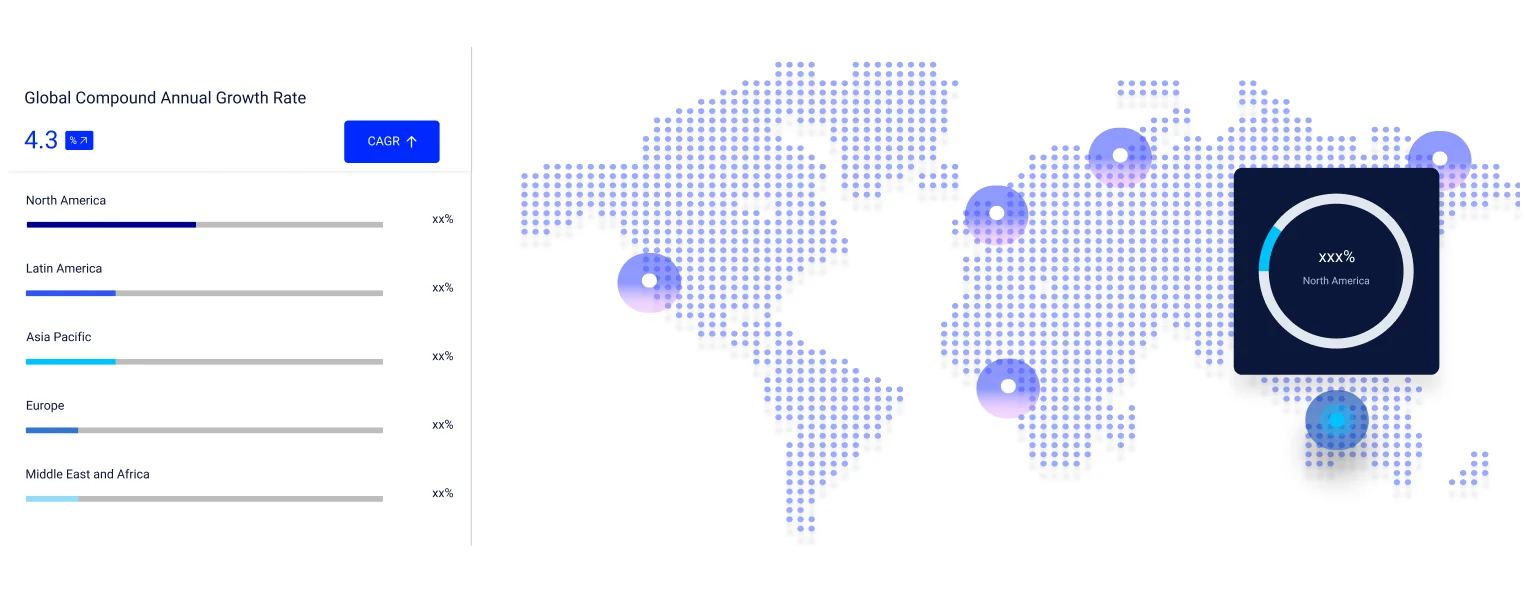
Compound Annual Growth Rate
2.3%
Value in USD Billion
2026-2035
Read more about this report - REQUEST FREE SAMPLE COPY IN PDF
Monroe Ride Solutions launched its innovative DCX piston valve, allowing for separate tuning of the car’s ride comfort and dynamic handling characteristics while minimizing noise, vibration, and harshness levels. Such innovations clearly indicate an increasing interest in highly sophisticated damping solutions that improve both driving experience and passenger comfort without adding any additional complexity to the system.
Monroe Ride Solutions announced the extension of its advanced MCX damping system on North American cars, increasing their suspension reaction and enhancing overall ride comfort. Developments like these highlight increasing adoption of next-generation damping systems designed to meet evolving consumer expectations for comfort and vehicle control.
DaVinci Dampers expanded their range of high-performance suspensions, offering customized damping systems for varied vehicle applications. Such advancements in the automotive dampers market demonstrate the growing demand for special dampers for various vehicle applications.
The ZF Group released new advanced rail dampers in India, offering better passenger safety and enhanced operational comfort. Such automotive dampers market trends show how the use of dampers is evolving from being used in automotive applications to other areas, such as rail travel.
Electric mobility poses many new challenges that hinder the automotive dampers market growth. First, electric vehicles have more massive battery packs and, hence, require better performing suspensions to ensure ride comfort and stability while traveling. Hence, manufacturers are incorporating electronically-controlled dampers capable of adjusting their behavior to changing road conditions and loads. For example, ZF Group continues expanding its portfolio of active chassis systems designed for future generations of electric vehicles.
Software-defined vehicles are another factor driving suspension technology evolution, redefining the automotive dampers market dynamics. Dampers of modern cars are becoming smarter by getting wired to control modules of vehicles and allowing for constant readjustments depending on vehicle speed, road conditions, and driver behavior. Carmakers are making considerable investments into software-defined vehicle architectures, which make it possible to coordinate the work of brake systems, chassis control, safety functions, and others. For example, Continental AG and some other OEMs are working on solutions to integrate their chassis control technology. On the other hand, in November 2025, Nissan debuted Adaptive Air Suspension on the new Patrol, enhancing ride comfort, stability, and off-road capability. Besides, government regulatory policies focusing on the improvement of safety and advanced driver assistance systems are promoting the rise of such solutions.
Luxury SUVs and cars continue to be a significant source of demand for advanced suspension solutions. Customers' expectations of ride quality, lower vibrations, and dynamic vehicle behavior are increasing; therefore, manufacturers are equipping their vehicles with adaptive and semi-adaptive suspensions as a standard or optional feature. Automakers are addressing these demands through innovations and upgrades in premium chassis models, boosting the automotive dampers market penetration. Luxury car brands like Mercedes-Benz Group AG and BMW AG are supporting this trend by introducing electronically controlled suspensions into more SUV models. In March 2025, Mahindra launched BE 6 and XEV 9e electric SUVs featuring intelligent suspension, enhancing comfort, handling, and stability.
With the emergence of autonomous and connected vehicle technologies, the need for sophisticated dampers that offer a smooth and predictable ride is becoming more prominent. Autonomous driving requires passengers to feel more comfortable because they would spend more time performing other activities while in motion. Therefore, OEMs require predictive suspension systems with advanced software algorithms, cameras, and sensors that are able to predict the road ahead and offer smoother rides to their passengers. Companies like Tenneco Inc. are developing intelligent suspension solutions for the future of mobility platforms, driving demand in the automotive dampers market. For example, in May 2026, Schaeffler showcased advanced chassis and body technologies, enhancing vehicle safety, comfort, connectivity, handling, and autonomous driving.
The automotive industry is increasingly focused on reducing vehicle weight and improving efficiency to comply with stricter environmental regulations and emissions standards. The shift towards lightweighting is compelling automotive dampers market players to design lightweight dampers using advanced alloys and composites and through efficient production methods. Lightweight parts enhance the fuel economy of the standard vehicle as well as the range of electric cars. Companies like KYB Company are developing high-quality lightweight suspension dampers that can be used in automobiles around the world. For example, in May 2026, Henkel unveiled Teroson EP 52 adhesive, combining structural bonding, vibration damping, durability, lightweighting, and automotive performance.

Read more about this report - REQUEST FREE SAMPLE COPY IN PDF
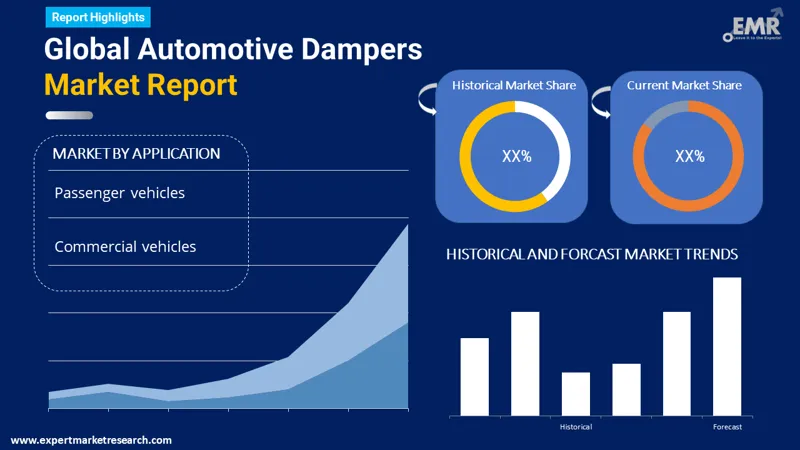
The EMR’s report titled “Global Automotive Dampers Market Report and Forecast 2026-2035” offers a detailed analysis of the market based on the following segments:
Market Breakup by Application
Key Insight: Passenger vehicles continue to be the dominant application segment owing to the rising requirements of providing a luxurious driving experience, improved suspension capabilities, and increased emphasis on comfort-related vehicle designs. The demand for commercial vehicles continues to rise gradually since fleet owners pay attention to longevity, cargo safety, and reduced total cost of ownership, stimulating the automotive dampers market growth. While passenger vehicle makers invest heavily in developing adaptive suspensions, lighter materials, and software-controlled chassis integration, commercial vehicle makers concentrate on effective cargo management, ride stability, and longevity of parts.
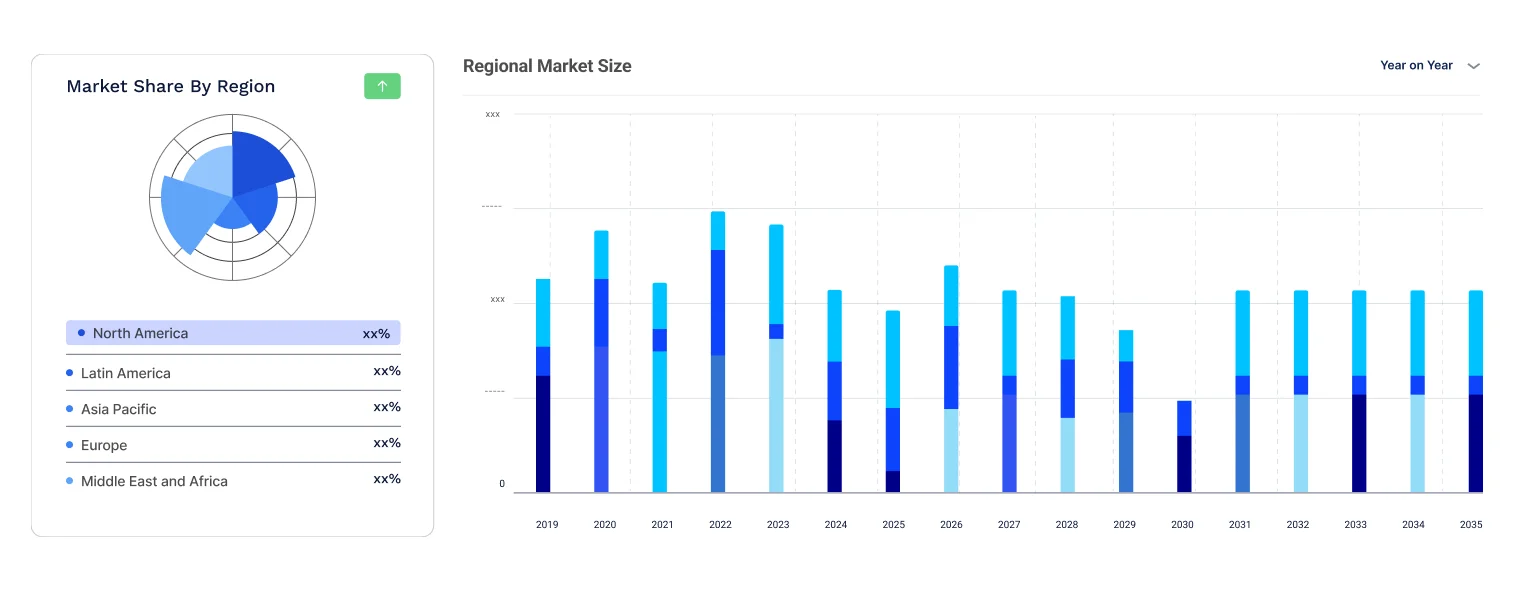
Market Breakup by Region
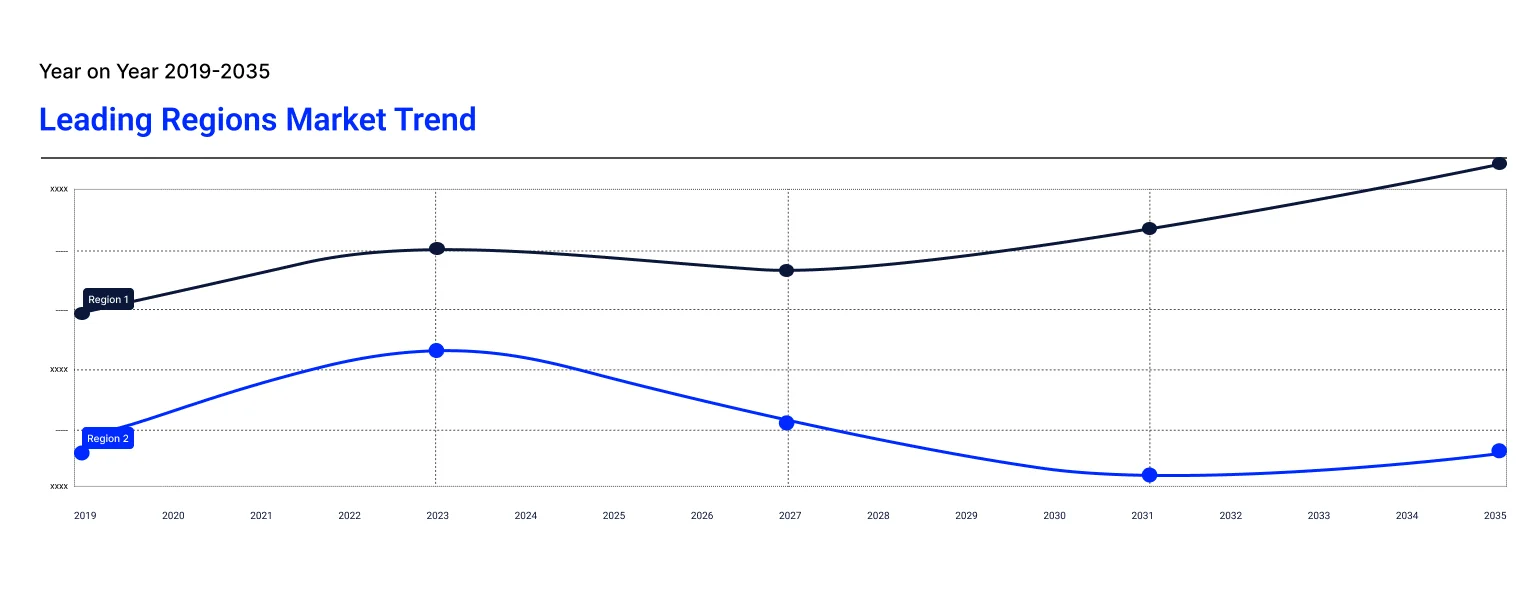
Key Insight: The Asia Pacific region retains its dominance in the automotive dampers market owing to its vast vehicle manufacturing capacity, its initiatives towards electric mobility, and effective supply chain network. The North America region witnesses rapid growth due to high demand for luxurious vehicles, adoption of superior suspension systems, and innovations in connected mobility solutions. The European region holds a prominent position owing to engineering expertise, production of luxurious vehicles, and superior performance standards. The Latin American region, on the other hand, is gaining advantage due to steady vehicle manufacturing growth and replacement needs.
Read more about this report - REQUEST FREE SAMPLE COPY IN PDF
By application, passenger vehicles register the largest share of the market due to rising demand for comfort-focused suspension technologies
Passenger cars largely contribute to the automotive dampers market revenue as car makers focus on improving ride, maneuverability, and passenger comfort. Increasing customer inclination towards sports utility vehicles (SUVs), crossover utility vehicles, and luxury sedans is fueling the development of adaptive and electronically-controlled dampers. Automotive companies are relying on state-of-the-art suspension technologies to increase safety and improve vehicle dynamics while facilitating their efforts toward electrification. Continuous development by OEMs in innovative chassis design, software control systems, and weight-optimized dampers is expected to boost segment growth.
The commercial vehicle segment is rapidly gaining traction within the automotive dampers market scope due to increased adoption of damper technology by fleet managers who want to ensure that their vehicles remain durable, protect cargo from any damage, and keep drivers comfortable. Advanced dampers aid in minimizing vibration and wear and tear to help increase the durability of components and reduce repair costs. In May 2026, Lotus launched the Emira 420 Sport, increasing power, reducing weight, and enhancing suspension performance significantly.
Read more about this report - REQUEST FREE SAMPLE COPY IN PDF
Asia Pacific accounts for the leading market share due to extensive vehicle production capacity
Asia Pacific represents the dominant automotive dampers market owing to the strong automotive manufacturing base, increasing vehicle ownership, and considerable investments made toward electric mobility within the region. Some of the prominent automotive manufacturing facilities are based in countries such as China, Japan, India, and South Korea. The automotive manufacturers operating in the region continue developing high-tech chassis systems that contribute toward enhancing the performance of their products. Moreover, the increasing preference for passenger cars, localized supply chain network, and increasing penetration of electric vehicles further bolster the demand for cutting-edge damping solutions in the region. In February 2026, Tenneco discussed DaVinci DCx dampers with multiple OEMs, expanding advanced suspension adoption and market opportunities.
The North American region is anticipated to witness the fastest growth in the automotive dampers market during the forecast period owing to increasing demand for advanced suspension systems among premium SUVs, electric vehicles, and sporty variants. Vehicle manufacturers are installing electronically controlled and adaptive dampers to enhance the performance and provide an enhanced ride comfort experience to consumers. Apart from that, considerable investments made by automakers toward the development of connected car technology and software-defined vehicles are expected to boost the demand for innovative damping solutions in the region. For example, in April 2024, ZF expanded SACHS Continuous Damping Control shocks, enhancing vehicle stability, safety, ride comfort, and aftermarket availability.
Technology is taking center stage in the market owing to stiff competition in terms of advanced suspension, weight reduction, and integration of software-controlled dampers. Leading automotive dampers market players are emphasizing the use of electronic dampers that not only offer superior ride comfort but also enable designs for electric vehicles and autonomous cars. Opportunities can be found in premium SUVs, battery electric vehicles, and intelligent chassis platforms with the need for active suspension control.
Additionally, automotive damper companies are developing innovative predictive dampers with the help of sensors and other data about vehicles to boost the performance of their products. A key opportunity for growth for damper manufacturers is modularity of suspension systems that would make it possible to use the same suspension system across various vehicles, thereby reducing development cost for automotive makers. In addition, partnerships with OEMs, setting up local manufacturing plants, and new product development for the aftersales market are expected to further strengthen competitiveness.
Founded in 2009 and headquartered in Tokyo, Japan, Hitachi Automotive Systems specializes in providing advanced suspension technology to the dampers market of automotive industry. The company's products include electronically controlled dampers, which improve stability and comfort of vehicles. Its competence in using its suspension technology together with vehicle control systems contributes to improving the performance of the vehicle, its safety and energy-efficiency.
Founded in 1919 and headquartered in Corbetta, Italy, Magneti Marelli is a company well-known in the field of chassis and suspension technology. It creates damping technologies for passenger cars and vehicles that are intended for high-performance driving. In addition, the company offers such technologies as lightweight suspension technology and electronically adjustable suspension.
Founded in 1962 and based in South Korea, Mando Corporation offers innovative suspension and chassis solutions for leading automotive OEMs all around the world. Mando Corporation invests in advanced suspension solutions featuring sensor technology to deliver enhanced performance. The automotive damper line offered by Mando Corporation includes solutions for passenger cars, EVs, and commercial vehicles.
Founded in 1938 and located in Saitama, Japan, Showa Corporation focuses on manufacturing of high-quality suspension technologies for automotive and mobility applications. Showa Corporation specializes in creating premium shock absorbers and damping systems that deliver top-notch ride comfort and vehicle stability. By offering precise engineering and lightweight parts development, Showa helps car manufacturers achieve better efficiency.
Other key players in the market include Tenneco Inc., and ZF Friedrichshafen AG, among others.
*Please note that this is only a partial list; the complete list of key players is available in the full report. Additionally, the list of key players can be customized to better suit your needs.*
Unlock the latest insights with our automotive dampers market trends 2026 report. Discover regional growth patterns, consumer preferences, and key industry players. Stay ahead of competition with trusted data and expert analysis. Download your free sample report today and drive informed decisions in the market.


Upto 15% Off
USD
$2499 $2249
$3999 $3599
$4999 $4249
$5999 $5099


*While we strive to always give you current and accurate information, the numbers depicted on the website are indicative and may differ from the actual numbers in the main report. At Expert Market Research, we aim to bring you the latest insights and trends in the market. Using our analyses and forecasts, stakeholders can understand the market dynamics, navigate challenges, and capitalize on opportunities to make data-driven strategic decisions.*
The market is projected to grow at a CAGR of 2.30% between 2026 and 2035.
The major regions in the industry are North America, Latin America, the Middle East and Africa, Europe, and the Asia Pacific.
Stakeholders are investing in smart damping technologies, expanding OEM partnerships, developing lightweight suspension solutions, strengthening regional manufacturing capabilities, and enhancing aftermarket offerings to capture emerging growth opportunities.
The technological advancements and rising innovation in the automotive industry are the key trends guiding the growth of the industry.
Passenger vehicles and commercial vehicles are the significant applications based on which the market is segmented.
The key players in the market include Hitachi Automotive Systems, Ltd., Magneti Marelli S.p.A., Mando Corporation, Showa Corporation, Tenneco Inc., and ZF Friedrichshafen AG, among others.
In 2025, the market reached an approximate value of USD 16.83 Billion.
Companies face challenges from rising raw material costs, complex integration of electronic damping technologies, intense pricing pressure from OEMs, evolving vehicle architectures, and increasing requirements for lightweight components.
Explore our key highlights of the report and gain a concise overview of key findings, trends, and actionable insights that will empower your strategic decisions.
| REPORT FEATURES | DETAILS |
| Base Year | 2025 |
| Historical Period | 2019-2025 |
| Forecast Period | 2026-2035 |
| Scope of the Report |
Historical and Forecast Trends, Industry Drivers and Constraints, Historical and Forecast Market Analysis by Segment:
|
| Breakup by Application |
|
| Breakup by Region |
|
| Market Dynamics |
|
| Competitive Landscape |
|
| Companies Covered |
|
| Report Price and Purchase Option | Explore our purchase options that are best suited to your resources and industry needs. |
| Delivery Format | Delivered as an attached PDF and Excel through email, with an option of receiving an editable PPT, according to the purchase option. |
Datasheet
One User
USD 2,499
USD 2,249
tax inclusive*
Single User License
One User
USD 3,999
USD 3,599
tax inclusive*
Five User License
Five User
USD 4,999
USD 4,249
tax inclusive*
Corporate License
Unlimited Users
USD 5,999
USD 5,099
tax inclusive*
*Please note that the prices mentioned below are starting prices for each bundle type. Kindly contact our team for further details.*
Flash Bundle
Small Business Bundle
Growth Bundle
Enterprise Bundle
*Please note that the prices mentioned below are starting prices for each bundle type. Kindly contact our team for further details.*
Flash Bundle
Number of Reports: 3
20%
tax inclusive*
Small Business Bundle
Number of Reports: 5
25%
tax inclusive*
Growth Bundle
Number of Reports: 8
30%
tax inclusive*
Enterprise Bundle
Number of Reports: 10
35%
tax inclusive*
How To Order

Select License Type
Choose the right license for your needs and access rights.

Click on ‘Buy Now’
Add the report to your cart with one click and proceed to register.

Select Mode of Payment
Choose a payment option for a secure checkout. You will be redirected accordingly.
Strategic Solutions for Informed Decision-Making
Gain insights to stay ahead and seize opportunities.

Get insights & trends for a competitive edge.

Track prices with detailed trend reports.

Analyse trade data for supply chain insights.

Leverage cost reports for smart savings

Enhance supply chain with partnerships.

Connect For More Information
Our expert team of analysts will offer full support and resolve any queries regarding the report, before and after the purchase.
Our expert team of analysts will offer full support and resolve any queries regarding the report, before and after the purchase.
We employ meticulous research methods, blending advanced analytics and expert insights to deliver accurate, actionable industry intelligence, staying ahead of competitors.
Our skilled analysts offer unparalleled competitive advantage with detailed insights on current and emerging markets, ensuring your strategic edge.
We offer an in-depth yet simplified presentation of industry insights and analysis to meet your specific requirements effectively.




