

Consumer Insights
Uncover trends and behaviors shaping consumer choices today
Procurement Insights
Optimize your sourcing strategy with key market data
Industry Stats
Stay ahead with the latest trends and market analysis.
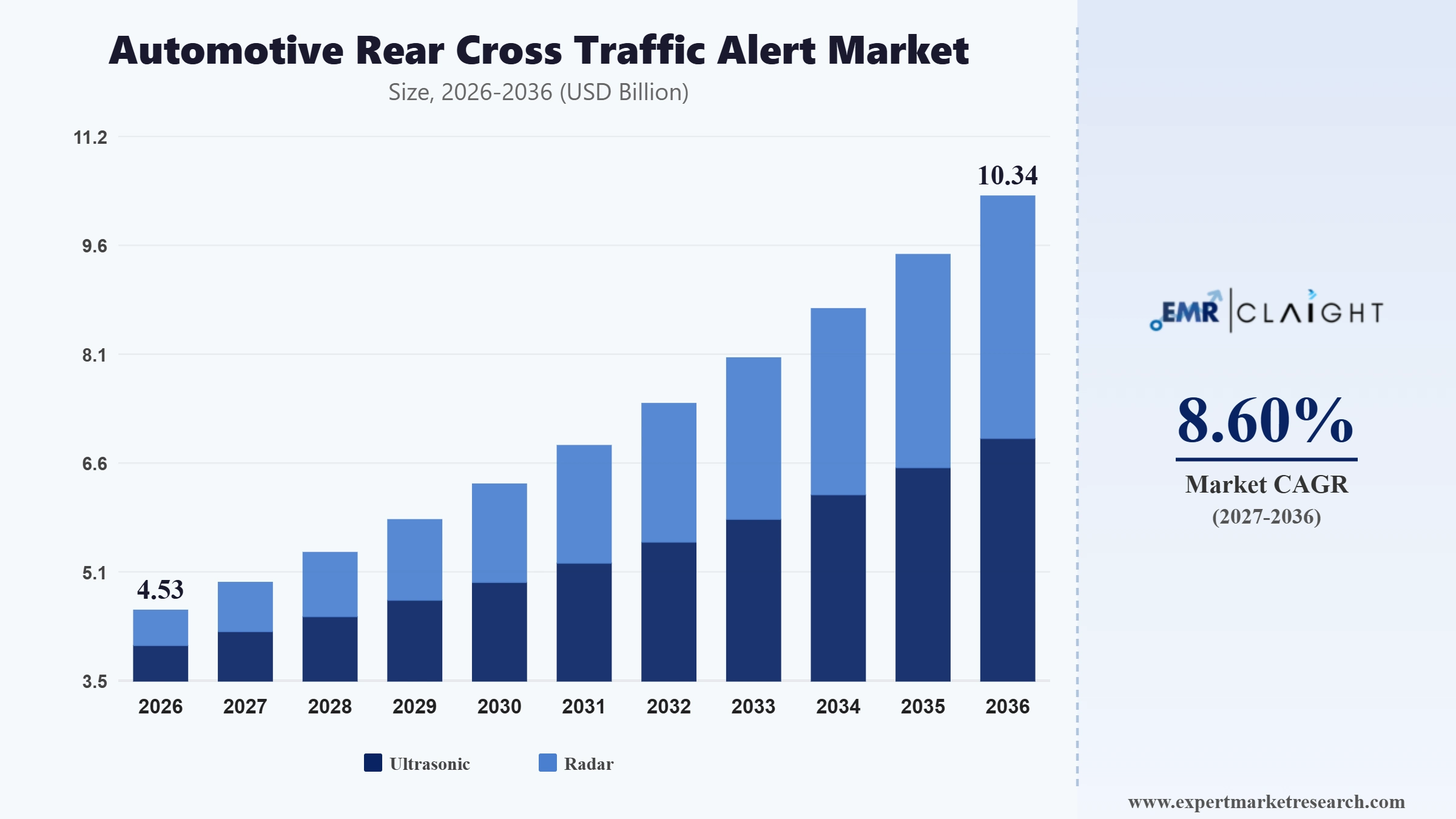
The global automotive rear cross traffic alert market attained a value of USD 4.17 Billion in 2025 and is projected to expand at a CAGR of 8.60% through 2035. The market is further expected to achieve USD 9.52 Billion by 2035, driven by tightening vehicle-safety rating protocols, rising radar and ultrasonic sensor content per vehicle, and wider factory fitment of driver-assistance features across passenger and commercial vehicles worldwide.
Safety rating bodies keep raising the baseline for low-speed and rear protection. Euro NCAP announced in December 2025 what was described as its most extensive protocol overhaul since 2009, taking effect in 2026, with emergency braking and lane support tested against a broader range of pedestrians, cyclists, and two-wheelers and a new low-speed collision test. Such rules push carmakers to fit more sensors, which supports demand for rear cross traffic alert hardware. For suppliers, tougher rating criteria mean rear sensing, once an optional extra, increasingly becomes a function that carmakers need to include across their model ranges.
Production volumes decide how quickly sensor fitment spreads. The Japan Automobile Manufacturers Association reported in September 2026 that Japanese vehicle output for the six months ended June 2026 rose 3% to 4,299,050 units, with June 2026 output up 6.8% to 776,023 units. Output growth in Japan supports steady demand for the radar and ultrasonic electronics that suppliers deliver to carmakers. That matters for rear cross traffic alert because these modules rely on the radar and electronics content suppliers add to each vehicle, so more content per car can offset slow unit volumes elsewhere, and stable factory schedules help suppliers plan sensor capacity ahead of model launches.
Vehicle demand in emerging markets is also expanding the installed base. The National Association of Automobile Manufacturers of South Africa, Naamsa, reported in July 2026 that June 2026 new vehicle sales reached 54,482 units, up 15.3% on a year earlier and the best June since 2007, with passenger car sales up 18.1% to 38,393 units. Growing fleets in the Middle East and Africa widen the pool of vehicles that can be fitted with rear sensing. For rear cross traffic alert suppliers, a larger vehicle base in these regions offers a longer-term opportunity, particularly as safety awareness among buyers and regulators increases over time.
Read more about this report - REQUEST FREE SAMPLE COPY IN PDF
Bosch reported in September 2026 that, for the six months ended June 2026, group revenue rose 3.6% to EUR 46.4 billion, while Mobility revenue of EUR 27.8 billion fell 0.5% and its operating EBIT margin dropped to 4.7% from 5.8%, as flat automobile production and EUR 270 million of impairments weighed. Companies can leverage cost discipline and sensor-led safety content to protect margins when vehicle output is flat.
Aptiv reported in August 2026 that revenue for the quarter ended June 2026 rose 2% to USD 3.3 billion, with adjusted earnings per share of USD 1.63 against USD 1.31 a year earlier and GAAP diluted earnings per share from continuing operations of USD 1.40. The result shows how a focused electronics portfolio can lift earnings on modest sales growth. Companies can secure gains by concentrating on higher-content vehicle architectures.
Autoliv reported in July 2026 that net sales for the quarter ended June 2026 rose 3.3% to USD 2,803 million, with organic growth of 1.0%, an adjusted operating margin of 9.6% against 9.3% a year earlier, and adjusted earnings per share of USD 2.43. Companies can leverage disciplined restructuring and a growing customer base to expand margins when global light vehicle production declines.
NXP introduced its TEF8388 third-generation RFCMOS radar transceiver in March 2026, with eight transmit and eight receive channels on a single die, scalable to systems with up to 576 antenna channels. FORVIA HELLA is using it with the S32R47 processor in a radar sensor program planned for series production in 2028. Companies can secure design wins early by aligning sensor roadmaps with scalable radar chip families.
In July 2026, Autoliv reported that it had signed strategic cooperation agreements with both Great Wall Motor and XPENG, and that Chinese carmakers made up 55% of its China sales in the quarter ended June 2026, up from about 40% a year earlier. The shift shows how safety suppliers are rebalancing toward domestic Chinese brands. Companies can expand local partnerships to secure factory-fit programs in the fastest-growing region.
In July 2026, Magna raised its 2026 outlook, lifting the adjusted EBIT margin range to 6.3% to 6.6% from 6.0% to 6.6%, adjusted earnings per share to USD 6.70 to 7.30, and free cash flow to USD 1.75 to 1.85 billion, while lowering its sales range to USD 41.3 to 42.5 billion on currency translation. Companies can leverage margin-focused outlooks to fund investment in advanced safety electronics.
Aptiv completed the spin-off of its Electrical Distribution Systems business as Versigent PLC in April 2026, receiving about USD 1.9 billion from Versigent and using it to redeem USD 1,847 million of senior notes during that month. The move leaves Aptiv focused on its remaining technology businesses and strengthens its balance sheet. Companies can leverage portfolio separations to sharpen focus on high-growth sensing and software content.
Infineon reported in May 2026 revenue of EUR 3.812 billion for the quarter ended March 2026 and said automotive electronics orders were rebounding, raising its full-year revenue growth expectation to significant from moderate and guiding next-quarter revenue to around EUR 4.1 billion. The recovery matters for radar and ultrasonic chip supply, since sensor programs depend on steady semiconductor availability. Companies can expand capacity planning and secure long-term chip supply as automotive order books recover.
This Expert Market Research's Report titled "Automotive Rear Cross Traffic Alert Market Report and Forecast 2026-2035" offers a detailed analysis of the market based on the following segments:
Market Breakup by Type
Key Insight: Ultrasonic serves close-range parking and low-speed maneuvering, with ultrasonic IC supplier Elmos reporting in August 2026 sales of EUR 314.5 million for the six months ended June 2026, up 15.4%, at an operating EBIT margin of 24.1%; and Radar is the leading type, with Gapwaves announcing in June 2026 that automated volume production of its waveguide radar antennas for Valeo had started at Frencken's plant in Chuzhou, China, with output using its technology estimated at about 4.5 million antennas in 2026.
Market Breakup by Distribution Channels
Key Insight: OEMs are the leading channel through factory fitment, with Autoliv reporting in April 2026 that sales to Chinese carmakers rose about 30% in the quarter ended March 2026 and that its organic growth beat global light vehicle production by 15 percentage points in China; and Aftermarket grows through retrofits and repair, with a United States House subcommittee advancing in February 2026 the ADAS Functionality and Integrity Act, which would direct NHTSA to set standardized ADAS calibration guidelines from model year 2028 for aftermarket businesses.
Market Breakup by Applications
Key Insight: Passenger Cars hold the larger share, with the China Passenger Car Association reporting that nationwide passenger vehicle retail sales totaled 1.461 million units in July 2026, down 20.9% on a year earlier, which still leaves a very large base of cars for factory-fitted sensors; and Commercial Vehicles are growing quickly, with data from the China Association of Automobile Manufacturers published in August 2026 showing commercial vehicle sales for January to July 2026 of 2.614 million units, up 7.7% year on year.
Market Breakup by Region
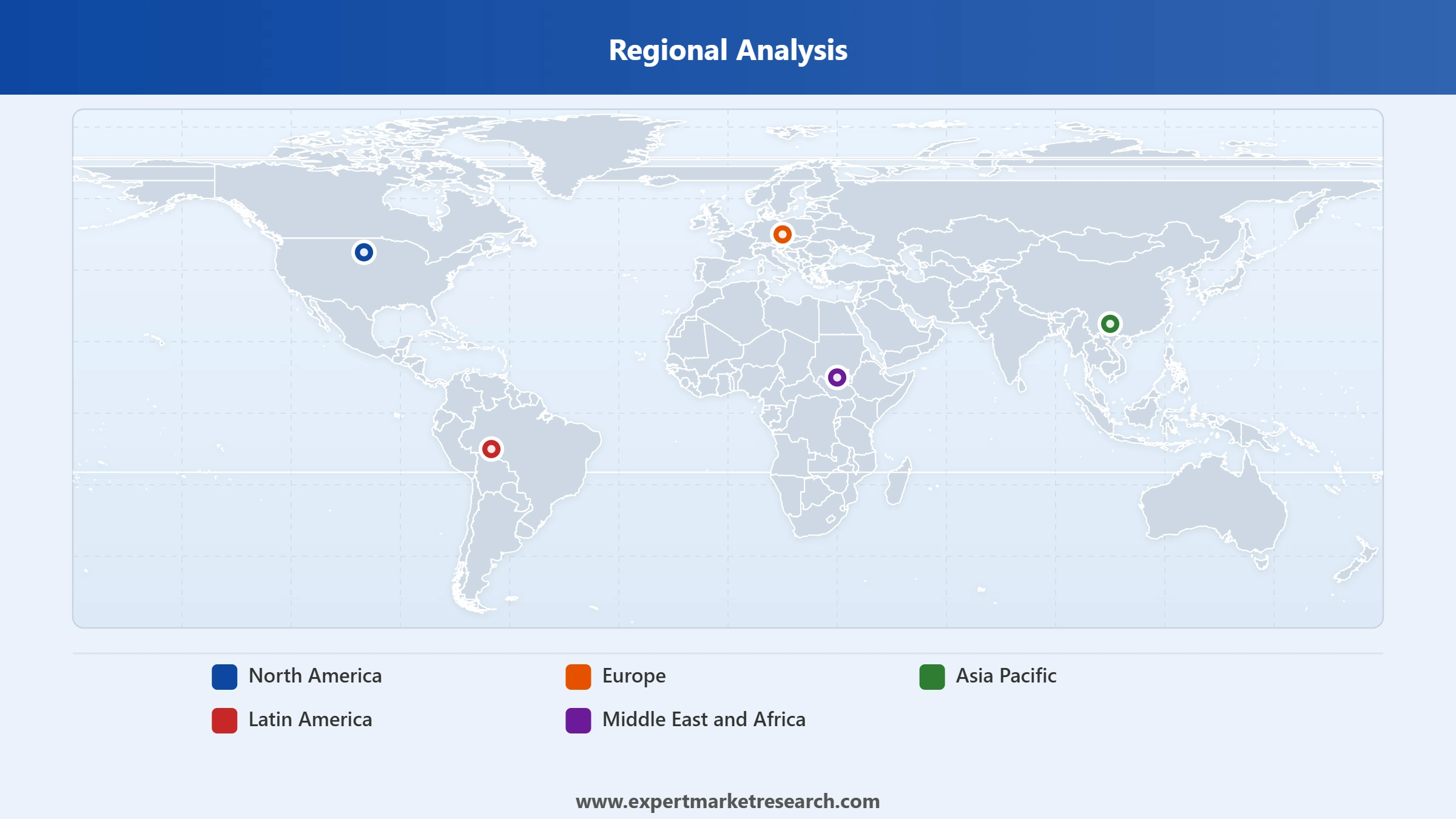
Key Insight: North America is the largest regional market, with Cox Automotive reporting in August 2026 that United States new vehicle sales totaled about 1.36 million vehicles sold in July 2026, a 1.8% decline from a year earlier, at a seasonally adjusted annual rate of 16.3 million; Europe is a mature, regulation-led market, with the European Automobile Manufacturers' Association reporting in July 2026 that new EU car registrations rose 5.7% for the six months ended June 2026; Asia Pacific is the fastest-growing region, with the China Passenger Car Association reporting in August 2026 that passenger vehicle exports reached 918,000 units in July 2026, up 87.8% year on year; Latin America is shaped by safety ratings, with Brazil's automakers association ANFAVEA reporting in August 2026 that output for January to July 2026 rose 8.3% to 1.626 million units; and the Middle East and Africa is an emerging market, with new vehicle sales in Saudi Arabia reaching 166,748 units in the quarter ended March 2026, down 24.3% year on year, as published in April 2026.
Read more about this report - REQUEST FREE SAMPLE COPY IN PDF
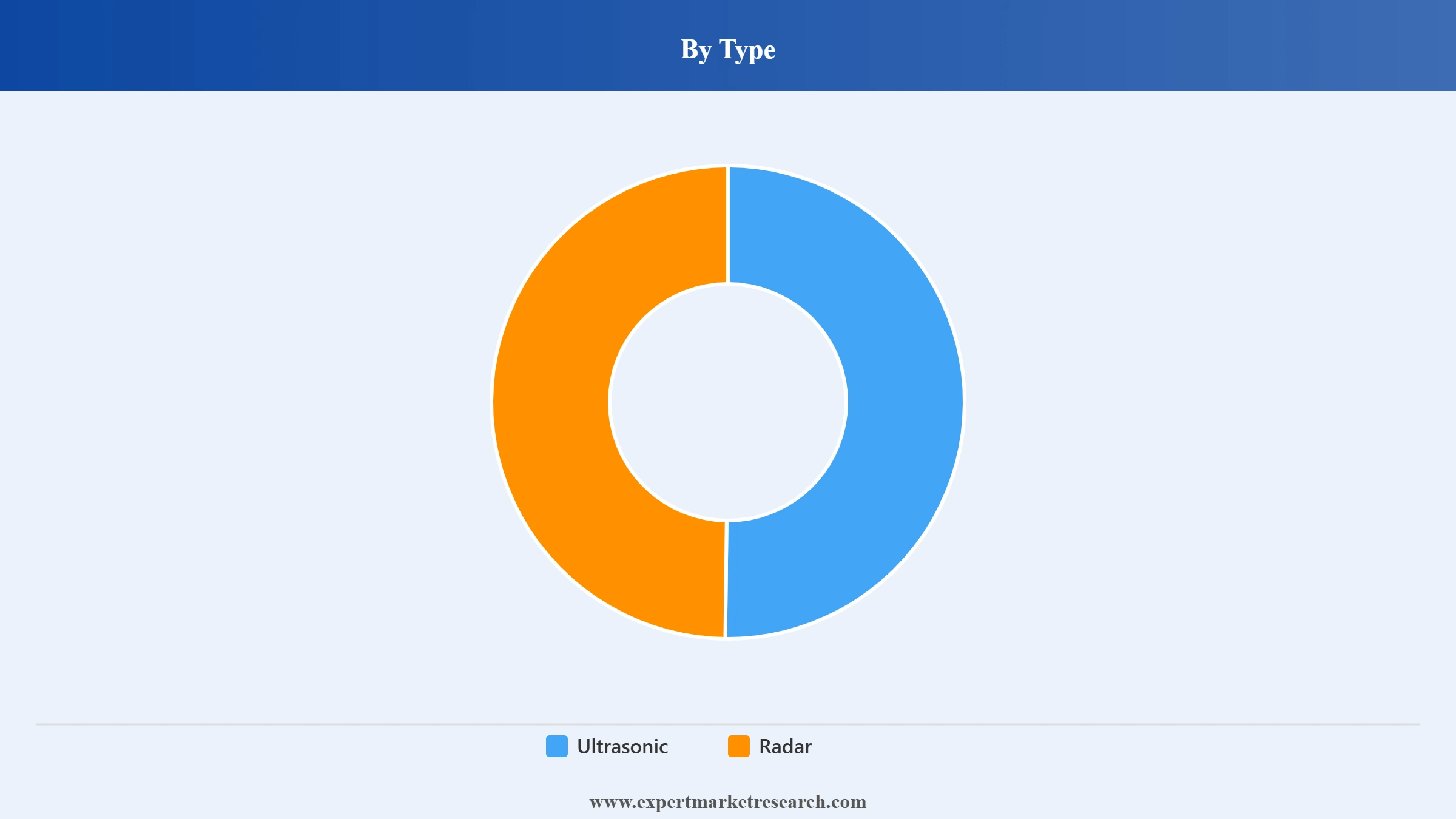
By Type, Radar leads the market while Ultrasonic gains ground because it offers a low-cost sensing option for close-range parking and reversing.
Radar leads because it detects fast-approaching cross traffic at longer range and holds up in rain and darkness. Hirain Technologies and Arbe Robotics were reported in September 2026 to be supplying imaging radar for a level 3 automated driving programme spanning several brands of one automaker group in China, with series deliveries beginning in 2027. For buyers, that matters because a reversing driver cannot see vehicles approaching from the side, and higher-resolution radar resolves such traffic earlier and more reliably.
Read more about this report - REQUEST FREE SAMPLE COPY IN PDF
Ultrasonic gains share where cost and short range matter most. Bosch presented its TB193 and TB293 ultrasonic chipsets in April 2026, which process raw sensor signals to detect parked vehicles and curbs while also cutting energy use by up to 50 percent, a sign that ultrasonic sensing is still being refined for parking systems and keeps spreading across vehicle classes. That broad installed base also gives carmakers a proven, low-cost option whenever a vehicle needs dependable sensing at walking pace.
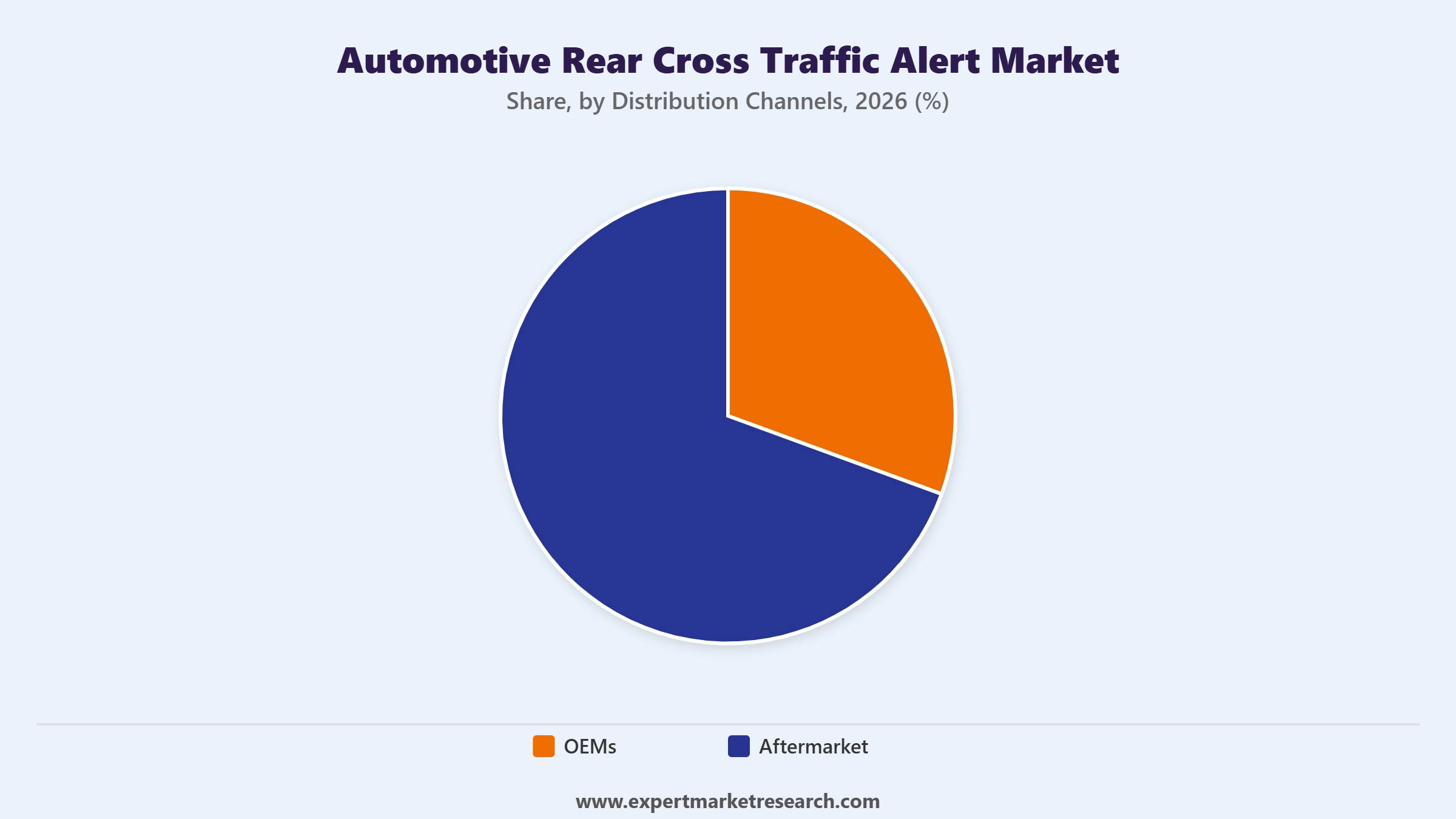
By Distribution Channels, OEMs lead the market while Aftermarket grows fastest because retrofits let owners of older vehicles add rear sensing.
OEMs lead because factory-fitted systems are integrated with the vehicle's brakes, cameras, and displays and sold as part of safety packs. Euro NCAP awarded five stars in July 2026 to the BMW iX3 and the Zeekr 7GT, with Crash Avoidance scores of 83% and 89%, under its revised 2026 protocol, which shows carmakers engineering sensing, braking, and driver-assistance software together long before finished vehicles reach dealers and showrooms. That integration is why factory fitment remains the dominant route to market.
Read more about this report - REQUEST FREE SAMPLE COPY IN PDF
Aftermarket grows as independent workshops fit and service sensors on vehicles already on the road. Bosch stated in September 2026, in its Automechanika presentation, that its eXchange business generated about EUR 400 million in sales in 2025 and that its AutoCrew network spans more than 700 workshops in over 100 countries, which gives retrofit sensor suppliers an established path to repair shops. Retrofit demand also reflects owners who want newer safety features on older vehicles without buying a new car.
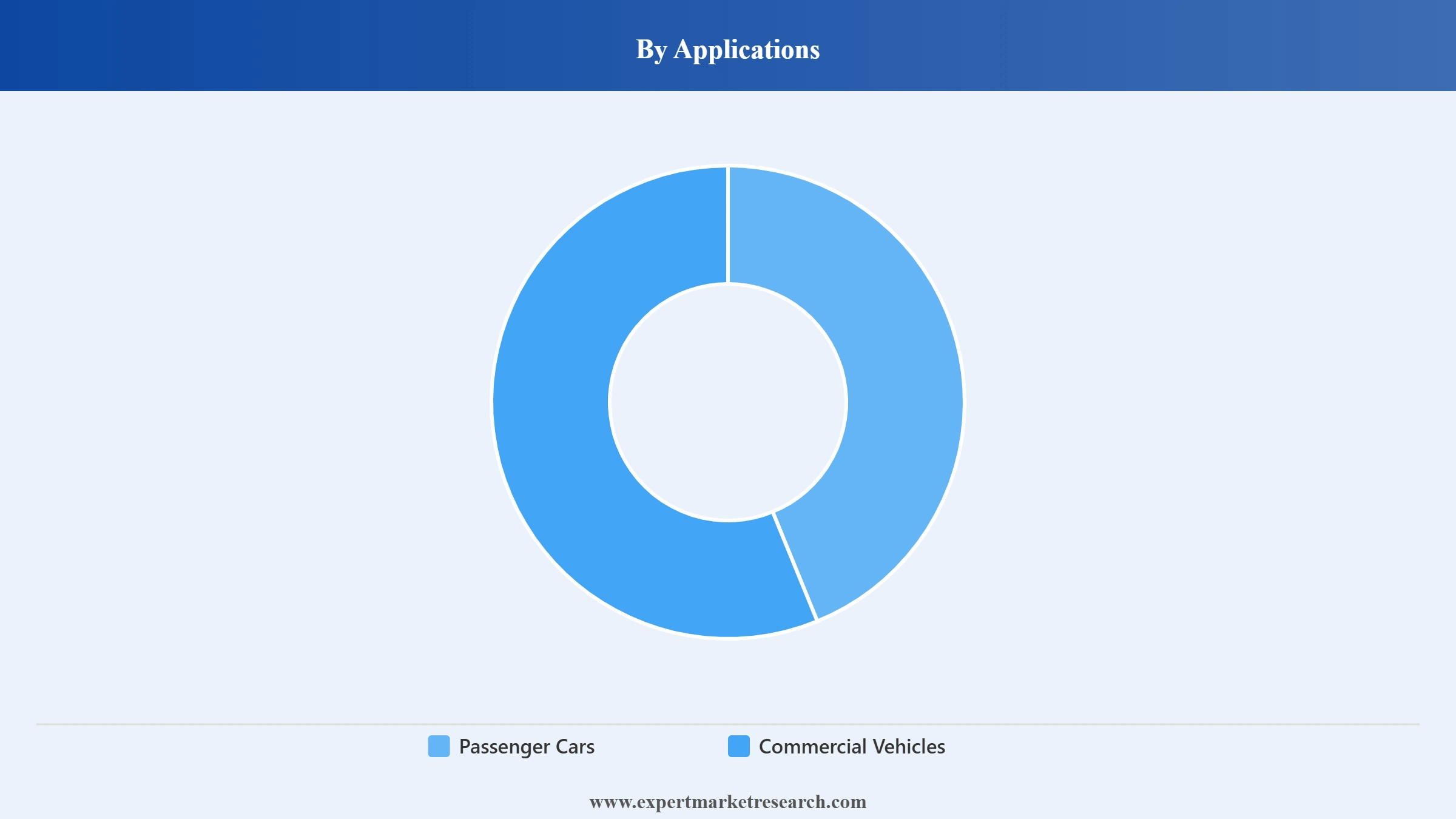
By Applications, Passenger Cars lead the market while Commercial Vehicles grow fastest because truck makers and fleets are adding radar-based safety packages.
Passenger Cars lead because they make up the bulk of global vehicle output and carry the broadest range of comfort and parking features. Aumovio reported in August 2026 adjusted sales of EUR 8.6 billion for the six months ended June 2026 and said new BMW projects carry a planned order volume of well over one billion euros, which shows passenger car programs still anchor supplier order books. Large volumes also give suppliers scale to spread development costs across many models.
Read more about this report - REQUEST FREE SAMPLE COPY IN PDF
Commercial Vehicles grow fastest as regulation and fleet safety programs reach heavy trucks. ZF presented in July 2026, ahead of IAA Transportation, a scalable 360-degree safety concept that merges radar and camera data from trucks and trailers into one environmental model, with a Blind Spot Information System that can brake for vulnerable road users and reversing assistance with automated emergency braking. Fleet operators value these functions because visibility around large vehicles is limited and fewer collisions cut their downtime costs.
North America commands the largest regional share of the market, shaped by mature driver-assistance adoption and stringent vehicle-safety oversight across passenger and commercial vehicles.
This is supported by Daimler Truck North America, which announced in April 2026 that Cross Traffic Assist and Active Side Guard Assist 2 would join the Detroit Assurance suite, using four short-range radar units, one long-range radar unit, and a multi-purpose camera, with the new features applying to Freightliner Cascadias built from 2027 and orders opening later in 2026, which shows how large North American truck makers are specifying radar-based cross traffic detection for intersections and turning.
Read more about this report - REQUEST FREE SAMPLE COPY IN PDF
Asia Pacific is the fastest-growing regional market, with the China Association of Automobile Manufacturers reporting in August 2026 that new energy vehicles passed a 60% share of China's July 2026 sales for the first time, at 1.561 million units, up 23.7% year on year. Europe, Latin America, and the Middle East and Africa follow, supported by tightening safety protocols, gradual regulatory harmonization, and growing vehicle fleets that widen the base for factory-fitted and retrofit rear sensing.
The global automotive rear cross traffic alert market is moderately consolidated, with a handful of multinational tier-one suppliers and semiconductor makers holding large positions alongside regional sensor and module producers serving local carmakers.
Competitive dynamics are shaped by investment in radar and ultrasonic sensing, scalable chip platforms, software integration with parking and braking functions, and long-term supply relationships with carmakers, as suppliers work to defend margins while vehicle production stays flat.
Founded in 1871, Continental AG built its radar business, including its first long-range radar, integrated in a Mercedes-Benz S-Class in 1999 with a range of 150 meters, before its automotive electronics operations moved to Aumovio in a spin-off. In August 2026, it reported EUR 4.4 billion of sales and EUR 570 million of adjusted EBIT, a 12.9% margin, for the quarter ended June 2026, as it moves toward a pure-play tire business and prepares to sell ContiTech to Lone Star Funds.
Robert Bosch GmbH develops and manufactures radar sensors in-house, including a computing chip of its own design. In July 2025, it presented the SX600 and SX601 77 GHz radar chips, each with four transmit and four receive channels on 22 nm RF CMOS technology, with SX601 samples already available to customers worldwide, and it supports functions such as blind-spot object detection and lane change assistance.
Autoliv supplies automotive safety products to carmakers worldwide. In April 2026, it reported for the quarter ended March 2026 that it had introduced its first airbag for motorcycles and its first wearable airbag solution for riders, had begun investing in additional inflator production capacity in India, and planned to repurchase USD 300 million to 500 million of shares during 2026.
Magna International Inc. supplies automotive systems through segments that include Power & Vision. In May 2026, it reported that Power & Vision sales for the quarter ended March 2026 rose to USD 3,881 million from USD 3,646 million, with adjusted EBIT of USD 252 million, a 6.5% margin compared with 3.4% a year earlier.
Other key players in the automotive rear cross traffic alert market include Infineon Technologies AG, Veoneer Inc., and Aptiv, among others.
*Please note that this is only a partial list; the complete list of key players is available in the full report. Additionally, the list of key players can be customized to better suit your needs.*
For a detailed assessment of opportunities across the automotive rear cross traffic alert market's type, distribution channel, application, and regional segments through 2026 and beyond, connect with Expert Market Research for a customized consultation.


Upto 15% Off
USD
$2499 $2249
$3999 $3599
$4999 $4249
$5999 $5099


*While we strive to always give you current and accurate information, the numbers depicted on the website are indicative and may differ from the actual numbers in the main report. At Expert Market Research, we aim to bring you the latest insights and trends in the market. Using our analyses and forecasts, stakeholders can understand the market dynamics, navigate challenges, and capitalize on opportunities to make data-driven strategic decisions.*
The global automotive rear cross traffic alert market attained a value of USD 4.17 Billion in 2025.
The automotive rear cross traffic alert market is projected to grow at a CAGR of 8.60% from 2026 to 2035.
The market is estimated to witness a healthy growth to attain about USD 9.52 Billion by 2035.
Key strategies include investment in scalable radar and ultrasonic chip platforms, closer partnerships with regional carmakers, integration of rear sensing with braking and parking functions, and expansion of aftermarket and workshop channels.
The growing implementation of road safety regulations and technological advancements and innovations are key trends propelling the growth of the market.
The major regions in the market are North America, Latin America, the Middle East and Africa, Europe, and the Asia Pacific.
The major types of automotive rear cross traffic alert are ultrasonic and radar.
The several distribution channels of automotive rear cross traffic alert in the market are OEMs and aftermarket.
The significant applications of automotive rear cross traffic alert in the market are passenger cars and commercial vehicles.
Key players in the automotive rear cross traffic alert market include Continental AG, Robert Bosch GmbH, Infineon Technologies AG, Veoneer Inc., Autoliv, Magna International Inc., and Aptiv, among others.
Key challenges include flat vehicle production in several regions, pricing pressure from carmakers, the cost of radar sensors for entry-level vehicles, false alerts in cluttered parking environments, and the need to meet differing safety rules across regions.
Explore our key highlights of the report and gain a concise overview of key findings, trends, and actionable insights that will empower your strategic decisions.
| REPORT FEATURES | DETAILS |
| Base Year | 2025 |
| Historical Period | 2019-2025 |
| Forecast Period | 2026-2035 |
| Scope of the Report |
Historical and Forecast Trends, Industry Drivers and Constraints, Historical and Forecast Market Analysis by Segment:
|
| Breakup by Type |
|
| Breakup by Distribution Channels |
|
| Breakup by Applications |
|
| Breakup by Region |
|
| Market Dynamics |
|
| Competitive Landscape |
|
| Companies Covered |
|
Datasheet
One User
USD 2,499
USD 2,249
tax inclusive*
Single User License
One User
USD 3,999
USD 3,599
tax inclusive*
Five User License
Five User
USD 4,999
USD 4,249
tax inclusive*
Corporate License
Unlimited Users
USD 5,999
USD 5,099
tax inclusive*
*Please note that the prices mentioned below are starting prices for each bundle type. Kindly contact our team for further details.*
Flash Bundle
Small Business Bundle
Growth Bundle
Enterprise Bundle
*Please note that the prices mentioned below are starting prices for each bundle type. Kindly contact our team for further details.*
Flash Bundle
Number of Reports: 3
20%
tax inclusive*
Small Business Bundle
Number of Reports: 5
25%
tax inclusive*
Growth Bundle
Number of Reports: 8
30%
tax inclusive*
Enterprise Bundle
Number of Reports: 10
35%
tax inclusive*
How To Order

Select License Type
Choose the right license for your needs and access rights.

Click on ‘Buy Now’
Add the report to your cart with one click and proceed to register.

Select Mode of Payment
Choose a payment option for a secure checkout. You will be redirected accordingly.
Strategic Solutions for Informed Decision-Making
Gain insights to stay ahead and seize opportunities.

Get insights & trends for a competitive edge.

Track prices with detailed trend reports.

Analyse trade data for supply chain insights.

Leverage cost reports for smart savings

Enhance supply chain with partnerships.

Connect For More Information
Our expert team of analysts will offer full support and resolve any queries regarding the report, before and after the purchase.
Our expert team of analysts will offer full support and resolve any queries regarding the report, before and after the purchase.
We employ meticulous research methods, blending advanced analytics and expert insights to deliver accurate, actionable industry intelligence, staying ahead of competitors.
Our skilled analysts offer unparalleled competitive advantage with detailed insights on current and emerging markets, ensuring your strategic edge.
We offer an in-depth yet simplified presentation of industry insights and analysis to meet your specific requirements effectively.




