

Consumer Insights
Uncover trends and behaviors shaping consumer choices today
Procurement Insights
Optimize your sourcing strategy with key market data
Industry Stats
Stay ahead with the latest trends and market analysis.
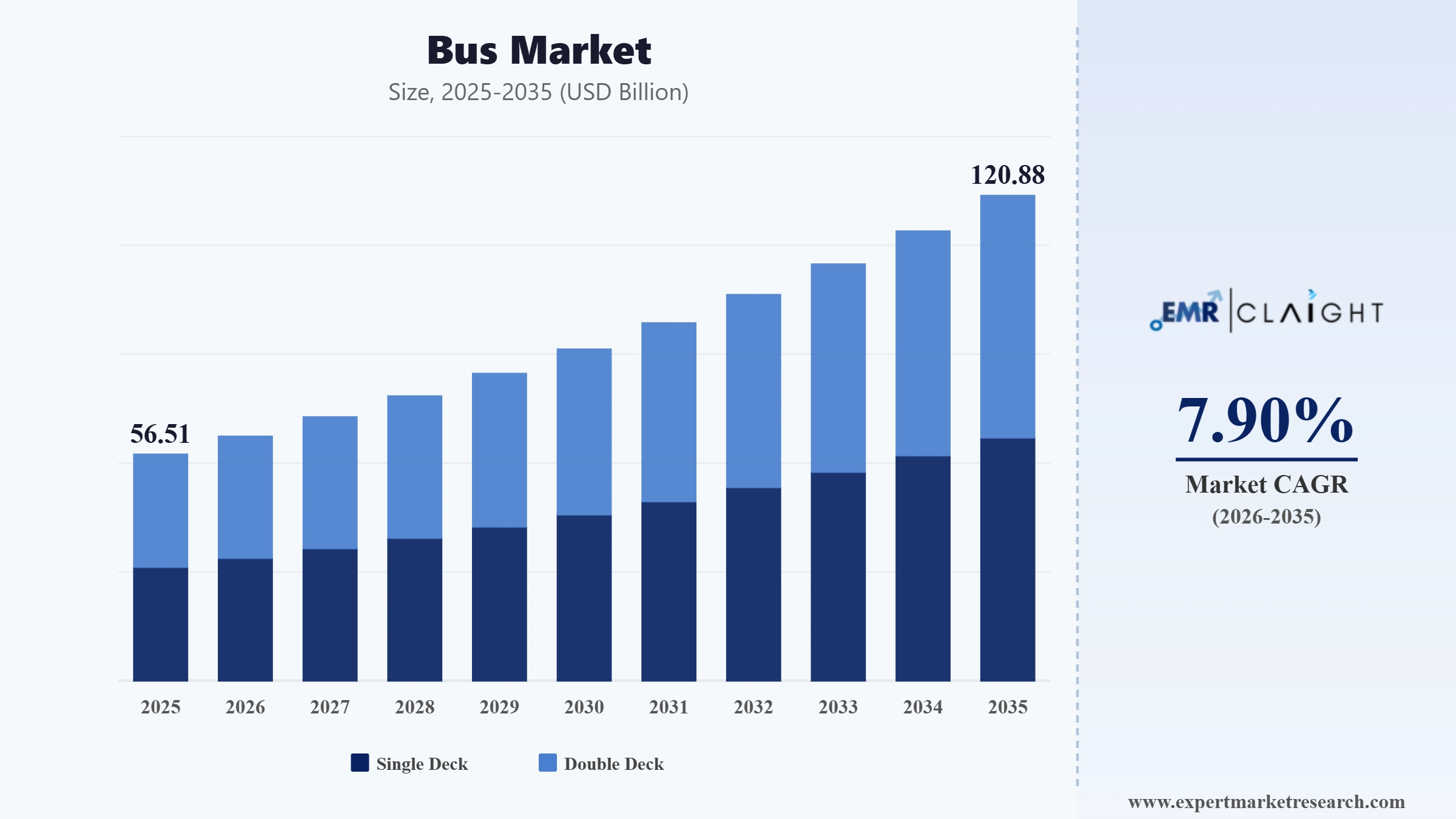
The global bus market size was valued at USD 56.51 Billion in 2025. Resurgence in the tourism sector post-pandemic has triggered bulk orders for minibuses and luxury coaches, with operators in Europe and Southeast Asia expanding fleets to meet growing demand for intercity and cross-border travel. As a result, the market is expected to grow at a CAGR of 7.90% during the forecast period of 2026-2035 to reach a value of USD 120.88 Billion by 2035.
Growth in the market is largely driven by sustainable mobility mandates and smarter public transportation systems. Governments worldwide are setting emission goals and actively funding public transport revamps. For instance, India’s PM-eBus Sewa scheme, announced in 2023, allocated INR 57,613 crore to deploy 10,000 electric buses across on PPP model, which indicates a clear shift from policy drafts to implementation. In addition, The EU-funded ZeEUS project has been pivotal in testing electric buses in urban spaces, now influencing national policies. Colombia leads the Latin American market with over 1,500 electric buses operating as of late 2023.
B2B buyers, including fleet operators, city transit authorities, and private transport contractors, are targeting modular, AI-integrated, and ultra-low emission buses, accelerating the overall bus market development. The industry also observes that smart bus solutions are beginning to take precedence over traditional physical fleets. These solutions include onboard diagnostics, dynamic route optimization, and predictive maintenance.
In addition, rising fuel prices are making public transport, especially buses, more appealing to the cost-conscious passengers. As the prices of fuel escalate, the cost of running one’s vehicle also increases, which gives people a reason to look for cheaper means of transport. This leads to increased demand for buses as they offer a cheaper means of transport and reduce the cost incurred individually when travelling. More bus passengers surge the demand for development and procurement of more bus fittings and facilities, hence driving industry growth.
Read more about this report - REQUEST FREE SAMPLE
The North Bengal State Transport Corporation (NBSTC) announced plans to introduce a new Volvo AC bus service that will go from Raiganj to Digha via Kolkata. By removing the need for break trips, this project seeks to give travellers a smooth ride from North Dinajpur to the seaside town of Digha. The launch of a long-distance AC Volvo route in India reflects growing demand for seamless intercity bus services, pushing OEMs to offer premium, comfort-focused models.
The first electric articulated and bi-articulated bus produced in Mexico, the Volvo 7800 Electric, was introduced by Volvo Buses. The new electric bus, which is based on Volvo Buses' global electromobility Volvo BZR platform, will improve Mexico's Bus Rapid Transit systems and make the country's people-transporting infrastructure more sustainable and effective. Volvo’s debut of articulated EV buses in Mexico enhances the credibility of electric Bus Rapid Transit (BRT) models globally, signalling scalability of high-capacity clean mobility solutions.
At the Bharat Mobility Global Expo 2025, BM Electric Vehicles debuted four new electric buses, including the Luxury Coach Galaxy. In addition, JBM Electric, a division of the JBM Group, has expanded its role in green mobility with the introduction of the Intercity Bus Xpress, the low Floor Electric Medical Mobile Unit e-MediLife, and India's first-ever 9 Metre Electric Tarmac Coach e-SkyLife. New electric offerings, including medical and intercity variants, from Indian manufacturers show rising diversification in e-bus portfolios to cater to B2B use-cases like airports and health fleets.
Tata Motors introduced the 7-meter EV bus at Prawaas, a ground-breaking product in India with 21 seats for a comfortable and safe ride. In line with the government's sustainability pledges, this launch marks a major advancement toward the company’s objective of reaching net-zero emissions. Tata's compact EV bus targets urban and last-mile routes, aligning with global trends of downsized, zero-emission fleets optimised for smart city applications.
Governments all over the world are laying the groundwork for mass electric bus adoption. The United States Federal Transit Administration committed over USD 1.7 billion in 2023 under the Low or No Emission Grant Program to fund zero-emission buses and infrastructure. Similarly, China continues to dominate electric bus deployment, with over 420,000 electric buses on the roads, driven by subsidies and local manufacturing incentives. B2B fleet operators are finding easier entry into electrification owing to government-facilitated charging infrastructure and subsidy schemes, making adoption economically viable.
Companies like Volvo and Scania are integrating AI and IoT for predictive maintenance, fuel optimisation, and route efficiency, reshaping the overall bus market dynamics. In Sweden, the “Drive Sweden” initiative includes autonomous electric shuttles in city centres, laying groundwork for broader technology deployment in regular buses. B2B operators gain from these enhancements by reducing downtime and achieving considerable operational savings.
An emerging trend in the bus market is the preference for modular bus chassis that allow easy retrofitting and hybrid powertrain integration. Companies like Switch Mobility (Ashok Leyland’s EV arm) are building platforms adaptable to electric, CNG, or diesel configurations. These chassis systems also streamline production cycles and lower engineering costs. Modular designs enable faster scaling of fleets, reduce the need for separate production lines, and simplify training for maintenance staff. This is especially useful in regions where diverse operating conditions demand multiple fuels and feature combinations within the same fleet.
Emerging markets like Southeast Asia are witnessing public-private partnerships flourish, boosting the bus market development. In the Philippines, the “PUV Modernisation Program” enabled private fleets to upgrade to modern, eco-friendly buses, with considerable co-financing from government banks. This model has encouraged brands like Foton and BYD to enter with scalable leasing models for private operators. These schemes de-risk large capital investments, opening new doors for B2B fleet management firms.
Environmental, Social, and Governance (ESG) goals are pushing corporates and governments to opt for greener transport solutions. For instance, World Bank’s Green Urban Mobility Partnership with Bangladesh aims to introduce 400 electric buses in Dhaka. Meanwhile, cities like Paris are issuing green bonds specifically tied to public transport upgrades. B2B procurement officers are now including ESG compliance as a core metric in supplier evaluations, pushing OEMs toward sustainable innovation.
The EMR’s report titled “Global Bus Market Report and Forecast 2026-2035” offers a detailed analysis of the market based on the following segments:
Market Breakup by Type
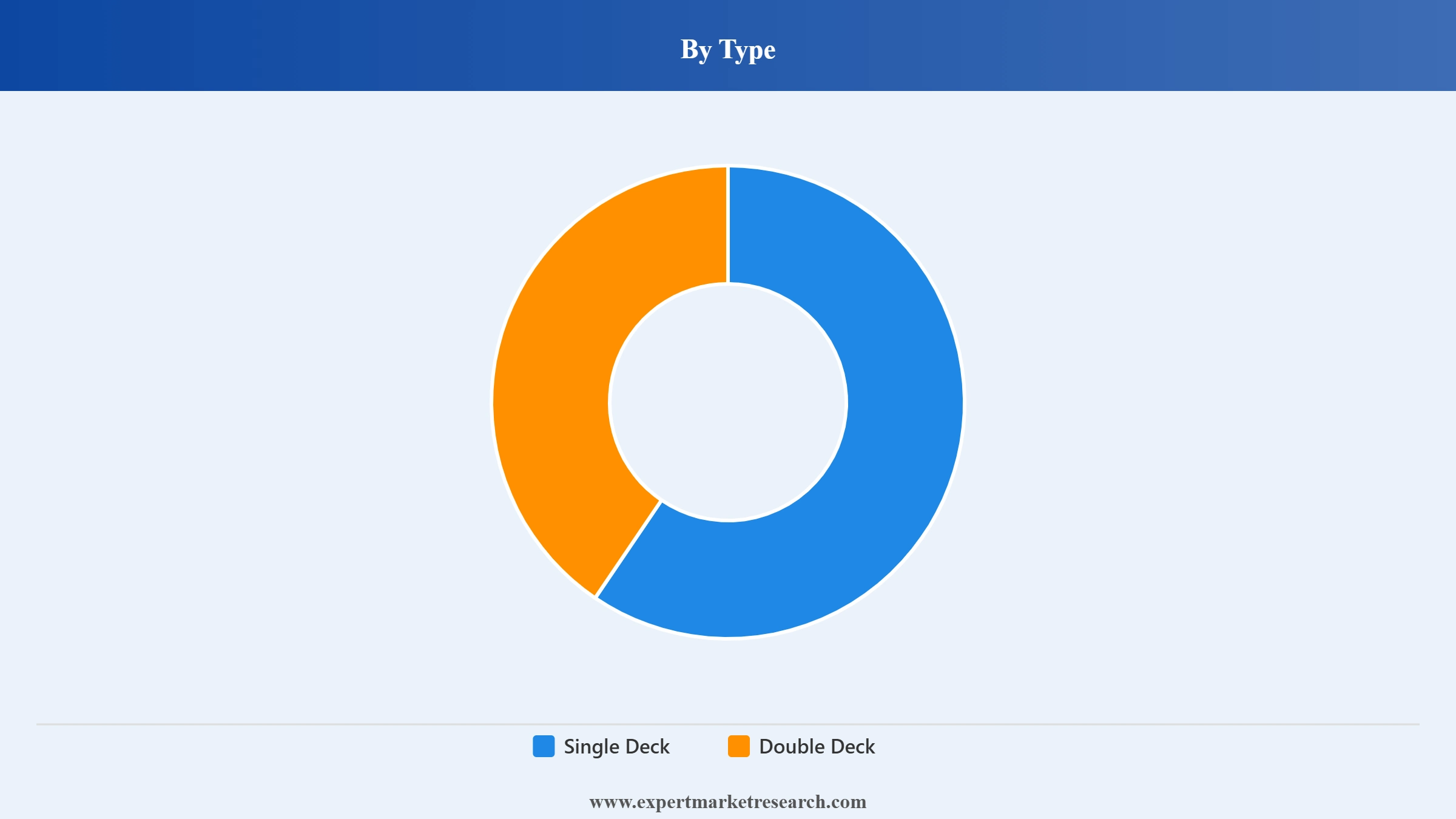
Key Insight: The dominance of the single deck buses in the global market stems from flexibility and low capex. Cities like Dubai are retrofitting old diesel fleets with electric drivetrains, using modular kits from UAE’s TerraTech Mobility. For B2B buyers, this retrofitting model slashes transition costs to a significant extent, making it a practical move for smaller urban operators with tight budgets but ambitious carbon goals.
Market Breakup by Application
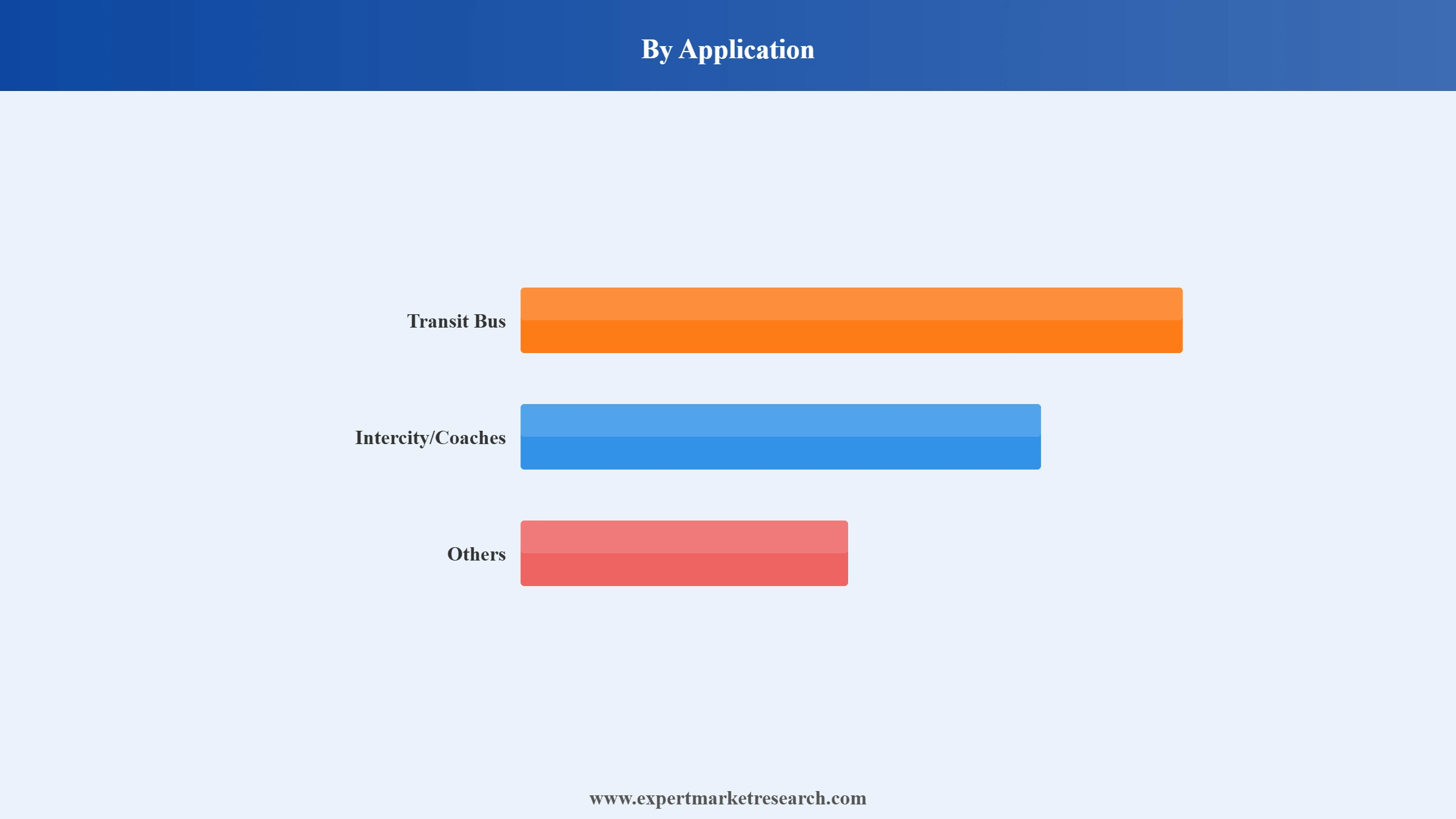
Key Insight: Transit buses strengthen the overall bus demand forecast. These buses are designed for urban and suburban travel, offering efficient and reliable transportation for passengers. They provide frequent service with shorter routes, helping to reduce congestion and lower carbon emissions. Cost-effective and easy to maintain, transit buses are essential for improving mobility in densely populated areas. In March 2025, the Delhi government launched direct electric bus services to Noida International Airport, offering seamless travel from Anand Vihar, Sarai Rohilla, and Kamla Market.
Market Breakup by Fuel Type
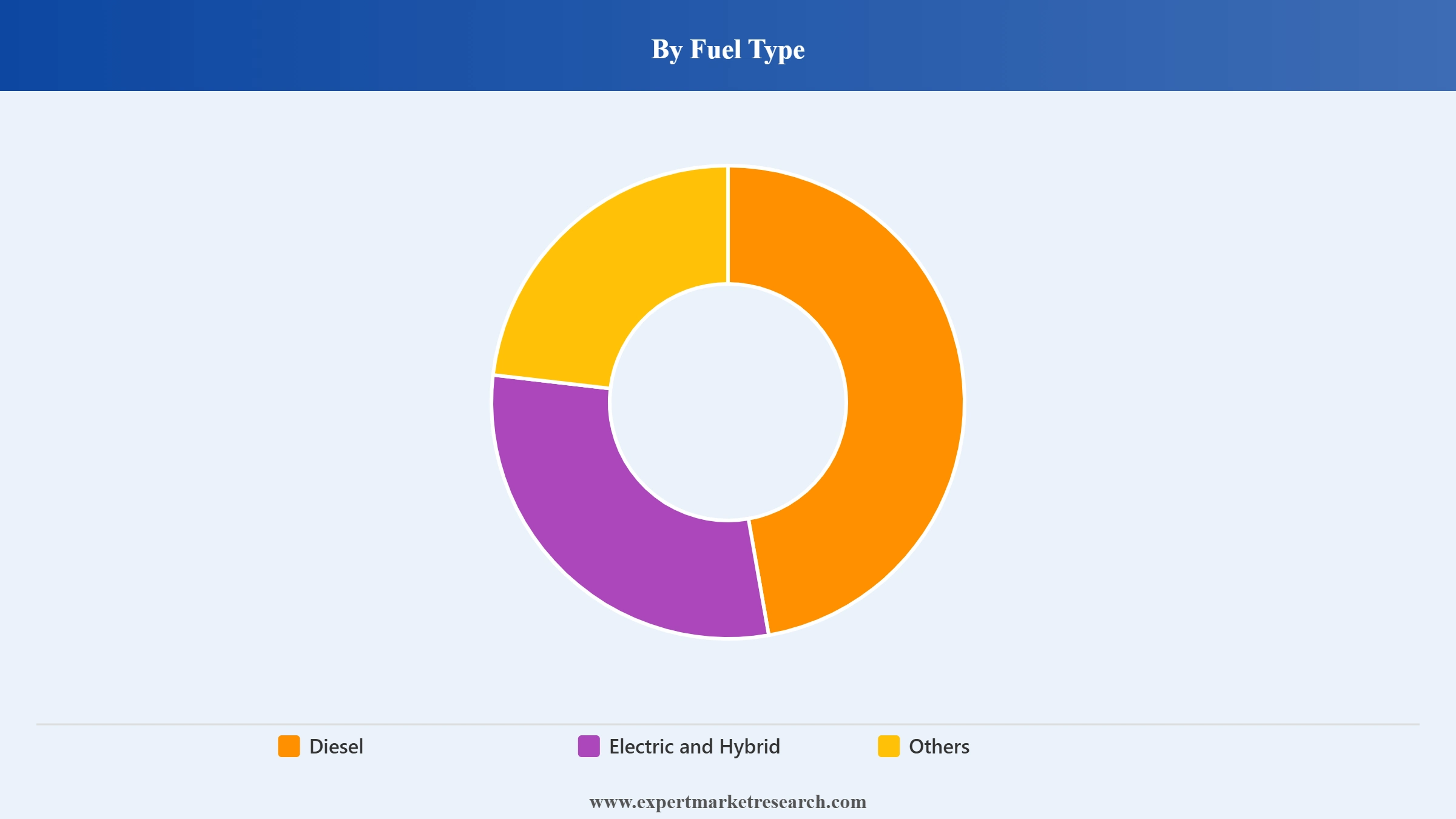
Key Insight: Diesel buses hold the largest share in the bus market value as they have long been the backbone of public transport, offering robust performance and reliability. They are widely available, cost-effective, and suitable for both urban and long-distance routes. Diesel buses can operate continuously without the need for frequent charging or downtime, making them ideal for high-demand services. They also offer powerful engines capable of handling heavy loads and challenging terrains. With well-established infrastructure and a long history of usage, diesel buses remain a practical choice for many operators globally.
Market Breakup by Seat Capacity
Key Insight: Buses with 31-50 seats strike an ideal balance between capacity and manoeuvrability, which makes them dominant in the bus market share. They are well-suited for medium-distance routes, providing ample space for passengers while remaining manageable in terms of fuel efficiency and maintenance. These buses can serve various markets, including commuter services, intercity routes, and private hire. Their larger capacity reduces the frequency of bus schedules, improving service availability. With added comfort features, they offer a cost-effective, versatile solution for transport operators looking to meet demand without excessive operational costs.
Market Breakup by Region
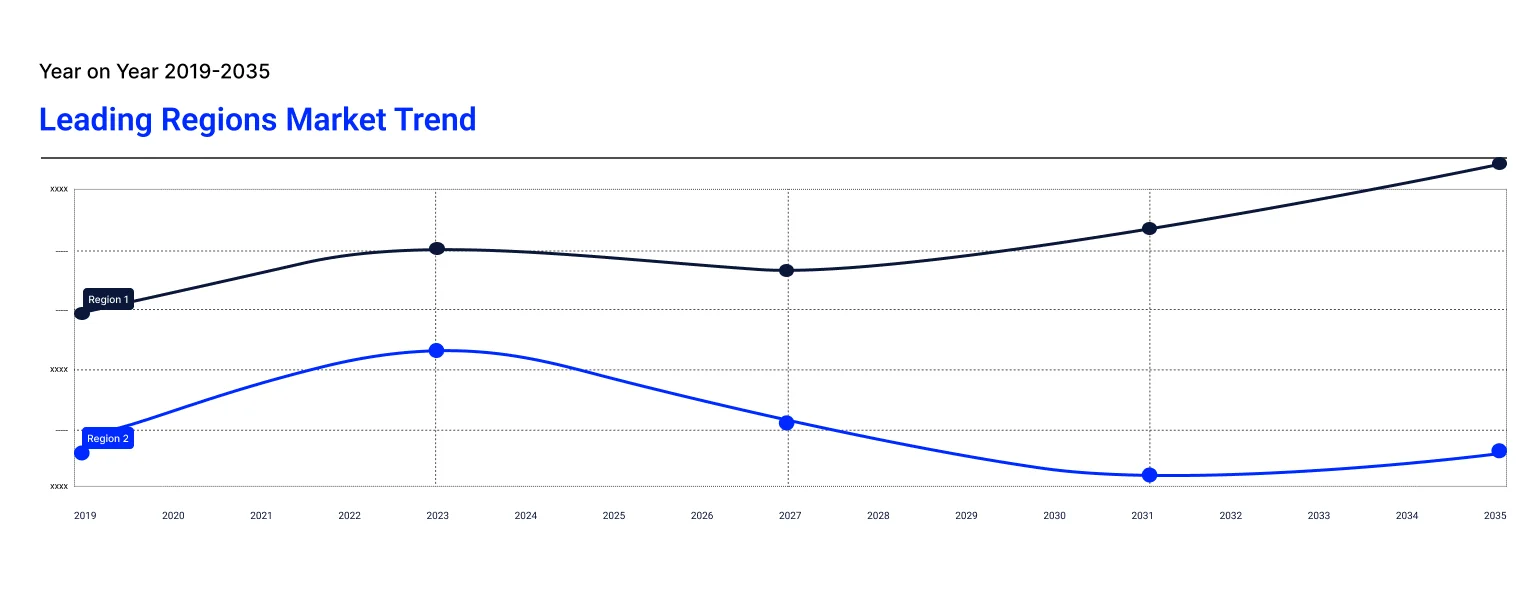
Key Insight: The Asia Pacific region is experiencing rapid growth and is expected to remain dominant in the global market over the forecast period. The regional industry is driven by rising urban populations and increasing demand for public transport solutions. Electric buses are gaining popularity in the region, particularly in countries like China and India, where air pollution and traffic congestion remain significant challenges. Singapore’s 2024 pilot with mobility startup SWAT allowed real-time rerouting of buses based on commuter demand.
Read more about this report - REQUEST FREE SAMPLE
By Type, Single Deck Buses Account for the Largest Share of the Market
Single deck buses dominate the global market due to their cost efficiency, ease of maintenance, and adaptability in urban settings. Recent models like NFI’s Xcelsior CHARGE NG offer lightweight aluminium bodies and 160kWh battery packs, ideal for short, repetitive urban routes. Municipal fleets prefer these due to higher manoeuvrability and lower upfront cost. In Europe, the e-bus registrations saw a 53% growth. The category’s dominance stems from their compact, smart-enabled single deck designs with upgraded passenger comfort and real-time tracking integration.
The category of the double deck buses is witnessing growth in the bus market, especially in megacities where commuter load is high. For instance, Hong Kong introduced electric double decker buses with AI-powered driver alert systems. These buses can carry up to 130 passengers while maintaining a minimal footprint. With urban vertical expansion, B2B operators are targeting double decker buses as a space-maximising solution. Innovations like lighter carbon fibre frames and hybrid propulsion systems make them ideal for intercity and suburban deployment without compromising energy efficiency.
Read more about this report - REQUEST FREE SAMPLE
By Application, Transit Bus Secure the Bigger Share of the Market Revenue
Transit buses continue to be dominant in the market as urban transport systems. Governments are investing heavily to renew outdated fleets. For instance, Indonesia, through its National Urban Mobility Programme, allocated funds for low-emission city buses. Innovations like onboard energy recovery systems and real-time passenger counting are improving operational efficiency. Transit authorities, from New York’s MTA to Manila’s LTFRB, are integrating these technology-enabled buses to boost capacity and lower emissions.
Long-distance buses or inter-city coaches are accelerating the overall bus market revenue, driven by the booming domestic tourism sector and improved highway infrastructure. OEMs like Mercedes-Benz and Yutong are launching luxury electric coaches with features like cabin-level climate control, autonomous driving aids, and regenerative braking systems. Additionally, governments are stabilising this application’s growth pace with several initiatives. For example, India’s Parivahan Sewa is enabling state-run intercity operators to upgrade 38,000 buses to electric by 2027. B2B fleet companies are capitalising on this growing commuter demand with premium services, such as Wi-Fi, entertainment, and ergonomic seating.
Read more about this report - REQUEST FREE SAMPLE
By Fuel Type, Diesel Clock in the Largest Share of the Market
Despite the EV surge, diesel has continued to dominate the industry. The fuel’s continued dominance stems from robust infrastructure and the ability to cover long distances without recharging delays. In markets like Africa and Southeast Asia, diesel buses remain dominant in public transport. The fuel consumption is also boosted by innovations. For instance, Bosch’s new generation of low-NOx diesel engines reduces emissions without compromising power.
Electric and hybrid buses are witnessing surging demand, especially in policy-heavy markets. According to global bus market analysis, electric buses are expected to comprise 39% of new bus sales worldwide. On the other hand, in 2017, Shenzhen became the first city to operate an entirely electric bus fleet, with over 16,000 units. In March 2025, Volvo launched its 7800 electric buses in Mexican cities, marking the first electric articulated and bi-articulated buses manufactured in Mexico. Built on Volvo's global BZR platform, these buses aim to enhance bus rapid transit systems across the country.
Read more about this report - REQUEST FREE SAMPLE
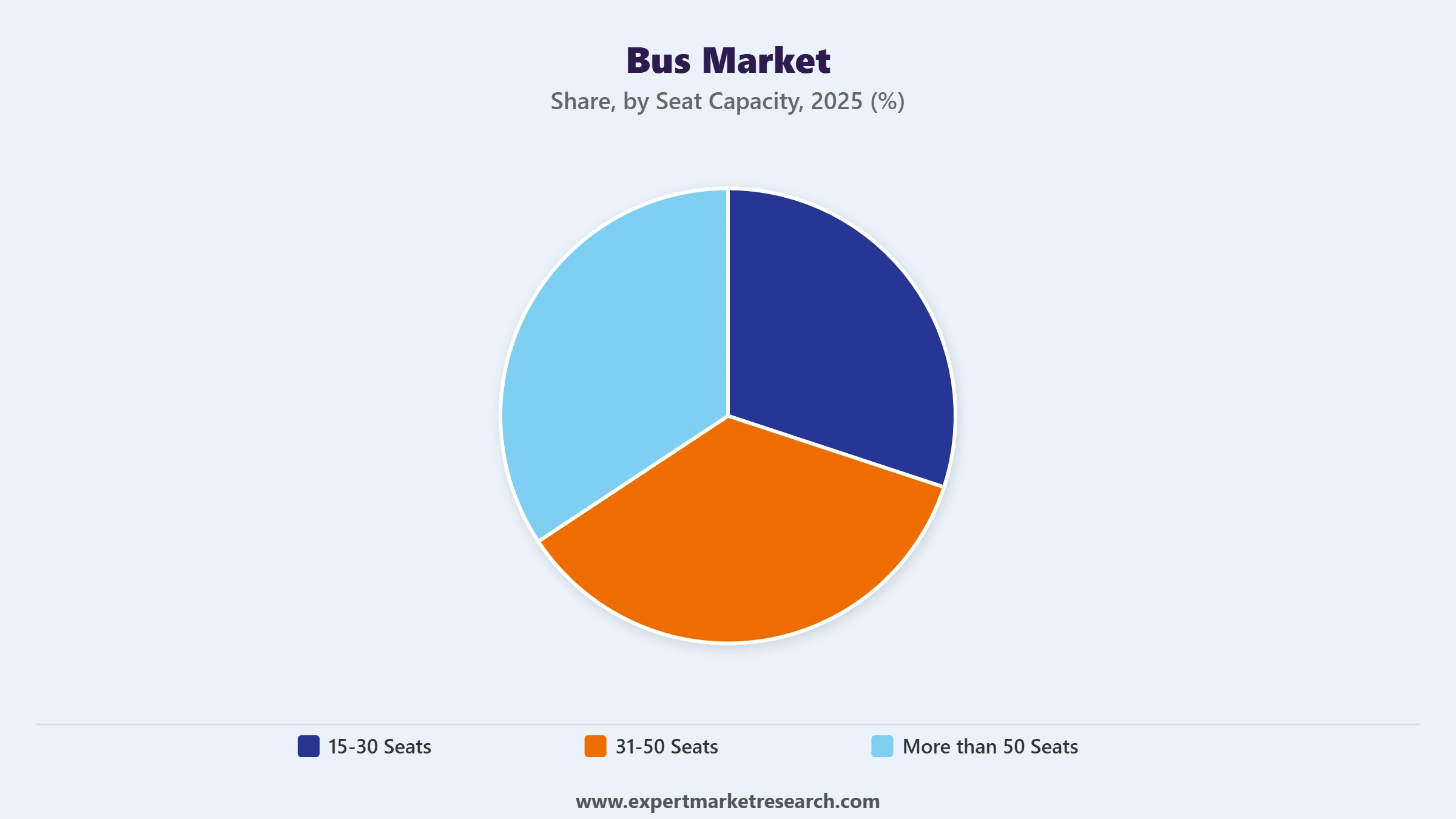
By Seat Capacity, 31–50 Seats Occupy a Substantial Market Share
The range of 31-50 seats occupies a substantial share of the market. OEMs are optimising this range with lightweight materials and energy-efficient air-conditioning units. For instance, Ashok Leyland’s “Cheetah” model offers dual-fuel capabilities including CNG and battery. Transit authorities in Eastern Europe and Southeast Asia are bulk ordering these due to their balance of passenger volume and fuel efficiency.
As per the bus market analysis, buses with 15-30 seats are the fastest-growing seat capacity category. These offer flexibility for smaller groups and short-distance travel, making them ideal for urban shuttle services, schools, and private hire. Moreover, such compact vehicles are more fuel-efficient, easier to navigate through tight spaces, and require lower maintenance costs than larger buses. Their size allows for quicker boarding and disembarking, improving overall service efficiency. Additionally, these buses contribute to reducing road congestion while still offering a comfortable and cost-effective transport solution for both operators and passengers.
Read more about this report - REQUEST FREE SAMPLE
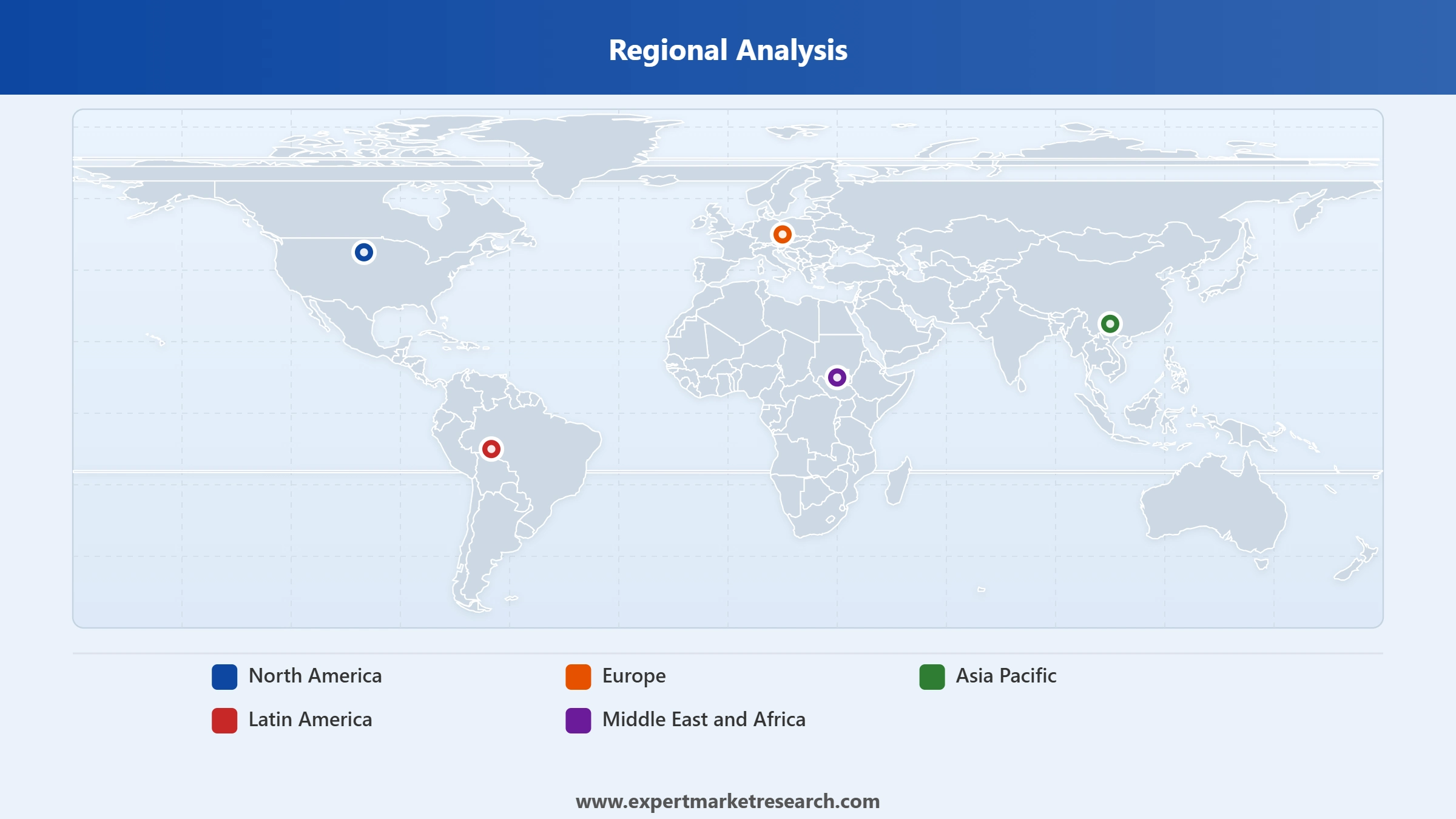
By Region, Asia Pacific Register the Leading Position of the Bus Market
Growth in the Asia Pacific market is majorly driven by large populations and strong government support. China alone accounts for more than 60% of the world’s electric buses. On the other hand, India’s FAME-II schemes and Japan’s Smart City initiatives are boosting adoption of electric and AI-integrated buses. B2B buyers in this region enjoy strong financial incentives, large procurement tenders, and growing public-private ecosystems, making it the high-priority zone for OEM innovation and partnership deals.
North America witnesses significant bus market growth, driven by increased urbanisation and a shift towards sustainable transportation solutions. Governments and public transport authorities are investing in electric and hybrid buses to reduce carbon emissions and improve air quality. The rise in environmental consciousness, coupled with government incentives, has made electric buses an attractive option for fleet operators. In December 2024, Solaris entered the United States market by signing its first contract for electric buses with King County Metro. This contract marked a significant step in Solaris’ North American expansion, providing zero-emission buses in the United States.
Read more about this report - REQUEST FREE SAMPLE
The bus market players are focusing on three strategic zones, including electrification, AI-powered fleet analytics, and modular platforms. Most companies specialise in producing a wide range of commercial vehicles, including trucks and buses, designed for applications across various industries. They are actively advancing in electric and autonomous vehicle technologies, aiming to create sustainable transport solutions. Startups like Arrival are being acquired for their smart battery technology. Major OEMs are launching in-house digital platforms to offer predictive maintenance, route planning, and driver behaviour monitoring. Strategic partnerships with governments and local operators are also rising. In India, Daimler partnered with local governments for EV bus trials with their BharatBenz platform. Bus companies can find lucrative opportunities in mid-life bus conversion, aftermarket telematics, and subscription-based procurement models. Electrification, smart fleet management, modular designs, public-private partnerships, and ESG-driven procurement are some of the key trends that they can focus on to gain an edge in this competitive market in the coming years.
Established in 1997 and headquartered in Hefei, China, Ankai is a leading manufacturer of electric and luxury coaches. The company has built a strong export presence across the Middle East and Southeast Asia, often partnering with governments under bilateral trade agreements.
Founded in 2019, headquartered in Germany, Daimler Truck focuses on zero-emission buses via its Mercedes-Benz and BharatBenz sub-brands. Their eCitaro model is already in use across several European cities. The company is heavily invested in hydrogen-fuelled buses, with pilot fleets operating in Hamburg.
Based in Winnipeg, Canada and established in 2015, NFI is a global innovator with brands like New Flyer and Alexander Dennis under its belt. The company’s Xcelsior line features battery-electric and fuel cell electric buses with onboard telematics.
Founded in 1927, headquartered in Sweden, AB Volvo is a pioneer in integrating connectivity and automation into buses. Its ElectriCity project in Gothenburg tests semi-autonomous buses with passenger behaviour analytics.
*Please note that this is only a partial list; the complete list of key players is available in the full report. Additionally, the list of key players can be customized to better suit your needs.*
Other key players in the market are Solaris Bus & Coach sp. z o.o., among others.
Explore the latest trends shaping the global bus market 2026-2035 with our in-depth report. Gain strategic insights, future forecasts, and key market developments that can help you stay competitive. Download a free sample report or contact our team for customised consultation on global bus market trends 2026.
Asia Pacific Electric Bus Market
Middle East and Africa Bus Market
School Bus Electrification Market
Bus Rapid Transit System Market


Upto 15% Off
USD
$2499 $2249
$3999 $3599
$4999 $4249
$5999 $5099


*While we strive to always give you current and accurate information, the numbers depicted on the website are indicative and may differ from the actual numbers in the main report. At Expert Market Research, we aim to bring you the latest insights and trends in the market. Using our analyses and forecasts, stakeholders can understand the market dynamics, navigate challenges, and capitalize on opportunities to make data-driven strategic decisions.*
In 2025, the bus market reached an approximate value of USD 56.51 Billion.
The market is projected to grow at a CAGR of 7.90% between 2026 and 2035.
The market is estimated to witness healthy growth in the forecast period of 2026-2035, reaching a value of around USD 120.88 Billion by 2035.
Key strategies driving the market include investing in modular EV platforms, partnering with governments, enhancing AI-driven diagnostics, and offering flexible ownership models.
The key challenges are high upfront cost of EV buses, inconsistent charging infrastructure, supply chain delays, and skilled labour shortages for maintaining connected buses.
The market is broken down into North America, Europe, Asia Pacific, Latin America, the Middle East, and Africa.
The major types of bus in the market are single deck and double deck.
By application, the market is divided into transit bus, intercity/coaches, and others.
Based on fuel type, the market is segmented into diesel, electric and hybrid, and others.
The different segments based on the seat capacity of buses included in the market report are 15-30 seats, 31-50 seats, and more than 50 seats.
The key players in the market include Anhui Ankai Automobile Company, Daimler Truck Holding AG, NFI Group Inc., AB Volvo, and Solaris Bus & Coach sp. z o.o., among others.
Explore our key highlights of the report and gain a concise overview of key findings, trends, and actionable insights that will empower your strategic decisions.
| REPORT FEATURES | DETAILS |
| Base Year | 2025 |
| Historical Period | 2019-2025 |
| Forecast Period | 2026-2035 |
| Scope of the Report |
Historical and Forecast Trends, Industry Drivers and Constraints, Historical and Forecast Market Analysis by Segment:
|
| Breakup by Type |
|
| Breakup by Application |
|
| Breakup by Fuel Type |
|
| Breakup by Seat Capacity |
|
| Breakup by Region |
|
| Market Dynamics |
|
| Competitive Landscape |
|
| Companies Covered |
|
Datasheet
One User
USD 2,499
USD 2,249
tax inclusive*
Single User License
One User
USD 3,999
USD 3,599
tax inclusive*
Five User License
Five User
USD 4,999
USD 4,249
tax inclusive*
Corporate License
Unlimited Users
USD 5,999
USD 5,099
tax inclusive*
*Please note that the prices mentioned below are starting prices for each bundle type. Kindly contact our team for further details.*
Flash Bundle
Small Business Bundle
Growth Bundle
Enterprise Bundle
*Please note that the prices mentioned below are starting prices for each bundle type. Kindly contact our team for further details.*
Flash Bundle
Number of Reports: 3
20%
tax inclusive*
Small Business Bundle
Number of Reports: 5
25%
tax inclusive*
Growth Bundle
Number of Reports: 8
30%
tax inclusive*
Enterprise Bundle
Number of Reports: 10
35%
tax inclusive*
How To Order

Select License Type
Choose the right license for your needs and access rights.

Click on ‘Buy Now’
Add the report to your cart with one click and proceed to register.

Select Mode of Payment
Choose a payment option for a secure checkout. You will be redirected accordingly.
Strategic Solutions for Informed Decision-Making
Gain insights to stay ahead and seize opportunities.

Get insights & trends for a competitive edge.

Track prices with detailed trend reports.

Analyse trade data for supply chain insights.

Leverage cost reports for smart savings

Enhance supply chain with partnerships.

Connect For More Information
Our expert team of analysts will offer full support and resolve any queries regarding the report, before and after the purchase.
Our expert team of analysts will offer full support and resolve any queries regarding the report, before and after the purchase.
We employ meticulous research methods, blending advanced analytics and expert insights to deliver accurate, actionable industry intelligence, staying ahead of competitors.
Our skilled analysts offer unparalleled competitive advantage with detailed insights on current and emerging markets, ensuring your strategic edge.
We offer an in-depth yet simplified presentation of industry insights and analysis to meet your specific requirements effectively.




