

Consumer Insights
Uncover trends and behaviors shaping consumer choices today
Procurement Insights
Optimize your sourcing strategy with key market data
Industry Stats
Stay ahead with the latest trends and market analysis.
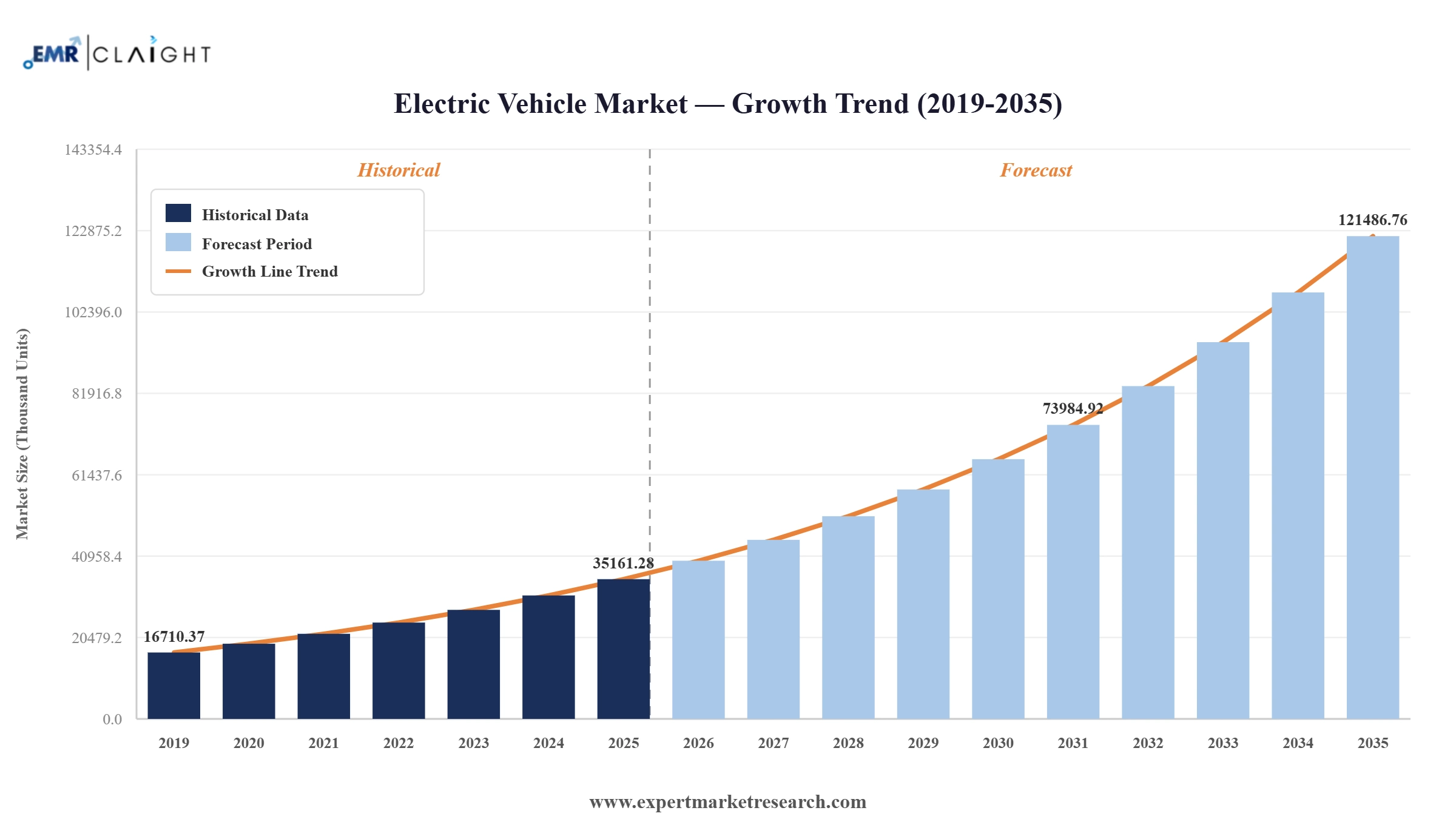
The global electric vehicle market reached a volume of 35161.28 Thousand Units at 2025 and is projected to expand at a CAGR of around 13.20% during the forecast period of 2026-2035. With accelerating government mandates for zero-emission mobility, falling battery costs, expanding charging infrastructure, and growing consumer preference for environmentally sustainable transport options, the market is expected to reach 121486.76 Thousand Units by 2035.
Read more about this report - REQUEST FREE SAMPLE COPY IN PDF
| Global Electric Vehicle Market Report Summary | Description | Value |
| Base Year | Thousand Units | 2025 |
| Historical Period | Thousand Units | 2019-2025 |
| Forecast Period | Thousand Units | 2026-2035 |
| Market Size 2025 | Thousand Units | 35161.28 |
| Market Size 2035 | Thousand Units | 121486.76 |
| CAGR 2019-2025 | Percentage | XX% |
| CAGR 2026-2035 | Percentage | 13.20% |
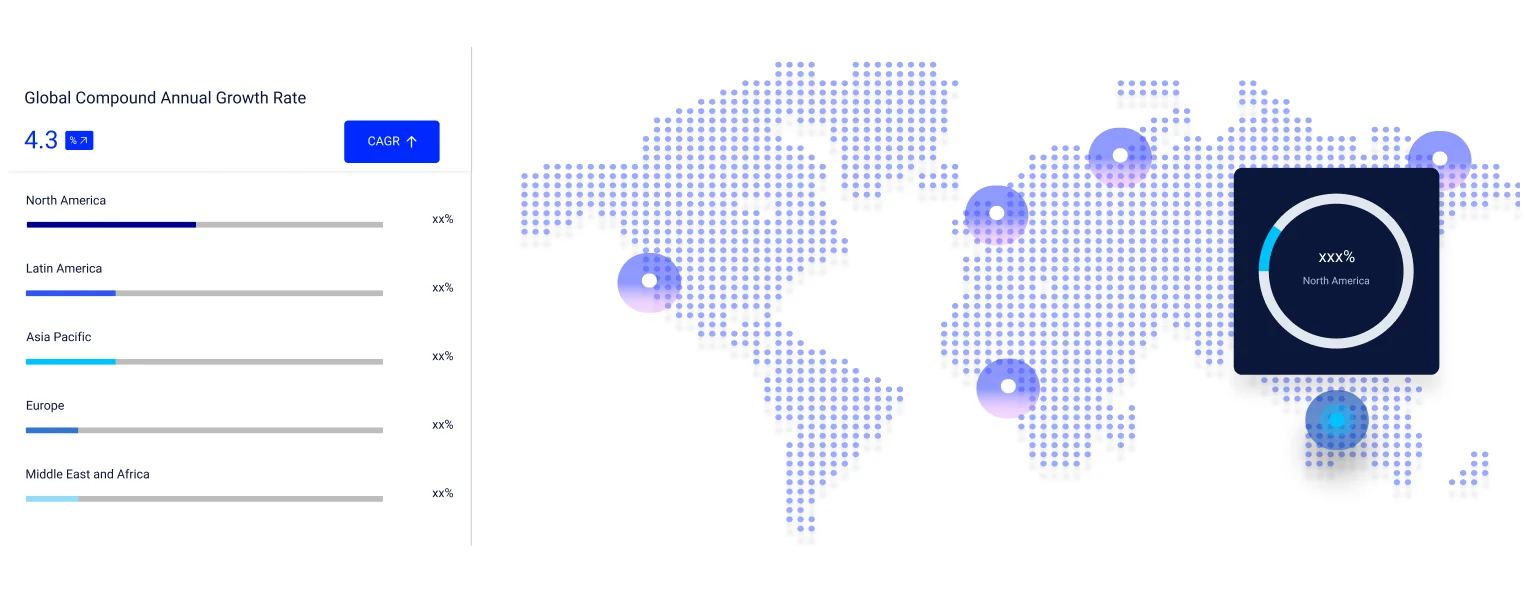
| CAGR 2026-2035 - Market by Region | North America | 16.4% |
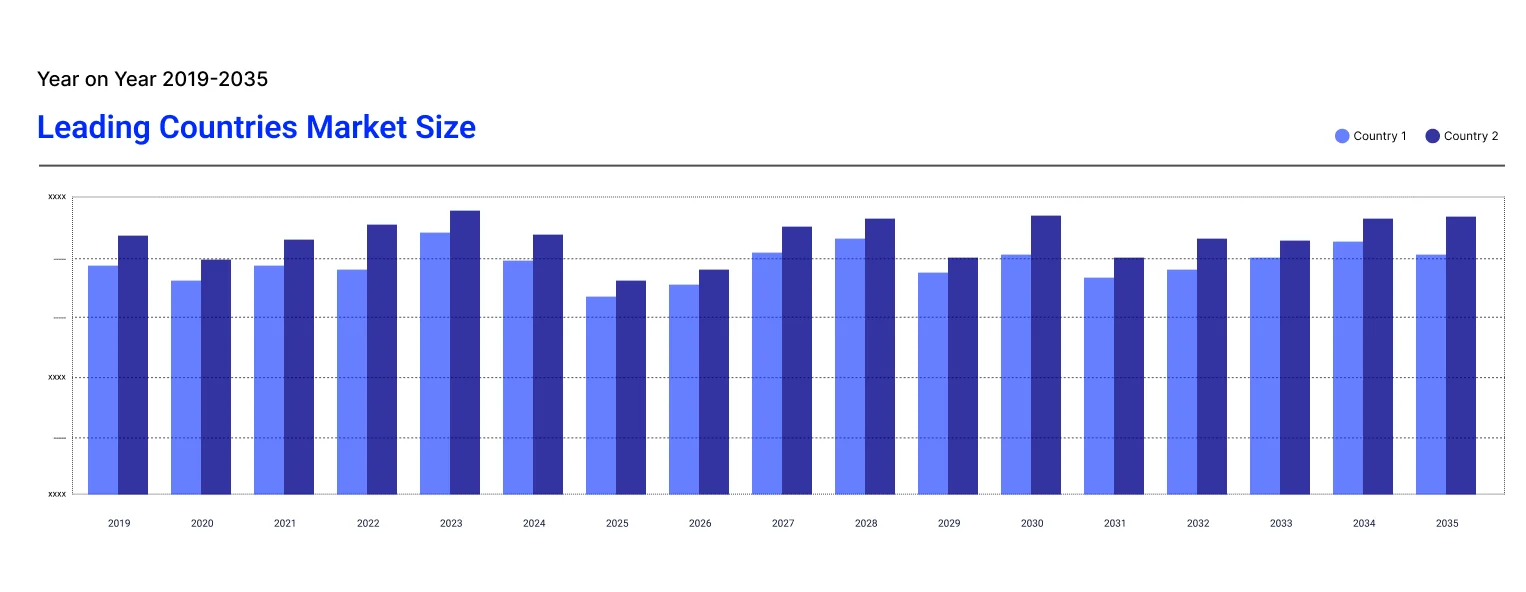
| CAGR 2026-2035 - Market by Country | Brazil | 22.8% |
| CAGR 2026-2035 - Market by Country | India | 20.2% |
| CAGR 2026-2035 - Market by Type | Battery Electric Vehicle | 15.6% |
| CAGR 2026-2035 - Market by Vehicle Type | Light and Medium Commercial Vehicles | 15.2% |
| Market Share by Country 2025 | USA | 6.8% |
The global electric vehicle market is experiencing rapid competitive shifts driven by record production volumes, aggressive new model launches, and intensifying rivalry between established automakers and Chinese EV manufacturers. Battery technology improvements and government policy changes are reshaping adoption trajectories across North America, Europe, and Asia Pacific.
Toyota opened orders for the 2026 bZ, C-HR, and bZ Woodland electric SUVs in the US in early 2026, with the Highlander EV expected by year-end. The bZ delivered a 25% improvement in driving range, reaching up to 314 miles, as Toyota accelerated its electrification push across the North American market.
Tesla reclaimed the global battery electric vehicle sales crown in Q1 2026, delivering 358,023 EVs against BYD's 310,389 pure EV deliveries. The rebound reflected increased demand for the refreshed Model Y and Model 3, and demonstrated the company's recovery following a year in which BYD had surpassed Tesla's annual pure EV sales globally.
Toyota confirmed plans for four new electric SUVs for the US market in 2026, including refreshed and all-new models, at a time when competitors including Ford and GM were pulling back EV commitments. The company's battery EV sales increased 168.4% to 145,000 units in its FY2025/26, demonstrating genuine commercial traction across key markets.
BYD announced it sold 2.26 million pure battery electric vehicles in full-year 2025, surpassing Tesla's 1.64 million deliveries, which declined 9% year-over-year. BYD's success was driven by strong domestic Chinese demand and aggressive pricing, marking a pivotal shift in the global EV competitive landscape heading into 2026.
Regulatory frameworks across major economies are mandating accelerating EV adoption timelines. Government policies supporting the global electric vehicle market include subsidies, charging infrastructure investments, and fleet electrification targets. European ICE bans by 2035 and Chinese NEV credit policies continue to drive sustained demand, prompting automakers to accelerate their EV investments globally.
Declining battery costs and advancements in lithium iron phosphate and solid-state chemistries are significantly improving EV value propositions in the global electric vehicle market. Cost reductions in battery packs are enabling automakers to offer competitive pricing across mass-market segments, while higher energy density addresses consumer range anxiety concerns in key developed markets.
Rapid expansion of public and private charging infrastructure is a critical enabler for electric vehicle market growth. Government-backed charging rollouts in North America, Europe, and China are improving accessibility. Tesla's Supercharger network opening to non-Tesla vehicles and the NACS port standard adoption are further standardising the charging experience across competing EV brands globally.
Chinese electric vehicle manufacturers, led by BYD, are expanding aggressively into European, Southeast Asian, and emerging market territories, challenging traditional automakers on price and technology. The global electric vehicle market is experiencing intensified competition driven by China's cost-competitive manufacturing, software integration, and vertically integrated battery supply chains as a core competitive advantage.
Fleet electrification is emerging as a high-growth segment within the electric vehicle market, driven by total-cost-of-ownership advantages and corporate sustainability mandates. Delivery companies, public transport operators, and ride-hailing platforms are committing to electric fleets globally, creating sustained volume demand for light commercial EVs and two-wheelers across Asia Pacific and European markets.
The report of the Expert Market Research's titled "Global Electric Vehicle Market Report and Forecast 2026-2035" offers a detailed analysis of the market based on the following segments:
Market Breakup by Type
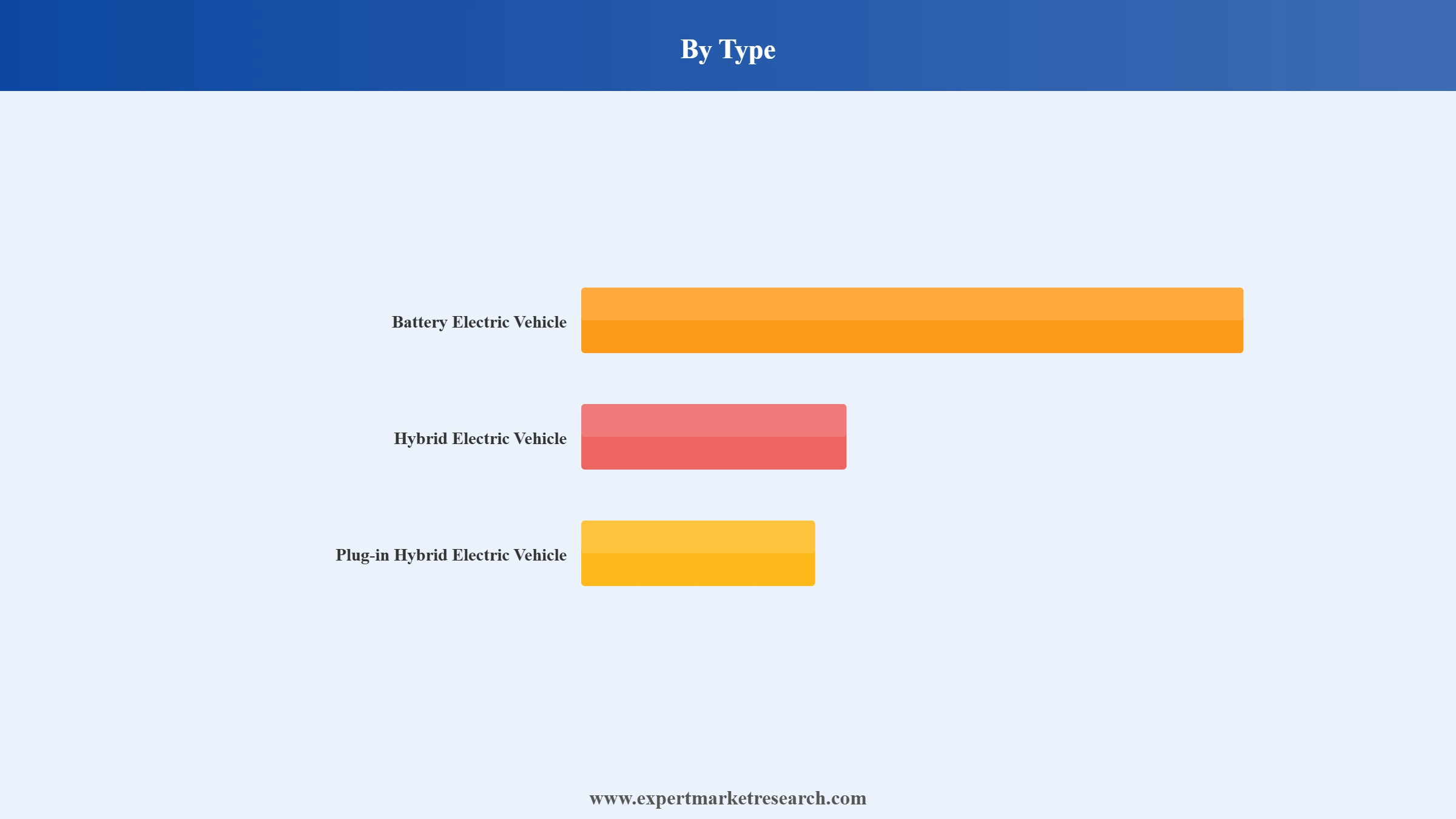
Key Insight: Battery electric vehicles dominate the global EV market by type, propelled by strong policy incentives, expanding charging infrastructure, and continuous improvements in range and battery costs. China and Europe represent the largest BEV markets, with leaders such as BYD and Tesla driving volume. HEVs maintain significant share in markets where charging infrastructure remains limited, including Japan and parts of Southeast Asia.
Market Breakup by Vehicle Type
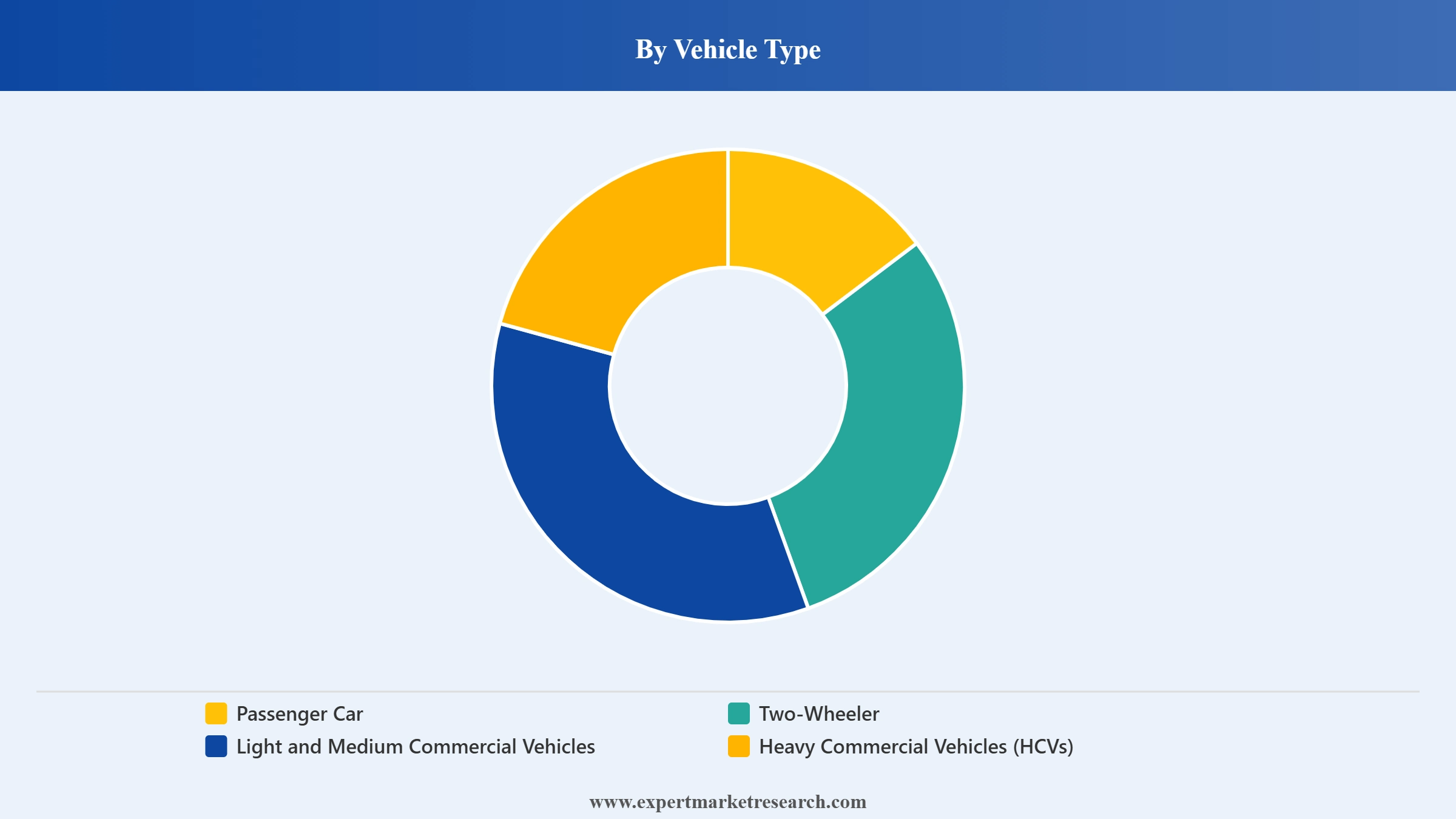
Key Insight: Passenger cars constitute the dominant vehicle type segment, accounting for the majority of global EV volumes. Mass-market sedans and SUVs from Tesla, BYD, and Toyota are the primary growth drivers. Two-wheelers are the fastest-growing sub-segment, particularly across Asia Pacific and emerging markets, driven by affordability and high urban mobility demand in countries such as India, Vietnam, and Indonesia.
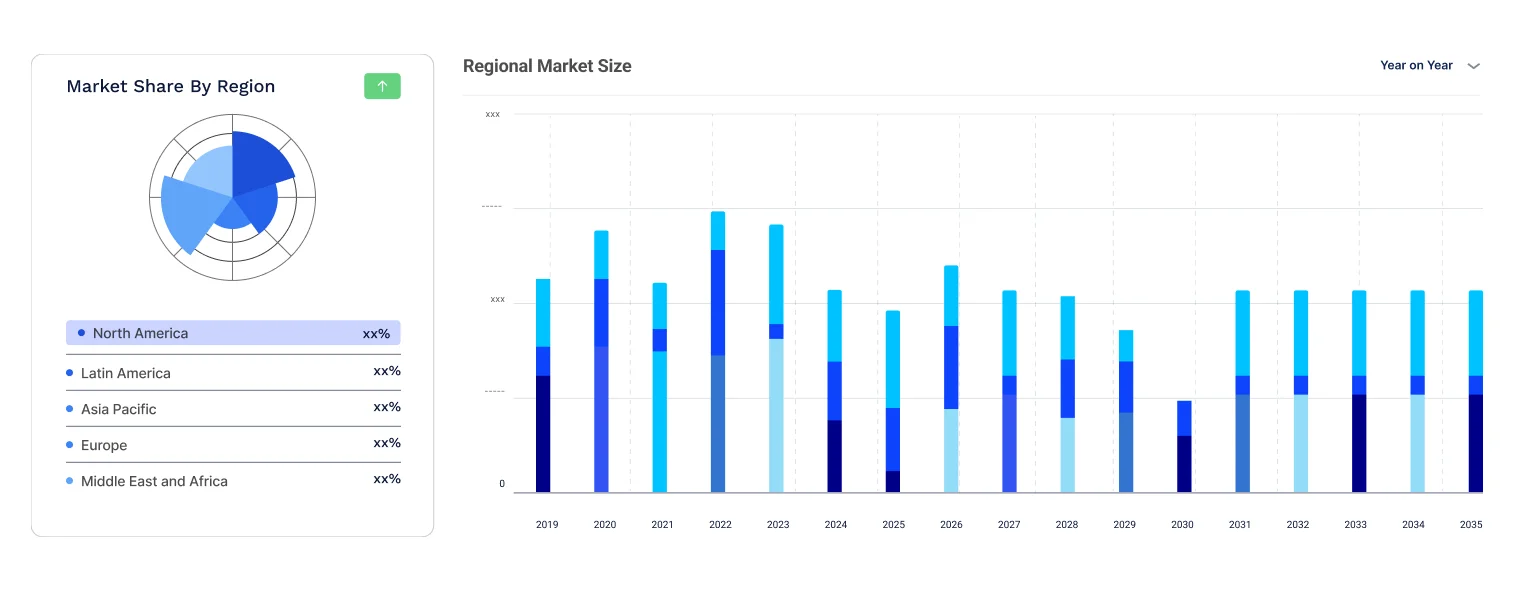
Market Breakup by Region
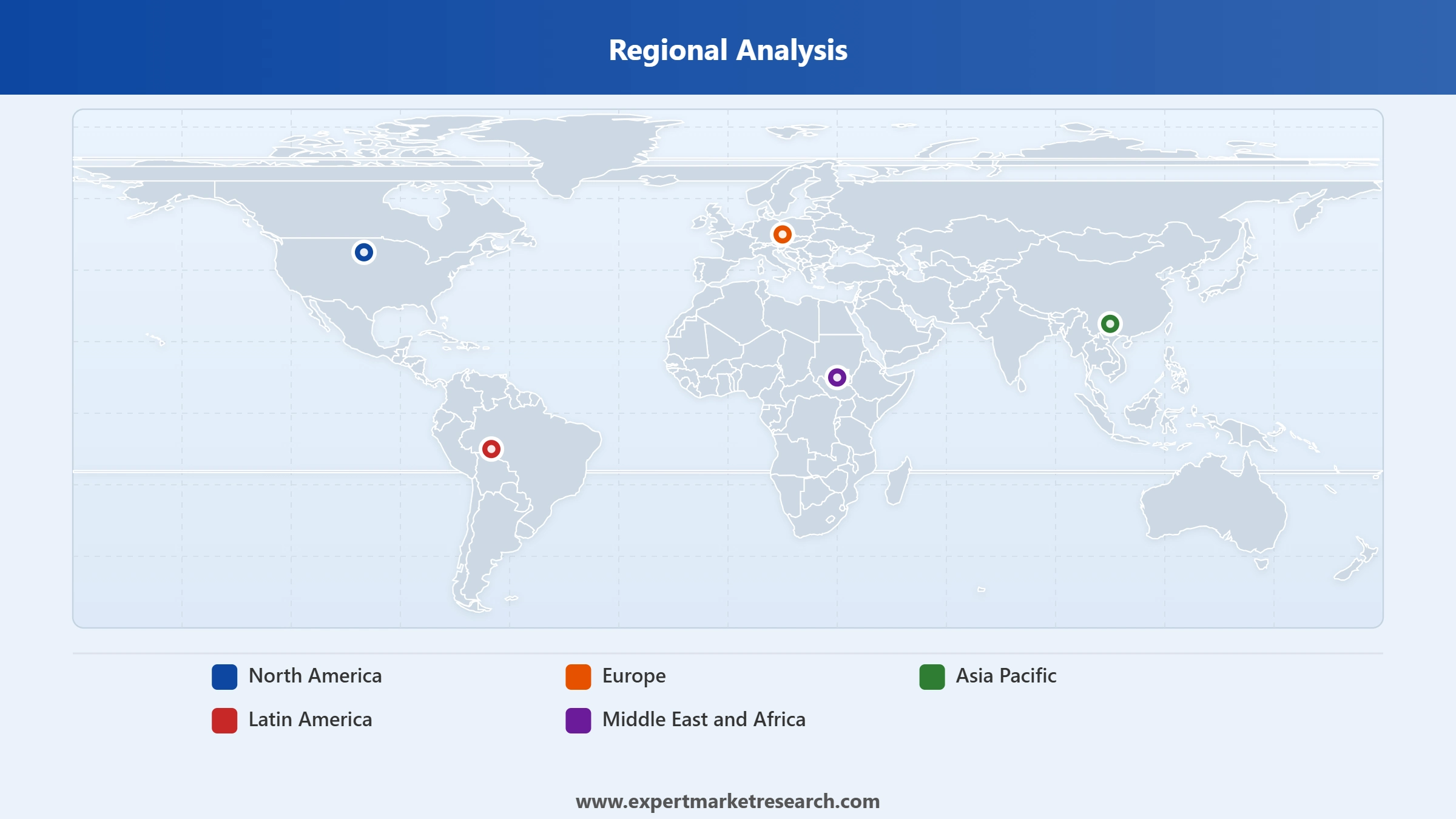
Key Insight: Asia Pacific, led by China, dominates the global electric vehicle market, accounting for over 50% of global EV sales. North America and Europe are significant and growing markets, supported by policy mandates and expanding EV model availability. Latin America and the Middle East and Africa are nascent but fast-emerging regions where government incentives and falling vehicle costs are driving accelerating adoption rates.
Read more about this report - REQUEST FREE SAMPLE COPY IN PDF
By Type, Battery Electric Vehicles dominate the market due to strong policy support, zero-emission classification, and improving battery economics
Battery electric vehicles are the dominant segment of the global electric vehicle market, driven by the combination of government policy mandates targeting zero tailpipe emissions, falling battery costs, and expanding public charging infrastructure. Leading manufacturers including BYD, Tesla, and Volkswagen are scaling BEV production across multiple price tiers, making them accessible across both premium and mass-market consumer segments in North America, Europe, and Asia Pacific.
Read more about this report - REQUEST FREE SAMPLE COPY IN PDF
Hybrid electric vehicles maintain a significant share, particularly in markets where BEV charging infrastructure remains underdeveloped or where consumers prefer the range flexibility of a dual powertrain. Toyota's dominance in global HEV volumes, driven by Prius and RAV4 Hybrid models, reflects sustained consumer preference for fuel efficiency in transition-phase markets. In early 2026, Toyota confirmed plans for six new EV models targeting the US and European markets through 2026.
By Vehicle Type, Passenger Cars account for the dominant share of the market due to mass-market consumer demand and broad OEM investment
Passenger cars command the largest segment share in the global electric vehicle market, anchored by high-volume SUV and sedan models from Tesla, BYD, Hyundai, and Volkswagen that collectively drive the majority of annual unit sales. Consumer demand for longer range, better connectivity, and lower operating costs continues to fuel passenger car EV adoption, with mass-market pricing below USD 30,000 becoming increasingly achievable in China and emerging Asian markets.
Read more about this report - REQUEST FREE SAMPLE COPY IN PDF
Two-wheelers represent one of the fastest-growing vehicle type segments globally, driven by affordability, urban commuting use cases, and strong demand in high-density cities across Asia Pacific. India's EV two-wheeler market in particular is expanding rapidly, supported by government FAME II incentives and the entry of domestic manufacturers alongside international brands. Commercial vehicle electrification, including light delivery vans and heavy-duty trucks, is also accelerating globally as fleet operators prioritise total cost of ownership.
Asia Pacific dominates the market due to China's scale, government incentives, and vertically integrated domestic EV supply chain
Asia Pacific leads the global electric vehicle market by a substantial margin, with China alone accounting for over 50% of global EV sales. China's dual-credit policy, robust domestic manufacturers such as BYD, SAIC Motor, and CHERY, and a vast and growing public charging network underpin the region's leadership. Japan and India are rapidly scaling EV adoption, the former through hybrid-to-BEV transition and the latter through two-wheeler and small car electrification programs supported by government subsidies.
Read more about this report - REQUEST FREE SAMPLE COPY IN PDF
North America is a key growth region in the global electric vehicle market, driven by federal tax incentives, state-level mandates in California, and expanding EV model availability from both domestic and international automakers. Tesla continues to lead the US market, while Toyota, Hyundai, and emerging Chinese brands are expanding their North American footprint. In Q1 2026, Tesla delivered 358,023 EVs globally, reclaiming the top BEV position, while Toyota's US EV sales rose 79% year-over-year, reflecting growing market breadth.
The global electric vehicle market is intensely competitive, with a growing roster of automakers ranging from established global manufacturers to technology-driven new entrants. BYD and Tesla have defined the competitive benchmark in BEV volumes, while Toyota maintains hybrid leadership. Consolidation and technology partnerships are reshaping competitive positioning as the industry transitions toward full electrification.
Founded in 1995, headquartered in Shenzhen, China. BYD is the world's leading EV manufacturer by annual volume, with 2.26 million pure EVs sold in 2025. Operating across passenger cars, buses, and commercial EVs, BYD benefits from vertical integration in battery manufacturing via its Blade Battery technology. The company is expanding aggressively into Europe, Southeast Asia, and Latin America.
Founded in 2003, headquartered in Austin, Texas. Tesla pioneered the premium BEV segment and leads in autonomous driving software through its FSD platform. Key models include the Model 3, Model Y, and Cybertruck. Tesla delivered 358,023 BEVs in Q1 2026, reclaiming the global BEV lead, and operates a growing global Supercharger network now open to non-Tesla vehicles.
Founded in 1937, headquartered in Toyota City, Japan. Toyota is the global leader in hybrid vehicles and is rapidly expanding its BEV lineup, including the bZ, C-HR, and planned Highlander EV. The company's battery EV sales rose 168.4% in FY2025/26 to 145,000 units, demonstrating commercial momentum across multiple segments.
Founded in 1937, headquartered in Wolfsburg, Germany. Volkswagen is Europe's largest automaker and operates a broad EV portfolio through the ID. series. Reporting Q1 2026 sales revenue of EUR 75.7 billion, Volkswagen continues to invest heavily in dedicated EV platforms and software-defined vehicles despite near-term headwinds from tariffs and market competition from Chinese brands.
Other key players in the market are Dongfeng Motor Group Company Limited, Hyundai Motor Company, Ford Motor Company, Great Wall Motor Company Limited, CHERY Automobile Co. Ltd., General Motors Co., Volvo AB, Nissan Motor Corporation, Mercedes-Benz Group AG, BMW AG, SAIC Motor Corporation Limited, and Others.
*Please note that this is only a partial list; the complete list of key players is available in the full report. Additionally, the list of key players can be customized to better suit your needs.*
Explore the latest insights on the global electric vehicle industry with our comprehensive 2026 report. Stay ahead with current data on technology advances, policy shifts, and regional growth leaders. Whether you are an automaker, investor, or supplier, this report delivers the strategic clarity you need. Download your free sample now and uncover the key opportunities in the expanding electric vehicle space.
Germany Electric Vehicle Market
France Electric Vehicle Market
United Kingdom Electric Vehicle Market


Upto 15% Off
USD
$2499 $2249
$3999 $3599
$4999 $4249
$5999 $5099


*While we strive to always give you current and accurate information, the numbers depicted on the website are indicative and may differ from the actual numbers in the main report. At Expert Market Research, we aim to bring you the latest insights and trends in the market. Using our analyses and forecasts, stakeholders can understand the market dynamics, navigate challenges, and capitalize on opportunities to make data-driven strategic decisions.*
In 2025, the market volume was around 35161.28 Thousand Units.
The market is assessed to grow at a CAGR of 13.20% between 2026 and 2035.
The market is estimated to witness a healthy growth in the forecast period of 2026-2035 to reach nearly 121486.76 Thousand Units by 2035.
The major drivers include favourable government policies promoting EV adoption and rising government investments in EV charging infrastructure.
The key trends aiding the market include innovation in EV technology and the introduction of low-cost lithium-iron-phosphate (LFP) batteries.
The different types of electric vehicle include battery electric vehicle, hybrid electric vehicle, and plug-in hybrid electric vehicle.
The major vehicle types considered in the market report include passenger car, two-wheeler, light and medium commercial vehicles, and heavy commercial vehicles (HCVs).
The major players in the market include BYD Co. Ltd., Tesla Inc., Toyota Motor Corp., Dongfeng Motor Group Company Limited, Hyundai Motor Company, Ford Motor Company, Great Wall Motor Company Limited, CHERY Automobile Co., Ltd., General Motors Co., Volkswagen AG, Volvo AB, Nissan Motor Corporation, Mercedes-Benz Group AG, BMW AG, and SAIC Motor Corporation Limited.
Explore our key highlights of the report and gain a concise overview of key findings, trends, and actionable insights that will empower your strategic decisions.
| REPORT FEATURES | DETAILS |
| Base Year | 2025 |
| Historical Period | 2019-2025 |
| Forecast Period | 2026-2035 |
| Scope of the Report |
Historical and Forecast Trends, Industry Drivers and Constraints, Historical and Forecast Market Analysis by Segment:
|
| Breakup by Type |
|
| Breakup by Vehicle Type |
|
| Breakup by Region |
|
| Market Dynamics |
|
| Competitive Landscape |
|
| Companies Covered |
|
| Others Report Price and Purchase Option | Explore our purchase options that are best suited to your resources and industry needs. |
| Delivery Format | Delivered as an attached PDF and Excel through email, with an option of receiving an editable PPT, according to the purchase option. |
Datasheet
One User
USD 2,499
USD 2,249
tax inclusive*
Single User License
One User
USD 3,999
USD 3,599
tax inclusive*
Five User License
Five User
USD 4,999
USD 4,249
tax inclusive*
Corporate License
Unlimited Users
USD 5,999
USD 5,099
tax inclusive*
*Please note that the prices mentioned below are starting prices for each bundle type. Kindly contact our team for further details.*
Flash Bundle
Small Business Bundle
Growth Bundle
Enterprise Bundle
*Please note that the prices mentioned below are starting prices for each bundle type. Kindly contact our team for further details.*
Flash Bundle
Number of Reports: 3
20%
tax inclusive*
Small Business Bundle
Number of Reports: 5
25%
tax inclusive*
Growth Bundle
Number of Reports: 8
30%
tax inclusive*
Enterprise Bundle
Number of Reports: 10
35%
tax inclusive*
How To Order

Select License Type
Choose the right license for your needs and access rights.

Click on ‘Buy Now’
Add the report to your cart with one click and proceed to register.

Select Mode of Payment
Choose a payment option for a secure checkout. You will be redirected accordingly.
Strategic Solutions for Informed Decision-Making
Gain insights to stay ahead and seize opportunities.

Get insights & trends for a competitive edge.

Track prices with detailed trend reports.

Analyse trade data for supply chain insights.

Leverage cost reports for smart savings

Enhance supply chain with partnerships.

Connect For More Information
Our expert team of analysts will offer full support and resolve any queries regarding the report, before and after the purchase.
Our expert team of analysts will offer full support and resolve any queries regarding the report, before and after the purchase.
We employ meticulous research methods, blending advanced analytics and expert insights to deliver accurate, actionable industry intelligence, staying ahead of competitors.
Our skilled analysts offer unparalleled competitive advantage with detailed insights on current and emerging markets, ensuring your strategic edge.
We offer an in-depth yet simplified presentation of industry insights and analysis to meet your specific requirements effectively.




