

Consumer Insights
Uncover trends and behaviors shaping consumer choices today
Procurement Insights
Optimize your sourcing strategy with key market data
Industry Stats
Stay ahead with the latest trends and market analysis.
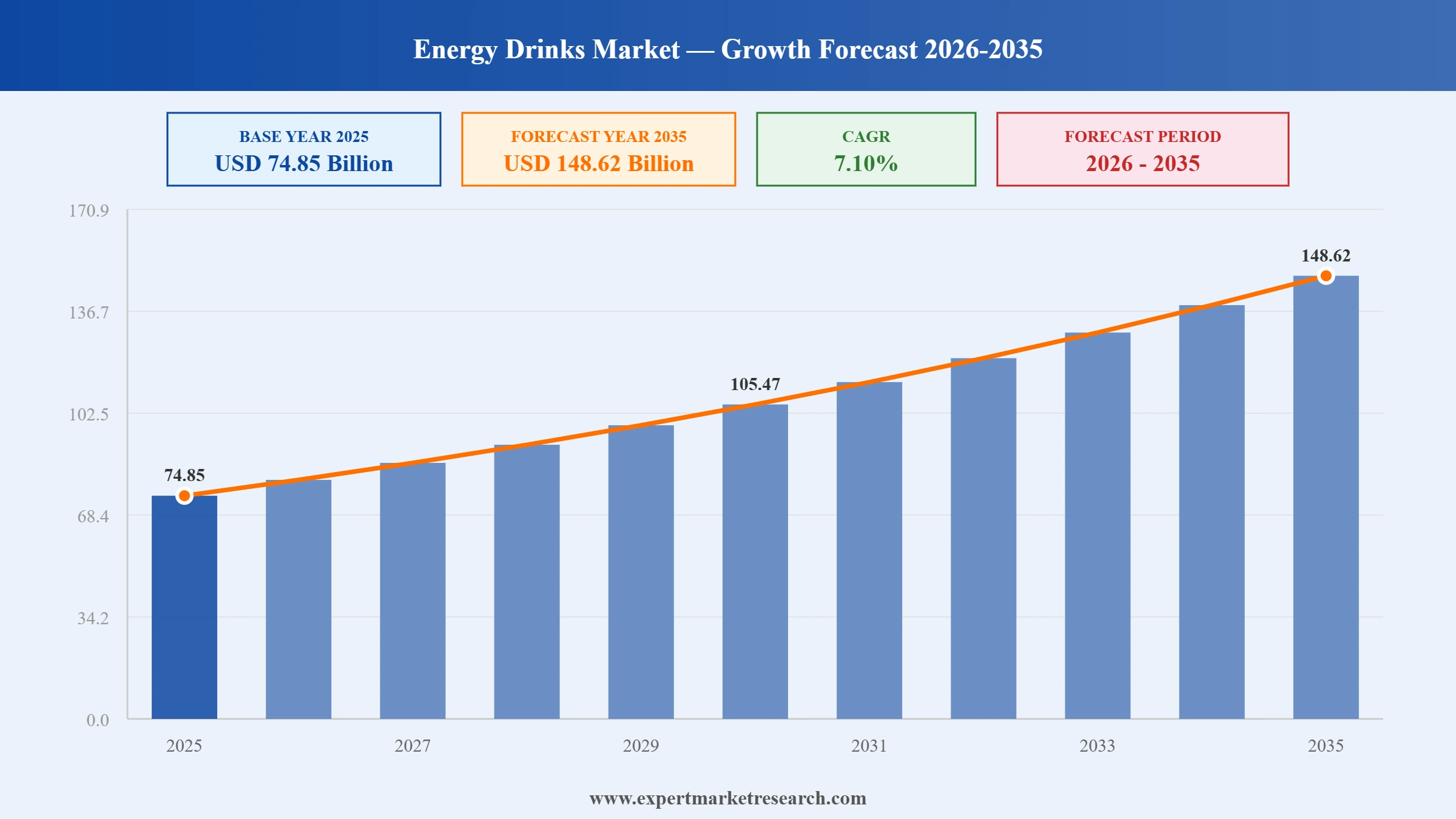
The global energy drinks market attained a value of USD 74.85 Billion in 2025 and is projected to expand at a CAGR of 7.10% through 2035. The market is further expected to achieve USD 148.62 Billion by 2035. The emerging trend towards multifunctional beverages that use natural sources of caffeine, adaptogens, electrolytes, and brain function enhancers is fostering the development of innovative premium products.
Beverage companies are partnering up with sports tech firms and professional sports events for greater visibility and increased customer loyalty, widening the energy drinks market dynamics. In addition, the quick commerce channel's rapid growth is being helpful for premium energy drink brands to deliver products quickly to urban customers while offering tailored product recommendations. Another emerging trend is the use of sugar-free products due to the use of advanced natural sweeteners by beverage companies.
Innovations in the energy drinks market are being observed as leading brands are now going past their traditional caffeine-powered beverages in order to come up with functional performance drinks. In May 2025, PepsiCo concluded the acquisition of Poppi, a prebiotic soda, thus boosting the functional beverage line and highlighting PepsiCo's overall plan to enter wellness drinks. The acquisition reflects the strategies of leading beverage manufacturers, who are attempting to enhance gut health and use clean label approach to satisfy the needs of customers. Caffeine consumption globally is continuously increasing with a variety of beverage types, while functional beverages are one of the fastest-growing categories in retail trade, driving existing players towards diversifying their portfolios with innovative formulas based on scientific research.
Innovations in products are becoming the key competitive strategy within the energy drinks market. Leading brands like Red Bull, Monster Beverage, Celsius Holdings, and Suntory are working on their natural sources of caffeine extracted from green coffee, guarana, and tea and are adding nootropic elements, electrolytes, and vitamins to their formulas. Moreover, producers are introducing zero sugar, plant-based and specific for performance variants intended for athletes and professionals. For example, in June 2026, HELL Energy Drink expanded its India portfolio by launching sugar-free HELL ZERO and strengthening premium beverage offerings.
Read more about this report - REQUEST FREE SAMPLE COPY IN PDF
| Global Energy Drinks Market Report Summary | Description | Value |
| Base Year | USD Billion | 2025 |
| Historical Period | USD Billion | 2019-2025 |
| Forecast Period | USD Billion | 2026-2035 |
| Market Size 2025 | USD Billion | 74.85 |
| Market Size 2035 | USD Billion | 148.62 |
| CAGR 2019-2025 | Percentage | XX% |
| CAGR 2026-2035 | Percentage | 7.10% |
| CAGR 2026-2035 - Market by Region | Asia Pacific | 7.9% |
| CAGR 2026-2035 - Market by Country | India | 8.1% |
| CAGR 2026-2035 - Market by Country | Brazil | 8.0% |
| CAGR 2026-2035 - Market by Consumer | Adults | 7.8% |
| CAGR 2026-2035 - Market by Distribution Channel | Off-Trade & Direct Selling Distribution | 7.7% |
| Market Share by Country 2025 | Italy | 2.3% |
The Nordic Rocket Factory developed a highly concentrated powdered energy drink that delivers more than one liter using only 12 grams of ingredients. Firms may produce highly concentrated beverages sustainably to reduce expenses related to logistics, limit packaging waste, and appeal to eco-friendly customers.
Adrenaline Rush was introduced by PepsiCo in India. The firm extended its business into the mass-premium energy drinks market by launching performance-oriented energy drinks aimed at Generation Z. Competitors may therefore introduce energy drinks oriented toward the younger generation as part of their premium portfolio.
Fuell from Agthia is a new energy drink made using dates, thus integrating natural ingredients along with functional benefits, to appeal to the health-conscious consumers looking for healthier formulations. Brands can therefore drive innovation by incorporating regional natural ingredients and developing clean-label formulations.
28 BLACK entered the Indian market with Blinkit collaboration, thereby allowing quicker deliveries of premium energy drinks in prominent urban areas. This can help companies in enhancing their position in the energy drinks market through quick-commerce platform and omnichannel distribution.
Brands are ramping up their investment in formulations for clean-label products that contain caffeine derived from natural sources, along with adaptogens, nootropics, and plant extracts. Manufacturers are replacing artificial stimulants with the use of green coffee beans, guarana, yerba mate, and tea-based caffeine to boost hydration. For example, in October 2024, Celsius Holdings launched new offerings of CELSIUS Essentials, functional beverages designed for active individuals available in larger packs, boosting demand in the energy drinks market. Regulatory agencies, including the FDA, highlight the importance of transparency in ingredient listings and caffeine content as they encourage manufactures to produce evidence-based formulations.
The energy drinks market trend towards sugar-free variants is changing the product development strategy of many brands that seek to meet the wellness preferences of consumers and regulatory requirements related to nutrition. Monster Beverage, Red Bull, and Rockstar Energy continue expanding their portfolios of zero-sugar beverages by developing technologies of sweeteners that allow preserving taste while decreasing calorie intake. For instance, in March 2026, Dunkin' launched Dunkin' Zero, a zero-sugar, 20-calorie energy drink available in six fruit-forward flavors. The World Health Organization is also recommending decreased free sugar intake as a way to reduce obesity and diabetes.
Top energy drinks market players are enhancing consumer engagement through collaborations with major sporting events, esports, and entertainment platforms. Firms use such collaborations to release unique products, enhance brand presence, and build better consumer communities. Red Bull is maintaining its significant investment in Formula One, extreme sports, and esports tournaments while Monster Energy is presenting itself as a major partner in motorsports and gaming competitions. Investments in sports infrastructure made by governments in different countries, especially in the Middle East and Asian region, are creating new opportunities for sponsorship and marketing through athletic and entertainment events. Demosntating this shift, in June 2026, Alani Nu partnered with Becky G to launch limited-edition Purple Cotton Candy Energy, featuring zero sugar and 200mg caffeine.
The energy drinks market players are emphasizing innovation in packaging since it is a competitive advantage for companies that are pursuing sustainability initiatives. Manufacturers are focusing more on using recycled aluminum packaging, lighter cans, secondary packaging materials, and reducing their emissions in production. For example, in May 2025, Ball and Açaí Motion introduced ASI-certified aluminum cans with sustainable packaging, enhancing beverage preservation and environmental performance. Regulatory actions towards circular economy, like the initiative of the European Union on the Packaging and Packaging Waste Regulation, also encourage energy drink manufacturers to adopt sustainable packaging.
Artificial intelligence is redefining manufacturing planning across the energy drinks market scope through enhanced ability of manufacturers to forecast demand and improve their distribution networks. Predictive analysis is being utilized with sales data from retailers to ensure availability of products, minimize wastage, and accelerate the introduction of new products. PepsiCo is developing its artificial intelligence supply chain management capability in beverages for improved forecasting and efficiency. Various government programs designed to facilitate digitalization in industries like the Manufacturing Extension Partnership of the United States are motivating the beverage manufacturers to update their production processes. In April 2025, Nutrabolt selected e2open to accelerate digital supply chain transformation, improving planning, visibility, and operational efficiency globally.
The EMR’s report titled “Global Energy Drinks Market Report and Forecast 2026-2035” offers a detailed analysis of the market based on the following segments:
Market Breakup by Product
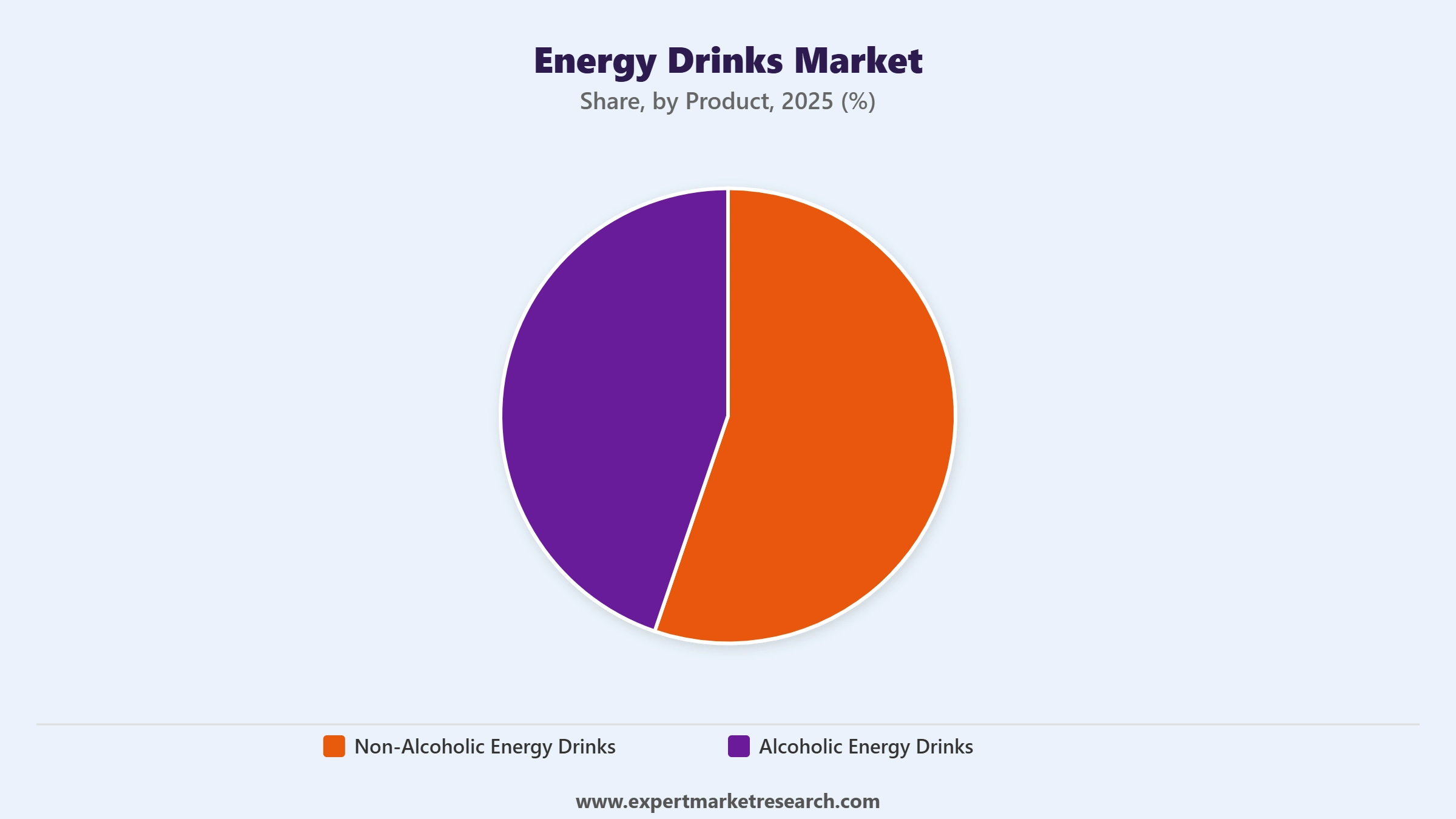
Key Insight: Both beverages’ product landscapes indicate different consumption situations. Non-alcoholic energy drinks dominate in the energy drinks market owing to their versatile nature and functional positioning, while being suitable for everyday consumption. In February 2026, Red Bull introduced ready-to-drink beverages, energy drinks, non-alcoholic beers, and hydration products, expanding functional beverage innovation. At the same time, alcoholic energy drinks are becoming increasingly popular due to the focus of beverage companies on social premium consumption through unique flavor combinations and ready-to-drink formats. Both types of energy drinks motivate businesses to create diverse product portfolios, build premium positions, widen distribution channels, and meet changing consumer needs.
Market Breakup by Type
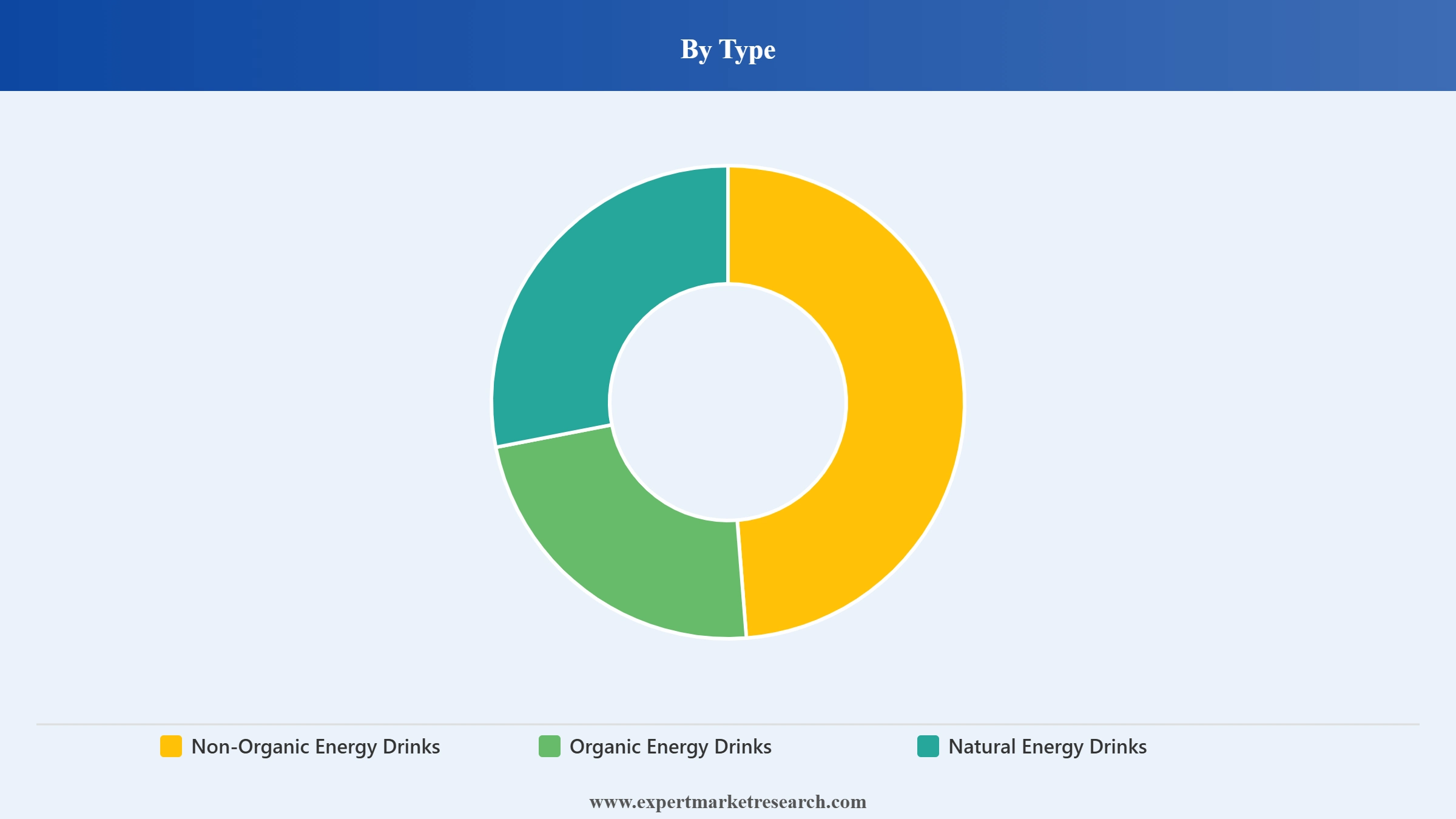
Key Insight: Type-based segmentation is associated with a constant increase in consumer requirements in the case of energy drinks. Regular energy drinks sustain the leading position in the global energy drinks market due to their affordable price, mass production, and availability. The organic energy drink segment is growing because of the preference towards clean label products that require the development of premium products made of natural components. Natural energy drinks contribute to diversity of the market as they offer consumers minimally processed products with plant sources of caffeine. In May 2026, STORM launched, offering clean energy, zero sugar, natural caffeine, and functional ingredients for younger consumers.
Market Breakup by Consumer
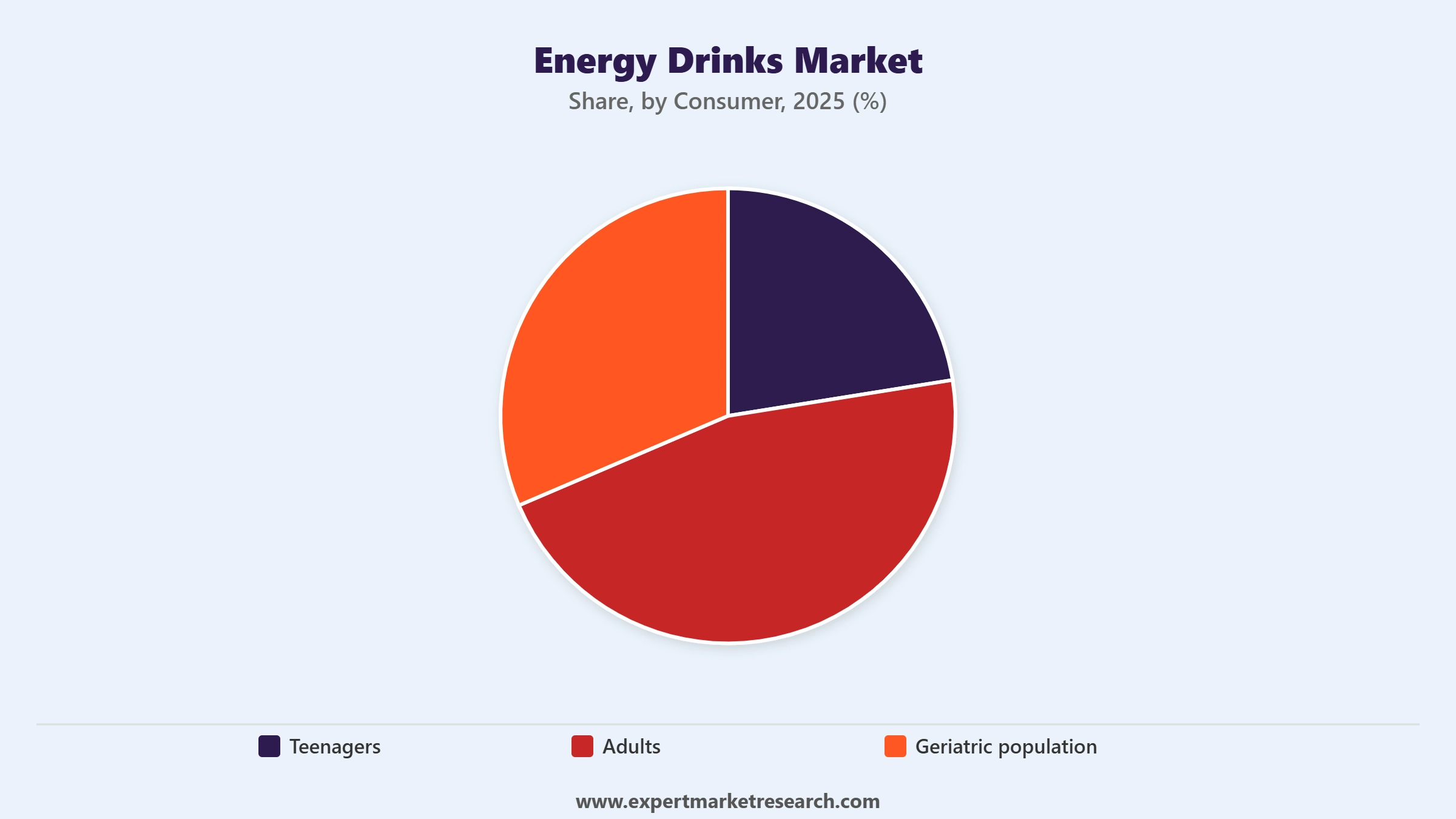
Key Insight: As per the energy drinks market report, adults continue to generate demand due to their constant buying of products that are associated with work, fitness, and productivity. Teens are playing a vital role in innovation as companies strive to introduce different tastes and marketing styles that match the lifestyle of the youth. Lastly, the geriatric segment offers an emerging opportunity for the introduction of formulations that are aimed at maintaining energy levels and low sugar content.
Market Breakup by Distribution Channel
Key Insight: Distribution approaches are advancing as companies enhance their product availability through various purchasing options, reshaping the energy drinks market trends and dynamics. The off-trade and direct selling distribution approaches are prevalent due to the consistent availability of products, broad geographic reach, and easy purchase options for average customers. The on-trade channel is rapidly growing by offering exclusive experiences in the hospitality, entertainment, and fitness settings which enhance brand perception and product discovery. The two distribution approaches are meant to assist companies in enhancing consumer engagement, market penetration, sales approaches, and supply chain efficiency.
Market Breakup by Region
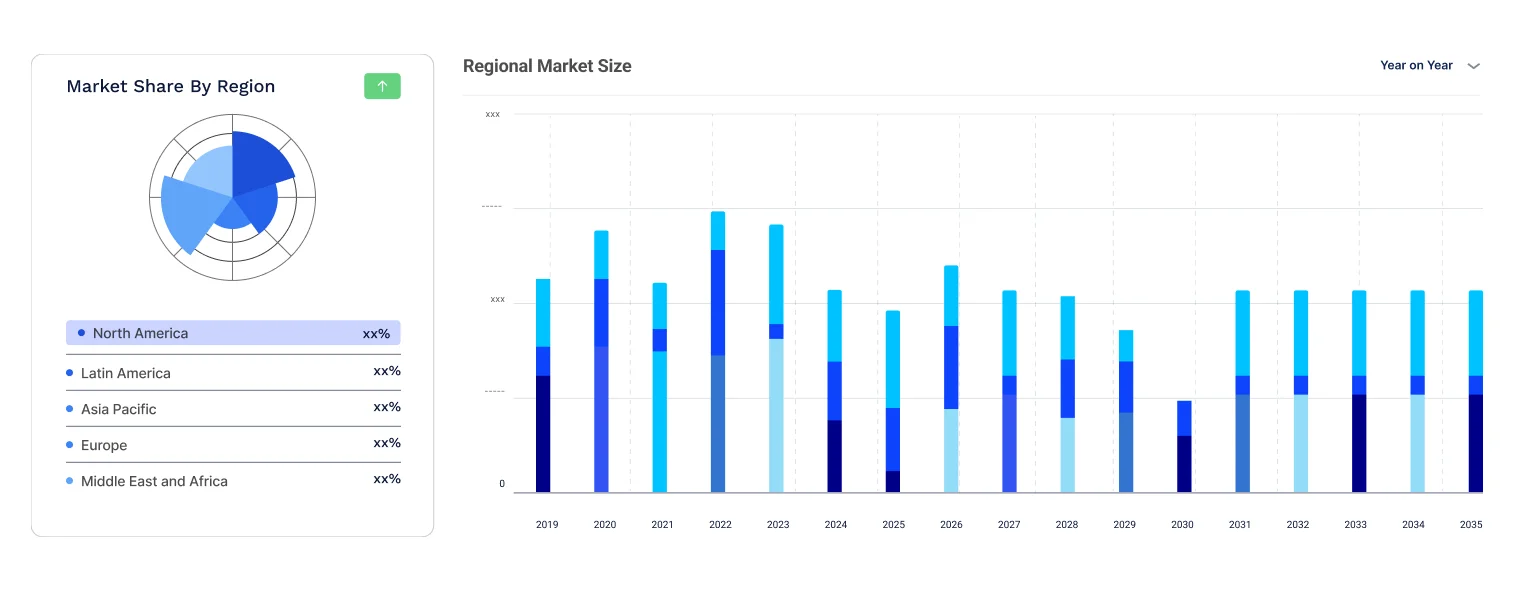
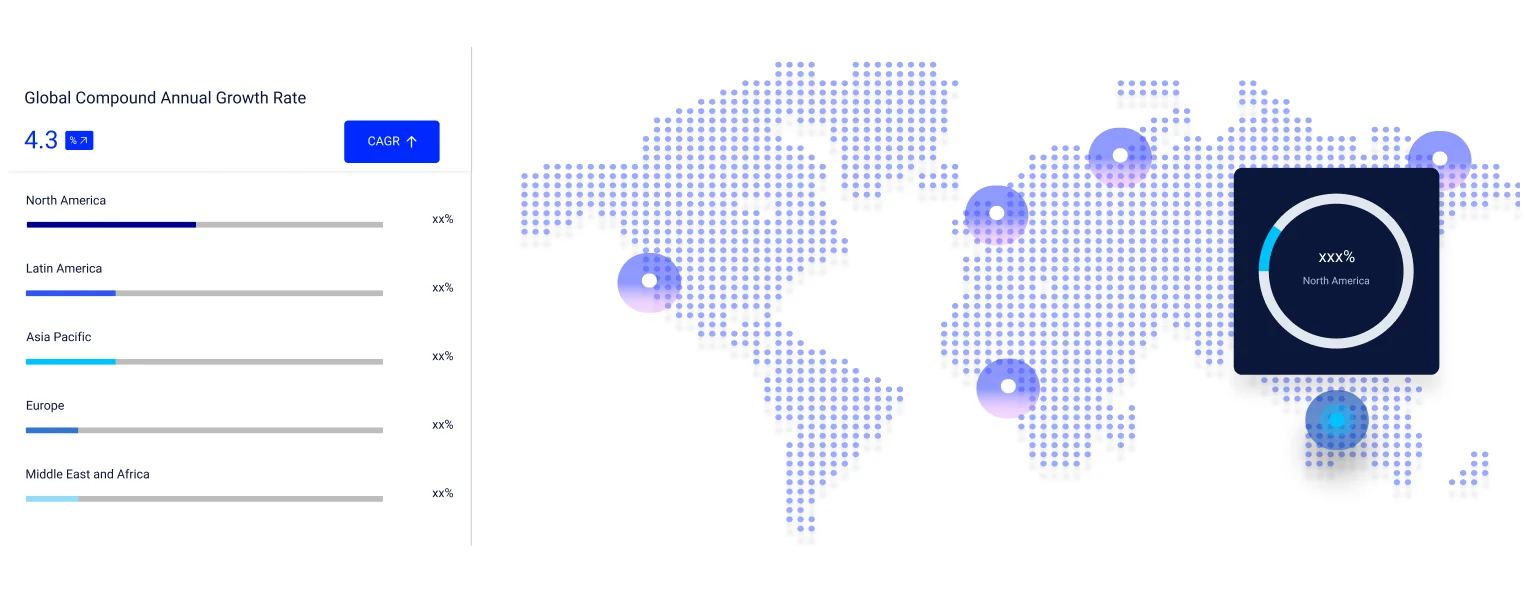
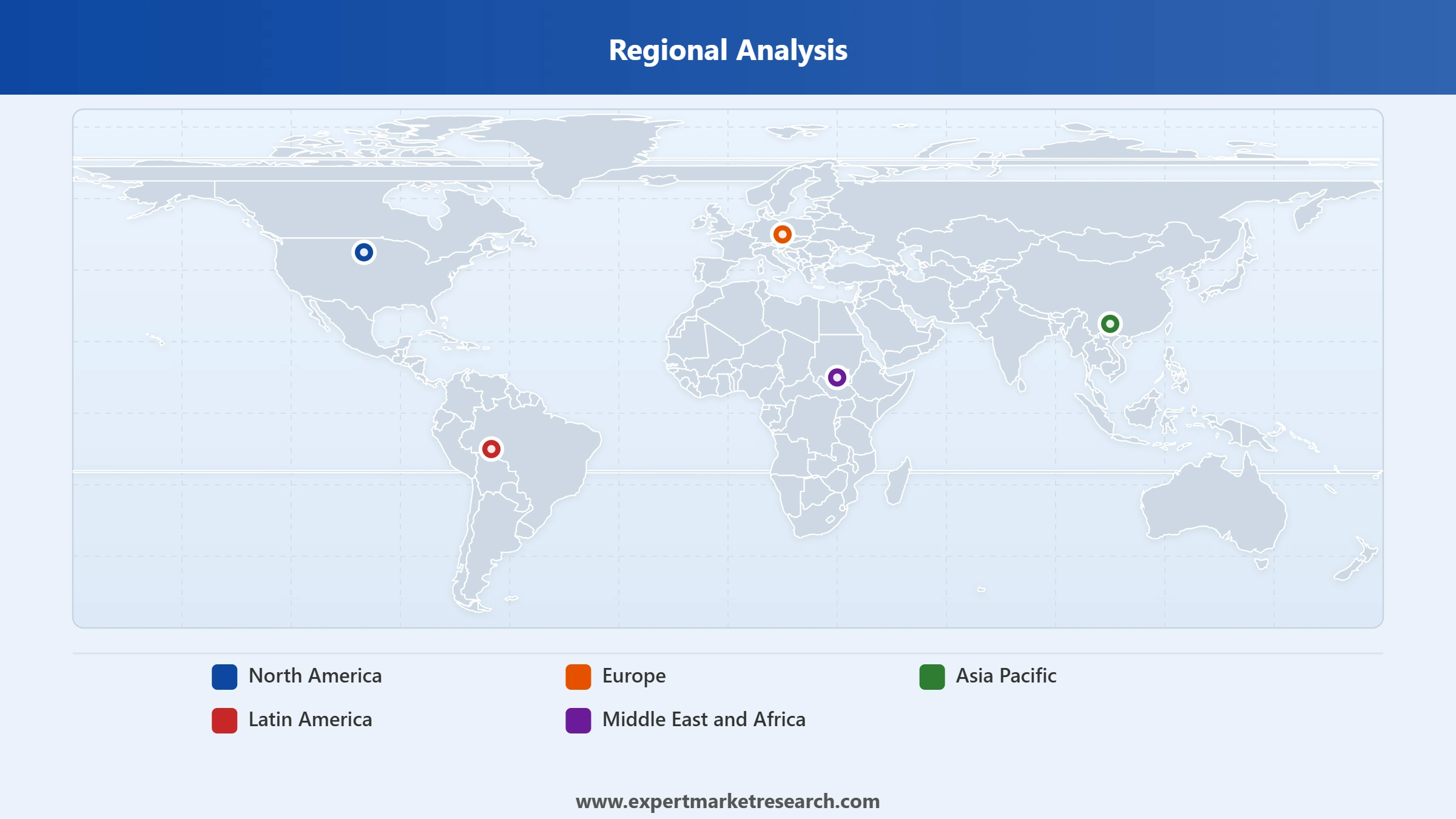
Key Insight: Energy drinks market dynamics in each region are characterized by differing levels of maturity and demand in the sector. North America continues to be dominant through innovation, brand excellence, and retail advancements. Europe emerges to be an important market due to the importance of ingredients, sustainability practices, and regulations geared towards the development of premium beverages. Asia Pacific experiences the fastest growth due to growing urbanization, increasing incomes, and innovation strategies. Latin America benefits from the increasing youth demand and retail advancements, whereas the Middle East and Africa are being identified as developing markets through innovations in retailing and premium beverages.
By product, non-alcoholic energy drinks dominate the market due to broader consumer acceptance
Energy drinks that are non-alcoholic form the majority due to their appeal to different types of customers such as students, office workers, athletes, and fitness fanatics. Energy drinks market players continuously add different varieties of energy drinks to their portfolio that includes functional energy drinks which may be vitamin-rich, sugar-free or performance-driven. Availability in retail stores, convenience stores, gyms, vending machines and online helps boost sales. In July 2026, Wrangler Energy launched a fountain beverage format for foodservice operators, delivering 80 mg caffeine and B vitamins.
Read more about this report - REQUEST FREE SAMPLE COPY IN PDF
Alcoholic energy drinks represent the fastest growing category of energy drinks due to growing demand for premium ready-to-drink beverages among young adults to have a unique experience in social drinking. Beverage companies are producing different varieties of alcoholic energy drinks in order to meet the changing regulatory requirements and attract new consumers. Growth in the energy drinks market is further supported by collaborations with nightlife spots, music festivals, and entertainment brands where manufacturers can distinguish themselves in the premium beverages category.
By type, non-organic energy drinks secure the dominant share of the market through affordability and extensive product availability
Non-organic energy drinks continue contributing to the energy drinks market revenue because of their attractive pricing, customer familiarity, and wide distribution networks. Established beverage producers keep innovating through formulation enhancements and introduction of functional ingredients, keeping prices affordable for mainstream consumers. Innovation in flavor varieties, sugar-free, and performance-based drinks is helping brands sustain customer loyalty through the different distribution channels including convenience retail, supermarkets, and online retail. In July 2025, O'Neill Vintners launched Catalyst, a zero-sugar functional energy drink featuring plant-based caffeine and premium nootropics.
Read more about this report - REQUEST FREE SAMPLE COPY IN PDF
On the other hand, the fastest-growing product category is represented by the organic energy drinks market as customers are becoming more health-conscious and preferring beverages with naturally sourced ingredients. Beverage manufacturers are now producing drinks that have organic caffeine, fruits and herbal extract ingredients, along with plant-based sweeteners to support their premium brands. Companies are putting efforts into sourcing, production, and packaging of their beverages to be sustainable and environmentally friendly for the wellness-seeking consumers.
By consumer, adults dominate the market owing to regular functional beverage consumption across lifestyles
Adults comprise the largest consumer base owing to increased needs of beverages that can enhance productivity, physical fitness, traveling, and activity levels. Beverage manufacturers keep launching functional energy drinks that can cater to office workers, athletes, night shifters, and active leisure consumers. Premium branding, convenient packaging, and diverse flavor portfolio contribute to more repeat purchases through varied sales platforms. Marketing campaigns of manufacturers around wellness and performance help in building a relationship with customers and sustaining brand loyalty. In February 2026, Nestlé launched Vital nutritional drinks supporting healthy aging, delivering science-backed nutrition for energy, strength, sleep, and recovery.
Read more about this report - REQUEST FREE SAMPLE COPY IN PDF
Teenagers are becoming one of the fast-growing consumer bases because of growing involvement in gaming, sports, digital entertainment activities, and an active lifestyle. Companies in the energy drinks market are increasingly launching low-sugar beverages, small portion sizes, and fruity flavors in compliance with the changing marketing guidelines. Digital marketing campaigns, influencer marketing, and sponsorship in esports games help in enhancing the brand presence among this demographic group. Manufacturers are also focusing on transparent ingredient communication to develop trust in parents while keeping the product appeal among young consumers.
By distribution channel, off-trade and direct selling account for the largest share of the market through wider retail accessibility and convenience
The off-trade and direct selling category accounts for a significant share in the energy drinks market because of easy availability of the products via supermarkets, convenience stores, hypermarkets, e-commerce, and the company’s website. Beverage companies use omnichannel approach, subscription programs, and online promotions that help to retain consumers better. Partnerships with retailers and effective inventory management ensure product availability across both urban and rural markets.
Rapid growth in the energy drinks market is observed in on-trade distribution due to the introduction of beverages in restaurants, bars, fitness centers, entertainment centers, and luxury hospitality centers. Companies are offering unique versions of the products along with special packaging meant for on-premise consumption. Collaborations with nightlife operators, sports, and music festivals help the brands to enhance their visibility and create experiences for consumers. In March 2026, FLRT launched a range of energy drinks with zero sugar, natural caffeine, electrolytes, and functional ingredients targeting health-conscious young consumers.
Read more about this report - REQUEST FREE SAMPLE COPY IN PDF
North America clocks in the dominant share of the market through established brands and continuous product innovation
North America holds a dominant position in the energy drinks market owing to high consumer awareness, premium adoption, and the presence of international players in the beverages market. Beverage companies are consistently launching products that come with functional properties such as zero sugar content, natural caffeine, hydration benefits, and cognitive wellness. The region is well supported by advanced retail infrastructure and convenient store networks, along with fitness-oriented consumers. Ongoing investments in marketing and R&D ensure continued dominance of the region over a long period of time. In January 2026, BLU Energy Drink officially launched across the United States, offering functional ingredients, bold flavors, and premium positioning.
Read more about this report - REQUEST FREE SAMPLE COPY IN PDF
The Asia Pacific region is the fastest growing regional energy drinks market, owing to the rapid urbanization, rise in middle class population, and increased engagement with fitness and gaming activities. The global and regional beverage companies are increasing their production capacity within the region and offering flavors that suit regional taste preferences. Growing organized retail and e-commerce channels, along with premiumization trends, offer immense potential to companies looking to expand on a long-term basis.
The global industry is getting increasingly competitive since manufacturers are focusing more on innovations that are functional and premium ingredients. Major energy drinks market players are offering an expanded product line of zero sugar options, botanical caffeine, nootropics, hydration-focused blends, and collaborations. The use of artificial intelligence in gaining consumer insights, using sustainable aluminum bottles, and building production centers across different regions enhance efficiency as well as increase the company’s presence in the market.
Collaborations with esport teams, fitness apps, and sports events keep creating new opportunities for interacting with consumers. Additionally, energy drink companies are exploring the area of personalized nutrition, clean label energy drinks, and ready-to-drink formulas aimed at attracting premium consumers. Emerging markets, direct-to-consumer digital sales channels, and functional energy drinks present many growth opportunities for manufacturers.
Founded in 1984 and having its headquarters at Fuschl am See, Austria, Red Bull GmbH continues to be one of the major players owing to its innovative range of products and effective branding strategy. The company enhances its market position via investment in sugar-free formulations, seasonal varieties, sustainable packaging, and collaboration in Formula One, extreme sports, aviation, and esports. In turn, it generates effective consumer involvement and encourages premium product usage around the world.
Founded in 1935 and based in Corona, California, United States, Monster Beverage Corporation satisfies the needs of diverse target audiences with its wide selection of performance beverages, sugar-free versions, coffee-energy blends, and hydration drinks. The firm emphasizes its efforts on increasing its international presence, developing functional ingredients, promoting digital marketing campaigns, and collaboration in motorsports, gaming, and music sectors.
Established in 1985, having its headquarters in Fort Lauderdale, Florida, United States, National Beverage Corp. focuses on healthier beverage alternatives and product diversification. It utilizes innovations in terms of flavored and functional drinks, developing partnerships with retailers, and promoting premium products. Investments in high-quality products, production, and consumers' preferences contribute to the company's competitive position in the dynamic beverage market.
Established in 1892, having its headquarters in Atlanta, Georgia, United States, The Coca-Cola Company targets the energy drinks market through beverage innovation and partnerships. The range of the company comprises energy-oriented beverages that are characterized by global distribution channels, digital marketing, and sustainability activities. The company keeps investing in zero-sugar, functional, and local beverages.
Other key players in the market include PepsiCo Inc., Celsius Holdings, Inc., Energy Beverages LLC, Reign Beverage Company LLC, HELL ENERGY Magyarország Kft., and Arizona Beverage Co., among others.
*Please note that this is only a partial list; the complete list of key players is available in the full report. Additionally, the list of key players can be customized to better suit your needs.*
Unlock the latest insights with our energy drinks market trends 2026 report. Discover regional growth patterns, consumer preferences, and key industry players. Stay ahead of competition with trusted data and expert analysis. Download your free sample report today and drive informed decisions in the market.


Upto 15% Off
USD
$2499 $2249
$3999 $3599
$4999 $4249
$5999 $5099


*While we strive to always give you current and accurate information, the numbers depicted on the website are indicative and may differ from the actual numbers in the main report. At Expert Market Research, we aim to bring you the latest insights and trends in the market. Using our analyses and forecasts, stakeholders can understand the market dynamics, navigate challenges, and capitalize on opportunities to make data-driven strategic decisions.*
In 2025, the market reached an approximate value of USD 74.85 Billion.
The market is projected to grow at a CAGR of 7.10% between 2026 and 2035.
The market is estimated to witness a healthy growth in the forecast period of 2026-2035 to reach USD 148.62 Billion by 2035.
Stakeholders are investing in functional formulations, expanding digital sales channels, strengthening sustainable packaging initiatives, building regional manufacturing capabilities, leveraging AI-driven consumer insights, and forming strategic wellness and sports partnerships.
Key trends aiding market expansion include new product launches, emergence of plant-based energy drinks, and rising investments by manufacturers in research and development activities and product-marketing.
Major regions in the market are North America, Latin America, the Middle East and Africa, Europe, and the Asia Pacific.
Non-organic energy drinks, organic energy drinks, and natural energy drinks are the significant types of energy drinks available in the market.
Teenagers, adults, and geriatric population are studied in the market report.
The main distribution channels include on-trade distribution and off-trade and direct selling distribution.
The key players in the market include Red Bull GmbH, Monster Beverage Corporation, National Beverage Corp., The Coca-Cola Company, PepsiCo Inc., Celsius Holdings, Inc., Energy Beverages LLC, Reign Beverage Company LLC, HELL ENERGY Magyarország Kft., and Arizona Beverage Co., among others.
Companies face regulatory scrutiny on caffeine and sugar content, rising ingredient costs, intense premium competition, changing consumer preferences, sustainability expectations, and maintaining product differentiation across increasingly crowded beverage categories.
Explore our key highlights of the report and gain a concise overview of key findings, trends, and actionable insights that will empower your strategic decisions.
| REPORT FEATURES | DETAILS |
| Base Year | 2025 |
| Historical Period | 2019-2025 |
| Forecast Period | 2026-2035 |
| Scope of the Report |
Historical and Forecast Trends, Industry Drivers and Constraints, Historical and Forecast Market Analysis by Segment:
|
| Breakup by Product |
|
| Breakup by Type |
|
| Breakup by Consumer |
|
| Breakup by Distribution Channel |
|
| Breakup by Region |
|
| Market Dynamics |
|
| Competitive Landscape |
|
| Companies Covered |
|
| Report Price and Purchase Option | Explore our purchase options that are best suited to your resources and industry needs. |
| Delivery Format | Delivered as an attached PDF and Excel through email, with an option of receiving an editable PPT, according to the purchase option. |
Datasheet
One User
USD 2,499
USD 2,249
tax inclusive*
Single User License
One User
USD 3,999
USD 3,599
tax inclusive*
Five User License
Five User
USD 4,999
USD 4,249
tax inclusive*
Corporate License
Unlimited Users
USD 5,999
USD 5,099
tax inclusive*
*Please note that the prices mentioned below are starting prices for each bundle type. Kindly contact our team for further details.*
Flash Bundle
Small Business Bundle
Growth Bundle
Enterprise Bundle
*Please note that the prices mentioned below are starting prices for each bundle type. Kindly contact our team for further details.*
Flash Bundle
Number of Reports: 3
20%
tax inclusive*
Small Business Bundle
Number of Reports: 5
25%
tax inclusive*
Growth Bundle
Number of Reports: 8
30%
tax inclusive*
Enterprise Bundle
Number of Reports: 10
35%
tax inclusive*
How To Order

Select License Type
Choose the right license for your needs and access rights.

Click on ‘Buy Now’
Add the report to your cart with one click and proceed to register.

Select Mode of Payment
Choose a payment option for a secure checkout. You will be redirected accordingly.
Strategic Solutions for Informed Decision-Making
Gain insights to stay ahead and seize opportunities.

Get insights & trends for a competitive edge.

Track prices with detailed trend reports.

Analyse trade data for supply chain insights.

Leverage cost reports for smart savings

Enhance supply chain with partnerships.

Connect For More Information
Our expert team of analysts will offer full support and resolve any queries regarding the report, before and after the purchase.
Our expert team of analysts will offer full support and resolve any queries regarding the report, before and after the purchase.
We employ meticulous research methods, blending advanced analytics and expert insights to deliver accurate, actionable industry intelligence, staying ahead of competitors.
Our skilled analysts offer unparalleled competitive advantage with detailed insights on current and emerging markets, ensuring your strategic edge.
We offer an in-depth yet simplified presentation of industry insights and analysis to meet your specific requirements effectively.




