

Consumer Insights
Uncover trends and behaviors shaping consumer choices today
Procurement Insights
Optimize your sourcing strategy with key market data
Industry Stats
Stay ahead with the latest trends and market analysis.
The global eye tracking technology market attained a value of USD 1.49 Billion in 2025 and is projected to expand at a CAGR of 28.40% through 2035. The market is further expected to achieve USD 18.15 Billion by 2035. The increasing integration of eye tracking solutions into automotive safety systems and XR technologies is driving the adoption of these solutions by enterprises. This is particularly due to the growing need for real-time behavioral analytics and monitoring solutions for regulated industries.
The transformation of the eye tracking technology market is being driven by the integration of neuroscience, computer vision, and artificial intelligence-based analytics. The application of eye tracking is being increasingly witnessed in driver monitoring systems for the automotive industry, assistive communication devices, and retail analytics solutions. The key players in the global market are focusing on enhancing the accuracy of calibration and reducing latency while tracking multiple users in a dynamic environment. This is allowing them to command premium prices for their solutions in industries such as healthcare diagnostics and aviation safety systems. For example, Seeing Machines Ltd. expanded its OEM relationships with European automotive manufacturers in November 2025 to accelerate the development and delivery of driver monitoring solutions that align with EU General Safety Regulation requirements.
The global eye tracking technology market is increasingly influenced by product innovation driven by precision and strategic partnerships in the healthcare, automotive, and immersive computing industries. In May 2025, Prophesee and Tobii partnered to develop ultra-fast, low-power event-based eye tracking for AR/VR and smart eyewear, combining advanced sensors with gaze platforms. The primary driving factor of this demand is attributed to enterprise training simulations and defense-based virtual environments. This is a new trend in which the integration of hardware and software is not only a requirement but also a key differentiator for companies competing in the global market.
The demand in the eye tracking technology market is also being fueled by the increasing investment in healthcare diagnostics and neuromarketing analytics. This technology is being adopted by hospitals for the assessment of cognitive abilities and by companies for improving the effectiveness of advertisements. Strategic developments are also changing the commercialization routes of eye tracking solutions.
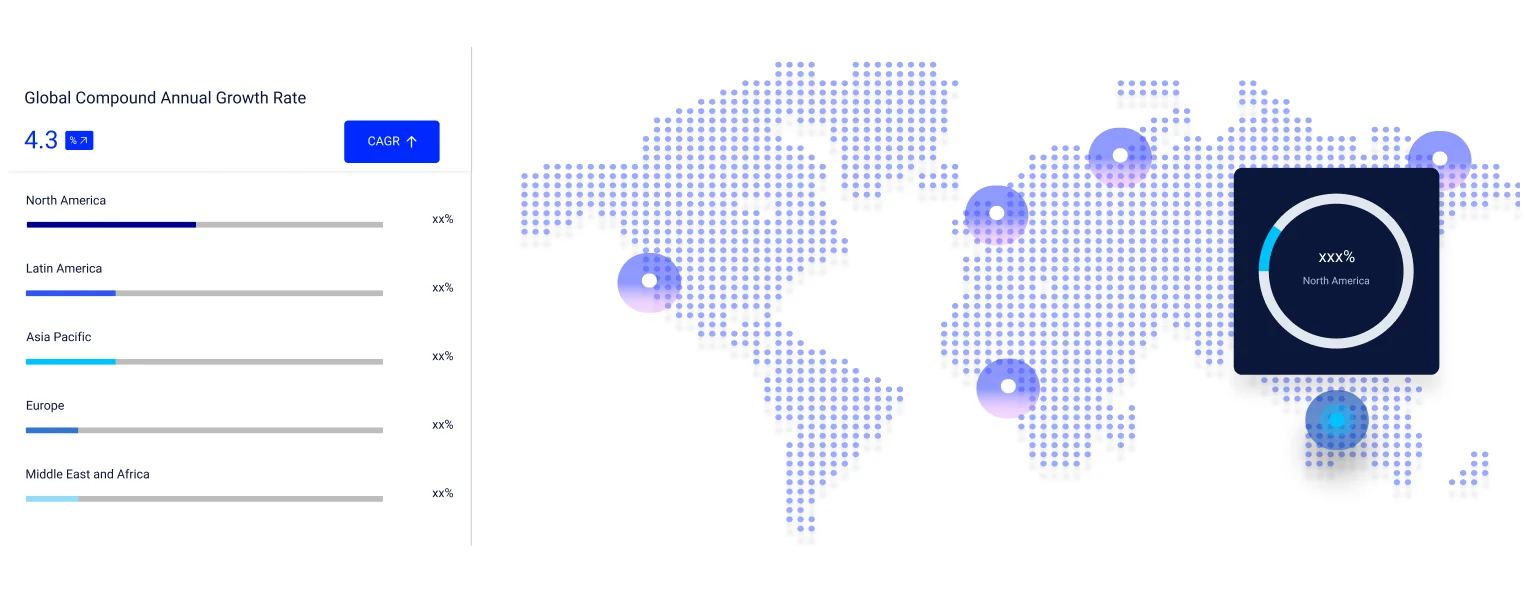
Compound Annual Growth Rate
28.4%
Value in USD Billion
2026-2035
Read more about this report - REQUEST FREE SAMPLE COPY IN PDF
Ganzin released a next-gen ultra-low power eye tracking chip for AR/VR headsets and smart glasses. The company is optimizing energy efficiency while maintaining high-precision tracking performance. Companies can leverage this eye tracking technology market opportunity to design energy-efficient chips for wearable devices and form partnerships for consumer electronics.
OpenBCI and Pupil Labs launched a wireless all-in-one headset for brain, body, and eye tracking. The device provides an opportunity for synchronized brain, body, and eye tracking data acquisition. Such a development is expanding the application of human behavior analysis, especially for neuroscience and XR training scenarios. Companies can leverage this opportunity in the eye tracking technology market to develop multimodal analytics solutions for providing in-depth analysis of human behavior.
VPS introduced AI-based eye-tracking glasses, which can be used for spatial interaction in real-time.. TheryThey have improved visual positioning systems for AR and industrial workflow optimization. The eye-tracking glasses can be used to map the environment and track the attention of users simultaneously. Other organizations in the eye tracking technology market can invest in AI-based spatial computing solutions to access the market potential of industrial AR and smart navigation.
EyeSee launched an AI-based predictive eye tracking platform, which can help brands predict the attention of consumers and make marketing strategies more accurate. This AI-based eye tracking platform can improve decision-making in the field of advertising. Organizations can develop predictive analytics-based solutions to improve data-driven marketing solutions and decision support for ROI-based client services.
Eye tracking technology companies are competing to partner with other stakeholders in the VR/AR ecosystem to offer AI-based eye tracking and gaze interaction technologies. For instance, companies like Tobii and Pupil Labs are integrating eye tracking and gaze prediction into VR headsets to offer foveated rendering, which can help companies reduce the load on their computers. This eye tracking technology market trend can help companies in different industries, like aviation and defense, which require simulation-based training. For example, in February 2025, DPVR launched P2 Vision VR headset with advanced eye tracking, delivering high precision, AI optimization, and immersive performance for enterprise and professional XR applications.
Eye tracking technologies are becoming essential in the automotive industry, especially with governments enforcing regulations requiring driver monitoring systems. For instance, the European Union has enforced a General Safety Regulation, requiring advanced driver attention warning systems to be installed in all new vehicles, reshaping the entire eye tracking technology market dynamics. Companies like Seeing Machines and Smart Eye AB are taking advantage of this trend and entering into long-term agreements with automotive companies. These companies have developed eye tracking technologies based on infrared, which can function in low-light environments and in the presence of motion. For example, in March 2026, Mobileye secured a major United States automaker deal to integrate AI-powered driver monitoring systems into millions of vehicles, advancing in-cabin sensing and safety platform consolidation.
The technology is gaining significant attention in the medical diagnostics space, especially in the fields of neurology and cognitive health assessment. Organizations such as EyeTech Digital Systems are creating compliant technologies to detect early symptoms of various diseases such as autism, Parkinson’s, and brain injuries. Various research hospitals in the United States are incorporating eye tracking technologies in clinical trials to assess cognitive response patterns with greater accuracy. The technologies are helping to create non-invasive data-based diagnostics, which is gaining tremendous attention as a potential solution for hospitals looking for efficient patient monitoring technologies. Aligning with this trend in the eye tracking technology market, in January 2025, NeuroClues secured CE certification for its AI-powered eye tracking medical device, enabling clinical deployment for early neurological diagnosis using precise eye movement biomarkers.
Eye tracking is gaining significant attention in the retail and advertising space as various organizations are leveraging the technologies to create effective strategies for customer engagement. Organizations such as iMotions are creating comprehensive platforms that combine eye tracking with biometric sensors to create detailed customer behavior patterns, boosting the growth of the eye tracking technology market. For instance, in June 2025, Integral Ad Science partnered with Snap and Lumen to launch AI-powered social attention measurement, combining eye-tracking data with media analytics for deeper advertising engagement insights. Further, various government initiatives promoting digital commerce in the Asia Pacific region are creating an ecosystem for the adoption of advanced analytics tools.
The eye tracking technology market is witnessing a major shift in favor of software-based eye tracking technology that utilizes common webcams. Companies such as Gazepoint and RealEye are developing cloud-based solutions that allow for remote user testing. This has opened up new avenues for market access, especially for SMEs and academic institutions. Companies are also trying to increase the accuracy of eye tracking technology despite hardware constraints. In June 2024, Tobii launched Nexus, a software-only platform enabling webcam-based eye tracking integration across devices, reducing hardware dependency and lowering entry barriers for developers.
Read more about this report - REQUEST FREE SAMPLE COPY IN PDF
The EMR’s report titled “Global Eye Tracking Technology Market Report and Forecast 2026-2035” offers a detailed analysis of the market based on the following segments:
Market Breakup by Component
Key Insight: The eye tracking technology market observes a gradual shift from hardware-based implementations towards software-based implementations. While hardware continues to be an essential element for precision-based applications where accuracy, latency, and environmental robustness are important, software is also gaining traction as businesses seek scalable and analytics-based solutions that go beyond mere data capture towards actionable intelligence. In May 2024, Apple introduced AI-powered eye tracking for iPhones and iPads, enabling hands-free navigation using front camera without additional hardware, enhancing accessibility for users with physical disabilities. The others segment, which includes support for services, is also gaining traction as businesses seek end-to-end implementation support from vendors.
Market Breakup by Type
Key Insight: The type-based segmentation as considered in the eye tracking technology market report emphasizes the clear difference between scalability and precision. Optical tracking is the most dominant technology due to its balance of precision, comfort, and versatility for use in different industries. Although eye attached tracking is more niche, it is becoming more popular in environments that require extreme precision and immersion. Electrooculography is applicable in environments that require the measurement of electrical signals.
Market Breakup by Location
Key Insight: The remote tracking mode continues to be dominant across the eye tracking technology market scope due to the ease of implementation in controlled and semi-controlled environments. On the other hand, mobile tracking is gaining ground due to the need for industries to have on-the-go data capture capabilities. In March 2025, Google announced plans of acquisition of AdHawk Microsystems to integrate low-power eye tracking into smart glasses and XR devices, strengthening next-generation wearable computing capabilities. The choice of remote or mobile tracking often depends on the specific needs of the application. There has been a trend among vendors to introduce hybrid solutions that can support both remote and mobile tracking.
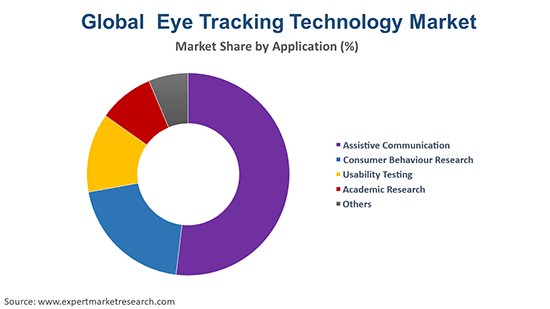
Market Breakup by Application
Key Insight: Application segmentation reflects the wide applicability of eye tracking in both commercial and social spheres. Consumer behavior research accounts for the dominant share in the eye tracking technology market due to its direct influence on revenue generation and optimization of marketing strategies. Assistive communication is also growing rapidly due to the increasing inclusivity of technology. Usability studies and research have remained the foundation of the industry due to their significance in product development and research.
Market Breakup by End Use
Key Insight: The healthcare segment is positioned at the forefront of the eye tracking technology market, given its critical nature in diagnostics and patient care. The automotive segment is witnessing tremendous growth, driven by regulatory needs and safety issues. In October 2025, Tobii and STMicroelectronics began mass production of a single-camera interior sensing system combining RGB and infrared imaging for driver and occupant monitoring in automotive applications. Retail and IT segments are using eye tracking for analytics and improving user experiences, while military and aerospace are using it for training and situational awareness. Entertainment is another segment where eye tracking is becoming significant, with the advent of immersive technologies.
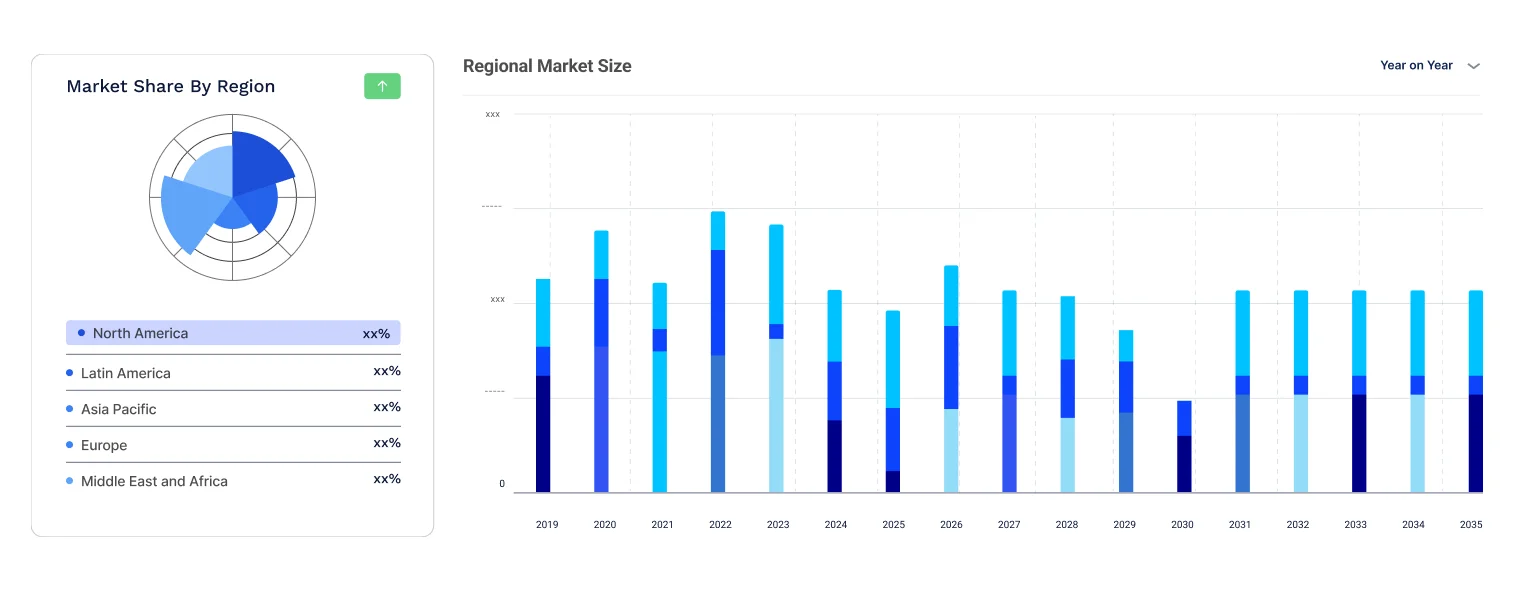
Market Breakup by Region
Key Insight: North America leads the eye tracking technology market growth, driven by a strong innovation infrastructure and early technology adoption in various sectors. Europe ranks second, driven by regulatory-driven demand, mainly in automotive safety. Asia Pacific is a fast-growing regional hub that is driven by strong manufacturing infrastructure and increased investment in emerging technologies. Latin America and the Middle East and Africa markets are gradually embracing eye tracking solutions, aided by digital transformation strategies. Vendors are localizing their strategies to accommodate regional factors, thus expanding their footprint and leveraging growth prospects.
Hardware components dominate the market due to precision requirements in critical applications
Hardware remains a key segment in the eye tracking technology market, especially with the increased demand for higher accuracy and reliability in real-time environments by businesses. Companies are investing in advanced infrared sensors, high-speed cameras, and embedded processing units, which support low latency in gaze detection technologies. Car manufacturers and healthcare equipment makers are using proprietary hardware modules in their systems, which are directly integrated with their offerings, thereby creating higher switching costs for their clients. Companies like Tobii and Smart Eye are focusing on miniaturization while ensuring calibration stability, which enables their technologies to be deployed in compact VR/AR headsets and driver cabins.
The software segment is witnessing significant growth in the eye tracking technology market, with companies focusing on platform-based business models and software-based offerings to generate recurring revenue. Companies are using artificial intelligence and machine learning algorithms to interpret gaze patterns, which helps in predictive analysis and behavioral analysis. This trend is evident in retail analytics and usability studies, where software helps in interpreting raw data on eye movements and generates actionable insights for businesses. In November 2024, Smart Eye launched Pro 13 with automatic profile selection and enhanced user recognition, improving usability, workflow efficiency, and data accuracy across research and simulation environments.
By type, optical tracking accounts for the largest share of the market due to high accuracy and non-invasive capabilities
Optical tracking represents the largest segment within the eye tracking technology market scope as it provides high accuracy without the need to come into contact with the user. It utilizes infrared technology and cameras to track the movement of the eyes and provides detailed gaze mapping. Many companies are working to improve the accuracy of this technology to work well in different lighting conditions and head movements. In January 2026, Pupil Labs partnered with NIL Technology to integrate ultra-compact metaEye cameras with AI-based gaze tracking, enabling lightweight, low-power, high-speed wearable eye tracking systems.
Eye attached tracking is growing rapidly because wearable and immersive technologies are being used in many industries. It is used to attach devices to the eyes. It provides high accuracy with minimal interference. Many companies making AR/VR headsets are using this technology to improve the experience for the users. It is also being used for medical purposes, boosting further eye tracking technology market penetration.
By location type, remote tracking registers a substantial share of the market due to non-intrusive and scalable deployment advantages
Remote eye tracking systems dominate the eye tracking technology market by a high margin, as they allow for non-intrusive tracking without the need to physically contact the subject. They are used in many applications, including retail analytics, usability studies, and academic research. Many companies are working to improve the resolution of the cameras and the efficiency of the algorithms to ensure high accuracy even in uncontrolled environments. Businesses prefer remote eye tracking because it is easy to set up and can be easily integrated with existing digital infrastructure. For instance, in January 2026, scientists demonstrated a low-cost, self-powered eye-tracking technology that is powered by the friction of blinking eyes.
Mobile eye tracking is also contributing to the eye tracking technology market revenue as many industries are adopting this technology to collect data in real-time. They are usually integrated into wearable technology such as smart glasses and VR headsets. They can track the subject in uncontrolled environments. Many companies are working to improve the wearability of the technology by making it lightweight and the batteries long-lasting. Mobile eye tracking is being used in many applications, including healthcare, sports, and field research. They can be used in environments where it is not possible to set up stationary equipment. Many companies are using wireless connectivity to ensure data is processed on the device.
By application, consumer behavior research accounts for the largest share of the market due to demand for actionable attention analytics insights
Research in consumer behavior is the largest application segment, with brands increasingly using eye tracking technologies to understand the behavior and decision-making processes of consumers. Organizations are using this technology to understand the gaze pattern and behavior of consumers. For example, in January 2026, TDK launched AIsight and ultra-low power DSP platform integrating AI-based eye-intent tracking, enabling efficient smart glasses with contextual awareness and extended battery performance.
Assistive communication is also seen as a growing trend in the eye tracking technology market, particularly because of developments in accessibility technologies. Eye tracking systems have allowed people with mobility disabilities to interact with electronic devices using their eyes. Technology developers are making interfaces more user-friendly and refining calibration methods to improve user experience. Healthcare facilities and rehabilitation centers are also using these technologies to help patients with disabilities such as ALS and spinal cord injuries.
By end use, healthcare dominates the market due to rising adoption in diagnostics and patient monitoring
Healthcare continues to register a substantial share of the eye tracking technology market revenue as this technology is increasingly being used for diagnostic purposes, patient monitoring, and rehabilitation. Medical institutions are adopting eye tracking technology to evaluate cognitive functions and diagnose neurological disorders. Companies are focusing on developing technology that is validated to meet regulatory requirements, which is building trust among medical institutions. Eye tracking technology is also being used to improve the quality of surgery training and therapy. It is being integrated into the electronic medical records of patients. In December 2025, Himax and Liqxtal introduced Pro-Eye monitor with WiseEye AI tracking, enabling real-time gaze analysis, personalized eye-use reports, and adaptive alerts to reduce visual strain.
The automotive industry is growing its share in the eye tracking technology market as this technology is being increasingly used to develop driver monitoring systems. Governments are enforcing regulations to ensure the development of technology to monitor driver fatigue and distractions. Companies are focusing on developing advanced technology to function effectively even during different lighting conditions and driver behavior. Eye tracking technology is being combined with autonomous vehicles to ensure safety and reliability. Car manufacturers are entering into long-term agreements with eye tracking technology companies.
Read more about this report - REQUEST FREE SAMPLE COPY IN PDF
North America secures the leading market share due to strong technology ecosystem and early adoption trends
Dominance of the North America eye tracking technology market is backed by a strong technology platform and early adoption rates in various industries. The region is home to several technology companies and research institutions working on the application of AI and computer vision. Enterprises are adopting the latest technology with ease, especially in the healthcare, automotive, and defense industries. Technology companies are also benefiting from the well-developed digital landscape, which enables the smooth integration of hardware and software.
Asia Pacific is growing at the fastest pace in the global eye tracking technology market. It is witnessing rapid growth in the consumer electronics and automotive manufacturing industries. Countries such as China, Japan, and South Korea are investing considerably in the development of AR/VR technology and smart mobility. Manufacturers in the region are using eye tracking technology to improve the functionality and competitiveness of their products. Government initiatives to support the digital transformation and innovation of businesses are also contributing to the growth. For example, in December 2025, Remidio introduced PRISTINE OBM 12 integrating axial length, biometry, and autorefraction with 3D eye tracking, enabling precise, automated pediatric myopia assessment and streamlined clinical workflows.
The competitive scenario of the global industry is witnessing a paradigm shift toward a platform-based approach, where eye tracking technology companies are not only looking to move beyond standalone solutions to integrated platforms that include software, analytics, and hardware. Players in the industry are enhancing their solutions with AI-based gaze prediction, real-time behavioral analytics, and cross-platform support to gain traction in the enterprise segment. Partnerships with automotive, XR, and healthcare businesses also create long-term contract opportunities.
Another opportunity being pursued by leading eye tracking technology market players is to enhance software-based recurring revenue streams, particularly in retail analytics and remote usability testing. Businesses are also looking to tap into regulatory-driven segments such as automotive safety and healthcare diagnostics to create a recurring revenue stream. Localization strategies and cloud-based solutions also create opportunities for businesses to scale up.
Tobii AB is a Sweden-based company established in 2001 with the aim of providing innovative eye tracking solutions to the XR, healthcare, and automotive industries. It provides integrated hardware and software solutions with high-end gaze prediction technology. It is also working with global technology companies to integrate its technology into the next generation of devices.
ERGONEERS GmbH is a German-based company established in 2005 with the aim of providing human behavior analytics solutions to its clients. It provides innovative solutions using eye tracking technology combined with other data sources. It provides its flagship product with the ability to analyze gaze, motion, and physiological data at the same time. It is highly focused on the automotive and UX research markets.
EyeTech Digital Systems is a company that specializes in assistive communication and healthcare-based eye tracking solutions. The company was founded in 1996 and is based in Mesa, Arizona, United States. Being a key player in the eye tracking technology market, the company provides high-precision systems for accessibility purposes. The systems are intended for use by disabled individuals to interact with digital devices. The company provides user-friendly interfaces and high-precision systems for use in the medical field.
Mirametrix Inc. is a company that provides software-based eye tracking solutions. The company specializes in delivering solutions for attention analytics and user engagement measurement. The company is based in Montreal, Canada, and was founded in 2011. The company integrates its solutions into laptops and digital devices. The solutions are intended for presence detection and adaptive interfaces. The company remains committed to delivering scalable solutions for use in the consumer and enterprise fields.
*Please note that this is only a partial list; the complete list of key players is available in the full report. Additionally, the list of key players can be customized to better suit your needs.*
Other key players in the market include iMotions A/S, and Smart Eye AB, among others.
Unlock the latest insights with our eye tracking technology market trends 2026 report. Discover regional growth patterns, consumer preferences, and key industry players. Stay ahead of competition with trusted data and expert analysis. Download your free sample report today and drive informed decisions in the market.


Upto 15% Off
USD
$2499 $2249
$3999 $3599
$4999 $4249
$5999 $5099


*While we strive to always give you current and accurate information, the numbers depicted on the website are indicative and may differ from the actual numbers in the main report. At Expert Market Research, we aim to bring you the latest insights and trends in the market. Using our analyses and forecasts, stakeholders can understand the market dynamics, navigate challenges, and capitalize on opportunities to make data-driven strategic decisions.*
The market is projected to grow at a CAGR of 28.40% between 2026 and 2035.
The market is estimated to witness a healthy growth in the forecast period of 2026-2035 to reach about USD 5.60 Billion by 2035.
Investing in AI-driven analytics, expanding software ecosystems, forming OEM partnerships, enhancing remote tracking capabilities, and focusing on regulatory compliance are enabling stakeholders to capture scalable and long-term growth opportunities.
The key trends guiding the market development are the growing adoption of smart sensors, the rising demand for contactless biometrics, the increasing use of real-time data to analyse consumer behaviour, and the surging utilisation of smart sensors.
The major regions in the market are North America, Latin America, the Middle East and Africa, Europe, and the Asia Pacific.
The major components of eye tracking technology include hardware and software, among others.
The significant eye tracking technology types available in the market are eye attached tracking, optical tracking, and electrooculography.
Remote and mobile are the major location types of the product in the market.
Assistive communication, consumer behaviour research, usability testing, and academic research, among others, are the significant applications of eye tracking technology.
The major end uses of the product include healthcare, retail, automotive, military and aerospace, IT and telecommunication, and entertainment, among others.
The key players in the market include Tobii AB, ERGONEERS GmbH, EyeTech Digital Systems, Inc., Mirametrix Inc., iMotions A/S, and Smart Eye AB, among others.
In 2025, the market reached an approximate value of USD 1.49 Billion.
High implementation costs, calibration complexity, and accuracy limitations in uncontrolled environments remain key challenges, while privacy concerns around behavioral data collection are also slowing adoption in sensitive sectors globally.
Explore our key highlights of the report and gain a concise overview of key findings, trends, and actionable insights that will empower your strategic decisions.
| REPORT FEATURES | DETAILS |
| Base Year | 2025 |
| Historical Period | 2019-2025 |
| Forecast Period | 2026-2035 |
| Scope of the Report |
Historical and Forecast Trends, Industry Drivers and Constraints, Historical and Forecast Market Analysis by Segment:
|
| Breakup by Component |
|
| Breakup by Type |
|
| Breakup by Location Type |
|
| Breakup by Application |
|
| Breakup by End Use |
|
| Breakup by Region |
|
| Market Dynamics |
|
| Competitive Landscape |
|
| Companies Covered |
|
Datasheet
One User
USD 2,499
USD 2,249
tax inclusive*
Single User License
One User
USD 3,999
USD 3,599
tax inclusive*
Five User License
Five User
USD 4,999
USD 4,249
tax inclusive*
Corporate License
Unlimited Users
USD 5,999
USD 5,099
tax inclusive*
*Please note that the prices mentioned below are starting prices for each bundle type. Kindly contact our team for further details.*
Flash Bundle
Small Business Bundle
Growth Bundle
Enterprise Bundle
*Please note that the prices mentioned below are starting prices for each bundle type. Kindly contact our team for further details.*
Flash Bundle
Number of Reports: 3
20%
tax inclusive*
Small Business Bundle
Number of Reports: 5
25%
tax inclusive*
Growth Bundle
Number of Reports: 8
30%
tax inclusive*
Enterprise Bundle
Number of Reports: 10
35%
tax inclusive*
How To Order

Select License Type
Choose the right license for your needs and access rights.

Click on ‘Buy Now’
Add the report to your cart with one click and proceed to register.

Select Mode of Payment
Choose a payment option for a secure checkout. You will be redirected accordingly.
Strategic Solutions for Informed Decision-Making
Gain insights to stay ahead and seize opportunities.

Get insights & trends for a competitive edge.

Track prices with detailed trend reports.

Analyse trade data for supply chain insights.

Leverage cost reports for smart savings

Enhance supply chain with partnerships.

Connect For More Information
Our expert team of analysts will offer full support and resolve any queries regarding the report, before and after the purchase.
Our expert team of analysts will offer full support and resolve any queries regarding the report, before and after the purchase.
We employ meticulous research methods, blending advanced analytics and expert insights to deliver accurate, actionable industry intelligence, staying ahead of competitors.
Our skilled analysts offer unparalleled competitive advantage with detailed insights on current and emerging markets, ensuring your strategic edge.
We offer an in-depth yet simplified presentation of industry insights and analysis to meet your specific requirements effectively.




