

Consumer Insights
Uncover trends and behaviors shaping consumer choices today
Procurement Insights
Optimize your sourcing strategy with key market data
Industry Stats
Stay ahead with the latest trends and market analysis.
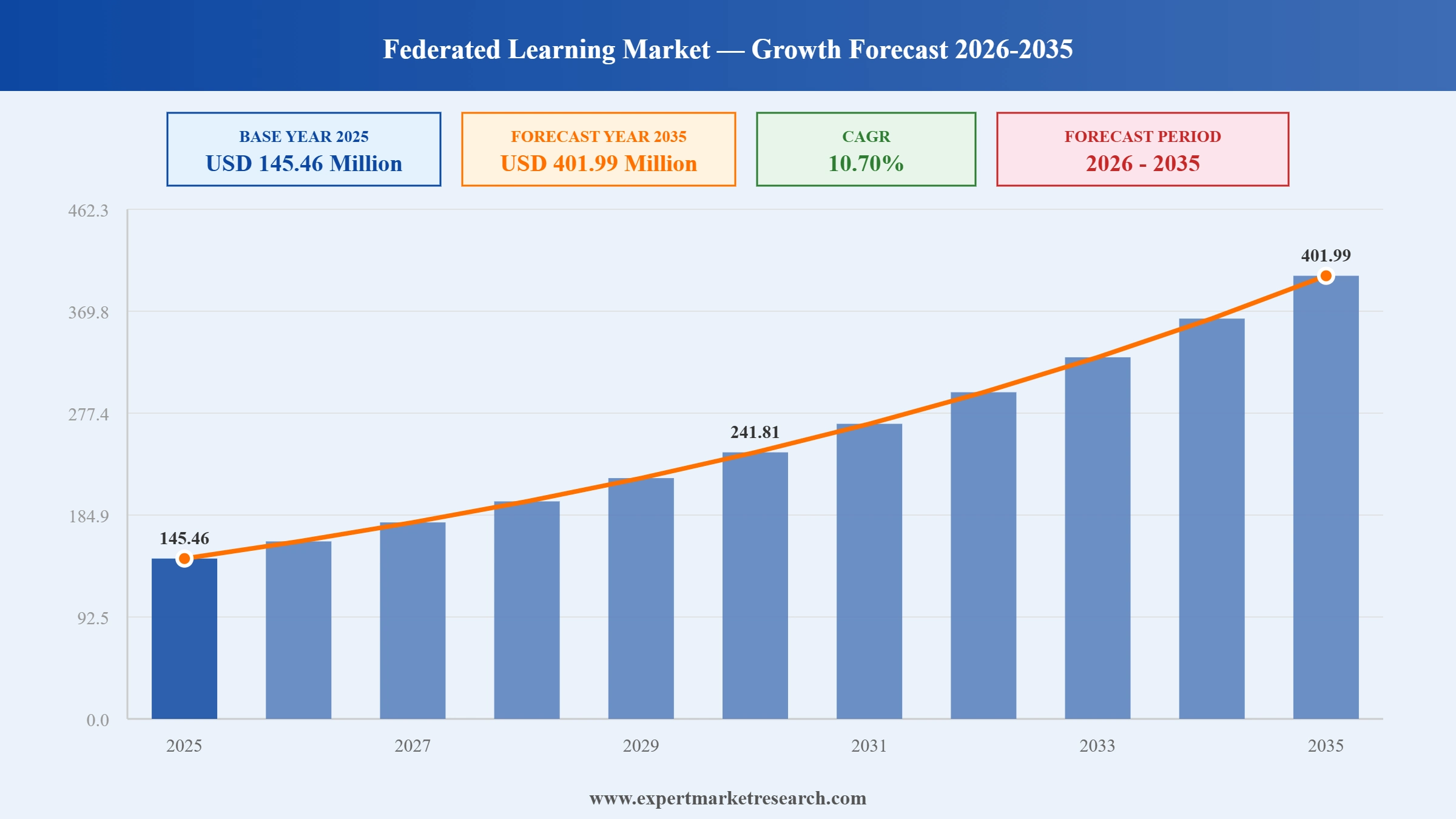
The global federated learning market attained a value of USD 145.46 Million in 2025 and is projected to expand at a CAGR of 10.70% through 2035. The market is further expected to reach USD 401.99 Million by 2035. Rising data privacy regulation, growing adoption of AI across regulated industries, and increasing demand for collaborative model training are helping vendors differentiate their platforms and broaden deployment across cloud and on-premises environments. Growing emphasis on drug discovery, fraud detection, and decentralised edge intelligence is further encouraging established players to expand their solution portfolios across every major industry vertical.
Federated learning, also known as collaborative learning, refers to a distributed machine learning approach that trains models across decentralised data sources without requiring the underlying data to be centralised, reducing the risk of data breaches. Cloud based deployment holds a growing share of the market owing to the flexibility and scalability it offers organisations managing distributed data environments. Rising adoption of artificial intelligence, machine learning, and the Internet of Things across manufacturing, healthcare, and financial services continues to widen the buyer base for the global federated learning market.
Demand is concentrating around vendors able to combine privacy preserving model training with regulatory compliant deployment across sensitive industries. In December 2025, Sandia, Los Alamos, and Lawrence Livermore national laboratories completed a year-long pilot building a federated AI model across classified data, producing a working prototype without centralising sensitive information across the three sites. This collaboration driven positioning is converting rising demand for privacy-preserving AI directly into expanded institutional adoption across the global federated learning market.
Vendors across the federated learning market are converging on a common development direction, widening from standalone model training tools toward comprehensive, industry specific platforms. Providers are increasingly forming partnerships with sector specialists to broaden their vertical reach rather than building every capability internally, while established players continue investing in agentic AI features that automate data governance and cohort discovery across federated networks. This consolidated approach is reshaping vendor selection criteria across enterprise buyers, favouring platforms that demonstrate proven deployment within regulated industries over generic, horizontal offerings.
Read more about this report - REQUEST FREE SAMPLE COPY IN PDF
Lifebit launched its Agentic Federated Platform, using AI agents to automatically manage data governance and cohort creation across its federated biomedical research network. The platform reduces manual data harmonisation work that has historically slowed multi-institution research collaborations. Vendors across the federated learning market can use agentic automation to cut the operational overhead of coordinating federated data access across dozens of participating institutions.
Swift worked with 13 major financial institutions to test privacy-enhancing technologies combined with federated learning for cross-border fraud detection, training a model on synthetic data from 10 million transactions. The collaborative model proved twice as effective at identifying known fraud as one trained on a single institution's dataset. Financial institutions across the federated learning market can use federated fraud models to detect cross-border crime patterns without exposing proprietary customer data.
WPP acquired InfoSum, a company specialising in federated data collaboration technology, to enhance its privacy-preserving data capabilities for marketing and advertising applications. The deal strengthens WPP's ability to match advertiser and publisher data without either party exposing raw customer records. Marketing groups across the federated learning market can use federated data acquisitions to add privacy-compliant collaboration capability faster than internal development.
Owkin released K1.0 Turbigo, a first of its kind operating system automating data harmonisation across multiple hospital networks for federated drug discovery. The platform accelerates diagnostics and drug development using AI and multimodal patient data drawn from Owkin's federated research network. Vendors can use dedicated federated operating systems to reduce the manual data preparation burden for multi-institution biomedical research.
Federated learning platforms across the federated learning market serving healthcare research are increasingly seeking formal compatibility with national secure research environments, rather than requiring hospitals to adopt entirely separate infrastructure for federated projects. This is reshaping how healthcare providers evaluate platform vendors, favouring solutions that integrate with existing controlled research infrastructure over standalone systems. In October 2025, Flower Labs made its federated platform deployable within NHS Secure Research Environments, reducing a technical barrier that had prevented UK hospitals from participating in international federated research projects.
European federated computing vendors across the federated learning market are increasingly forming partnerships to extend distributed analysis capability across borders, rather than each vendor building isolated national platforms. This is reshaping collaborative research infrastructure across Europe, favouring interoperable partnerships over fragmented national systems. In February 2026, Tune Insight announced a partnership with Softway Medical for industrial federated computing across European medical research, targeting distributed analysis without requiring health data to leave originating institutions.
Federated learning vendors across the federated learning market are increasingly expanding encrypted computation capability, allowing organisations to train models on data that remains encrypted even during processing, rather than decrypting data temporarily during model training. This is reshaping security expectations across regulated industries, favouring platforms offering encryption throughout the entire computation pipeline. In May 2025, Enveil expanded its ZeroReveal platform to support encrypted federated learning at scale, enabling companies to train models on datasets that never exist in decrypted form.
Federated learning platforms across the federated learning market are increasingly being deployed to connect university research labs studying rare diseases, rather than requiring each institution to pursue isolated research given typically small patient populations. This is reshaping rare disease research collaboration, favouring federated portals over centralised data pooling that raises consent and privacy concerns. In October 2025, Secure AI Labs partnered with the National Institutes of Health to create a federated portal for rare disease research, connecting university laboratories across the United States.
Federated learning is increasingly extending into additive manufacturing supply chains, allowing manufacturers to optimise 3D printing processes across sensitive production sites without exposing proprietary process data to supply chain partners. This is reshaping industrial IoT adoption in manufacturing, favouring federated optimisation over either fully centralised data sharing or isolated site-by-site tuning. In September 2025, Intellegens announced a collaboration with a leading aerospace manufacturer to apply federated learning to additive manufacturing process optimisation across a global supply chain of sensitive 3D printing sites.
The Expert Market Research's report titled "Global Federated Learning Market Report and Forecast 2026-2035" offers a detailed analysis of the market based on the following segments:
Market Breakup by Deployment Type
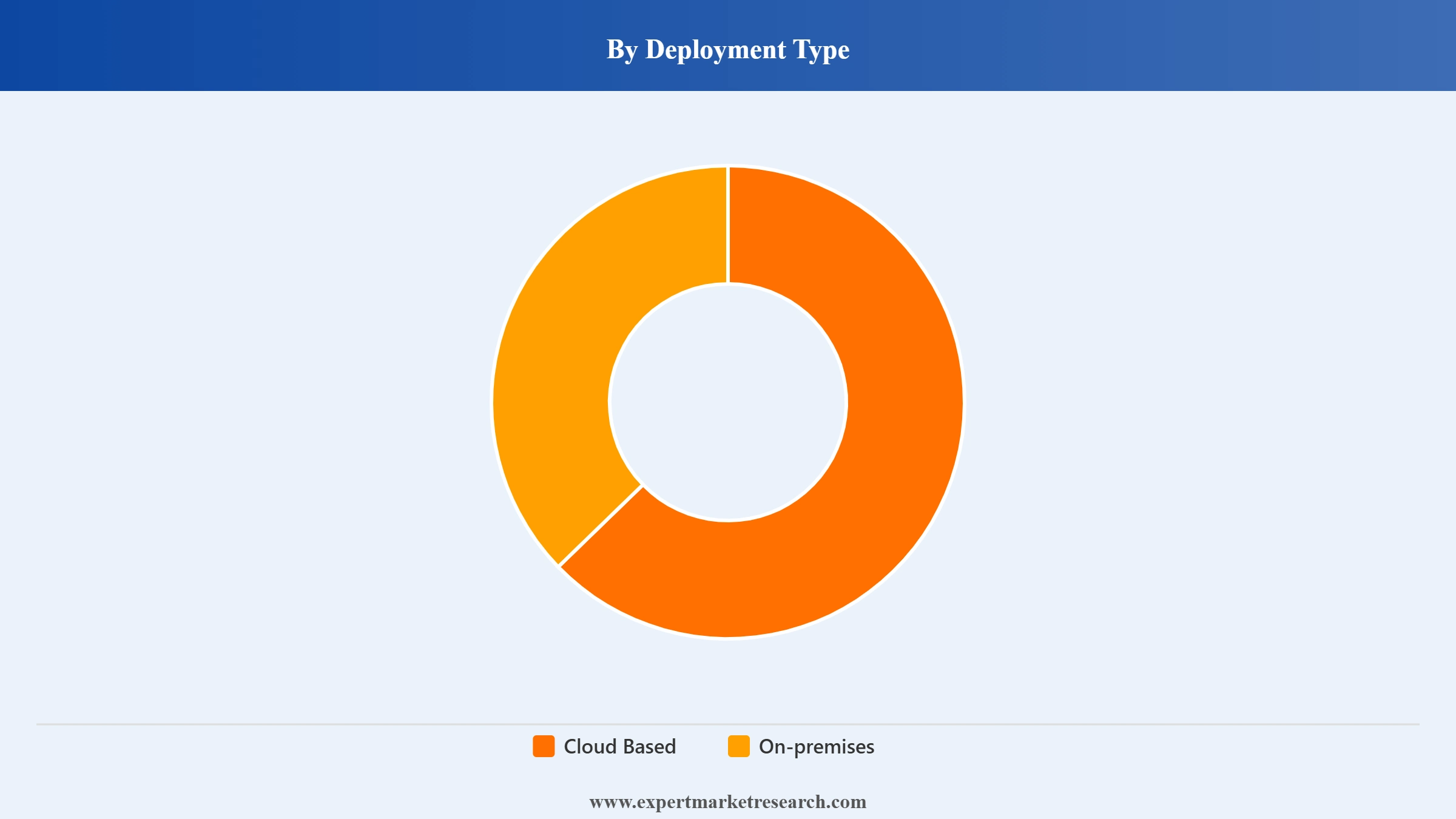
Key Insight: Cloud based deployment holds a growing share of the market owing to the flexibility and scalability it offers organisations managing distributed data environments across multiple institutions. On-premises deployment continues to hold meaningful share among enterprises in regulated industries requiring strict data residency and direct control over sensitive information. In May 2026, DSFederal and Taiwan AI Labs demonstrated a production-ready federated learning framework at AI Expo 2026 in Washington, D.C., showing government clients, a working system already delivering measurable outcomes in health systems and fraud detection environments.
Market Breakup by Application
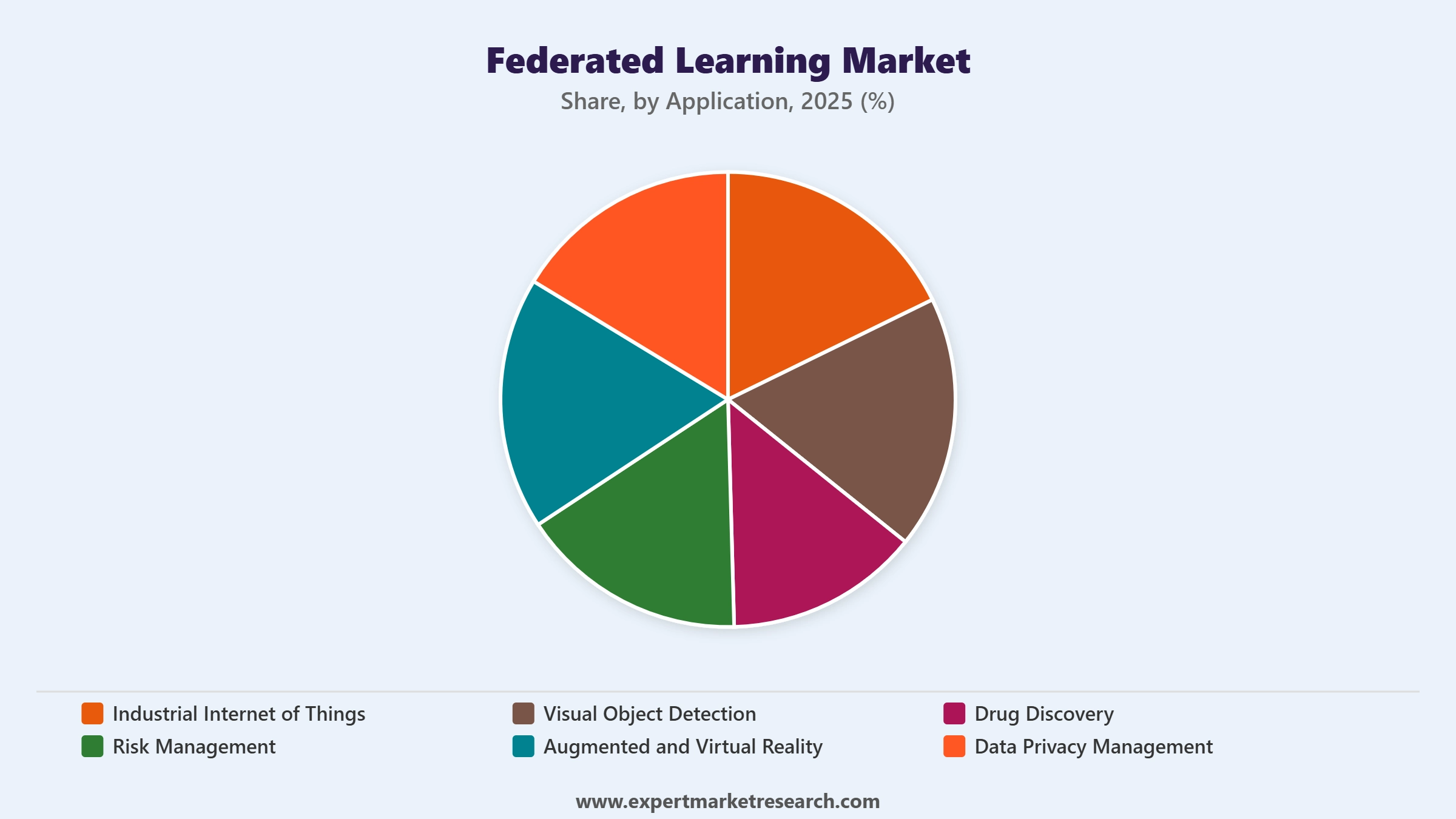
Key Insight: Industrial Internet of Things holds a significant application share as manufacturers increasingly deploy federated learning to monitor equipment and predict maintenance needs without centralising sensitive operational data. Drug discovery is registering the fastest growth as pharmaceutical companies collaborate on model training across proprietary datasets while protecting confidential research. In April 2026, NCI presented its FLAIMME consortium at the AACR Annual Meeting, showing how member cancer centers are adapting the MedGemma model for clinical trial matching without centralising patient data. Risk management and data privacy management applications serve financial institutions and privacy conscious enterprises respectively, while visual object detection and augmented and virtual reality applications support emerging metaverse and autonomous systems use cases, with others capturing remaining specialised applications.
Market Breakup by End Use
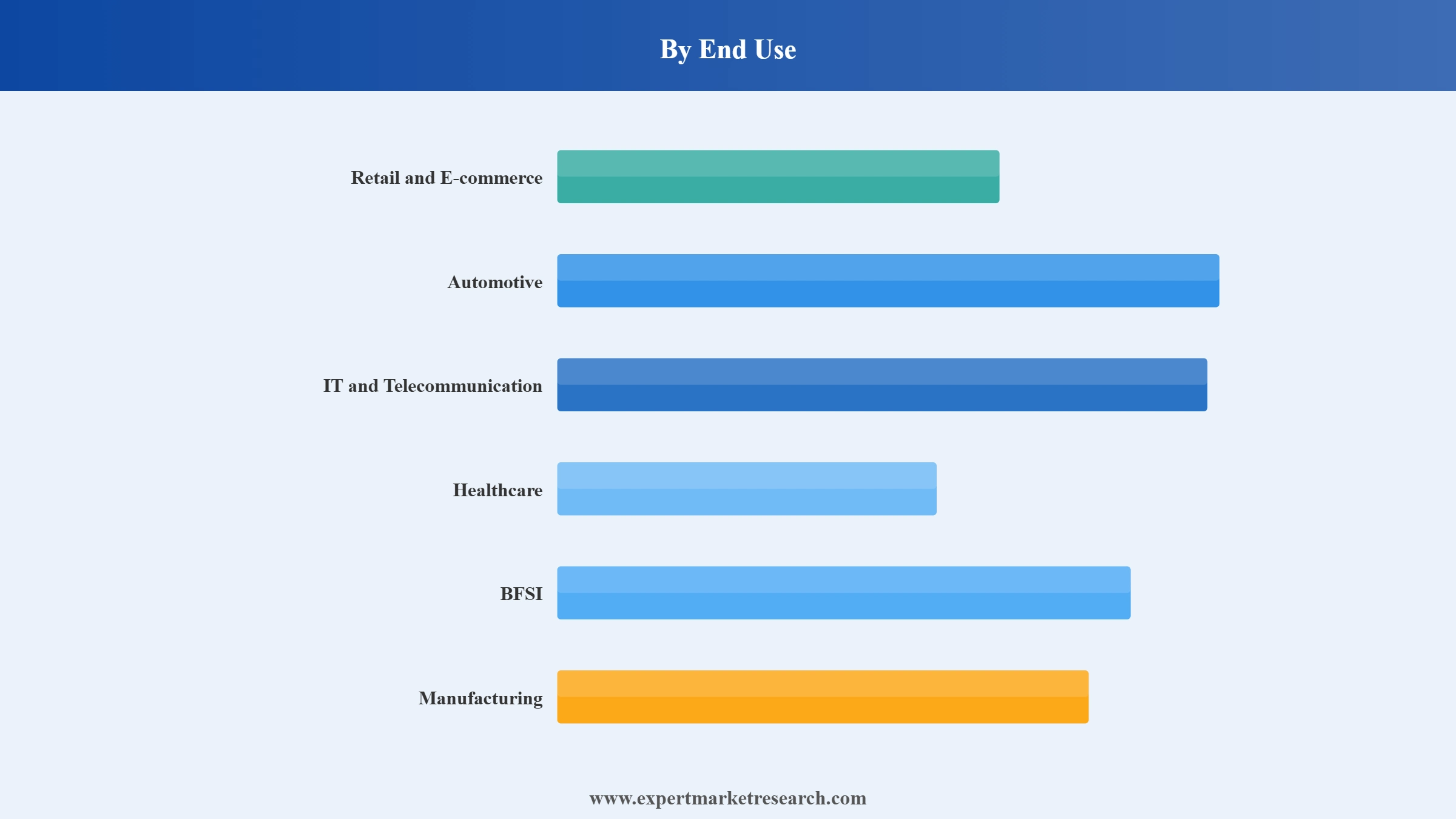
Key Insight: Healthcare and life sciences hold a substantial end use share as institutions increasingly collaborate on medical imaging, genomics, and diagnostics research without sharing sensitive patient data. Automotive is registering fast growth as the sector expands autonomous driving capability by enabling vehicles to learn from collective driving experiences. BFSI relies on federated learning for cross-institutional fraud detection, while retail and e-commerce, IT and telecommunication, and manufacturing each depend on federated approaches to unify insights across distributed operations, with others rounding out remaining demand.
Market Breakup by Region
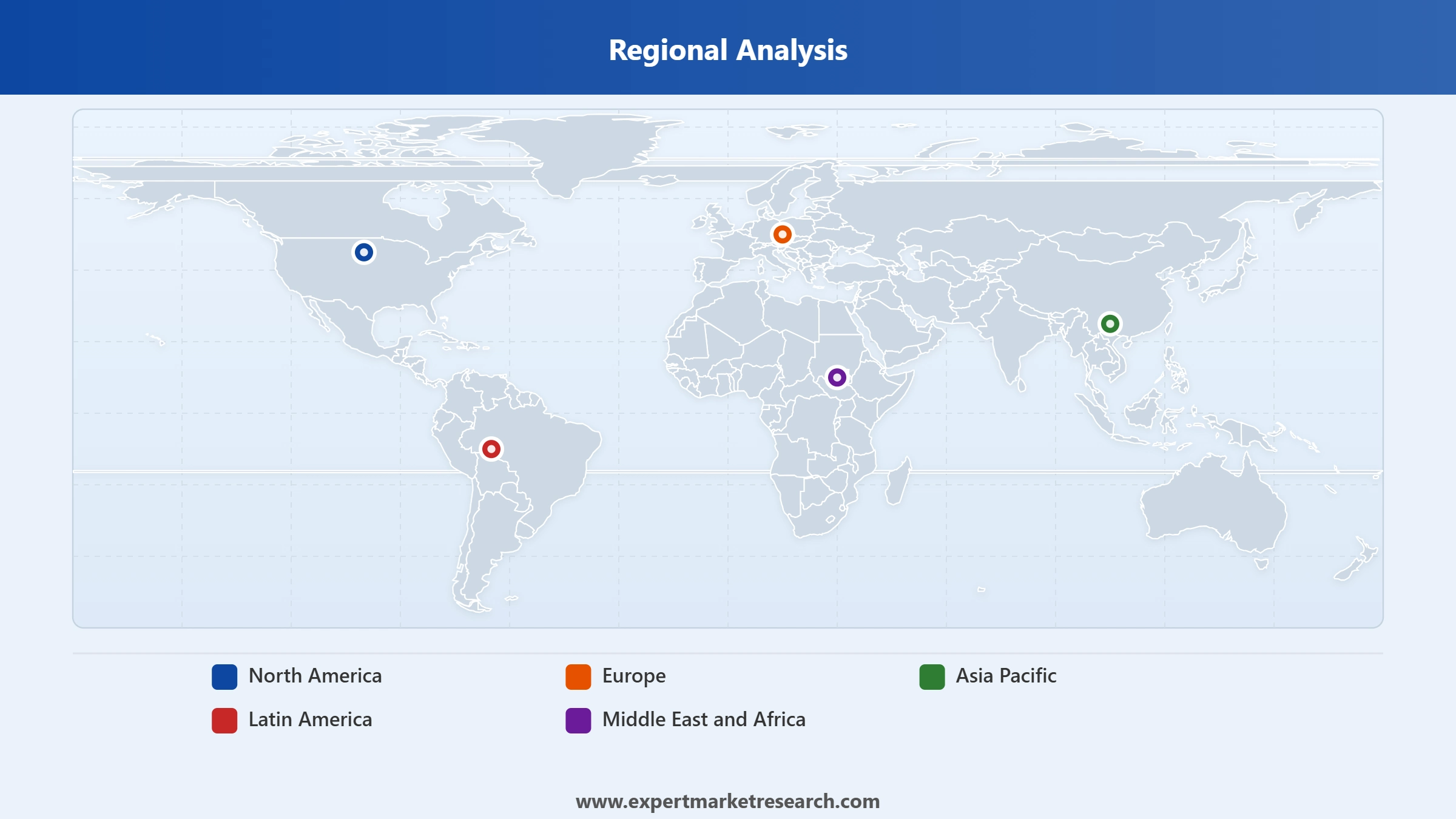
Key Insight: North America holds the largest regional share, reflecting strong demand among the region's concentration of large enterprises and technology companies across healthcare, finance, and retail. Asia Pacific is the fastest-growing region as rapid digital transformation lifts demand for privacy-preserving collaborative AI. Europe sustains steady demand from enterprises navigating strict data privacy regulation, particularly across healthcare and automotive research. Latin America is registering gradual growth as enterprises modernise legacy data infrastructure to support expanding digital services. Middle East and Africa form a smaller but developing market, with government-led digital transformation gradually widening demand.
Read more about this report - REQUEST FREE SAMPLE COPY IN PDF
By deployment type, cloud based is the fastest-growing segment owing to the flexibility and scalability it offers distributed organisations
Cloud based deployment is the fastest-growing segment of the federated learning market as it offers organisations the flexibility and scalability required to manage distributed data environments without heavy upfront infrastructure investment. In February 2026, Deutsche Telekom, Orange, Telefonica, TIM, and Vodafone achieved the first pan-European federated Edge Continuum at Mobile World Congress, successfully federating their edge environments to enable seamless application deployment across their combined European footprint.
Read more about this report - REQUEST FREE SAMPLE COPY IN PDF
On-premises deployment continues to hold meaningful share of the federated learning market among enterprises in regulated industries requiring strict data residency and direct control over sensitive information. Providers serving this category continue to prioritise robust security certification accordingly, since customers in healthcare, banking, and government sectors often require data processing to remain within their own security perimeter. This preference is reinforced by regulators who increasingly expect auditable, on-site evidence of how sensitive data is handled throughout model training.
By application, drug discovery is the fastest-growing segment as pharmaceutical companies increasingly collaborate on model training without exposing proprietary data
Drug discovery is the fastest-growing application of the federated learning market as pharmaceutical companies increasingly collaborate on model training across proprietary chemical and patient datasets without exposing confidential research. In January 2026, Benchling and Eli Lilly's TuneLab announced a partnership giving Benchling's 1,300-plus biotech customers direct access to prediction models trained on over a billion dollars of Lilly's proprietary research data, with results shared back into the federated network.
Read more about this report - REQUEST FREE SAMPLE COPY IN PDF
Industrial Internet of Things holds a significant share of the federated learning market as manufacturers deploy the technology across factory sensors to monitor equipment and predict maintenance needs without centralising data. Providers serving this category continue to expand edge deployment capability accordingly, since industrial sensors typically operate with limited connectivity and require models capable of training with intermittent network access. This resilience to connectivity gaps makes federated approaches particularly suited to remote or distributed manufacturing sites.
By end use, healthcare holds a substantial share of the market owing to institutions increasingly collaborating on research without sharing sensitive patient data
Healthcare holds a substantial end use share of the federated learning market as institutions increasingly collaborate on medical imaging, genomics, and diagnostics research without sharing sensitive patient data. In October 2025, the Cancer AI Alliance launched the first scalable federated learning platform for cancer research, connecting Fred Hutch, Dana-Farber, Memorial Sloan Kettering, and Johns Hopkins to train models across more than a million patients' de-identified data.
Read more about this report - REQUEST FREE SAMPLE COPY IN PDF
BFSI relies heavily on the federated learning market for cross-institutional fraud detection, allowing banks to identify suspicious patterns across previously siloed transaction systems without exposing customer data to competitors. Providers serving this category continue to prioritise encrypted computation capability accordingly, since financial institutions increasingly require assurance that sensitive transaction data remains protected throughout every stage of the model training pipeline. This assurance is becoming a prerequisite for regulatory approval of any cross-border collaborative fraud initiative.
Read more about this report - REQUEST FREE SAMPLE COPY IN PDF
North America leads the market through concentration of large enterprises and mature technology adoption
North America commands the largest share of the federated learning market overall, reflecting strong demand for privacy-preserving AI among the region's concentration of large enterprises and technology companies across healthcare, finance, and retail. In June 2026, Canada's federal government committed 100 million dollars to expand the VITAL health data platform, which uses a federated data model keeping clinical information secure within each province while enabling integrated national analysis across 160 participating hospitals.
Asia Pacific is the fastest-growing regional federated learning market as rapid digital transformation initiatives across the region's largest economies lift demand for privacy-preserving collaborative AI considerably faster than in more mature markets. In February 2026, India's Health Minister unveiled Bodh, a federated open data platform developed by IIT Kanpur and the National Health Authority to benchmark health AI models under the Ayushman Bharat Digital Mission, allowing developers to train models on-site without accessing raw patient data.
The federated learning companies are becoming increasingly consolidated as major federated learning companies invest in industry specific platforms, encrypted computation capability, and regulatory compliant deployment to defend their market positions. Federated learning players are prioritising automated data governance, cross-border interoperability, and vertical specialisation to differentiate their platforms in a market where basic distributed training capability is increasingly commoditised. Strategic emphasis on compatibility with existing institutional infrastructure is allowing vendors to reduce adoption friction for hospitals, banks, and manufacturers evaluating federated platforms.
Major federated learning market players are also focusing on agentic AI capabilities, pursuing automated cohort discovery and data harmonisation to help institutions operationalise federated research at scale. Opportunities are emerging in encrypted computation for highly regulated sectors, as well as in expanding federated capability into emerging applications such as additive manufacturing and autonomous vehicle safety networks. Companies that successfully combine platform breadth with deep vertical specialisation and proven regulatory compliance are expected to strengthen their competitive position over the coming years.
Founded in 1998 and headquartered in Mountain View, California, Google LLC supports the market through its foundational research into the federated averaging algorithm and its continued development of federated learning tools within its broader AI and cloud infrastructure portfolio. The company's early research established many of the core techniques underpinning modern federated learning deployments across mobile and enterprise applications. Google continues to extend federated learning capability across its Cloud and Android ecosystems, supporting developers building privacy-preserving AI applications at scale.
Founded in 1968 and headquartered in Santa Clara, California, Intel Corporation supports the market through its OpenFL open-source framework and hardware-level security technologies that enable confidential computation during federated training. The company's semiconductor expertise allows it to embed privacy-preserving capability directly into processors used across edge devices and data centres running federated workloads. Intel continues to expand its federated learning tooling to support enterprise deployment across healthcare, manufacturing, and telecommunications customers.
Founded in 1911 and headquartered in Armonk, New York, IBM Corporation supports the market through its IBM Federated Learning framework, part of its broader Watsonx AI and data platform offerings helping enterprises train models across distributed data sources. The company continues to extend federated capability to support customers in regulated industries requiring strict data governance and compliance. IBM's global research and development infrastructure allows it to serve enterprise customers across more than 175 countries with deep vertical industry expertise.
Founded in 1993 and headquartered in Santa Clara, California, NVIDIA Corporation supports the market through its NVIDIA FLARE framework, an open-source platform enabling federated learning across healthcare, life sciences, and other data sensitive industries. The company's GPU computing infrastructure provides the processing power required for training complex models across distributed federated networks. NVIDIA continues to expand FLARE's integration with partner platforms to broaden federated learning adoption across research and enterprise customers.
Other key players in the market include Barron Associates Inc., Sherpa.ai, Apheris AI GmbH, Cloudera, Inc., Acuratio Inc., and Consilient Inc., among others.
*Please note that this is only a partial list; the complete list of key players is available in the full report. Additionally, the list of key players can be customized to better suit your needs.*
Unlock the latest insights with our federated learning market trends 2026 report. Discover regional growth patterns, application adoption, and key industry players. Stay ahead of competition with trusted data and expert analysis. Download your free sample report today.


Upto 15% Off
USD
$2499 $2249
$3999 $3599
$4999 $4249
$5999 $5099


*While we strive to always give you current and accurate information, the numbers depicted on the website are indicative and may differ from the actual numbers in the main report. At Expert Market Research, we aim to bring you the latest insights and trends in the market. Using our analyses and forecasts, stakeholders can understand the market dynamics, navigate challenges, and capitalize on opportunities to make data-driven strategic decisions.*
The market reached a value of nearly USD 145.46 Million in 2025.
The market is estimated to grow at a CAGR of 10.70% between 2026 and 2035.
The market is estimated to witness a healthy growth in the forecast period of 2026-2035 to reach a value of around USD 401.99 Million by 2035.
Expanding encrypted computation capability, pursuing partnerships with sector specialists in healthcare and finance, strengthening compatibility with national secure research infrastructure, broadening industrial IoT and additive manufacturing applications, and deepening agentic automation for data governance and cohort discovery.
The key trends in the market include the growing use of federated learning in the healthcare sector to boost drug discovery processes and heightening demand for self-driving cars.
Cloud based and on-premises are the different deployment types of federated learning.
Industrial internet of things, visual object detection, drug discovery, risk management, augmented and virtual reality, and data privacy management, among others, are the major applications of federated learning.
Google LLC, Intel Corporation, Barron Associates Inc., Sherpa.ai., Apheris AI GmbH, IBM Corporation, Cloudera, Inc., NVIDIA Corporation, Acuratio Inc., and Consilient Inc., among others, are the key market players.
Companies face integration complexity across legacy institutional systems, rising data privacy regulation, a shortage of skilled federated learning engineers, and the computational overhead of maintaining encrypted computation while coordinating training across dozens of distributed, often intermittently connected participating sites.
Explore our key highlights of the report and gain a concise overview of key findings, trends, and actionable insights that will empower your strategic decisions.
| REPORT FEATURES | DETAILS |
| Base Year | 2025 |
| Historical Period | 2019-2025 |
| Forecast Period | 2026-2035 |
| Scope of the Report |
Historical and Forecast Trends, Industry Drivers and Constraints, Historical and Forecast Market Analysis by Segment:
|
| Breakup by Deployment Type |
|
| Breakup by Application |
|
| Breakup by End Use |
|
| Breakup by Region |
|
| Market Dynamics |
|
| Competitive Landscape |
|
| Companies Covered |
|
Datasheet
One User
USD 2,499
USD 2,249
tax inclusive*
Single User License
One User
USD 3,999
USD 3,599
tax inclusive*
Five User License
Five User
USD 4,999
USD 4,249
tax inclusive*
Corporate License
Unlimited Users
USD 5,999
USD 5,099
tax inclusive*
*Please note that the prices mentioned below are starting prices for each bundle type. Kindly contact our team for further details.*
Flash Bundle
Small Business Bundle
Growth Bundle
Enterprise Bundle
*Please note that the prices mentioned below are starting prices for each bundle type. Kindly contact our team for further details.*
Flash Bundle
Number of Reports: 3
20%
tax inclusive*
Small Business Bundle
Number of Reports: 5
25%
tax inclusive*
Growth Bundle
Number of Reports: 8
30%
tax inclusive*
Enterprise Bundle
Number of Reports: 10
35%
tax inclusive*
How To Order

Select License Type
Choose the right license for your needs and access rights.

Click on ‘Buy Now’
Add the report to your cart with one click and proceed to register.

Select Mode of Payment
Choose a payment option for a secure checkout. You will be redirected accordingly.
Strategic Solutions for Informed Decision-Making
Gain insights to stay ahead and seize opportunities.

Get insights & trends for a competitive edge.

Track prices with detailed trend reports.

Analyse trade data for supply chain insights.

Leverage cost reports for smart savings

Enhance supply chain with partnerships.

Connect For More Information
Our expert team of analysts will offer full support and resolve any queries regarding the report, before and after the purchase.
Our expert team of analysts will offer full support and resolve any queries regarding the report, before and after the purchase.
We employ meticulous research methods, blending advanced analytics and expert insights to deliver accurate, actionable industry intelligence, staying ahead of competitors.
Our skilled analysts offer unparalleled competitive advantage with detailed insights on current and emerging markets, ensuring your strategic edge.
We offer an in-depth yet simplified presentation of industry insights and analysis to meet your specific requirements effectively.




