

Consumer Insights
Uncover trends and behaviors shaping consumer choices today
Procurement Insights
Optimize your sourcing strategy with key market data
Industry Stats
Stay ahead with the latest trends and market analysis.
The global fintech market reached a value of USD 264.80 Billion at 2025 and is projected to expand at a CAGR of around 16.80% during the forecast period of 2026-2035. With rapid cloud and API adoption, the mainstreaming of stablecoins and embedded finance, surging AI-led automation in payments and risk, and rising demand for digital banking across emerging markets, the market is expected to reach USD 1251.26 Billion by 2035.
Compound Annual Growth Rate
16.8%
Value in USD Billion
2026-2035
Get a sample of the market report in PDF - REQUEST A FREE SAMPLE
| Global FinTech Market Report Summary | Description | Value |
| Base Year | USD Billion | 2025 |
| Historical Period | USD Billion | 2019-2025 |
| Forecast Period | USD Billion | 2026-2035 |
| Market Size 2025 | USD Billion | 264.80 |
| Market Size 2035 | USD Billion | 1251.26 |
| CAGR 2019-2025 | Percentage | XX% |
| CAGR 2026-2035 | Percentage | 16.80% |
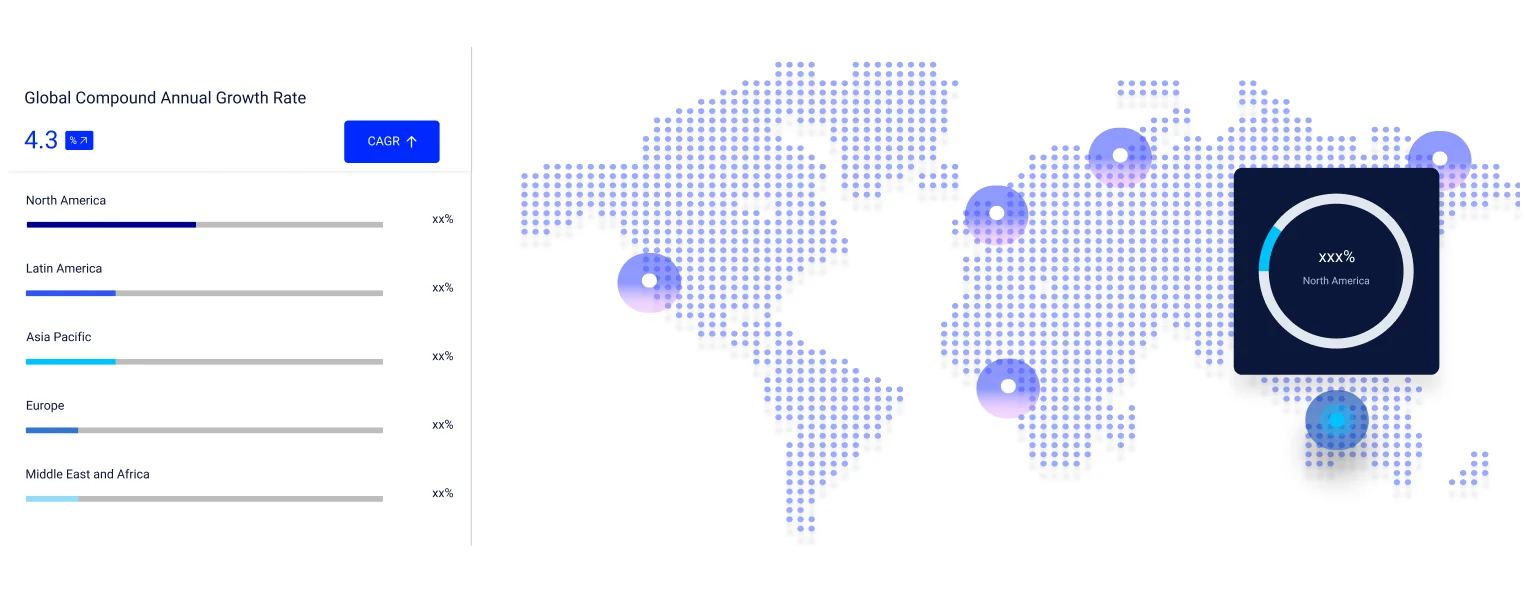
| CAGR 2026-2035 - Market by Region | Asia Pacific | 18.7% |
| CAGR 2026-2035 - Market by Country | India | 19.5% |
| CAGR 2026-2035 - Market by Country | China | 18.9% |
| CAGR 2026-2035 - Market by Deployment Mode | Cloud | 26.9% |
| CAGR 2026-2035 - Market by Technology | Artificial Intelligence | 19.2% |
| Market Share by Country 2025 | France | 3.2% |
The global fintech market is being reshaped by a race into stablecoins, AI-driven automation, and embedded finance. Payment networks and processors are buying or building on-chain rails, buy-now-pay-later players are turning into licensed banks, and cloud-native infrastructure is becoming the default. The result is a sector where partnerships and acquisitions move faster than product cycles, and where regulation increasingly defines who scales and who stalls.
Stablecoin payment volumes surpassed $350 billion in 2025, pulling major networks on-chain. Mastercard's March 2026 agreement to buy BVNK and PayPal's PYUSD expansion show how programmable money is becoming core fintech market infrastructure for cross-border and business-to-business payments.
Artificial intelligence is rewiring fintech operations, from fraud detection to customer service. Klarna's AI-led restructuring and Stripe's AI-optimised checkout illustrate how automation is lifting fintech market growth and conversion, even as firms recalibrate hiring after over-aggressive early cuts.
Distribution increasingly runs through partnerships rather than standalone apps. In March 2026, Klarna deepened its Stripe partnership so more than 200,000 businesses across 25 countries could offer its payments instantly, embedding credit and checkout directly into merchant experiences across the fintech market.
Banks and fintechs are migrating from legacy on-premise systems to scalable cloud platforms. This shift cuts cost, speeds product launches, and underpins API-driven open banking, reinforcing cloud as the fastest-growing deployment mode across the global fintech market and a foundation for embedded services.
Capital markets are warming again to large fintechs. Klarna's 2025 US listing, valuing the company near $19.65 billion, and continued fundraising across the sector signal renewed investor confidence and provide fresh capital for acquisitions and international expansion within the fintech market.
Get a sample of the market report in PDF - REQUEST A FREE SAMPLE
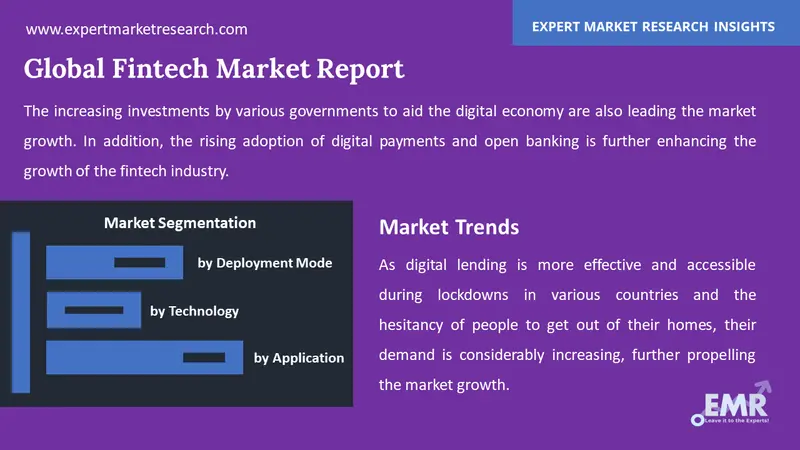
The report by Expert Market Research, titled “Global Fintech Market Report and Forecast 2026-2035”, offers a detailed analysis of the market based on the following segments:
Market Breakup by Deployment Mode
Key Insight: Cloud deployment leads and grows fastest because it offers scalability, lower upfront cost, faster product rollouts, and easy API integration, all of which suit fast-moving fintechs and modernising banks. On-premise still serves institutions with strict data-residency, latency, or legacy-integration needs, especially in regulated banking. Yet the clear direction of travel is cloud-first and hybrid architecture, which keeps cloud the dominant and most dynamic deployment mode across the global fintech market.
Market Breakup by Technology
Key Insight: APIs underpin open banking and embedded finance, making them foundational to the fintech market, while artificial intelligence is the fastest-rising technology, powering fraud detection, credit scoring, and customer service automation. Blockchain is moving from pilots to production through stablecoins and tokenised payments, and robotic process automation streamlines back-office work. Data analytics ties it together, turning transaction flows into personalised products and sharper risk decisions across banking, lending, and insurance.
Market Breakup by Application
Key Insight: Banking and payments command the largest application share, reflecting the scale of digital transfers, lending, and embedded checkout. Fraud monitoring, KYC verification, and compliance support are among the fastest-growing applications as regulators tighten rules on financial crime and identity. Trading, insurance, and taxation applications add depth, with insurtech and regtech expanding quickly. Together these uses show how fintech now spans the full financial value chain rather than payments alone.
Market Breakup by End Use
Key Insight: Banks form the largest end-use group, adopting fintech to modernise core systems, defend against digital challengers, and embed services into customer journeys. Broader financial institutions, including asset managers, payment firms, and lenders, are fast adopters of cloud, API, and AI tools. Insurance companies increasingly deploy fintech for claims automation, underwriting, and fraud control. Fintech adoption across all these end users is widening, deepening the global fintech market's reach.
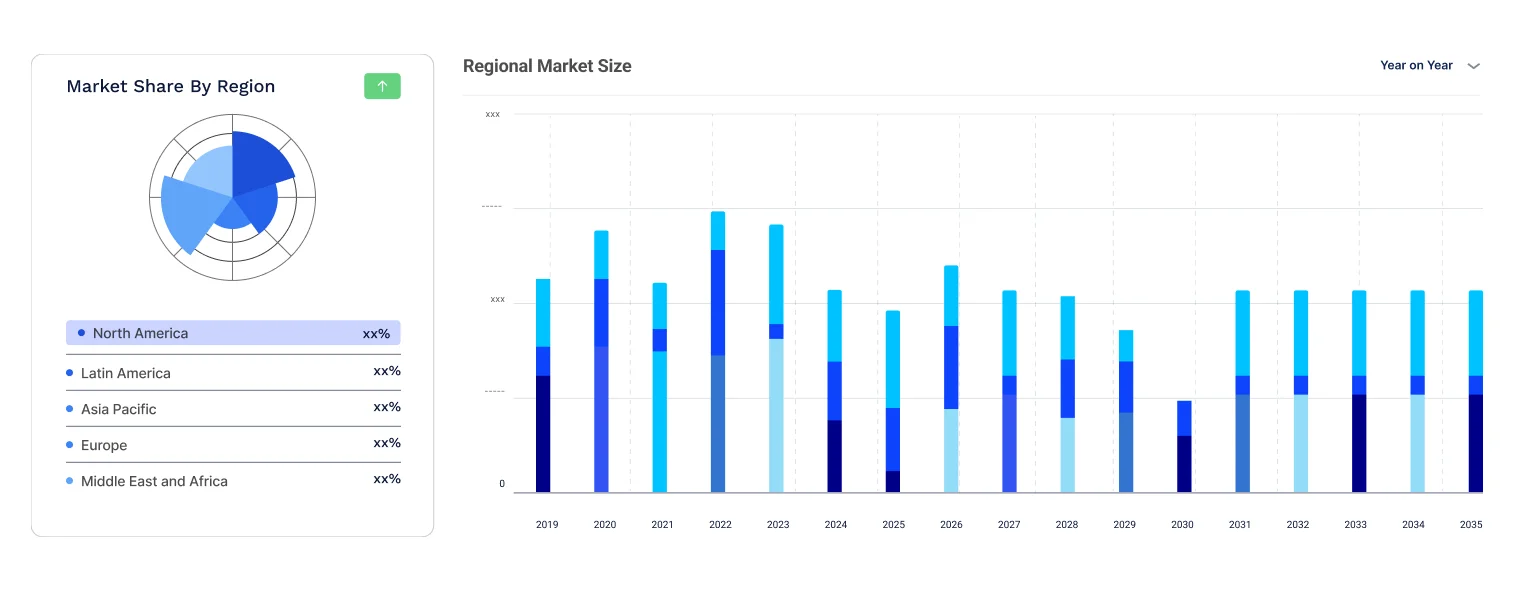
Market Breakup by Region
Key Insight: North America leads on capital, infrastructure, and the presence of major platforms such as Stripe, PayPal, and Mastercard. Europe combines strong open-banking regulation with scaled players like Adyen and Klarna. Asia Pacific is the fastest-growing region, propelled by digital payments and large unbanked-to-banked transitions, with Ant Group prominent. Latin America, led by Nubank's footprint, and the Middle East and Africa add rapid mobile-first adoption across the fintech market.
By deployment mode, cloud dominates the market due to scalability, lower cost, and faster product rollouts
Cloud deployment dominates the global fintech market because it lets firms scale instantly, cut upfront infrastructure spend, and launch products faster than legacy systems allow. Cloud-native architecture also underpins API-driven open banking and embedded finance, which are central to modern fintech distribution. For both digital challengers and incumbent banks modernising core platforms, cloud offers the flexibility and speed that competitive markets demand, making it the default choice for new builds.
On-premise deployment retains a meaningful role where data residency, latency, and tight integration with legacy core banking systems matter, particularly among large regulated institutions. Even so, hybrid models that combine on-premise control with cloud agility are gaining ground. The broad migration to cloud and API ecosystems continues to accelerate, keeping cloud the fastest-growing and most influential deployment mode across the fintech market worldwide.
By technology, artificial intelligence is reshaping the market due to gains in automation, risk, and personalisation
Artificial intelligence is among the most transformative technologies in the global fintech market, powering fraud detection, credit scoring, automated customer service, and personalised product recommendations. APIs remain the structural backbone of open banking, but AI is where competitive advantage is increasingly won. By turning vast transaction data into real-time decisions, AI improves conversion, lowers operating cost, and sharpens risk management across payments, lending, and insurance workflows for banks and fintechs alike.
Blockchain is shifting from experimentation to production, led by stablecoins and tokenised payments. In March 2026, Mastercard agreed to acquire stablecoin infrastructure firm BVNK for up to $1.8 billion, underscoring how on-chain rails are entering core payment systems. Alongside robotic process automation and data analytics, these technologies are widening capability and reinforcing fintech market growth across cross-border, compliance, and embedded-finance use cases.
By application, banking and payments hold the dominant share due to the scale of digital transactions
Banking and payments account for the dominant application share of the global fintech market, reflecting the sheer volume of digital transfers, lending, and embedded checkout flowing through fintech rails. Consumers and businesses increasingly expect instant, low-friction payments, and platforms such as Stripe, PayPal, and Adyen process these at global scale. This concentration of activity in banking and payments keeps the application at the centre of fintech investment and innovation.
Fraud monitoring, KYC verification, and compliance support are the fastest-growing applications as regulators tighten oversight of financial crime and identity. Rising stablecoin and cross-border volumes add further compliance complexity. In March 2026, PayPal expanded its PYUSD stablecoin to 70 markets, illustrating how new payment forms intensify demand for robust monitoring and regulatory tooling across the fintech market.
By end use, banks hold the dominant share due to large-scale digital modernisation and embedded services
Banks form the largest end-use group in the global fintech market, deploying fintech to modernise core systems, defend against digital challengers, and embed payments and lending into customer journeys. Heavy investment in cloud migration, API banking, and AI-driven risk tools keeps banks central to fintech spending. Their scale, regulatory standing, and distribution reach make them the primary adopters and the anchor demand source across the sector.
Broader financial institutions, insurers, and other end users are the fastest-expanding cohort, adopting embedded finance, automated underwriting, and fraud control at speed. Insurtech and wealthtech platforms widen the base beyond traditional banking. In March 2026, Klarna's deepened Stripe partnership extended instant payments to more than 200,000 businesses, illustrating how non-bank end users increasingly drive fintech market growth and distribution.
Get a sample of the market report in PDF - REQUEST A FREE SAMPLE
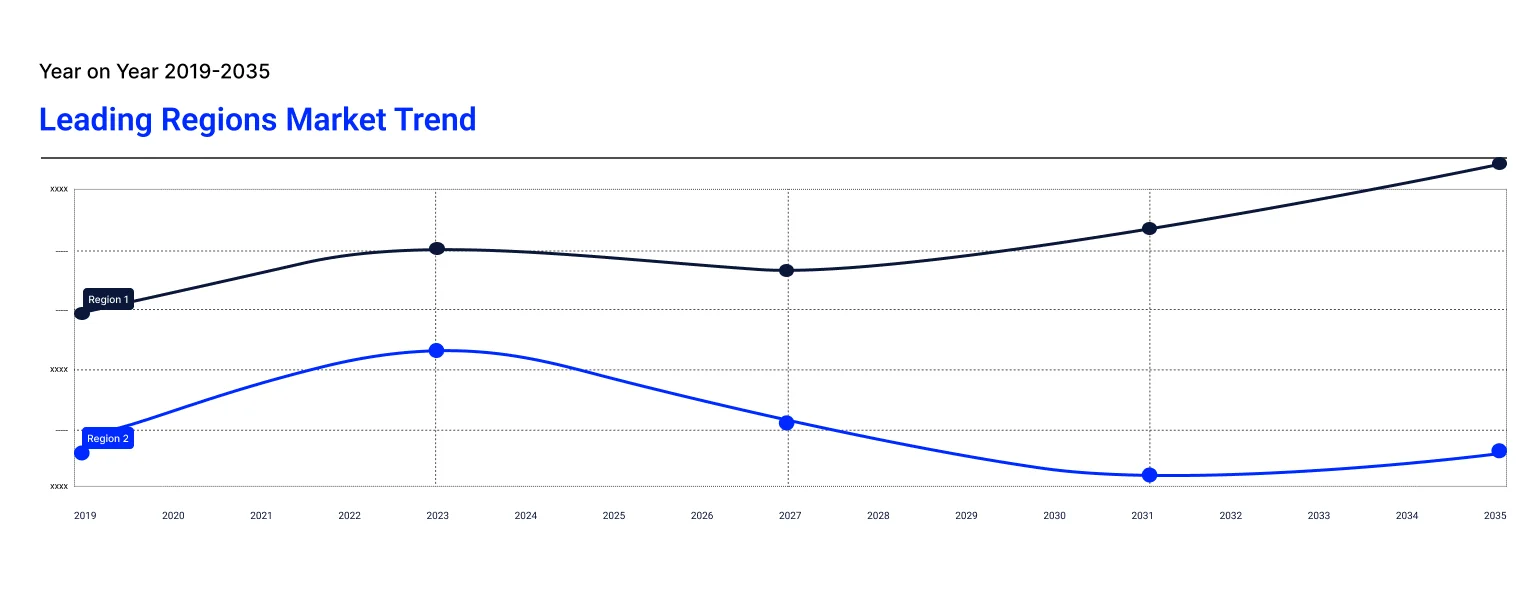
North America dominates the market due to deep capital, mature infrastructure, and leading platforms
North America leads the global fintech market, supported by deep venture and public capital, mature digital infrastructure, and the presence of dominant platforms such as Stripe, PayPal, Mastercard, and Block. A large, payments-savvy consumer base and an active acquisition environment keep innovation rapid. In March 2026, Mastercard's agreement to acquire BVNK reinforced the region's lead in next-generation, stablecoin-enabled payments and its appetite for bold strategic moves across fintech.
Asia Pacific is the fastest-growing region, propelled by mobile-first payments, fast digital-banking adoption, and large transitions from unbanked to banked populations. China's Ant Group and a wave of regional super-apps drive scale, while India and Southeast Asia post rapid growth in digital transfers and lending. Supportive regulation, rising smartphone penetration, and embedded-finance expansion continue to accelerate Asia Pacific's share of the global fintech market.
The global fintech market is highly competitive and only loosely consolidated, spanning payment processors, neobanks, infrastructure providers, and big-tech-backed super-apps. Players compete on developer experience, transaction reliability, pricing, and the breadth of embedded services rather than on a single product. Scale, regulatory licences, and partnership networks are the key sources of advantage, and no single firm dominates every region or use case.
Strategy now centres on stablecoins, AI automation, and embedded finance, with acquisitions moving faster than organic product cycles. Processors are buying on-chain rails, buy-now-pay-later players are becoming licensed banks, and infrastructure firms are racing to own the API layer. Cloud-native scale and trusted compliance increasingly decide which players defend share and which expand internationally across the fintech market.
Founded in 2010 and operating from San Francisco and Dublin, Stripe is a leading financial infrastructure platform for online businesses. Its APIs power payments, billing, and issuing for millions of companies, and recent acquisitions in crypto wallets and stablecoin tooling extend its reach across embedded and on-chain finance.
Founded in 1998 and headquartered in San Jose, California, PayPal is a global digital payments leader serving consumers and merchants worldwide. Its network spans checkout, peer-to-peer transfers, and its PYUSD stablecoin, recently expanded to 70 markets, positioning PayPal at the centre of mainstream and on-chain payments.
Founded in 2006 and headquartered in Amsterdam, Adyen is a single-platform payments provider serving large global enterprises. It unifies acquiring, gateway, and risk in one stack, and its 2026 expansion plans, weighted toward the US and engineering, reflect steady, profitable growth among enterprise merchants.
Founded in 2005 and headquartered in Stockholm, Klarna is a licensed bank and global payments and shopping network best known for buy-now-pay-later. Following its 2025 US listing, it is expanding through deepened Stripe partnerships and its planned KlarnaUSD stablecoin, blending consumer credit with programmable payments.
Other key players in the market are Mastercard, Fiserv, Inc., Block Inc. (Square), Finastra, Rapyd Financial Network Ltd., Plaid Inc., Ant Group, Intuit Inc., Coinbase, Nu Pagamentos S.A, and Others.
*Please note that this is only a partial list; the complete list of key players is available in the full report. Additionally, the list of key players can be customized to better suit your needs.*
Get the full intelligence on the global fintech market with our latest report. See how stablecoins, AI automation, embedded finance, and cloud migration are rewiring payments, banking, and risk, and where the next growth pockets are opening. Whether you run a bank, a payments firm, an insurer, or invest in financial technology, this report gives you the clarity to act. Download your free sample today and explore the key opportunities across fintech.
Saudi Arabia Fintech Market
Germany Fintech Market
Vietnam Fintech Market
France Fintech Market
Brazil Fintech Market
China Fintech Market
RegTech Compliance and Risk Management Systems
Open Banking Financial Services Systems
BNPL Digital Consumer Credit Systems


Upto 15% Off
USD
$4399 $3959
$2999 $2699
$5599 $4759
$6659 $5660


*While we strive to always give you current and accurate information, the numbers depicted on the website are indicative and may differ from the actual numbers in the main report. At Expert Market Research, we aim to bring you the latest insights and trends in the market. Using our analyses and forecasts, stakeholders can understand the market dynamics, navigate challenges, and capitalize on opportunities to make data-driven strategic decisions.*
In 2025, the market reached an approximate value of USD 264.80 Billion.
The market is projected to grow at a CAGR of 16.80% between 2026 and 2035.
The global FinTech market is expected to reach approximately USD 1251.26 Billion by 2035.
The market is being driven by the rising use of fintech by the young population and the introduction of various favourable government initiatives.
The market is driven by technological advancements, increasing adoption of AI, blockchain, digital payments, BNPL solutions, and a rising demand for financial inclusion.
The major regions in the industry are North America, Latin America, the Middle East and Africa, Europe, and the Asia Pacific.
On-premise and cloud are the different deployment modes of fintech in the market.
Application programming interface (API), artificial intelligence, blockchain, robotic process automation, and data analytics, among others, are the different technologies of the market.
Banking, trading, taxation, insurance, fraud monitoring, KYC verification, and compliance & regulatory support, among others are the major applications of the market.
The major players in the market are Rapyd Financial Network Ltd. (U.K.), Unicorn Payment Ltd. (China), Stripe, Inc. (Ireland), Mastercard (U.S.), Finastra (U.K.), Fiserv, Inc. (U.S.), Block Inc. (Square) (U.S.), Adyen (Netherlands), Plaid Inc. (U.S.), Neo Mena Technologies Ltd. (U.S.), PayPal Holdings, Inc., Ant Group, Intuit Inc., Coinbase, Avant, LLC., Klarna Bank AB, and Nu Pagamentos S.A, among others.
Banks dominate the FinTech market, leveraging digital transformation, AI, and blockchain for enhanced financial services.
North America leads the FinTech market, driven by high technology adoption, regulatory support, and strong financial institutions.
Insurance companies and trading platforms are expected to grow at the highest CAGR, driven by digital transformation, AI-driven risk assessment, and blockchain-based transactions.
Key players include Tide, NatWest, FIS (Atelio), Paysky, MTN Group Fintech, Snapmint, and du Pay, along with major financial technology firms like PayPal, Square, Stripe, and Revolut.
Explore our key highlights of the report and gain a concise overview of key findings, trends, and actionable insights that will empower your strategic decisions.
| REPORT FEATURES | DETAILS |
| Base Year | 2025 |
| Historical Period | 2019-2025 |
| Forecast Period | 2026-2035 |
| Scope of the Report |
Historical and Forecast Trends, Industry Drivers and Constraints, Historical and Forecast Market Analysis by Segment:
|
| Breakup by Deployment Mode |
|
| Breakup by Technology |
|
| Breakup by Application |
|
| Breakup by End Use |
|
| Breakup by Region |
|
| Market Dynamics |
|
| Competitive Landscape |
|
| Companies Covered |
|
Single User License
One User
USD 4,399
USD 3,959
tax inclusive*
Datasheet
One User
USD 2,999
USD 2,699
tax inclusive*
Five User License
Five User
USD 5,599
USD 4,759
tax inclusive*
Corporate License
Unlimited Users
USD 6,659
USD 5,660
tax inclusive*
*Please note that the prices mentioned below are starting prices for each bundle type. Kindly contact our team for further details.*
Flash Bundle
Small Business Bundle
Growth Bundle
Enterprise Bundle
*Please note that the prices mentioned below are starting prices for each bundle type. Kindly contact our team for further details.*
Flash Bundle
Number of Reports: 3
20%
tax inclusive*
Small Business Bundle
Number of Reports: 5
25%
tax inclusive*
Growth Bundle
Number of Reports: 8
30%
tax inclusive*
Enterprise Bundle
Number of Reports: 10
35%
tax inclusive*
How To Order

Select License Type
Choose the right license for your needs and access rights.

Click on ‘Buy Now’
Add the report to your cart with one click and proceed to register.

Select Mode of Payment
Choose a payment option for a secure checkout. You will be redirected accordingly.
Strategic Solutions for Informed Decision-Making
Gain insights to stay ahead and seize opportunities.

Get insights & trends for a competitive edge.

Track prices with detailed trend reports.

Analyse trade data for supply chain insights.

Leverage cost reports for smart savings

Enhance supply chain with partnerships.

Connect For More Information
Our expert team of analysts will offer full support and resolve any queries regarding the report, before and after the purchase.
Our expert team of analysts will offer full support and resolve any queries regarding the report, before and after the purchase.
We employ meticulous research methods, blending advanced analytics and expert insights to deliver accurate, actionable industry intelligence, staying ahead of competitors.
Our skilled analysts offer unparalleled competitive advantage with detailed insights on current and emerging markets, ensuring your strategic edge.
We offer an in-depth yet simplified presentation of industry insights and analysis to meet your specific requirements effectively.




