

Consumer Insights
Uncover trends and behaviors shaping consumer choices today
Procurement Insights
Optimize your sourcing strategy with key market data
Industry Stats
Stay ahead with the latest trends and market analysis.
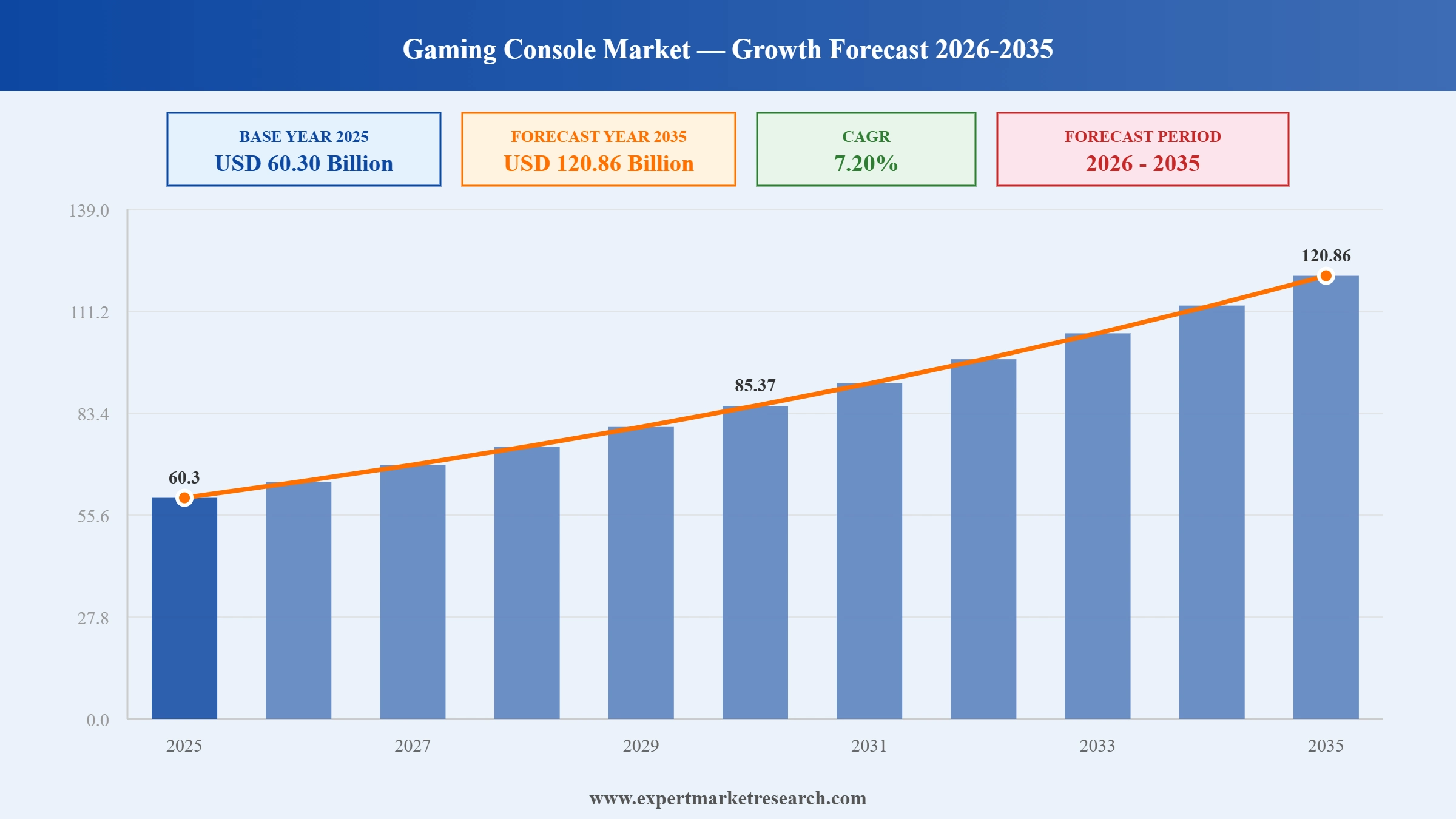
The global gaming console market attained a value of USD 60.30 Billion in 2025 and is projected to expand at a CAGR of 7.20% through 2035. The market is further expected to achieve USD 120.86 Billion by 2035. Increasing investments in cloud gaming infrastructure, AI-powered games functionality, and exclusive content ecosystems are facilitating console purchases while providing regular revenue streams for the hardware providers and publishers in the industry.
One key driving factor boosting the growth of the gaming console market is the rising demand for premium gaming experiences and growth of digital content consumption in the market. The growing popularity of subscription gaming models is driving customers to stay loyal to certain gaming console ecosystems, contributing to better customer retention rates and digital spending levels. Secondly, advances in graphics processing technologies, ray-tracing solutions, and AI-driven game design are allowing console companies to provide immersive experiences that attract both casual and hardcore gamers. This, in turn, drives the publishers to release exclusive titles for different platforms and develop exclusive franchises, increasing hardware demand as well as software revenue.
The global gaming console market keeps evolving due to hardware innovation, growth of ecosystems, and integration of cloud services. One of the most notable events in recent years was the launch of Nintendo Switch 2 by Nintendo in June 2025, resulting in high market traction with over 3.5 million consoles sold worldwide in just four days after being released. This example shows how the market keeps recording demand for hybrid gaming consoles with major companies utilizing next-generation hardware, graphics, and games library to attract more players and increase adoption rates.
The competition is shifting towards ecosystem monetization, with Sony Group Corporation developing the PlayStation ecosystem through its exclusive content, subscriptions, and cloud gaming services, and Microsoft Corporation promoting its Xbox platform via Game Pass, cross-platform support, and artificial intelligence-powered gaming experience. This way, manufacturers are generating revenue from selling subscriptions, engaging customers on different devices, and providing additional services, boosting the gaming console market value. For example, in June 2026, Valve launched the Steam Machine console, overcoming component shortages and rising AI-driven hardware costs.
Read more about this report - REQUEST FREE SAMPLE COPY IN PDF
| Global Gaming Console Market Report Summary | Description | Value |
| Base Year | USD Billion | 2025 |
| Historical Period | USD Billion | 2019-2025 |
| Forecast Period | USD Billion | 2026-2035 |
| Market Size 2025 | USD Billion | 60.30 |
| Market Size 2035 | USD Billion | 120.86 |
| CAGR 2019-2025 | Percentage | XX% |
| CAGR 2026-2035 | Percentage | 7.20% |
| CAGR 2026-2035 - Market by Region | Asia Pacific | 9.3% |
| CAGR 2026-2035 - Market by Country | India | 10.7% |
| CAGR 2026-2035 - Market by Country | Canada | 8.9% |
| CAGR 2026-2035 - Market by Type | Personal | 7.9% |
| CAGR 2026-2035 - Market by End Use | Online | 7.9% |
| Market Share by Country 2025 | China | 16.9% |
Next-Generation Hardware Launches and Console Upgrade Cycles
The console market operates on multi-year hardware upgrade cycles, and the launch of new console generations consistently generates extraordinary unit sales spikes as consumers upgrade from current-generation platforms. The Nintendo Switch 2, launched in June 2025, sold 3.5 million units in its first four days a record-breaking console launch performance and accumulated 19.86 million lifetime unit sales by March 2026. This launch demonstrated the sustained consumer appetite for breakthrough console hardware experiences and the commercial power of the Nintendo franchise ecosystem to drive hardware adoption.
Looking further ahead, Microsoft revealed Project Helix, its next-generation Xbox platform, during the Game Developers Conference in 2026. Developed in partnership with AMD and designed to unify the Xbox console and PC gaming experiences through a custom System-on-Chip architecture, Project Helix is scheduled for developer alpha testing beginning in 2027. This announcement signals that the next major hardware generation cycle is approaching, which is expected to trigger a significant hardware refresh wave across the installed console base.
Subscription Services: The Structural Revenue Engine
Gaming subscription services have become the most strategically important growth driver in the console market, providing platform holders with recurring monthly revenue that is largely decoupled from hardware unit sales cycles. PlayStation Plus reached 51.6 million subscribers in Q1 2025, representing one of the largest subscription bases of any consumer entertainment service. Xbox Game Pass had approximately 37 million subscribers in 2025, generating approximately USD 5 billion in annual stream revenue for Microsoft, a recurring revenue base that significantly cushioned a 29% decline in Xbox hardware unit sales in 2025.
Subscription services create powerful platform lock-in dynamics: subscribers build digital game libraries, achievements, and social networks that increase switching costs and reduce platform churn. The competitive race between PlayStation Plus and Xbox Game Pass has driven both platforms to invest substantially in first-party game development, studio acquisitions, and publisher partnerships to differentiate their subscription content catalogs investments that in turn drive subscriber acquisition and retention.
Hybrid Console Architecture: The Growth Category
Hybrid gaming consoles devices that function as both high-performance home consoles and portable handheld gaming systems represent the fastest-growing hardware category in the market, expanding at a CAGR of approximately 9.2% through the forecast period. The Nintendo Switch's demonstration that a mass consumer market exists for hardware that provides living room and on-the-go gaming in a single device has validated the hybrid form factor, and the Nintendo Switch 2's record launch sales in June 2025 confirmed that consumer demand for hybrid gaming continues to strengthen.
The appeal of hybrid consoles extends beyond the core gaming audience. The ability to play console-quality games on a portable screen resonates with busy adult consumers who cannot always dedicate extended periods to television-based gaming, with families seeking a shared portable entertainment device, and with younger audiences who have grown up consuming entertainment primarily on mobile screens.
Cloud Gaming Integration and 5G Connectivity
Cloud gaming the streaming of game content from remote servers to consumer devices, eliminating the need for powerful local hardware is increasingly integrated into the gaming console ecosystem rather than positioning itself as a hardware replacement. Both PlayStation and Xbox have integrated cloud gaming capabilities directly into their platform ecosystems, enabling subscribers to stream game titles directly to their consoles, mobile devices, and web browsers without requiring local downloads. Xbox Cloud Gaming (xCloud) allows Xbox Game Pass Ultimate subscribers to stream games to any connected device, significantly expanding the addressable reach of the Xbox ecosystem beyond console hardware.
The expansion of 5G networks and high-speed broadband is progressively enabling the technical performance levels required for cloud-streamed gaming experiences to be competitive with locally rendered gameplay in terms of response latency and image quality. As 5G penetration expands across urban and suburban environments globally through the forecast period, the addressable market for satisfactory cloud gaming experiences will expand substantially.
Gaming Consoles as All-in-One Entertainment Platforms
Modern gaming consoles have evolved significantly beyond their original single-purpose function as dedicated gaming devices. Current-generation consoles provide access to major streaming video services, music platforms, fitness and wellness applications, web browsers, social networking integration, video calling, and streaming content creation tools. This platform evolution is strategically significant: it positions gaming consoles as household entertainment hubs rather than gaming-specific peripherals, broadening their appeal to non-gaming household members, increasing daily usage time, and strengthening the case for console purchase decisions in households where gaming is not the primary entertainment priority.
The integration of fitness and wellness applications is a particularly notable expansion. Exercise programs, yoga instruction, and rhythm-based fitness games available on gaming console platforms have attracted usage from demographics, particularly adult women and older users that were historically underserved by gaming console marketing and content.
The limited edition of 25th Anniversary consoles and controllers was released by Xbox to celebrate its gaming history and community involvement. These releases ensure brand loyalty, attract collectors and generate revenues by offering unique hardware. Other organizations can also release special gaming hardware editions to improve customer engagement and premium products sales.
Intel announced the development of Arc G-Series processors tailored for handheld gaming systems. These developments satisfy the increasing demand for handheld gaming solutions while allowing manufacturers to build more advanced handheld consoles. Organizations can focus on developing hand-held chipsets to satisfy the increasing demand for such gaming platforms, accelerating the gaming console market value.
Microsoft stated that the company was currently working on the next-generation Xbox, which would be developed for gaming purposes and would involve the company’s ecosystem. Leveraging such developments, other organizations can also launch their ecosystem partnerships and exclusivity programs in conjunction with the release of the next-generation consoles.
ASUS released two new handheld gaming consoles named ROG Xbox Ally and ROG Xbox Ally X. The introduction of such products proves that consumers’ interest in hybrid gaming continues to grow. Other organizations could create their own hybrid handheld consoles, leveraging such developments in the gaming console market.
Manufacturers of gaming consoles are beginning to emphasize the subscription ecosystem to help retain their customers and generate recurring revenue streams. For instance, companies like Sony are increasing their subscription service, PlayStation Plus, by introducing premium content libraries and cloud gaming services. On the other hand, in November 2025, Microsoft launched Xbox Cloud Gaming in India, enabling Game Pass subscribers to stream console-quality games across devices. Such developments in the gaming console market encourage publishers to release more digital content and sustain engagement for longer periods.
The gaming console market observes increased investment in semiconductor innovation and architectures to ensure enhanced graphics, reduced power consumption, and better processor performance. The new console launched by Nintendo, which was known as Nintendo Switch 2, includes hardware that is capable of supporting large-sized game environments and providing better visuals. Similarly, the efforts of Sony and Microsoft to invest in semiconductors to provide gaming experiences are motivated by government-backed projects such as the CHIPS and Science Act in the United States. In May 2026, Samsung launched next-generation Odyssey monitors, including the industry’s first 6K gaming display.
Cloud gaming technology is changing users' experience regarding accessing console games as it minimizes reliance on physical media and high-end computers. Cloud gaming technologies are being developed by Microsoft, Sony, and NVIDIA to allow users access to console video games through multiple devices. In addition, governments are investing in building digital infrastructure, which indirectly supports the development of cloud gaming. Several countries from Europe and Asia are investing significantly in developing broadband services and networks with low latency within the framework of their national digital transformation strategies. This trend in the gaming console market might help in minimizing costs of distribution, improving accessibility of content, and allowing console brands to reach more consumer groups. In May 2026, Radian Arc, Blacknut, and TrueID launched Android cloud gaming in Thailand, expanding affordable access to premium gaming experiences.
Exclusiveness of content remains one of the most powerful competitive factors in the gaming console market. Companies continue acquiring their own first-party studios and make investments in collaborations to own exclusive franchises that would help them in making users adopt their products. The acquisition strategy followed by Microsoft and continuous investments made by Sony in their own game development shows the role of exclusive content for buying decisions. Moreover, Nintendo continues using its iconic franchises to increase sales of its hardware. Aligning with this trend, in October 2025, Board introduced a tabletop gaming console combining physical game pieces with immersive touchscreen gameplay experiences.
AI is emerging as an important differentiator in the overall gaming console market. AI-driven behaviors and personalized recommendations in addition to better game development tools powered by AI are being introduced by gaming consoles to deliver enhanced user experience. Companies like Microsoft are taking initiatives related to AI in its gaming division to facilitate content creation and game optimizations, whereas Sony is researching how AI can help improve entertainment ecosystems in the future. At the same time, investments in spatial computing, haptic technology, and immersive audio technologies are improving gaming experience and attracting more developers towards premium hardware developments. In May 2026, AYANEO unveiled the NEXT 2 handheld console, featuring flagship performance, OLED display, and ergonomics.
Mid-Cycle Hardware Trough and Unit Volume Decline (2026)
The gaming console market is navigating a challenging mid-cycle period in 2026 as the current generation of home consoles, PlayStation 5 and Xbox Series X|S, enters its fifth year on the market, and consumers increasingly delay hardware purchases while anticipating next-generation platform announcements. Industry analysts projected approximately a 20% decline in console unit volumes in 2026, with forecasting total console shipments of approximately 33.9 million units. PlayStation 5 shipments fell 15.2% in 2025 to 17.1 million units, and Xbox Series X|S shipped only 3.2 million units in 2025, the lowest annual figure on record. These unit volume headwinds are expected to persist until next-generation hardware launches reignite upgrade cycle demand.
Xbox Hardware Market Share Erosion
Microsoft's Xbox platform faces a structural competitive challenge in console hardware market share. Xbox Series X|S' 2025 unit volumes of 3.2 million compared to PlayStation 5's 17.1 million represent a widening competitive gap that Microsoft is addressing through a fundamental strategic pivot: de-emphasizing Xbox as a hardware platform and repositioning it primarily as a software and services ecosystem accessible across multiple devices including PC, mobile, and television via streaming sticks. This strategy prioritizes Xbox Game Pass subscriber growth over hardware unit sales, but creates uncertainty about Microsoft's long-term commitment to dedicated console hardware and has contributed to declining retail confidence in the Xbox platform.
Shifting Consumer Revenue Models and Digital Ownership Questions
The rapid shift toward digital game distribution and subscription-based access to game libraries raises consumer questions about digital ownership, game library persistence, and the risk of service discontinuation. Consumers who have invested in large digital game libraries on a specific platform ecosystem face significant switching costs and potential library loss if a platform holder discontinues its service or alters backward compatibility policies. These concerns create a structural friction point in the transition from physical to digital game distribution and represent a potential consumer advocacy and regulatory issue as subscription-based gaming models become increasingly prevalent.
High Console Hardware Prices and Emerging Market Access Barriers
Premium gaming console hardware price points, with the PlayStation 5 Pro retailing at USD 700 and standard current-generation consoles priced between USD 350 and USD 550 create access barriers for price-sensitive consumer segments and in emerging markets where disposable income levels are lower. The premium hardware pricing strategy pursued by Sony in particular limits the addressable market for console gaming in developing economies across Southeast Asia, Latin America, Africa, and South Asia, where mobile gaming has captured the gaming audience that console hardware prices exclude. Cloud gaming offers a potential solution to this price barrier over time, as it enables console-quality gaming experiences on low-cost devices, but current cloud gaming service latency and data cost requirements limit its practical accessibility in markets with less developed digital infrastructure.
The Experts Market Research’s report titled “Global Gaming Console Market Report and Forecast 2026-2035” offers a detailed analysis of the market based on the following segments:
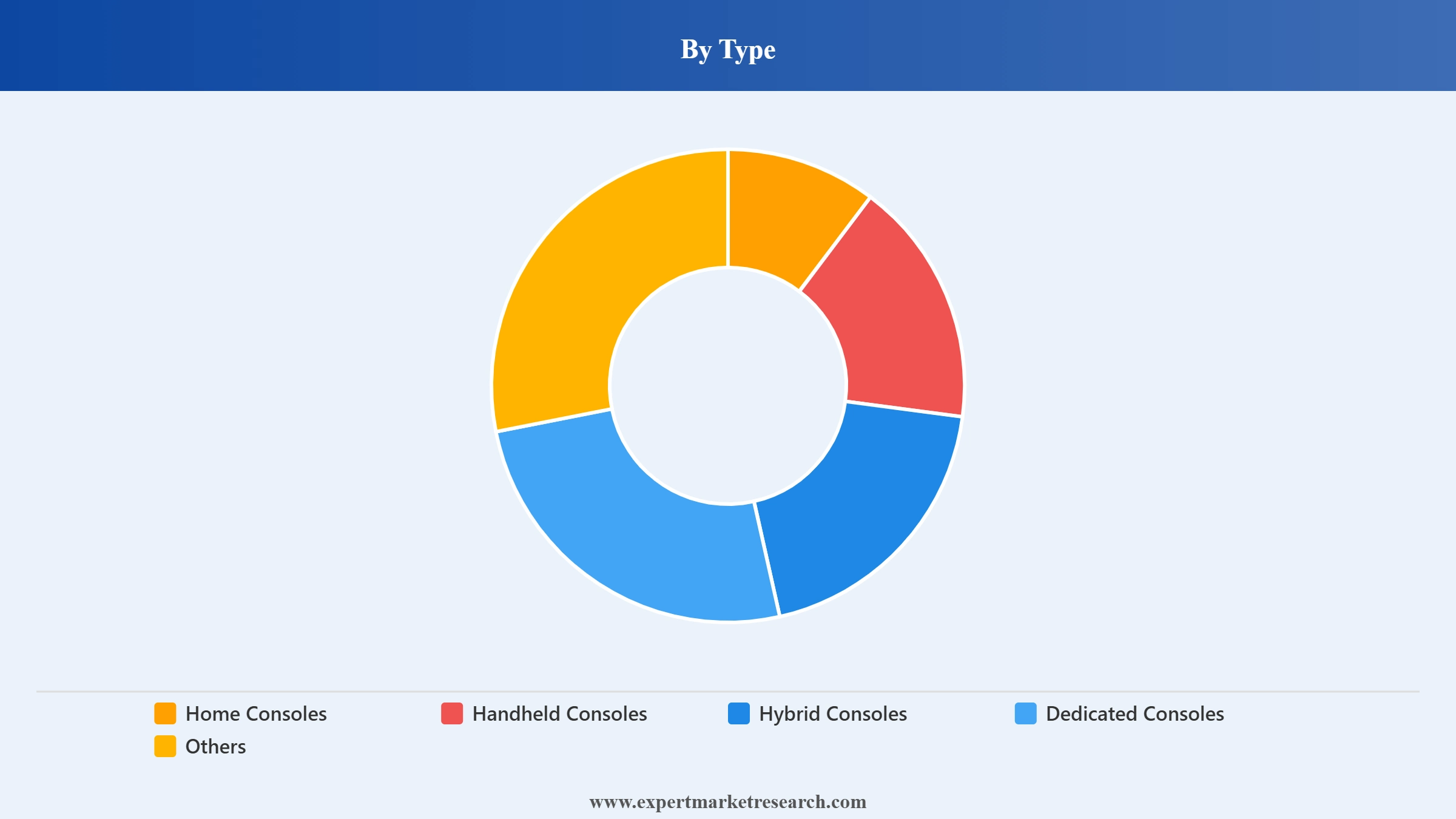
Based on type, the market can be segmented into:
Key Insight: Growth trends in the gaming console market show wide variation in their different product forms. The home consoles retain their leadership position because of advanced processing features, unique software, and existing digital platforms. Handheld gaming consoles keep appealing to those consumers who value portability and accessibility during travel and commuter hours. In August 2025, ROG Xbox Ally launched with AMD Ryzen processors, Xbox integration, and enhanced portable gaming performance. Hybrid consoles are expected to become more popular for offering mobile solutions along with high-quality game playing. The dedicated consoles continue to be popular in specific uses and among certain consumers because of their focus on ease of use and lower cost.
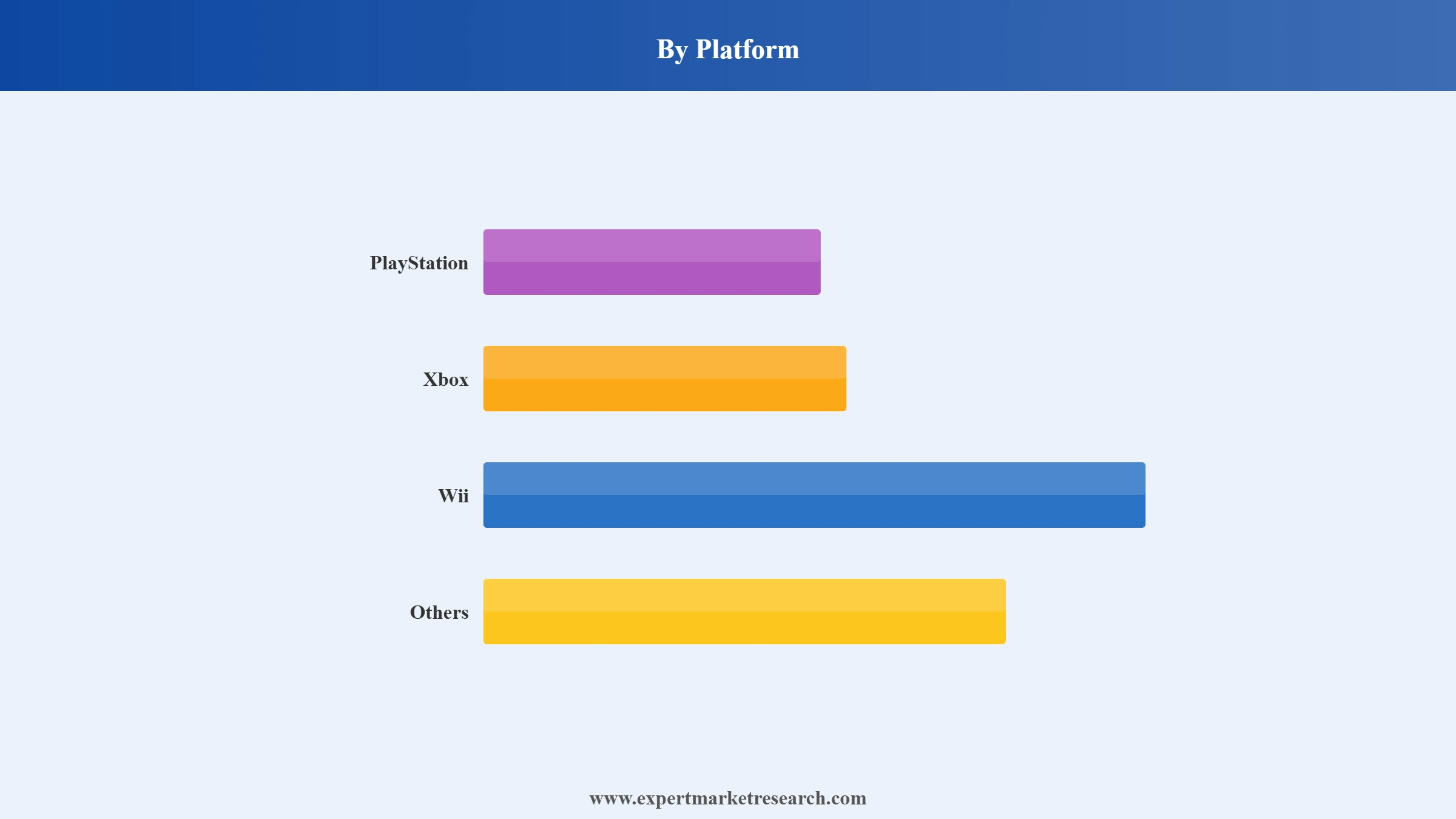
On the basis of platform, the gaming console market segmentation includes:
Key Insight: The competition between different platform players is largely defined by the ecosystem approach and content distinction. PlayStation is ahead due to unique intellectual property, close ties with developers, and superior gaming experience. Xbox is expanding its share rapidly owing to cloud gaming, subscription-based strategy, and wide availability on multiple devices. Wii keeps remaining relevant for consumers interested in motion gaming and games for families. Other platforms make their contributions due to their specialization and regional peculiarities, accelerating the gaming console market value.
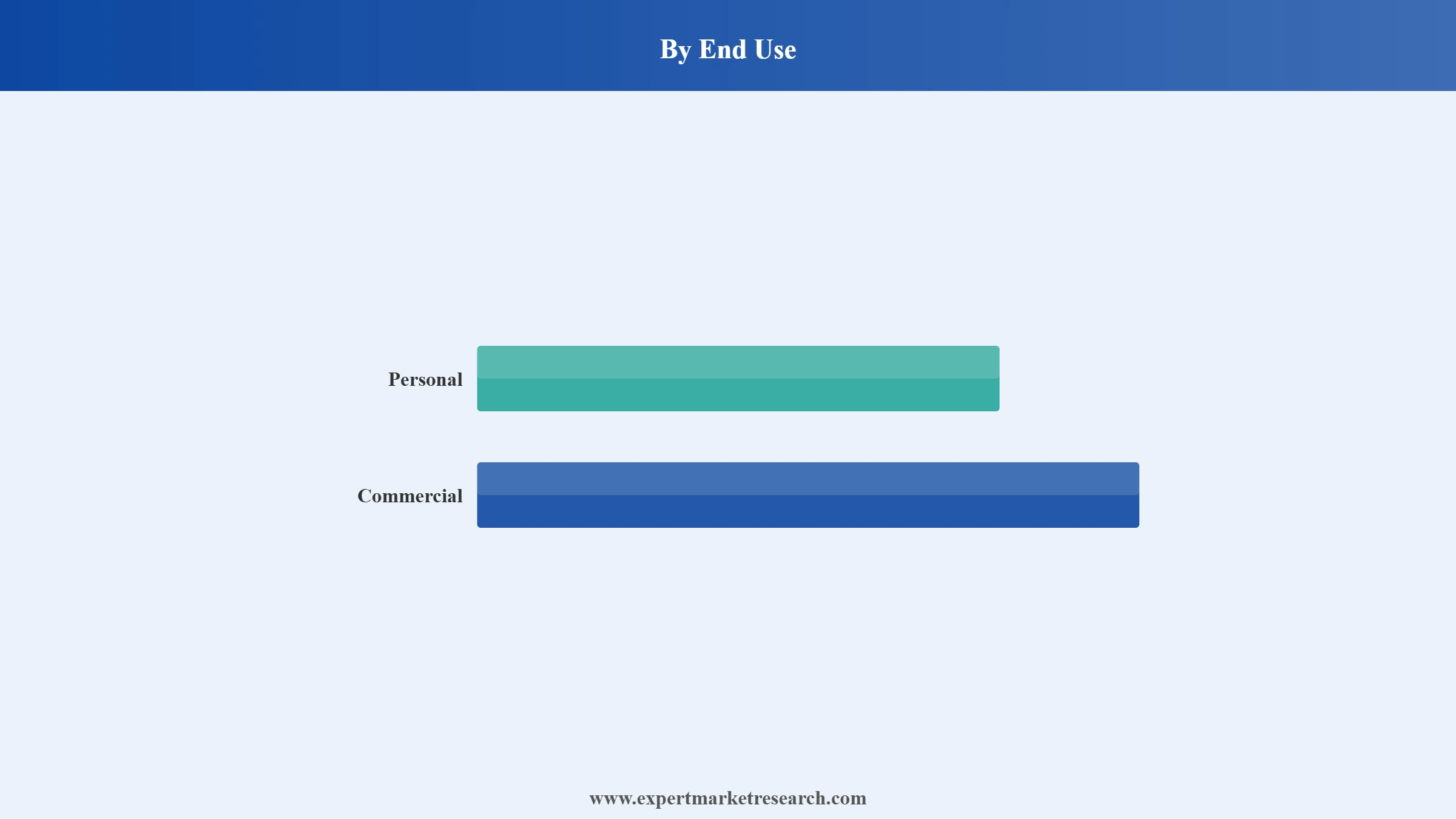
Based on end use, the market is divided into:
Key Insight: The end user requirements in the gaming console market can be attributed to consumer entertainment as well as commercial engagement. Personal users remain the major players due to their interests in gaming immersion, entertainment, and digital communication. The use of gaming consoles among commercial organizations increases because of the need to organize esports, customer engagement, and premium entertainment services. Although consumers emphasize content access and entertainment, commercial organizations aim at audience attraction and efficient use of gaming consoles.
On the basis of distribution channel, the market is divided into:
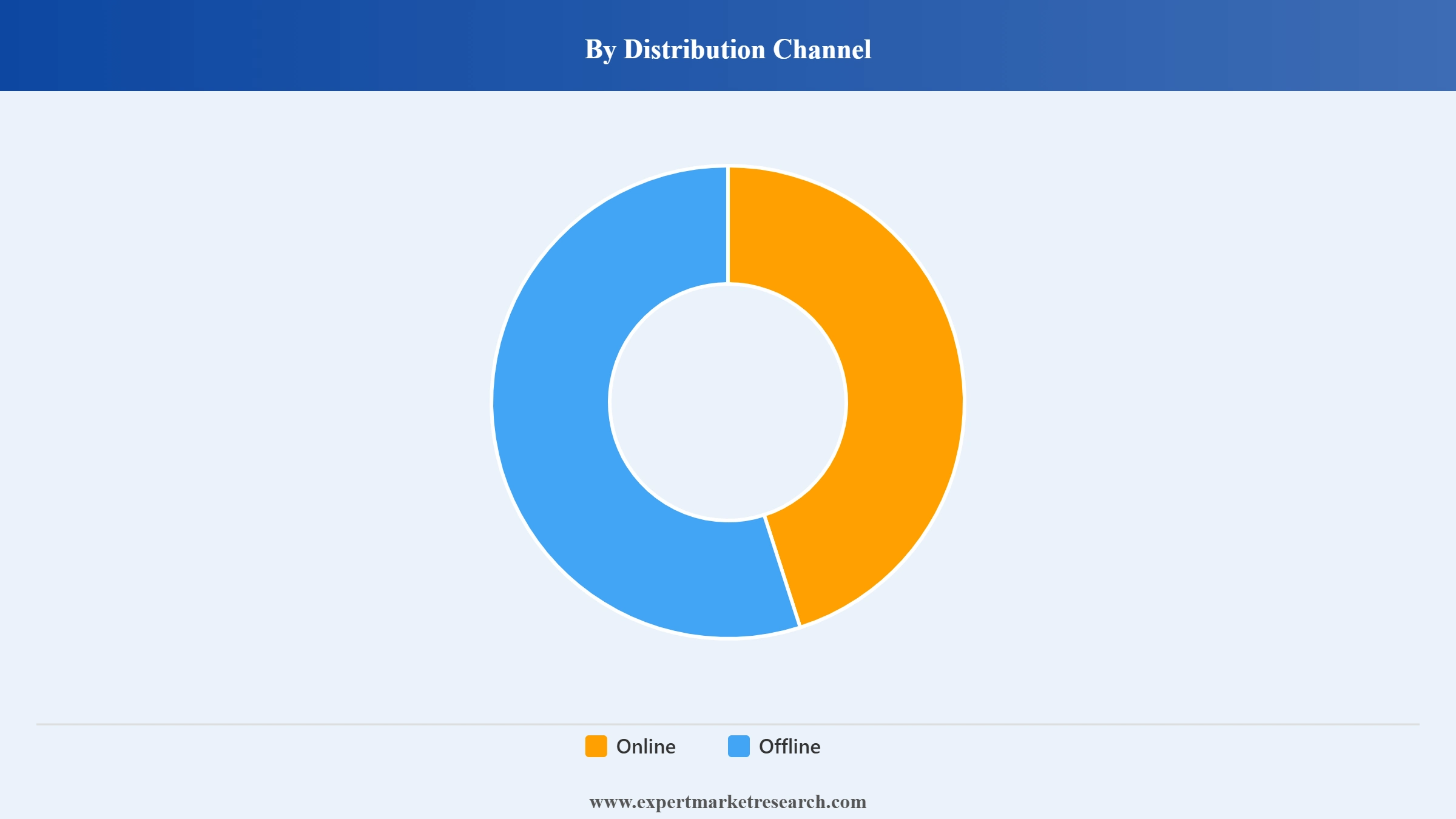
Key Insight: Distribution trends in the gaming console market are characterized by an effective combination of the capabilities of offline methods of promotion along with new opportunities provided by online business practices. Offline distribution becomes crucial owing to its benefits such as product exposure, consumers' engagement, and relationships between the manufacturer and offline retailers. At the same time, online distribution becomes popular due to its convenience, wide array of products, and consumer involvement.
On the basis of region, the market is classified into:
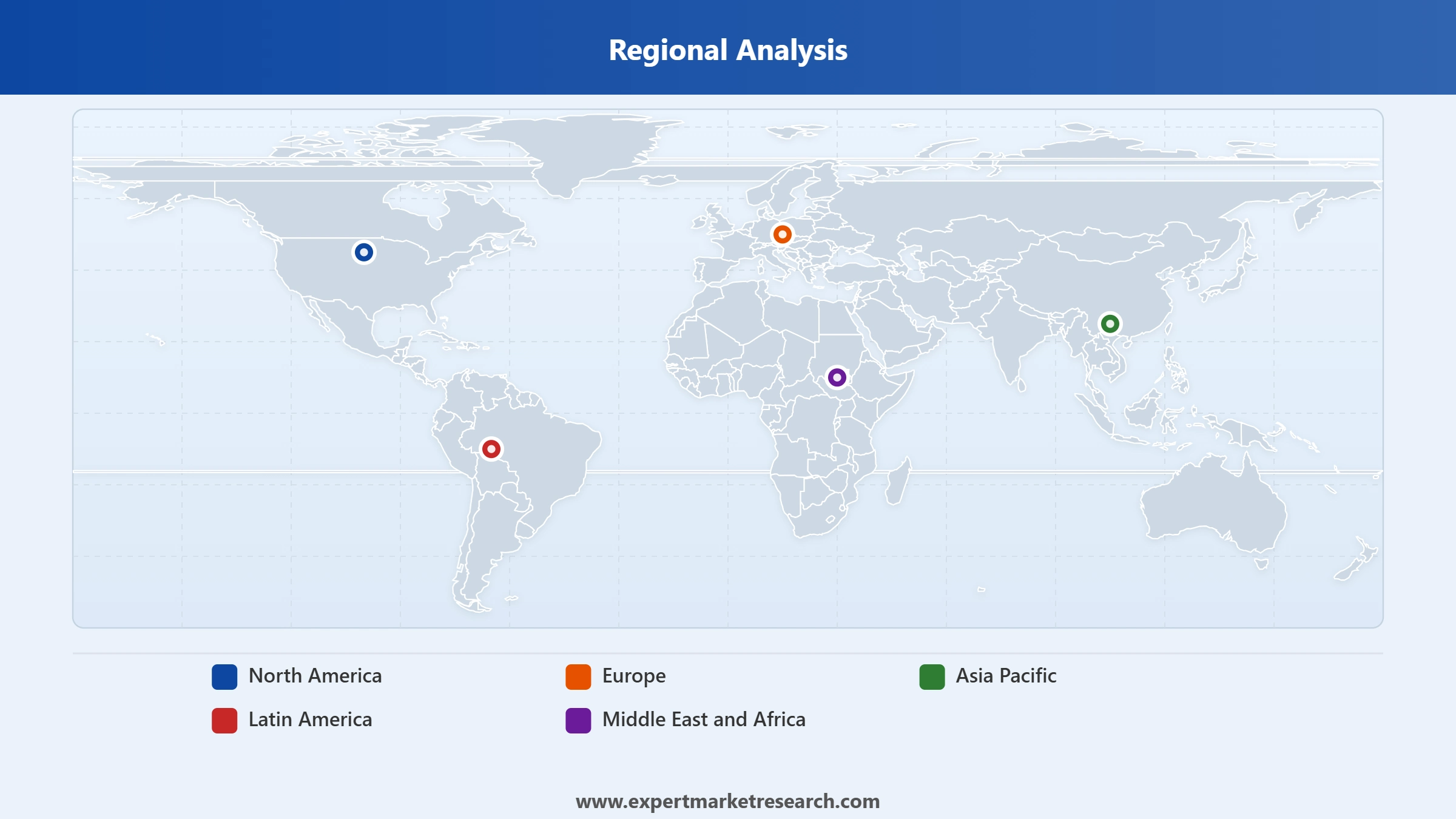
Key Insight: The performance of regional gaming console markets is characterized by varying degrees of consumer sophistication, technology uptake, and content demand. North America takes the lead in terms of mature gaming ecosystems, high-end spending habits, and high levels of platform usage. Europe gets advantages through its diverse gaming culture and increasing demand for digital content. The market in Asia Pacific is driven by increased gaming population and technological advancements. Latin America is experiencing growth due to increased internet connectivity and platform availability. On the other hand, the Middle East and Africa benefit from increased investment in digital infrastructure and interest in interactive entertainment.




Read more about this report - REQUEST FREE SAMPLE COPY IN PDF
Home consoles register the largest share of the market due to exclusive content ecosystems and premium gaming performance
Home consoles remain dominant in the gaming console market, as gamers prefer to play games that are fast and powerful, with high graphics, exclusive gaming brands, and entertainment features. Companies like Sony and Microsoft are building up platform loyalty using subscriptions, cloud gaming and proprietary content library. The segment also enjoys growth in the market due to multiplayer games, esports, and home entertainment systems. Developer support and digital content purchase are among other aspects that add to the commercial appeal of the segment for the publishers and hardware makers. In August 2025, Microsoft partnered with ASUS to launch ROG Xbox Ally handhelds, strengthening competition in portable gaming.
Read more about this report - REQUEST FREE SAMPLE COPY IN PDF
Hybrid consoles are experiencing high rates of growth in the gaming console market as consumers prefer to have a choice between portable gaming and playing their games through the television. The segment offers products which do not compromise game quality, while adding ease of use. Hardware makers are concentrating on designing light devices that consume less energy and have more content. The segment is also attractive to families and young people who prefer a flexible gaming environment.
PlayStation platforms account for the largest share of the market owing to strong exclusive franchises and ecosystem loyalty
PlayStation retains its leading position in the gaming console market as a result of its large number of exclusive games, advanced features of hardware, and high level of users' engagement. Sony keeps enhancing its ecosystem using digital subscriptions, development of its own video games, and multimedia features. Moreover, PlayStation enjoys brand awareness in both developed and developing gaming markets. In March 2024, Sony reportedly planned a PlayStation 5 Pro variant with improved graphics, AI upscaling, and enhanced gaming performance.
Read more about this report - REQUEST FREE SAMPLE COPY IN PDF
Xbox is showing considerable share in the gaming console market as a result of Microsoft's efforts to expand its gaming ecosystem using subscriptions, cloud gaming, and connecting different devices. The strategy of Microsoft consists of making game content available on consoles, personal computers, and other connected devices along with engaging customers through subscriptions. Investments in game studios and digital platforms increase the competitive position of the platform. Businesses involved in the gaming value chain see Xbox as a suitable platform for distributing their content.
Personal users generate the largest share of the market due to widespread household gaming adoption
The individual category constitutes the largest share of the gaming console market revenue since consoles continue being an ideal source of entertainment at home. Individuals continue buying gaming systems to gain enjoyment from their games, connections made online, and access to other digital contents. Console manufacturers target individuals through exclusive titles, subscriptions, and individualized experiences. Increased engagement in online multiplayer games is also improving consumer engagement. Demonstrating this shift, in June 2026, MSI launched the Claw 8 AI+ handheld, featuring Intel Arc graphics, AI enhancements, and extended battery life.
Read more about this report - REQUEST FREE SAMPLE COPY IN PDF
In terms of commercial use, gaming consoles are being adopted faster by businesses because of the rising investments in gaming arenas, gaming lounges, entertainment centers, and hospitality centers. Businesses are adopting more advanced gaming systems to differentiate themselves from other businesses and to draw customers to their venues. Competitive and community gaming is also becoming an important factor in the adoption of gaming consoles commercially. Manufacturers and publishers of gaming consoles are also actively engaging in promoting competitive gaming.
Offline channels register the largest share of the market due to hands-on purchasing and retail partnerships
Offline distribution plays an important role in generating the gaming console market revenue because of the customers' preference for demonstration in stores, instant buying, and promotions. Electronics shops, gaming specialty shops, and retail networks are important channels through which major manufacturers distribute their products. Offline retailing allows for bundled deals, selling additional products like accessories, and providing customer support services. Collaboration between gaming console brands and retail networks makes sure that these channels remain effective in terms of visibility and trust. The benefits listed above make offline distribution relevant despite further development of online commerce.
Read more about this report - REQUEST FREE SAMPLE COPY IN PDF
Online distribution develops rapidly along with the growing tendency of consumers to buy gaming consoles via e-commerce sites and digital stores operated by the brands themselves. It allows accessing various options, promotion offers, and delivery services. Manufacturers develop the direct-to-customer strategy in order to establish good relationships with customers and enhance their buying experience. It is possible to offer hardware along with subscriptions and downloadable content within the digital retail channel. In June 2026, Valve launched the Steam Machine console, bringing PC gaming performance and SteamOS integration home.
North America dominates the market owing to strong console ecosystems and digital spending
The North American gaming console market continues to be the largest industry on account of high spending power, gaming communities, and the availability of digital gaming solutions among consumers. The region hosts key global players, gaming console makers, and technology providers that help in fostering ecosystem expansion. Demand for premium gaming experience, gaming subscription, and online multiplayer gaming continues to drive gaming console purchases. Software, esports, and content creation businesses in the region benefit from their gaming infrastructure, thus maintaining the lead of North America in the global gaming market. In June 2026, Nex and SEGA partnered to bring Sonic-themed interactive gaming experiences to Nex Playground in Q4 2026.
Read more about this report - REQUEST FREE SAMPLE COPY IN PDF
The fastest growth in the gaming console market is recorded in the Asia Pacific region owing to an increasing number of gamers in developing and developed economies in the region. Internet accessibility, higher disposable income levels, and strong affinity towards digital entertainment are driving the adoption of gaming consoles in the region. Consumers of the region are looking for premium gaming experience, and at the same time local gaming content developers are producing content in line with the diversity of consumers. In June 2026, OnMobile launched the ONMO+ Smart Console on Flipkart, expanding cloud-based gaming accessibility for Indian consumers.
The industry is evolving towards competition, where gaming console companies are shifting their focus from hardware-based products to creating an ecosystem that will sustain in the long run. They are focusing on cloud gaming, artificial intelligence-driven game creation, subscription-based offerings, and content portfolios for enhanced user engagement. In this context, Sony is offering immersive entertainment experiences through haptics and premium first-party games. Microsoft is bringing its artificial intelligence and cloud computing capabilities into its Xbox platform. Nintendo is continuing with its hybrid gaming innovation and family-friendly content strategy. Accessory makers like Logitech are offering high-quality peripherals for better console performance and esports experience.
There is a range of opportunities coming up in cross-platform gaming, digital subscriptions, cloud gaming, and community-driven creator gaming. Personalized games through AI technology, portable gaming solutions, and entertainment service-based games are other ways that companies are exploring to generate recurring revenues. Partnerships with game studios and technology providers are among the top focus areas for gaming console market players competing for user loyalty.
Founded in 1946 and located in Tokyo, Japan, Sony Corporation continues to be a major player in the industry via its PlayStation line. The company has emphasized exclusive gaming franchises, sophisticated controllers, and subscription services in this sector. Further investments in the gaming console market include cloud gaming, haptic technology, and cross-media offerings to enhance user experience and revenue generation from the digital space.
Founded in 1975 and located in Redmond, Washington, United States, Microsoft Corporation operates in the gaming console industry via its Xbox platform. The company is focusing on Game Pass subscriptions, cloud gaming accessibilities, and artificial intelligence-based gaming experiences. By making investments in game studios and digital infrastructure, the company is able to create an ecosystem where gaming content can be accessed on consoles, PC, and cloud-enabled devices.
Nintendo Co., Ltd was founded in 1889 and is based in Kyoto, Japan. It targets the gaming console industry with innovative hardware and renowned intellectual properties. The company solidified its position in the market with the hybrid gaming concept that emerges through the Switch platform. Nintendo continues targeting the gaming console market through family-friendly entertainment, portability, and exclusive franchises.
Logitech International SA was founded in 1981 and is based in Lausanne, Switzerland. The company serves the gaming console industry with innovative gaming hardware and accessories. Logitech provides high-quality controllers, racing simulator devices, headsets, and streamer kits for casual and professional gamers. Logitech is increasingly catering to the esports community with innovative products that improve gameplay accuracy and engagement.
Other key players in the market include Atari Inc., Meta Platforms Technologies, LLC, Samsung Electronics Co. Ltd., Valve Corporation, HTC Corporation, ASUSTEK Computer Inc., and Anbernic.
*Please note that this is only a partial list; the complete list of key players is available in the full report. Additionally, the list of key players can be customized to better suit your needs.*
Unlock the latest insights with our gaming console market trends 2026 report. Discover regional growth patterns, consumer preferences, and key industry players. Stay ahead of competition with trusted data and expert analysis. Download your free sample report today and drive informed decisions in the market.


Upto 15% Off
USD
$2999 $2699
$4839 $4355
$5999 $5099
$7259 $6170


*While we strive to always give you current and accurate information, the numbers depicted on the website are indicative and may differ from the actual numbers in the main report. At Expert Market Research, we aim to bring you the latest insights and trends in the market. Using our analyses and forecasts, stakeholders can understand the market dynamics, navigate challenges, and capitalize on opportunities to make data-driven strategic decisions.*
In 2025, the gaming console market reached an approximate value of USD 60.30 Billion.
The gaming console market is assessed to grow at a CAGR of 7.20% between 2026 and 2035.
The market is estimated to witness healthy growth in the forecast period of 2026-2035 to reach a value of around USD 120.86 Billion by 2035.
The major drivers of the market include technological advancements, increasing disposable incomes of gamers, availability of various gaming options, and rising awareness regarding the numerous benefits offered by gaming consoles.
Advent of VR and AR technologies and surge in the number of gamers are the key trends propelling the growth of the market.
The major regions in the market are North America, Latin America, the Middle East and Africa, Europe, and the Asia Pacific.
Home consoles, handheld consoles, hybrid consoles, and dedicated consoles, among others, are the different types of gaming console in the market.
The major platforms of gaming console are PlayStation, Xbox, and Wii, among others.
The various end uses of gaming consoles are personal and commercial.
The significant distribution channels in the market are online and offline.
The major players in the market are Sony Corporation, Microsoft Corporation, Nintendo Co., Ltd, Logitech International SA, Atari Inc., Meta Platforms Technologies, LLC, Samsung Electronics Co. Ltd., Valve Corporation, HTC Corporation, ASUSTEK Computer Inc., and Anbernic.
Explore our key highlights of the report and gain a concise overview of key findings, trends, and actionable insights that will empower your strategic decisions.
| REPORT FEATURES | DETAILS |
| Base Year | 2025 |
| Historical Period | 2019-2025 |
| Forecast Period | 2026-2035 |
| Scope of the Report |
Historical and Forecast Trends, Industry Drivers and Constraints, Historical and Forecast Market Analysis by Segment:
|
| Breakup by Type |
|
| Breakup by Platform |
|
| Breakup by End Use |
|
| Breakup by Distribution Channel |
|
| Breakup by Region |
|
| Market Dynamics |
|
| Competitive Landscape |
|
| Companies Covered |
|
Datasheet
One User
USD 2,999
USD 2,699
tax inclusive*
Single User License
One User
USD 4,839
USD 4,355
tax inclusive*
Five User License
Five User
USD 5,999
USD 5,099
tax inclusive*
Corporate License
Unlimited Users
USD 7,259
USD 6,170
tax inclusive*
*Please note that the prices mentioned below are starting prices for each bundle type. Kindly contact our team for further details.*
Flash Bundle
Small Business Bundle
Growth Bundle
Enterprise Bundle
*Please note that the prices mentioned below are starting prices for each bundle type. Kindly contact our team for further details.*
Flash Bundle
Number of Reports: 3
20%
tax inclusive*
Small Business Bundle
Number of Reports: 5
25%
tax inclusive*
Growth Bundle
Number of Reports: 8
30%
tax inclusive*
Enterprise Bundle
Number of Reports: 10
35%
tax inclusive*
How To Order

Select License Type
Choose the right license for your needs and access rights.

Click on ‘Buy Now’
Add the report to your cart with one click and proceed to register.

Select Mode of Payment
Choose a payment option for a secure checkout. You will be redirected accordingly.
Strategic Solutions for Informed Decision-Making
Gain insights to stay ahead and seize opportunities.

Get insights & trends for a competitive edge.

Track prices with detailed trend reports.

Analyse trade data for supply chain insights.

Leverage cost reports for smart savings

Enhance supply chain with partnerships.

Connect For More Information
Our expert team of analysts will offer full support and resolve any queries regarding the report, before and after the purchase.
Our expert team of analysts will offer full support and resolve any queries regarding the report, before and after the purchase.
We employ meticulous research methods, blending advanced analytics and expert insights to deliver accurate, actionable industry intelligence, staying ahead of competitors.
Our skilled analysts offer unparalleled competitive advantage with detailed insights on current and emerging markets, ensuring your strategic edge.
We offer an in-depth yet simplified presentation of industry insights and analysis to meet your specific requirements effectively.




