

Consumer Insights
Uncover trends and behaviors shaping consumer choices today
Procurement Insights
Optimize your sourcing strategy with key market data
Industry Stats
Stay ahead with the latest trends and market analysis.
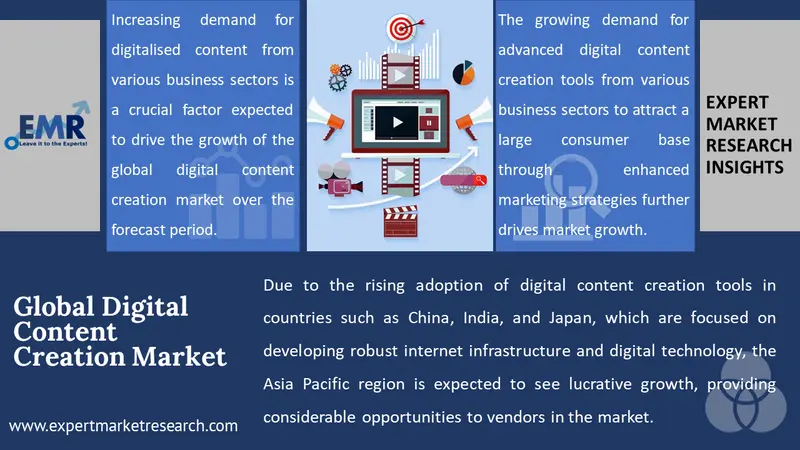
The global digital content creation market reached USD 37.54 Billion in 2025 and is projected to expand at a CAGR of 12.50% over the forecast period of 2026-2035, reaching USD 121.90 Billion by 2035. The growing adoption of AI-powered content generation tools among global marketing agencies is fast-tracking turnaround times and enabling scalable B2B campaigns with a consistent brand voice across multiple regional markets.
The growing influence of social media globally is boosting the need for content creation. According to the Press Information Bureau (PIB) of India, the country's broadband user base surged from 60 million to 810 million over eight years, while smartphone users grew from 150 million to 750 million. The World Bank reports that the internet was accessed by 63% of the global population in 2021, sustaining content-creation demand across both mature and emerging digital economies. In countries like South Korea and Singapore, government-backed AI innovation labs are producing generative tools for real-time content rendering.

Compound Annual Growth Rate
12.5%
Value in USD Billion
2026-2035
Get a sample of the market report in PDF – REQUEST A FREE SAMPLE
The Tools sub-segment dominates the component split. Tools form the fundamental building blocks that enable creators to produce and manipulate digital content efficiently, encompassing software applications and platforms for graphic design, video editing, animation and audio production. Services wrap around these tools, covering integration, deployment, training and managed-content offerings.
The trajectory is anchored by generative AI integration across creative suites, enterprise adoption of AI-augmented content workflows, and the continued expansion of social media and mobile-first audiences across emerging economies particularly across South and Southeast Asia.
The analysis triangulates primary interviews with industry stakeholders, secondary research across government and authority sources (including the Press Information Bureau, the World Bank and the European Commission), and proprietary modelling to arrive at the segmentation and regional outlook presented in the report.
Read more about this report - REQUEST FREE SAMPLE COPY IN PDF
AI-powered content generation has shifted from a novelty to an operational layer inside content production stacks. Adobe has embedded generative AI across its Creative Cloud suite, enabling agencies to automate high-volume creative content at enterprise-grade quality. Canva is positioning itself as an enterprise platform with its "Magic Studio" rollout that supports brand governance and cross-team collaboration. Microsoft Designer, infused with Copilot, is being adopted by HR teams to build recruitment and internal communication content.
Tools remain the largest component in the global market not just for their usage but because they anchor entire content ecosystems. Platforms like Figma, integrated with DevOps pipelines, now support design-to-code exports, reducing production lag in enterprise application development. Tools such as Canva for Teams and Adobe Experience Manager dominate marketing and creative teams inside large enterprises.
As generative content scales, content authenticity and licensing are becoming critical. In March 2019, IBM partnered with Shutterstock to pilot a blockchain-based licensing solution. The European Commission's Digital Services Act has gone on to support decentralised solutions that boost content authenticity. For B2B platforms operating in knowledge commerce or stock media, this integration ensures transparency across the content supply chain.
Digital content tools are seeing rising enterprise adoption driven by growing demand for design automation and smart content pipelines. Marketing, HR and product teams inside large enterprises are standardising on browser-based, AI-augmented platforms to compress content production cycles and maintain brand consistency.
The growing influence of social media globally is the primary driver of content-creation demand. India's eight-year leap from 60 million to 810 million broadband subscribers and 150 million to 750 million smartphone users figures reported by the Press Information Bureau (PIB) illustrates the scale of mobile-first content demand emerging across high-growth economies.
AI-powered content generation tools are fast-tracking turnaround times for global marketing agencies, enabling scalable B2B campaigns with consistent brand voice across multiple regional markets a structural growth driver for the forecast period.
Government-backed AI innovation labs in South Korea and Singapore are producing generative tools for real-time content rendering, accelerating regional capability and market expansion.
According to the World Bank, 63% of the global population accessed the internet in 2021 a demand surface that continues to widen each year and fosters sustained content-creation growth.
As generative AI scales, ensuring content authenticity and managing licensing complexity becomes critical. Initiatives such as the IBM–Shutterstock blockchain-based licensing pilot and the European Commission's Digital Services Act point to the regulatory and operational complexity that enterprises must navigate when scaling AI-generated content.
Maintaining consistent brand voice across multiple regional markets at scale is a recurring challenge for global marketing agencies one that AI-powered content generation tools are increasingly designed to address.
The EMR’s report titled “Global Digital content Creation Market Report and Forecast 2026-2035” offers a detailed analysis of the market based on the following segments:
Market Breakup by Component
Key Insight: Tools remain the largest component in the global market, not just for their usage but also because they anchor entire content ecosystems. Platforms like Figma, integrated with DevOps pipelines, now support design-to-code exports. This reduces production lag in enterprise app development. For instance, Microsoft Designer, infused with Copilot, is being adopted by HR teams to build recruitment and internal communication content. This cross-functional usability makes tools heavily relied on across departments.
Market Breakup by Content Format
Key Insight: Video dominates the digital content creation industry, not just in viewership but also in conversion impact. LinkedIn reports that video posts earn 3x more engagement for B2B brands than text-only ones. AI subtitles, language toggles, and click-through CTAs are new trends that are accelerating this category’s growth. Salesforce now integrates explainer videos directly into product pages. This is a practice that is being increasingly adopted by SaaS platforms globally.
Market Breakup by Deployment Type
Key Insight: Cloud remains the largest deployment mode further stimulating the digital content creation market value by sheer volume of users and flexibility. It enables global marketing rollouts in hours. Adobe’s Experience Cloud, for instance, now supports multilingual asset libraries accessible by distributed teams. Companies like Canva and Bynder are also expanding their cloud-native offerings with built-in brand governance and analytics dashboards. These platforms streamline collaboration across geographies and allow real-time asset versioning. Additionally, cloud deployment reduces infrastructure costs, making it highly attractive for SMEs and large enterprises alike.
Market Breakup by Enterprise Size
Key Insight: Large enterprises considerably accelerate the digital content creation market growth, not merely in volume, but in innovation. Their shift to “content factories” powered by AI, LLMs, and custom automation workflows is setting new efficiency benchmarks. For example, Unilever’s in-house content studio uses predictive performance analytics to decide what to publish and when, to streamline operations. These companies are also driving demand for modular content frameworks, where content blocks are dynamically assembled based on channel and audience.
Market Breakup by End Use
Key Insight: Media and entertainment register the biggest share of the digital content creation market revenue. This sector dictates format adoption cycles, from vertical video to immersive storytelling. In February 2024, Disney+ employed real-time rendered promos using generative AI. Furthermore, influencer-driven microcontent is being industrialised, and broadcasters are leaning on AI-generated anchor scripts and localised dubbing. Studios are even testing dynamic content that adapts based on viewer profiles.
Market Breakup by Region
Key Insight: North America maintains a substantial share of the global market owing to the widespread adoption and penetration of digital content creation tools and services, along with their extensive application across various end-user categories in the region. With 92% of the population in the United States using the internet in 2024, this trend is expected to continue to grow.
Access Detailed Forecasts & Data-Driven Insights – Download Free PDF
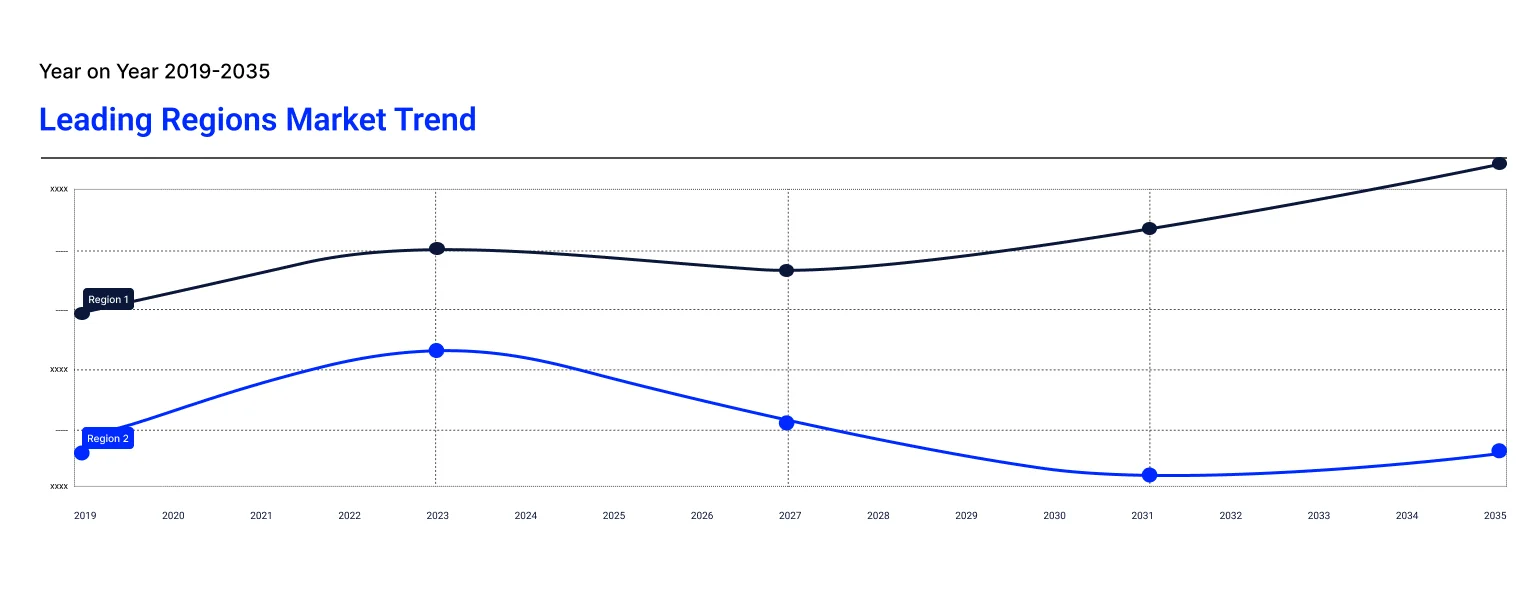
North America maintains a substantial share of the global market owing to widespread adoption and penetration of digital content creation tools and services across various end-user categories. According to authority data, the United States had one of the highest levels of internet penetration globally in 2024, anchoring sustained demand across enterprise marketing, media and creative teams in the region.
The United States is the anchor country in the regional mix, with deep penetration of digital content creation tools and services across enterprise marketing, media and creative teams.
Europe forms a major regional pillar. Regulatory frameworks such as the European Commission's Digital Services Act are shaping decentralised content authenticity and licensing models across the region.
Asia Pacific is a high-growth region for digital content creation. Government-backed AI innovation labs in South Korea and Singapore are producing generative tools for real-time content rendering. India's broadband expansion (60 million to 810 million users in eight years, per PIB) and smartphone growth (150 million to 750 million, per PIB) are creating one of the largest demand bases globally.
Latin America is covered as a discrete regional segment, with analysis tracking adoption of digital content tools and services across the region's growing creator and enterprise base.
The Middle East and Africa region completes the global segmentation, with analysis covering the evolving adoption of digital content tools and services across the sub-regions.
Most of the leading digital content creation market players are enabling smart, scalable storytelling ecosystems. Adobe’s recent move to embed generative AI across its Creative Cloud has allowed agencies to automate high-volume creative content at enterprise-grade quality. Canva is positioning itself as an enterprise platform with its “Magic Studio” rollout that supports brand governance and cross-team collaboration. Meanwhile, Synthesia and Runway are making waves with AI video and synthetic media tailored for corporate L&D and product demonstration.
In addition, digital content creation companies like WPP and Accenture Interactive are acquiring niche content startups to offer bundled, industry-specific content services. A major opportunity lies in content orchestration and monetisation. Firms that offer cloud-native, API-integrated, and compliance-ready content stacks are finding favour among regulated sectors like healthcare and finance.
Adobe Inc., founded in 1982 in California, United States, is a renowned global software company recognised for its innovative, creative and digital marketing solutions, empowering individuals and businesses to create, manage, and deliver compelling content.
Corel Corporation, established in 1985 in Canada, is a leading software company acclaimed for its diverse range of graphic design, productivity, and digital media software, serving professionals and enthusiasts worldwide.
MarketMuse, Inc., founded in 2009 in the United States, provides AI-powered content intelligence and strategy solutions, enabling marketers and content creators to optimise content performance and drive organic growth effectively.
Quark Software Inc., established in 1981 in the United States, specialises in content automation and publishing software solutions, empowering organisations to streamline content workflows.
*Please note that this is only a partial list; the complete list of key players is available in the full report. Additionally, the list of key players can be customized to better suit your needs.*
Other key players in the market are Acrolinx GmbH, Aptara Inc., Avid Technology, Inc., PicsArt, Inc., Integra Software Services Pvt. Ltd., and Canva, among others.
The trajectory of the market will be shaped by the continued embedding of generative AI across creative suites, the rise of design-automation pipelines linked into DevOps and enterprise application development, and the institutionalisation of content authenticity and decentralised licensing frameworks supported by regulatory programmes such as the European Commission's Digital Services Act.
Why Rely on Expert Market Research?
Call to Action
Explore the latest trends shaping the digital content creation market 2026-2035 with our in-depth report. Gain strategic insights, future forecasts, and key market developments that can help you stay competitive. Download a free sample report or contact our team for customized consultation on digital content creation market trends 2026.
Digital Content Creation Market Report Snapshots
Augmented Reality Content Creation Market
Voice-Activated Content Creation Market
Blockchain-Based Content Authentication Market


Upto 15% Off
USD
$2999 $2699
$4839 $4355
$5999 $5099
$7259 $6170


*While we strive to always give you current and accurate information, the numbers depicted on the website are indicative and may differ from the actual numbers in the main report. At Expert Market Research, we aim to bring you the latest insights and trends in the market. Using our analyses and forecasts, stakeholders can understand the market dynamics, navigate challenges, and capitalize on opportunities to make data-driven strategic decisions.*
The market is projected to grow at a CAGR of 12.50% between 2026 and 2035.
The revenue generated from the digital content creation market is expected to reach USD 121.90 Billion in 2035.
The market is categorised based on the component into tools and services.
The key players are Adobe Inc., Corel Corporation, MarketMuse, Inc., Quark Software Inc., Acrolinx GmbH, Aptara Inc., Avid Technology, Inc., PicsArt, Inc., Integra Software Services Pvt. Ltd., and Canva, among others.
Based on the content format, the market is divided into textual, graphical, video, audio, and others.
Based on the enterprise size, the market is divided into large enterprises and small and medium enterprises.
The market is broken down into North America, Europe, Asia Pacific, Latin America, and Middle East and Africa.
In 2025, the digital content creation market reached an approximate value of USD 37.54 Billion.
Key strategies driving the market include investing in AI-driven tools, streamlining localization pipelines, building vertical-specific content platforms, partnering with niche tech startups, and embedding compliance-ready features to scale secure, high-impact content creation globally.
The key challenges are data privacy compliance, content saturation, high localization costs, lack of skilled creators, and keeping up with AI advancements while maintaining consistent brand voice across platforms and geographies.
Explore our key highlights of the report and gain a concise overview of key findings, trends, and actionable insights that will empower your strategic decisions.
| REPORT FEATURES | DETAILS |
| Base Year | 2025 |
| Historical Period | 2019-2025 |
| Forecast Period | 2026-2035 |
| Scope of the Report |
Historical and Forecast Trends, Industry Drivers and Constraints, Historical and Forecast Market Analysis by Segment:
|
| Breakup by Component |
|
| Breakup by Content Format |
|
| Breakup by Deployment Type |
|
| Breakup by Enterprise Size |
|
| Breakup by End Use |
|
| Breakup by Region |
|
| Market Dynamics |
|
| Value Chain Analysis |
|
| Competitive Landscape |
|
| Companies Covered |
|
Datasheet
One User
USD 2,999
USD 2,699
tax inclusive*
Single User License
One User
USD 4,839
USD 4,355
tax inclusive*
Five User License
Five User
USD 5,999
USD 5,099
tax inclusive*
Corporate License
Unlimited Users
USD 7,259
USD 6,170
tax inclusive*
*Please note that the prices mentioned below are starting prices for each bundle type. Kindly contact our team for further details.*
Flash Bundle
Small Business Bundle
Growth Bundle
Enterprise Bundle
*Please note that the prices mentioned below are starting prices for each bundle type. Kindly contact our team for further details.*
Flash Bundle
Number of Reports: 3
20%
tax inclusive*
Small Business Bundle
Number of Reports: 5
25%
tax inclusive*
Growth Bundle
Number of Reports: 8
30%
tax inclusive*
Enterprise Bundle
Number of Reports: 10
35%
tax inclusive*
How To Order

Select License Type
Choose the right license for your needs and access rights.

Click on ‘Buy Now’
Add the report to your cart with one click and proceed to register.

Select Mode of Payment
Choose a payment option for a secure checkout. You will be redirected accordingly.
Strategic Solutions for Informed Decision-Making
Gain insights to stay ahead and seize opportunities.

Get insights & trends for a competitive edge.

Track prices with detailed trend reports.

Analyse trade data for supply chain insights.

Leverage cost reports for smart savings

Enhance supply chain with partnerships.

Connect For More Information
Our expert team of analysts will offer full support and resolve any queries regarding the report, before and after the purchase.
Our expert team of analysts will offer full support and resolve any queries regarding the report, before and after the purchase.
We employ meticulous research methods, blending advanced analytics and expert insights to deliver accurate, actionable industry intelligence, staying ahead of competitors.
Our skilled analysts offer unparalleled competitive advantage with detailed insights on current and emerging markets, ensuring your strategic edge.
We offer an in-depth yet simplified presentation of industry insights and analysis to meet your specific requirements effectively.




