

Consumer Insights
Uncover trends and behaviors shaping consumer choices today
Procurement Insights
Optimize your sourcing strategy with key market data
Industry Stats
Stay ahead with the latest trends and market analysis.
The global household robots market attained a value of USD 6.65 Billion in 2025 and is projected to expand at a CAGR of 22.00% through 2035. The market is further expected to achieve USD 48.58 Billion by 2035. Growing desire for autonomous outdoor upkeep services is prompting companies to design wireless outdoor robots equipped with artificial intelligence, obstacle detection, map making, adaptive trimming, and automatic charging features for bigger yards and lawns.
There are two particular considerations that impact the product strategies in the household robots market. On one hand, there are recent innovations in LiDAR sensors, computer vision, and edge AI that enhance the ability of robots to detect obstacles by recognizing furniture, wires, pets, and other objects around the house. On the other hand, cross-category platforms enable the sharing of batteries, navigation systems, apps, and charging technologies across robots, including vacuums, mowers, window cleaners, and pool-cleaning robots.
The household robots market is outgrowing conventional floor cleaning as robot makers integrate advanced artificial intelligence, superior sensors, and multifunctional automation within consumer-grade devices. For instance, Roborock's January 2025 launched Saros 10 features a retractable LiDAR sensor system paired with ultra-slim 7.98 cm frame, Reactive AI 3.0 obstacle detection feature and AdaptiLift chassis that makes it possible to move above thresholds. It is evident that the market moves towards creation of robots capable to work in diverse domestic settings, not just on mapped floors.
Product offerings are moving towards outdoor and special household automation, widening the household robots market scope. This progress encourages major players to transfer their navigation, perception and battery technologies to other segments. Chinese companies pursue this strategy especially intensively, using fast product life cycles and foreign market entry, increasing competition for established vendors of household appliances and robotics. For example, in August 2026, Sonardyne expanded SPRINT navigation into a scalable family, supporting diverse robotic systems with advanced inertial navigation capabilities.
Compound Annual Growth Rate
22%
Value in USD Billion
2026-2035
Read more about this report - REQUEST FREE SAMPLE COPY IN PDF
| Global Household Robots Market Report Summary | Description | Value |
| Base Year | USD Billion | 2025 |
| Historical Period | USD Billion | 2019-2025 |
| Forecast Period | USD Billion | 2026-2035 |
| Market Size 2025 | USD Billion | 6.65 |
| Market Size 2035 | USD Billion | 48.58 |
| CAGR 2019-2025 | Percentage | XX% |
| CAGR 2026-2035 | Percentage | 22.00% |
| CAGR 2026-2035 - Market by Region | Asia Pacific | 28.5% |
| CAGR 2026-2035 - Market by Country | India | 35.3% |
| CAGR 2026-2035 - Market by Country | China | 27.3% |
| CAGR 2026-2035 - Market by Offering | Product | 24.2% |
| CAGR 2026-2035 - Market by End Use | Companionship | 25.1% |
| Market Share by Country 2025 | France | 2.7% |
MOVA introduced more than 20 products ranging from robot vacuums, lawnmowers, pool cleaners, window robots, pet products, and even personal products. Firms specializing in house robotics can diversify their product lines beyond floor robots to include outdoor robots, pet robots, thereby boosting growth in the household robots market.
X Square robot unveiled advancements in humanoid robotics, especially in the areas of autonomous movement, intelligent interactions, and practical uses for automation in households. Firms can consider developing AI-based humanoid robots that perform different household functions.
Tau Robotics started its humanoid robot cleaning services for some specific customers in San Francisco, United States for an hourly charge of USD 30. Firms in the household robots market may consider the idea of providing robot as a service so that they save on initial expenses but earn recurring incomes from housecleaning purposes.
Stretch 4 was launched by Hello Robot, which is a wheeled mobile manipulator and is used for safe and practical assistance at home. This robot is an example of an autonomous navigation systemas well as remote robot.
The evolution of Generative AI technology is transforming robots used for household cleaning into systems capable of processing voice, vision, and environment-related data. Samsung is building a robot called Ballie, which works on Google Cloud Gemini, providing its conversational abilities to handle home environments, manage schedules, help with tasks based on audio, video, and sensor data. On the other hand, in August 2026, Ropedia launched HOMIE Gen2, expanding real-world physical AI data collection through autonomous humanoid robots for household task learning. This household robots market trend motivates producers to combine multimodal large models with navigation and motion control to develop robots able to perceive household intentions and react to them adaptively.
The household robots market has been evolving and is entering new areas like lawns, windows, pools, and other household chores that were being performed manually, developing new product categories for existing robotics companies. Companies such as Roborock, Dreame, Ecovacs, and Segway-Ninebot are broadening their navigation, cordless, and AI capabilities. For example, in October 2025, 1X launched NEO, a home humanoid robot designed to perform household tasks through autonomous capabilities and human guidance.
Embodied AI is becoming an approach to long-term product development with manufacturers attempting to integrate perception, reasoning, and manipulation capabilities to perform household chores. The 2025-2027 Beijing plan of embodied intelligence specifically emphasizes family services, elderly assistance, health monitoring, emotional companionship, intelligent housekeeping, and independent task planning. The city of Shanghai then announced goals of 100 top companies, 100 application cases and 100 embodied-intelligence products internationally competitive until 2027. On the other hand, in April 2026, X Square Robot showcased embodied AI, integrating foundation models, dexterous manipulation, and household robotics for adaptive real-world applications. These developments in the household robots market are compelling companies to create robots able to work in varied domestic environments, including manipulation of objects and performing assistance tasks, instead of focusing commercial products only on predictable cleaning operations.
Older population and caregiver shortage is becoming an important commercial way for household robots that are oriented to monitoring, assistance, companionship, and independent living. The government of Japan is updating their priorities in technology fields, increasing the number of priority technologies up to 16 in nine fields, such as home monitoring, dementia assistance, nutrition, bathing, and caregiving assistance. In China, there are pilot projects of intelligent elderly-care robots for home, community, and institutional environment used for health promotion, companionship, daily assistance, and dementia assistance purposes. Aligning with such trends in the household robots market, in January 2026, SwitchBot launched Onero H1, a wheeled humanoid household robot using on-device AI to perform diverse domestic tasks.
Wireless navigation is increasingly gaining importance as makers expand their services to gardens and other open areas. Players in the household robots industry are utilizing RTK localization technology, LiDAR sensors, computer vision, and AI mapping to lessen the installation process and increase autonomous navigation. Robotics ecosystems are getting more governmental backing, for example, in June 2025, Wuhan launched a three-year humanoid robot plan and a RMB 1 billion industry fund. On the other hand, in February 2026, Coco Robotics launched next-generation autonomous delivery robots, enhancing urban deliveries through improved navigation, safety, and operational efficiency.
Read more about this report - REQUEST FREE SAMPLE COPY IN PDF
The Expert Market Research's report titled “Household Robots Market Report and Forecast 2026-2035” offers a detailed analysis of the market based on the following segments:
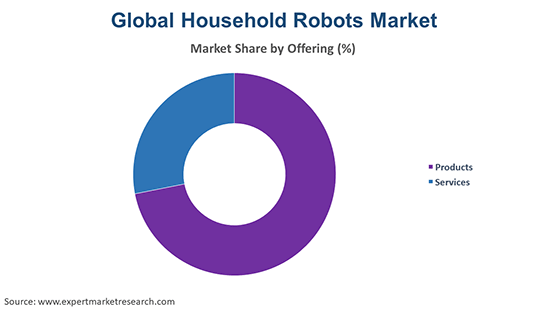
Market Breakup by Offering
Key Insight: The products segment is leading the household robots market growth through innovative hardware, navigational advancements, and autonomous capabilities, while services find applications in software dependency, maintenance requirements, remote diagnostics, and lifecycle management. The product providers are moving toward offering solutions in self-maintenance, increased life cycle, and smart home compatibility in order to increase the replacement. On the other hand, service providers are planning to offer recurrent services in relation to firmware, parts, diagnostics, and connectivity. These two solutions are increasingly inter-dependent owing to advanced hardware requires ongoing software optimization and technical assistance.
Market Breakup by Type
Key Insight: Domestic robots observe significant demand in the household robots market since consumers prefer practical application of robotics for performing repetitive household chores, which need little human intervention. Innovation in domestic robots revolves around navigation, autonomy of docking, object detection, and multizone operation. Robots for entertainment and leisure are being embraced due to their interactive and conversational abilities. The commercial success of entertainment and leisure robots is much more dependent on long-term user interaction compared to traditional domestic robots.
Market Breakup by Application
Key Insight: Vacuuming continues to be the most widely used function as there are many uses for autonomous navigation and scheduling within the domain of frequent floor cleaning, creating new household robots market opportunities. Lawn mowing records notable demand since the problem of outdoor navigation and boundary management is being resolved by equipment manufacturers. For example, in August 2026, Cobra launched two robotic lawn mowers, expanding autonomous outdoor maintenance solutions with advanced navigation and automated lawn-care capabilities. While pool-cleaning robots aim at efficiency in route design, collecting debris, and cleaning water lines, companionship robots have communication and socializing as their main features. Elder care and disability robots are under development as systems of monitoring, prompting, and practical help in housework.
Market Breakup by Region
Key Insight: The Asia Pacific household robots industry observes regional domination by way of its dense robotics value chain, electronics manufacturing industry, fast adoption of smart home appliances, and automation programs with governmental support. North America has its advantage in consumerism driven by technological innovation, high-end position of its appliances, and desire for convenience. Europe becomes more appealing to investors owing to its demographic trends, labor shortage, sustainability needs, and need for automation related to houses and homes. Latin America becomes an emerging market due to availability of its connected appliances and logistics.
By offering, products command the largest share of the market as autonomous devices gain adoption
Products emerge as the leading offering since hardware is responsible for delivering the main value proposition associated with household automation starting with automatic vacuum cleaners and ending with lawn and pool robots. Competitiveness in the household robots market is achieved via better sensing, compact docks, edge AI, increased battery life, and multi-surface navigation. Product iterations stimulate refresh cycles by means of comparing obstacle detection capabilities, mapping precision, maintenance abilities, and integration with home networks. In August 2026, LG Electronics expanded its robotics collaboration with NVIDIA, advancing AI-powered robots for smart home and commercial applications.
The most rapidly growing offering segment is represented by services as household robots become increasingly dependent on software, maintenance, connectivity and service lifetime. Players in the household robots market offer recurring revenues based on remote monitoring, software/firmware updates, replacement parts, navigation improvement, and technical support. Services decrease the friction of using the robots when these devices need sensing calibration, battery replacement, and dock maintenance.
By type, domestic robots generate maximum demand as consumers automate routine household tasks
Domestic robots make up the leading category behind the household robots market growth because the typical household chores represent easily repeatable actions that an autonomous robot can complete with little human supervision. The demand is boosted by innovations such as maps, obstacle recognition, self-cleaning stations, and appliance connectivity. The companies aim at achieving multi-room operation and independence from users. Entertainment and leisure robots make up another category due to their interactive interfaces, personalized content, social activities, and intelligent play. In May 2026, OpenAI-backed 1X Technologies launched NEO, a humanoid robot designed to perform household chores and assist users autonomously.
As per the household robots market report, entertainment and leisure robots are the most rapidly developing type as manufacturers try to utilize AI in order to create interactive experience and socialization beyond the basic cleaning functions. These products tend to feature cameras, microphones, expressive interfaces, conversational models, and other similar elements in order to make a companion or gaming system. The development of entertainment robots is favored by their use in families and education.
Vacuuming applications lead demand as mature navigation supports automated cleaning routines
Vacuuming is the primary application because floor cleaning is a common chore, for which autonomous navigation provides savings. Manufacturers refine obstacle detection, recognition, mopping, docking, and cleaning paths, sustaining demand in the household robots market. In July 2026, Dreame Technology launched L50 Plus and L50 robotic vacuum cleaners in India, expanding affordable, high-performance smart home cleaning solutions.
Lawn mowing is the fastest growing application in the market due to the desire by homeowners for automated outdoor lawn maintenance with less setup. The latest generations of lawn mowers incorporate satellite positioning, computer vision, terrain sensing, and adaptive routing capabilities for handling nonuniform lawns and changing environments.
Read more about this report - REQUEST FREE SAMPLE COPY IN PDF
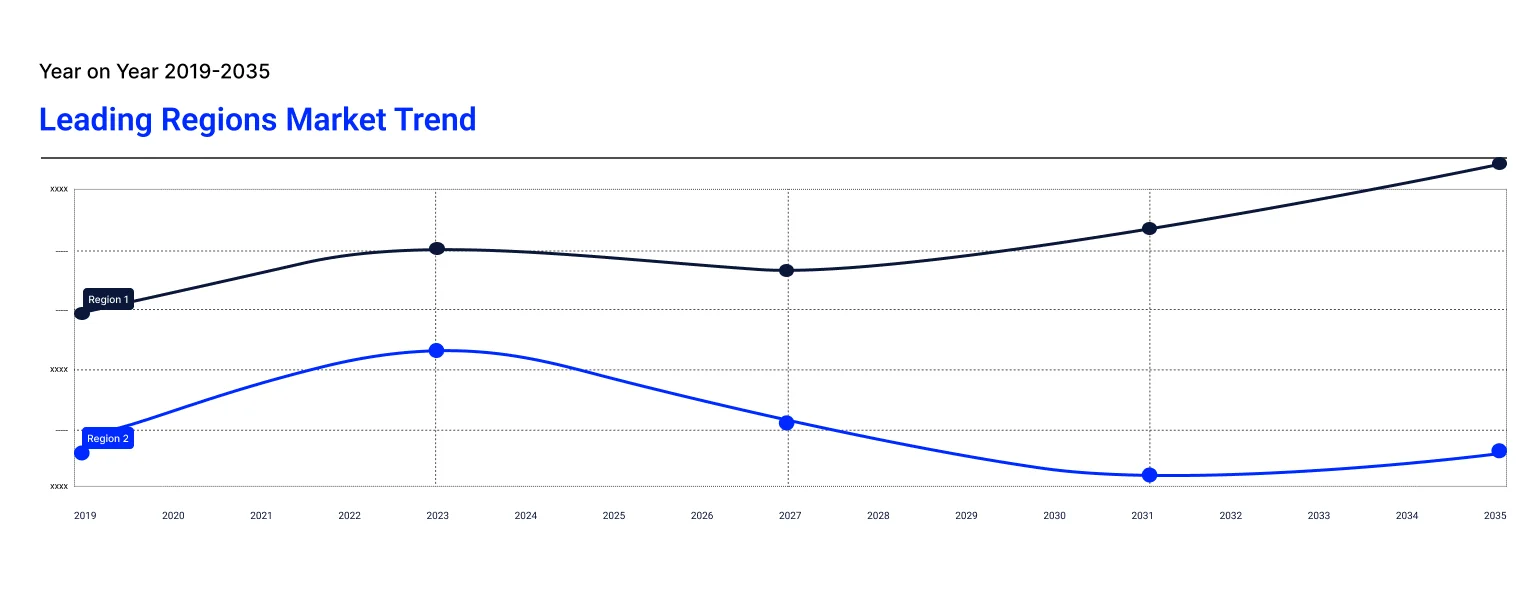
Asia Pacific clocks in the dominant share of the market as manufacturing strength and automation adoption accelerate
Asia Pacific is considered the leading regional household robots market due to the presence of robotics manufacturing, ecosystem of electronics, increasing demand for smart homes, and supportive policies. Countries such as China, Japan and South Korea are critical for the development of this market and commercialization. In January 2026, India deployed its first humanoid robot at a railway station, performing surveillance and security tasks autonomously.
The most dynamic regional household robots market is Europe, where household robotics will solve labor shortage problems, aging population, issues related to energy efficiency and desire for easy maintenance of homes. Manufacturers are adjusting their products according to different housing arrangements and focus on noise reduction, maintainability, reliable navigation and interoperability. In August 2026, Bosch confirmed Europe’s first humanoid robot production line will begin operations in August 2027, advancing robotic manufacturing capabilities.
The market is becoming increasingly competitive as household robot companies begin moving from single-purpose cleaning appliances towards multifunctional home automation solutions with AI. Roborock, ECOVACS, Dreame, Xiaomi, Samsung, iRobot, and other industry veterans are focusing on developing advanced technologies like advanced navigation capabilities, obstacle detection and avoidance, automatic docking stations, multimodal AI systems and smart home solutions to distinguish their products from those offered by competitors.
Leading household robots market players are starting to focus on cordless lawn care solutions, advanced pool maintenance, window cleaning and home ecosystem building solutions, thus enabling the reuse of technology platforms developed for navigation and perception in multiple segments. Recurring services, software updates, and diagnostics represent another valuable business opportunity in this regard.
Founded in 2014, based in Bengaluru, India, Puresight Systems is a company involved in the development of smart home appliances. The firm supports the Indian household robotics market with their unique iRobot partnership. Puresight Systems provides Indian clients with robotic vacuum and mopping technologies through Roomba and Braava systems.
Founded in 2005, based in California, United States, Neato Robotics was one of the first companies that produced robot vacuum cleaners with the help of lasers. Their most distinguishing feature was D-shaped robots that helped them effectively clean edges.
Since its founding in 1969 and based in Suwon, South Korea, Samsung is extending household robotics from vacuuming with Ballie which is an AI companion meant to interact with its owners as well as control home devices. Samsung’s 2025 collaboration with Google Cloud equips Ballie with the multimodal technology of Google’s Gemini that enables interaction, personalization, scheduling, and proactivity.
Founded in 1998 in Suzhou, China, Ecovacs Robotics designs home robots for cleaning floors, windows, and other areas of household cleaning tasks. DEEBOT and WINBOT platforms feature autonomy, intelligence, automation, and connectivity. Ecovacs is growing household robotics through the production of a wider range of products and enhanced AI capabilities.
Other key players in the market include Alfred Kärcher SE & Co. KG, Dyson Limited, and LG Electronics Inc., among others.
*Please note that this is only a partial list; the complete list of key players is available in the full report. Additionally, the list of key players can be customized to better suit your needs.*
Unlock the latest insights with our household robots market trends 2026 report. Discover regional growth patterns, consumer preferences, and key industry players. Stay ahead of competition with trusted data and expert analysis. Download your free sample report today and drive informed decisions in the market.


Upto 15% Off
USD
$2499 $2249
$3999 $3599
$4999 $4249
$5999 $5099


*While we strive to always give you current and accurate information, the numbers depicted on the website are indicative and may differ from the actual numbers in the main report. At Expert Market Research, we aim to bring you the latest insights and trends in the market. Using our analyses and forecasts, stakeholders can understand the market dynamics, navigate challenges, and capitalize on opportunities to make data-driven strategic decisions.*
In 2025, the global household robots market attained a value of nearly USD 6.65 Billion.
The market is projected to grow at a CAGR of 22.00% between 2026 and 2035.
Stakeholders are developing modular platforms, strengthening AI navigation, expanding service ecosystems, improving cybersecurity, targeting elderly-care applications, localizing products, and integrating robots with connected-home infrastructure.
The improved accessibility of household robots and rising consumer demand for autonomous robotic technology are expected to be key trends guiding the growth of the market.
The two types of household robots available in the market are domestic, and entertainment and leisure.
The different applications of household robots include vacuuming, lawn mowing, pool cleaning, companionship, elderly assistance and handicap systems, and robot toys and hobby systems, amongst others.
The primary offerings in the market are products and services.
The leading players in this market are Puresight Systems Private Limited, Neato Robotics, Inc., Samsung Electronics Co., Ltd., Ecovacs Robotics, Alfred Kärcher SE & Co. KG, Dyson Limited, and LG Electronics Inc., among others.
The market is estimated to witness a healthy growth in the forecast period of 2026-2035 to reach USD 48.58 Billion by 2035.
Household robot companies face high development costs, intense price competition, unreliable performance in complex homes, privacy concerns, cybersecurity risks, battery limitations, and difficulty converting experimental AI capabilities into dependable mass-market products.
Explore our key highlights of the report and gain a concise overview of key findings, trends, and actionable insights that will empower your strategic decisions.
| REPORT FEATURES | DETAILS |
| Base Year | 2025 |
| Historical Period | 2019-2025 |
| Forecast Period | 2026-2035 |
| Scope of the Report |
Historical and Forecast Trends, Industry Drivers and Constraints, Historical and Forecast Market Analysis by Segment:
|
| Breakup by Offering |
|
| Breakup by Type |
|
| Breakup by Application |
|
| Breakup by Region |
|
| Market Dynamics |
|
| Competitive Landscape |
|
| Companies Covered |
|
| Report Price and Purchase Option | Explore our purchase options that are best suited to your resources and industry needs. |
| Delivery Format | Delivered as an attached PDF and Excel through email, with an option of receiving an editable PPT, according to the purchase option. |
Datasheet
One User
USD 2,499
USD 2,249
tax inclusive*
Single User License
One User
USD 3,999
USD 3,599
tax inclusive*
Five User License
Five User
USD 4,999
USD 4,249
tax inclusive*
Corporate License
Unlimited Users
USD 5,999
USD 5,099
tax inclusive*
*Please note that the prices mentioned below are starting prices for each bundle type. Kindly contact our team for further details.*
Flash Bundle
Small Business Bundle
Growth Bundle
Enterprise Bundle
*Please note that the prices mentioned below are starting prices for each bundle type. Kindly contact our team for further details.*
Flash Bundle
Number of Reports: 3
20%
tax inclusive*
Small Business Bundle
Number of Reports: 5
25%
tax inclusive*
Growth Bundle
Number of Reports: 8
30%
tax inclusive*
Enterprise Bundle
Number of Reports: 10
35%
tax inclusive*
How To Order

Select License Type
Choose the right license for your needs and access rights.

Click on ‘Buy Now’
Add the report to your cart with one click and proceed to register.

Select Mode of Payment
Choose a payment option for a secure checkout. You will be redirected accordingly.
Strategic Solutions for Informed Decision-Making
Gain insights to stay ahead and seize opportunities.

Get insights & trends for a competitive edge.

Track prices with detailed trend reports.

Analyse trade data for supply chain insights.

Leverage cost reports for smart savings

Enhance supply chain with partnerships.

Connect For More Information
Our expert team of analysts will offer full support and resolve any queries regarding the report, before and after the purchase.
Our expert team of analysts will offer full support and resolve any queries regarding the report, before and after the purchase.
We employ meticulous research methods, blending advanced analytics and expert insights to deliver accurate, actionable industry intelligence, staying ahead of competitors.
Our skilled analysts offer unparalleled competitive advantage with detailed insights on current and emerging markets, ensuring your strategic edge.
We offer an in-depth yet simplified presentation of industry insights and analysis to meet your specific requirements effectively.




