

Consumer Insights
Uncover trends and behaviors shaping consumer choices today
Procurement Insights
Optimize your sourcing strategy with key market data
Industry Stats
Stay ahead with the latest trends and market analysis.
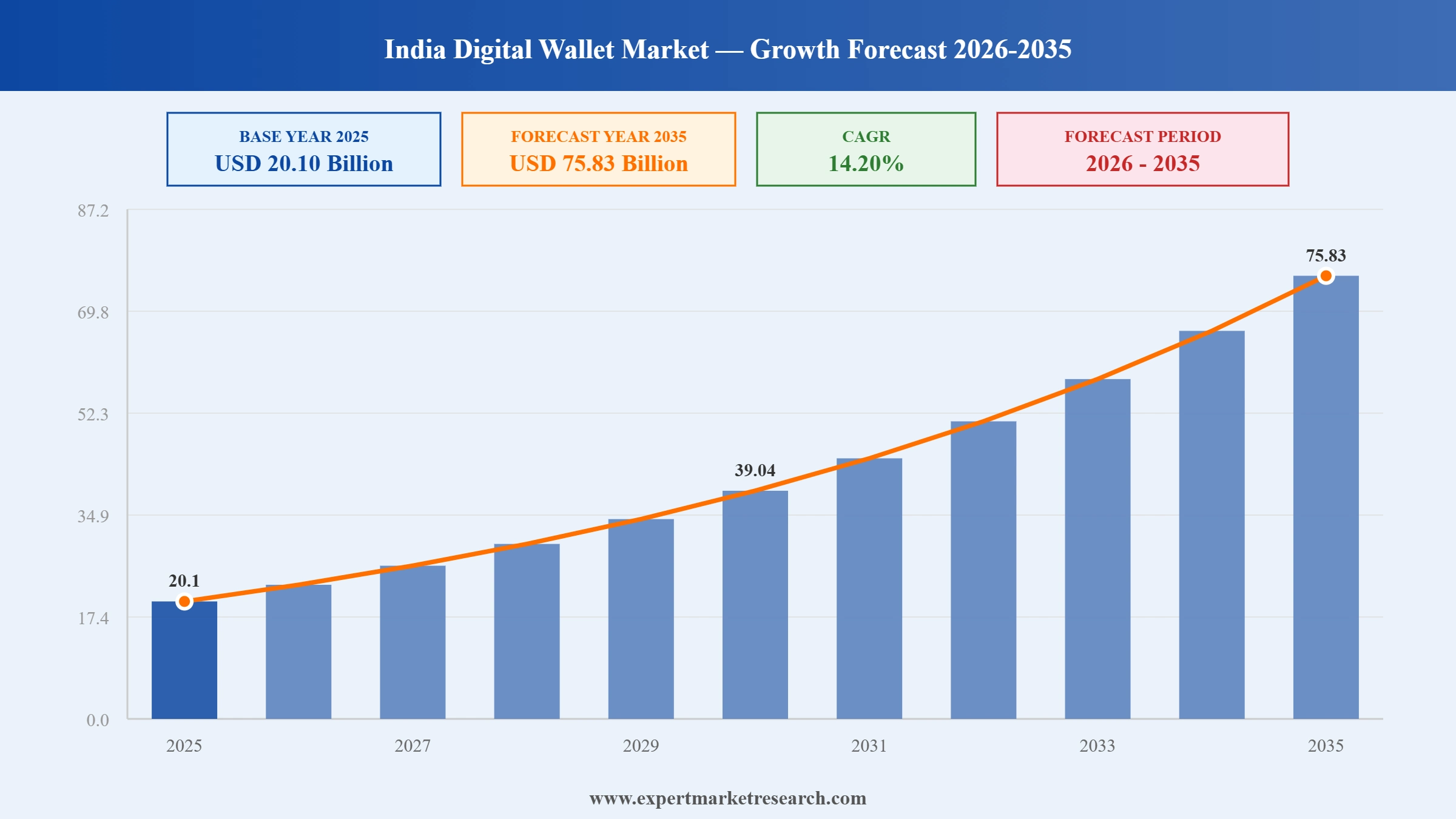
The India Digital Wallet Market reached a value of USD 20.10 Billion at 2025 and is projected to expand at a CAGR of around 14.20% during the forecast period of 2026-2035. With rising UPI transaction volumes, accelerating smartphone penetration, growing e-commerce adoption, and deepening financial inclusion in semi-urban and rural India, the market is expected to reach USD 75.83 Billion by 2035.
Read more about this report - REQUEST FREE SAMPLE COPY IN PDF
|
India Digital Wallet Market Report Summary |
Description |
Value |
|
Base Year |
USD Billion |
2025 |
|
Historical Period |
USD Billion |
2019-2025 |
|
Forecast Period |
USD Billion |
2026-2035 |
|
Market Size 2025 |
USD Billion |
20.10 |
|
Market Size 2035 |
USD Billion |
75.83 |
|
CAGR 2019-2025 |
Percentage |
XX% |
|
CAGR 2026-2035 |
Percentage |
14.20% |
|
CAGR 2026-2035 - Market by Region |
East India |
17.6% |
|
CAGR 2026-2035 - Market by Region |
North India |
XX% |
|
CAGR 2026-2035 - Market by Technology |
Proximity |
17.2% |
|
CAGR 2026-2035 - Market by End Users |
Retail & E-commerce |
16.3% |
|
2025 Market Share by Region |
South India |
23.4% |
India's digital wallet market is undergoing rapid structural change, shaped by UPI's dominance, embedded finance integration, expanding financial inclusion, and growing consumer expectations for secure and seamless payment experiences.
In December 2025, Google Pay, in partnership with Axis Bank, introduced Flex by Google Pay, a fully digital credit card built on the RuPay network and powered by UPI. The product lives entirely within the Google Pay app, allowing users to access a pre-approved credit line at the point of payment without a physical card. The card offers flexible repayment options, including full-balance settlement and installment plans, alongside a star-based rewards program. This launch targets the hundreds of millions of UPI users in India who have never held a traditional credit card, and signals the convergence of digital wallets and credit access in the India digital wallet market.
In November 2025, the National Payments Corporation of India launched UPI Circle, a feature enabling primary account holders to authorize digital payment access for family members, including minors and elderly dependents who do not hold their own bank accounts. The feature meaningfully expands the addressable user base for digital wallets by bringing previously excluded demographic groups into the formal digital payment ecosystem. This initiative aligns with the Indian government's broader objective of achieving comprehensive financial inclusion and is expected to accelerate new user acquisition across the India digital wallet market over the forecast period.
In October 2025, PhonePe introduced a credit line on UPI feature in partnership with major Indian banks, allowing registered users to draw on a pre-approved credit limit directly at the QR code scan without requiring a separate credit card. The Reserve Bank of India had earlier expanded UPI's scope to include pre-approved credit lines from banks, formally enabling this type of embedded credit product. The development positions PhonePe as a full-stack financial platform and deepens the integration of financial services within India's digital wallet ecosystem, accelerating the trend toward wallets functioning as comprehensive personal finance tools.
In April 2025, Razorpay became the first payment gateway to integrate its platform with the UPI plugin launched by NPCI BHIM Services Limited, enabling businesses to offer native in-app UPI payments without redirecting customers to external payment pages. This seamless integration significantly reduces checkout friction and improves transaction success rates for merchants operating e-commerce, subscription, and digital services businesses. The development strengthens digital wallet infrastructure within the Retail and E-commerce end-user segment, creating a more connected payment experience across India's growing online commerce ecosystem.
In August 2024, PhonePe Payment Gateway introduced PhonePe PG Bolt, a high-performance payment product designed to deliver near-instantaneous in-app transactions for merchants. The product promises a one-second transaction experience with a 99% success rate and is optimized for UPI Lite, wallets, and Electronic Gift Vouchers. By reducing transaction latency and failure rates considerably, PhonePe PG Bolt enhances the reliability of digital wallet payments embedded within e-commerce and retail apps, directly supporting the growth and competitiveness of the Retail and E-commerce end-user segment within India's digital wallet landscape.
India's digital wallet landscape is increasingly shaped by super-app platforms that go far beyond simple payments. UPI-based wallets now bundle features such as credit lines, insurance, investments, and in-app commerce, transforming them into financial operating systems for everyday users. The convergence of payments with financial services is no longer a future ambition; it is the dominant competitive strategy today. In December 2025, Google Pay launched the Flex credit card in partnership with Axis Bank on the RuPay network, targeting the hundreds of millions of UPI users who remain outside the credit card system. This kind of product convergence is a central driver of India digital wallet market growth over the forecast period.
A significant and accelerating portion of India's digital wallet adoption is now coming from first-time users in semi-urban and rural areas, a shift that is fundamentally changing the market's growth profile. The government's Digital India push, combined with Aadhaar-linked onboarding and affordable mobile data, continues to bring millions of previously underserved consumers onto digital platforms. According to the Reserve Bank of India, rural digital payment usage reached 46% of residents by January 2025. In November 2025, NPCI launched UPI Circle, which authorizes delegated payments for family members without bank accounts, extending the reach of digital wallets to minors and elderly users who were previously locked out of direct digital payment participation.
The integration of financial products such as credit, insurance, and buy-now-pay-later directly into digital wallets is redefining the competitive landscape in India. Wallets that once competed on transaction speed are now competing on financial utility, loyalty, and ecosystem depth. Research consistently shows that multi-service wallets retain users at significantly higher rates than payment-only apps. In October 2025, PhonePe partnered with major Indian banks to launch a credit line on UPI, allowing users to spend from a pre-approved credit limit directly at QR scan. The RBI's earlier policy expansion permitting pre-approved credit lines on UPI formally opened this door, signaling a structural change in how digital wallets function in India.
Consumer confidence in digital wallets depends heavily on robust security and low-friction onboarding, and Indian fintech companies are investing meaningfully in both. AI-driven fraud detection, biometric authentication, and video-KYC onboarding have become standard features among leading wallet providers. These advancements reduce friction at account setup while simultaneously fortifying defenses against unauthorized access. In April 2025, Cashfree Payments launched an RBI-compliant AI-powered Video-KYC solution that the company claims can improve onboarding conversions by up to 80% for regulated financial entities. Such innovations are critical to bringing new users into the digital wallet ecosystem, particularly across underserved market segments.
The Expert Market Research's report titled "India Digital Wallet Market Report and Forecast 2026 to 2035" offers a detailed analysis of the market based on the following segments:
Market Breakup by Technology
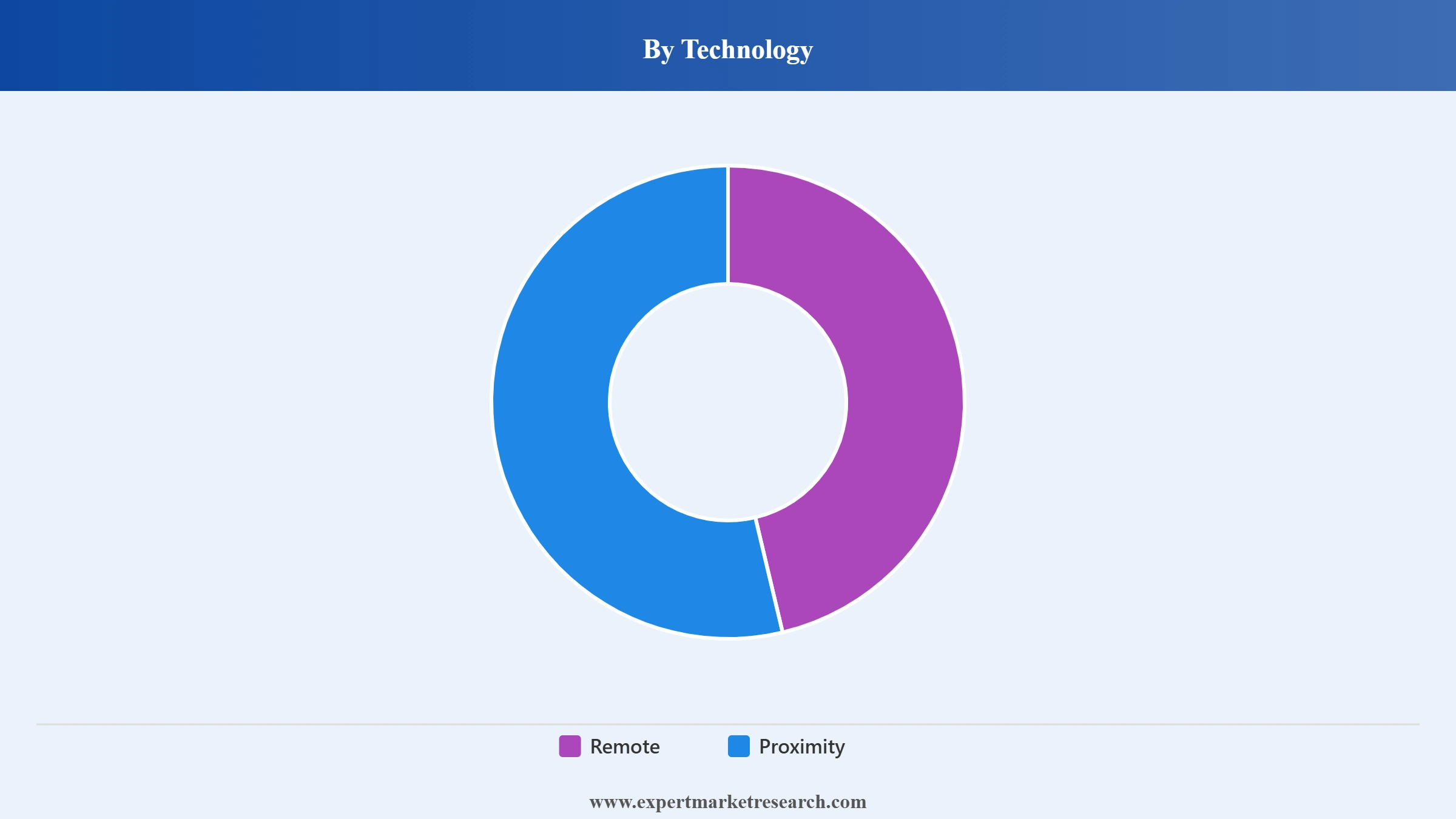
Key Insight: Remote payments dominate the India Digital Wallet Market, owing primarily to the explosive growth of e-commerce, peer-to-peer fund transfers, and bill payments conducted through UPI-linked apps on mobile devices. In October 2024 alone, UPI processed 16.58 billion transactions, and the overwhelming majority were remote in nature. Platforms like PhonePe, Google Pay, and Paytm have built their value propositions around remote payment capabilities, integrating features that include QR-based checkout, in-app commerce, and utility payment. Proximity payments, while the smaller segment, are gaining traction through NFC-based contactless transactions at retail POS terminals and metro transit systems in cities like Mumbai and Bengaluru. The continued rollout of contactless infrastructure and growing consumer comfort with tap-to-pay technology are gradually expanding proximity payment's contribution to total market volume.
Market Breakup by End Use
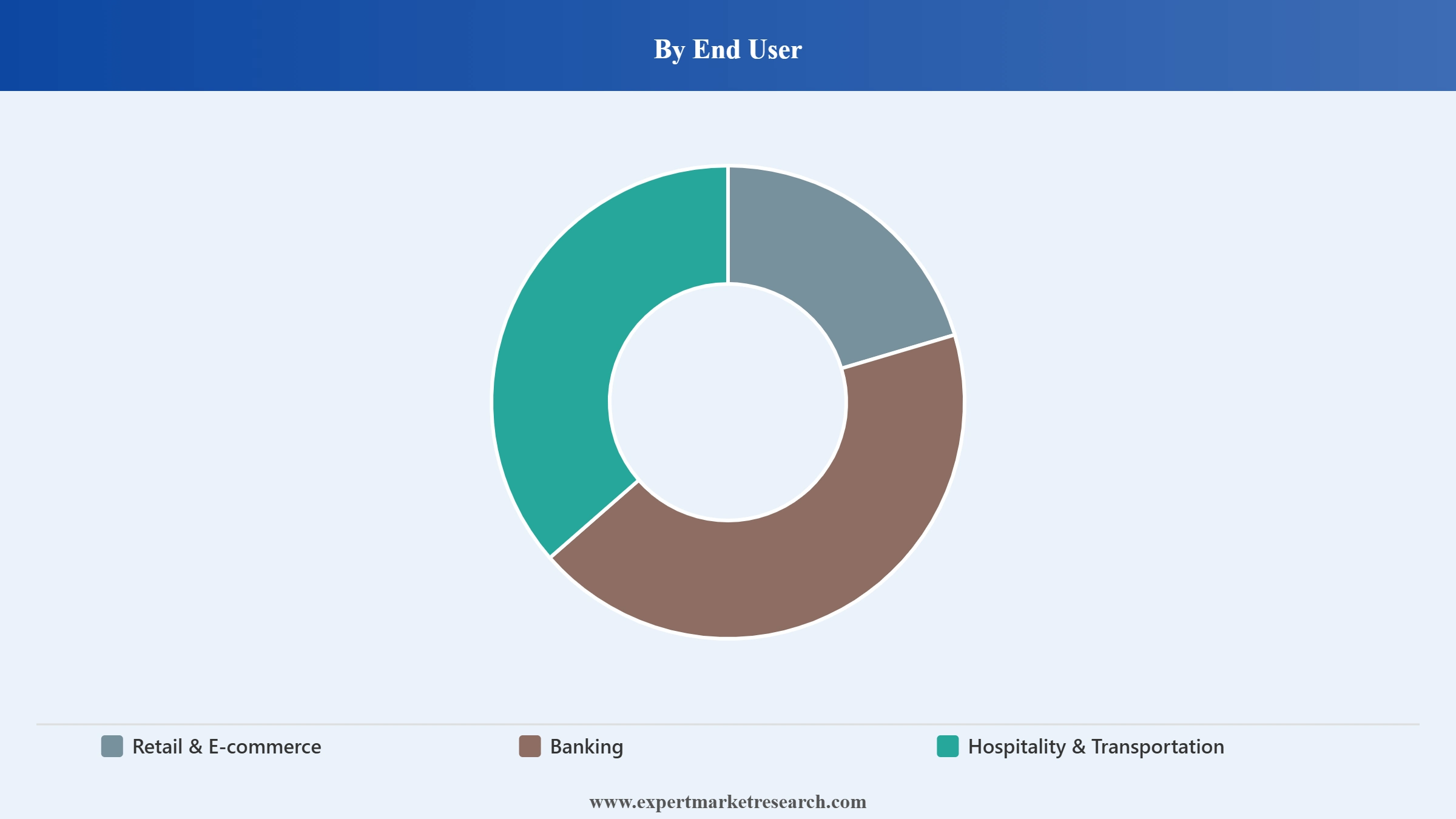
Key Insight: The Retail and E-commerce segment leads the India Digital Wallet Market by end user, accounting for the largest share of total digital wallet transaction value. India's e-commerce sector is projected to reach USD 200 billion in total value, with a growing share of purchases completed through mobile wallets. According to research findings, digital wallets accounted for 55% of retail purchases among Indian consumers in 2023, and adoption has continued to deepen since. Banking represents a strong secondary segment, with both public and private sector banks embedding wallet functionalities into their own apps to retain customer relationships and facilitate seamless account management. Hospitality and Transportation is the fastest-growing end-user category, driven by metro rail networks, ride-hailing platforms, and online hotel booking apps that are integrating UPI-based wallet acceptance into their consumer experience flows.
Market Breakup by Region
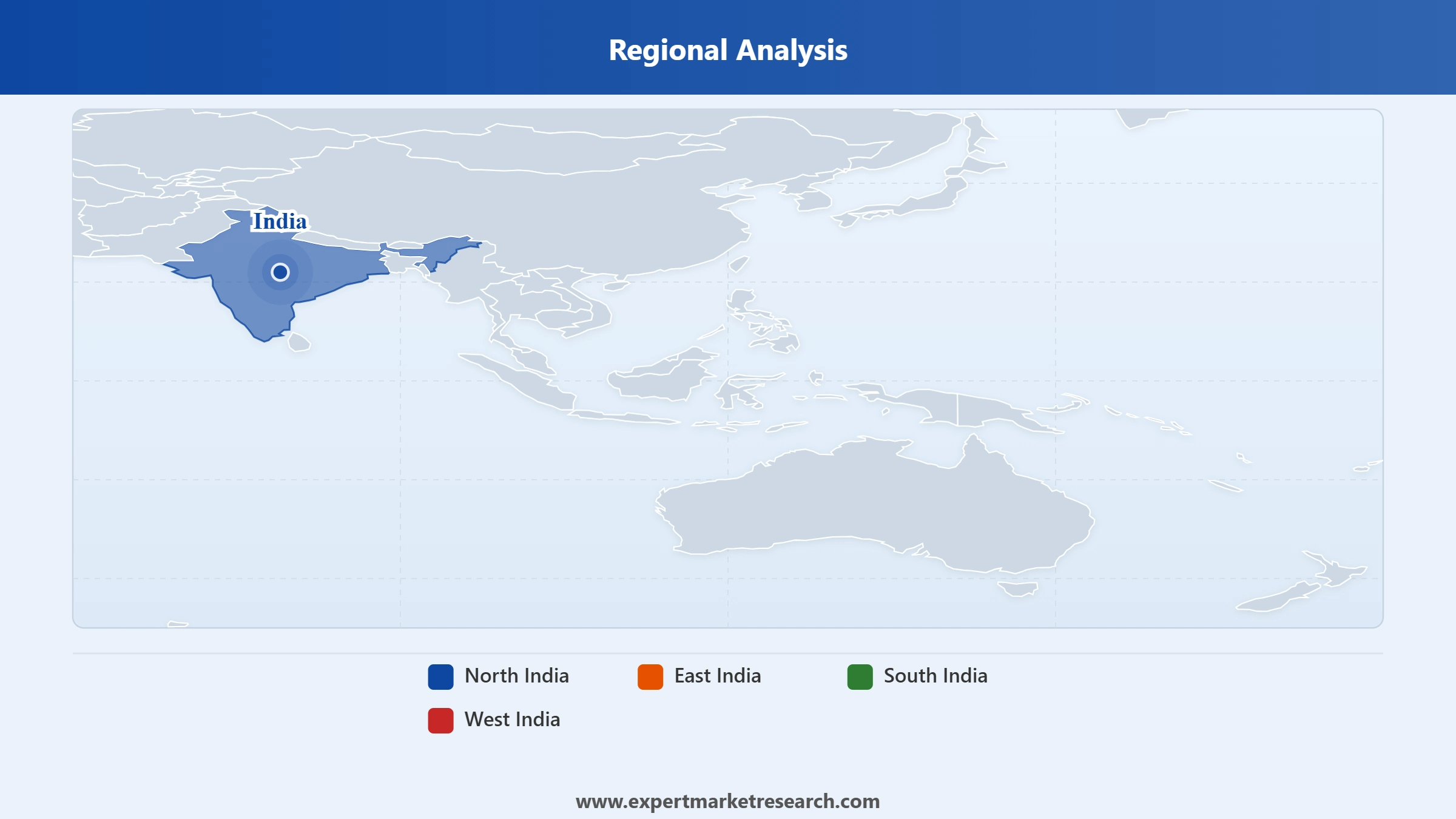
Key Insight: West India leads the India Digital Wallet Market regionally, anchored by Maharashtra's concentration of fintech headquarters, commercial banks, and regulatory institutions in Mumbai and Pune. South India follows closely, powered by Bengaluru's technology startup ecosystem and strong smartphone penetration across Tamil Nadu and Telangana. North India, centered on the National Capital Region, benefits from high internet connectivity and strong adoption of digital payments across government and private sectors. East India, while presently the smallest regional contributor, represents the fastest-growing market due to rising smartphone access in states like West Bengal and Odisha, combined with targeted financial inclusion initiatives. Research indicates that West and Central India collectively accounted for approximately 32.6% of India's digital payment revenue in 2025.
Read more about this report - REQUEST FREE SAMPLE COPY IN PDF
By Technology
Remote payments dominate the India Digital Wallet Market, driven by the explosive adoption of UPI-based transactions across online commerce, bill payments, and peer-to-peer fund transfers. The remote payment segment's leadership reflects both consumer habit and infrastructure reality. With UPI recording 16.58 billion transactions in October 2024 and the majority of these being app-based remote transfers, the segment's position is structurally reinforced. The integration of the NPCI UPI plugin, which enables native in-app payments without external page redirects, further cements remote payment's advantage in the e-commerce and digital services ecosystem. Proximity payment is the secondary segment, gaining momentum through NFC contactless transactions at retail outlets and transit ticketing across major metropolitan areas, particularly among premium retail and corporate traveler segments.
Read more about this report - REQUEST FREE SAMPLE COPY IN PDF
By End User
Retail and E-commerce is the leading end-user segment in the India Digital Wallet Market, with online retail and quick commerce platforms driving the highest digital wallet transaction volumes. India's e-commerce market, projected to reach USD 200 billion, generates massive demand for seamless, wallet-based checkout experiences. Research suggests that digital wallets accounted for 55% of Indian retail purchases in 2023, and this figure has been growing steadily. The Banking segment holds a solid secondary position, with financial institutions integrating wallet capabilities into their proprietary apps to deepen consumer relationships. Hospitality and Transportation is gaining share rapidly, as metro transit systems, ride-hailing apps, and travel booking platforms formalize digital wallet acceptance and in some cases launch branded wallet products of their own.
Read more about this report - REQUEST FREE SAMPLE COPY IN PDF
West India holds the largest share of the India Digital Wallet Market, with Maharashtra serving as the country's financial services capital. Mumbai is home to the Reserve Bank of India, the National Stock Exchange, and a dense concentration of payment processing companies, making it the natural epicenter of financial digitization in India. The region's deep institutional infrastructure translates into consistently high digital payment volumes across both retail and corporate segments. Pune supplements Mumbai's fintech activity with its growing pool of technology and engineering talent that powers product development for wallet platforms. Research data indicates that West and Central India collectively accounted for approximately 32.6% of India's digital payment revenue in 2025, the largest single regional share, reflecting the region's structural advantages in the digital financial services space.
Read more about this report - REQUEST FREE SAMPLE COPY IN PDF
South India is the fastest-growing regional market for digital wallets, propelled by Bengaluru's role as India's technology capital and the high digital literacy of its urban population. The city's concentration of technology companies, engineering talent, and startup founders creates a consumer base that is among the earliest and most consistent adopters of new payment innovations. States like Tamil Nadu and Telangana have invested substantially in digital infrastructure, with Hyderabad's expanding IT corridor and Chennai's growing fintech scene adding scale to the region's digital wallet adoption. South India's urban population skews younger compared to national averages, creating a receptive market for features such as embedded credit, loyalty rewards, and super-app wallet ecosystems. This demographic advantage, combined with institutional technology investment, positions South India for above-average growth throughout the forecast period.
The India Digital Wallet Market features a competitive mix of global technology companies, international payment networks, and fintech-native platforms. The market operates at high competitive intensity, with major players differentiating through product bundling, merchant integrations, and embedded financial services. UPI's open-architecture design has lowered barriers to entry while simultaneously raising consumer expectations for feature depth and ecosystem breadth.
Despite a fragmented supply side, the consumer-facing layer is effectively concentrated around super-app platforms and network-backed digital card products. Competitive battles are shifting from basic payment functionality toward embedded credit, AI-driven personalization, and cross-border payment capabilities. Strategic partnerships between global payment networks and domestic fintech platforms are reshaping the competitive landscape, with co-branded credit products and BNPL features becoming the new terrain on which market leadership is determined.
Founded in 2006 and headquartered in Seattle, USA, Amazon Web Services operates a broad technology and financial services portfolio globally. In India, Amazon Pay, embedded within the Amazon shopping ecosystem, has built a meaningful digital wallet presence by leveraging Prime membership for recurring payments, utility bill settlement, and Buy Now Pay Later products. AWS cloud infrastructure also powers backend payment processing for a number of Indian fintech platforms. The company's primary competitive advantage lies in ecosystem lock-in through Amazon's retail and subscription platform, alongside deep merchant integrations across India's e-commerce sector.
Founded in 1958 and headquartered in San Francisco, USA, Visa is a global payment network with a foundational role in India's digital payment infrastructure. Visa enables digital wallet transactions by providing card-on-file and tokenization services for mobile payment apps, and partners with Indian banks and fintech platforms to power digital card products. Visa's India operations span retail, banking, and e-commerce partnerships designed to support contactless payment adoption. Its global processing network and advanced fraud prevention capabilities make it a key infrastructure partner for wallet providers seeking to offer card-linked payment features in India.
Founded in 1850 and headquartered in New York, USA, American Express is a globally recognized financial services and payments company. In India, American Express operates as both a card-issuing bank and a payment network, serving premium consumers, business travelers, and corporate clients. Its digital payment services integrate with wallet platforms and banking apps to facilitate contactless transactions and reward-based spending. American Express is distinguished by its premium service proposition, competitive rewards programs, and strong corporate client base in India, targeting higher-income urban professionals and business travelers who represent a valuable segment of the country's growing digital payment ecosystem.
Founded in 1998 and headquartered in San Jose, USA, PayPal is a leading global digital payments company with significant operations in India. In India, PayPal primarily serves cross-border e-commerce merchants, freelancers, and exporters who require international payment acceptance in foreign currencies. The company provides digital wallet and payment gateway services that allow Indian businesses to receive payments from global customers. PayPal's key strengths in India include its established global brand recognition, robust fraud detection capabilities, and deep integration with international e-commerce and freelancing platforms, making it the preferred choice for India's rapidly expanding export-oriented digital economy.
Other key players in the market are Apple Inc., Google Inc., Airtel, Mastercard, Alipay, Samsung, AT&T, and Others.
*Please note that this is only a partial list; the complete list of key players is available in the full report. Additionally, the list of key players can be customized to better suit your needs.*
Discover the latest insights on the India Digital Wallet Market 2026 with our comprehensive report. Stay ahead with verified data on technology innovations, e-commerce-driven payment trends, and the regions recording the fastest wallet adoption. Whether you are entering India's fintech space for the first time or scaling an existing digital payment offering, this report gives you the clarity and confidence you need. Download your free sample today and uncover the key opportunities within India's booming digital wallet sector.


Upto 15% Off
USD
$2499 $2249
$3999 $3599
$4999 $4249
$5999 $5099


*While we strive to always give you current and accurate information, the numbers depicted on the website are indicative and may differ from the actual numbers in the main report. At Expert Market Research, we aim to bring you the latest insights and trends in the market. Using our analyses and forecasts, stakeholders can understand the market dynamics, navigate challenges, and capitalize on opportunities to make data-driven strategic decisions.*
In 2025, the India digital wallet market reached an approximate value of USD 20.10 Billion.
The market is projected to grow at a CAGR of 14.20% between 2026 and 2035.
The market is estimated to witness healthy growth in the forecast period of 2026-2035 to reach a value of around USD 75.83 Billion by 2035.
The key strategies for companies include adopting super apps, revolutionizing UPI, focusing on tier2 and tier 3 markets, and embedding financial services and credit access.
The major regions in the market are North India, East India, South India, and West India.
The major players in the market are Amazon Web Services, Inc., Visa Inc., American Express, PayPal Holdings Inc., Apple Inc., Google Inc., Airtel, Mastercard, Alipay, Samsung, and AT&T, among others.
Explore our key highlights of the report and gain a concise overview of key findings, trends, and actionable insights that will empower your strategic decisions.
| REPORT FEATURES | DETAILS |
| Base Year | 2025 |
| Historical Period | 2019-2025 |
| Forecast Period | 2026-2035 |
| Scope of the Report |
Historical and Forecast Trends, Industry Drivers and Constraints, Historical and Forecast Market Analysis by Segment:
|
| Breakup by Technology |
|
| Breakup by End User |
|
| Breakup by Region |
|
| Market Dynamics |
|
| Competitive Landscape |
|
| Companies Covered |
|
Datasheet
One User
USD 2,499
USD 2,249
tax inclusive*
Single User License
One User
USD 3,999
USD 3,599
tax inclusive*
Five User License
Five User
USD 4,999
USD 4,249
tax inclusive*
Corporate License
Unlimited Users
USD 5,999
USD 5,099
tax inclusive*
*Please note that the prices mentioned below are starting prices for each bundle type. Kindly contact our team for further details.*
Flash Bundle
Small Business Bundle
Growth Bundle
Enterprise Bundle
*Please note that the prices mentioned below are starting prices for each bundle type. Kindly contact our team for further details.*
Flash Bundle
Number of Reports: 3
20%
tax inclusive*
Small Business Bundle
Number of Reports: 5
25%
tax inclusive*
Growth Bundle
Number of Reports: 8
30%
tax inclusive*
Enterprise Bundle
Number of Reports: 10
35%
tax inclusive*
How To Order

Select License Type
Choose the right license for your needs and access rights.

Click on ‘Buy Now’
Add the report to your cart with one click and proceed to register.

Select Mode of Payment
Choose a payment option for a secure checkout. You will be redirected accordingly.
Strategic Solutions for Informed Decision-Making
Gain insights to stay ahead and seize opportunities.

Get insights & trends for a competitive edge.

Track prices with detailed trend reports.

Analyse trade data for supply chain insights.

Leverage cost reports for smart savings

Enhance supply chain with partnerships.

Connect For More Information
Our expert team of analysts will offer full support and resolve any queries regarding the report, before and after the purchase.
Our expert team of analysts will offer full support and resolve any queries regarding the report, before and after the purchase.
We employ meticulous research methods, blending advanced analytics and expert insights to deliver accurate, actionable industry intelligence, staying ahead of competitors.
Our skilled analysts offer unparalleled competitive advantage with detailed insights on current and emerging markets, ensuring your strategic edge.
We offer an in-depth yet simplified presentation of industry insights and analysis to meet your specific requirements effectively.




