

Consumer Insights
Uncover trends and behaviors shaping consumer choices today
Procurement Insights
Optimize your sourcing strategy with key market data
Industry Stats
Stay ahead with the latest trends and market analysis.
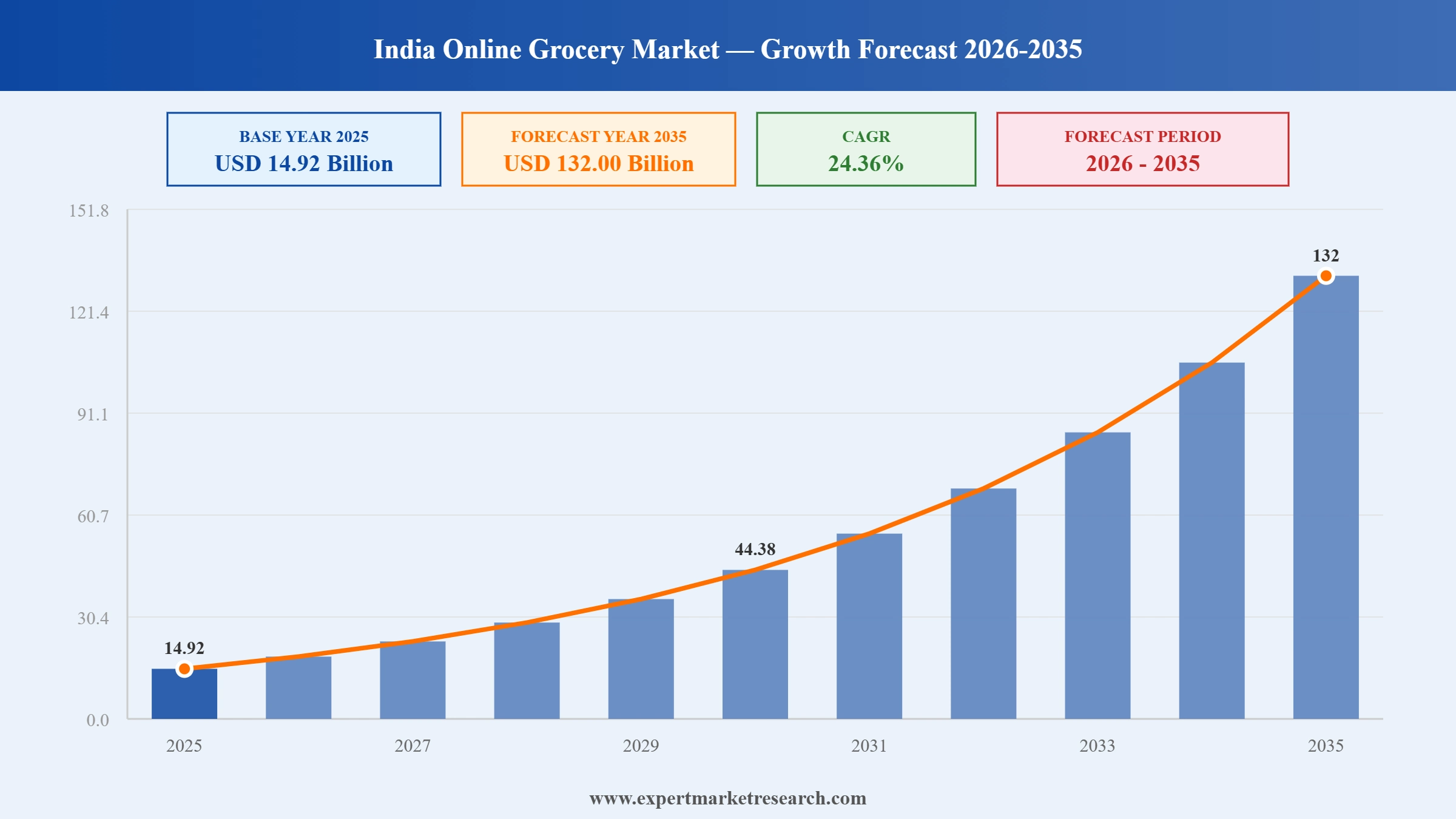
The India online grocery market attained a value of USD 14.92 Billion in 2025 and is projected to expand at a CAGR of 24.36% through 2035. The market is further expected to achieve USD 132.00 Billion by 2035. Increasing investment in AI-driven fulfilment centers, hyperlocal delivery services, and innovation in digital payments technology are making processes even more efficient, as well as allowing online grocery delivery companies to enter unserved cities in India.
Increasingly growing private-label food assortments are making higher profit margins possible for online grocers and at the same time providing competitive prices for a wide range of packaged foods, fresh products, and home essentials. Moreover, growing cooperation between the online grocers and agritech startups might improve their logistics by introducing digital procurement process and quality control and tracking systems that decrease product waste, enhance transparency of the procurement process, and help in delivering fresher products.
Further, companies in the India online grocery market are diversifying collaborations with fresh regional produce suppliers to improve its offerings. By developing AI-powered dark stores and predicting inventory planning of groceries in Indian cities, BigBasket enhanced its quick commerce solutions that helped deliver orders faster without causing stock-out situations. Additionally, in June 2025, BigBasket planned nationwide 10-minute food delivery, expanding dark stores to strengthen India's rapidly growing quick-commerce ecosystem.
The growth of the India online grocery market is also being facilitated by intelligent fulfilment systems, digital payment solutions, and fast delivery solutions instead of traditional e-commerce strategies. Industry leaders are leveraging AI-powered demand forecasts, automation of micro-warehouses, and route optimization to increase the accuracy of delivery and reduce costs. Retailers are also working with FMCG manufacturers to create new offerings like exclusive online products, subscription replenishment and promotional campaigns that would help retain customers. For example, in May 2026, Allana Group and Captain Fresh formed a fresh protein retail joint venture, targeting 4,000 omnichannel stores across India. Further, the inclusion of regional brands in online grocery marketplaces increases product diversity and enables platforms to target Tier II & Tier III cities and FMCG manufacturers to directly target consumers online.
Read more about this report - REQUEST FREE SAMPLE COPY IN PDF
FirstClub launched an innovative marketing strategy based on quality, freshness, and reliable sourcing rather than faster delivery, thereby building consumer trust and maintaining premium status in India’s highly competitive online grocery retail industry. Companies in the India online grocery market can therefore distinguish themselves from other firms on the basis of their high-quality products, reliable sourcing and quality assurance, and not just faster delivery.
Amazon enhanced its ultra-fast delivery service, Amazon Now, by providing ultra-fast grocery delivery in more Indian cities along with better convenience, local inventory management, and overall customer experience. Companies can make use of dark stores, AI-based inventory planning, and hyperlocal logistics for improving rapid grocery delivery.
BuyBuyCart enhanced its digital offerings through the introduction of a grocery supermarket application, which will enhance the experience of mobile shopping and personalized purchase as well as online grocery shopping for customers. Companies can use specialized features in developing grocery apps with personalized offers, loyalty programs, and improved checkouts, leveraging such developments in the India online grocery market.
JIVA Technologies collaborated with We Got Groceries in developing an online grocery platform that specializes in health and wellness-oriented natural foods for digital consumers. Leveraging such developments, businesses can focus on premium consumers who are health conscious through the development of an online grocery platform that specializes in organic, wellness, and functional foods.
AI is changing the India online grocery market dynamics by bringing efficiency in forecasting, deliveries, and warehouse operations. Prominent players are utilizing predictive analytics to ensure there are no stock outs but high availability at the same time. Companies like BigBasket and Blinkit are further investing in setting up dark stores that facilitate fast deliveries using AI technology. At the same time, the government is promoting digital commerce using its Digital India program through digital infrastructure including internet connectivity and digital payments. Companies are integrating artificial intelligence and consumer analytics for promotional activities to increase profitability. Aligning with this trend inn June 2026, Amazon expanded Amazon Now to 300 cities, strengthening ultra-fast grocery delivery, fulfilment infrastructure, and quick-commerce competitiveness across India.
The online grocery firms are rapidly moving beyond the metropolitan areas with the establishment of hyperlocal fulfillment centers close to the consumers. It helps them to facilitate fast deliveries and promote regional brands and suppliers, thereby accelerating growth in the India online grocery market. Some of the players who have already started working in emerging cities include Swiggy Instamart, Zepto, and Flipkart Minutes, as organized retailing is growing in these cities. Similarly, in July 2025, LoveLocal introduced Quality Commerce, prioritizing freshness, trusted neighborhood retailers, video shopping, and reliable two-hour grocery delivery experiences. Logistics infrastructure development is being carried out through government programs like PM Gati Shakti that focus on integrated transport planning.
Private label groceries are gaining prominence as firms strive for higher margins and increased customer loyalty. Online retailers are launching their food, drinks, grocery, and personal care brands, which serve as a competitor to the already existing FMCG brands, reshaping trends in the India online grocery market. BigBasket's Fresho and BB Royal branded items are expanding their reach in premium and health segments in groceries, thereby ensuring repeat business. The Indian government's Production Linked Incentives scheme for investments in food processing industry is fostering home-grown capabilities, which are indirectly contributing to private label production. For example, in February 2026, Elixiir Foods secured funding to expand private-label omnichannel grocery, tech-enabled sourcing, premium retail, and wholesale distribution across urban India.
The use of agritech partnerships is improving procurement efficiency and reducing wastage through better visibility of the procurement process. Digital procurement platforms and quality control technologies are being used by online grocery firms for purchasing fresh produce directly from farmers. Firms like Bigbasket are also extending the scope of their direct procurement to ensure freshness of produce while also helping farmers earn more income. Government policies including the electronic National Agricultural Market continue to encourage adoption of digital agriculture and improved India online grocery market access. In October 2025, BioFizz launched India's first agritech quick-commerce platform, enabling 20-minute farm input deliveries through smart digital logistics.
The growing popularity of digital payment systems is helping in speeding up online grocery transactions through security and fast transaction processing. The Unified Payment Interface system is emerging as the most favored payment method in the India online grocery market, promoting frequent transactions of small amounts for buying groceries. Subscription programs, instant refund offers, loyalty programs, and 'buy now pay later' services are being introduced by the online grocery platforms to promote customer loyalty. As per the National Payments Corporation of India, the UPI is processing millions of monthly transactions, which indicates continuing growth in digital payments. On the otehr hand, in July 2026, Pick n Pay launched AI grocery assistant Penny, enabling conversational shopping, personalized recommendations, meal planning, and multilingual ordering experiences.
Read more about this report - REQUEST FREE SAMPLE COPY IN PDF
The Expert Market Research's report titled “India Online Grocery Market Report and Forecast 2026-2035” offers a detailed analysis of the market based on the following segments:
Market Breakup by Category
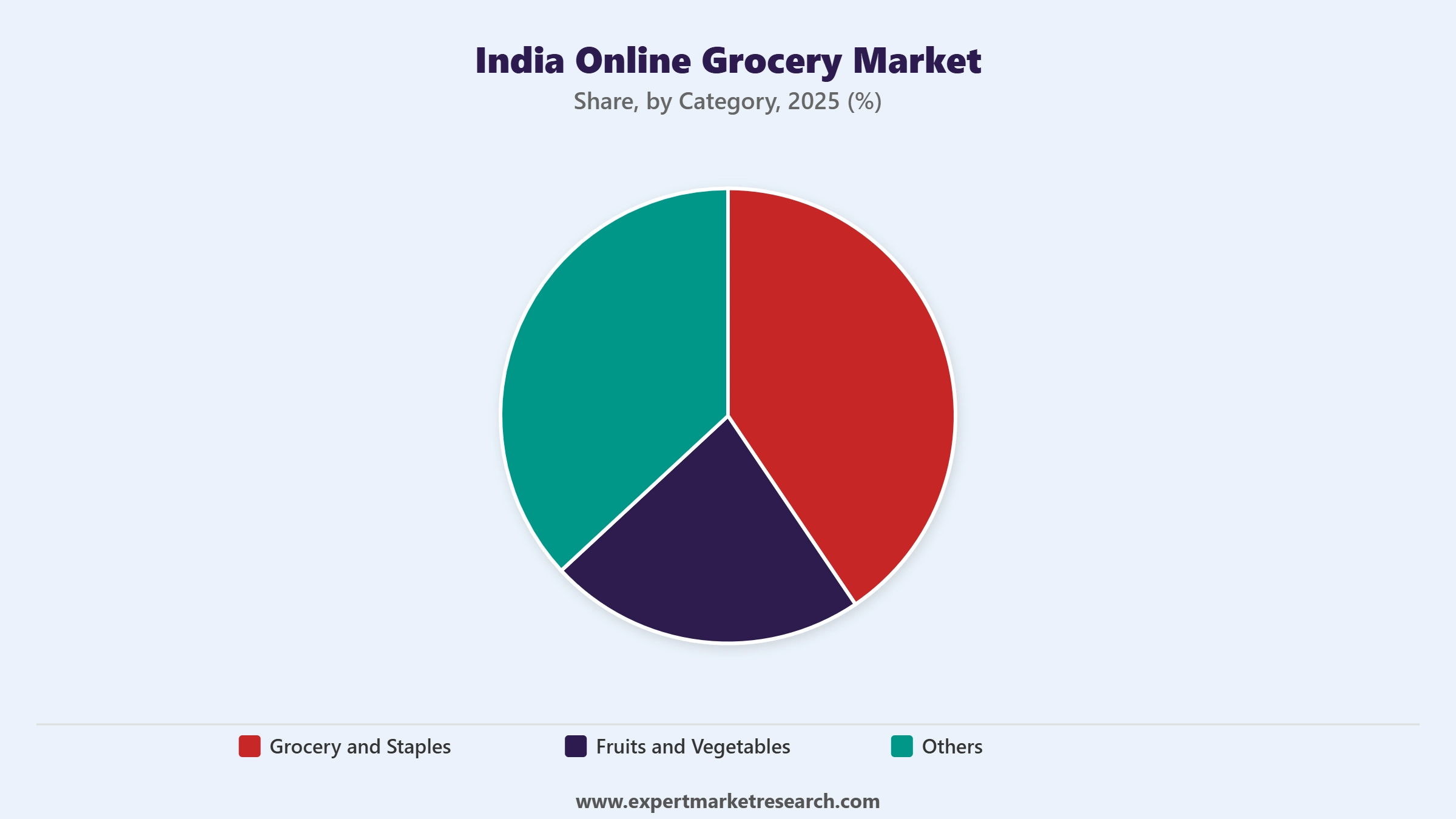
Key Insight: Categories such as grocery and staples continue to dominate the India online grocery market as a result of regular consumption at homes, subscription systems and frequent purchases. Category of fruits and vegetables is growing at an accelerated pace due to better supply chain coordination, freshness management, and direct sourcing programs. Others category, comprising beverages, snacks, frozen foods, and personal care items, enable retailers to generate cross-selling potential and increase the value of baskets through complementary buying of essentials in grocery. On the other hand, in January 2025, Swiggy launched a standalone Snacc app, enabling 15-minute delivery of snacks, beverages, meals, and quick convenience experiences.
Market Breakup by Average Spend per Transaction (in Rupees)
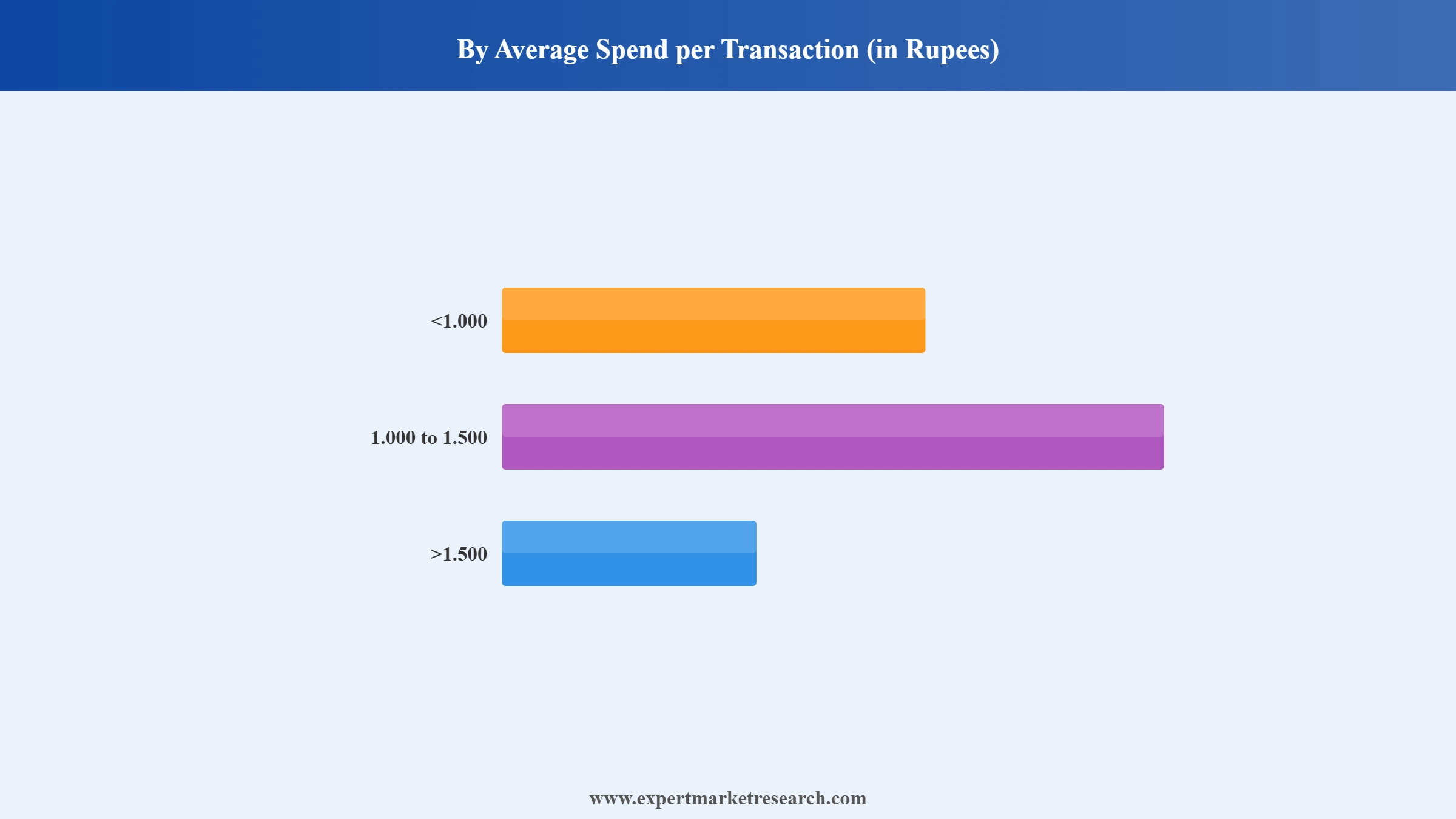
Key Insight: Purchasing behavior in the India online grocery market is influenced by the intention of the purchaser, family size, and the preferences in terms of products. Purchases made less than INR 1,000 are made for purposes of meeting immediate consumption and convenience purchases. Purchases between INR 1,000 and INR 1,500 hold dominance in the market as a result of their being affordable and allowing the full range of groceries to be purchased. Purchases above INR 1,500 are becoming popular as premium items and large families as well as subscription purchases become more common.
Market Breakup by Platform
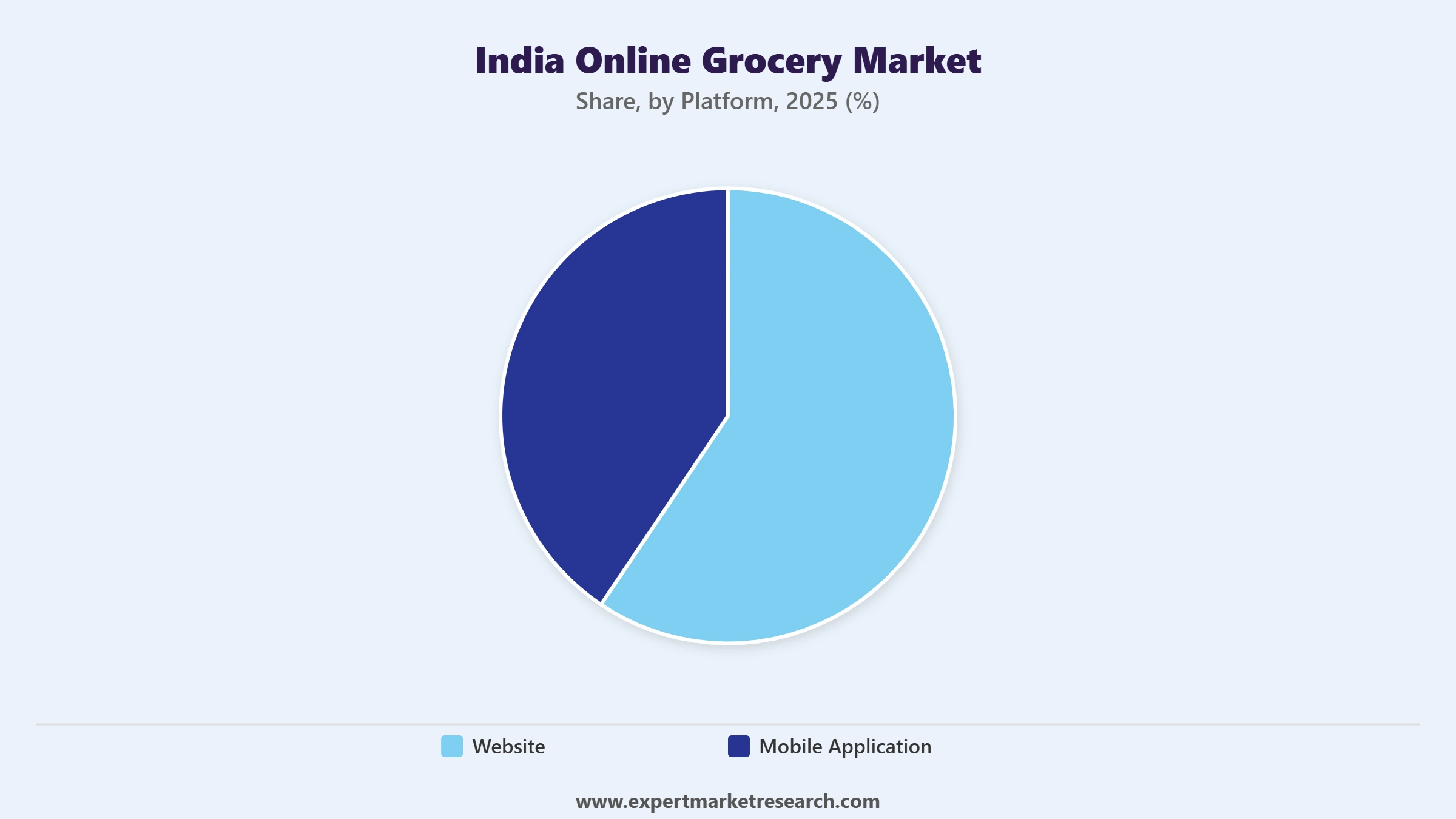
Key Insight: As per the India online grocery market report, the choice of platform varies based on purchasing behavior and the complexity of purchases. Mobile applications are preferred since they help in providing convenience, personalization, and increased engagement on the part of consumers using their smart phones. Websites are increasing in popularity owing to the fact that they cater to consumers looking for more information regarding the products, bigger ticket transactions, and better order management facilities. Both the platforms combine to offer a seamless omnichannel experience where consumers can move from one device to another without interrupting their purchasing process.
Market Breakup by Payment Method
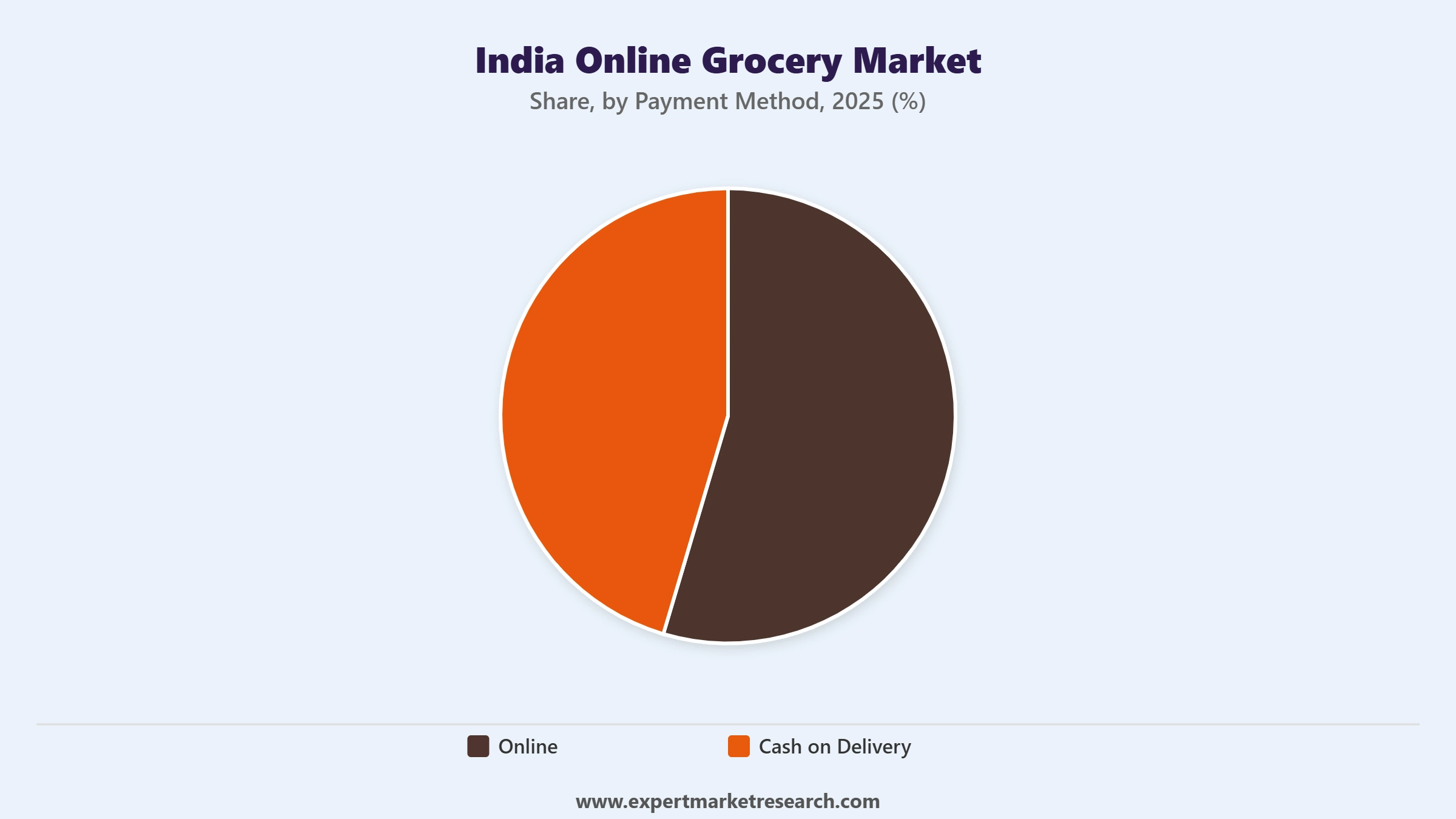
Key Insight: The methods for payments keep changing as per the India online grocery market landscape. The online mode of payment is preferred as it gives fast and secure services and provides a promotional aspect in the process. Cash on delivery plays an important role as it enables the online grocery to reach customers with diverse needs regarding payment modes as well as build trust with them when making purchases for the first time. Both these methods of payments help the retailers in catering to the different customer requirements and reducing obstacles during purchase process.
Market Breakup by Region
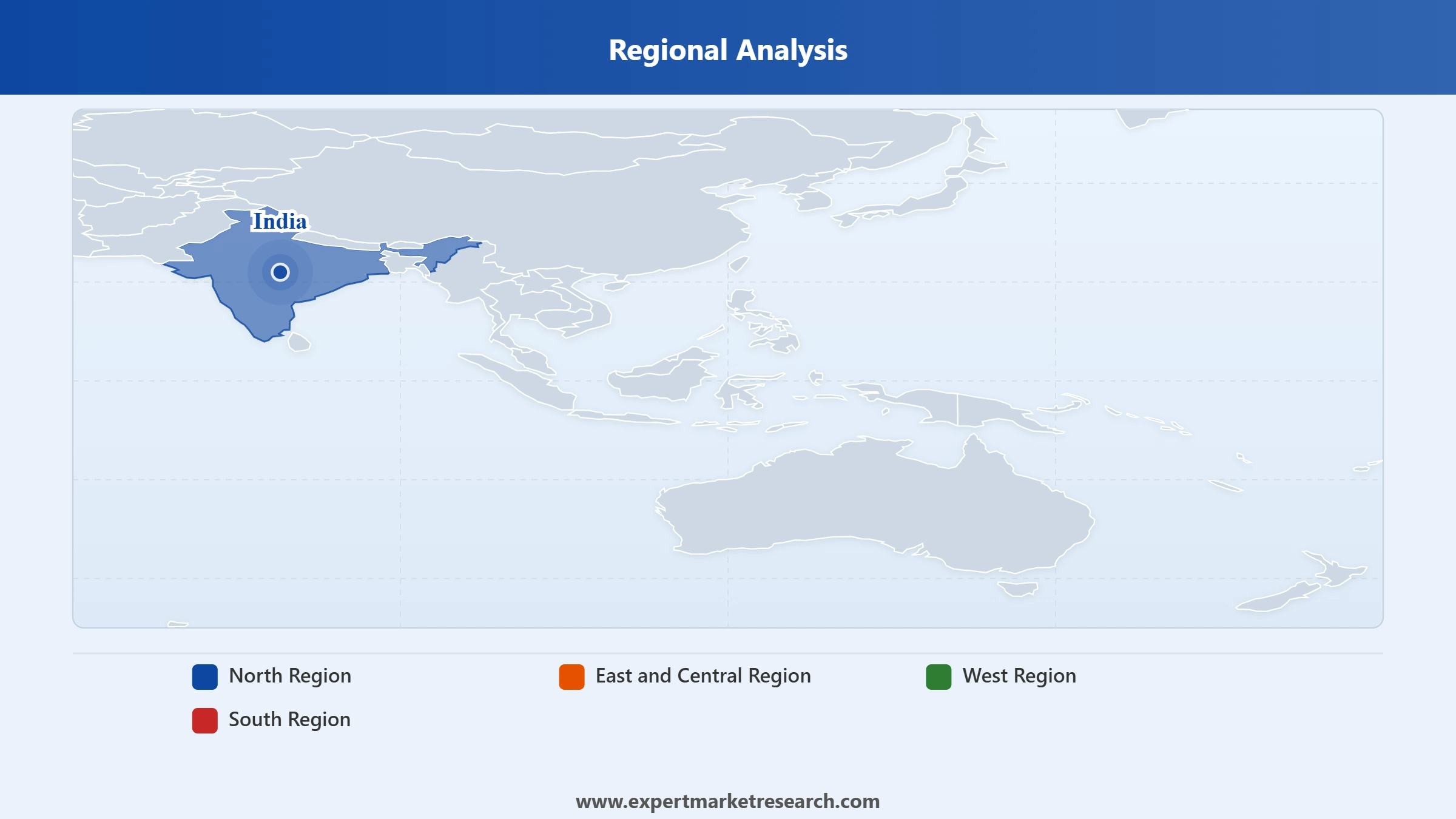
Key Insight: Regional performance across the India online grocery market scope is determined by variations in the level of infrastructure, urbanization, and the purchasing behavior of consumers. The South region dominates the market due to its well-established digital ecosystem, structured retailing, and high technology adoption. The Western region performs well because of the concentration of urban population and the existence of well-developed quick-commerce networks. North India continues to boast considerable demand owing to the growing number of urban households and the increasing online grocery shopping. The Eastern and Central India is growing rapidly owing to the improved logistics and Internet connectivity among others.
Read more about this report - REQUEST FREE SAMPLE COPY IN PDF
Grocery and staples dominate the market owing to frequent household purchases and recurring demand
The most dominant category in the India online grocery market is represented by the grocery and staples category as it covers the routine purchases made by consumers on a regular basis with consistent refill cycles. Customers now want scheduled deliveries of items like rice, flour, pulses, cooking oil, dairy products, and packaged food items in order to save time. Retailers make sure that this category is strengthened using subscription services, own brand portfolio, discounts, and recommended repeat orders. The availability of bulk purchase options and consistency in inventory availability ensures more retention of customers on the platform. In January 2026, BuyBuyCart expanded B2 Premium portfolio with snacks and staples, strengthening private-label grocery offerings across omnichannel retail platforms.
Read more about this report - REQUEST FREE SAMPLE COPY IN PDF
Fresh fruits and vegetables are witnessing rapid growth in the India online grocery market owing to customers’ preference for freshness, quality, and quick delivery at doorsteps. Platforms are investing in cold chains, quality control using artificial intelligence, and direct procurement from farmers in order to ensure less wastage while keeping the quality of products intact. The ability to provide traceability, same day delivery, and local sourcing of products increases the trust of customers in making their purchases of perishable items through the platform.
By average spend per transaction (in rupees), the INR 1,000 to INR 1,500 category dominates the market owing to balanced household purchasing and value optimization
The INR 1,000 to INR 1,500 segment dominates the India online grocery market since it is in line with the demand for groceries per month for a household while optimizing the promotional benefits and deliveries. Customers generally combine staples, packaged foods, fresh vegetables, and household items within this basket size. Online grocery stores promote such basket sizes through their loyalty program, discounting, and minimum order value benefits. For example, in April 2025, FarMart launched FarMart Pantry, expanding packaged grocery staples through quick commerce, omnichannel distribution, and AI-powered quality assurance.
Read more about this report - REQUEST FREE SAMPLE COPY IN PDF
Baskets beyond INR 1,500 are on the rise due to the growing trend of buying premium groceries, imported food items, organic foods, and large-size household items online. Subscription programs and larger pack sizes are driving higher orders. Retailers are expanding exclusive online product offerings and using personalized recommendations to increase average cart value. Growing consumer trust in online grocery quality and reliable delivery services is encouraging shoppers to place fewer but larger orders, supporting higher basket sizes and stronger customer loyalty.
By platform, mobile applications lead the market through superior accessibility and personalized shopping experiences
Mobile apps largely contribute to the India online grocery market revenue since they offer features like convenience in ordering, real-time notifications, digital payment, and product recommendations to consumers. Smartphone apps are used more often by customers for grocery ordering, order tracking, and instant customer support. Market players are constantly making improvements in mobile apps through product recommendations, multilingual interfaces, voice search, and loyalty programs. Frequent use of application ensures customer retention as well as helps retailers gather important insights about consumer behavior which can be useful in improving merchandising and promotions.
Read more about this report - REQUEST FREE SAMPLE COPY IN PDF
Website platforms keep on evolving as organizations, institutional consumers, and individuals who are ordering large quantities of groceries often prefer to have larger product selection along with an easy ordering process. Desktop interfaces make it easy to compare products, place bulk orders, create invoices, and manage subscriptions, accelerating the India online grocery market penetration. Online grocery retailers are trying to upgrade website platforms with faster navigation, AI-enabled search function, and customer support services in order to improve customer experience. For example, Shopmatic offers grocery web stores, enabling kirana retailers with digital storefronts, online payments, inventory management, and contactless deliveries, since May 2020.
Online payments secure a substantial share of the market through seamless digital transactions and secure checkout experiences
The online payment systems hold the largest share in the India online grocery market revenue since they allow quick transactions, immediate confirmations, digital reward programs, and cashless buying. Consumers use online modes such as UPIs, digital wallets, debit cards, credit cards, and net banking for their grocery purchase transactions. Retailers encourage consumers to use online payment systems through cash back programs, loyalty programs, and integration of check-out systems. It enhances consumer confidence along with increasing the number of orders made digitally through these payment systems. In October 2025, India launched ChatGPT shopping integration, enabling AI-powered product discovery, seamless purchases, UPI payments, and conversational online commerce.
Read more about this report - REQUEST FREE SAMPLE COPY IN PDF
The cash on delivery system continues growing in the emerging markets where consumers have hesitation towards digital payment methods or no access to digital banks. The cash-on-delivery payment option helps retailers attract new customers by offering a secure and familiar payment method, increasing consumer confidence and encouraging first-time online grocery purchases. In May 2025, Kiko Live introduced cash-on-delivery grocery orders, boosting kirana revenues, digital trust, payment flexibility, and neighborhood retail growth in the India online grocery market.
South India dominates the market through advanced digital adoption and organized retail infrastructure
The South India online grocery market is the largest regional market due to factors like high levels of urbanization, digital payment acceptance, and high rates of smartphone ownership. Cities such as Bengaluru, Hyderabad, Chennai, and Kochi demonstrate considerable consumer interest in fast-commerce grocery services that are facilitated by sophisticated logistics. Subscription grocery purchases, demand for premium food, and digital loyalty are readily accepted by consumers in the region. There are large technology centers in the region and also high levels of digital literacy, hence making it easier for grocery retailers to try out new fulfillment models without compromising order volume consistency in the metro and urban markets.
Read more about this report - REQUEST FREE SAMPLE COPY IN PDF
The East and Central regions are observing an accelerated growth pace in the India online grocery market due to internet proliferation, adoption of digital payments, and organized retailing. Online grocery companies are making investments in regional fulfillment centers, regional product mixes, and hyperlocal delivery networks to improve their customer reach. High disposable incomes and growing familiarity with e-commerce platforms make it easy for customers to adopt online groceries. In June 2026, BigBasket expanded bbinstant to Kolkata, deploying 24/7 smart vending stores for quick grocery access across workplaces and residential communities.
The competitive nature of the industry is based on faster delivery, use of AI to optimize inventory, and unique customer experience. Leading India online grocery companies are investing in dark store facilities, predicting demand and direct procurement from the farmers for ensuring better quality products as well as lowering the cost of operations. Private label grocery product line, regional assortment of groceries, and subscription-based buying models are being developed by companies for improving customer retention and higher margins.
Quick commerce is another important area that is receiving attention from India online grocery market players who are attempting to develop micro-fulfillment centers and route optimization technology for quicker deliveries. The other potential areas include expansion in the Tier II and Tier III cities, collaborations with FMCG companies, digital payment solutions, and omnichannel retailing.
Established in 2010 and based out of Bengaluru, India, Innovative Retail Concepts Private Limited owns and manages BigBasket, one of the largest online grocery shopping companies in India. It focuses on AI-powered inventory management, farm-to-table procurement, private labeling, and establishment of dark stores. It constantly improves customer experience through subscriptions, hyperlocal distribution centers, technology-enabled supply chain optimization, and expanding footprints in upcoming Indian cities.
Founded in 2015 and based out of Gurugram, India, Blink Commerce Private Limited runs Blinkit, which is an ultra-fast online grocery delivery platform, through an increasing number of strategically positioned dark stores. It is focused on inventory forecasting, automated fulfillment, and smart delivery routing. It constantly invests in the infrastructure for quick commerce.
Founded in 1994 and with headquarters based out of Seattle, Washington, Amazon.com, Inc. supports the India online grocery market through the platform known as Amazon Fresh, leveraging its extensive logistical capabilities and superior recommendation technology and fulfillment platforms. It concentrates on digital shopping, payment integration, subscription advantages, and efficient last-mile deliveries, while expanding the number of products in the grocery range and enhancing delivery accuracy in urban regions.
Founded in 2005 and with headquarters based in Mumbai, India, Nature's Basket offers premium groceries, gourmet, imported, and fresh goods. The company stands out due to its selective product ranges, omnichannel retail approach, and premium experiences. Digital commerce, personalization, and selective food categories help the retailer cater to the needs of the affluent segment of the target market.
Other key players in the market include Spencer’s Retail Limited, Flipkart Private Limited, Paytm, Avenue Supermarts Limited, Reliance Retail Limited, and Fiora Online Limited, among others.
*Please note that this is only a partial list; the complete list of key players is available in the full report. Additionally, the list of key players can be customized to better suit your needs.*
Unlock the latest insights with our India online grocery market trends 2026 report. Discover regional growth patterns, consumer preferences, and key industry players. Stay ahead of competition with trusted data and expert analysis. Download your free sample report today and drive informed decisions in the market.
Australia Online Grocery Delivery Market
China Online Grocery Market
Online Grocery Market


Upto 15% Off
USD
$2499 $2249
$3999 $3599
$4999 $4249
$5999 $5099


*While we strive to always give you current and accurate information, the numbers depicted on the website are indicative and may differ from the actual numbers in the main report. At Expert Market Research, we aim to bring you the latest insights and trends in the market. Using our analyses and forecasts, stakeholders can understand the market dynamics, navigate challenges, and capitalize on opportunities to make data-driven strategic decisions.*
The market is projected to grow at a CAGR of 24.36% between 2026 and 2035.
Key strategies driving the market include hyperlocal delivery models, app-based quick-commerce services, partnerships with local kirana stores, expansion into Tier-2 and Tier-3 cities, competitive pricing with cashback offers, and seamless digital payment integration. Companies also leverage data analytics for personalized marketing and efficient inventory management.
Key trends aiding market expansion include the increasing availability of cheaper smartphones, declining data tariffs, and rising demand for instant grocery delivery.
Regions considered in the market are North Region, East and Central Region, West Region, and South Region.
Different categories in the market are grocery and staples, and fruits and vegetables, among others.
Indian online grocery can be categorised by spending into less than 1000, between 1000 and 1500, and greater than 1500.
The different modes of payment include online payments and cash on delivery.
Based on platform, the market is divided into websites and mobile applications.
The key players in the market report include Retail Concepts Private Limited, Blink Commerce Private Limited, Amazon.com, Inc., Nature’s Basket, Spencer’s Retail Limited, Flipkart Private Limited, Paytm, Avenue Supermarts Limited, Reliance Retail Limited, and Fiora Online Limited, among others.
In 2025, the market reached an approximate value of USD 14.92 Billion.
The market is estimated to witness a healthy growth in the forecast period of 2026-2035 to reach about USD 132.00 Billion by 2035.
Mobile applications are dominating the market dynamics, driven by the booming smartphone penetration and affordable internet access.
Explore our key highlights of the report and gain a concise overview of key findings, trends, and actionable insights that will empower your strategic decisions.
| REPORT FEATURES | DETAILS |
| Base Year | 2025 |
| Historical Period | 2019-2025 |
| Forecast Period | 2026-2035 |
| Scope of the Report |
Historical and Forecast Trends, Industry Drivers and Constraints, Historical and Forecast Market Analysis by Segment:
|
| Breakup by Category |
|
| Breakup by Average Spend per Transaction (in Rupees) |
|
| Breakup by Platform |
|
| Breakup by Payment Method |
|
| Breakup by Region |
|
| Market Dynamics |
|
| Competitive Landscape |
|
| Companies Covered |
|
Datasheet
One User
USD 2,499
USD 2,249
tax inclusive*
Single User License
One User
USD 3,999
USD 3,599
tax inclusive*
Five User License
Five User
USD 4,999
USD 4,249
tax inclusive*
Corporate License
Unlimited Users
USD 5,999
USD 5,099
tax inclusive*
*Please note that the prices mentioned below are starting prices for each bundle type. Kindly contact our team for further details.*
Flash Bundle
Small Business Bundle
Growth Bundle
Enterprise Bundle
*Please note that the prices mentioned below are starting prices for each bundle type. Kindly contact our team for further details.*
Flash Bundle
Number of Reports: 3
20%
tax inclusive*
Small Business Bundle
Number of Reports: 5
25%
tax inclusive*
Growth Bundle
Number of Reports: 8
30%
tax inclusive*
Enterprise Bundle
Number of Reports: 10
35%
tax inclusive*
How To Order

Select License Type
Choose the right license for your needs and access rights.

Click on ‘Buy Now’
Add the report to your cart with one click and proceed to register.

Select Mode of Payment
Choose a payment option for a secure checkout. You will be redirected accordingly.
Strategic Solutions for Informed Decision-Making
Gain insights to stay ahead and seize opportunities.

Get insights & trends for a competitive edge.

Track prices with detailed trend reports.

Analyse trade data for supply chain insights.

Leverage cost reports for smart savings

Enhance supply chain with partnerships.

Connect For More Information
Our expert team of analysts will offer full support and resolve any queries regarding the report, before and after the purchase.
Our expert team of analysts will offer full support and resolve any queries regarding the report, before and after the purchase.
We employ meticulous research methods, blending advanced analytics and expert insights to deliver accurate, actionable industry intelligence, staying ahead of competitors.
Our skilled analysts offer unparalleled competitive advantage with detailed insights on current and emerging markets, ensuring your strategic edge.
We offer an in-depth yet simplified presentation of industry insights and analysis to meet your specific requirements effectively.




