

Consumer Insights
Uncover trends and behaviors shaping consumer choices today
Procurement Insights
Optimize your sourcing strategy with key market data
Industry Stats
Stay ahead with the latest trends and market analysis.
The Latin America Laparoscopic Devices market was valued at USD 1.54 Billion in 2025 and is expected to grow at a CAGR of 7.50%, reaching USD 3.17 Billion by 2035. The market growth is driven by the increasing adoption of minimally invasive surgical procedures, rising surgical volumes, expanding hospital infrastructure, and technological advancements in laparoscopic visualization systems, energy-based instruments, and surgical equipment.
Compound Annual Growth Rate
7.5%
Value in USD Billion
2026-2035
Read more about this report - REQUEST FREE SAMPLE COPY IN PDF
Laparoscopic devices are specialized surgical instruments and equipment used to perform minimally invasive operations through small incisions, offering an alternative to conventional open surgery. The equipment includes camera-integrated laparoscopes and illumination systems, high-definition monitors, trocars and access ports, insufflators, graspers, dissectors, scissors, electrosurgical and advanced energy instruments, suction-irrigation systems, and specimen-retrieval and stapling devices. The market was valued at USD 1.54 Billion in 2025, driven by the rising adoption of minimally invasive surgical procedures, increasing surgical demand, investment in hospital infrastructure, and ongoing improvements in laparoscopic technologies.
The following section outlines the key factors influencing the growth of the market, including major drivers, restraints, and emerging opportunities.
Public Hospital Modernization and Expanding Adoption of Advanced Minimally Invasive Surgical Technologies
The market is primarily driven by public hospital modernization, expanding minimally invasive surgical capacity and technology adoption. According to Brazil’s Ministry of Health, 2025 procurement initiatives prioritized domestic medical equipment, while 2026 hospital upgrades introduced advanced laparoscopic systems. In September 2026, Edge Medical announced Brazilian regulatory approval for its remote surgery system, extending its minimally invasive portfolio. These investments can reduce procedural bottlenecks and improve capital utilization, although currency volatility, import costs and constrained public budgets favor demonstrable clinical value and lifecycle-cost efficiency.
High Capital Costs, Import-Tax Exposure and Limited Reimbursement Likely to Restran the Market Growth
The market is constrained by the high acquisition and operating costs of imported equipment, compounded by currency volatility and uneven reimbursement. According to Brazil’s Chamber of Deputies, in April 2026, medical-device import-tax increases raised concerns about higher hospital expenditure and procurement disruption. The financial burden is particularly significant for advanced imaging, energy-based instruments and robotic platforms, where maintenance, consumables and staff training increase total ownership costs. Under constrained public budgets, hospitals may prioritize essential equipment over premium upgrades, slowing technology adoption and replacement cycles.
Public-Sector Surgical Equipment Expansion and Localized Medical-Technology Manufacturing
The most important opportunity in the market lies in expanding access to minimally invasive surgery through public-hospital equipment upgrades, technology transfer and locally manufactured devices. According to Brazil’s Ministry of Health, June 2026 procurement under Novo PAC Saúde expanded surgical capacity through equipment packages distributed nationally. In September 2026, Brazil and Mexico discussed joint platforms for developing and producing healthcare technologies. These initiatives create opportunities for suppliers offering interoperable systems, training and local servicing, while pooled procurement and domestic production can improve affordability and reduce import-related cost exposure.
Shift Towards Robot-Assisted Laparoscopy and Digitally Connected Surgical Systems
The latest developments point to a shift from conventional laparoscopy towards digitally enabled, robot-assisted minimally invasive surgery, including remote surgical capabilities. Brazil’s public healthcare system is an important test case: a 2026 clinical study reported the first robotic telesurgery procedures within the Unified Health System, while public equipment programmes are expanding surgical infrastructure. For hospitals, the trend creates demand for high-definition visualization, precision instruments, connectivity and surgeon training. Financially, adoption will depend on whether greater operating-room utilization and specialist access justify capital expenditure, maintenance and digital infrastructure costs.
General Surgery Expected to Lead the Market Share by Application
General surgery is the leading application in the market, supported by the broad use of minimally invasive techniques for cholecystectomy, appendectomy and hernia repair. Brazil’s Ministry of Health announced in June 2026 an investment in operating-room equipment to expand surgical capacity across the public health system. This infrastructure expansion supports demand for laparoscopes, trocars, energy systems and closure devices. From a financial perspective, high procedure volumes and equipment utilization can improve capital efficiency, making general surgery a priority for hospitals balancing affordability and surgical throughout.
Read more about this report - REQUEST FREE SAMPLE COPY IN PDF
Brazil is expected to lead the market, supported by its extensive hospital network, large surgical patient population and sustained investment in public healthcare infrastructure. According to Brazil’s Ministry of Health, in June 2026, the government expanded surgical capacity through equipment procurement under Novo PAC Saúde, strengthening operating-room infrastructure and domestic medical-device manufacturing. The country’s adoption of robotic telesurgery further demonstrates technological advancement. Economically, Brazil’s scale and centralized procurement create opportunities for suppliers to achieve larger sales volumes and improve distribution efficiencies.
The key features of the market report include patent analysis, funding and investment analysis, and strategic initiatives by leading players. The major companies in the market are as follows:
Karl Storz SE & Co. KG is a medical technology company involved in the market. Its product portfolio includes laparoscopes, surgical instruments, imaging systems, and equipment for gynecological procedures. The company supports laparoscopic applications such as hysterectomy, endometriosis treatment, urogynecological surgery, and oncological procedures through specialized instruments and integrated surgical solutions.
Medtronic plc is a global medical technology company and a key player in the market. Its product portfolio includes laparoscopic access instruments designed for minimally invasive surgical procedures. Through its laparoscopic access product category, the company provides surgical solutions for healthcare professionals, supporting instrument access during laparoscopic procedures and strengthening its presence in the surgical devices segment.
Johnson & Johnson, through its MedTech business and Ethicon portfolio, participates in the Latin America laparoscopic devices market. The company provides surgical solutions for laparoscopic procedures, including laparoscopic hysterectomy. Its offerings support minimally invasive gynecological surgery, contributing to the adoption of laparoscopic techniques and strengthening its position in the surgical technology and medical devices industry.
Olympus Corporation is a medical technology company that is actively involved in the market. Its general surgery portfolio includes laparoscopes designed for minimally invasive surgical applications. Through these visualization devices, the company supports laparoscopic procedures by providing optical solutions for surgical visualization, contributing to its presence in the global market for minimally invasive surgical equipment.
Other key players in the market include CONMED Corporation, B. Braun SE, Richard Wolf GmbH,
*Please note that this is only a partial list; the complete list of key players is available in the full report. Additionally, the list of key players can be customized to better suit your needs.*
The market report offers a detailed analysis of the market based on the following segments:
Market Breakup by Product
The product segment comprises visualisation systems, surgical instruments and supporting equipment used in minimally invasive procedures. Demand is influenced by technological advancements in imaging, energy-assisted tissue dissection and closure systems, as well as investments in hospital infrastructure. Equipment reliability, compatibility with existing systems, maintenance requirements and adaptability across different surgical applications remain important considerations shaping procurement decisions across the region.
Market Breakup by Usage
Reusable instruments appeal to healthcare providers aiming to reduce long-term procurement expenses, while disposable devices simplify operations and limit reprocessing requirements. Purchasing decisions are influenced by sterilization infrastructure, infection-control protocols, procedure volumes and overall lifecycle costs. Manufacturers differentiate their offerings through instrument durability, procedural safety, operational efficiency and the balance between upfront acquisition costs and recurring replacement expenditure.
Market Breakup by Application
Market demand across applications is supported by the growing use of minimally invasive surgical techniques across various medical specialties. General surgery encompasses a broad spectrum of procedures, while gynecological, colorectal, bariatric and urological interventions require specialized instruments. Adoption depends on surgeons’ technical expertise, patient suitability, hospital infrastructure, and the availability of advanced imaging systems and energy-based surgical technologies.
Market Breakup by End User
The market is segmented by end user based on healthcare facilities and surgical care settings, with market growth supported by increasing laparoscopic procedure volumes, expanding hospital infrastructure, rising investments in surgical technologies, and growing demand for minimally invasive treatment options across the region.
Market Breakup by Country
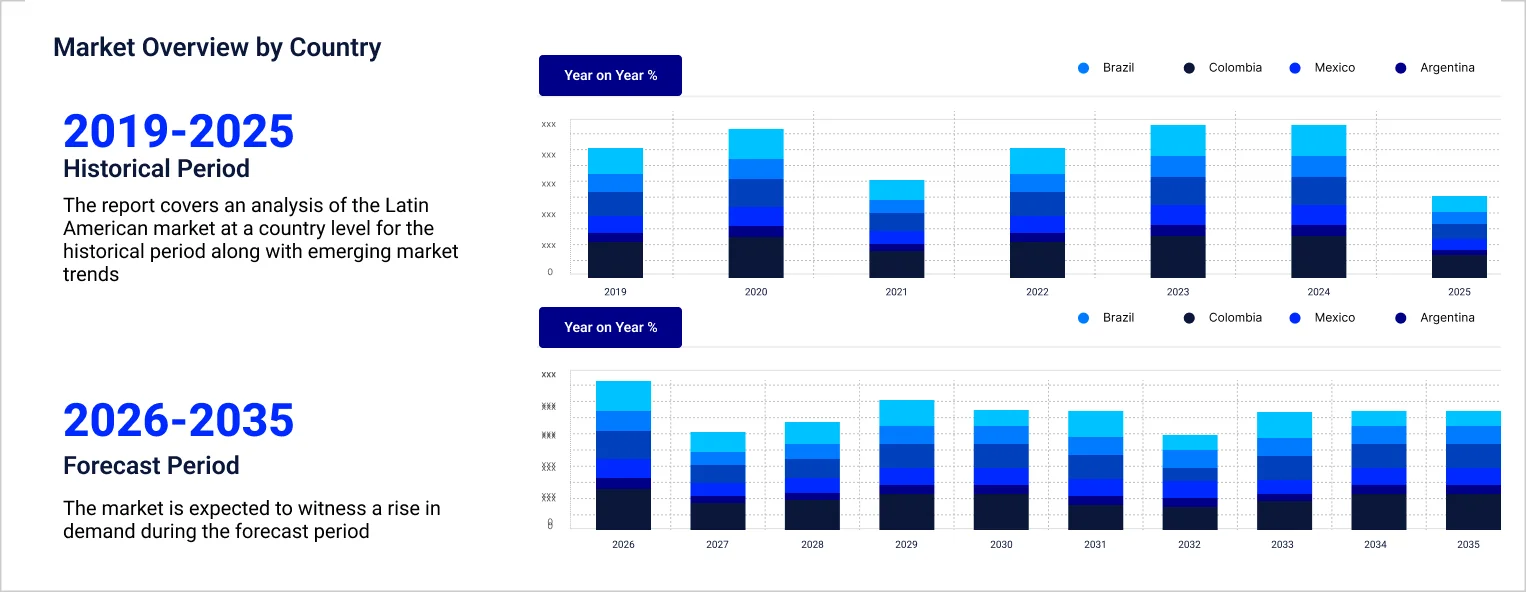
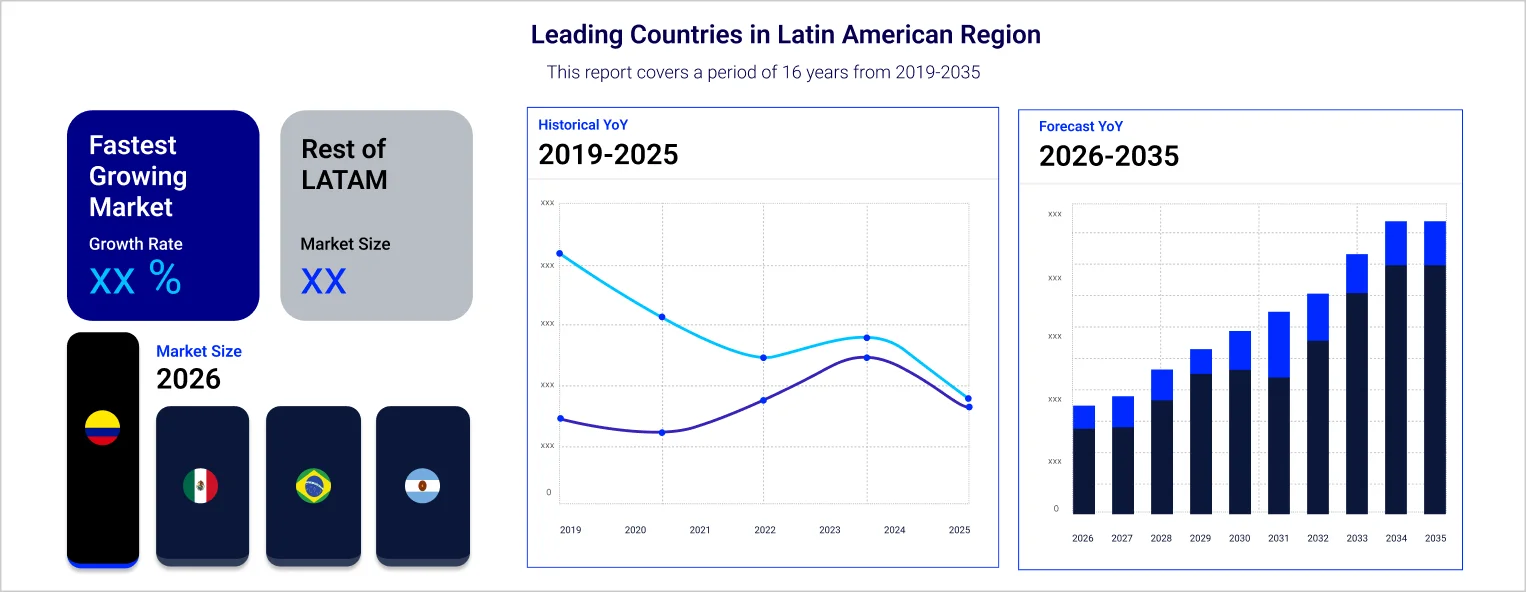
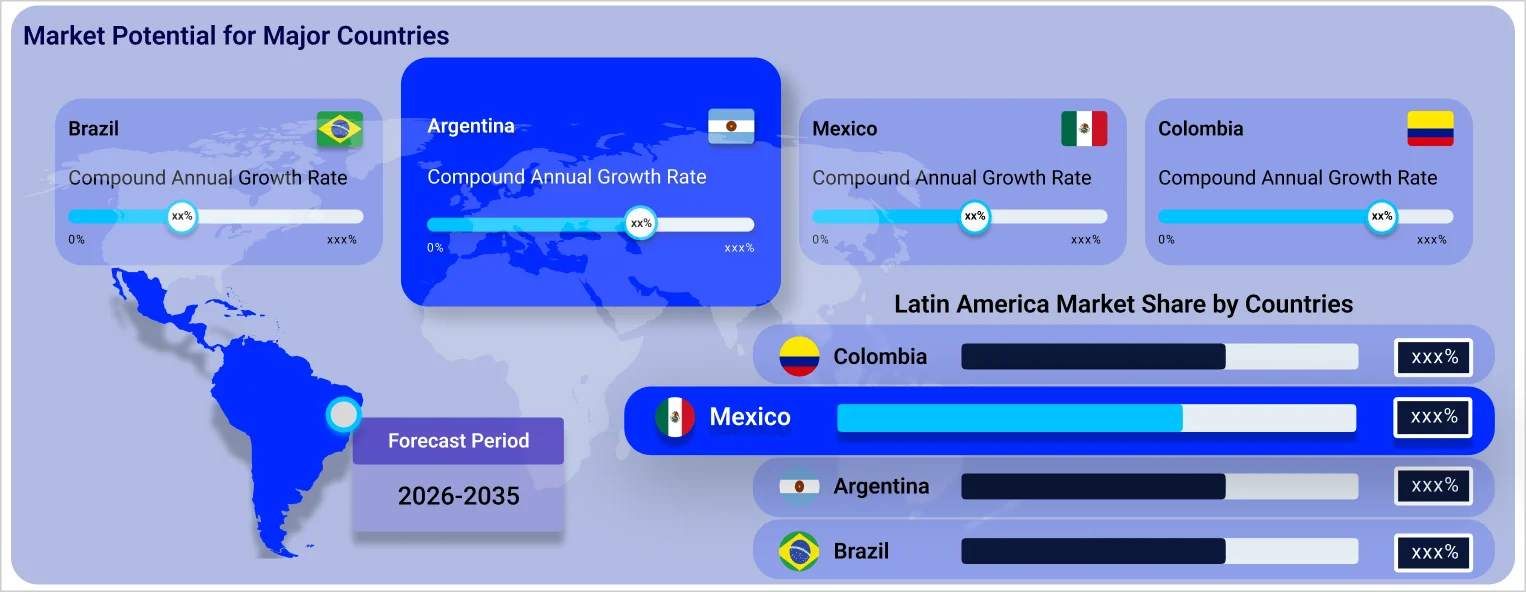
The Latin America laparoscopic devices market is segmented into Brazil, Argentina, Mexico, and other countries. Regional demand is supported by the adoption of minimally invasive surgical procedures, hospital infrastructure development and increasing requirements for advanced surgical equipment. Differences in healthcare expenditure, public procurement policies, import costs and access to specialized surgical services influence device adoption and market development across the region.


Upto 15% Off
USD
$2699 $2429
$4299 $3869
$5799 $4949
$6999 $5949


*While we strive to always give you current and accurate information, the numbers depicted on the website are indicative and may differ from the actual numbers in the main report. At Expert Market Research, we aim to bring you the latest insights and trends in the market. Using our analyses and forecasts, stakeholders can understand the market dynamics, navigate challenges, and capitalize on opportunities to make data-driven strategic decisions.*
Explore our key highlights of the report and gain a concise overview of key findings, trends, and actionable insights that will empower your strategic decisions.
| REPORT FEATURES | DETAILS |
| Base Year | 2025 |
| Historical Period | 2019-2025 |
| Forecast Period | 2026-2035 |
| Scope of the Report |
Historical and Forecast Trends, Industry Drivers and Constraints, Historical and Forecast Market Analysis by Segment:
|
| Breakup by Product |
|
| Breakup by Usage |
|
| Breakup by Application |
|
| Breakup by End User |
|
| Breakup by Region |
|
| Market Dynamics |
|
| Supplier Landscape |
|
| Companies Covered |
|
Datasheet
One User
USD 2,699
USD 2,429
tax inclusive*
Single User License
One User
USD 4,299
USD 3,869
tax inclusive*
Five User License
Five User
USD 5,799
USD 4,949
tax inclusive*
Corporate License
Unlimited Users
USD 6,999
USD 5,949
tax inclusive*
*Please note that the prices mentioned below are starting prices for each bundle type. Kindly contact our team for further details.*
Flash Bundle
Small Business Bundle
Growth Bundle
Enterprise Bundle
*Please note that the prices mentioned below are starting prices for each bundle type. Kindly contact our team for further details.*
Flash Bundle
Number of Reports: 3
20%
tax inclusive*
Small Business Bundle
Number of Reports: 5
25%
tax inclusive*
Growth Bundle
Number of Reports: 8
30%
tax inclusive*
Enterprise Bundle
Number of Reports: 10
35%
tax inclusive*
How To Order

Select License Type
Choose the right license for your needs and access rights.

Click on ‘Buy Now’
Add the report to your cart with one click and proceed to register.

Select Mode of Payment
Choose a payment option for a secure checkout. You will be redirected accordingly.
Strategic Solutions for Informed Decision-Making
Gain insights to stay ahead and seize opportunities.

Get insights & trends for a competitive edge.

Track prices with detailed trend reports.

Analyse trade data for supply chain insights.

Leverage cost reports for smart savings

Enhance supply chain with partnerships.

Connect For More Information
Our expert team of analysts will offer full support and resolve any queries regarding the report, before and after the purchase.
Our expert team of analysts will offer full support and resolve any queries regarding the report, before and after the purchase.
We employ meticulous research methods, blending advanced analytics and expert insights to deliver accurate, actionable industry intelligence, staying ahead of competitors.
Our skilled analysts offer unparalleled competitive advantage with detailed insights on current and emerging markets, ensuring your strategic edge.
We offer an in-depth yet simplified presentation of industry insights and analysis to meet your specific requirements effectively.




