Consumer Insights
Uncover trends and behaviors shaping consumer choices today
Procurement Insights
Optimize your sourcing strategy with key market data
Industry Stats
Stay ahead with the latest trends and market analysis.
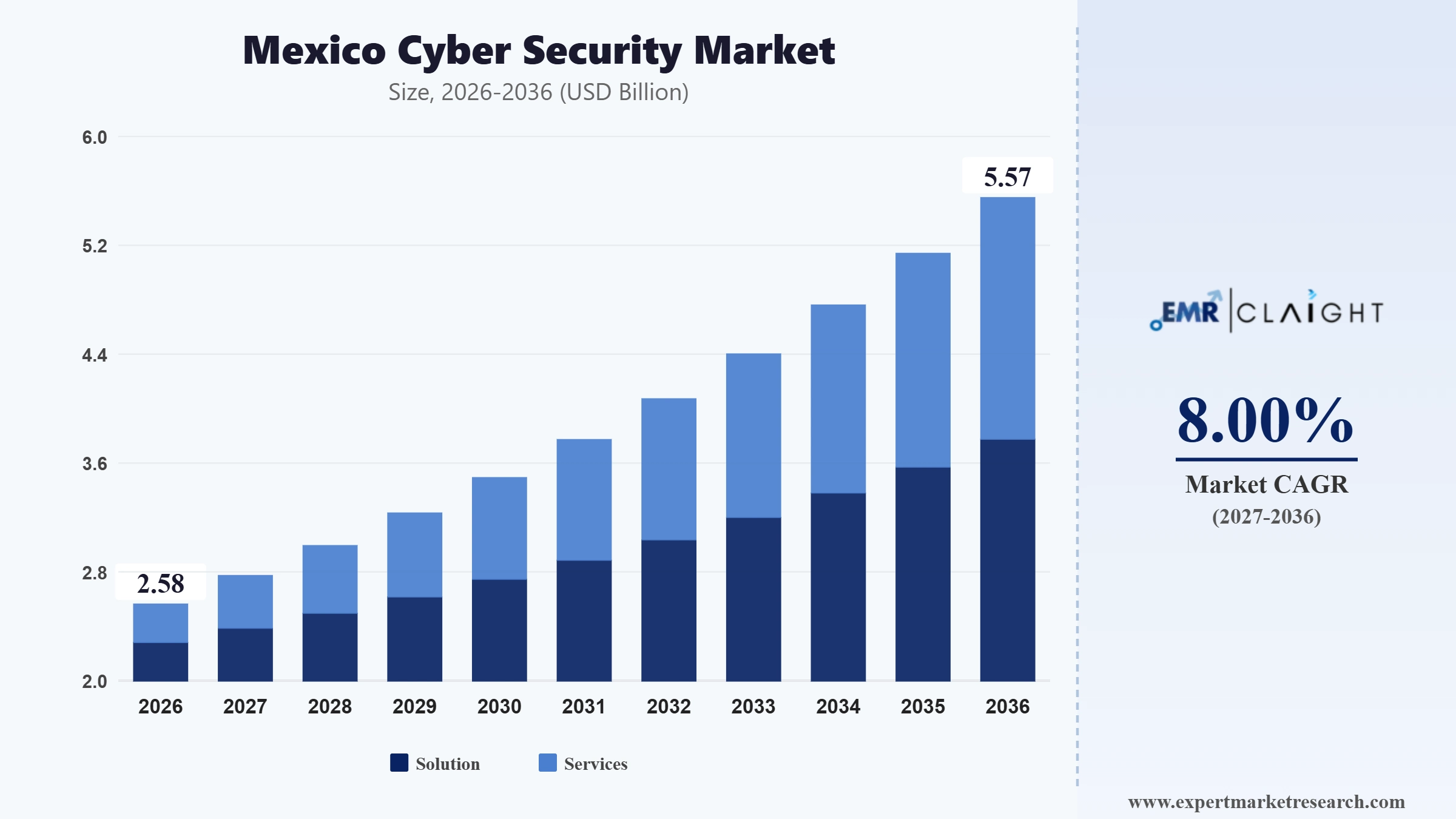
The Mexico cyber security market attained a value of USD 2.39 Billion in 2025 and is projected to expand at a CAGR of 8.00% through 2035. The market is further expected to achieve USD 5.16 Billion by 2035. The proliferation of nearshoring is increasing the need for cybersecurity among Mexican supply chains, with multinational companies increasingly expecting more rigorous identity management, surveillance, incident response, and compliance among their local technology and logistics partners.
Over the recent past, the Mexico cyber security market has shifted from perimeter security to a more strategic approach through the integration of cloud, identity, and AI-based security for enterprises and government institutions. One such example is Cisco AI Defense, launched in January 2025, which can identify, validate and protect AI agents and applications. According to the 2025 Cisco Mexico Cybersecurity Readiness Index, only 12% of the survey respondents were considered mature in terms of cloud reinforcement, while 56% were formative in this regard.
Moreover, the Mexico cyber security market observes several efforts within the government that are shaping up an institutional market. The Mexican Government Cybersecurity Center within the Agency for Digital Transformation and Telecommunications works on the creation of cybersecurity policies, models of maturity assessment, competencies, and cooperation between the public and private sectors. For example, in March 2025, the National Guard initiated the maturity assessment of CERT-MX using OAS SIM3 maturity model.
The growth in the use of digital payment solutions and connected devices in the Mexico cyber security market is leading to an increased number of critical corporate assets which must be continuously monitored and secured, and where incident response is a key capability. At the same time, international supply chains are driving Mexican companies and technology providers to become more capable from a cybersecurity perspective to cater to multinational expectations.
Read more about this report - Request a Free Sample
Thales launched Sentinel Envelope+ which ensures that the software is protected against AI-powered attacks by integrating application runtime protection and threat detection technology. Cybersecurity vendors can create AI-capable application security, runtime protection, and threat detection systems for businesses in Mexico.
Mexico shifted its focus from cybersecurity to digital resilience through enhanced coordination and management of risks and protection of digital infrastructure. Businesses can sell cyber resilience products, managed security services, incident response services, and critical infrastructure protection solutions, broadening the Mexico cyber security market scope.
The Mexican government initiated an initiative known as PYMEs Ciberseguras to enhance the level of cybersecurity among 500,000 small and medium-sized enterprises. The cybersecurity industry will be able to provide affordable managed security solutions for SMEs that have limited cybersecurity skills.
Veea enhanced edge computing and AI technology capabilities to deliver secure connectivity, intelligence, and real-time cybersecurity services to connected enterprise environments. Companies in the Mexico cyber security market can incorporate edge computing, AI, networking, and IoT cybersecurity in Mexico’s growing digital infrastructure.
AI is currently emerging as a security control as it adopts generative AI, copilots, and automated workflows, further redefining the Mexico cyber security market dynamics. In May 2026, Dragos reported AI-assisted intrusion attempts targeting a Mexican water utility’s OT systems, highlighting emerging critical-infrastructure risks. However, as per the research done by Cisco on 2025 readiness of Mexico, 47% of Mexican organizations that use cloud security have integrated AI within their cybersecurity infrastructure but basic features are not ubiquitous, offering an opportunity to vendors in AI discovery, model validation, runtime protection, and automated response.
Mexico is establishing its cybersecurity capability through a central framework of standardization, maturity assessment, and incident response coordination. The Agency for Digital Transformation and Telecommunications has established the Government Cybersecurity Center, which will help in developing policy instruments, maturity models, technical training, cyber hygiene initiatives, and public-private collaboration. For example, in December 2025, Mexico introduced its first National Cybersecurity Plan, establishing coordinated measures to strengthen digital resilience, critical infrastructure protection, and national cyber capabilities. For companies in the Mexico cyber security market, this will favor interoperable monitoring, incident orchestration, government cloud security, and assessment solutions.
Ransomware resistance is evolving from prevention to quick containment, permanent recovery, and business continuity, propelling growth in the Mexico cyber security market. In August 2026, Fortinet and Alestra strengthened telecom cybersecurity in Mexico through advanced protection, threat intelligence, and managed security capabilities. Security vendors are working towards automating backup validation, identity isolation, endpoint containment, and recovery orchestration. Managed security companies can unite threat hunting and disaster recovery testing for their customers, who need to know if their important systems can be recovered and put back into operation.
Cloud adoption is increasing the attack surface faster than the majority of Mexican businesses can adapt their control mechanisms. Companies in the Mexico cyber security market are developing cloud posture management, identity segmentation, workload protection, and secure access. Zero Trust solutions are also evolving towards continuous authentication of users, devices, applications, and workloads. Providers that integrate cloud security with network visibility and identity analytics can reduce fragmented tooling, while local partners can accelerate implementation for companies lacking specialized cloud-security teams and improve risk visibility. In July 2025, XONA and DICOFRA partnered to deliver secure remote access solutions for critical infrastructure across Mexico, Latin America, and the United States.
Identity is emerging as an increasingly crucial control point as companies in the Mexico cyber security market interconnect their cloud platforms, operational technology, remote workers, and external providers. The CyberArk platform’s emphasis on privileged access, machine identities, least privilege, and continuous identity threat monitoring is indicative of this trend. Such an offering enables the organization to implement Zero Trust architecture within cloud, hybrid, and hosted environments. This means that identity control becomes applicable to banks, manufacturing plants, telecom providers, and government agencies. In September 2026, TEAM expanded its Mexican cybersecurity portfolio with SailPoint, strengthening identity governance and access management capabilities for enterprises.
The Expert Market Research's report titled “Mexico Cyber Security Market Report and Forecast 2026-2035” offers a detailed analysis of the market based on the following segments:
Market Breakup by Component
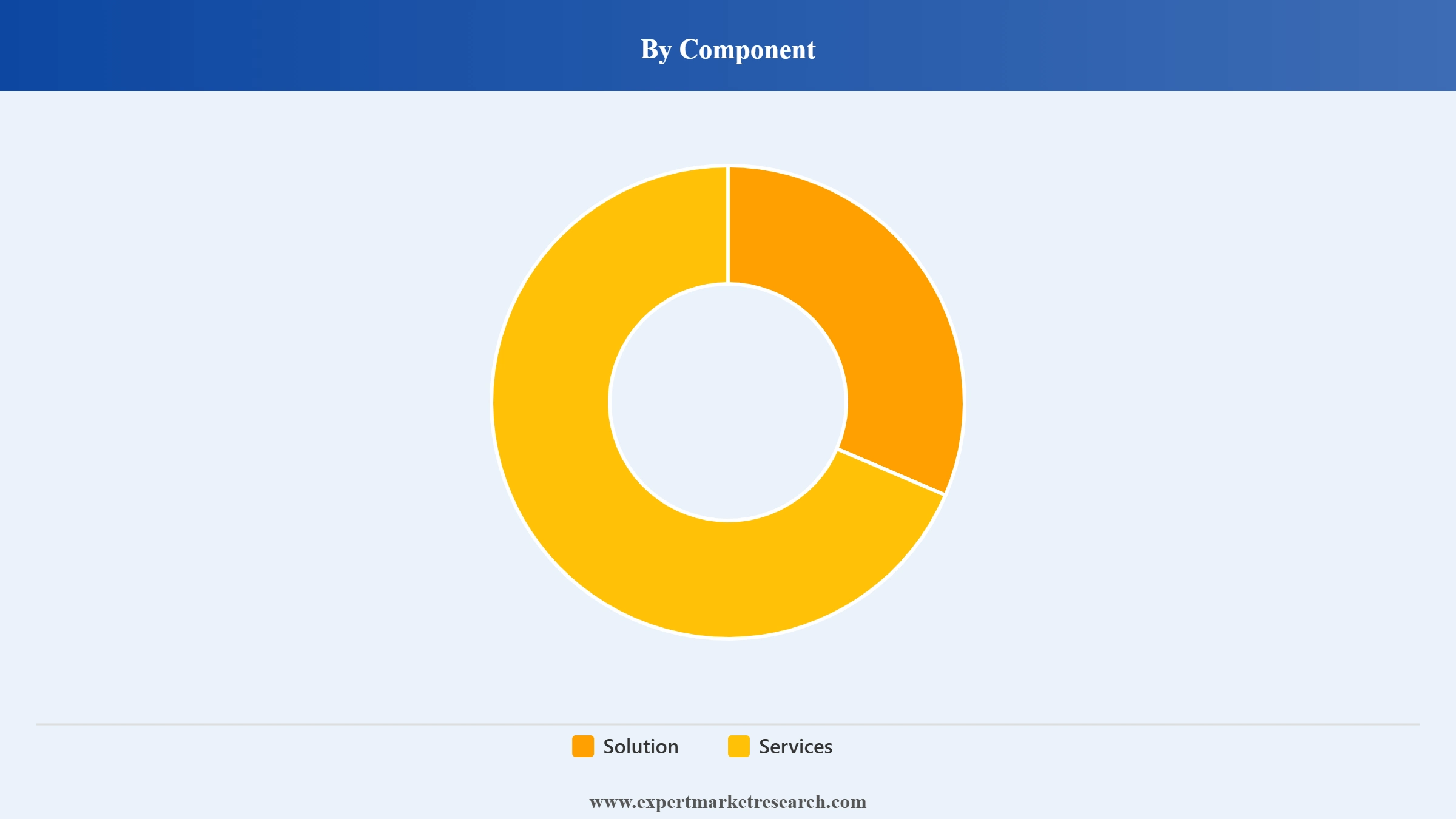
Key Insight: Component requirement is driven by solutions that integrate several controls, whereas encryption provides security for confidential records, and DLP prevents illegal movement of data, propelling demand in the Mexico cyber security market. Unified Threat Management provides integration, Firewall manages network perimeter, and Antivirus/Antimalware stops malicious software. IDS/IPS enhances detection/prevention capability, and Disaster Recovery enables operational continuity post disruption. DDoS Mitigation ensures security for internet facing services, Web Filtering prevents dangerous access, and other services comprise specialized controls. In September 2026, Airties expanded its AI-driven connectivity platform with integrated cybersecurity, strengthening protection for connected homes and broadband networks.
Market Breakup by Deployment
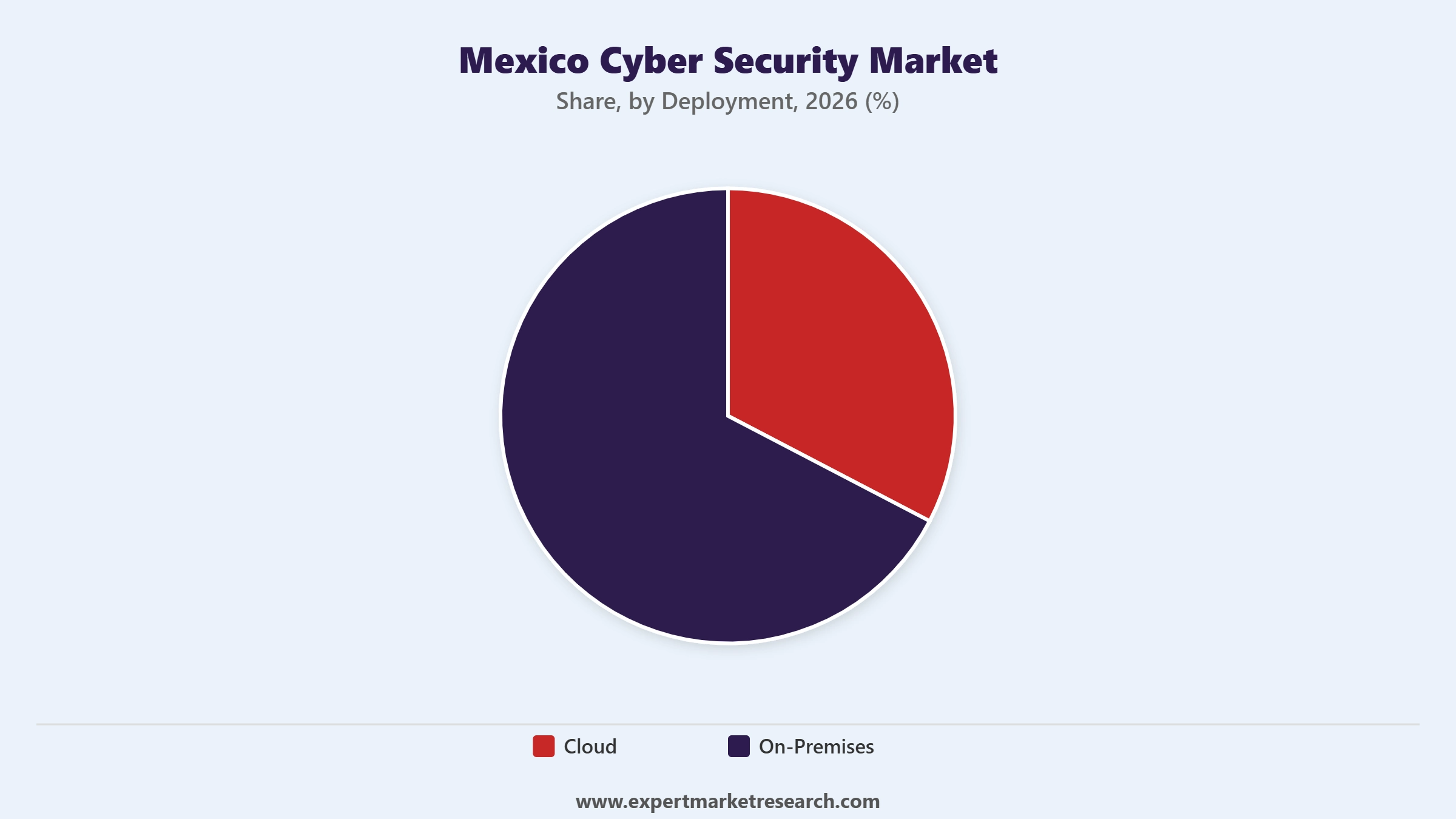
Key Insight: Cloud deployment secures a substantial share in the Mexico cyber security market revenue through provision of security features that are extended to the application, data, identity, and workloads without set infrastructure limits. On-premises deployment is essential when it comes to dealing with regulated data, operational technology, latency-dependent solutions, and where infrastructure needs to be controlled directly. There is growing demand for consistency in policies for these environments, including central visibility, automation of remediation, and identity-based access. In August 2026, WSO2 launched a self-managed AI platform enabling regulated firms to deploy AI securely while maintaining data control and compliance.
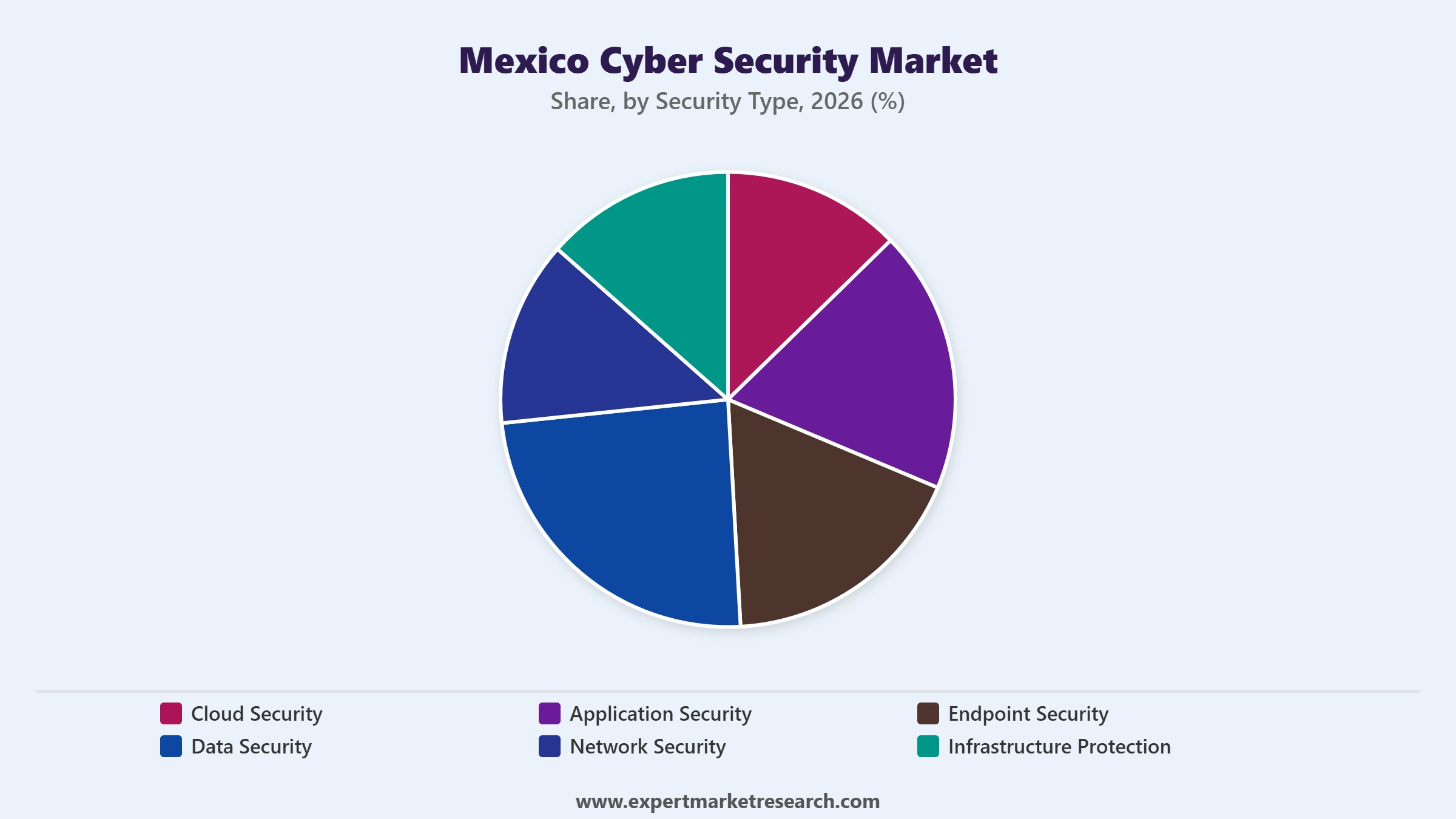
Market Breakup by Security Type
Key Insight: As per the Mexico cyber security market report, multi-cloud and configurations are the driving factors of the cloud security segment, whereas APIs, software, and artificial intelligence development are the factors behind application security. The other types of security solutions include endpoint security that secures distributed endpoints, data security that secures sensitive data, network security that secures network infrastructure. Consumers are increasingly moving towards security solutions that exchange telemetry data and provide automated response rather than working independently.
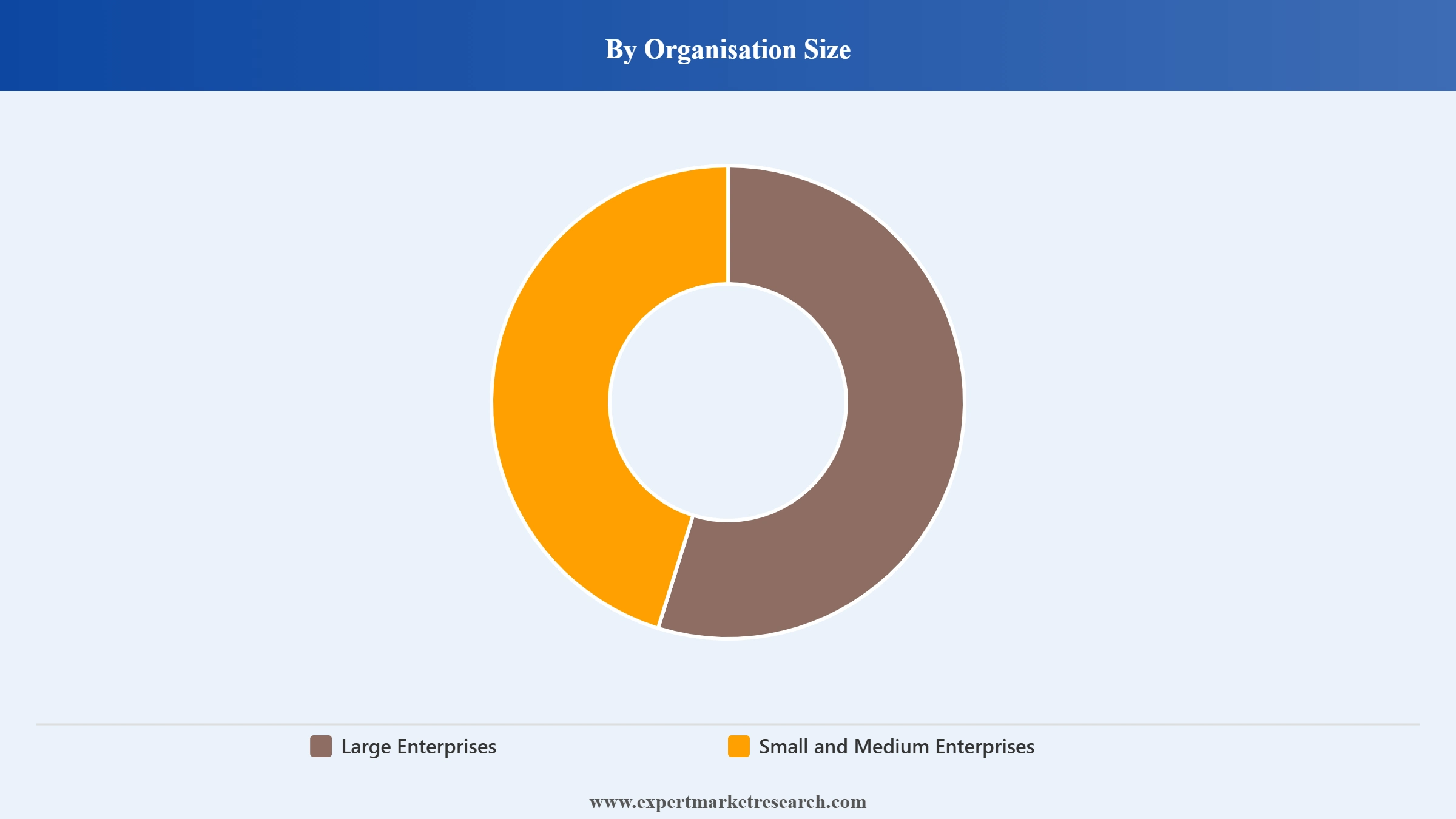
Market Breakup by Organization Size
Key Insight: Integrated platforms are favored by large enterprises due to their complexity in management, many sites, sensitivity of the data, and large third-party access, opening up new opportunities in the Mexico cyber security market. For these enterprises, key factors that matter are governance, threat detection, identity management, compliance, and quick response to incidents. Small and medium enterprises are increasingly purchasing managed security services, endpoint protection, secure access, backup services, and consulting since their in-house experts are few.
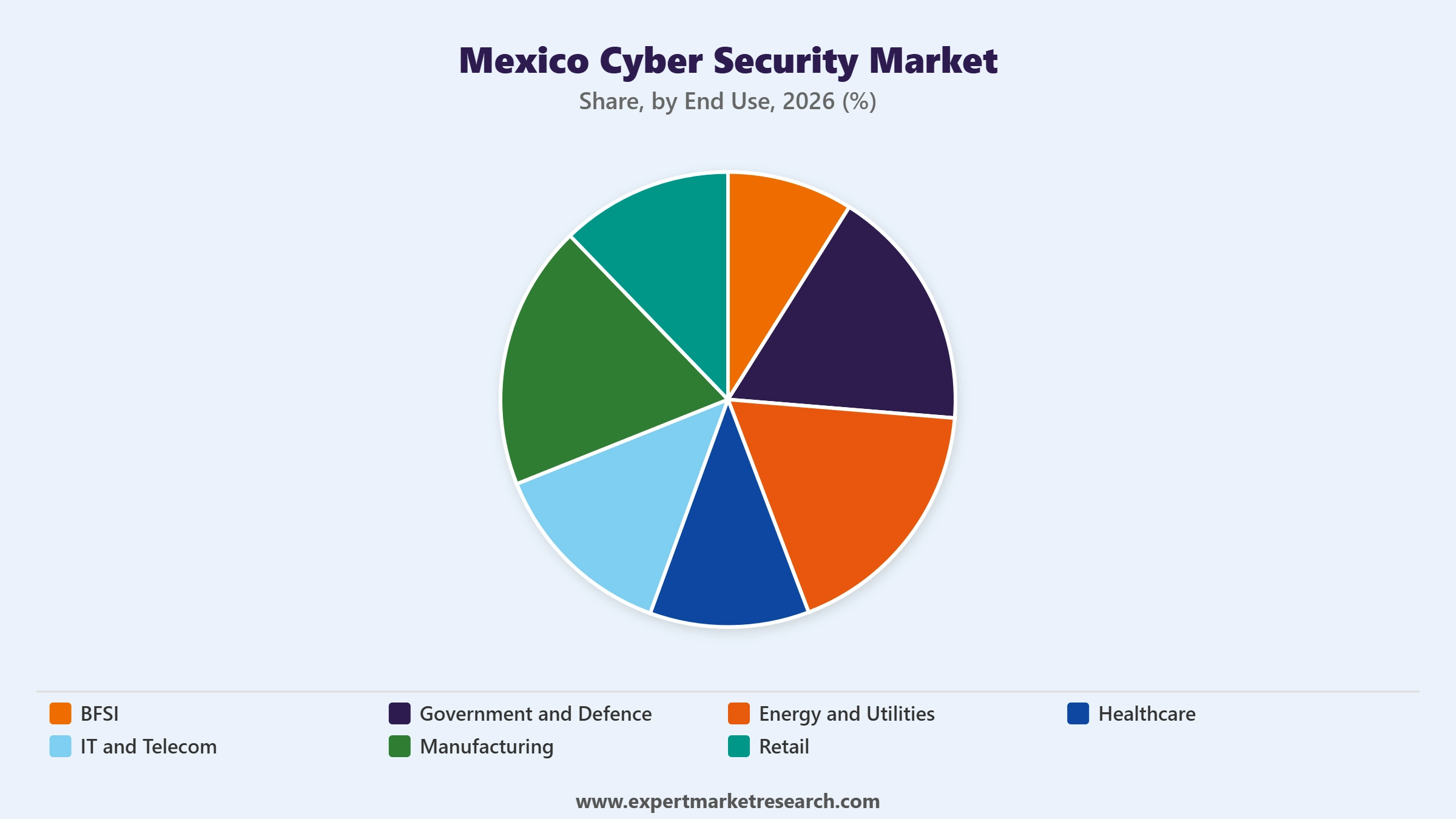
Market Breakup by End Use
Key Insight: The BFSI sector has security needs of transaction protection, fraud control, privileged access, and resilience, stimulating demand in the Mexico cyber security market. The government and defense sector's needs include secure public systems, incident coordination, and sensitive information protection. The energy and utilities sector has the need for monitoring operational technology and infrastructure resilience. In October 2026, Rockwell Automation expanded SecureOT managed services to support Fortinet firewalls, strengthening cybersecurity for industrial OT environments, and existing infrastructure. The healthcare industry needs patient data security, connected devices, and availability. The IT and telecom sector's needs are related to network, cloud, identity, and customer data security. The manufacturing sector is emphasizing IT-OT segmentation and secure automation.
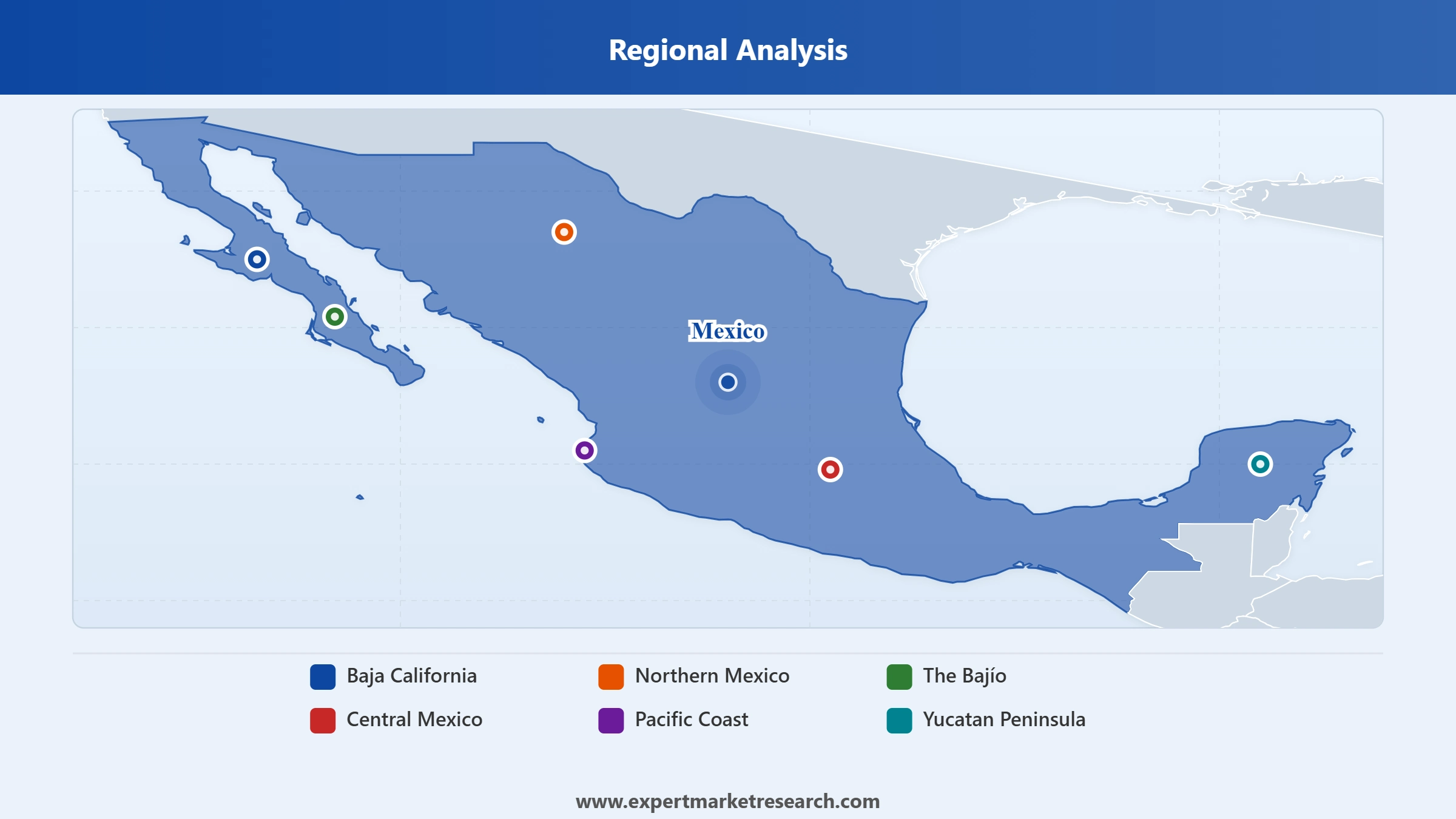
Market Breakup by Region
Key Insight: The Mexico cyber security market drives demand through heavy clusters of government, finance, telecommunications, and business activities. The northern region is booming due to increased need for industrial cybersecurity because of nearshoring. Baja California is benefiting from cross-border trade, technological activities, and manufacturing capabilities. The Bajío region is creating demand due to supply chains of automobiles and industries that require cybersecurity of IT-OT networks. The Pacific Coast region is forming cybersecurity demands related to tourism and logistics activities. Yucatan peninsula is forming increased demands for digital government, tourism, and business infrastructure.
Read more about this report - Request a Free Sample
By component, encryption dominates the market as regulated data protection drives enterprise security investment
The encryption category observes significant growth in the Mexico cyber security market, given the need for enterprises to safeguard customer data, transaction data, intellectual property, and regulated data. The market is moving towards centralized encryption keys, hardware-based protection, and encryption of data at rest, in transit, and in use. Financial institutions and government agencies want to restrict exposure due to stolen credentials and compromised storage. In June 2026, Mexico expanded biometric security measures as ransomware attacks increased, strengthening identity verification and cyber protection across critical sectors.
Read more about this report - Request a Free Sample
The managed security segment experiences the highest rate of growth in the Mexico cyber security market, driven by the desire to monitor security continuously without having to hire large-scale internal security teams. Mexican businesses are looking at outsourcing SOC management, threat hunting, incident response, vulnerability management, and cloud monitoring as one service layer. This demand is highly relevant for mid-market organizations with growing digital operations that lack skilled personnel.
Cloud deployment leads the market as hybrid workloads require scalable security controls across enterprises
Cloud deployment is the leading deployment segment in the Mexico cyber security market as organizations migrate applications, analytics, collaboration solutions, and workloads to the cloud and hybrid environments. Users need cloud-native policies that can follow workloads rather than being bound to network perimeters alone. Cloud security posture management, identity and access management, workload security, and policy enforcement are emerging as new priorities. In June 2026, Operation Escaneo exposed evolving cyber threats across Latin America, highlighting increased reconnaissance activity and targeting of vulnerable digital infrastructure.
Read more about this report - Request a Free Sample
On-premise deployment is the most rapidly growing deployment segment in the Mexico cyber security market as users need full control over sensitive workloads, OT assets, and regulated data. Manufacturers, governments, utilities, and financial institutions often need a local infrastructure due to their resilience needs, performance requirements, or regulatory obligations. Vendors are upgrading on-premises architectures with cloud-native administration, behavioral analytics, and automated response capabilities.
By security type, cloud security dominates the market as multi-cloud adoption increases identity and workload risks
Cloud security remains the leading security type with the increasing usage of software, data, and AI-based workloads in public and hybrid clouds, stimulating the overall Mexico cyber security market penetration. Posture management, workload isolation, identity-aware access, and securing against accidental exposure due to misconfiguration issues in cloud environments remain key areas of interest. Vendors are incorporating automated remediation and detection using AI capabilities in their cloud platforms, enabling them to quickly detect permissions and other risky activities. In April 2026, AT&T Mexico and Microsoft partnered to strengthen cybersecurity through advanced cloud, AI, threat intelligence, and security capabilities.
Read more about this report - Request a Free Sample
Application security observes significant development in the Mexico cyber security market, driven by digital services, APIs, mobile platform, and software-driven customer experience transformation initiatives in Mexican enterprises. Companies are looking at DevSecOps integrations that do not disrupt the release process but detect vulnerabilities. AI generated codes are driving further demand.
Large enterprises secure the major market share as complex estates require integrated governance and advanced protection
Large enterprises continue being the largest organization-size category that is contributing to the Mexico cyber security market value. This is due to the complexity and valuable nature of the technologies and data owned by banks, telecoms, manufacturing, energy companies, and organizations linked to government. These enterprises need integrated security solutions encompassing network security, endpoint security, identity security, cloud workload security, and operational technology security. Moreover, there is opportunity for implementation of advanced SOC solutions, threat intelligence solutions, and other specialized offerings.
Read more about this report - Request a Free Sample
Small and medium enterprises generate significant demand in the Mexico cyber security market since use of digital payment solutions, cloud applications, ecommerce, and remote collaboration increases their exposure to cyber risks. Many companies do not have specialized security teams; thus, there is demand for managed detection and response solutions, secure access solutions, endpoint security solutions, automatic backup solutions, and low-cost advisory services. Vendors address this challenge by offering subscription bundles including multiple controls into one platform.
By end use, the BFSI sector leads the market as financial data, transactions, and fraud risks demand stronger controls
BFSI is the largest end-use segment in the Mexico cyber security market due to the high value financial data and transactions maintained by banks, insurers, payment services, and Fintech companies. The security needs include fraud detection, privileged access management, encryption, identity analytics, endpoint protection, and recovery. The financial institutions link their traditional infrastructure with cloud services, leading to the need for controls to be available in a hybrid environment. Solution providers aim at risk platforms with real-time monitoring and response along with regulatory compliance capabilities. In July 2024, BBVA and Telefónica partnered to establish a cybersecurity center in Mexico, strengthening threat detection, response, and digital protection capabilities.
Read more about this report - Request a Free Sample
Manufacturing represents the fastest-growing end-use segment due to the expansion of the Mexican industry into connected factories, automation, supply chain platforms, and digital controls in the machines. Companies in the Mexico cyber security market solve the challenge related to the intersection of information technology and operational technology in which attacks on the endpoint might result in disrupting operations. There is a growing demand for network segmentation, industrial monitoring, secure remote access, endpoint protection, and incident recovery.
Central Mexico registers notable demand through dense concentrations of government, financial, telecom, and corporate operations
The Central Mexico cyber security market is growing due to its concentration of government agencies, banks, telecommunications companies, corporate offices, and service providers. The region is characterized by abundant digital infrastructure and various companies holding sensitive data, driving the demand for identity security, managed detection, cloud security, and regulatory compliance services. Vendors are focusing on security operations, zero trust architecture, and incident responses for the sophisticated enterprise environment. In October 2026, Mexico planned a spectrum auction for private 5G networks, supporting industrial connectivity, automation, and secure enterprise communications.
Read more about this report - Request a Free Sample
The Northern Mexico cyber security market observes fast-paced growth owing to nearshoring and the expansion of automotive, electronics, logistics, manufacturing, and cross-border technology operations. Companies in the region are linking their factories to cloud platforms and supplier networks, thus exposing themselves to greater risks in the areas of operational technology and IT. Vendors in the region are concentrating on industrial network segmentation, remote access security, endpoint security, identity security, and fast recovery.
The market is being driven by platform consolidation, AI-powered detection capabilities, identity management, cloud security, and managed services. Leading Mexico cyber security companies compete on their capacity to correlate security telemetry data across networks, endpoints, applications, workloads, and identities without adding additional complexity. Areas of opportunity include cloud maturity, ransomware recovery, industrial cyber security, government modernization, and adopting AI securely.
Collaborating with system integrators and managed security service providers could help companies reach businesses without dedicated cybersecurity specialists. Their product roadmaps are increasingly prioritizing automation, validation, and risk mitigation over traditional prevention-focused tools. Buyers look for flexible subscription plans, API integration, centralization dashboards, and security controls able to operate consistently in a hybrid environment. This creates an opportunity for Mexico cyber security market players to outshine competition in terms of integration and implementation, as well as in fast protection and support.
Cisco Systems, Inc., founded in 1984 and having headquarters in San Jose, California, United States, provides its services to Mexican businesses in terms of networking, cloud, endpoint, identity, and security technologies. The launch of AI Defense 2025 provides additional safety for AI applications and agents, whereas the Mexico readiness study reveals cloud-security deficiencies.
IBM Corporation, founded in 1911 and having headquarters in Armonk, New York, United States, provides its services to Mexican organizations in terms of hybrid-cloud security, consulting, threat detection, and AI-driven risk management. IBM offers a portfolio of both software and services so that organizations can update their infrastructures and improve security operations.
Intel Corporation, formed in 2005 and headquartered in Santa Clara, California, United States, provides cybersecurity capabilities such as hardware-based protection and confidential computing. The Trust Domain Extensions capability isolates virtual machines, whereas the Total Memory Encryption technologies help secure sensitive data in use. These capabilities provide security for cloud and large enterprises within Mexico that need confidential workload protection.
CyberArk Software Ltd., formed in 1999 and headquartered in Petah Tikva, Israel, specializes in providing cybersecurity capabilities around identity security and privileged access protection. It provides cybersecurity capabilities such as least privilege access, machine identities, credential security, and continuous identity threat detection. These capabilities cater to increasingly connected Mexican enterprise environments.
Other key players in the market include Dell Inc., CrowdStrike, Inc., Sophos Ltd., Palo Alto Networks, Inc., Fortinet, Inc., and Trend Micro Incorporated, among others.
*Please note that this is only a partial list; the complete list of key players is available in the full report. Additionally, the list of key players can be customized to better suit your needs.*
Unlock the latest insights with our Mexico cyber security market trends 2026 report. Discover regional growth patterns, consumer preferences, and key industry players. Stay ahead of competition with trusted data and expert analysis. Download your free sample report today and drive informed decisions in the market.


Upto 15% Off
USD
$2499 $2249
$3999 $3599
$4999 $4249
$5999 $5099


*While we strive to always give you current and accurate information, the numbers depicted on the website are indicative and may differ from the actual numbers in the main report. At Expert Market Research, we aim to bring you the latest insights and trends in the market. Using our analyses and forecasts, stakeholders can understand the market dynamics, navigate challenges, and capitalize on opportunities to make data-driven strategic decisions.*
In 2025, the market reached an approximate value of USD 2.39 Billion.
The market is projected to grow at a CAGR of 8.00% between 2026 and 2035.
The market is assessed to witness a healthy growth in the forecast period to reach around USD 5.16 Billion in 2035.
The different components in the market include solution and services.
The different organisation sizes in the market include large enterprises and small and medium enterprises.
The different segments considered in the market report are cloud and on-premises, among others.
The major regions in the market include Baja California, Northern Mexico, The Bajío, Central Mexico, Pacific Coast, and Yucatan Peninsula.
The key players in the market include Cisco Systems, Inc., IBM Corporation, Intel Corporation, Cyber Ark Software Ltd, Dell Inc., CrowdStrike, Inc., Sophos Ltd., Palo Alto Networks, Inc., Fortinet, Inc., and Trend Micro Incorporated, among others.
Companies face fragmented security tools, shortages of skilled analysts, cloud misconfigurations, ransomware, third-party exposure, legacy systems, inconsistent security maturity, and limited budgets for continuous monitoring across rapidly changing digital environments.
Stakeholders are consolidating security platforms, expanding managed detection, strengthening identity controls, automating recovery, improving cloud posture, localizing services, and building public-private cybersecurity partnerships for measurable long-term risk reduction and resilience.
Explore our key highlights of the report and gain a concise overview of key findings, trends, and actionable insights that will empower your strategic decisions.
| REPORT FEATURES | DETAILS |
| Base Year | 2025 |
| Historical Period | 2019-2025 |
| Forecast Period | 2026-2035 |
| Scope of the Report |
Historical and Forecast Trends, Industry Drivers and Constraints, Historical and Forecast Market Analysis by Segment:
|
| Breakup by Component |
|
| Breakup by Deployment |
|
| Breakup by Security Type |
|
| Breakup by Organisation Size |
|
| Breakup by End Use |
|
| Breakup by Region |
|
| Market Dynamics |
|
| Competitive Landscape |
|
| Companies Covered |
|
Datasheet
One User
USD 2,499
USD 2,249
tax inclusive*
Single User License
One User
USD 3,999
USD 3,599
tax inclusive*
Five User License
Five User
USD 4,999
USD 4,249
tax inclusive*
Corporate License
Unlimited Users
USD 5,999
USD 5,099
tax inclusive*
*Please note that the prices mentioned below are starting prices for each bundle type. Kindly contact our team for further details.*
Flash Bundle
Small Business Bundle
Growth Bundle
Enterprise Bundle
*Please note that the prices mentioned below are starting prices for each bundle type. Kindly contact our team for further details.*
Flash Bundle
Number of Reports: 3
20%
tax inclusive*
Small Business Bundle
Number of Reports: 5
25%
tax inclusive*
Growth Bundle
Number of Reports: 8
30%
tax inclusive*
Enterprise Bundle
Number of Reports: 10
35%
tax inclusive*
How To Order

Select License Type
Choose the right license for your needs and access rights.

Click on ‘Buy Now’
Add the report to your cart with one click and proceed to register.

Select Mode of Payment
Choose a payment option for a secure checkout. You will be redirected accordingly.
Strategic Solutions for Informed Decision-Making
Gain insights to stay ahead and seize opportunities.
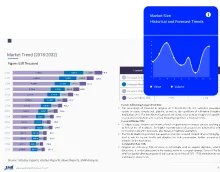
Get insights & trends for a competitive edge.
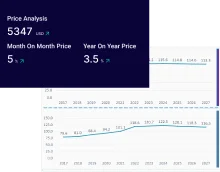
Track prices with detailed trend reports.
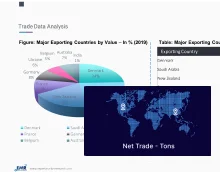
Analyse trade data for supply chain insights.

Leverage cost reports for smart savings
Enhance supply chain with partnerships.
Connect For More Information
Our expert team of analysts will offer full support and resolve any queries regarding the report, before and after the purchase.
Our expert team of analysts will offer full support and resolve any queries regarding the report, before and after the purchase.
We employ meticulous research methods, blending advanced analytics and expert insights to deliver accurate, actionable industry intelligence, staying ahead of competitors.
Our skilled analysts offer unparalleled competitive advantage with detailed insights on current and emerging markets, ensuring your strategic edge.
We offer an in-depth yet simplified presentation of industry insights and analysis to meet your specific requirements effectively.