

Consumer Insights
Uncover trends and behaviors shaping consumer choices today
Procurement Insights
Optimize your sourcing strategy with key market data
Industry Stats
Stay ahead with the latest trends and market analysis.
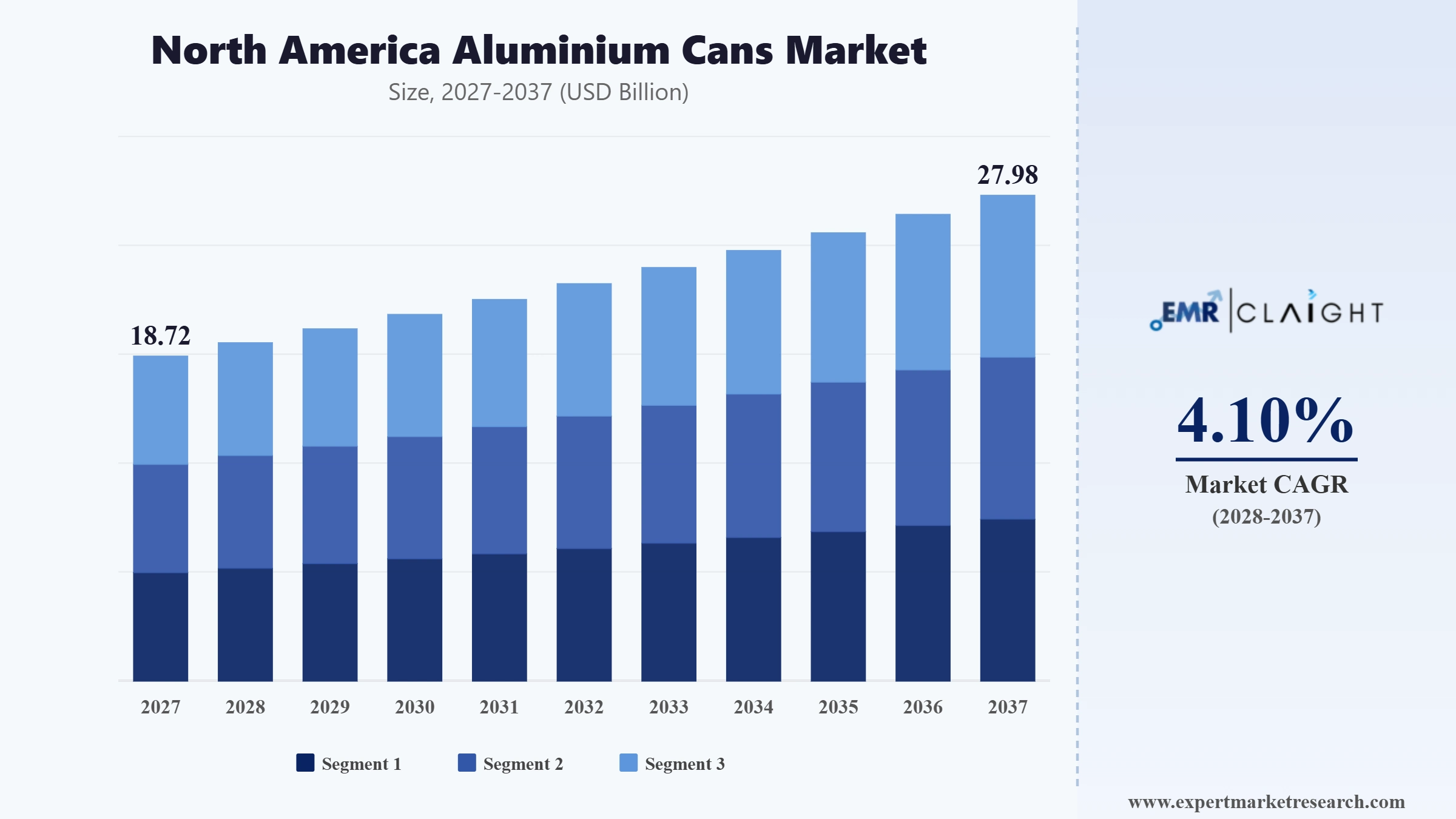
The North America aluminium cans market attained a value of USD 17.98 Billion in 2025 and is projected to expand at a CAGR of 4.10% through 2035. The market is further expected to achieve USD 26.87 Billion by 2035. Expansion of closed-loop aluminium supply is creating a niche growth avenue, supported by the 71% recycled content in the average U.S. can. However, only 43% of aluminium cans shipped in 2023 were recycled, leaving considerable scope to improve collection and remelting capacity. Ball shipped approximately 50 billion aluminium beverage containers across North America in 2025, increasing the need for reliable recycled-metal availability as beverage packaging volumes continue expanding.
Growth in the North America aluminium cans market is being supported by rising beverage-can volumes and the packaging format’s high recycled-material content. Crown Holdings reported a 5% year-on-year increase in North American beverage-can volumes in Q2 2026, reflecting stronger demand from beverage producers and continued adoption of cans across product categories. Meanwhile, aluminium’s established circularity is strengthening its position among sustainability-focused beverage brands. The average U.S. aluminium beverage can contains approximately 71% recycled aluminium, while around 97% of recycled beverage cans are converted back into new cans, supporting repeated material use. These characteristics are encouraging beverage manufacturers to incorporate aluminium cans into packaging portfolios where recyclability and recycled content are important considerations. Ball Corporation’s shipment of approximately 50 billion aluminium beverage containers across North America in 2025 further demonstrates the scale of regional demand and the expanding requirement for efficient can manufacturing and recycled aluminium supply, thereby boosting the North America aluminium cans market value.
A significant innovation is Crown’s SuperEnd® beverage end design, which is available in North America and is made using 10% less aluminum than standard beverage ends. This innovation uses new geometries to improve the strength of the end and reduce material while maintaining package integrity. According to Crown, through its use of this innovation in more than 700 billion ends, it has saved over 177,000 metric tons of aluminum, over 3,000 metric tons of coatings, and avoided the emission of 1.4 million metric tons of greenhouse gases. The innovation demonstrates how lightweighting can be incorporated into established can formats while maintaining manufacturing performance.
Fluctuations in the price of aluminium have continued to be one of the critical challenges facing can manufacturers in North America because they affect costs incurred in procuring the raw materials and in production. Prices of aluminium are affected by the cost of energy, smelting capacity, trade practices, and the availability of the raw material globally. This challenge has been made difficult through the low recycling rate of used beverage cans since in 2023 only 43 percent of the aluminium cans sold in the United States were recycled. The insufficient recycled feedstock can force manufacturers to depend on primary aluminium, making their production costs more vulnerable to fluctuations in prices of the raw materials. Large-scale manufacturers will find it difficult to negotiate contract terms with beverage firms due to the uncertain cost. This pressure encourages canmakers to pursue lightweighting, improve scrap recovery, and increase recycled-aluminium utilisation to reduce material requirements and manage exposure to volatile input costs across the North American packaging supply chain, thereby restricting the North America aluminium cans market developments.
Read more about this report - Request a Free Sample
Crown Holdings reported a 5% increase in North American beverage-can volumes in Q2 2026, reflecting continued demand across regional beverage markets. The company also highlighted the contribution of new product introductions and sustained customer activity. The development indicates continued utilisation of metal beverage packaging among North American beverage producers and supports Crown’s ongoing focus on beverage-can manufacturing and packaging solutions.
Novelis highlighted new aluminium solutions designed to increase recycled content and support lower-carbon packaging applications, building on its recycling and materials-development capabilities. The company’s fiscal 2026 filing confirms that its North American operations include seven recycling facilities, processing post-consumer materials such as used beverage cans. Beverage packaging remains the region’s largest end-use market by shipment volume. The development reflects Novelis’ focus on supplying can-sheet materials with greater recycled content while supporting beverage manufacturers seeking more circular aluminium packaging solutions.
Ball Corporation highlighted its work with ELYSIS technology, which is designed to eliminate direct greenhouse-gas emissions from the traditional aluminium smelting process by producing oxygen rather than carbon dioxide as a by-product. The development is relevant to aluminium-can manufacturing because lower-carbon aluminium could reduce the environmental footprint of primary metal used in beverage packaging. Ball continues to position aluminium packaging around circularity and sustainability.
Ball Corporation expanded its North American beverage-packaging footprint through its acquisition of Florida Can Manufacturing, strengthening its manufacturing presence in the United States. The addition provides Ball with further domestic production capacity and supports supply to beverage customers. The development is relevant to the regional aluminium cans market because additional manufacturing capability can improve supply coverage and enable canmakers to respond to beverage-packaging requirements across different U.S. markets.
Digital printing technology is becoming increasingly viable for aluminum can producers in North America as it allows for reduced production runs and artwork changeover without using conventional printing plates. In August 2026, CanSource added its digital printing capability to its plant in Charlotte, North Carolina by launching a 19.2-ounce digitally printed can in addition to its current line-up which includes a 7.5-ounce, a standard 12-ounce, a sleek 12-ounce, and a 16-ounce can. CanSource’s direct-to-can approach also reduces the need for additional labels or sleeves, supporting more efficient packaging production. The development is particularly relevant to emerging beverage brands, seasonal launches, craft products, and promotional campaigns requiring multiple designs without committing to traditional high-volume printing runs.
In February 2025, recycling equipment funded by Ardagh Metal Packaging and Crown Holdings was installed at material recovery facilities in Alabama and California. These systems are expected to collect over 31 million aluminum cans each year which would have been disposed of in some way incorrectly. The effort shows a higher degree of collaboration between can makers and recycling activities at the source of material collection compared to container manufacturing alone. Enhanced collection can help ensure a supply of recycled aluminum which can be melted. For B2B buyers, stronger recovery networks can support recycled-material procurement and improve supply-chain visibility. The development also highlights the growing commercial importance of connecting can manufacturing with collection, sorting, and recycling infrastructure.
As per Ball Corporation’s 2026 filing, there are 17 facilities in United States, one facility in Canada, and two facilities in Mexico that comprise its manufacturing facilities in beverages containers business in North & Central America. Ball Corporation provides services to its customers in beverages through multiyear contracts, resulting in its operational strategy that focuses on geographical proximity and reliability of supply. Such manufacturing concentration allows canmakers to reduce transportation requirements and maintain reliable deliveries to major beverage-filling locations. It also creates opportunities for regional suppliers of aluminium sheet, can ends, coatings, logistics, and manufacturing equipment. For beverage companies, geographically diversified sourcing can become increasingly relevant when aluminium prices, cross-border trade conditions, or regional production disruptions affect packaging availability.
Aluminium cans are gaining greater importance in craft beer packaging, with the Brewers Association reporting that cans represented 78% of packaged volume for BA-defined craft beer in 2025. Such demand leads to requirements that go beyond regular high-volume production of cans. Small brewers require different sizes of cans, unique designs, smaller batches, and quick changeovers to introduce new products. Such requirements open up possibilities for producers who offer flexibility in production and decorating. Special coatings and digital printing can be used by small beverage brands to distinguish their products. Consequently, canmakers that combine efficient large-scale production with economical short-run capabilities can address a wider range of beverage customers.
Ontario’s updated Blue Box framework sets a 75% recovery target for beverage containers during 2026–2027, increasing to 80% from 2032 onward. The requirement places greater emphasis on measurable packaging recovery and gives beverage brands stronger incentives to understand how their containers perform after consumption. For aluminium-can manufacturers, this creates opportunities to support customers through improved can design, collection partnerships, sorting systems, and recycled-material sourcing. Recovery data can also become relevant during packaging procurement as brands assess suppliers against environmental requirements alongside cost, quality, and delivery performance. The regulatory development therefore strengthens the commercial value of traceable recycling pathways and documented recovery outcomes within the North American aluminium-can supply chain.
The Expert Market Research’s report titled "North America Aluminium Cans Market Report and Forecast 2026-2035” offers a detailed analysis of the market based on the following segments:
Market Breakup by Size
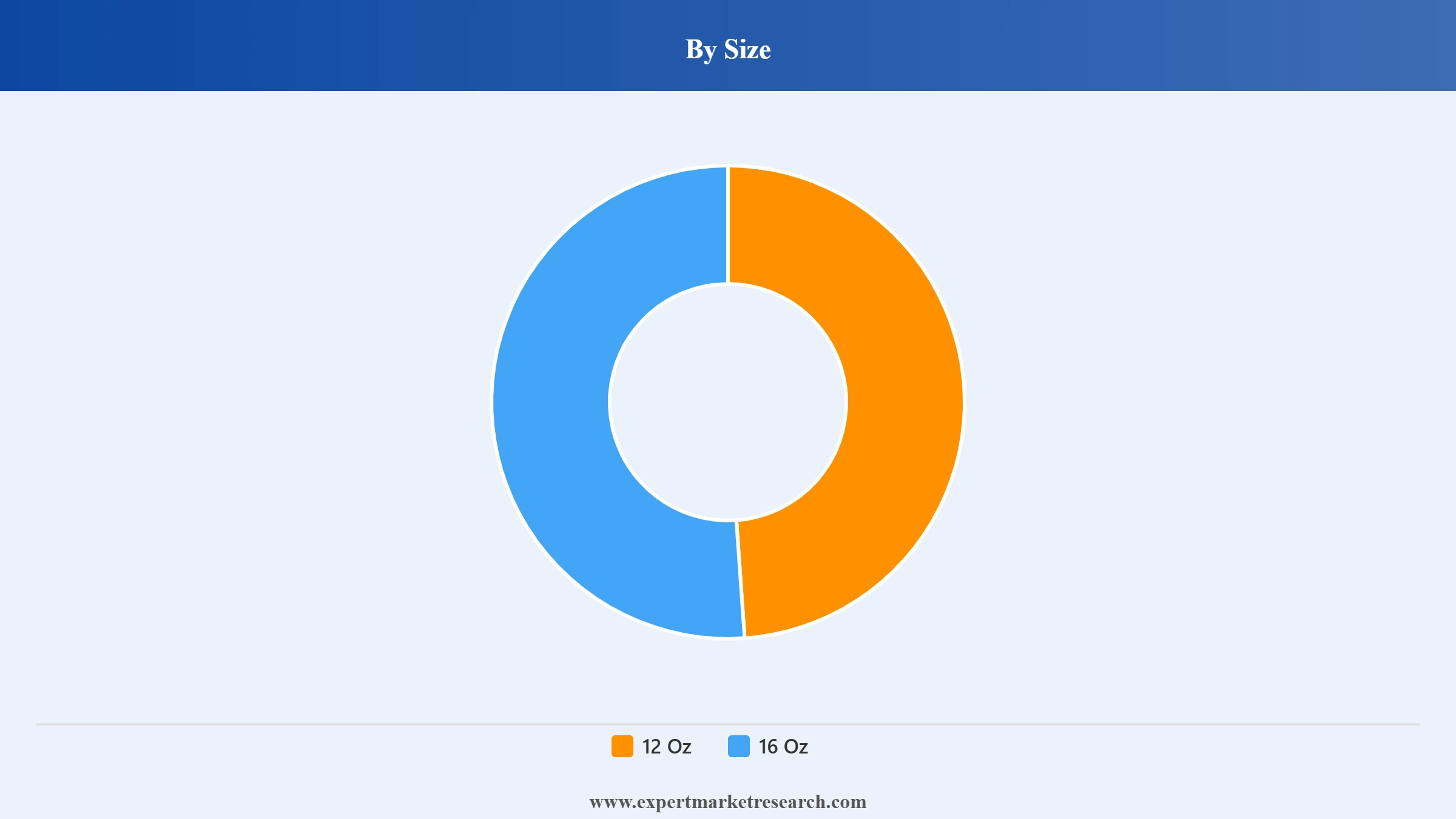
Key Insight: The North America aluminium cans market is segmented into 12 Oz, 16 Oz, and Others. The 12 Oz format remains closely associated with mainstream beer, carbonated soft drinks, energy drinks, and other high-volume beverage programs because it fits established filling, secondary packaging, vending, and retail-distribution systems. The 16 Oz segment benefits from the expansion of larger single-serve formats and premium beverage positioning, particularly where brands use package size to differentiate products. The Others category captures specialized sizes required for energy drinks, craft beverages, premium alcoholic drinks, and emerging beverage concepts. Ball's North American operations sell aluminum containers primarily under multi-year agreements to fillers of carbonated soft drinks, beer, energy drinks, and other beverages, reinforcing the importance of standardized formats in procurement, thus boosting the North America aluminium cans market growth.
Market Breakup by Application
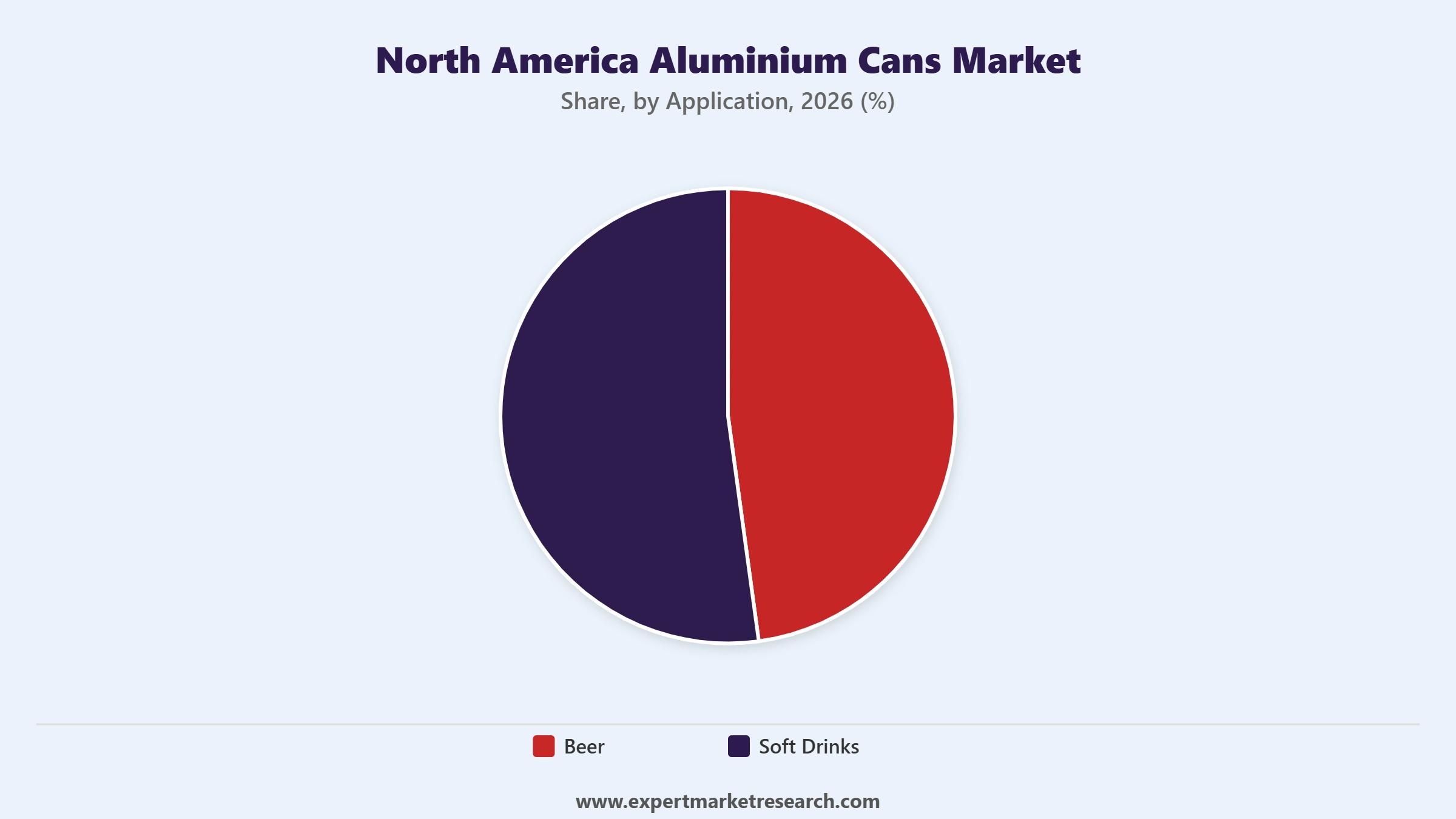
Key Insight: The market is divided into beer, soft drinks, and others. Soft drinks represent a major application because aluminum cans combine pressure resistance, light weight, stackability, and strong graphics with established high-speed filling infrastructure. The Brewers Association's 2025 packaging analysis provides a useful indication of the scale of aluminum adoption in beer that cans represented 78% of packaged volume among BA-defined craft beer, demonstrating the established role of metal packaging within an important North American beverage category. Beer demand also creates opportunities for specialty sizes, premium finishes, short-run designs, and seasonal programs. The Others category includes energy drinks, sparkling water, ready-to-drink products, and other beverages that can diversify can demand beyond traditional carbonated soft drinks and beer.
Market Breakup by Country
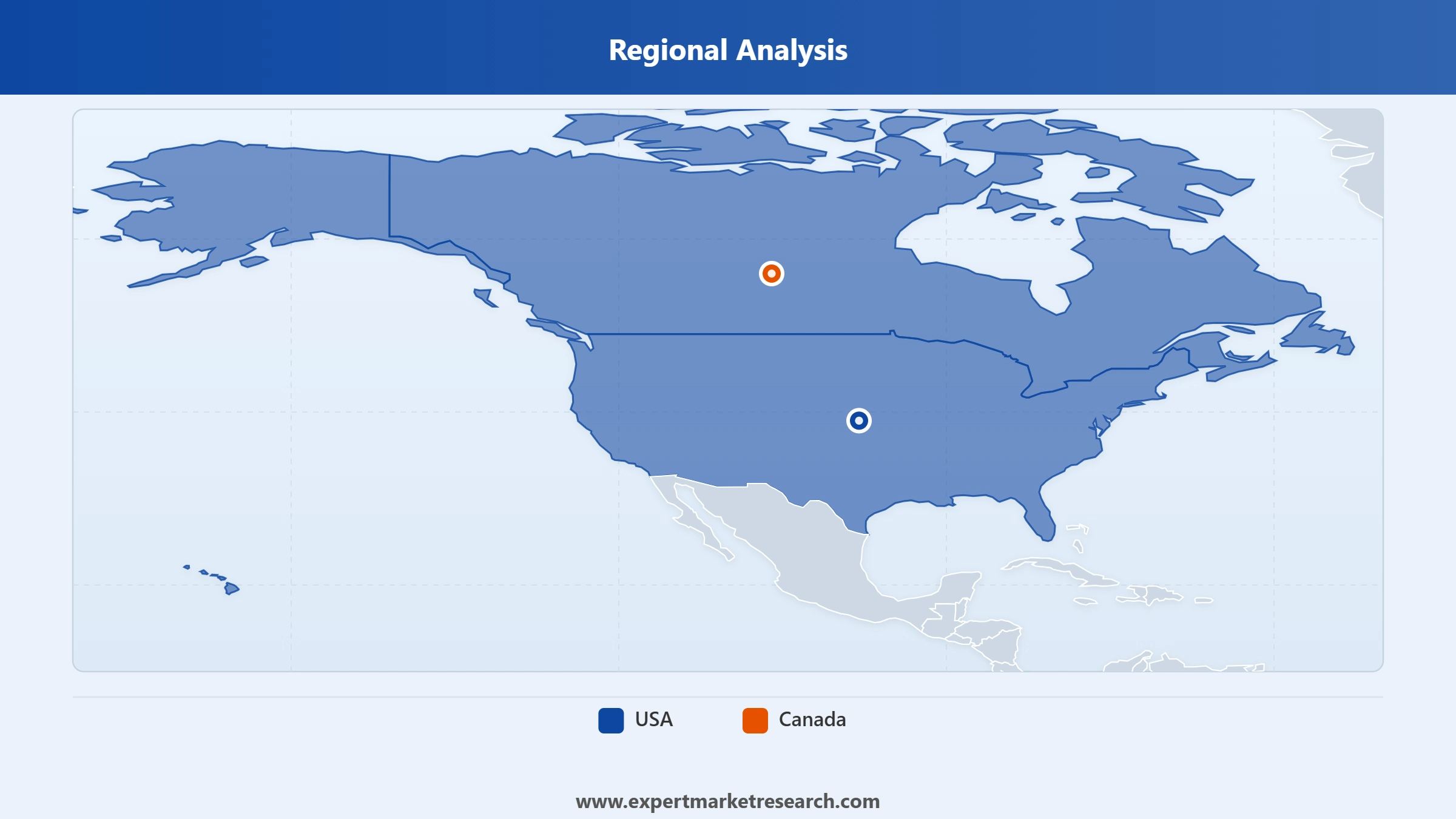
Key Insight: The regional market is divided into the United States and Canada, with the United States representing the larger operating base. Ball estimates the North American aluminum beverage-container industry at approximately 139 billion units, with five companies manufacturing substantially all aluminum beverage containers across the United States, Canada, and Mexico. The United States benefits from extensive beverage-filling infrastructure, a large craft-brewing ecosystem, established canmaking capacity, and a substantial recycling network. Canada contributes through its integrated North American supply chain and growing emphasis on producer responsibility and recovery. Ontario's Blue Box framework, for example, requires a 75% recovery percentage for beverage containers during 2026-2027.
Read more about this report - Request a Free Sample
By size, 12 Oz is positioned as the dominant format due to established high-volume beverage applications
The 12-Oz format constitutes the main standardized packaging format for beverages in North America since it is already part of the current filling and secondary packaging system, as well as distribution and retail channels. According to Ball's filing in 2026, aluminum beverage containers are mainly marketed under long-term contracts to bottlers of carbonated soft drinks, beer, energy drinks, and other beverages, indicating the value of standard high volume formats. TThe scale of the regional beverage-container industry, approximately 139 billion units in 2025, also supports continued demand for formats compatible with established production infrastructure. Such developments will thus boost North America aluminium cans market trends in the long run.
Read more about this report - Request a Free Sample
16 Oz is positioned for faster expansion as beverage brands use larger single-serve formats to support premium positioning and differentiated consumption occasions. Craft beer provides a relevant commercial example, that is, the Brewers Association reported that aluminum cans accounted for 78% of packaged BA-defined craft volume in 2025. Larger can formats can provide additional graphic real estate and accommodate products positioned around longer consumption occasions, making them relevant for craft beer, energy drinks, flavored beverages, and premium ready-to-drink products.
By application, soft drinks retain a significant position because of established high-volume beverage packaging demand
Alcoholic beverages account for a substantial market share of the North America aluminium cans market, as per EMR’s recent market study. The segment benefits from the presence of large-scale carbonated beverages manufacturers along with the compatibility of aluminum cans with fast-filling processes. Ball identifies carbonated soft drinks as one of the principal customer categories served by its North and Central American beverage-packaging business. This combination of established demand, large filler networks, and standardized packaging infrastructure supports sustained purchasing volumes, thereby bolstering the North America aluminium cans demand.
Read more about this report - Request a Free Sample
Beer has a strong pathway for expansion, particularly through craft and specialty beverage production. The Brewers Association found that aluminum cans accounted for 78% of packaged volume for BA-defined craft beer in 2025, up two percentage points from 2024. This creates opportunities for can manufacturers supplying smaller batch sizes, specialty graphics, seasonal releases, and multiple package formats. Beer producers also benefit from aluminum's transport efficiency and compatibility with outdoor consumption occasions.
The United States dominates, supported by strong beverage demand, manufacturing capacity, and recycling infrastructure
The United States remains the principal market within North America because of its large beverage-filling base, extensive canmaking footprint, and established aluminum recycling infrastructure. Ball estimates approximately 139 billion aluminum beverage containers are consumed across the United States, Canada, and Mexico annually, with its own shipments reaching approximately 50 billion units in 2025. The U.S. market is also undergoing a shift toward more structured material recovery. The Aluminum Association reported that 43% of aluminum cans shipped in the United States in 2023 were ultimately recycled, while the industry's closed-loop circularity rate reached 96.7%. This gap between recovery performance and the value of recyclable material creates commercial opportunities for MRF technology, collection programs, recycled-content procurement, and can-to-can supply chains, thereby directly boosting the North America aluminium cans market regional growth.
Read more about this report - Request a Free Sample
Canada represents an important complementary market, particularly where producer-responsibility rules encourage measurable recovery outcomes. Ontario's Blue Box framework requires producers to account for recovered resources and sets beverage-container recovery at 75% for 2026-2027. At the broader regional level, North American aluminum demand increased 0.8% during 2025, indicating stabilization after weakness earlier in the year. For suppliers, future regional opportunities are therefore likely to center on cross-border supply assurance, secondary aluminum availability, recycling-linked contracts, and packaging formats tailored to specific beverage categories.
North America aluminium cans market players are primarily aiming to strengthen production capacity, improve manufacturing efficiency, and respond to sustained demand for recyclable beverage packaging. Companies such as Ball Corporation, Crown Holdings, and Ardagh Metal Packaging are focusing on lightweight can designs, production optimisation, and technological improvements that can reduce material use and operating costs without compromising package performance. They are also seeking to deepen relationships with beverage manufacturers by offering differentiated can sizes, shapes, finishes, and packaging solutions tailored to evolving product categories.
North America aluminium cans companies are increasing the use of recycled aluminium, improving resource and energy efficiency, reducing manufacturing emissions, and supporting recycling initiatives. These efforts are increasingly important as beverage brands pursue packaging-related sustainability targets and consumers show greater preference for recyclable formats. Companies are therefore combining operational investments with sustainability programmes to maintain competitiveness and strengthen their position in the regional aluminium cans industry.
Founded in 1880 and headquartered in Westminster, Colorado, Ball Corporation is a major global supplier of aluminum packaging, with a particularly strong presence in North American beverage containers. Its Beverage Packaging, North and Central America segment operates 17 facilities in the United States, one in Canada, and two in Mexico. In 2025, Ball shipped approximately 50 billion aluminum beverage containers across North and Central America, representing about 36% of regional industry shipments. Its products primarily serve carbonated soft drinks, beer, energy drinks, and other beverages.
Established in 1892 and headquartered in Tampa, Florida, Crown Holdings is a major rigid packaging manufacturer serving beverage, food, personal care, household, and industrial markets. Its beverage packaging portfolio includes aluminum cans and related technologies for alcoholic and non-alcoholic beverages. Crown reported a 5% increase in global beverage-can volumes during Q2 2026, with North American volumes rising 5% year-on-year. The company continues to advance capacity investments and packaging solutions while responding to growing demand for recyclable metal beverage packaging.
Founded in 1932 and headquartered in Luxembourg, Ardagh Group operates metal and glass packaging businesses, with Ardagh Metal Packaging focused on beverage cans and ends. Its metal packaging operations serve beverage manufacturers across the Americas and other international markets, supplying recyclable aluminum and steel packaging formats. The company places emphasis on circularity, resource efficiency, and decarbonisation across its manufacturing activities. Through its broad production footprint and relationships with beverage brands, Ardagh Metal Packaging remains an important participant in the North American metal beverage packaging ecosystem.
Silgan Containers, established in 1987 following the acquisition of Carnation’s can division, is a major North American metal packaging manufacturer. The company supplies steel and aluminum containers for food and non-food applications, supported by more than two dozen manufacturing facilities across the United States. Its portfolio includes two-piece draw-redraw aluminum cans, aluminum ends, and other metal packaging formats. Silgan also emphasizes technical support, product development, manufacturing efficiency, and sustainability, reporting a 42.5% reduction in market-based Scope 1 and 2 emissions versus 2016 by 2024.
Other key players in the market include Canpack S.A., Novelis Inc., Saxco International LLC, and Envases Group, among others.
*Please note that this is only a partial list; the complete list of key players is available in the full report. Additionally, the list of key players can be customized to better suit your needs.*
Access the latest North America Aluminium Cans Market trends 2026 to understand evolving beverage-packaging demand, recycling economics, supplier strategies, and regional opportunities. The North America Aluminium Cans Market forecast 2026-2035 can support manufacturers, beverage companies, packaging buyers, recyclers, investors, and procurement teams in evaluating capacity requirements, application opportunities, and competitive developments. Request the report sample to explore detailed market insights and strategic analysis.


Upto 15% Off
USD
$2499 $2249
$3999 $3599
$4999 $4249
$5999 $5099


*While we strive to always give you current and accurate information, the numbers depicted on the website are indicative and may differ from the actual numbers in the main report. At Expert Market Research, we aim to bring you the latest insights and trends in the market. Using our analyses and forecasts, stakeholders can understand the market dynamics, navigate challenges, and capitalize on opportunities to make data-driven strategic decisions.*
In 2025, the market reached an approximate value of USD 17.98 Billion.
The market is projected to grow at a CAGR of 4.10% between 2026 and 2035.
The market is estimated to witness a healthy growth in the forecast period of 2026-2035 to reach a value of around USD 26.87 Billion by 2035.
Key strategies include expanding recycling infrastructure, increasing recycled aluminium content, investing in lightweight can designs, improving manufacturing efficiency, developing innovative can formats, strengthening supply-chain capabilities, forming strategic partnerships, and supporting sustainability initiatives to meet evolving consumer preferences and regulatory requirements.
The key trends in the market include the growing innovations in the food and beverage packaging sector and favourable government initiatives intended to reduce wastage y are the major market trends.
12 Oz, and 16 Oz, among others, are the different sizes of aluminium cans.
Beer, and soft drinks, among others, are the major applications of aluminium cans.
The major players in the market are Ball Corporation, Crown Holding, Inc., Ardagh Group, Silgan Containers LLC, Canpack S.A., Novelis Inc., Saxco International LLC, and Envases Group, among others.
Key challenges include fluctuating aluminium prices, high energy and production costs, supply-chain disruptions, competition from alternative packaging materials, recycling infrastructure gaps, stringent environmental regulations, and maintaining cost efficiency while meeting growing sustainability and lightweighting requirements.
Explore our key highlights of the report and gain a concise overview of key findings, trends, and actionable insights that will empower your strategic decisions.
| REPORT FEATURES | DETAILS |
| Base Year | 2025 |
| Historical Period | 2019-2025 |
| Forecast Period | 2026-2035 |
| Scope of the Report |
Historical and Forecast Trends, Industry Drivers and Constraints, Historical and Forecast Market Analysis by Segment:
|
| Breakup by Size |
|
| Breakup by Application |
|
| Breakup by Region |
|
| Market Dynamics |
|
| Competitive Landscape |
|
| Companies Covered |
|
Datasheet
One User
USD 2,499
USD 2,249
tax inclusive*
Single User License
One User
USD 3,999
USD 3,599
tax inclusive*
Five User License
Five User
USD 4,999
USD 4,249
tax inclusive*
Corporate License
Unlimited Users
USD 5,999
USD 5,099
tax inclusive*
*Please note that the prices mentioned below are starting prices for each bundle type. Kindly contact our team for further details.*
Flash Bundle
Small Business Bundle
Growth Bundle
Enterprise Bundle
*Please note that the prices mentioned below are starting prices for each bundle type. Kindly contact our team for further details.*
Flash Bundle
Number of Reports: 3
20%
tax inclusive*
Small Business Bundle
Number of Reports: 5
25%
tax inclusive*
Growth Bundle
Number of Reports: 8
30%
tax inclusive*
Enterprise Bundle
Number of Reports: 10
35%
tax inclusive*
How To Order

Select License Type
Choose the right license for your needs and access rights.

Click on ‘Buy Now’
Add the report to your cart with one click and proceed to register.

Select Mode of Payment
Choose a payment option for a secure checkout. You will be redirected accordingly.
Strategic Solutions for Informed Decision-Making
Gain insights to stay ahead and seize opportunities.

Get insights & trends for a competitive edge.

Track prices with detailed trend reports.

Analyse trade data for supply chain insights.

Leverage cost reports for smart savings

Enhance supply chain with partnerships.

Connect For More Information
Our expert team of analysts will offer full support and resolve any queries regarding the report, before and after the purchase.
Our expert team of analysts will offer full support and resolve any queries regarding the report, before and after the purchase.
We employ meticulous research methods, blending advanced analytics and expert insights to deliver accurate, actionable industry intelligence, staying ahead of competitors.
Our skilled analysts offer unparalleled competitive advantage with detailed insights on current and emerging markets, ensuring your strategic edge.
We offer an in-depth yet simplified presentation of industry insights and analysis to meet your specific requirements effectively.




