

Consumer Insights
Uncover trends and behaviors shaping consumer choices today
Procurement Insights
Optimize your sourcing strategy with key market data
Industry Stats
Stay ahead with the latest trends and market analysis.
The global pharmaceutical glass packaging market attained a value of USD 20.97 Billion in 2025 and is projected to expand at a CAGR of 7.00% through 2035. The market is further expected to achieve USD 41.25 Billion by 2035. The growing adoption of ready-to-use (RTU) glass vials and prefilled formats is creating a niche opportunity in pharmaceutical glass packaging, as manufacturers seek to minimize washing, sterilisation, and handling steps before aseptic filling. This shift is particularly relevant for biologics and high-value injectables, where reduced particulate exposure and streamlined fill-finish operations can improve contamination control and manufacturing efficiency.
Global expansion in complex therapeutics, biologics, and sensitive liquid formulations is currently driving primary packaging requirements toward ultra-inert glass containment solutions. Regulators worldwide enforce rigorous container-closure stability mandates to eliminate leachables and maintain drug sterility over extended storage lifecycles. Government healthcare infrastructure investments across emerging economies, alongside national serialization initiatives, have significantly boosted local fill-finish capacity. These systemic shifts accelerate pharmaceutical glass packaging analysis, with robust demand generated by large-scale production of vaccines, injectable therapeutics, and generic formulations requiring non-reactive packaging materials, thereby boosting the pharmaceutical glass packaging market value.
One of the major advances in pharmaceutical glass packaging technologies is the introduction of high-performance glass cartridges that are especially designed to cater sensitive biological drugs. This was achieved when in April 2026, SCHOTT Pharma unveiled its latest advance called cartriQ® BioPure. The cartriQ® BioPure is a sterile Type I borosilicate glass cartridge that offers better chemical resistance and lesser extractables and leachables, and increased mechanical resistance. It comes in two volumes, i.e., 3 ml and 5 ml, for pen and autoinjector use.
Glass delamination and mechanical breakage remain key challenges, particularly for sensitive injectable and biologic drugs, as glass flakes can compromise product quality while breakage creates filling-line losses and safety concerns. Players can overcome this challenge by investing in high-strength Type I glass compositions, improved surface treatments, rigorous container testing, and automated inspection systems. Advanced vial technologies that improve chemical durability and mechanical resistance can help manufacturers reduce particulate contamination, reject rates, and product losses while meeting increasingly stringent pharmaceutical packaging requirements, thus aiming more towards the pharmaceutical glass packaging market developments.
Compound Annual Growth Rate
7%
Value in USD Billion
2026-2035
Read more about this report - REQUEST FREE SAMPLE COPY IN PDF
SCHOTT Pharma announced the development of cartriQ® BioPure, a new sterile glass cartridge engineered for sensitive biologics. Announced on April 28, 2026, the cartridge offers enhanced chemical resistance, an improved extractables and leachables profile, and greater mechanical strength. Available in 3 ml and 5 ml formats for pens and autoinjectors, the development targets growing demand for self-administered biologic therapies and strengthens SCHOTT Pharma's portfolio of high-performance pharmaceutical glass containment solutions.
Stevanato Group introduced a Digital Holographic Microscopy (DHM®) method to characterize silicone coatings inside prefillable syringes. The technology enables quantitative measurement of coating volume and distribution across syringe surfaces, supporting more precise evaluation of plunger performance and drug-container interactions. The development is relevant to pharmaceutical glass packaging as prefillable glass syringes increasingly serve biologics and parenteral therapies requiring reliable storage and administration performance.
SGD Pharma announced a collaboration with Prince Sterilization Services to validate ready-to-use Type I glass primary packaging for the North American market. The first resulting solution, My Sterinity Nasal, uses SGD Pharma's U-Save Type I glass vials and targets high-value nasal drug-delivery applications. The initiative expands the availability of sterilized pharmaceutical glass packaging while strengthening regional supply capabilities for specialized drug-delivery products.
Gerresheimer announced its participation in Pharmapack Europe 2026, highlighting its portfolio of ready-to-fill and ready-to-use pharmaceutical packaging, including EZ-fill Smart injection vials, Gx Elite RTF syringes, and Gx Advance RTF cartridges. The company emphasized solutions for sensitive biopharmaceuticals and the growing shift toward home treatment. The development demonstrates how pharmaceutical glass packaging suppliers are adapting primary containers to biologics, efficient fill-finish operations, and self-administration requirements.
Ready-to-use pharmaceutical glass formats are gaining adoption as manufacturers seek to simplify fill-finish operations, reduce handling requirements, and improve production flexibility. In November 2025, Stevanato Group reported that its EZ-fill® portfolio and investments in growth capacity were supporting increasing demand for injectable biologics, biosimilars, and ready-to-use platforms. The company specifically highlighted EZ-fill® cartridges as an important part of this transition, demonstrating continued industry movement toward pre-washed, ready-to-use primary packaging, thus affecting the pharmaceutical glass packaging market dynamics and trends.
Rapid advancements in biologics and other injectables have been creating a demand for specialty pharmaceutical glass containers. In November 2025, Stevanato Group indicated that the investment in strategic capacity was made to serve the growing demand for injectable biologics, biosimilars, and ready-to-use platforms. Their high value-added products such as EZ-fill® vials and cartridges witnessed continuing demand owing to the increasing requirement for specialty primary packaging to handle complex drug formulations.
Pharmaceutical glass manufacturers are expanding and restructuring production networks to improve regional supply capabilities and serve customers closer to their manufacturing operations. In April 2025, Gerresheimer stated that its acquisition of Bormioli Pharma had created a moulded-glass network with eight production plants across Europe, strengthening its regional manufacturing footprint for pharmaceutical primary packaging. Such network expansion demonstrates the industry's focus on geographically diversified production and localized supply capabilities, thereby boosting the trends in the pharmaceutical glass packaging market.
Smart packaging systems are attracting a lot of attention due to the increasing need for efficiency, traceability, and sustainability among other factors in the process of primary packaging by the pharmaceutical industries. In January 2025, Gerresheimer launched its EZ-fill® Smart packaging system at Pharmapack Europe, which is a ready-to-use vial packaging system using a different type of sterilization intended to minimize CO₂ emissions. The platform illustrates how pharmaceutical glass packaging is evolving beyond conventional containers toward integrated, ready-to-use solutions that address manufacturing efficiency and environmental requirements.
Pharmaceutical glass packaging manufacturers are expanding specialized glass tubing capabilities to support rising demand for injectable biologics, GLP-1 therapies, and self-administered drug delivery systems. In August 2025, SCHOTT expanded its Jambusar, Gujarat facility to locally produce high-precision glass tubing for syringes and cartridges, becoming the first company in India to manufacture these products locally. The expansion targets growing demand for GLP-1-based injectables such as semaglutide and strengthens India's domestic pharmaceutical primary-packaging supply chain.
Read more about this report - REQUEST FREE SAMPLE COPY IN PDF
The Expert Market Research’s report titled "Pharmaceutical Glass Packaging Market Report and Forecast 2026-2035” offers a detailed analysis of the market based on the following segments:
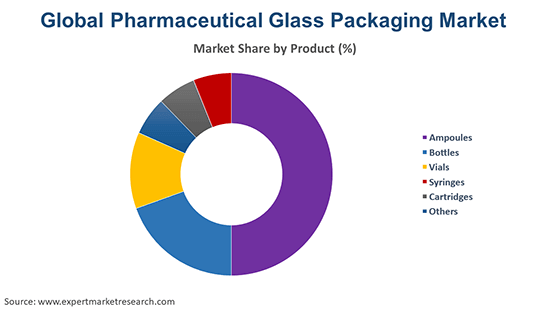
Market Breakup by Product
Key Insight: The Type I borosilicate glass segment holds the largest share of the pharmaceutical glass packaging market. Its dominant market standing stems from superior chemical inertness, high thermal shock resistance, and minimal extractable levels, making it the essential choice for parenteral medications, biologics, and sensitive injectable solutions. Regulatory agencies mandate Type I glass for parenteral formulations due to its ability to preserve chemical stability and eliminate leaching risks over multi-year storage cycles. Pharmaceutical companies and contract development and manufacturing organizations widely select borosilicate containers to safeguard high-value protein therapies, vaccines, and complex biologic molecules, thereby opening up new opportunities and boosting the growth of the pharmaceutical glass packaging market.
Market Breakup by Drug Type
Key Insight: Generic drugs are gaining traction through affordability, patent expirations, wider substitution policies, and increasing healthcare access, while branded drugs retain demand through established physician trust, differentiated formulations, and strong therapeutic portfolios. Biologics are gaining momentum as treatment needs rise across oncology, autoimmune, metabolic, and chronic diseases, supported by advances in targeted therapies and biosimilar adoption. Increasing penetration of injectable and complex therapies is also strengthening demand for specialized pharmaceutical glass packaging across these drug categories.
Market Breakup by Application
Key Insight: Injectables product line occupies a leading market share across all applications. Liquid and lyophilized formulations of injectable drugs require complete inertness of the container in order to retain the efficacy of the drug and avoid any hazardous reactions. An increase in the prevalence of chronic diseases worldwide, growing oncology pipeline, and increasing need for self-administration of biological drugs contribute to increased use of glass vials, prefilled syringes, and cartridges in clinical settings. Moreover, growing demand for oral liquids among children and elderly patients drives continued use of glass bottles.
Market Breakup by Region
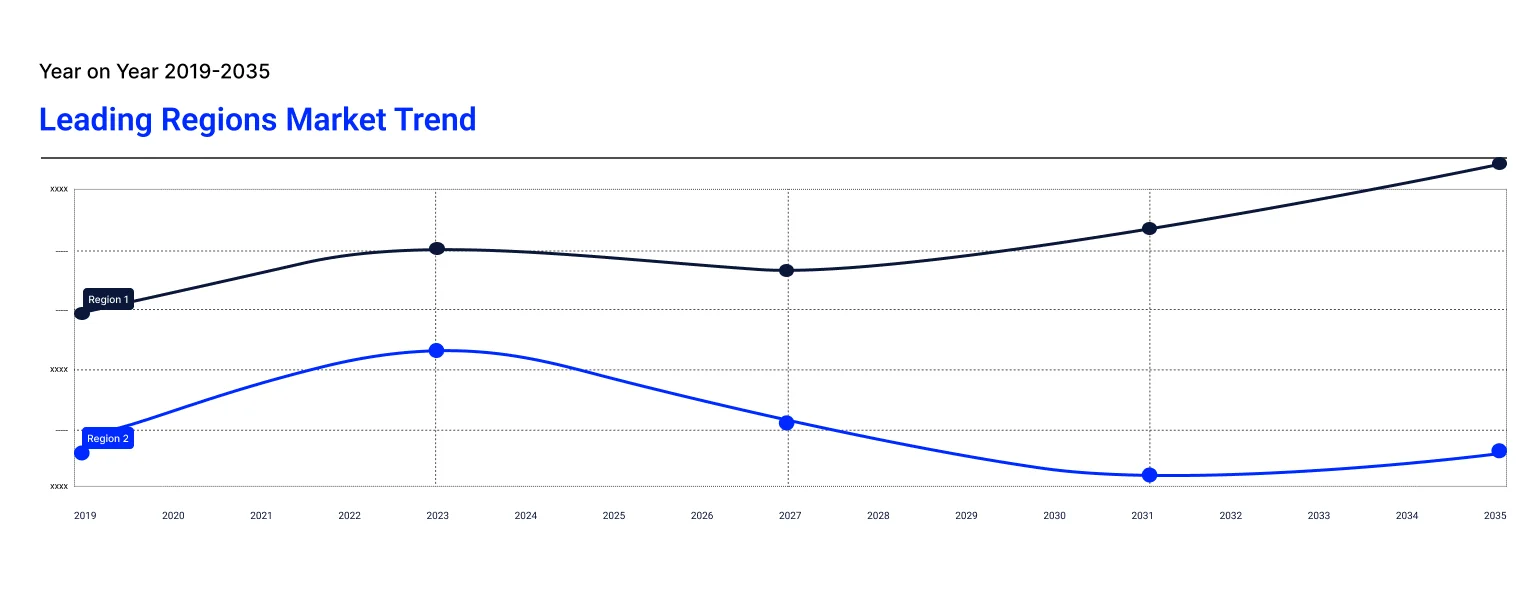
Key Insight: North America commands the dominant revenue share in the market, supported by advanced healthcare infrastructure, high healthcare expenditure, and a dense concentration of global biopharmaceutical companies. Meanwhile, the Asia Pacific region is expanding at the fastest growth rate, fueled by expanding generic drug manufacturing bases, government healthcare funding, and shifting production footprints toward China and India. European markets maintain strong market share due to established packaging manufacturing hubs, strict regulatory standards, and pioneer investments in sustainable glass technologies.
By Material Type, Type I (Borosilicate Glass) dominates the market due to its unmatched chemical inertness and low extractable profile
The demand for Type I borosilicate glass continues to dominate the market owing to its superior chemical stability, ability to withstand heat, and low interaction with drugs. The regulations in the dominant healthcare markets mandate that Type I glass be used for parenterals, biological products, and liquid injectables. Biopharmaceuticals use Type I glass to avoid degradation or contamination due to alkali leaching, especially over longer storage times. Such developments will thus boost the pharmaceutical glass packaging market dynamics and trends in the long run.
New developments in technology related to the internal coating of materials provide a considerable growth opportunity for material segments. Barrier coatings prevent the phenomenon of delamination when dealing with aggressive drugs but still offer a high degree of transparency. For instance, Corning Incorporated developed Type I borosilicate vials with a coating aimed at improving the efficiency of filling lines without generating glass flakes.
By Drug type, Generic drugs dominate pharmaceutical glass packaging demand, supported by affordability and widespread injectable drug manufacturing
Generic drugs represent the dominant drug type, supported by their affordability, broad use across essential therapies, and expanding production in major pharmaceutical manufacturing hubs such as India and China. Their extensive presence in injectable antibiotics, oncology medicines, vaccines, and chronic-disease treatments sustains demand for vials and ampoules. For example, SCHOTT Pharma reported strong demand for its pharmaceutical containment solutions in 2025, with sterile ready-to-use cartridges and vials performing particularly well, reflecting continued requirements from large-scale pharmaceutical manufacturing.
Biologics are projected to register the fastest growth as pharmaceutical pipelines increasingly shift toward complex, high-value therapies for oncology, immunology, diabetes, and other chronic conditions. Their sensitivity to environmental conditions is increasing demand for specialized Type I glass vials, cartridges, and prefillable syringes. For instance, SCHOTT Pharma launched a 5.5 ml prefillable glass syringe in October 2025 specifically for large-volume biologic therapies, supporting self-administration through homecare and autoinjector-based treatment.
By Application, injectables account for the dominant share of the market due to strict chemical stability and sterility mandates
Injectable applications dominate market demand because parenteral formulations require absolute chemical inertness and sterile containment to ensure patient safety. Liquid and freeze-dried injectable drugs are highly susceptible to contamination or interaction with container materials. Consequently, global pharmaceutical manufacturers specify high-grade glass packaging for injectables, including vaccines, oncology drugs, and monoclonal antibodies. High regulatory compliance standards governing parenteral products maintain injectables as the primary application driving pharmaceutical glass packaging penetration..
Oral liquid products form yet another significant market segment owing to the constant use of syrups, suspensions, and pediatric formulas around the world. There is an increasing preference in developing countries for liquid oral drugs packed in reusable glass containers. The sustained investment in the production of environmentally-friendly glass helps ensure that the conventional method of oral drug packaging stays ahead of other packaging types.
Read more about this report - REQUEST FREE SAMPLE COPY IN PDF
North America dominates the market due to extensive biopharmaceutical infrastructure and high healthcare expenditure.
North America holds market dominance due to its advanced biopharmaceutical production processes, investments in research and development, and high expenditure on healthcare on an individual basis. The presence of major multinational companies in the pharma sector creates an assured market for high-quality Type I borosilicate vials, syringes, and cartridges. The stringent requirements set by the US FDA for ensuring container-closure integrity ensure the adoption of premium pharmaceutical glass packaging scope. Such factors are directly boosting the pharmaceutical glass packaging market regional growth.
Asia Pacific represents the fastest-growing regional market, propelled by expanding generic drug manufacturing, government initiatives to widen healthcare access, and shifting operational investments. Countries such as China and India are evolving into major international hubs for active pharmaceutical ingredient production and generic fill-finish operations. For instance, in August 2025, SCHOTT expanded its Jambusar, Gujarat facility to locally produce high-precision glass tubing for pharmaceutical syringes and cartridges, strengthening India’s primary pharmaceutical packaging supply chain and supporting rising demand for injectable drugs. Glass packaging manufacturers are actively expanding regional plant footprints to serve local demand, further elevating pharmaceutical glass packaging opportunities across Asian healthcare markets.
The market structure exhibits a consolidated nature among established multinational packaging specialists, alongside regional specialized pharmaceutical glass packaging market players. Dominant strategic priorities center around expanded capital investments in high-value ready-to-use formats, geographic expansion into emerging economies, and implementation of sustainable furnace technologies. Leading pharmaceutical glass packaging companies maintain competitive advantage through comprehensive regulatory compliance documentation, specialized surface coating technologies, and long-term supply contracts with top global drug developers.
Pharmaceutical glass packaging companies differentiate themselves through continuous technological innovation and vertical integration across raw material sourcing and conversion processes. Major industry players focus on developing proprietary glass formulations, expanding cleanroom packaging capabilities, and implementing advanced automated visual inspection systems. Sustainability initiatives, including carbon footprint reductions via electric melting, remain crucial strategy pillars for pharmaceutical glass packaging players maintaining global supply chains.
Founded in 1884 and headquartered in Mainz, Germany, SCHOTT AG is a global leader in specialty glass and primary pharmaceutical packaging. Operating across 34 countries, the company produces high-grade borosilicate tubing, vials, ampoules, and prefillable syringes. SCHOTT excels in proprietary glass formulation innovations and sustainable production technology investments.
Headquartered in Duesseldorf, Germany, Gerresheimer AG is a premier global partner for the pharmaceutical and healthcare industries specializing in glass and plastic packaging solutions. The company operates extensive production facilities across Europe, the Americas, and Asia. Its key strength lies in advanced barrier coating technologies and comprehensive ready-to-use containment systems.
Established in 1825 and headquartered in Milan, Italy, Bormioli Pharma produces comprehensive packaging solutions for the healthcare industry. Supplying customers across more than 100 countries with nine operational manufacturing plants, its operational strength centers on high-volume production of Type I, II, and III glass containers paired with integrated closure systems.
Established in 1984 and headquartered in Mumbai, India, Piramal Glass is a prominent specialty glass packaging manufacturer. Operating 12 furnaces and 65 production lines, the company supplies packaging to over 50 countries. Its core strength lies in large-scale manufacturing of amber glass containers and Type I borosilicate formulations at competitive cost structures.
Other key players in the pharmaceutical glass packaging report include Ardagh Group S.A., Sisecam, Stevanato Group S.p.A., Nipro Corporation, among others.
*Please note that this is only a partial list; the complete list of key players is available in the full report. Additionally, the list of key players can be customized to better suit your needs.*
Explore the latest trends shaping the Pharmaceutical Glass Packaging Market 2026–2035 with our in-depth report. Gain strategic insights, future forecasts, and key market developments that can help you stay competitive. Download a free sample report or contact our team for customized consultation on Pharmaceutical Glass Packaging Market trends 2026.


Upto 15% Off
USD
$2499 $2249
$3999 $3599
$4999 $4249
$5999 $5099


*While we strive to always give you current and accurate information, the numbers depicted on the website are indicative and may differ from the actual numbers in the main report. At Expert Market Research, we aim to bring you the latest insights and trends in the market. Using our analyses and forecasts, stakeholders can understand the market dynamics, navigate challenges, and capitalize on opportunities to make data-driven strategic decisions.*
In 2025, the global pharmaceutical glass packaging market attained a value of nearly USD 20.97 Billion.
The market is projected to grow at a CAGR of 7.00% between 2026 and 2035.
Leading manufacturers focus on expanding pre-sterilized ready-to-use glass capacity, investing in low-carbon electric melting furnaces, and developing specialized anti-delamination barrier coatings.
The key trends guiding the market growth include the rising popularity of vape liquids, the growing demand for sustainable packaging, and the robust growth of the pharmaceuticals sector in emerging markets.
The major regions in the market are North America, Latin America, the Middle East and Africa, Europe, and the Asia Pacific.
The major products of pharmaceutical glass packaging considered in the market report are ampoules, bottles, vials, syringes, and cartridges, among others.
The significant drug types considered in the market report are generic, branded and biologic.
The different applications of the product are oral, injectable, and nasal, among others.
The leading players in this market are Ardagh Group S.A., Bormioli Pharma S.r.l., Piramal Glass Private Limited, Schott AG, and Sisecam, amongst others.
High capital costs for specialized borosilicate production, glass breakage risks during transit, and competition from advanced cyclic olefin polymer containers challenge expansion.
Explore our key highlights of the report and gain a concise overview of key findings, trends, and actionable insights that will empower your strategic decisions.
| REPORT FEATURES | DETAILS |
| Base Year | 2025 |
| Historical Period | 2019-2025 |
| Forecast Period | 2026-2035 |
| Scope of the Report |
Historical and Forecast Trends, Industry Drivers and Constraints, Historical and Forecast Market Analysis by Segment:
|
| Breakup by Product |
|
| Breakup by Drug Type |
|
| Breakup by Application |
|
| Breakup by Region |
|
| Market Dynamics |
|
| Competitive Landscape |
|
| Companies Covered |
|
| Report Price and Purchase Option | Explore our purchase options that are best suited to your resources and industry needs. |
| Delivery Format | Delivered as an attached PDF and Excel through email, with an option of receiving an editable PPT, according to the purchase option. |
Datasheet
One User
USD 2,499
USD 2,249
tax inclusive*
Single User License
One User
USD 3,999
USD 3,599
tax inclusive*
Five User License
Five User
USD 4,999
USD 4,249
tax inclusive*
Corporate License
Unlimited Users
USD 5,999
USD 5,099
tax inclusive*
*Please note that the prices mentioned below are starting prices for each bundle type. Kindly contact our team for further details.*
Flash Bundle
Small Business Bundle
Growth Bundle
Enterprise Bundle
*Please note that the prices mentioned below are starting prices for each bundle type. Kindly contact our team for further details.*
Flash Bundle
Number of Reports: 3
20%
tax inclusive*
Small Business Bundle
Number of Reports: 5
25%
tax inclusive*
Growth Bundle
Number of Reports: 8
30%
tax inclusive*
Enterprise Bundle
Number of Reports: 10
35%
tax inclusive*
How To Order

Select License Type
Choose the right license for your needs and access rights.

Click on ‘Buy Now’
Add the report to your cart with one click and proceed to register.

Select Mode of Payment
Choose a payment option for a secure checkout. You will be redirected accordingly.
Strategic Solutions for Informed Decision-Making
Gain insights to stay ahead and seize opportunities.

Get insights & trends for a competitive edge.

Track prices with detailed trend reports.

Analyse trade data for supply chain insights.

Leverage cost reports for smart savings

Enhance supply chain with partnerships.

Connect For More Information
Our expert team of analysts will offer full support and resolve any queries regarding the report, before and after the purchase.
Our expert team of analysts will offer full support and resolve any queries regarding the report, before and after the purchase.
We employ meticulous research methods, blending advanced analytics and expert insights to deliver accurate, actionable industry intelligence, staying ahead of competitors.
Our skilled analysts offer unparalleled competitive advantage with detailed insights on current and emerging markets, ensuring your strategic edge.
We offer an in-depth yet simplified presentation of industry insights and analysis to meet your specific requirements effectively.




