

Consumer Insights
Uncover trends and behaviors shaping consumer choices today
Procurement Insights
Optimize your sourcing strategy with key market data
Industry Stats
Stay ahead with the latest trends and market analysis.
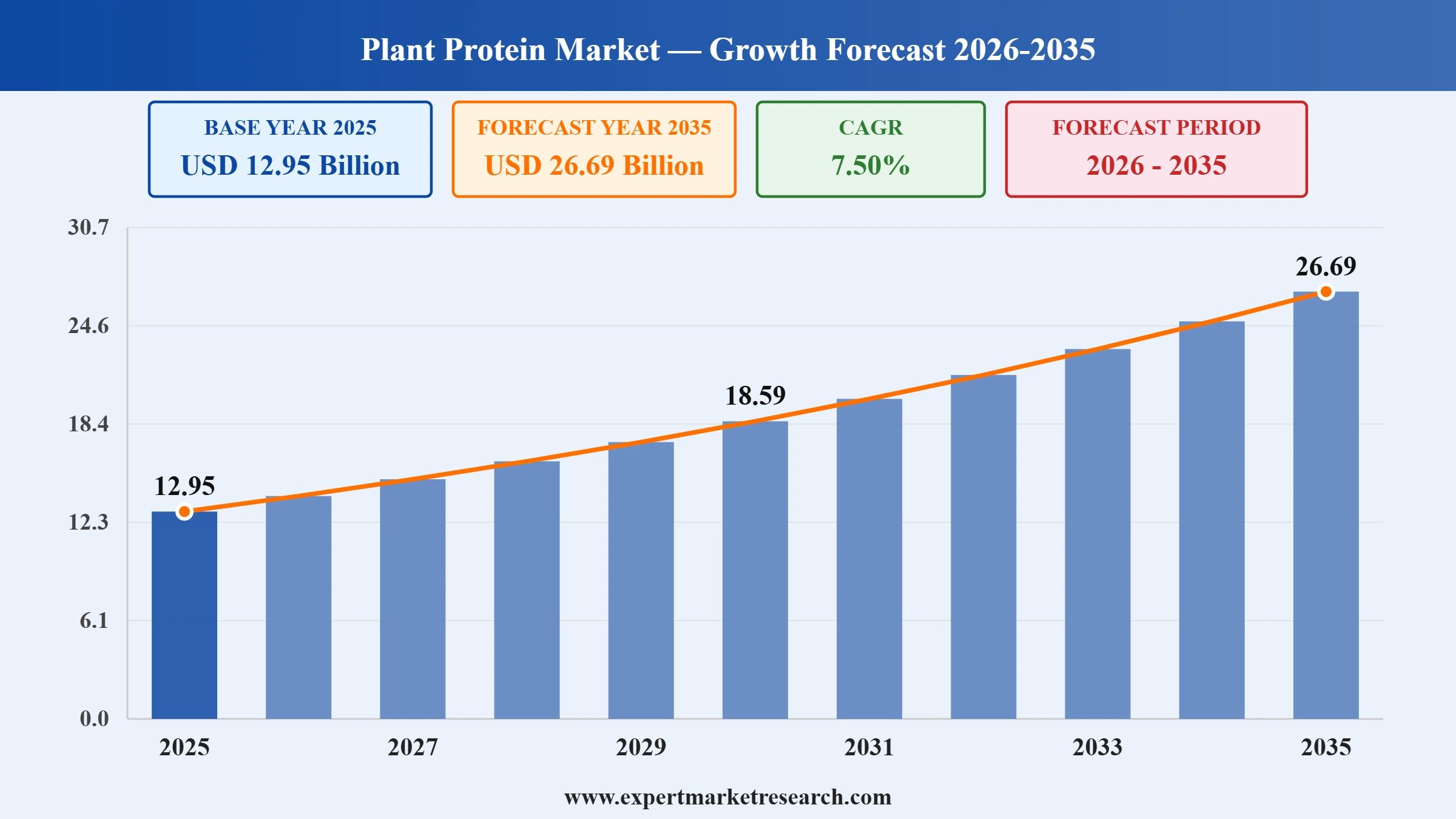
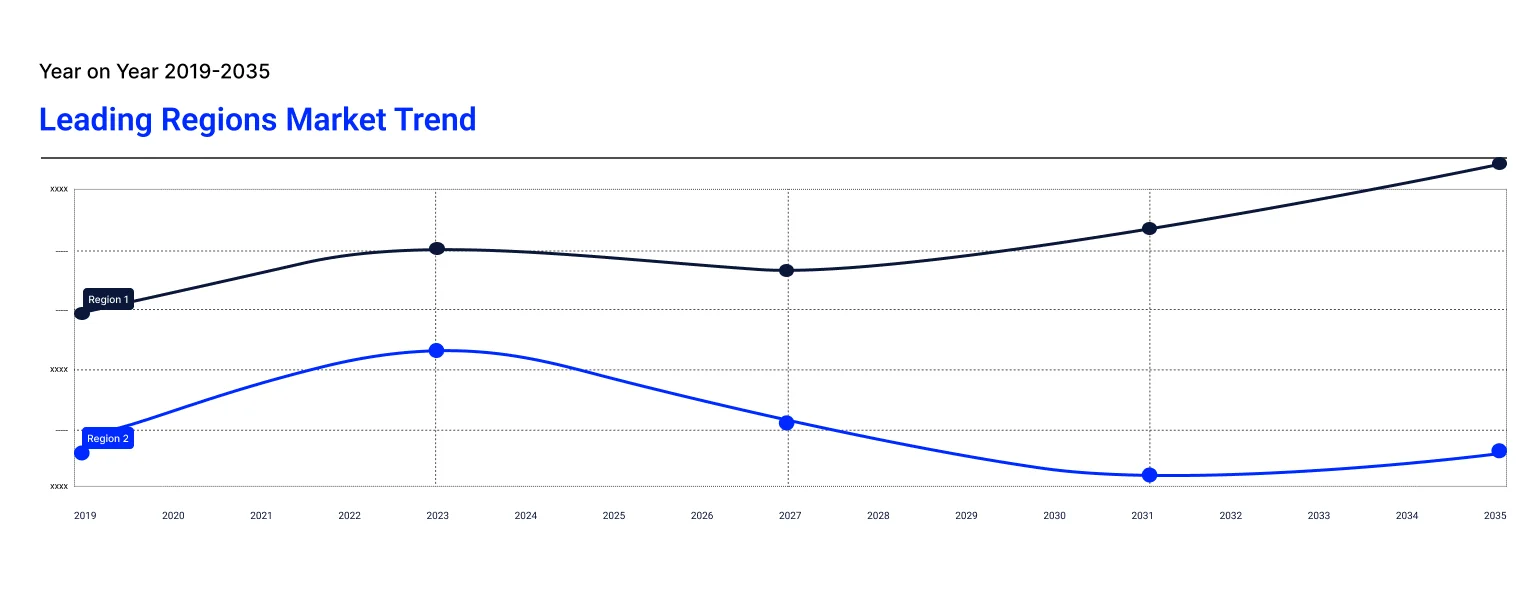
The global plant protein market attained a value of USD 12.95 Billion in 2025 and is projected to expand at a CAGR of 7.50% through 2035. The market is further expected to achieve USD 26.69 Billion by 2035. Increasing investments in precision fermentation technology are allowing food companies to create plant-based proteins with enhanced amino acid profiles in a more natural and structured way, thus unleashing new market potential for clinical nutrition as well as high-performance food products.
Consumers’ growing demand for proteins, which are not only 'clean label' but can also act as a single ingredient that can replace several additives in formulations is boosting market growth. Manufacturers are expected to reduce the complexity of the ingredient lists and at the same time, they have to maintain the functionalities of the products they make. Moreover, the ongoing demand for plant protein utilization in nutraceuticals and specialized medical nutrition is boosting the plant protein market growth. Since these segments experience less sensitivity to prices, it gives the opportunity for the manufacturers to offer higher-margin, technologically advanced protein forms.
The plant protein market has moved beyond just being a part of the alternative diet trend. It is changing through innovations at the ingredient level by companies that aim at resolving the texture and functionality issues. In February 2024, Roquette added to its NUTRALYS pea protein range with new solubility variants that are particularly made for ready-to-drink beverages. Moreover, new plant protein launches make up for a significant share of beverage applications, which is indicative of the move away from traditional meat analogs towards higher margin functional nutrition segments.
Moreover, foodservice chains and even pharmaceutical nutrition players view plant proteins as part of hybrid formats. Not only are companies selling the protein anymore, but they are also creating the formats that can withstand processing conditions, shelf life, and taste, thereby reshaping the entire plant protein market trends and dynamics. For example, in March 2026, Novameat launched a balanced protein ingredient platform enabling hybrid meat production, allowing processors to integrate plant proteins into existing lines, improving cost efficiency, and nutritional profiles. This is motivating suppliers to opt for fermentation-enabled proteins and precision processing. Furthermore, it is the reason why partnerships between ingredient companies and biotech firms are increasingly happening.
Read more about this report - REQUEST FREE SAMPLE COPY IN PDF
Not Rocket Science introduced India’s first savory plant-based ready-to-drink protein, catering to on-the-go consumers looking for non-sweet options, thus extending the category beyond traditional shakes and powders. Savory options and regional taste profiles can be leveraged as opportunities for companies to expand the category and stand out in the competitive space of sweet protein drinks.
BetterAlt developed a plant protein product with a 100% money-back guarantee, aiming to reassure consumers and mitigate taste and digestive health issues associated with early-stage product adoption. Risk reversal and results-oriented marketing can be effective strategies for companies entering the plant protein market.
PlantFusion introduced a clear plant protein product that is easier to digest and has a lighter texture. The product is meant to cater to consumers who want alternatives to heavy, creamy protein drinks. Companies can use alternative protein sources to enter new markets like hydration/wellness by developing new products that meet changing consumer preferences for lighter beverages.
Tetra Pak launched processing solutions that enable food producers to use sunflower protein, thereby diversifying protein sources, enhancing sustainability, and reducing reliance on soy and pea-based protein sources. Companies in the plant protein market can explore alternative protein sources like sunflowers to avoid supply chain risks, meet sustainability needs, and create differentiated portfolios that meet changing consumer preferences.
The most important trend in the plant protein market is that companies are trying to optimize the functionality of their products. They are improving the protein's ability to dissolve, act as an emulsifier, and resist heat. Ingredion, for instance, offers its VITESSENCE Pulse protein range for dairy alternatives and high-protein drinks. As per the USDA, plant-based beverage consumption in the United States has been growing steadily, which keeps pushing ingredient suppliers to introduce high-performance proteins. In February 2026, The Bland Company raised USD 2.7 million to scale technology converting agricultural side streams into functional plant proteins, delivering egg-like performance while improving cost efficiency and supply stability.
Precision fermentation is eventually becoming a key focus area as companies like Perfect Day have already shown that dairy proteins produced by this method are commercially viable. Now similar models for plant protein enhancements are being explored. Several European startups are partnering with ingredient suppliers to develop proteins obtained through fermentation with improved digestibility. The European Commission has also stepped up its financial support through the Horizon programs for the development of alternative proteins, boosting the plant protein market value. For example, in December 2025, Typcal opened Latin America’s first large-scale mycelium fermentation plant after USD 2 million funding, enabling industrial production and accelerating commercial supply of alternative protein ingredients globally.
Soy has been the front runner in driving the plant protein market growth. However, companies are eagerly diversifying their portfolio. Fava bean protein, chickpea isolates, and even lentil-derived proteins are being rapidly commercialized. Firms like PURIS are introducing non-soy variants in order to lessen the reliance on volatile crops. For example, in July 2024, Plantaway launched India’s first plant-based chicken fillet made from pea protein, delivering meat-like texture, high protein content, and versatile usage across multiple culinary applications. FAO has also mentioned pulses as sources of sustainable proteins and has urged governments to continue supporting their cultivation. As a consequence, ingredient firms are adjusting their sourcing strategies with regional agricultural strengths, which is gradually changing the supply chains.
Hybrid products are gradually gaining traction among consumers. Meat processors are mixing plant proteins with animal proteins to reduce their costs and improve sustainability metrics. Tyson Foods and other prominent food processors are testing such blends in their foodservice channels, driving the plant protein market penetration. This kind of product is helpful in saving food taste and reducing its production cost. Besides, this also helps the producers in complying with the stricter sustainability disclosure rules in regions, particularly in Europe. In April 2025, Plantomyc launched a European consortium developing hybrid proteins combining plant and mycelium biomass, improving taste, texture, and sustainability while enabling scalable alternative protein production.
Plant proteins are increasingly being incorporated in clinical nutrition, a high-value segment. Companies are coming up with hypoallergenic, readily digestible protein formats for elderly care and medical purposes. Companies like DSM-Firmenich are widening their range of plant protein solutions for medical nutrition with an emphasis on a better amino acid balance. Moreover, regulators such as the FDA are encouraging innovation by granting more rapid approvals for nutrition products with specific functions. Precision, consistency, and scientific proof are required in this segment. Aligning with this plant protein market trend, in March 2026, Sirio introduced LifeChews plant-based gel supplements with 198% higher bioavailability, improving nutrient absorption, taste, and convenience in on-the-go nutraceutical formats.
The EMR’s report titled “Global Plant Protein Market Report and Forecast 2026-2035” offers a detailed analysis of the market based on the following segments:
Market Breakup by Source
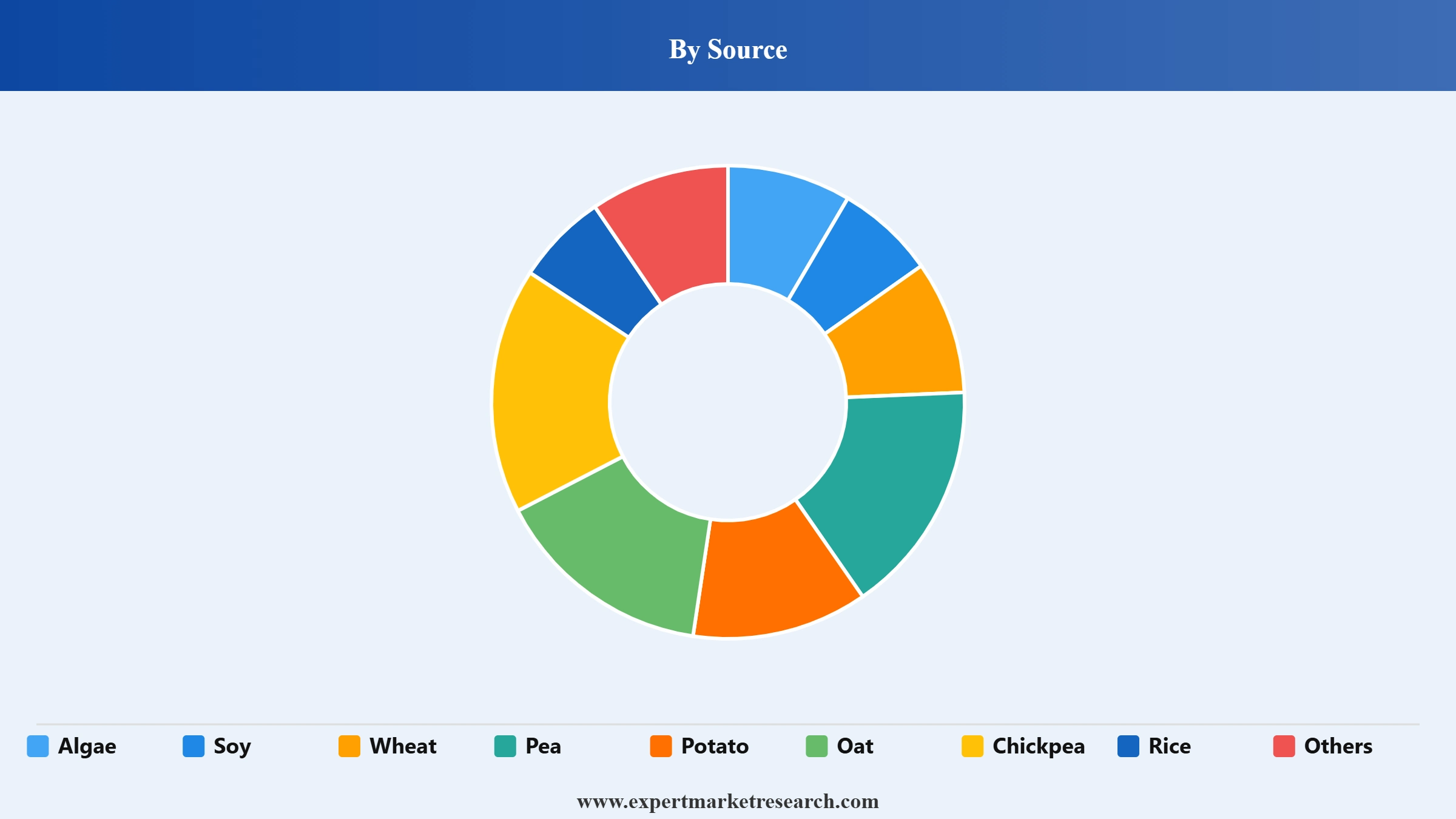
Key Insight: Alga and wheat proteins are discovering niche uses where certain specifications or sustainable positioning matter more than volume, thereby propelling growth in the plant protein market. Potato and oats proteins are being introduced for textures and flavor, especially in milk replacement products. For chickpea and rice proteins, the focus is on clean-label preparations that raise the issue of digestibility. Since it meets the requirements of industrial processing, soy forms the basis of high-volume production. On the contrary, pea is turning into the most favored option for new product development. In February 2026, Roquette launched NUTRALYS Pea 850F isolate delivering neutral taste, reducing off-notes, enabling clean-label formulations, and improving functionality in beverages and plant-based food applications. The "others" category, which comprises emerging plant sources, is also growing as companies are exploring alternatives that can lead to less reliance on traditional crops.
Market Breakup by Application
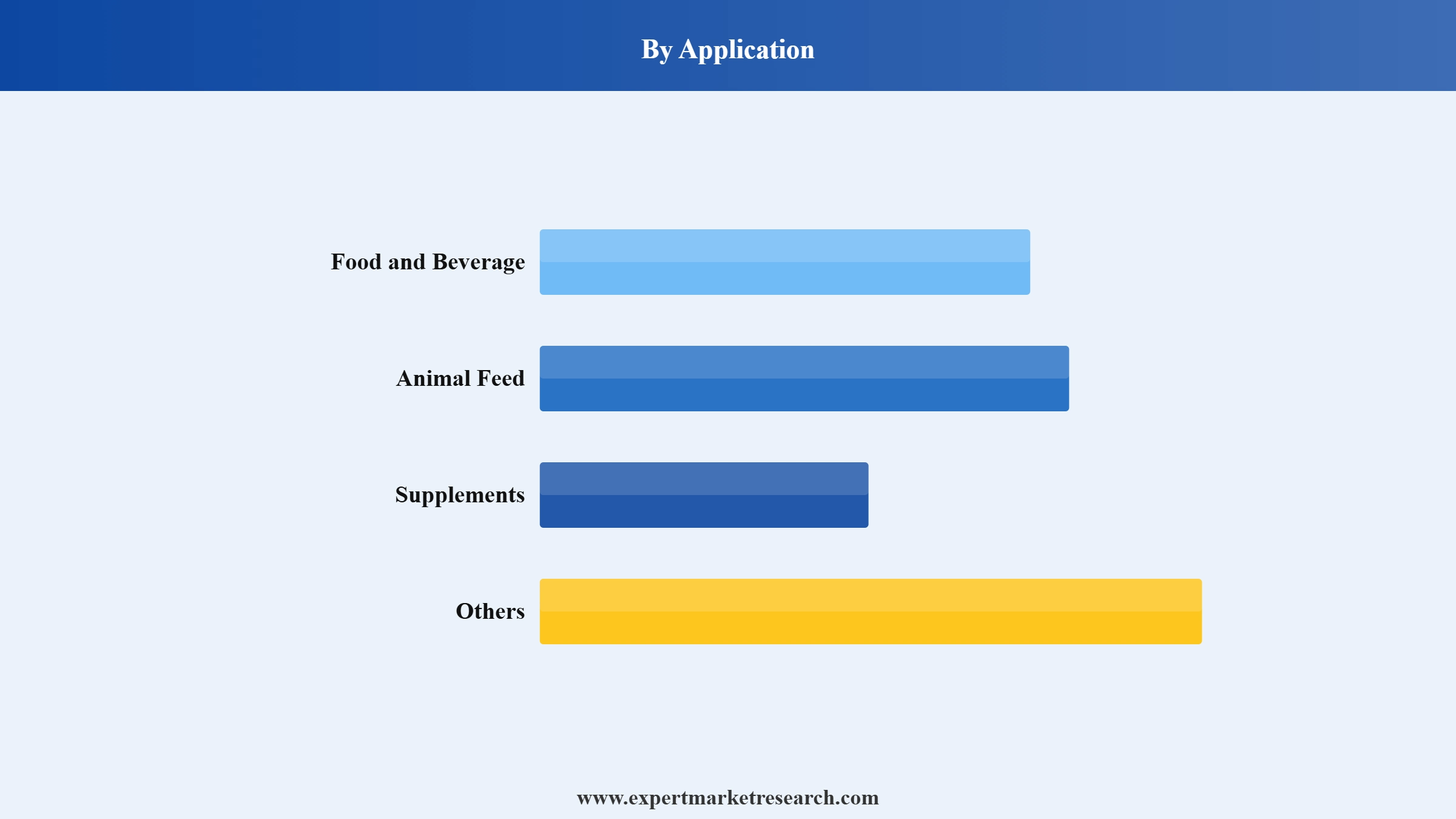
Key Insight: As per the plant protein market report, animal feed is gradually taking the lead among the distribution channels where plant proteins are introduced, particularly in situations where cost optimization is priority. It is a way for producers to make good use of lower-grade protein streams. On the other hand, supplements are emerging as a premium segment, where demand is primarily driven by functional benefits and targeted health outcomes. The food and beverage segment, mainly because of its size and product mix, continues to be the largest shareholder in terms of consumption. In January 2026, Silk launched high-protein plant-based beverage delivering 13g complete protein, lower sugar, and added nutrients, targeting growing demand for functional, plant-based nutrition. The others category covers the various applications in cosmetics and specialized formulations where plant proteins are mostly appreciated for their natural positioning.
Market Breakup by Region
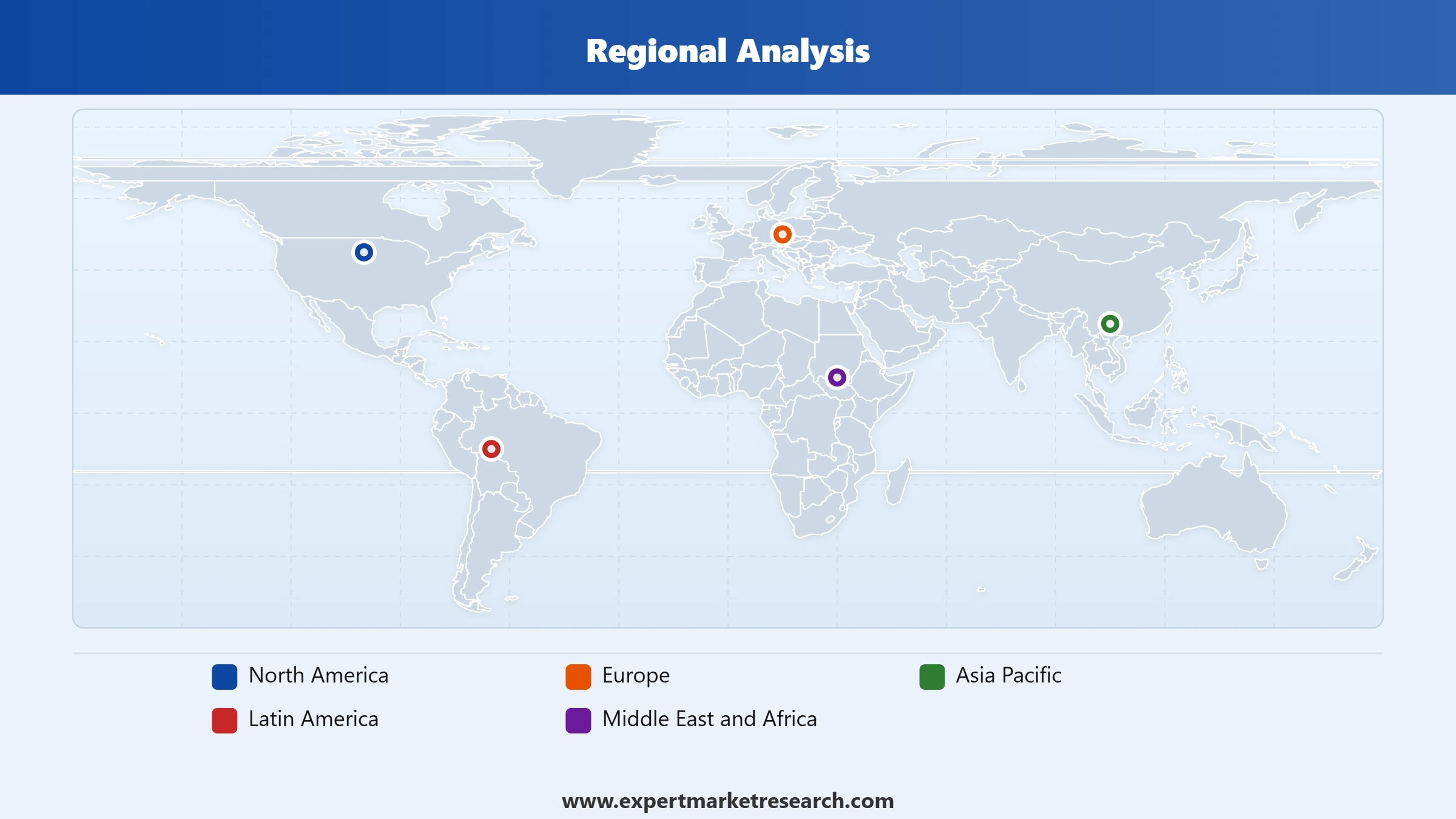
Key Insight: The plant protein market in Europe is emphasizing sustainability and regulatory alignment which affects product development and sourcing decisions. On the other hand, Latin America is becoming the supplier side of the raw material market especially for soy and pulses. Middle East and Africa are gradually embracing plant proteins characterized mainly by import-based supply and growing urban demand. North America continues to be an innovation-driven market, whereas Asia Pacific is expanding its production as well as its consumption of plant proteins. Since every region focuses on a different set of priorities, for example sustainability, cost efficiency, or ensuring supply security, the global market is becoming more interconnected yet regionally distinct in its developmental path.
Read more about this report - REQUEST FREE SAMPLE COPY IN PDF
By source, soy protein dominates the market due to established supply chains and processing efficiency advantages globally
Soy protein represents the dominant category within the plant protein market scope. Processing plants have become highly efficient, supply chains are reliable and stable, and even when raw material prices fluctuate, the cost of soy remains quite reasonable. Key players such as ADM and Cargill are not only increasing production capacity but also enhancing isolates that can be used more effectively in emulsifying and maintaining texture. Firms are offering products that are cleaner and have lesser levels of processing, thereby tackling issues related to taste. In January 2026, Ghodawat Consumer Limited launched STAR soya chunks using extrusion technology, targeting affordable protein demand as India’s meat substitutes segment grows around 10% annually.
Read more about this report - REQUEST FREE SAMPLE COPY IN PDF
Pea protein is also expanding its share in the plant protein market, as companies introduce a bunch of options without allergen issues. Pea protein is quite versatile and blends easily into beverages, which is especially useful now as ready-to-drink products are growing in terms of rapid demand. Firms like Roquette and Ingredion are working on the improvement of solubility which was the main reason limiting pea protein application in liquid products. Pea is often seen as more sustainable than soy, and it can be grown across different regions, which makes sourcing easier for manufacturers. This enables brands to market their products more easily in Europe and North America.
Food and beverage applications lead the market due to continuous product innovation and expanding plant-based product portfolios globally
Currently, food and beverage represents the biggest sector in which plant proteins are used, however the demand patterns are changing. Firms are introducing plant proteins not only in meat substitutes but in snacks, drinks, and even chocolates. Nestlé and Unilever are the two examples of companies who have been actively changing the formulations of the products to contain plant proteins without compromising the taste. Achieving such a balance is quite challenging, and this is where ingredient innovation comes into play. Moreover, retailers are promoting their own plant-based product lines, which means more volume for protein suppliers.
Read more about this report - REQUEST FREE SAMPLE COPY IN PDF
Supplements are also contributing to the plant protein market value with their capability to emphasize performance claims. Plant proteins are marketed for their benefits in muscle recovery, weight loss, and even for clinical nutrition. DSM-Firmenich and Glanbia are developing proprietary blends that enhance amino acid profiles. Personalized products are also on the rise. Brands are developing particular products for children, sportspeople, seniors, and people who lead a certain lifestyle. For example, in July 2025, Plix launched kids-focused plant protein powders, gummies, and fizzies using millets and natural ingredients, targeting clean-label nutrition and expanding into early-age functional wellness segments.
North America leads the market due to strong innovation ecosystem and presence of major plant protein manufacturers
North America secures the dominant position within the global plant protein market scope, mainly due to its mature innovation ecosystem. Businesses are not merely manufacturing plant proteins but they are tailoring them for different usages. The United States especially, boasts a strong collaborative network of food technology companies and ingredient suppliers. Moreover, strong funding opportunities are helping to drive innovation, and changes in regulatory clarity, although gradual, are helping to drive growth in the market. The leading companies are focusing on high-margin segments such as beverages and clinical nutrition, rather than bulk supply. For example, in January 2026, Ripple Foods launched organic plant-based milk with 5g protein, allergen-free ingredients, clean label formulation, targeting growing demand for nutritious dairy alternatives.
Read more about this report - REQUEST FREE SAMPLE COPY IN PDF
Asia Pacific observes fast-paced growth in the plant protein market revenue driven by innovation. Nations like China and India are developing local production facilities to lessen dependency on imports. At the same time, there is a rise in demand for cheap sources of proteins. Regional corporations are coming up with budget-friendly formulations in accordance with local diets. Moreover, global companies are forging partnerships to access this demand. In some locations, infrastructure continues to be in the developmental phase, which leads to uneven progress. In June 2025, India-based Prot released Prot Block, a shelf-stable ingredient offering health-conscious Indians a new format of plant-based protein.
The market is becoming more competitive, but not in a usual price-driven way. Plant protein companies are concentrating on functionality and performance specific to applications. Both ADM and Kerry Group are investing in developing proteins that can replace several ingredients simultaneously as this would help the manufacturers to make their formulations simpler. DuPont is focusing on fermentation-enabled proteins, aiming at better digestibility and amino balance.
One of the prominent high-potential segments for growth is hybrid applications. Food manufacturers are not fully shifting to plant-based products; instead, they are adopting a blended approach. This generates a requirement for proteins that can act like animal protein when subjected to processing conditions. Clinical nutrition is another area of focus. Plant protein market players who can produce reliable, high-purity protein products are getting more recognition here. Besides that, there is space for regional customization where companies change protein formats according to local diets and food preparation traditions.
Archer Daniels Midland Company, founded in 1902 and headquartered in Chicago, United States, is committed to scaling plant protein production with significant supply control. It is enhancing pea and soy isolates with higher solubility. The company also significantly supports the development of large-scale food manufacturers worldwide by linking sourcing, processing, and formulation support through end-to-end systems.
DuPont de Nemours Inc. founded in 1802 and located in Wilmington, United States, is committed to the development of high-performance nutrition. The company is pursuing the production of proteins derived through fermentation and customized blends. It is mainly targeting the improvement of food texture and nutritional balance. Its main focus is on the medical and specialized nutrition segments, where precision and consistency are paramount requirements.
Since 1972, Kerry Group has been delivering ingredients to the market but now it is becoming a key plant protein market player. With headquarters in Tralee, Ireland, the company uses plant proteins taste and texture systems to create delicious and healthy food. Besides, Kerry Group collaborates with food companies to find ready-to-scale formulations that align with changing consumer preferences.
Founded in 1921 and based in London, United Kingdom, Tate & Lyle Plc is committed to create integrated ingredient platforms. The company is working on plant protein solutions that can be used together with fibers and sweeteners. The company is focused on enhancing the mouthfeel and the stability of reduced-sugar and functional food products that can be used in various applications.
*Please note that this is only a partial list; the complete list of key players is available in the full report. Additionally, the list of key players can be customized to better suit your needs.*
Other key players in the market include Roquette Freres, and Cargill Inc., among others.
Unlock the latest insights with our plant protein market trends 2026 report. Discover regional growth patterns, consumer preferences, and key industry players. Stay ahead of competition with trusted data and expert analysis. Download your free sample report today and drive informed decisions in the market.
Plant-Based Protein Supplements Market
United States Plant Protein Market
India Plant Based Protein Market


Upto 15% Off
USD
$2499 $2249
$3999 $3599
$4999 $4249
$5999 $5099


*While we strive to always give you current and accurate information, the numbers depicted on the website are indicative and may differ from the actual numbers in the main report. At Expert Market Research, we aim to bring you the latest insights and trends in the market. Using our analyses and forecasts, stakeholders can understand the market dynamics, navigate challenges, and capitalize on opportunities to make data-driven strategic decisions.*
In 2025, the market reached an approximate value of USD 12.95 Billion.
The market is projected to grow at a CAGR of 7.50% between 2026 and 2035.
The market is estimated to witness a healthy growth in the forecast period of 2026-2035 to reach about USD 26.69 Billion by 2035.
Investing in localized sourcing, developing application-specific protein systems, forming biotech partnerships, optimizing processing efficiency, and expanding into high-margin segments like clinical nutrition and functional beverages to strengthen long-term positioning.
The rising inclination towards health and fitness, growing risk of animal-borne diseases, emergence of e-commerce, and rapid door-step delivery of food items are the key trends of the market.
The major regions in the market are North America, Latin America, the Middle East and Africa, Europe, and the Asia Pacific.
Algae, soy, wheat, pea, potato, oat, chickpea, and rice, among others, are the leading sources of plant protein.
Food and beverage, animal feed, and supplements, among others, are the different applications of the plant protein.
The key players in the market include Archer Daniels Midland Company, DuPont de Nemours Inc., Kerry Group, Tate & Lyle Plc, Roquette Freres, and Cargill Inc., among others.
Maintaining consistent taste and texture remains difficult. Supply chain volatility for raw crops creates pricing pressure. Processing costs are still high, and achieving full nutritional equivalence with animal protein continues challenging.
Explore our key highlights of the report and gain a concise overview of key findings, trends, and actionable insights that will empower your strategic decisions.
| REPORT FEATURES | DETAILS |
| Base Year | 2025 |
| Historical Period | 2019-2025 |
| Forecast Period | 2026-2035 |
| Scope of the Report |
Historical and Forecast Trends, Industry Drivers and Constraints, Historical and Forecast Market Analysis by Segment:
|
| Breakup by Source |
|
| Breakup by Application |
|
| Breakup by Region |
|
| Market Dynamics |
|
| Competitive Landscape |
|
| Companies Covered |
|
| Report Price and Purchase Option | Explore our purchase options that are best suited to your resources and industry needs. |
| Delivery Format | Delivered as an attached PDF and Excel through email, with an option of receiving an editable PPT, according to the purchase option. |
Datasheet
One User
USD 2,499
USD 2,249
tax inclusive*
Single User License
One User
USD 3,999
USD 3,599
tax inclusive*
Five User License
Five User
USD 4,999
USD 4,249
tax inclusive*
Corporate License
Unlimited Users
USD 5,999
USD 5,099
tax inclusive*
*Please note that the prices mentioned below are starting prices for each bundle type. Kindly contact our team for further details.*
Flash Bundle
Small Business Bundle
Growth Bundle
Enterprise Bundle
*Please note that the prices mentioned below are starting prices for each bundle type. Kindly contact our team for further details.*
Flash Bundle
Number of Reports: 3
20%
tax inclusive*
Small Business Bundle
Number of Reports: 5
25%
tax inclusive*
Growth Bundle
Number of Reports: 8
30%
tax inclusive*
Enterprise Bundle
Number of Reports: 10
35%
tax inclusive*
How To Order

Select License Type
Choose the right license for your needs and access rights.

Click on ‘Buy Now’
Add the report to your cart with one click and proceed to register.

Select Mode of Payment
Choose a payment option for a secure checkout. You will be redirected accordingly.
Strategic Solutions for Informed Decision-Making
Gain insights to stay ahead and seize opportunities.

Get insights & trends for a competitive edge.

Track prices with detailed trend reports.

Analyse trade data for supply chain insights.

Leverage cost reports for smart savings

Enhance supply chain with partnerships.

Connect For More Information
Our expert team of analysts will offer full support and resolve any queries regarding the report, before and after the purchase.
Our expert team of analysts will offer full support and resolve any queries regarding the report, before and after the purchase.
We employ meticulous research methods, blending advanced analytics and expert insights to deliver accurate, actionable industry intelligence, staying ahead of competitors.
Our skilled analysts offer unparalleled competitive advantage with detailed insights on current and emerging markets, ensuring your strategic edge.
We offer an in-depth yet simplified presentation of industry insights and analysis to meet your specific requirements effectively.




