

Consumer Insights
Uncover trends and behaviors shaping consumer choices today
Procurement Insights
Optimize your sourcing strategy with key market data
Industry Stats
Stay ahead with the latest trends and market analysis.
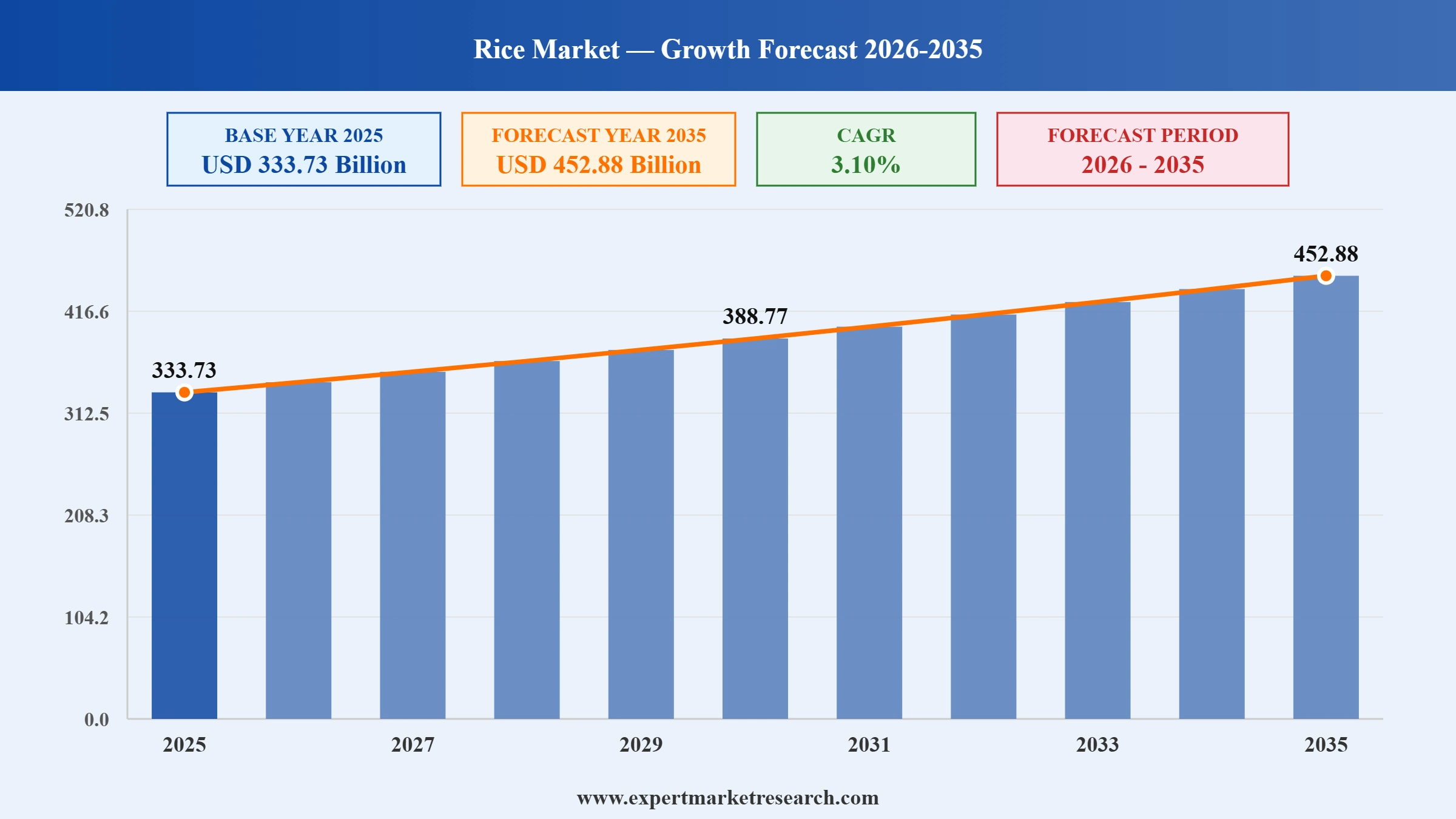
The global rice market attained a value of USD 333.73 Billion in 2025 and is projected to expand at a CAGR of 3.10% through 2035. The market is further expected to achieve USD 452.88 Billion by 2035. The increase in public-supported efforts toward the production of climate-tolerant varieties of rice, modernized irrigation systems, and precision agricultural tools is increasing efficiency in production and supply safety for institutional purchasers.
The fast development in the number of food additives made from rice is opening up new rice market opportunities for processors supplying bakeries, beverages, and baby food makers. Simultaneously, increased investments in grading, sorting, and smart warehousing are allowing exporters to meet high standards of purchasing organizations, such as multinational retailers and food processors.
The global rice market is seeing increased investments in premium, resilient, and traceable rice portfolios by the major players seeking to improve their export standing. One such innovation was by LT Foods Ltd., which launched more premium basmati rice portfolio and expanded its digital traceability efforts across international supply chain networks to ensure quality control and customer satisfaction, in March 2026. The move reflects the growing institutional needs for assured sourcing, especially for retailers and food service providers. Based on Food and Agriculture Organization estimates, the world produced more than 540 million metric tons of rice on a milled basis in 2025, owing to better yields by major producers despite the climatic risks faced in various regions.
The rice market is continuously evolving beyond being just a commodity business with manufacturers, exporters, and processors differentiating themselves through various value-added efforts, sustainability practices, and supply chain innovations. Some of the initiatives by the players include investment in precision milling technology, fortified rice varieties, specialty rice, and digital procurement tools to facilitate transparency in transactions between farmers and institutional buyers. For example, in May 2026, Panchamrutha Industries introduced fortified rice enriched with essential vitamins and minerals, supporting improved nutrition and everyday dietary health. Export-focused businesses are also implementing lower emissions agricultural practices and water efficient farming practices.
Read more about this report - REQUEST FREE SAMPLE COPY IN PDF
| Global Rice Market Report Summary | Description | Value |
| Base Year | USD Billion | 2025 |
| Historical Period | USD Billion | 2019-2025 |
| Forecast Period | USD Billion | 2026-2035 |
| Market Size 2025 | USD Billion | 333.73 |
| Market Size 2035 | USD Billion | 452.88 |
| CAGR 2019-2025 | Percentage | XX% |
| CAGR 2026-2035 | Percentage | 3.10% |
| CAGR 2026-2035 - Market by Region | Asia Pacific | 3.6% |
| CAGR 2026-2035 - Market by Country | India | 4.1% |
| CAGR 2026-2035 - Market by Country | China | 3.4% |
| CAGR 2026-2035 - Market by Length | Long Grain Rice | 3.5% |
| CAGR 2026-2035 - Market by Distribution Channel | Online | 4.7% |
| Market Share by Country 2025 | UK | 3.3% |
UPL unveiled an innovative weed management system for growing rice, which helps in efficient weed removal, yield protection, and sustainable agricultural practices. This innovation represents increasing demand for precise crop protection technology to increase agricultural productivity while minimizing wastage of resources and costs of production. Other firms can produce innovative crop protection technologies for rice cultivation based on the sustainable weed management technique used by UPL.
GRM Overseas launched 10X Basmati Rice that is suitable for consumption by diabetic patients and provides a lower glycemic response along with authentic taste and premium quality. This launch demonstrates the increasing demand for functional rice that is capable of curing lifestyle diseases and creating value addition opportunities in the premium packaged rice category. Firms can develop functional health-oriented rice through innovation in nutritional products, leveraging such advancements in the rice market.
KRBL introduced India Gate Uplife Lite, which is an everyday low-glycemic index rice, aimed at enabling consumers to have healthy carbohydrate intake without any compromise on taste and cooking experience. The product represents the trend towards healthier staples scientifically developed by combining nutrition, convenience, and brand luxury.
The government of Bangladesh approved six new rice varieties, including hybrid varieties, to increase production, climate-resilience, and ensure the country’s food security through innovative rice breeding techniques. Other companies can develop high-yielding and climate-resilient rice breeding programs, accelerating the rice market value.
Variations in the climate are prompting governments and seed manufacturers to develop drought-resistant, flood-resistant, and salinity-tolerant varieties of rice in order to make sure that production becomes more stable. These technological advancements in the rice market are reducing production risks for farmers and traders involved in the commercial growing of the crop. In July 2026, Japan and IRRI launched CoolRice, advancing heat-tolerant rice breeding, low-emission cultivation, climate analytics, and sustainable farming across Asia. On the other hand, the Indian Council of Agricultural Research, India, keeps introducing better rice varieties with the help of their public breeding efforts.
Exporters of rice are relying heavily on the use of blockchain technology, AI-based grading systems, and digital traceability to build customer confidence and meet the sourcing criteria set by the international markets. The institutional buyers are insisting on having visibility about the rice trade from the farm to the shipment in particular premium and specialty varieties of the crop. Companies like LT Foods Ltd. are implementing their basmati digital traceability systems, reshaping the rice market dynamics. Governments are also encouraging digital agriculture through farm digitization. For example, in June 2026, India expanded QR tagging on FCI rice bags, enhancing traceability, supply chain transparency, procurement tracking, and distribution efficiency.
The emergence of many public health projects is fueling commercial interest in fortified rice varieties enriched with iron, zinc, and vitamins in schools, hospitals, and government nutritional programs. Food processing businesses are using modern extrusion and blending equipment in the creation of enriched rice products at an industrial level. The Food Safety and Standards Authority of India in India continues to promote standards for fortified rice, while the Indian fortified rice distribution project helps public food schemes on a large scale. This trend in the rice market is motivating ingredient providers and millers to increase production capacity and offer new business prospects for equipment manufacturers, packaging firms, and institutional food suppliers both domestically and internationally. In March 2026, Cambodia, Japan, and WFP launched a fortified rice program improving factory worker nutrition, productivity, and food security through enriched staple meals.
Environmental compliance is turning out to be a major factor influencing the rice market scope, thus motivating producers to adopt low emission cultivation methods and sustainable farming practices. Alternate wetting and drying irrigation methods that considerably cut down greenhouse gas emissions such as methane and conserve water resources are being used. Governments in Southeast Asia are providing support for the promotion of climate-smart agriculture through various programs. SRP rescheduled the Standard for Sustainable Rice Cultivation Version 3.0 launch to January 2026, strengthening sustainability guidance, adoption tools, and implementation support.
The rice market is making significant investments in optical sorting, quality control based on AI, packaging robots, and automated milling machinery to ensure consistency of grain quality and minimize losses from the harvesting process. The use of such technologies increases the effectiveness of the process while satisfying high-quality requirements imposed by food manufacturing companies and retail chains across the world. Main milling firms in Asia are increasing their investment in intelligent processing plants with the help of machine vision systems that are used for defect detection and classification. The government-supported programs of agricultural modernization in major rice producing countries provide support in adopting modern processing facilities. Aligning with this trend, in April 2026, Satake launched the SSW80A rice milling machine, improving head rice yield, gentle milling efficiency, and mid-capacity processing performance.
The EMR’s report titled “Global Rice Market Report and Forecast 2026-2035” offers a detailed analysis of the market based on the following segments:
Market Breakup by Type
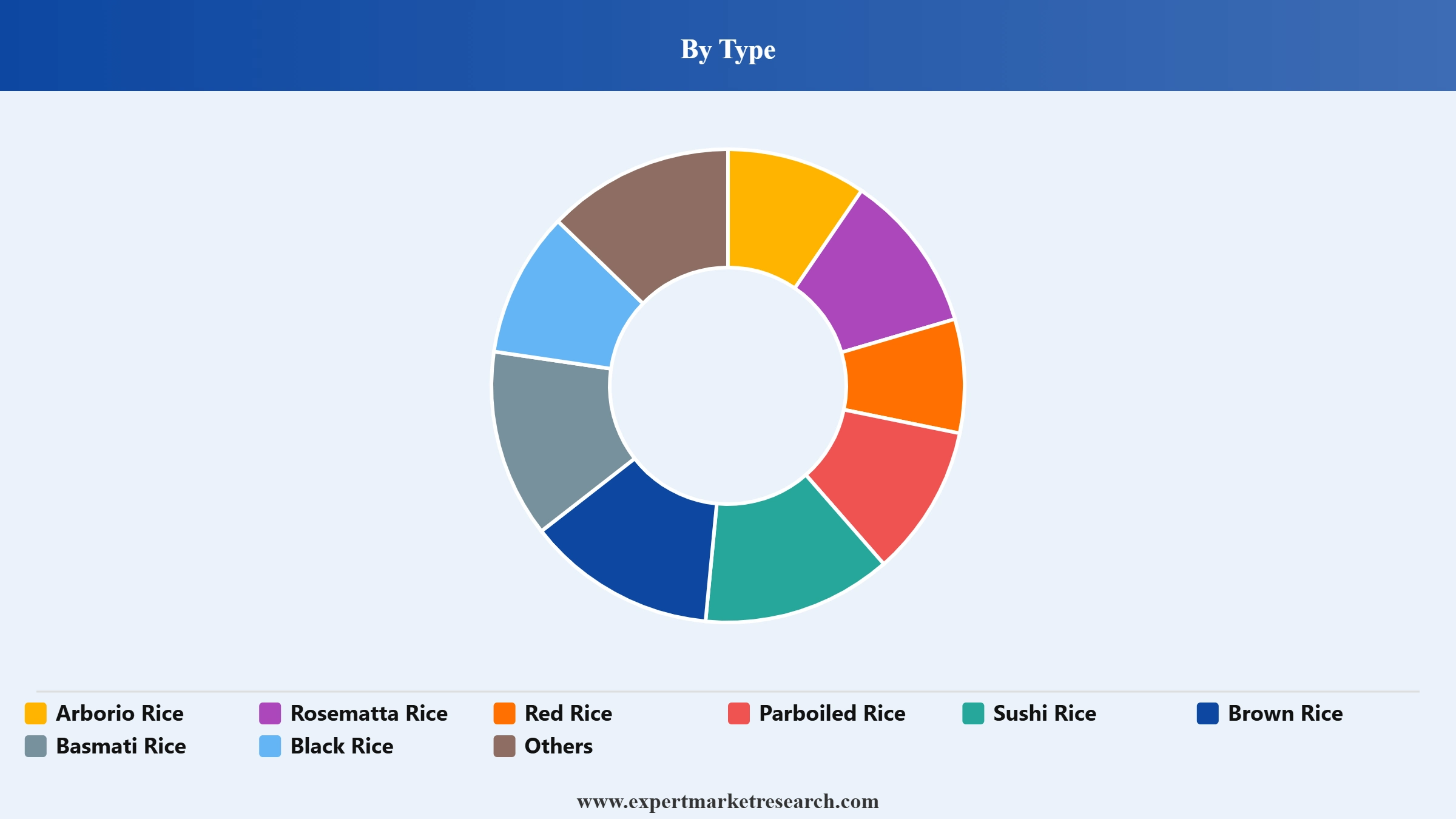
Key Insight: Rice markets cater to various consumer and industrial needs by offering different types of grains. Basmati rice is at the leading position due to export capacity and premium pricing, while black rice is advantageous due to growing interest in functional foods. Brown and red rice attract healthy eating consumers looking for whole grains. Parboiled rice stays in favor with industries as it is more durable and stable during the cooking process. Sushi rice experiences strong demand from the growing number of people who enjoy Asian cuisine, while Arborio rice is good for high-end purposes. In February 2025, JJ Foodservice launched premium sushi rice, expanding its Japanese food portfolio for restaurants, caterers, and takeaway operators.
Market Breakup by Length
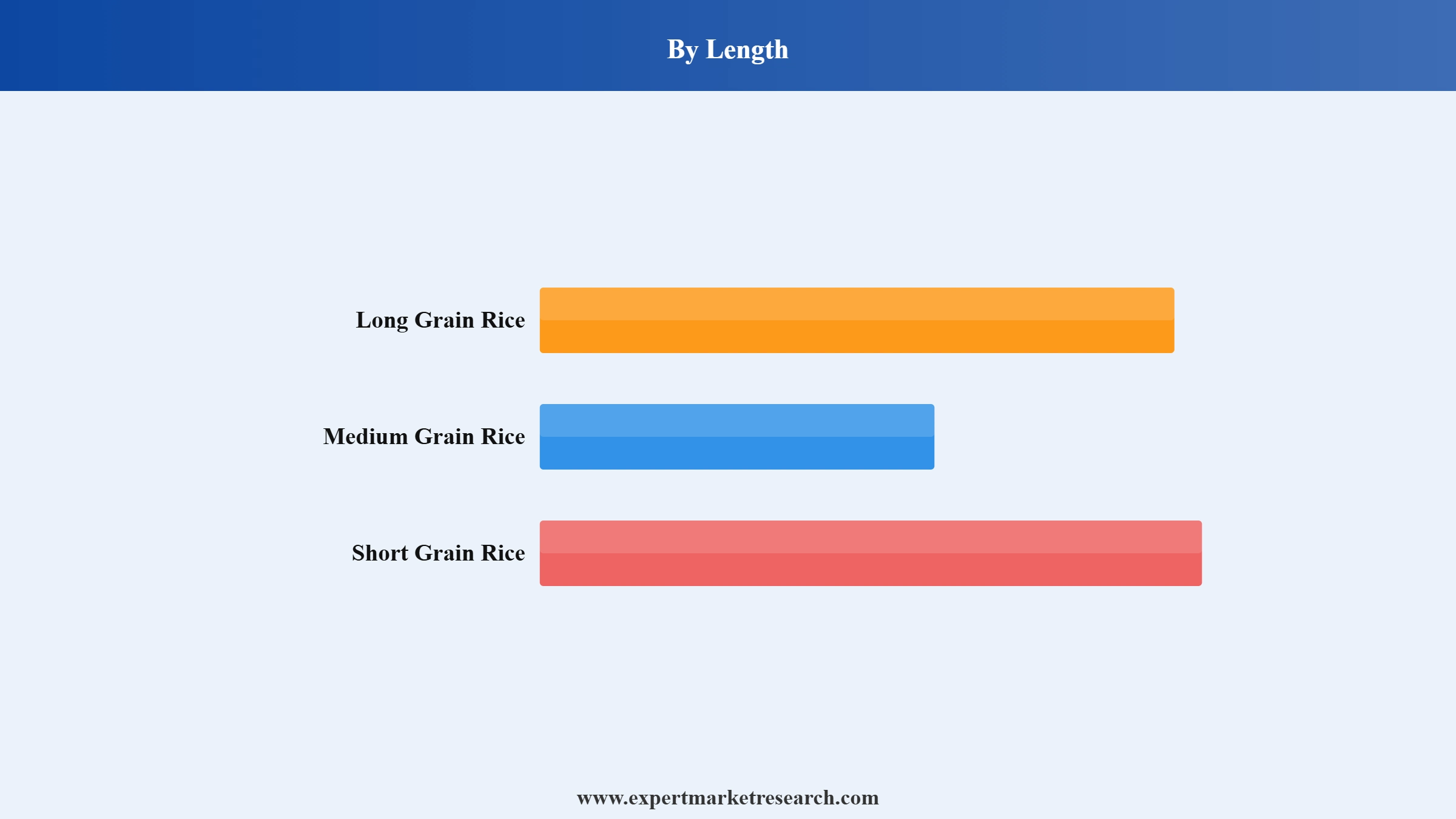
Key Insight: Classification of rice in terms of its length makes possible the presence of distinct properties and applications of the grain in various rice markets around the world. Long grain rice is becoming the dominant variety due to its flexibility, export success, and adaptability to many cuisines. The demand for medium grain rice is steadily increasing due to rising consumer preference for convenient food products and its excellent moisture retention during cooking. Short grain rice is valuable for the preparation of traditional foods and high-quality dishes and foods.
Market Breakup by End Use
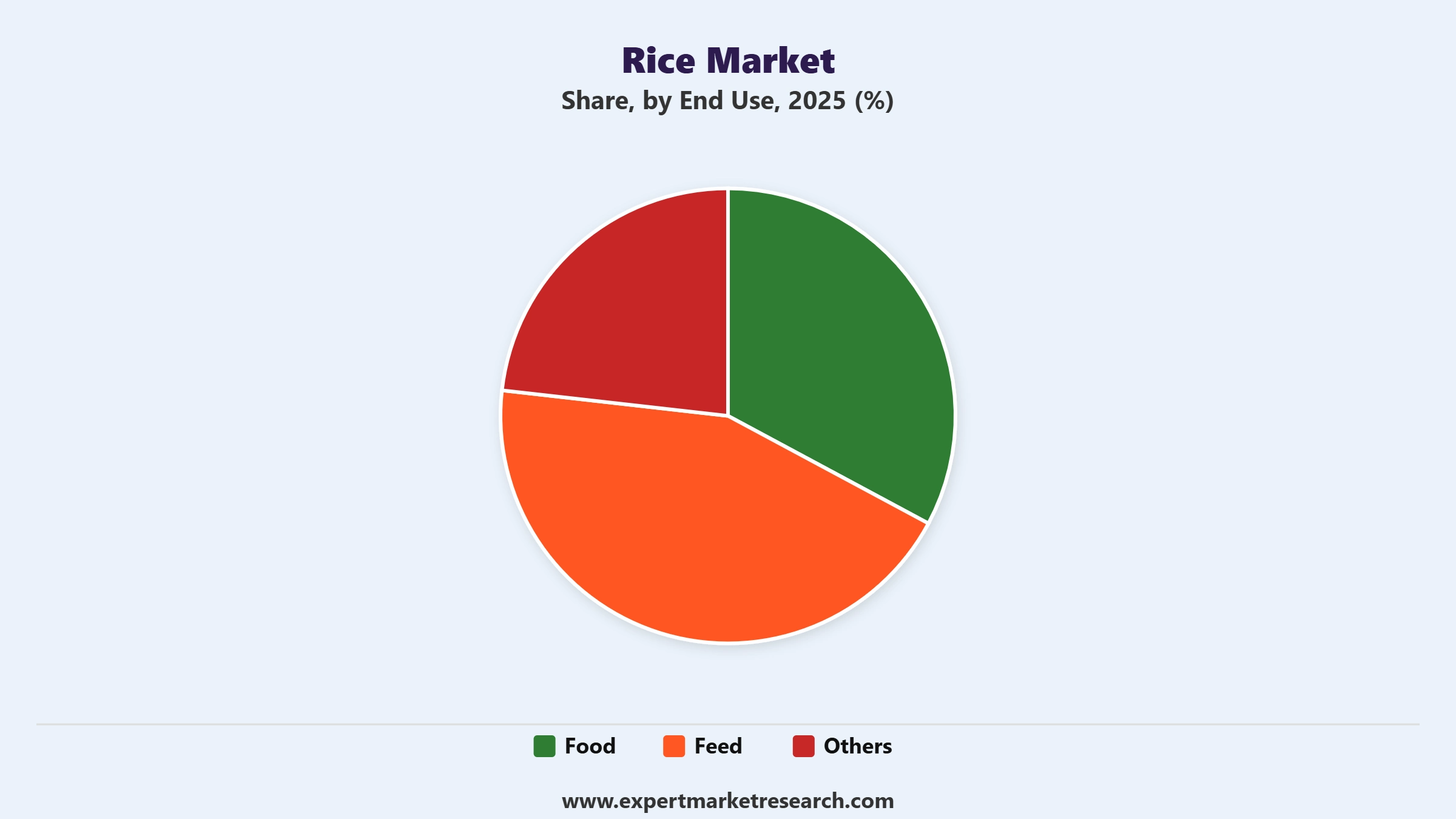
Key Insight: As per the rice market report, the food segment is the major application due to its importance as a constituent of the diet of people across the globe and for processing into various products. The use of feed as an application is rising steadily since processors make full use of the byproducts of rice to produce livestock and aquaculture feeds. There are other uses of rice, such as brewing, production of starch, cosmetics, industrial products, and bio applications where specific types of rice give unique properties to meet manufacturing needs.
Market Breakup by Distribution Channel
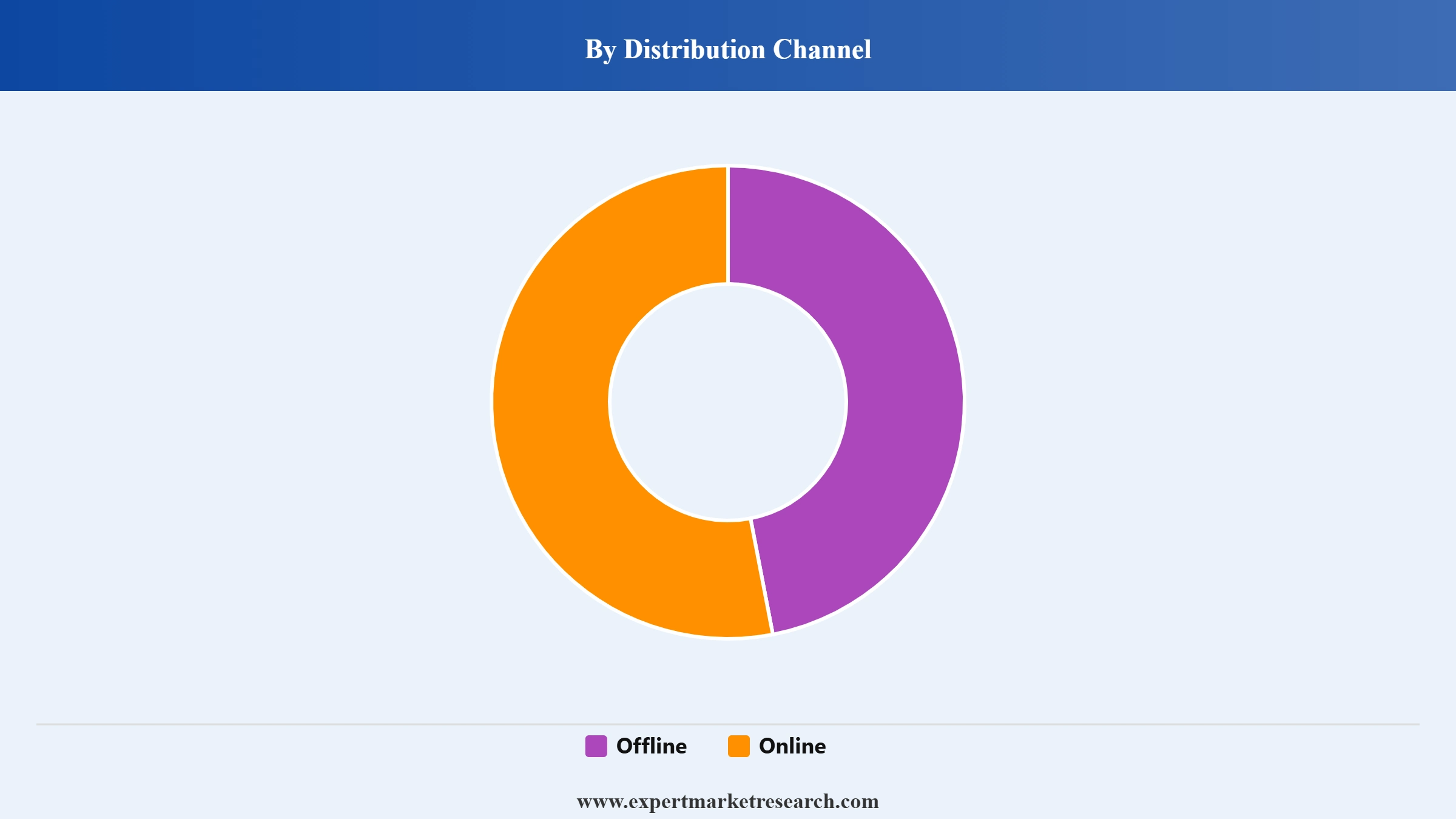
Key Insight: Offline distribution remains dominant across the rice market scope since wholesalers, supermarkets, specialty stores, and institutional purchasers depend on well-established supply chain systems that make bulk purchases possible. On the other hand, online distribution is expanding its share owing to the growth of e-commerce infrastructure, digital marketing, and direct consumer connections by companies. The two distribution channels work well together since they help the producers increase their geographical scope while catering for different needs of their customers. Offline distribution channels are vital for volume business deals, while online channels offer convenience for brand positioning and promotion.
Market Breakup by Region
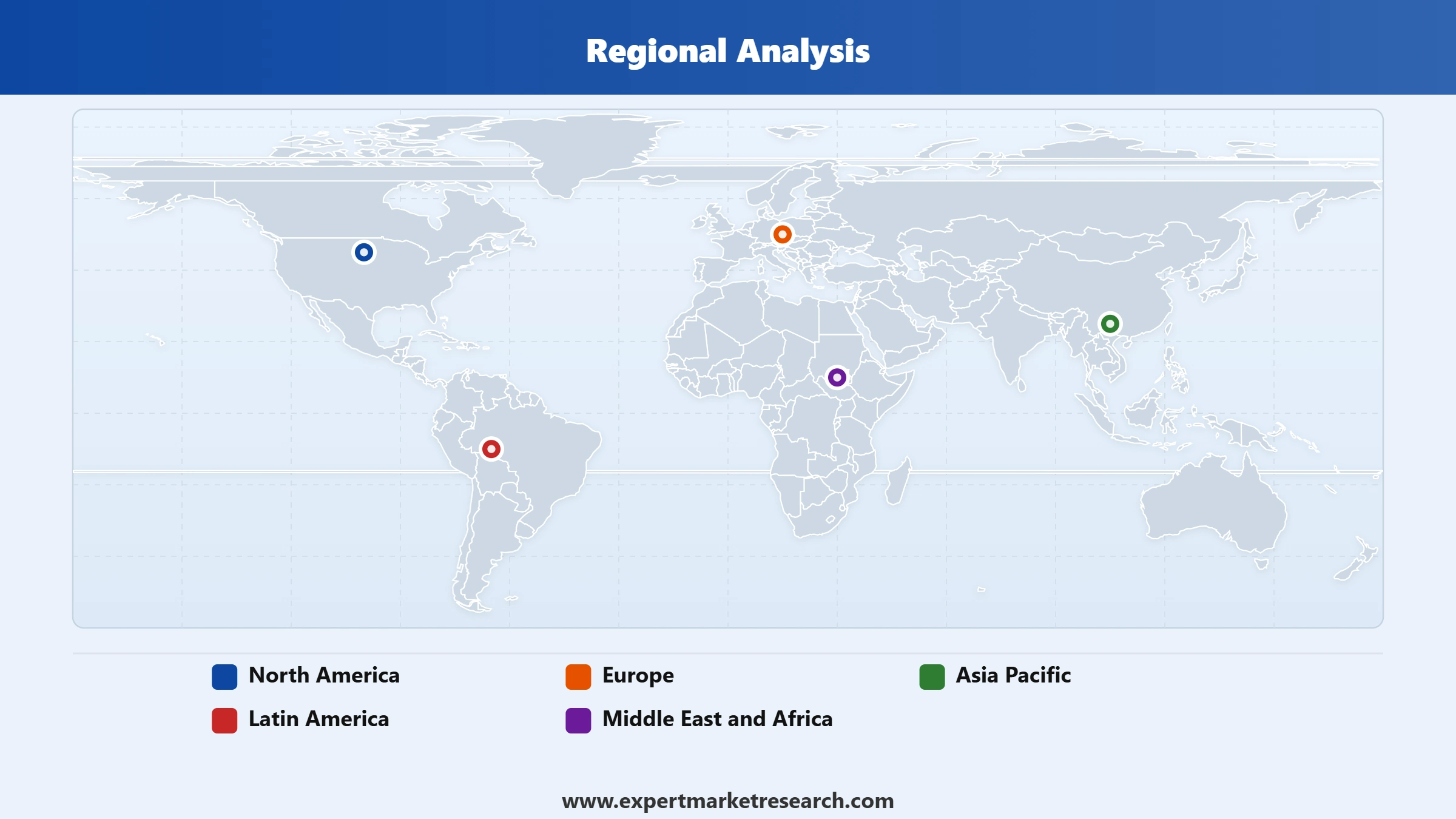
Key Insight: Asia Pacific continues to lead in the rice market due to its production capabilities, export strength, and domestic consumption. In October 2025, Sankyo Foods introduced microwavable GABA sprouted brown rice blends supporting mental wellness, gut health, sleep quality, and convenient nutrition. North America shows the fastest growth due to premium product development and food demands from diverse cultures. Europe focuses on sustainability, organic production, and quality imports to sustain their premium price strategies. Latin America finds benefits through increased domestic production, productivity improvement, and consumption of packaged foods. The Middle East and Africa keep making import demands since they have low regional production and need more due to the increase in population.




Read more about this report - REQUEST FREE SAMPLE COPY IN PDF
By type, basmati rice leads growth in the market owing to premium exports and strong global demand
Basmati rice continues to be dominant in the rice market due to premium positioning, enhanced aroma, and increased consumption in international retail and food service markets. Major exporters are focusing on branding, geographical indications, and traceability of their products to maintain a competitive edge in lucrative markets. Demand for this product from the Middle East, Europe, and North America regions is ensuring continuous innovation of product and production of organic, aged, and ready-to-cook varieties of basmati rice. Such efforts are enabling suppliers to make profits as well as form business relationships with institutions. In September 2024, Crown Basmati Rice launched low-GI Diet Rice with double fiber, supporting healthier nutrition, gut health, and global expansion.
Black rice is one of the fast-growing segments that is accelerating the rice market expansion since consumers are demanding more antioxidant and functional foods products. Food manufacturers are including black rice in ready meals, cereals, snack products, and premium packed food items. Increased consumer interest in the nutritional value of black rice is compelling retailers to increase the availability of specialized grains in both developed and developing nations. Exporters are now also focusing on premium hospitality and wellness markets through different packaging and certified organic products. In June 2025, India launched high-yielding, climate-resilient rice varieties, boosting productivity, sustainability, farmer incomes, and national food security.
Read more about this report - REQUEST FREE SAMPLE COPY IN PDF
By length, the long grain rice category dominates the market through versatile applications and extensive international trade demand
Long grain rice boasts the highest rice market share owing to its wide appeal in all types of households, restaurants, food manufacturers, and even exports. Its appealing fluffiness and ability to have a prolonged shelf life make it widely accepted among all cultures. Processors that focus on the export market keep investing in long grain rice processing plants in order to meet their procurement needs. High demand from food manufacturers and hospitality businesses might ensure processors retain their competitive edge in both domestic and foreign markets. In September 2025, Riviana Foods launched Mahatma Ready-to-Heat Red Beans & Rice and Basmati Rice, delivering authentic flavors in 90-second microwaveable pouches.
Medium grain rice is rapidly expanding its share in the rice market as food manufacturers produce products such as frozen food, ready-to-eat food, and food for specific regions with soft textures. The demand from food service and convenience meal producers keeps increasing, pushing processors to develop quality varieties and high-end packages. Food diversification within urban markets also drives commercial demand for this type of rice beyond its conventional consumption area. In May 2026, Zeeba launched Sona Masoori and HMT rice varieties, expanding beyond basmati to strengthen everyday consumption and global market presence.
Read more about this report - REQUEST FREE SAMPLE COPY IN PDF
By end use, the food sector dominates the market owing to the growing popularity of convenience meals
Food emerges as the most dominant segment due to the importance of rice as an important ingredient across homes, restaurants, hotels, institutional catering, and packaged foods industry. The process continues with the introduction of high quality, fortified, ready-to-eat and specialty rice. Convenience foods and meals are contributing to the overall rice market value owing to rising investments in the sector. There have been increases in manufacturing of food grade ingredients from rice which can be used in making snacks, beverages, bakery items, and baby foods. In June 2026, three fortified rice brands debuted in Lucknow, India, promoting improved nutrition, micronutrient enrichment, affordability, and healthier staple food consumption.
Feed emerges as the fastest growing end-use segment of the global rice market due to increased acceptance of rice bran, broken rice and other processing products in the livestock and aquaculture feed. Increasing use of this grade as ingredients by feed manufacturers is driven by nutritional properties, efficiency, and availability of these products. In addition, the increased commercial livestock production is encouraging processors to make maximum use of their by-products and minimize wastage. In October 2025, India lifted the de-oiled rice bran export ban, boosting trade, rice processing, farmer incomes, and global market competitiveness.
Read more about this report - REQUEST FREE SAMPLE COPY IN PDF
By distribution channel, offline retail accounts for a substantial share of the market through extensive wholesale networks and institutional procurement channels
Offline distribution takes up the majority of the rice market share as it benefits from well-developed wholesale trade networks, supermarkets, regular retailers, distributors, and institutional purchasing arrangements. Major commercial customers favor direct purchases to guarantee consistency in terms of quality, quantity, and price negotiations. Additionally, the use of promotional activities and retail shelf placement will improve market exposure for premium rice products. Such benefits remain relevant for offline distribution amid growing digital commerce in different regions. In June 2025, Jindal Rice Mills launched Nourifyme fortified rice, basmati rice, and wheat atta, enhancing nutrition with essential micronutrients.
Online distribution is growing rapidly as an increasing number of consumers buy premium, organic, and other specialized types of rice using digital marketplaces and branded websites. The rice market observes an increased emphasis on direct-to-consumer approaches, subscription plans, and customized product offers to create stronger customer involvement. Digital sales channels also make it possible for exporters to enter specific niche markets without significant physical retail investments. Improved logistics, secured payments, and increased popularity of online groceries drive the expansion of commercial activity in this distribution segment.
Read more about this report - REQUEST FREE SAMPLE COPY IN PDF
Asia Pacific dominates the global industry through large-scale production, consumption, and export capabilities
The Asia Pacific region dominates the global rice market due to its extensive rice cultivation, high domestic consumption, and strong position as the world's leading rice-producing and exporting region. India, China, Thailand, Vietnam and other countries are investing heavily in better seeds, milling facilities and export competitiveness. The strong support from the governments in increasing agriculture production and modernization in irrigation is expected to further help boost the supply capacity in the region. The presence of large-scale rice processors and exporters helps them innovate in premium, specialty, and value-added rice varieties for the global market.
North America emerges as the fast-growing regional rice market due to the growing consumer preference towards organic, fortified, ready-to-cook and specialty rice products. Innovative rice-based food products such as meals, snacks, and health-related rice ingredients are being increasingly launched by food manufacturing industries. Increased consumption of food products by different cultures boosts the demand for the import of premium rice varieties. In July 2026, Minute Rice introduced Garlic Parmesan and Veggie Stir-Fry microwaveable rice cups, delivering one-minute convenience, bold flavors, and gluten-free meals.
Read more about this report - REQUEST FREE SAMPLE COPY IN PDF
The global industry is becoming quite competitive, with top rice companies working towards differentiating themselves in terms of premium product, digital supply chain management, sustainable sourcing, and portfolio of value-added rice. Firms are investing in quality inspection through AI, traceability through blockchain technology, sustainable sourcing of rice that is resilient to climate change, and the manufacture of fortified rice in order to meet the rising demands from retailers and food manufacturers in terms of procurement needs.
Additionally, rice market players are working towards enhancing their export capacity through brand development, partnering with farmers, and improving milling infrastructure in order to enhance efficiency. The increasing need for organic, specialty, and convenient rice products is opening up new business opportunities in foodservice, retail, and industrial processing sectors.
Founded in 1921 and based in Arkansas, United States, Riceland Foods Inc. is among the biggest farmers' cooperative in the production of rice in the world. The company provides both bulk and branded rice products by leveraging sustainable partnerships for farming, milling technologies, and export activities. Its emphasis on traceable sourcing and grain handling has enabled the company to cater to its retail, foodservice, industrial, and international clients with high-quality products.
Founded in 1977 and based in Gurugram, Haryana, India, LT Foods Ltd. produces high-quality basmati and specialty rice varieties catering to the international market. The company is improving its blockchain-enabled traceability, offering more ready-to-cook rice, and developing sustainable procurement practices. Product innovations and premium brands are enabling LT Foods Ltd. to expand its footprint in retail, hospitality, and institutional foodservices.
Founded in 1998 and having its head office in Madrid, Spain, Ebro Foods, S.A. is one of the largest global food companies, providing a range of rice brands. The corporation is dedicated to the development of convenient rice foods, branded food items, and sustainability initiatives. Innovations, healthier foods, and branding efforts contribute to the ability of the company to adjust to the demands of consumers and to enhance its global distribution network.
Founded in 1999 and operating from its headquarters in Ahmedabad, Gujarat, India, Adani Wilmar Ltd. distributes packaged rice products with the help of a large food distribution network. The firm keeps developing its line of premium products, enhances processing methods, and develops relations with farmers.
Other key players in the market include McCormick & Company, Incorporated, KRBL Limited, ITC Limited, Riviana Foods Inc., LaGrande Family Food Groups, and Conagra Brands, Inc., among others.
*Please note that this is only a partial list; the complete list of key players is available in the full report. Additionally, the list of key players can be customized to better suit your needs.*
Unlock the latest insights with our rice market trends 2026 report. Discover regional growth patterns, consumer preferences, and key industry players. Stay ahead of competition with trusted data and expert analysis. Download your free sample report today and drive informed decisions in the market.
Parboiled Rice and White Rice Market


Upto 15% Off
USD
$2499 $2249
$3999 $3599
$4999 $4249
$5999 $5099


*While we strive to always give you current and accurate information, the numbers depicted on the website are indicative and may differ from the actual numbers in the main report. At Expert Market Research, we aim to bring you the latest insights and trends in the market. Using our analyses and forecasts, stakeholders can understand the market dynamics, navigate challenges, and capitalize on opportunities to make data-driven strategic decisions.*
The rice market was valued at USD 333.73 Billion in 2025.
The rice market is projected to grow at a CAGR of 3.10% between 2026 and 2035.
The revenue generated from the rice market is expected to reach USD 452.88 Billion in 2035.
The major drivers of the market include changing eating habits due to altering lifestyles and growing demand from Asian and South Asian countries due to increasing population.
The key trends of the market include rising focus of manufactures towards producing high quality rice grains, development of rice mill machineries, and adoption of attractive packaging.
The various types of rice available in the market are arborio rice, rosematta rice, red rice, parboiled rice, sushi rice, brown rice, basmati rice, and black rice, among others.
The market is broken down into North America, Europe, Asia Pacific, Latin America, and Middle East and Africa.
The market key players are Riceland Foods Inc., LT Foods Ltd., Ebro Foods, S.A., Adani Wilmar Ltd., McCormick & Company, Incorporated, KRBL Limited, ITC Limited, Riviana Foods Inc., LaGrande Family Food Groups, and Conagra Brands, Inc. among others.
The market is categorised according to the distribution channels, which include offline and online.
Based on the end use, the market is divided into food, feed, and others.
Explore our key highlights of the report and gain a concise overview of key findings, trends, and actionable insights that will empower your strategic decisions.
| REPORT FEATURES | DETAILS |
| Base Year | 2025 |
| Historical Period | 2019-2025 |
| Forecast Period | 2026-2035 |
| Scope of the Report |
Historical and Forecast Trends, Industry Drivers and Constraints, Historical and Forecast Market Analysis by Segment:
|
| Breakup by Type |
|
| Breakup by Length |
|
| Breakup by End Use |
|
| Breakup by Distribution Channel |
|
| Breakup by Region |
|
| Market Dynamics |
|
| Competitive Landscape |
|
| Companies Covered |
|
Datasheet
One User
USD 2,499
USD 2,249
tax inclusive*
Single User License
One User
USD 3,999
USD 3,599
tax inclusive*
Five User License
Five User
USD 4,999
USD 4,249
tax inclusive*
Corporate License
Unlimited Users
USD 5,999
USD 5,099
tax inclusive*
*Please note that the prices mentioned below are starting prices for each bundle type. Kindly contact our team for further details.*
Flash Bundle
Small Business Bundle
Growth Bundle
Enterprise Bundle
*Please note that the prices mentioned below are starting prices for each bundle type. Kindly contact our team for further details.*
Flash Bundle
Number of Reports: 3
20%
tax inclusive*
Small Business Bundle
Number of Reports: 5
25%
tax inclusive*
Growth Bundle
Number of Reports: 8
30%
tax inclusive*
Enterprise Bundle
Number of Reports: 10
35%
tax inclusive*
How To Order

Select License Type
Choose the right license for your needs and access rights.

Click on ‘Buy Now’
Add the report to your cart with one click and proceed to register.

Select Mode of Payment
Choose a payment option for a secure checkout. You will be redirected accordingly.
Strategic Solutions for Informed Decision-Making
Gain insights to stay ahead and seize opportunities.

Get insights & trends for a competitive edge.

Track prices with detailed trend reports.

Analyse trade data for supply chain insights.

Leverage cost reports for smart savings

Enhance supply chain with partnerships.

Connect For More Information
Our expert team of analysts will offer full support and resolve any queries regarding the report, before and after the purchase.
Our expert team of analysts will offer full support and resolve any queries regarding the report, before and after the purchase.
We employ meticulous research methods, blending advanced analytics and expert insights to deliver accurate, actionable industry intelligence, staying ahead of competitors.
Our skilled analysts offer unparalleled competitive advantage with detailed insights on current and emerging markets, ensuring your strategic edge.
We offer an in-depth yet simplified presentation of industry insights and analysis to meet your specific requirements effectively.




