

Consumer Insights
Uncover trends and behaviors shaping consumer choices today
Procurement Insights
Optimize your sourcing strategy with key market data
Industry Stats
Stay ahead with the latest trends and market analysis.
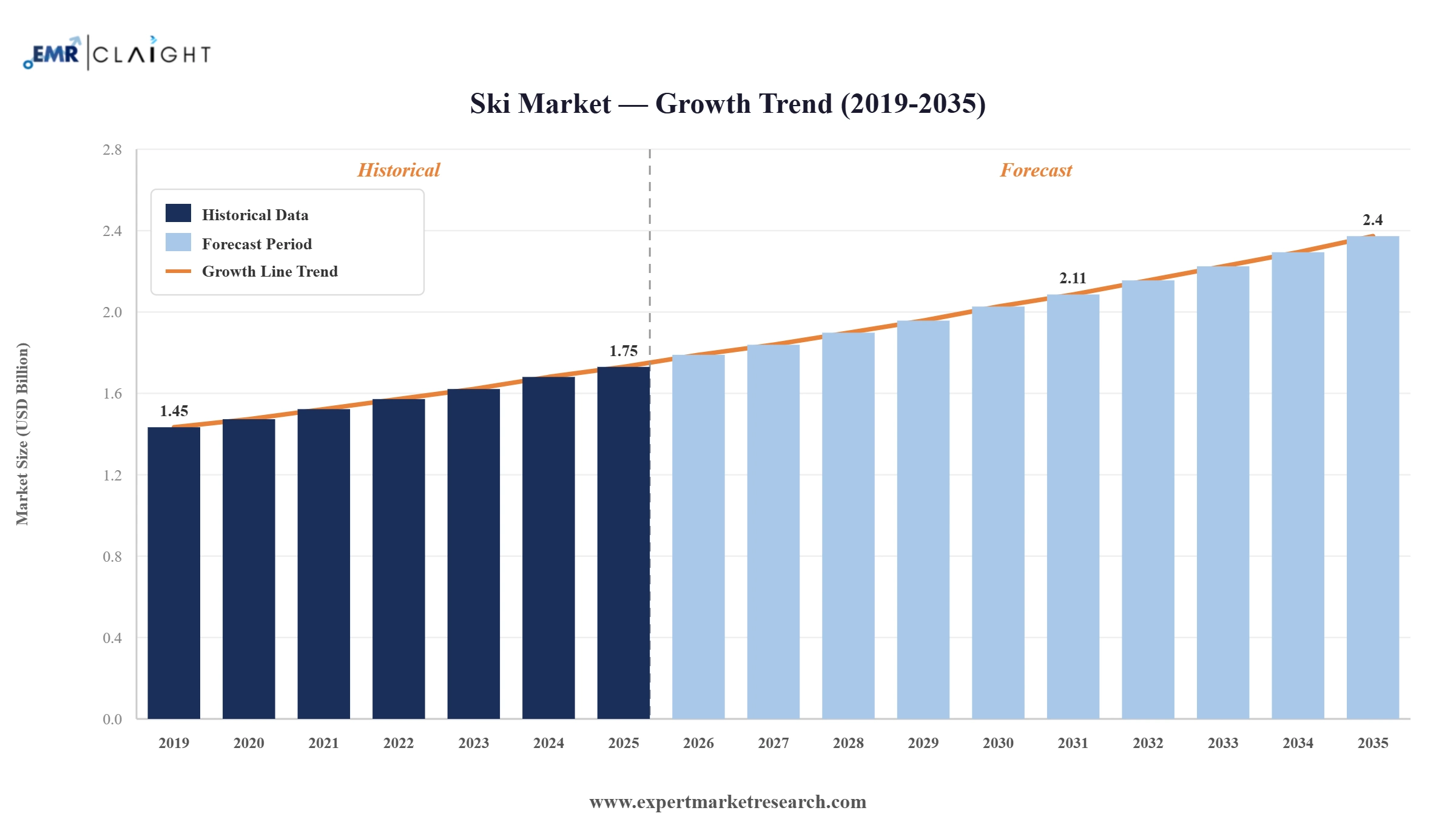
The global ski market attained a value of USD 1.75 Billion in 2025 and is projected to expand at a CAGR of 3.20% through 2035. The market is further expected to achieve USD 2.40 Billion by 2035. Development of adaptive skis, infrastructure development for inclusive winter tourism and advancements in the technology of equipment rentals is creating new business opportunities for producers, resorts and specialty retailers.
One of the significant trends influencing the global ski market is an increasing investment in developing the ecosystem of connected winter sport activities among manufacturers of skiing equipment. Several premium companies are launching programs for the implementation of skis with built-in digital technology, bindings compatible with wearable devices, and performance analysis software powered by AI algorithms. On the other hand, in July 2026, Freeride skiing and snowboarding joined the 2030 Winter Olympics, while Nordic combined is removed from the program. These initiatives are associated with the move of the industry towards value-adding services, rather than the sale of equipment. In line with that, according to the report released by the National Ski Areas Association, United Stares ski resorts saw more than 61.5 million skier visits during the 2024-25 season.
The structure of the ski market is changing rapidly, considering the shift in focus of manufacturers from heavy and poorly engineered equipment to lightweight, circular and innovative materials used in premium product portfolios. Among the most promising materials in skiing are carbon fiber composites, recycled thermoplastics, and bio-cores. Companies are also investing in automated manufacturing systems that reduce production waste and accelerate product customization for specialty retailers. For example, in February 2026, ZAG developed the UBAC 95 touring ski using Sicomin’s 80% bio-based GreenPoxy80 resin, advancing sustainable ski manufacturing.
One key factor which might help the ski market to benefit significantly is the advancement of the supply chain digitization and premium retailing. Leading companies are using digital product passports, RF-ID inventory tracking systems, and predictive forecasting models in order to ensure better stock availability through the seasons of sales. On the other hand, cooperation between ski brands, mountain resorts and tourist authorities results in increased promotion of premium equipment launch due to experience-based marketing. An additional driving factor in the development of the winter sports equipment market is the fast-growing practice of customized boots fittings and ski tuning using the 3D scanning technologies, which allows increasing consumer loyalty and decreasing number of returns.
Read more about this report - REQUEST FREE SAMPLE COPY IN PDF
A collective destination transformation approach was proposed by Braunwald. It included climate-resilient tourism, diversification of attractions throughout the year, and sustainability in the operations of the mountain resorts. Companies therefore have the opportunity to develop all-season resort infrastructure, climate-resistant technologies, and alternative winter tourism options.
Ski Portillo disclosed its plans for the 2026 winter season, emphasizing new accommodations and high-quality guest experience along with the attraction for ski tourists internationally. Companies can grow premium accommodations, adventure programs, and online booking services for international tourists, boosting the ski market growth.
Ski Butlers launched Quiver, offering high-end ski memberships with equipment delivery at the slope, curating their equipment, and providing equipment storage. Organizations can design a subscription-based model to rent equipment and design an efficient platform to manage the equipment and share high-quality gear.
Uber launched Uber Ski in selected cities of Canada that offers a reserved car with capacity to transport ski equipment for an amazing experience on the mountain. Organizations in the ski market can collaborate with mobility companies to offer services such as transport, logistics of equipment, and access to resorts.
The concept of sustainability is becoming an essential component of the competitive strategy of companies developing their products from recycled metals, bio-based resins, and sustainably sourced wooden cores. Companies are revamping their manufacturing operations in order to minimize carbon footprint and increase the durability of their products through repairable design, boosting the ski market growth. For instance, Rossignol continues adding new items to its Respect range produced from recycled materials and with reduced impact on the environment to help the company achieve its long-term sustainability goals. At the same time, the Circular Economy Action Plan and Ecodesign rules issued by the European Union require companies to produce more durable and recyclable products. Demonstrating this shift, in December 2025, Extrem Ski Co launched Project 83 Eco, featuring bio-based, recycled materials and renewable energy manufacturing for sustainable ski production.
Digital technologies are becoming increasingly common in the ski market for improving product performance and customer retention. Three-dimensional foot scans, AI-enabled equipment selection and custom configuration of skis are helping retailers offer highly personalized purchasing experience. Companies like Tecnica, Atomic, and Fischer continue expanding their networks of precision boot-fitting centers that use digitization technology to analyze foot anatomy, thus increasing comfort and performance of skiers. For example, in March 2025, Vail Resorts launched My Epic Pro, enabling digital lesson check-ins, real-time updates, skills tracking, and photo sharing experiences.
Continued development of mountain infrastructure opens new business opportunities in the ski market. Resorts upgrade their aged installations, install automatic snow-making systems, create beginner-friendly areas, attracting a wider range of clients. Several Alpine resorts are upgrading their high-capacity gondolas, snow-making machines and making improvements that allow operating longer seasons despite any changes in climate conditions. Government financing is also essential. Austrian, Swiss and Italian governments continue investing into sustainable tourism and infrastructure development of mountain regions. In July 2026, Wintergreen Resort added 14 high efficiency snowguns, enhancing snowmaking capacity, earlier trail openings, and improved snow quality for skiers.
Skiing is increasingly getting benefitted from growth in financing of equipment adapted for physically impaired people and novices. Equipment manufacturers develop and cooperate with ski schools, resorts and non-profit organizations to introduce special sit-skis, adaptive bindings and learning equipment. Non-profit organizations like Move United and various associations of adaptive skiing in Europe are working on developing the access to winter sports through equipment financing and training, accelerating the ski market development. Inclusive programs supported by government that promote tourism and recreational infrastructure development are encouraging people to participate. Similarly, in February 2026, Ukraine launched its first adaptive ski hub, enabling veterans with amputations to access rehabilitation, adaptive skiing, and inclusive winter sports.
The manufacturers of ski equipment are revolutionizing their rental business models by offering connected fleet management systems that ensure efficient usage and maintenance. With the help of RFID-based inventory systems, predictive maintenance software, and digital booking applications, resort companies can maximize the efficiency of the equipment availability during high season. Ski market players such as HEAD and Rossignol are building stronger ties with the resort companies by implementing rental schemes that ensure the introduction of new ski equipment technology in the market. In January 2026, Ski Butlers launched Quiver, offering premium ski memberships with guaranteed gear selection, slopeside pickup, overnight storage, and flexible resort access. The national tourism boards in Europe are continuously investing in the digital transformation of tourism businesses through innovation funds and modernization projects.
The Expert Market Research's report titled “Global Ski Market Report and Forecast 2026-2035” offers a detailed analysis of the market based on the following segments:
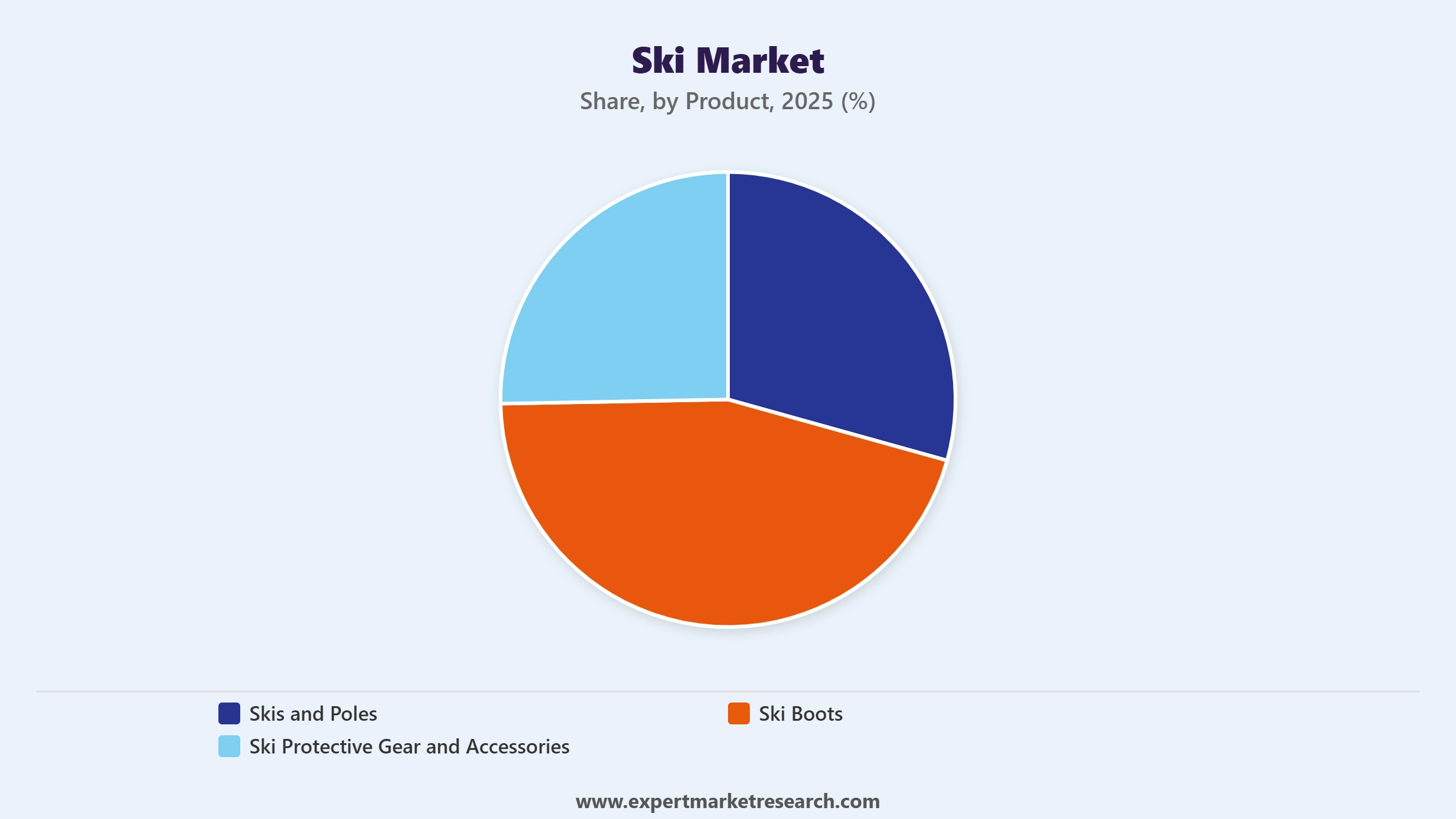
Market Breakup by Product
Key Insight: The ski market observes a balance in demand in each category of products as each serves a unique business purpose. The leadership position of the skis and poles is due to the fact that they are a crucial part of performance-oriented equipment that is necessary for any skier and is constantly being improved. Ski boots are important since companies aim at providing customized fitting, additional comfort, and efficient energy transmission. In January 2026, Lange launched its first ski boot with integrated RECCO reflectors, improving avalanche searchability through passive rescue detection technology. Accessories and ski protection gear are becoming popular due to the growing concern about safety and wearing technologies.
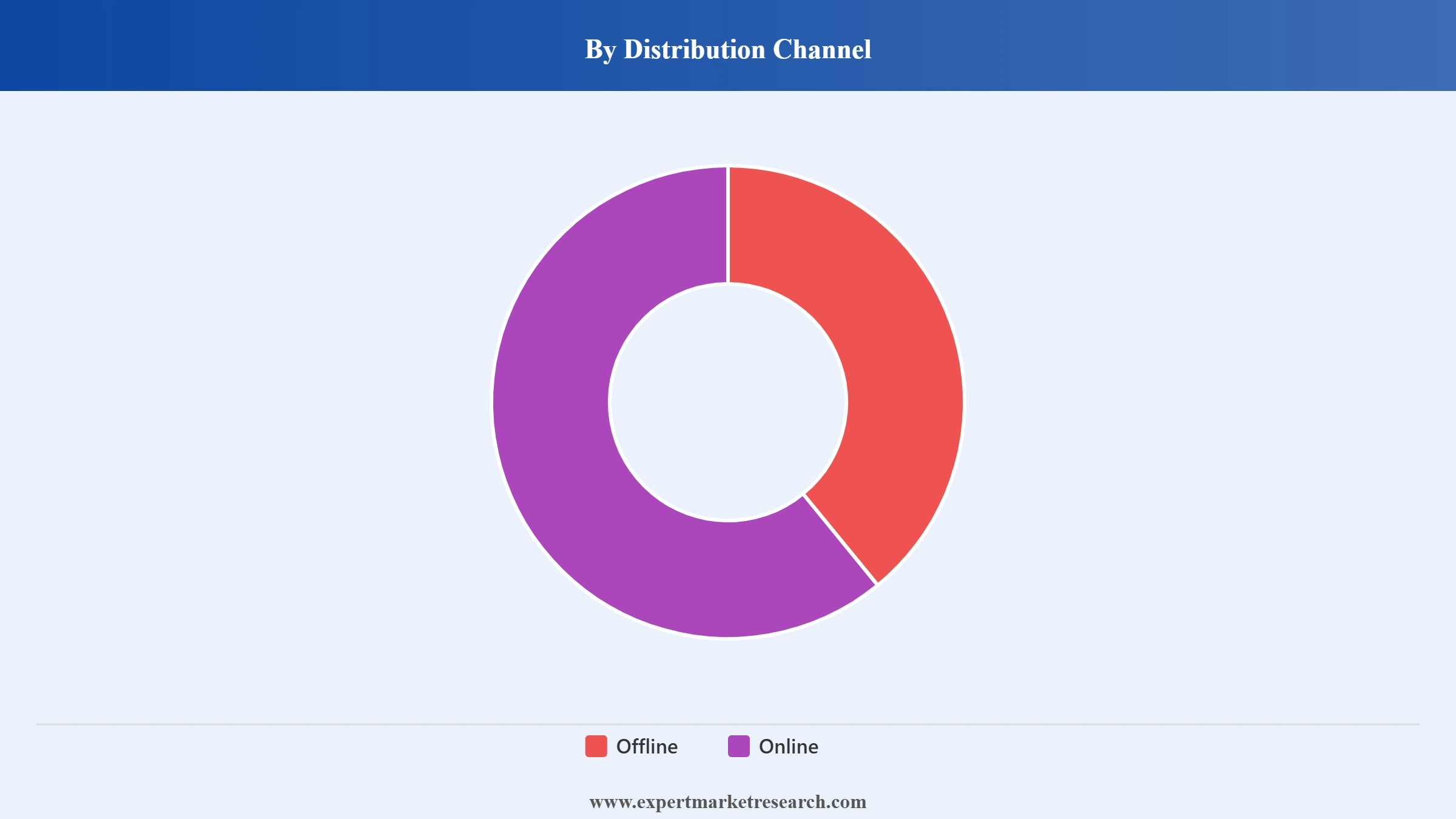
Market Breakup by Distribution Channel
Key Insight: The distribution channels in the ski market work together in a complementary way by catering to different consumer expectations during the buying process. Traditional retail stores are important since they provide expert assistance for buying technical ski gear and getting proper fit and maintenance. Online channels are gaining popularity due to the convenience they provide, along with the wide range of products and increased digital interaction. Companies are incorporating both channels into a coherent omnichannel strategy that increases customer accessibility and builds brand loyalty.
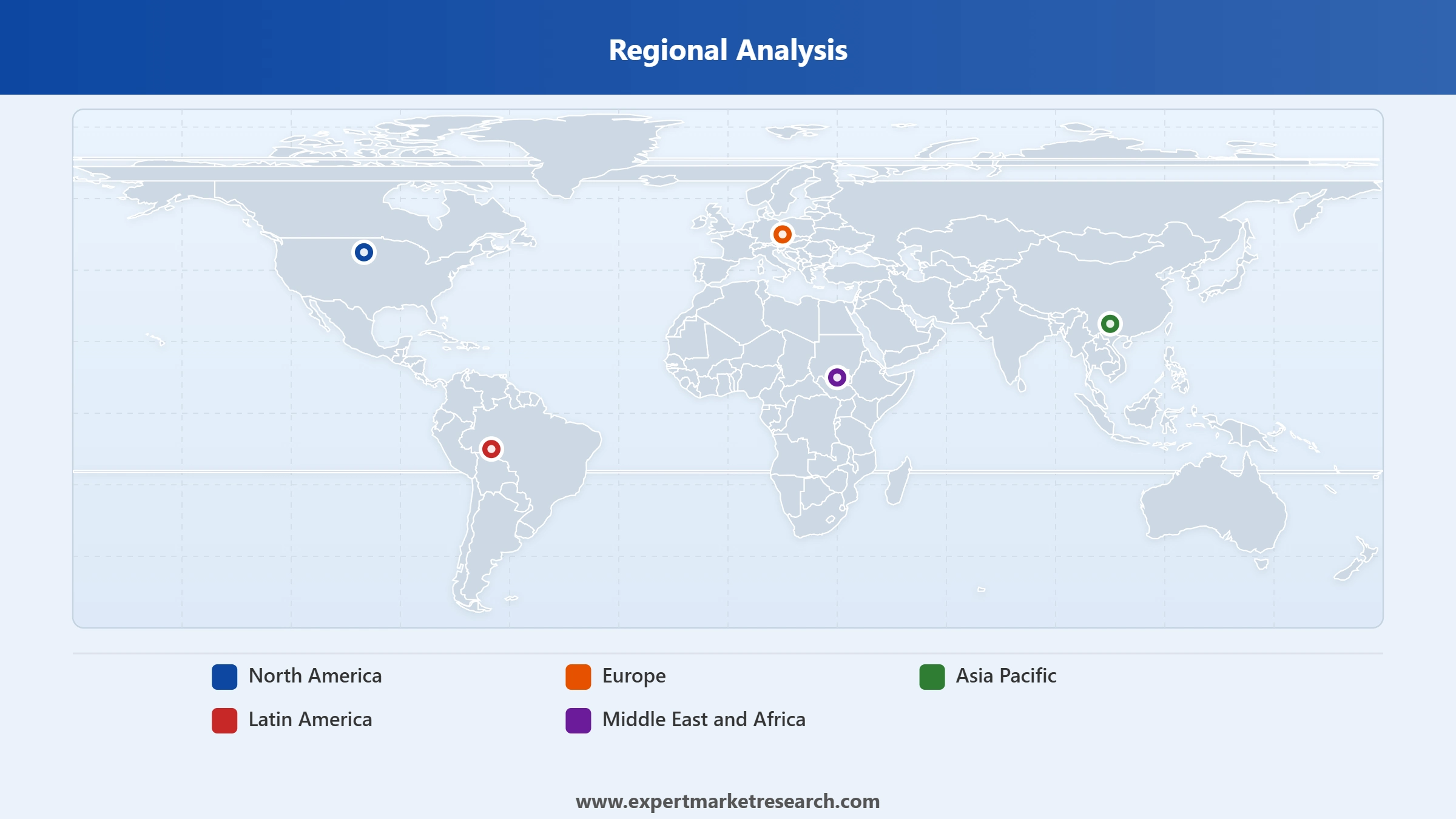
Market Breakup by Region
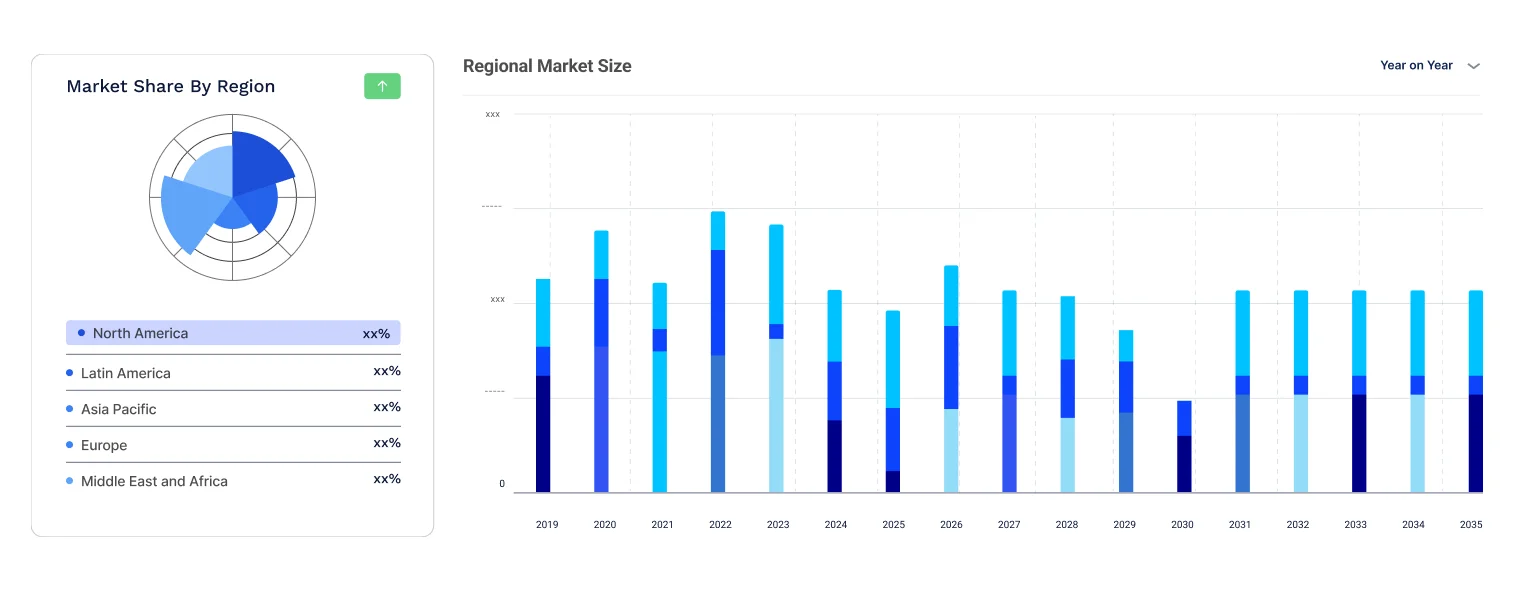
Key Insight: Regional trends illustrate diverse growth trends influenced by the level of infrastructure development, the development of tourism, and consumer engagement. The European ski market dominates owing to existing alpine locations and expanding manufacturing capabilities. North America records high demand due to premium recreational skiing, destination resorts, and sophisticated retail infrastructure. The fastest growth is registered by Asia Pacific, which benefits from government initiatives related to winter sports engagement and infrastructure development. Latin America shows growth potential due to the rise in mountain tourism and recreational facilities, whereas the Middle East and Africa are emerging regions due to indoor skiing, luxury tourism, and winter sports consumer engagement.

Read more about this report - REQUEST FREE SAMPLE COPY IN PDF
By product, skis and poles dominate the market owing to continuous performance innovation and replacement demand
The highest share in the ski market value is held by skis and poles as they continue to be the main equipment bought in the recreational, professional, and rental segments of the market. Continuous improvements to skis include lighter material, better edges, and the development of specialized products that suit the needs of various consumers. High-end skis with carbon fiber reinforcement, shock absorbers, and special flex are appealing to skiers that require better performance. These are replaced more frequently, used by rental fleets, and are continuously innovated, thus ensuring the commercial success of this equipment. For example, in March 2026, Armada introduced the Antimatter Series, delivering lightweight freeride skis with enhanced stability, versatility, and all-mountain performance.
Read more about this report - REQUEST FREE SAMPLE COPY IN PDF
There is significant growth in the ski market as customers seek safety, increased comfort, and connectivity during the skiing experience. More advanced ski helmets, impact protection, avalanche safety equipment, smart goggles, and communication gadgets are being demanded. Innovation includes light weight construction, sensors, and increased breathability without compromising mobility. Increased activity by beginners and families also boosts equipment sales, whereas high safety requirements from ski resorts speed up innovation within this segment. In July 2025, HEAD introduced solar-powered smart-tint ski goggles, automatically adjusting lens darkness for optimal visibility across changing mountain light conditions.
Offline retail dominates the market through specialist expertise, equipment fitting, and experiential product demonstrations
Offline distribution remains relevant because when purchasing ski equipment, consultation from experts becomes necessary to ensure proper fit of boots and equipment adjustment among other processes. The specialty sporting goods and resorts' stores offer personalized suggestions and recommendations for the benefit of customers to increase their satisfaction while at the same time reducing the risk of making wrong choices. Physical stores also contribute to the ski market revenue by offering services like maintenance of the ski equipment, repair, tuning, and renting services. Such value-added services help form strong ties with customers and convince them to buy the best products. In January 2026, Salomon unveiled S/PRO ALPHA C BOA ski boots featuring ExoDrive construction, enhancing precision, power transfer, fit, and responsiveness.
Read more about this report - REQUEST FREE SAMPLE COPY IN PDF
Online distribution channels are also experiencing significant growth in the ski market due to increased investments by manufacturers into direct-to-consumer platforms which have virtual fitting with AI technology and offer delivery options. Customers use online channels for comparison shopping of products' features, performance characteristics, and reviews. Manufacturers are enhancing their websites with interactive customization, financing services, and after-sales service to make sales more effective. Omni-channel retailing also allow customers to look for information about a product online and get additional services in the physical store.
Europe leads the market growth through mature ski tourism and advanced manufacturing capabilities
Europe retains dominance across the ski market scope owing to its culture of winter sports, established infrastructure in mountains, and the presence of world-renowned ski equipment brands. Countries such as Austria, France, Switzerland and Italy have a high level of demand from their well-established ski tourism sector and regular participation in both recreational and professional skiing. Regional companies consistently offer premium products while working in close cooperation with ski resorts and specialists in their respective markets. Thus, Europe's leadership in product development, sale of equipment, and winter tourism remains unchallenged. In July 2026, Switzerland introduced AI-powered Alpine transfer planning, delivering real-time ski transport options, dynamic pricing, and seamless cross-border resort connectivity.
China's Rapid Ski Infrastructure Expansion Makes Asia Pacific the Fastest-Growing Region
Asia Pacific is the fastest growing regional ski market since the expansion of winter sport infrastructures and winter tourism in the region is being supported by governments and private investments. Countries like China, Japan and South Korea are consistently making investments in ski resort developments, training centers, and tourism projects aimed at increasing participation. Increased disposable income and awareness of winter sports from abroad and the expansion of premium sporting goods retailing increase demand in this region. In July 2026, Chalet Ivy Weiss opened in Niseko, strengthening luxury ski tourism through improved Canadian air connectivity and premium mountain hospitality.
Read more about this report - REQUEST FREE SAMPLE COPY IN PDF
Record Skier Visits and Sustained Infrastructure Investment Anchor North America's Ski Market
North America is the largest region in the global ski market, led by the United States which recorded its second-highest skier visit total since the National Ski Areas Association began tracking visits in 1978 during the 2024-25 season. US ski areas made substantial infrastructure investments during the 2024-25 season, with significant capital spending already committed for 2025-26, including new lifts and lift upgrades across resorts nationwide. Season pass holders accounted for the largest share of all visits nationally, reflecting a structural shift toward frequency-based access products that provide resorts with more predictable revenue streams. Canada contributes meaningfully to regional demand through established destination resorts in British Columbia, Quebec, and Alberta, with backcountry skiing gaining popularity among younger demographics seeking off-piste experiences.
Andean Geography and Northern Hemisphere Off-Season Appeal Drive Latin America's Ski Market
Latin America is a smaller but growing region in the global ski market, anchored by Chile and Argentina as the two primary skiing destinations, with resorts concentrated along the Andean mountain range. Chilean resorts sit at high elevations providing conditions comparable to leading Alpine destinations, while the southern hemisphere winter season running from June through October positions the region as a unique off-season destination for northern hemisphere skiers. Argentina's Bariloche is home to South America's largest ski resort and attracts both domestic and international visitors, while Mountain Capital Partners acquired Chile's La Parva ski resort in 2024, signalling growing foreign investment interest in the region's ski infrastructure. The 2026 South American ski season opened with positive conditions across the Andes, with forecasters projecting above-average snowfall across key Chilean and Argentine resort corridors.
NEOM's Trojena Resort and Indoor Skiing Facilities Position Middle East and Africa as an Emerging Ski Market
The Middle East and Africa is an emerging region in the global ski market, characterised by government-backed investment in artificial snow infrastructure and ambitious sports tourism development programmes. Saudi Arabia is developing the Trojena ski resort at NEOM, a large-scale outdoor skiing destination set in a mountainous area, awarded the right to host the 2029 Asian Winter Games by the Olympic Council of Asia as part of the country's Vision 2030 economic diversification strategy. The UAE, Qatar, and Saudi Arabia all operate established indoor ski resorts serving domestic leisure markets, while Lebanon's Mzaar and Faraya resorts have traditionally attracted Gulf visitors. These existing consumer touchpoints provide a regional foundation for ski equipment and apparel demand as Saudi Arabia works to develop the first large-scale outdoor ski destination in the Arab world.
Climate change is the most consequential operational challenge facing the global ski market today. Research published in PLOS ONE found that within all major skiing regions worldwide, natural snow cover days are projected to decrease substantially under every assessed climate change scenario, with 13% of all current ski areas projected to completely lose natural annual snow cover and one fifth expected to experience a reduction of more than 50% by 2071 to 2100. In the United States alone, the average ski season has shortened by five to seven days since 2000, with Bank of America Institute research projecting a potential decline in snow accumulation of 20 to 30% across US resorts by 2050. Vail Resorts reported an 8% decline in visits during the 2023-24 season directly attributed to a 28% annual decline in snowfall at key properties, illustrating how climate variability translates directly into revenue loss for market participants.
The high cost of participation remains a structural restraint on ski market growth, limiting its addressable demographic to higher income households and creating a ceiling on participation volumes in price-sensitive markets. Equipment costs, lift ticket prices, resort accommodation, and travel expenses collectively make skiing one of the most expensive recreational activities globally. The OECD has documented that ski resorts are increasingly dependent on artificial snowmaking systems as a mitigation measure, but the energy and water demands of snowmaking increase non-linearly with rising temperatures, adding significant operational cost burdens that are ultimately passed on to consumers through higher ticket and pass prices, further narrowing accessibility.
Despite these pressures, the ski market holds meaningful structural opportunities underpinned by emerging geography and policy support. Saudi Arabia is developing a ski resort near NEOM and is preparing to host the 2029 Asian Winter Games, reflecting the entry of new sovereign-backed markets into the ski industry. China's government invested approximately 2.88 trillion Yuan RMB in ice and snow tourism infrastructure between 2016 and 2022, with ice and snow leisure tourists reaching 312 million nationally, according to peer-reviewed research published in Nature. The addition of freeride skiing and snowboarding to the 2030 Winter Olympics programme in July 2026 is expected to generate sustained global visibility for the sport, attracting new participants and sponsors across emerging markets.
The key areas of competition in the global industry revolve around innovations in sustainable materials, precision engineering, digital integration of equipment, and top-quality consumer experience. Top ski market players are developing lightweight composite materials, sustainable design of products, artificial intelligence-powered customization of ski gear, and digital retail technologies. Collaboration with ski resorts, rental providers, and winter tourism agencies allows firms to launch new products among active skiers and learn about the performance of the equipment.
The development of adaptive skis and introduction of after-sales digital services increase customers' interaction with brands. Local production is another area of competition, which helps minimize supply chain risks and facilitate customization of products. With the expansion of winter tourism in emerging markets, ski companies are increasing investments in distribution channels and equipment suitable for beginners, professionals, and adventure tourists. These innovation-based strategies help firms build brand loyalty and operational efficiency and generate new business opportunities.
Founded in 1924 and headquartered in Ried im Innkreis, Austria, Fischer Sports GmbH is known for creating high-performance alpine skis, cross-country skis, boots and bindings. The company keeps investing in technologies to manufacture light-weight products, precise manufacturing, and sustainable production processes. Partnerships with professional athletes and ski resorts allow for faster innovation and for providing technologically advanced products for recreational and competitive skiers as well as rental services.
Founded in 1989 and headquartered in Salt Lake City, Utah, United States, Black Diamond Equipment, Ltd manufactures skiing, climbing and mountain sports equipment. The company concentrates its activities on producing technologies of avalanches' safety, superior quality ski equipment and unique backcountry gear. Innovations, durability, and tests made by professional athletes allow Black Diamond to offer equipment for adventure seekers.
Amer Sports Corporation, founded in 1950 and based out of Helsinki, Finland, runs many popular winter sports brands, such as Atomic and Armada. Amer Sports Corporation continues to improve its ski market share through constant investment in new and innovative ski technology, digital retail operations, and quality products. With an extensive product line, the company serves professional skiers, recreation enthusiasts, and rental operators.
Founded in 1907 and based in France, Rossignol SAS produces skis, boots, bindings, clothing, and equipment for mountain sports. In its effort to build long-term brand loyalty, the company focuses on eco-design products, recycled materials, and connected consumers. With its collaboration with ski resorts, professional athletes, and specialty stores, Rossignol expands its premium product offerings.
Other key players in the market include United States Ski Pole Company, Fatcan Ski Poles, Apex Ski Boots, Icelantic LLC, Demon United, and Helly Hansen AS, among others.
*Please note that this is only a partial list; the complete list of key players is available in the full report. Additionally, the list of key players can be customized to better suit your needs.*
Unlock the latest insights with our ski market trends 2026 report. Discover regional growth patterns, consumer preferences, and key industry players. Stay ahead of competition with trusted data and expert analysis. Download your free sample report today and drive informed decisions in the market.
Japan Ski Market
Italy Ski Market
Canada Ski Market
Europe Ski Market
Ski Manufacturing Supply Chain And Component Sourcing
Ski Resort Infrastructure And Rental Systems


Upto 15% Off
USD
$2499 $2249
$3999 $3599
$4999 $4249
$5999 $5099


*While we strive to always give you current and accurate information, the numbers depicted on the website are indicative and may differ from the actual numbers in the main report. At Expert Market Research, we aim to bring you the latest insights and trends in the market. Using our analyses and forecasts, stakeholders can understand the market dynamics, navigate challenges, and capitalize on opportunities to make data-driven strategic decisions.*
At 2025, the market reached an approximate value of USD 1.75 Billion.
The market is projected to grow at a CAGR of 3.20% between 2026 and 2035.
The market is estimated to witness a healthy growth in the forecast period of 2026-2035 to reach USD 2.40 Billion by 2035.
The major drivers of the ski market include the growing numbers of initiatives to increase skiing participation, increasing number of people pursuing skiing as a recreational activity, and introduction of new products and technologies for skiing safety.
The increasing customer preference for snow-related activities and tourism activities and surging number of ski resorts are the key trends propelling the growth of the market.
By product into skis and poles, ski boots, and ski protective gear and accessories; by distribution channel into offline and online; and by region across North America, Europe, Asia Pacific, Latin America, and Middle East and Africa with country-level data for 17 individual markets.
The primary distribution channels in the market are offline and online.
The key players include Fischer Sports GmbH, Black Diamond Equipment, Ltd, Amer Sports Corporation, Skis Rossignol SAS, United States Ski Pole Company, Fatcan Ski Poles, Apex Ski Boots, Icelantic LLC, Demon United, Helly Hansen AS, and Others.
Powder skis, freestyle skis, snowblades, carving skis, racing skis, freeride skis, and big mountain skis are some of the different types of skis.
The average skier replaces their skis every 8 years.
Explore our key highlights of the report and gain a concise overview of key findings, trends, and actionable insights that will empower your strategic decisions.
| REPORT FEATURES | DETAILS |
| Base Year | 2025 |
| Historical Period | 2019-2025 |
| Forecast Period | 2026-2035 |
| Scope of the Report |
Historical and Forecast Trends, Industry Drivers and Constraints, Historical and Forecast Market Analysis by Segment:
|
| Breakup by Product |
|
| Breakup by Distribution Channel |
|
| Breakup by Region |
|
| Market Dynamics |
|
| Competitive Landscape |
|
| Companies Covered |
|
Datasheet
One User
USD 2,499
USD 2,249
tax inclusive*
Single User License
One User
USD 3,999
USD 3,599
tax inclusive*
Five User License
Five User
USD 4,999
USD 4,249
tax inclusive*
Corporate License
Unlimited Users
USD 5,999
USD 5,099
tax inclusive*
*Please note that the prices mentioned below are starting prices for each bundle type. Kindly contact our team for further details.*
Flash Bundle
Small Business Bundle
Growth Bundle
Enterprise Bundle
*Please note that the prices mentioned below are starting prices for each bundle type. Kindly contact our team for further details.*
Flash Bundle
Number of Reports: 3
20%
tax inclusive*
Small Business Bundle
Number of Reports: 5
25%
tax inclusive*
Growth Bundle
Number of Reports: 8
30%
tax inclusive*
Enterprise Bundle
Number of Reports: 10
35%
tax inclusive*
How To Order

Select License Type
Choose the right license for your needs and access rights.

Click on ‘Buy Now’
Add the report to your cart with one click and proceed to register.

Select Mode of Payment
Choose a payment option for a secure checkout. You will be redirected accordingly.
Strategic Solutions for Informed Decision-Making
Gain insights to stay ahead and seize opportunities.

Get insights & trends for a competitive edge.

Track prices with detailed trend reports.

Analyse trade data for supply chain insights.

Leverage cost reports for smart savings

Enhance supply chain with partnerships.

Connect For More Information
Our expert team of analysts will offer full support and resolve any queries regarding the report, before and after the purchase.
Our expert team of analysts will offer full support and resolve any queries regarding the report, before and after the purchase.
We employ meticulous research methods, blending advanced analytics and expert insights to deliver accurate, actionable industry intelligence, staying ahead of competitors.
Our skilled analysts offer unparalleled competitive advantage with detailed insights on current and emerging markets, ensuring your strategic edge.
We offer an in-depth yet simplified presentation of industry insights and analysis to meet your specific requirements effectively.




