

Consumer Insights
Uncover trends and behaviors shaping consumer choices today
Procurement Insights
Optimize your sourcing strategy with key market data
Industry Stats
Stay ahead with the latest trends and market analysis.
Glioblastoma is an aggressive, fast-growing malignant brain tumor that develops from glial cells and is difficult to treat because of its invasive nature. According to the American Brain Tumor Association, more than 12,000 glioblastoma cases are diagnosed annually in the United States, accounting for approximately 14% of primary brain tumors. Current treatment commonly combines surgery, radiation therapy, and temozolomide, while tumor-treating fields and emerging targeted, immunotherapeutic, and molecularly guided approaches are expanding the therapeutic landscape. According to the glioblastoma pipeline analysis by Expert Market Research, continued research into recurrence, treatment resistance, tumor heterogeneity, and precision therapies is expected to strengthen pipeline activity in the coming years.
Major companies involved in the glioblastoma pipeline analysis include Laminar Pharmaceuticals, Myosin Therapeutics Inc., and others.
Leading drugs currently in the pipeline include LAM561 + Radiotherapy + Temozolomide, MT-125, CM93, and others.
Advances in targeted therapies, immunotherapy combinations, and novel drug delivery approaches are expected to strengthen clinical development and expand treatment options for patients with glioblastoma.
The Glioblastoma Pipeline Analysis Report by Expert Market Research gives comprehensive insights into glioblastoma therapeutics currently undergoing clinical trials. It covers various aspects related to the details of each of these drugs under development for glioblastoma. The glioblastoma report assessment includes the analysis of over 100 pipeline drugs and 50+ companies. The glioblastoma Pipeline landscape will include an analysis based on efficacy and safety measure outcomes published for the trials, including their adverse effects on patients suffering from the condition, and alignment with glioblastoma treatment guidelines to ensure optimal care practices.
The assessment part will include a detailed analysis of each drug, drug class, clinical studies, phase type, drug type, route of administration, and ongoing product development activities related to glioblastoma.
Read more about this report - REQUEST FREE SAMPLE COPY IN PDF
Glioblastoma is an aggressive, fast-growing malignant brain tumor that develops from glial cells, which support and protect nerve cells. It occurs when genetic and molecular abnormalities cause these cells to grow uncontrollably, invade surrounding brain tissue, and form a rapidly progressing tumor. Most cases arise spontaneously, without a clearly identifiable cause.
Glioblastoma is primarily treated with maximal safe surgical resection followed by radiation therapy and temozolomide chemotherapy. Treatment may also include tumor-treating fields, targeted therapies, clinical trials, and supportive care based on tumor characteristics and patient condition. In September 2023, the U.S. Food and Drug Administration approved updated labeling for temozolomide under Project Renewal. The approval retained its indication for newly diagnosed glioblastoma, including use with radiotherapy followed by maintenance treatment, while updating dosage and prescribing information.
Glioblastoma remains a significant unmet need in neuro-oncology, supporting continued drug development and pipeline activity. According to the American Brain Tumor Association, glioblastomas account for approximately 14% of all primary brain tumors, with more than 12,000 cases diagnosed annually in the United States. Epidemiological data highlight the substantial patient population requiring improved therapies. The aggressive nature of glioblastoma and limited treatment options continue to drive research into novel drugs, targeted therapies, immunotherapies, and combination approaches. These developments are expected to shape the future glioblastoma treatment landscape.
This section of the report covers the analysis of glioblastoma drug candidates based on several segmentations, including:
By Phase
The pipeline assessment report covers 50+ drug analyses based on phase:
By Drug Class
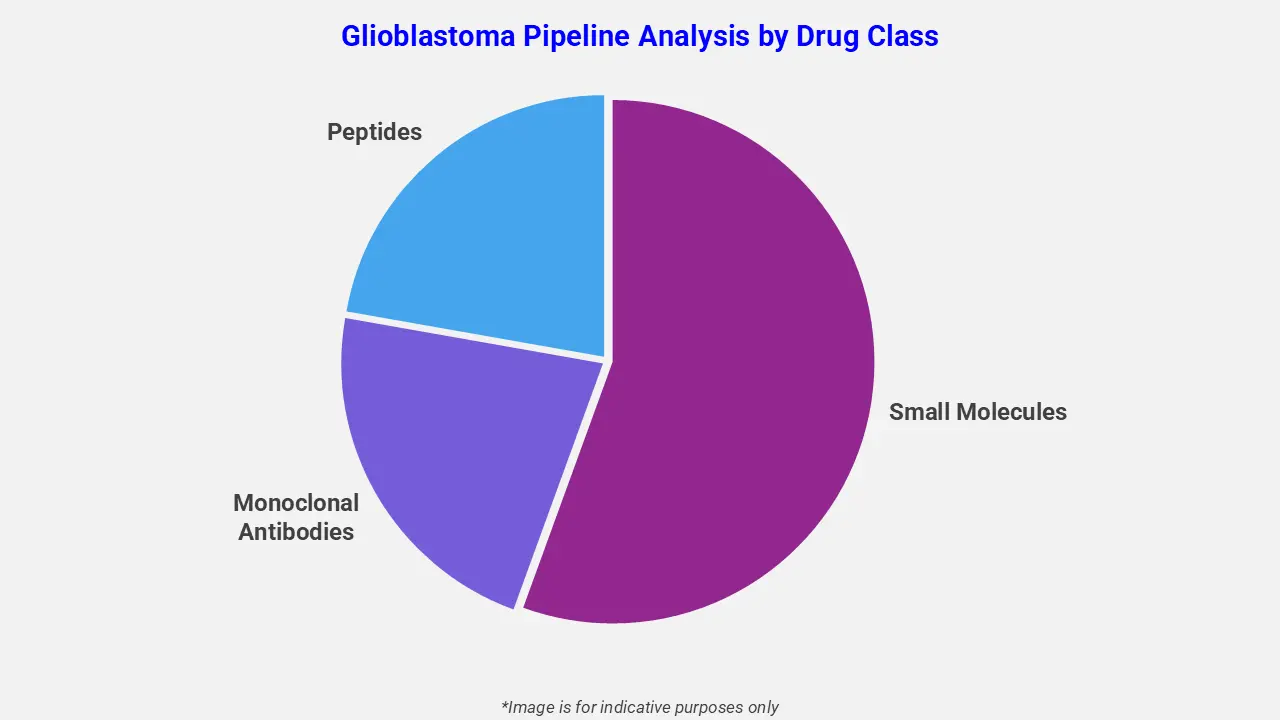
The glioblastoma pipeline analysis report covers 50+ drug analyses based on drug classes:
By Route of Administration
The pipeline assessment report covers 50+ drug analyses based on the route of administration:
The report covers phase I, phase II, phase III, phase IV, and early-phase drugs. The coverage includes an in-depth analysis of each drug across these phases. According to Expert Market Research's analysis, phase II covers a major share of the total glioblastoma clinical trials, accounting for 44%. Phase I represents 43%, reflecting strong ongoing investment in clinical development and opportunities for innovative therapies. Early phase I contributes 7%, supporting continued exploration of emerging candidates. Phase III represents 6%, indicating a growing group of therapies approaching pivotal evaluation, which can strengthen future treatment options and market expansion.
The drug molecule categories covered under the glioblastoma pipeline analysis include small molecules, monoclonal antibodies, and peptides. The glioblastoma report provides a comparative analysis of the drug classes for each drug in various phases of clinical trials for glioblastoma. EGFR inhibitors are emerging as a potential drug class for improving treatment outcomes in glioblastoma. For instance, afatinib, an EGFR inhibitor, is being investigated for its ability to increase glioblastoma sensitivity to temozolomide, including in tumors that have developed resistance. By reducing O-6-methylguanine-DNA methyltransferase production, EGFR inhibition may enhance the effectiveness of chemotherapy and support new treatment strategies.
The EMR report for the glioblastoma pipeline covers the profile of key companies involved in clinical trials and their drugs under development. It provides a detailed glioblastoma therapeutic assessment, analyzing the competitive dynamics of the clinical trial landscape. Below is the list of a few players involved in glioblastoma clinical trials:
This section covers the detailed analysis of each drug under multiple phases, including phase I, phase II, phase III, phase IV, and emerging drugs for glioblastoma. It includes product description, trial ID, study type, drug class, mode of administration, and recruitment status of glioblastoma drug candidates.
LAM561, sponsored by Laminar Pharmaceuticals, is being evaluated in a Phase IIb/III randomized trial with radiotherapy and temozolomide (TMZ) for adults with newly diagnosed, IDH-wildtype glioblastoma. The study is examining whether LAM561 can improve progression-free and overall survival compared with placebo when added to standard treatment. LAM561 (2-hydroxyoleic acid sodium) is an orally administered synthetic derivative of oleic acid that is altering cancer-cell membrane lipid composition and disrupting membrane-associated signaling pathways involved in tumor growth. The trial enrolled 144 patients and is being followed through an estimated completion in November 2026, with final overall survival analysis expected in Q4 2026.
MT-125, sponsored by Myosin Therapeutics Inc., is being evaluated in a Phase 1/2 study for newly diagnosed MGMT-methylated glioblastoma. The drug is a first-in-class, CNS-permeable dual inhibitor of non-muscle myosin IIA and IIB, targeting molecular motor proteins involved in tumor-cell proliferation, invasion, and mitochondrial function. It is being administered alongside radiation therapy and temozolomide for six weeks, five consecutive days per week with two days off. The study is examining safety, tolerability, pharmacokinetics, maximum tolerated dose, and recommended Phase 2 dose, with study completion anticipated in March 2027.
CM93 is an oral, investigational, third-generation, irreversible covalent epidermal growth factor receptor (EGFR) tyrosine kinase inhibitor being sponsored by Crimson Biopharm Inc. for recurrent glioblastoma characterized by EGFR mutation or amplification. The Phase I study is examining the drug’s safety, tolerability, pharmacokinetics, pharmacodynamics, and preliminary clinical activity while determining the recommended Phase II dose. Designed to penetrate the brain, CM93 is being evaluated for its ability to inhibit EGFR signaling within glioblastoma tumors. The study is estimated to begin in January 2027 and reach completion in July 2029.
*Please note that this is only a partial list; the complete list of drugs will be available in the full report.*
The Glioblastoma pipeline analysis report provides a strategic overview of the latest and future landscape of treatments for glioblastoma. It provides necessary information for making informed investment decisions along with research, development, and strategic planning efforts. The stakeholders will benefit from the essential insights into glioblastoma collaborations, regulatory environments, and potential growth opportunities.


Upto 15% Off
USD
$1999 $1799
$3099 $2789
$4599 $3909
$5999 $5099


*While we strive to always give you current and accurate information, the numbers depicted on the website are indicative and may differ from the actual numbers in the main report. At Expert Market Research, we aim to bring you the latest insights and trends in the market. Using our analyses and forecasts, stakeholders can understand the market dynamics, navigate challenges, and capitalize on opportunities to make data-driven strategic decisions.*
Explore our key highlights of the report and gain a concise overview of key findings, trends, and actionable insights that will empower your strategic decisions.
|
Scope of the Report |
Details |
|
Drug Pipeline by Clinical Trial Phase |
|
|
Route of Administration |
|
|
Drug Classes |
|
|
Leading Sponsors Covered |
|
|
Geographies Covered |
|
Mini Report
One User
USD 1,999
USD 1,799
tax inclusive*
Single User License
One User
USD 3,099
USD 2,789
tax inclusive*
Five User License
Five User
USD 4,599
USD 3,909
tax inclusive*
Corporate License
Unlimited Users
USD 5,999
USD 5,099
tax inclusive*
*Please note that the prices mentioned below are starting prices for each bundle type. Kindly contact our team for further details.*
Flash Bundle
Small Business Bundle
Growth Bundle
Enterprise Bundle
*Please note that the prices mentioned below are starting prices for each bundle type. Kindly contact our team for further details.*
Flash Bundle
Number of Reports: 3
20%
tax inclusive*
Small Business Bundle
Number of Reports: 5
25%
tax inclusive*
Growth Bundle
Number of Reports: 8
30%
tax inclusive*
Enterprise Bundle
Number of Reports: 10
35%
tax inclusive*
How To Order

Select License Type
Choose the right license for your needs and access rights.

Click on ‘Buy Now’
Add the report to your cart with one click and proceed to register.

Select Mode of Payment
Choose a payment option for a secure checkout. You will be redirected accordingly.
Strategic Solutions for Informed Decision-Making
Gain insights to stay ahead and seize opportunities.

Get insights & trends for a competitive edge.

Track prices with detailed trend reports.

Analyse trade data for supply chain insights.

Leverage cost reports for smart savings

Enhance supply chain with partnerships.

Connect For More Information
Our expert team of analysts will offer full support and resolve any queries regarding the report, before and after the purchase.
Our expert team of analysts will offer full support and resolve any queries regarding the report, before and after the purchase.
We employ meticulous research methods, blending advanced analytics and expert insights to deliver accurate, actionable industry intelligence, staying ahead of competitors.
Our skilled analysts offer unparalleled competitive advantage with detailed insights on current and emerging markets, ensuring your strategic edge.
We offer an in-depth yet simplified presentation of industry insights and analysis to meet your specific requirements effectively.




