

Consumer Insights
Uncover trends and behaviors shaping consumer choices today
Procurement Insights
Optimize your sourcing strategy with key market data
Industry Stats
Stay ahead with the latest trends and market analysis.
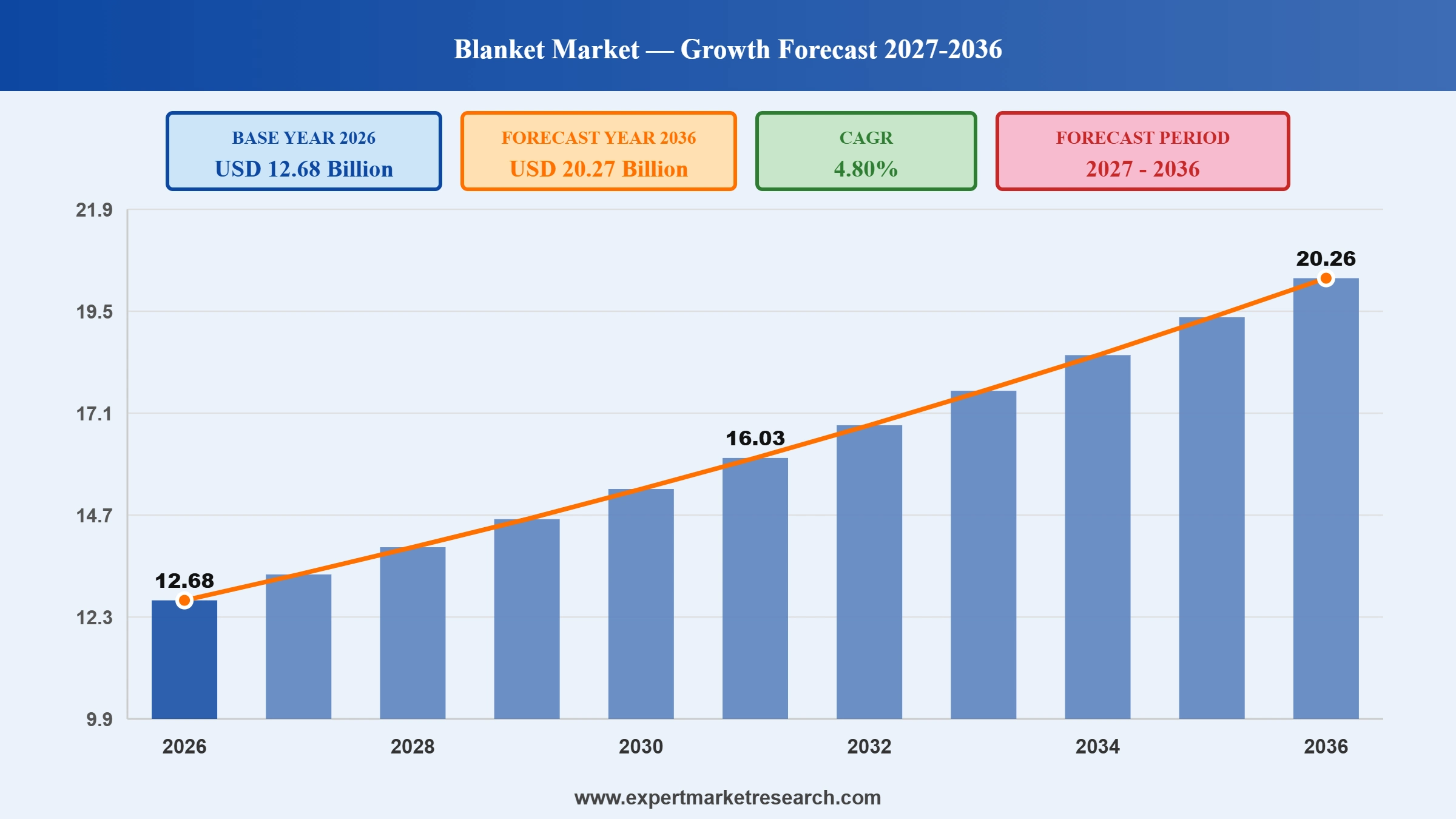
The blanket market was valued at USD 12.10 Billion in 2025. The market is expected to grow at a CAGR of 4.80% during the forecast period of 2026-2035 to reach a value of USD 19.34 Billion by 2035. Rising demand for sleep comfort, expanding online and organized retail, growing hospitality and travel spending, and wider adoption of heated and weighted products are collectively driving the market growth.
The current blanket market dynamics reflect resilient demand from households, hotels, and institutions, as manufacturers refresh fabrics, finishes, and certified safety features to match changing sleep, comfort, and decor preferences. Trade events are accelerating sourcing decisions: the Intertextile Shanghai Home Textiles Autumn edition concluded in August 2026 with more than 900 exhibitors from 19 countries and regions, nearly 36,000 visitors from 113 markets, and over 100,000 square metres of exhibition space across four halls. Such scale gives buyers broad access to new yarns, prints, and finishes, encouraging suppliers to introduce new collections quickly, shorten sampling cycles, and widen distribution through retailers, hospitality buyers, and online platforms in both established and emerging consumer markets, while seasonal gifting, travel, and hospitality refurbishment programs keep order volumes steady throughout the year.
The overall blanket industry dynamics are also being shaped by raw material price swings, which influence costs, margins, and retail pricing across the value chain. In September 2026, the Eastern Market Indicator for Australian wool reached 1,890 Australian cents per kilogram, up 2.0% on the week and 46.4% above a year earlier, with 25,021 bales offered and 4.4% passed in. Such movement shows how fibre costs can change quickly within a single season, pushing woolen mills and retailers toward forward buying, blended yarns, and careful pricing, while encouraging recycled and alternative fibres in value ranges. Buyers also watch these indicators when negotiating seasonal contracts.
Read more about this report - REQUEST FREE SAMPLE COPY IN PDF
|
Blanket Market Report Summary |
Description |
Value |
|
Base Year |
USD Billion |
2025 |
|
Historical Period |
USD Billion |
2019-2025 |
|
Forecast Period |
USD Billion |
2026-2035 |
|
Market Size 2025 |
USD Billion |
12.10 |
|
Market Size 2035 |
USD Billion |
19.34 |
|
CAGR 2019-2025 |
Percentage |
XX% |
|
CAGR 2026-2035 |
Percentage |
4.80% |
|
CAGR 2026-2035 - Market by Region |
Middle East and Africa |
6.2% |
|
CAGR 2026-2035 - Market by Product Type |
Electric Blankets |
6.8% |
|
CAGR 2026-2035 - Market by Distribution Channel |
Online Retail |
7.0% |
|
2025 Market Share by Region |
Asia Pacific |
38.0% |
The blanket market is being reshaped by heritage brands tying products to travel and cultural moments, manufacturers shifting from export dependence toward domestic demand, and retailers launching limited collections for mass shoppers. Volatile cotton and wool costs, tariff changes, and tighter heated product safety scrutiny are further reshaping the competitive landscape.
Trident posted first-quarter net sales of INR 1,786.83 crore, up 4.68%, and profit after tax of INR 158.09 crore, up 12.95%, with an operating margin of 16.78%. Management cited volatile cotton prices and subdued export demand as the main headwinds. Competitors can protect margins through disciplined cost control, flexible cotton sourcing, and a richer mix of value-added home textile products.
Parachute introduced a limited summer collection with the retailer featuring a Stitched Gauze Bed Blanket priced at USD 139, a Border Stripe Cotton Bed Blanket, and a Rib Knit Throw, available in select stores and online. The collaboration brought design-led cotton blankets to a mass retailer's shoppers. Direct-to-consumer brands can follow by using limited drops to widen reach without discounting.
Welspun Living reported domestic business growth of 29.2% in its fourth quarter, even as full year net profit fell to INR 212.89 crore from INR 644 crore amid United States tariffs and cautious demand. The company approved a share buyback of up to INR 252 crore. Other manufacturers can reduce export exposure by building domestic brands and wider retail distribution.
Pendleton Woolen Mills launched a numbered Alaska throw with Holland America Line, sold onboard its Alaska sailings and linked to America's 250th anniversary and Alaska Statehood Day. The limited-edition blanket turned a wool product into a collectible travel keepsake. Other blanket makers can replicate the model by pairing heritage designs with cruise lines, resorts, and attractions to reach visitors.
Regulators and online marketplaces are examining electric heating products more closely as incident reports rise, and sellers are being asked to prove compliance with safety standards. Buyers increasingly prefer certified products with automatic shut-off. In September 2026, the United States Consumer Product Safety Commission announced a recall of about 195,000 heated blankets and pads sold online, citing 577 incidents of smoking, melting, or burning and 53 burn injuries, which is pushing sellers toward much stronger testing and clearer safety labelling.
Home textile exporters are watching tariff changes closely because duty differences decide where buyers place large seasonal orders. Producers are reviewing pricing, capacity, and customer mix of orders accordingly. In February 2026, India and the United States reached an interim trade arrangement that reduced the reciprocal tariff on Indian textiles, and listed Indian exporters saw their shares rise by as much as 19% within a single week, as the change narrowed the earlier disadvantage against Bangladesh, Vietnam, China, and Pakistan.
Home retailers are investing in websites, apps, and delivery networks so shoppers can compare and buy bedding, throws, and blankets without visiting stores. Digital sales are growing as a share of total revenue across most categories. In September 2026, Dunelm reported full year revenue of GBP 1.83 billion, up 3.1%, with digital accounting for 42% of sales, two percentage points higher, and unveiled a brand-new three-year plan called Winning Hearts and Homes to deepen long term customer loyalty.
Trade fairs are becoming the main meeting place where blanket makers meet hotel, cruise, and contract buyers, who value durability, safety certification, and consistent supply quality. Exhibitors are also showing recycled, organic, and certified fibres alongside traditional ranges and new designs. In January 2026, Heimtextil in Frankfurt hosted about 3,000 exhibitors, 96% of them international, and roughly 47,000 buyers from 148 nations worldwide, with 78% of visitors in top level decision roles, and a clear hospitality and contract demand focus.
Regional textile manufacturing hubs are promoting themselves to international buyers by combining proximity, consistent quality, competitive pricing, and short delivery times. Buyers are diversifying sourcing across regions to reduce dependence on a single country. In May 2026, the 33rd HOMETEX fair opened in Istanbul with about 600 exhibiting companies across 200,000 square metres, as Turkiye reported home textile exports of USD 767 million in the first four months, giving it a 2.6% share of global trade and fifth rank worldwide.
The Expert Market Research's report titled "Blanket Market Report and Forecast 2026-2035" offers a detailed analysis of the market based on the following segments:
Market Breakup by Product Type
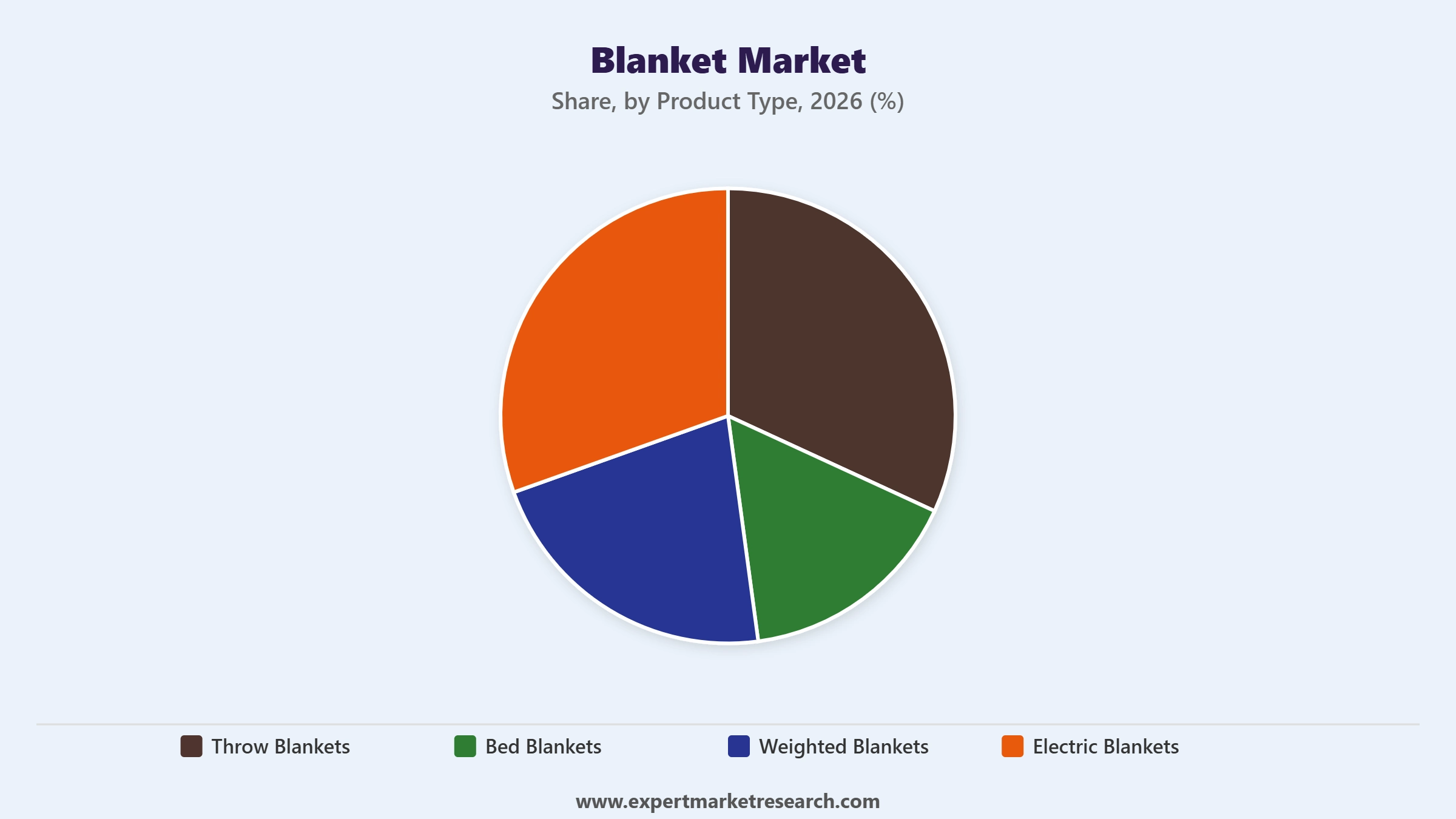
Key Insight: Bed blankets dominate the blanket market by product type, supported by everyday household and institutional use. Throw blankets serve sofas, gifting, and decor, weighted blankets are growing on sleep and wellness interest, and electric blankets are the fastest-growing type as heated, washable designs reach cold regions. Others include baby blankets, picnic and outdoor blankets, and emergency blankets. Illustrating weighted demand, in March 2026, Baloo Living reported its 100,000th customer order, led by cotton weighted blankets.
Market Breakup by Material
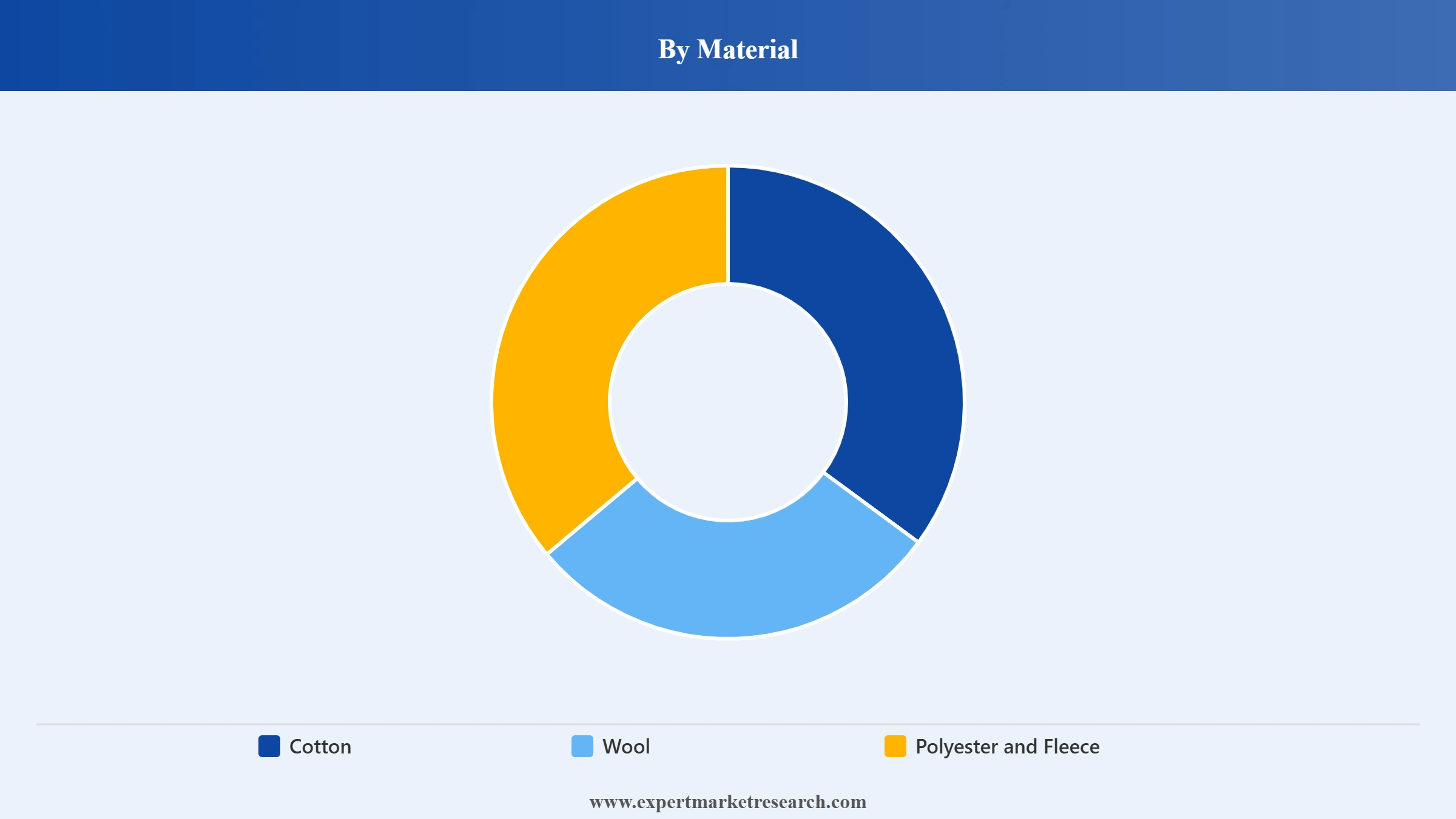
Key Insight: Polyester and fleece lead the blanket market by material because they are affordable, light, and easy to care for. Cotton is the fastest-growing material on demand for breathable, natural fabrics, while wool serves premium, heritage, and cold-weather buyers. Others include acrylic, bamboo, silk, linen, and cashmere blends, which add specialty softness and sustainability appeal. Showing wool's premium positioning, in February 2026, Faribault Mill announced three limited edition wool throws with the United States Olympic and Paralympic Committee and USA Bobsled, priced at USD 245.
Market Breakup by Distribution Channel
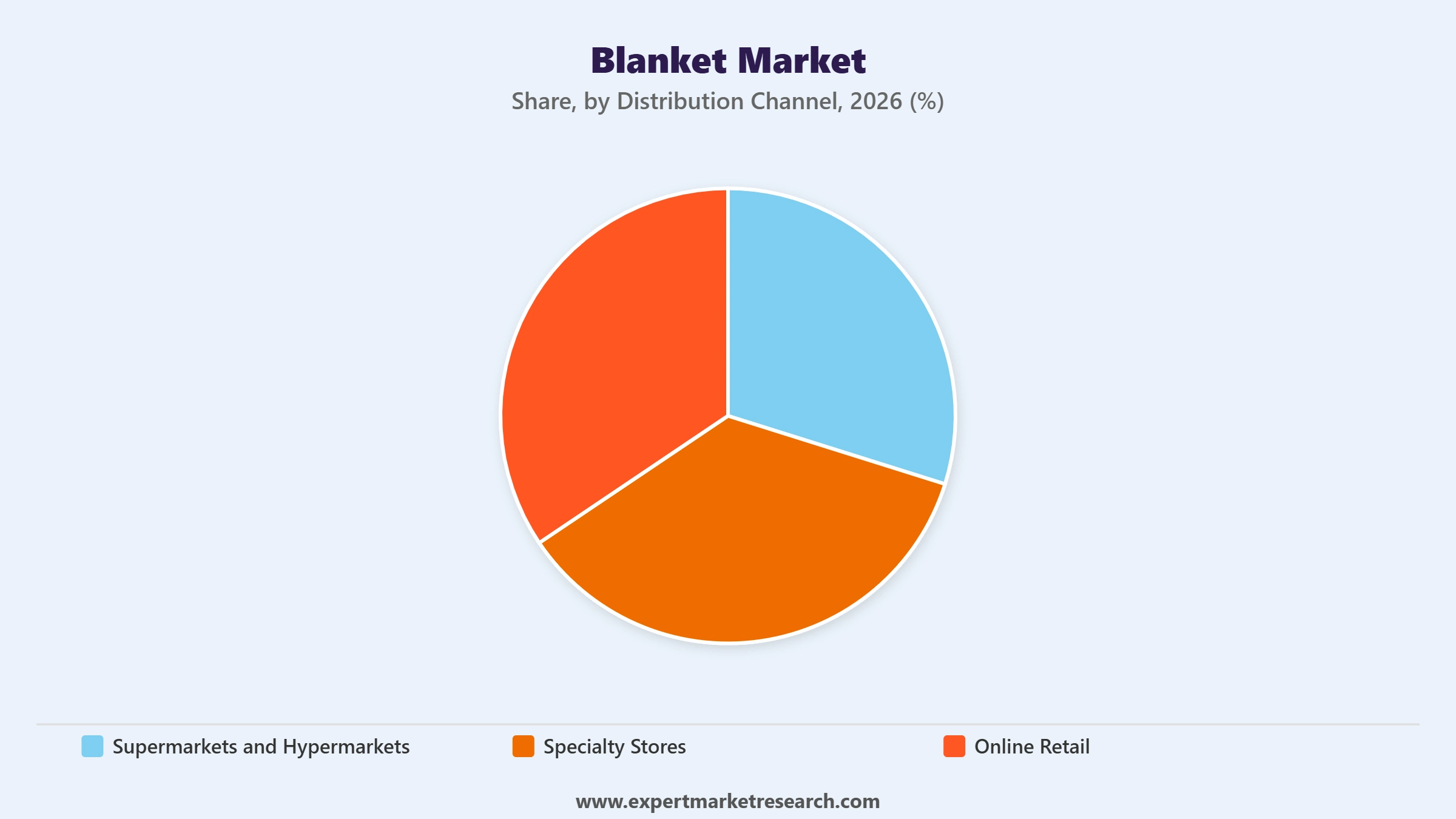
Key Insight: Supermarkets and hypermarkets lead the blanket market by distribution channel through broad reach, private label ranges, and seasonal promotions. Specialty stores serve shoppers seeking premium, heritage, and health-oriented ranges with expert advice, while online retail is the fastest-growing channel on convenience, reviews, and wider choice. Others include department stores, hotel and institutional supply, and direct sales through brand showrooms. Reflecting offline expansion by online-born brands, in January 2026, Bedsure launched its GentleSoft Ribbed Plush Blanket at Target stores nationwide.
Market Breakup by Region
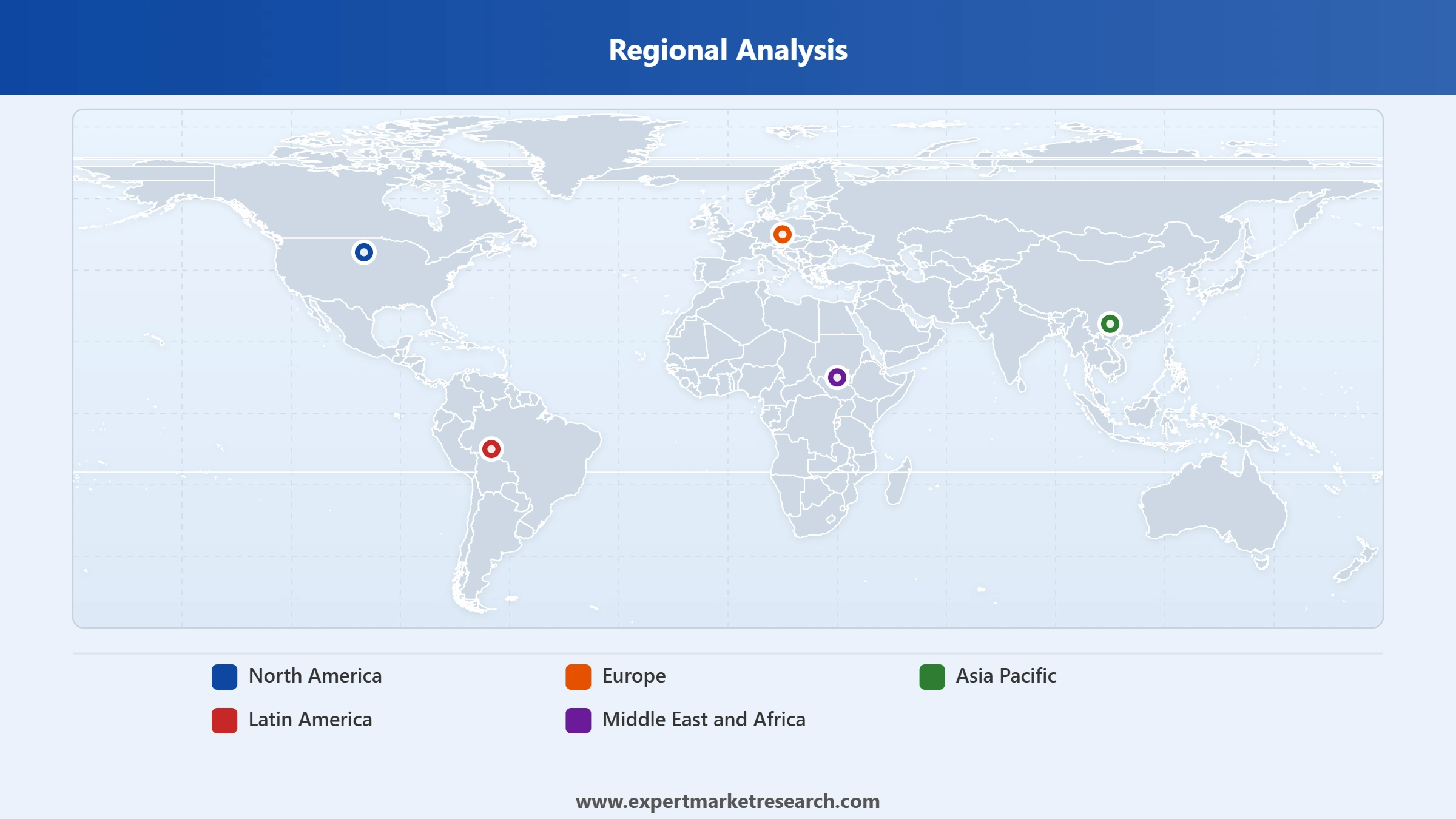
Key Insight: Asia Pacific dominates the blanket market, supported by large production clusters and populous domestic markets in China, India, and Pakistan. North America and Europe are mature regions where premium, weighted, and electric blankets lead growth, Latin America grows steadily on rising incomes and modern retail, and Middle East and Africa is the fastest-growing region. Rising urban incomes, cooler highland climates, and expanding hospitality sectors across these regions support steady demand for both value and premium ranges.
Read more about this report - REQUEST FREE SAMPLE COPY IN PDF
By product type, bed blankets dominate the market due to everyday use and year-round replacement demand
Bed blankets account for the largest share of the blanket market by product type, because every household needs them and they are replaced regularly as they wear out or as seasons change. Hotels, hospitals, hostels, and institutions also buy them in bulk for guest rooms and wards. Wide price ranges, from basic acrylic styles to premium wool and cotton ranges, let retailers serve every income group, while gifting, weddings, and festive demand add steady volumes across developed and emerging economies.
Read more about this report - REQUEST FREE SAMPLE COPY IN PDF
Electric blankets are the fastest-growing product type as consumers look for energy efficient warmth in cold climates and rising heating costs. Safety features and washable designs are widening adoption. In September 2026, Beurer introduced heated blankets, the HD 72 Waffle and HD 92 Arctic Brown, measuring 130 by 180 centimetres, with automatic switch-off after three hours, an integrated safety system, and OEKO-TEX Standard 100 certification, while throw, weighted, and other blankets also keep growing steadily in homes, hotels, and hospitals.
By material, polyester and fleece lead the market due to affordability, low maintenance, and light weight
Polyester and fleece account for the largest share of the blanket market by material, because they are inexpensive, soft, light, quick drying, and easy to wash and store. Mass retailers and online sellers’ stock large volumes of microfiber, flannel, and sherpa styles for value-conscious shoppers, and manufacturers can print and emboss them in many designs and colours at scale. Recycled polyester made from bottles also appeals to buyers seeking lower environmental impact without paying the higher prices of natural fibres.
Read more about this report - REQUEST FREE SAMPLE COPY IN PDF
Cotton is the fastest-growing material as shoppers prefer breathable, hypoallergenic, and natural fabrics, particularly muslin, gauze, waffle, and organic ranges. Lower fibre costs also help manufacturers and retailers price competitively. In February 2026, ICE cotton futures fell below 63 cents per pound, close to the lowest level since late November 2025, on weak export demand and a lower United States output forecast, which further supported margins for cotton blanket makers, while wool and other fibres serve premium and specialty needs.
By distribution channel, supermarkets and hypermarkets lead the market due to wide reach and low-price points
Supermarkets and hypermarkets account for the largest share of the blanket market by distribution channel, because shoppers can touch fabrics, compare prices, and buy blankets along with other household items. Large chains stock private label ranges, run seasonal winter promotions, and negotiate bulk contracts with manufacturers, which keeps shelf prices low for shoppers. Strong footfall in emerging economies, together with festive discounts and gifting demand, sustains volumes, while specialty stores serve premium and heritage ranges and other channels remain smaller.
Read more about this report - REQUEST FREE SAMPLE COPY IN PDF
Online retail is the fastest-growing distribution channel as shoppers compare reviews, prices, and sizes from home, and sellers reach customers directly without intermediaries. In October 2026, Amazon Prime Big Deal Days ran across 22 countries worldwide and highlighted cozy home upgrades, including blankets from UGG, NEST New York, and Barefoot Dreams, while its low-price storefront offered blankets from USD 1, showing how deal events and low-price storefronts are drawing seasonal buyers toward online purchases of everyday bedding items.
Asia Pacific dominates the market due to large manufacturing bases, big populations, and strong domestic demand
Asia Pacific dominates the blanket market, supported by India, China, and Pakistan as major producers and by large populations that buy blankets in cold winters. Large clusters such as Panipat supply domestic and export buyers. In March 2026, Panipat blanket exporters, who ship about INR 600 to 700 crore a year mostly to the Middle East, reported more than 150 containers stuck at sea during regional conflict, with freight rates rising three to four times, highlighting both scale and exposure.
Read more about this report - REQUEST FREE SAMPLE COPY IN PDF
Middle East and Africa are the fastest-growing region from a smaller base, as rising populations, urbanisation, and cooler desert nights and highland winters lift blanket purchases. Hotel and tourism expansion in major Gulf cities adds institutional demand, and imports from Asian producers keep prices accessible for most households. North America and Europe remain mature markets shaped by premium, weighted, and electric styles, while Latin America grows steadily on rising incomes and expanding modern retail chains across Brazil, Mexico, and Argentina.
|
CAGR 2026-2035 - Market by |
Region |
|
North America |
3.9% |
|
Europe |
3.6% |
|
Asia Pacific |
5.4% |
|
Latin America |
4.5% |
|
Middle East and Africa |
6.2% |
The global blanket companies are fragmented, with textile manufacturers, heritage woolen mills, and sleep product companies competing on price, fabric quality, design, safety certification, and retailer relationships. Companies like Welspun Living Limited, Trident Limited, Pendleton Woolen Mills, Inc., and Hollander Sleep Products, LLC lead through scale and strong customer ties, while Newell Brands Inc., WestPoint Home LLC, Pacific Coast Feather, LLC, Faribault Woolen Mill Co., and Brentwood Originals, Inc. strengthen positions through branded ranges and niche specialties.
Leading blanket market players are focusing on certified materials, recycled and natural fibres, protective safety features, and partnerships with retailers, hospitality groups, and online platforms to strengthen their competitive position. Increasing emphasis on sustainable sourcing, flexible capacity, and omnichannel distribution is also enabling companies to broaden portfolios, manage raw material swings, and support sustained long term market growth across several regions.
Welspun Living Limited, headquartered in Mumbai, India, was founded in 1985 and is listed on the National Stock Exchange and the Bombay Stock Exchange. The company is part of the Welspun Group and manufactures bed linen, towels, rugs, and yarn, supplying large retailers and hospitality customers across North America, Europe, and Asia.
Trident Limited, headquartered in Ludhiana, Punjab, India, was founded in 1990 and is listed on Indian stock exchanges. The company, part of the Trident Group, operates integrated facilities in Barnala and Budni, producing yarn, bed and bath linen, paper, and chemicals for retailers across the United States, Europe, and other international markets.
Pendleton Woolen Mills, Inc., headquartered in Portland, Oregon, United States, was founded in 1863 and remains a privately held, sixth-generation family business. The company weaves wool blankets, fabrics, and apparel at mills in Oregon and Washington, selling through its own stores, wholesale partners, and online channels.
Hollander Sleep Products, LLC, headquartered in Boca Raton, Florida, United States, was founded in 1953 and is privately held. The company manufactures and markets utility bedding and home decor products, including pillows, comforters, mattress pads, and cushions, supplying retailers, distributors, and hotels across North America.
Other key players in the market report include Newell Brands Inc., WestPoint Home LLC, Pacific Coast Feather, LLC, Faribault Woolen Mill Co., and Brentwood Originals, Inc., among others.
*Please note that this is only a partial list; the complete list of key players is available in the full report. Additionally, the list of key players can be customized to better suit your needs.*
Explore the latest trends shaping the blanket market 2026-2035 with our in-depth report. Gain strategic insights, future forecasts, and key market developments that can help you stay competitive. Download a free sample report or contact our team for customized consultation on the market trends 2026.


Upto 15% Off
USD
$2499 $2249
$3999 $3599
$4999 $4249
$5999 $5099


*While we strive to always give you current and accurate information, the numbers depicted on the website are indicative and may differ from the actual numbers in the main report. At Expert Market Research, we aim to bring you the latest insights and trends in the market. Using our analyses and forecasts, stakeholders can understand the market dynamics, navigate challenges, and capitalize on opportunities to make data-driven strategic decisions.*
In 2025, the blanket market reached an approximate value of USD 12.10 Billion.
The market is projected to grow at a CAGR of 4.80% between 2026 and 2035.
The key players in the market include Welspun Living Limited, Trident Limited, Pendleton Woolen Mills, Inc., Hollander Sleep Products, LLC, Newell Brands Inc., WestPoint Home LLC, Pacific Coast Feather, LLC, Faribault Woolen Mill Co., and Brentwood Originals, Inc., among others.
Leading companies are pursuing retailer and hospitality partnerships, domestic market expansion, certified safe heating products, and natural and recycled fibre ranges to widen adoption.
Key challenges include volatile cotton and wool prices, tariff uncertainty, product safety scrutiny for heated items, and competition from low priced imports.
Explore our key highlights of the report and gain a concise overview of key findings, trends, and actionable insights that will empower your strategic decisions.
|
Report Features |
Details |
|
Base Year |
2025 |
|
Historical Period |
2019-2025 |
|
Forecast Period |
2026-2035 |
|
Scope of the Report |
Historical and Forecast Trends, Industry Drivers and Constraints, Historical and Forecast Market Analysis by Segment:
|
|
Breakup by Product Type |
|
|
Breakup by Material |
|
|
Breakup by Distribution Channel |
|
|
Breakup by Region |
|
|
Market Dynamics |
|
|
Competitive Landscape |
|
|
Companies Covered |
|
Datasheet
One User
USD 2,499
USD 2,249
tax inclusive*
Single User License
One User
USD 3,999
USD 3,599
tax inclusive*
Five User License
Five User
USD 4,999
USD 4,249
tax inclusive*
Corporate License
Unlimited Users
USD 5,999
USD 5,099
tax inclusive*
*Please note that the prices mentioned below are starting prices for each bundle type. Kindly contact our team for further details.*
Flash Bundle
Small Business Bundle
Growth Bundle
Enterprise Bundle
*Please note that the prices mentioned below are starting prices for each bundle type. Kindly contact our team for further details.*
Flash Bundle
Number of Reports: 3
20%
tax inclusive*
Small Business Bundle
Number of Reports: 5
25%
tax inclusive*
Growth Bundle
Number of Reports: 8
30%
tax inclusive*
Enterprise Bundle
Number of Reports: 10
35%
tax inclusive*
How To Order

Select License Type
Choose the right license for your needs and access rights.

Click on ‘Buy Now’
Add the report to your cart with one click and proceed to register.

Select Mode of Payment
Choose a payment option for a secure checkout. You will be redirected accordingly.
Strategic Solutions for Informed Decision-Making
Gain insights to stay ahead and seize opportunities.

Get insights & trends for a competitive edge.

Track prices with detailed trend reports.

Analyse trade data for supply chain insights.

Leverage cost reports for smart savings

Enhance supply chain with partnerships.

Connect For More Information
Our expert team of analysts will offer full support and resolve any queries regarding the report, before and after the purchase.
Our expert team of analysts will offer full support and resolve any queries regarding the report, before and after the purchase.
We employ meticulous research methods, blending advanced analytics and expert insights to deliver accurate, actionable industry intelligence, staying ahead of competitors.
Our skilled analysts offer unparalleled competitive advantage with detailed insights on current and emerging markets, ensuring your strategic edge.
We offer an in-depth yet simplified presentation of industry insights and analysis to meet your specific requirements effectively.




