

Consumer Insights
Uncover trends and behaviors shaping consumer choices today
Procurement Insights
Optimize your sourcing strategy with key market data
Industry Stats
Stay ahead with the latest trends and market analysis.
Alport syndrome is a genetic disorder affecting kidney function, hearing, and vision, caused by mutations in collagen genes. As per the Paulina Halat-Wolska et al. (2025), its estimated global prevalence ranges from 1 in 5,000 to 1 in 53,000, depending on the population studied. According to Alport syndrome epidemiology forecast by Expert Market Research, disease prevalence trends inform market assessments of this inherited kidney disease.
Base Year
Historical Period
Forecast Period
Read more about this report - REQUEST FREE SAMPLE COPY IN PDF
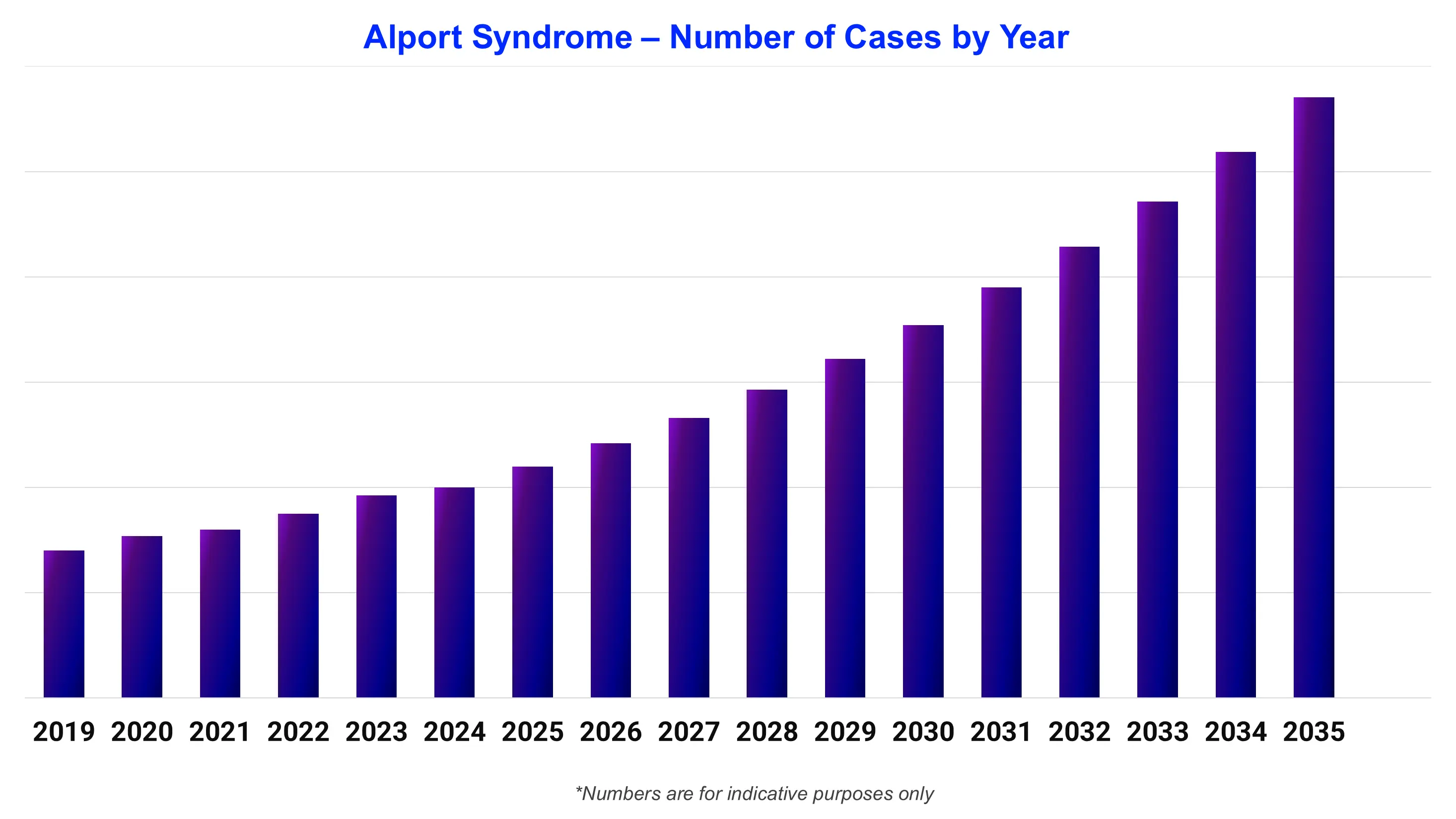
Expert Market Research's “Alport Syndrome Epidemiology Forecast Report 2026-2035” offers comprehensive information on the prevalence and demographics of Alport syndrome. It projects the future incidence and prevalence rates of Alport syndrome cases across various populations. The study covers age, gender, and type as major determinants of the Alport syndrome population. The report highlights patterns in the prevalence of Alport syndrome over time and projects future trends based on multiple variables.
The report provides a comprehensive overview of the disease, as well as historical and projected data on the epidemiology of Alport syndrome in the 8 major markets.
Regions Covered
Alport syndrome is a genetic kidney disorder caused by pathogenic variants in the genes COL4A3, COL4A4, or COL4A5, which encode type IV collagen, an essential component of basement membranes in the kidneys, inner ears, and eyes. The condition progressively damages the glomerular basement membrane, leading to persistent blood in the urine, proteinuria, and potentially chronic kidney disease and kidney failure. Its major inheritance patterns are X-linked, autosomal recessive, and autosomal dominant. Hearing loss and ocular abnormalities may also occur, making hereditary nephropathy a relevant term for describing the disease.
|
Parameter |
Insight |
|
Largest Patient Pool |
United States |
|
Fastest Growing Country |
India |
|
High-Risk Population |
Individuals with pathogenic variants in COL4A3, COL4A4, or COL4A5, particularly those with a family history of Alport syndrome or unexplained kidney disease |
|
Key Diagnostic Method |
Genetic testing of COL4A3, COL4A4, and COL4A5, supported by urinalysis, kidney function assessment, and family history evaluation |
|
Major Risk Factor |
Inherited pathogenic variants affecting type IV collagen production and the integrity of the glomerular basement membrane |
|
Major gap in the market |
Delayed diagnosis, variable clinical presentation, and limited access to genetic testing and specialized multidisciplinary care |
The Alport syndrome epidemiology division offers information on the patient pool from history to the present as well as the projected trend for each of the 8 major markets. Expert Market Research provides both current and predicted trends for the Alport syndrome epidemiology scenario by examining a wide range of studies. Additionally, the report covers the diagnosed patient pool for Alport syndrome and their trends. The data is broken down into specific categories, such as total prevalent cases in males and females, and total diagnosed cases across different age groups and patient pools.
|
Epidemiology Segment |
Key Insights |
|
Diagnosed Prevalent Cases of the Disease |
According to Paulina Halat-Wolska et al. (2025), the global prevalence of Alport syndrome is estimated to range from 1 in 5,000 to 1 in 53,000, depending on the population studied. The condition is considered underdiagnosed, potentially resulting in underestimated prevalence. |
|
Gender-Specific Cases of the Disease |
As per the National Organization for Rare Disorders (NORD), males with X-linked Alport syndrome generally experience more severe disease progression than females. In autosomal recessive and autosomal dominant forms, males and females are affected with similar severity. |
|
Age-Specific Cases of the Disease |
According to Simon Watson et al. (2023), Alport syndrome affects approximately 1 in 50,000 newborns. Kidney disease may progress during childhood, adolescence, or adulthood, depending on the genetic type and individual disease course. |
|
Ethnicity-Wise Cases of the Disease |
According to Max Healthcare, Alport syndrome can affect individuals across racial and ethnic groups. The condition is associated with inherited genetic variants, and its identification may vary with genetic testing, family history assessment, and diagnostic practices. |
|
Mortality and Survival Analysis of the Disease |
According to NORD, approximately 50% of untreated males with X-linked Alport syndrome develop kidney failure by age 25, increasing to 90% by age 40 and nearly 100% by age 60. Progression varies by genetic type and sex. |
|
Disease Type |
Prevalence |
|
X-linked Alport syndrome (XLAS) |
According to Simon Watson et al. (2023), approximately 60-80% of Alport syndrome cases follow an X-linked inheritance pattern. Males generally experience more severe disease progression, while females may develop kidney complications later in life. |
|
Autosomal recessive Alport syndrome (ARAS) |
As per Max Healthcare, autosomal recessive Alport syndrome accounts for lesser cases. It commonly presents with earlier-onset kidney disease and affects males and females with similar severity. |
|
Autosomal dominant Alport syndrome (ADAS) |
According to UPMC, autosomal dominant Alport syndrome accounts for approximately 40%–60% of cases. However, this estimate differs from other reported distributions, so the percentage should be interpreted in the context of the source. |
Read more about this report - REQUEST FREE SAMPLE COPY IN PDF
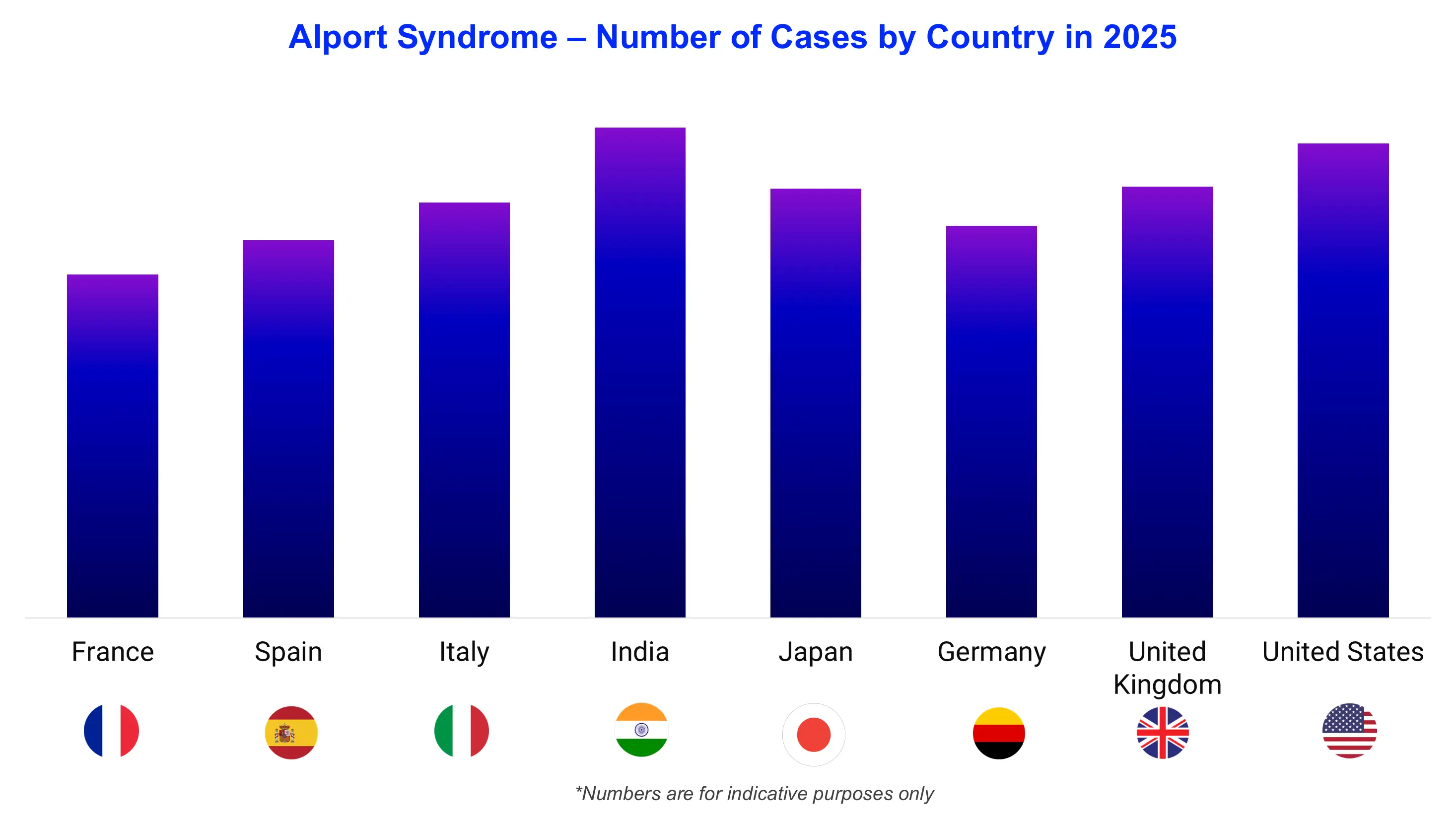
The Alport syndrome epidemiology data and findings for the United States, Germany, Spain, Italy, France, the United Kingdom, Japan, and India are also provided in the epidemiology section.
|
Country |
Key Insights |
|
United States |
According to the National Organization for Rare Disorders (NORD), Alport syndrome is estimated to affect approximately 1 in 5,000–10,000 people in the United States, corresponding to around 30,000–60,000 individuals. It accounts for approximately 3% of children with chronic kidney disease and 0.2% of adults with end-stage renal disease. |
|
Germany |
According to Julian Eble et al. (2024), approximately 13% of the adult population in Germany has chronic kidney disease. Monogenic kidney diseases account for approximately 9.3% of adults with chronic kidney disease, providing context for the burden of inherited kidney disorders. These figures are not specific to Alport syndrome. |
|
France |
According to Caroline Sevin et al. (2023), X-linked adrenoleukodystrophy has an estimated incidence of approximately 1 in 17,000 births in France. This figure relates to a different disease and is not applicable to Alport syndrome. |
|
Italy |
In Italy, greater awareness of inherited kidney disorders, improved access to genetic testing, and increased recognition of familial patterns of kidney disease may support the identification of Alport syndrome and contribute to the growth of diagnosed cases. |
|
Spain |
In Spain, improvements in the recognition of unexplained kidney abnormalities and the integration of genetic testing into diagnostic assessments may increase the identification of individuals with Alport syndrome, including patients whose condition was previously undiagnosed. |
|
United Kingdom |
According to Kidney Care UK, Alport syndrome affects approximately 1 in 2,300 people in the United Kingdom. Early diagnosis, monitoring, and treatment are relevant to reducing the risk of kidney failure. |
|
Japan |
In Japan, advances in genetic screening and the evaluation of familial kidney disease may support earlier identification of Alport syndrome. Greater clinical awareness of inherited kidney disorders may also improve diagnosis and the recognition of affected family members. |
|
India |
According to Max Healthcare, Alport syndrome is estimated to occur in approximately 1 in 5,000 live births. This is a general estimate and is not presented as an India-specific incidence rate. |
Alport syndrome presents unmet needs across the United States, Germany, France, Italy, Spain, the United Kingdom, Japan, and India because its variable clinical presentation can delay diagnosis, particularly among individuals with milder symptoms or a family history that has not been investigated. Wider access to genetic testing for COL4A3, COL4A4, and COL4A5 variants, family screening, and coordinated nephrology, audiology, and ophthalmology services could improve case identification and disease monitoring. Another opportunity involves developing disease-modifying therapies beyond established kidney-protective treatment, while addressing the limited clinical evidence for emerging interventions.
Alport syndrome treatment aims to slow kidney disease progression, manage symptoms, and address associated complications. Angiotensin-converting enzyme inhibitors or angiotensin II receptor blockers are commonly used to reduce proteinuria and protect kidney function. Sodium-glucose cotransporter 2 inhibitors may also be considered for eligible adults with chronic kidney disease, depending on clinical circumstances and applicable guidance. Regular monitoring of kidney function, blood pressure, hearing, and vision supports ongoing disease management. For patients who develop kidney failure, dialysis or kidney transplantation may be required. Research into renoprotective therapy and disease-modifying treatments continues to address unmet clinical needs.


Upto 15% Off
USD
$2699 $2429
$4299 $3869
$5799 $4949
$6999 $5949


*While we strive to always give you current and accurate information, the numbers depicted on the website are indicative and may differ from the actual numbers in the main report. At Expert Market Research, we aim to bring you the latest insights and trends in the market. Using our analyses and forecasts, stakeholders can understand the market dynamics, navigate challenges, and capitalize on opportunities to make data-driven strategic decisions.*
Explore our key highlights of the report and gain a concise overview of key findings, trends, and actionable insights that will empower your strategic decisions.
|
Report Features |
Details |
|
Base Year |
2025 |
|
Historical Period |
2019-2025 |
|
Forecast Period |
2026-2035 |
|
Epidemiology Statistics Provided |
|
|
Segmentation Provided |
|
|
Geographies Covered |
|
Datasheet
One User
USD 2,699
USD 2,429
tax inclusive*
Single User License
One User
USD 4,299
USD 3,869
tax inclusive*
Five User License
Five User
USD 5,799
USD 4,949
tax inclusive*
Corporate License
Unlimited Users
USD 6,999
USD 5,949
tax inclusive*
*Please note that the prices mentioned below are starting prices for each bundle type. Kindly contact our team for further details.*
Flash Bundle
Small Business Bundle
Growth Bundle
Enterprise Bundle
*Please note that the prices mentioned below are starting prices for each bundle type. Kindly contact our team for further details.*
Flash Bundle
Number of Reports: 3
20%
tax inclusive*
Small Business Bundle
Number of Reports: 5
25%
tax inclusive*
Growth Bundle
Number of Reports: 8
30%
tax inclusive*
Enterprise Bundle
Number of Reports: 10
35%
tax inclusive*
How To Order

Select License Type
Choose the right license for your needs and access rights.

Click on ‘Buy Now’
Add the report to your cart with one click and proceed to register.

Select Mode of Payment
Choose a payment option for a secure checkout. You will be redirected accordingly.
Strategic Solutions for Informed Decision-Making
Gain insights to stay ahead and seize opportunities.

Get insights & trends for a competitive edge.

Track prices with detailed trend reports.

Analyse trade data for supply chain insights.

Leverage cost reports for smart savings

Enhance supply chain with partnerships.

Connect For More Information
Our expert team of analysts will offer full support and resolve any queries regarding the report, before and after the purchase.
Our expert team of analysts will offer full support and resolve any queries regarding the report, before and after the purchase.
We employ meticulous research methods, blending advanced analytics and expert insights to deliver accurate, actionable industry intelligence, staying ahead of competitors.
Our skilled analysts offer unparalleled competitive advantage with detailed insights on current and emerging markets, ensuring your strategic edge.
We offer an in-depth yet simplified presentation of industry insights and analysis to meet your specific requirements effectively.




