

Consumer Insights
Uncover trends and behaviors shaping consumer choices today
Procurement Insights
Optimize your sourcing strategy with key market data
Industry Stats
Stay ahead with the latest trends and market analysis.
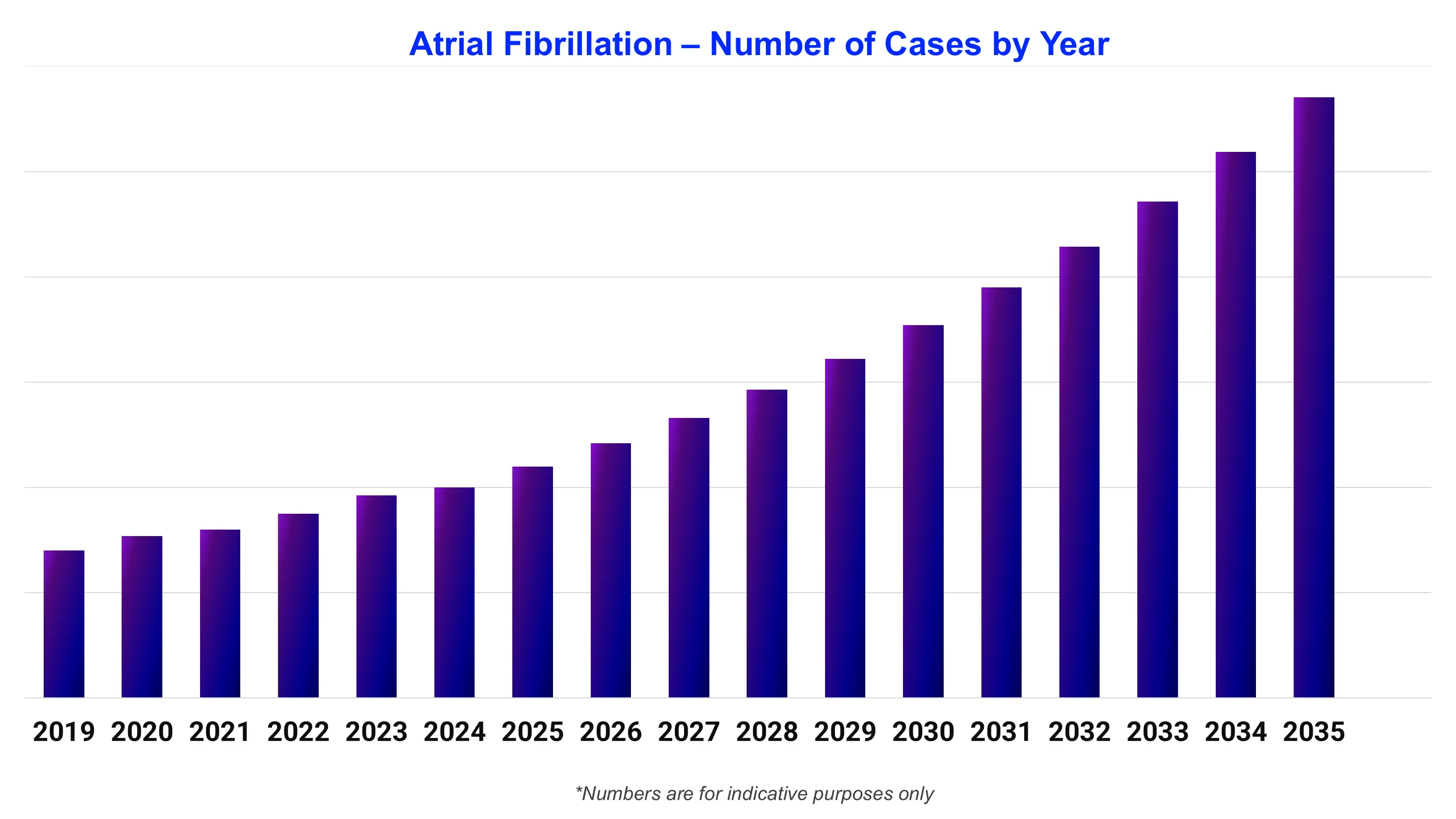
Atrial fibrillation (AF) is a cardiac arrhythmia characterized by an irregular and often rapid heart rhythm. As per Dominik Linz et al. (2024), the lifetime risk of developing atrial fibrillation is approximately 1 in 3-4 individuals after 45 years of age. According to the atrial fibrillation epidemiology forecast by Expert Market Research, disease prevalence remains an important epidemiological indicator.
Base Year
Historical Period
Forecast Period
Read more about this report - REQUEST FREE SAMPLE COPY IN PDF
Expert Market Research's “Atrial Fibrillation Epidemiology Forecast Report 2026-2035” offers comprehensive information on the prevalence and demographics of atrial fibrillation. It projects the future incidence and prevalence rates of Atrial Fibrillation cases across various populations. The study covers age, gender, and type as major determinants of the atrial fibrillation population. The report highlights patterns in the prevalence of atrial fibrillation over time and projects future trends based on multiple variables.
The report provides a comprehensive overview of the disease, as well as historical and projected data on the epidemiology of atrial fibrillation in the 8 major markets.
Regions Covered
Atrial fibrillation (AF) is a common cardiac arrhythmia characterized by rapid, disorganized electrical activity in the atria, resulting in an irregular and often rapid heartbeat. It occurs when abnormal electrical impulses disrupt the heart’s normal rhythm, impairing effective atrial contraction and potentially promoting blood clot formation. Major types include paroxysmal atrial fibrillation, which terminates spontaneously; persistent atrial fibrillation, which continues for more than seven days or requires intervention; and permanent atrial fibrillation, in which a sustained rhythm-control strategy is no longer pursued. AF increases the risk of stroke and heart failure, making early detection important.
|
Parameter |
Insight |
|
Largest Patient Pool |
India |
|
Fastest Growing Country |
India |
|
High-Risk Population |
Older adults and people with hypertension, obesity, diabetes, heart failure, or other cardiovascular conditions |
|
Key Diagnostic Method |
Electrocardiogram (ECG), including a 12-lead ECG; ambulatory ECG monitoring can help detect intermittent episodes |
|
Major Risk Factor |
High blood pressure (hypertension), a leading contributor to the global burden of atrial fibrillation and atrial flutter |
|
Major gap in the market |
Underdiagnosis and delayed detection, particularly when episodes are intermittent or asymptomatic, creating a need for improved rhythm monitoring and timely diagnosis |
The atrial fibrillation epidemiology division offers information on the patient pool from history to the present as well as the projected trend for each of the 8 major markets. Expert Market Research provides both current and predicted trends for the atrial fibrillation epidemiology scenario by examining a wide range of studies. Additionally, the report covers the diagnosed patient pool for atrial fibrillation and their trends. The data is broken down into specific categories, such as total prevalent cases in males and females, and total diagnosed cases across different age groups and patient pools.
|
Epidemiology Segment |
Key Insights |
|
Diagnosed Prevalent Cases of the Disease |
According to Rose McNulty et al. (2024), approximately 10.5 million US adults, representing 5% of the population, have atrial fibrillation. The findings suggest that its prevalence is substantially higher than previously estimated. |
|
Gender-Specific Cases of the Disease |
Atrial fibrillation affects both males and females, with its population burden influenced by age and other demographic factors. Gender-based prevalence comparisons should consider differences in population structure and disease detection. |
|
Age-Specific Cases of the Disease |
According to Dominik Linz et al. (2024), the lifetime risk of developing atrial fibrillation is approximately one in three to five individuals after age 45. In Italy, 8.1% of people older than 65 are affected. |
|
Ethnicity-Wise Cases of the Disease |
According to Kamala P. Tamirisa et al. (2024), US studies indicate a higher incidence among White individuals than among several underrepresented racial and ethnic groups. However, these groups experience higher rates of atrial fibrillation-related ischemic stroke compared with White individuals. |
|
Mortality and Survival Analysis of the Disease |
According to Ash Routen et al. (2023), atrial fibrillation-related strokes are associated with higher mortality and morbidity and longer hospital stays than strokes unrelated to atrial fibrillation. The condition is also associated with an increased risk of stroke. |
|
Disease Type |
Prevalence |
|
Paroxysmal atrial fibrillation |
A common clinical form of atrial fibrillation, characterized by episodes that begin and stop spontaneously. Its intermittent pattern may contribute to underdiagnosis when abnormal heart rhythms are not captured during assessment. |
|
Persistent atrial fibrillation |
Another major clinical form, characterized by abnormal heart rhythms lasting more than one week. It represents a sustained disease pattern rather than brief, self-terminating episodes. |
|
Long-standing persistent atrial fibrillation |
A less transient form characterized by abnormal heart rhythms lasting more than one year. It represents prolonged atrial fibrillation and contributes to the overall burden of sustained disease. |
|
Permanent atrial fibrillation |
A long-term form in which further attempts to restore normal heart rhythm are no longer pursued. It contributes to the continuing burden of atrial fibrillation requiring long-term management. |
Read more about this report - REQUEST FREE SAMPLE COPY IN PDF
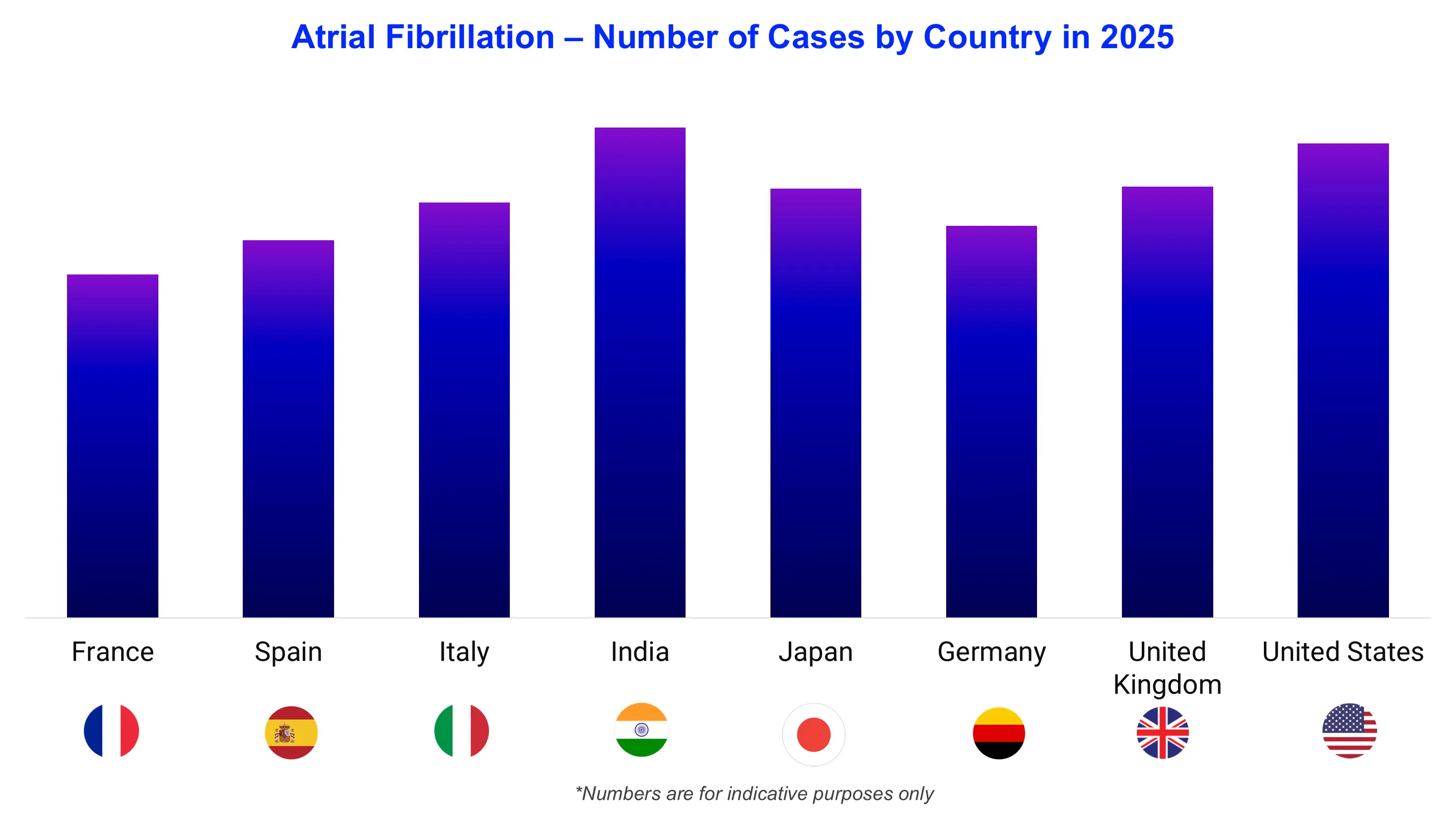
The atrial fibrillation epidemiology data and findings for the United States, Germany, Spain, Italy, France, the United Kingdom, Japan, and India are also provided in the epidemiology section.
|
Country |
Key Insights |
|
United States |
According to Rose McNulty et al. (2024), approximately 10.5 million US adults, equivalent to 5% of the population, have atrial fibrillation. According to Kamala P. Tamirisa et al. (2024), racial and ethnic differences exist in its incidence and associated ischemic stroke burden. |
|
Germany |
According to Deutsches Zentrum für Herz-Kreislauf-Forschung e.V., atrial fibrillation affects approximately 1% of Germany's population, equivalent to around 800,000 people. |
|
France |
According to the Foundation for Innovation in Cardiometabolism and Nutrition, approximately 750,000 people in France have atrial fibrillation. The reported prevalence is around 1% in the general population and reaches up to 8% among people older than 80. |
|
Italy |
According to Dr. Stefano Grossi, atrial fibrillation affects approximately 1%–2% of the population in Italy. Its prevalence increases with age, affecting 8.1% of people older than 65, or approximately one million individuals. |
|
Spain |
The prevalence of atrial fibrillation is influenced by population aging, the increasing proportion of older adults, and the higher burden of age-related cardiovascular conditions. Improved screening and greater detection of previously undiagnosed cases may also increase the number of identified patients. |
|
United Kingdom |
According to Ash Routen et al. (2023), atrial fibrillation affects up to 1.2 million people in England. An estimated 425,000 people in England have undiagnosed atrial fibrillation, highlighting the importance of disease detection. |
|
Japan |
Japan's aging population is a key factor contributing to the atrial fibrillation burden, as the condition becomes more common with advancing age. The growing number of older adults increases the population at risk and may raise demand for diagnosis and long-term disease management. |
|
India |
According to Dr. Raghu, an estimated 5–8 million people in India have atrial fibrillation. The reported burden is increasing alongside population aging, the prevalence of hypertension and diabetes, and improvements in awareness and detection. |
Across the United States, Germany, France, Italy, Spain, the United Kingdom, Japan, and India, atrial fibrillation presents opportunities to improve early diagnosis, stroke prevention, and long-term disease management. A major unmet need is the detection of intermittent or asymptomatic episodes, which may remain unidentified without appropriate cardiac monitoring. Wider access to ambulatory electrocardiography and validated wearable rhythm-monitoring technologies could support earlier detection. In addition, improved hypertension management, risk-based anticoagulation, and access to catheter ablation may help address complications and treatment gaps across diverse healthcare systems.
Atrial fibrillation treatment aims to control heart rate, restore or maintain normal heart rhythm, and reduce the risk of stroke. Rate-control medications, including beta-blockers and certain calcium channel blockers, help regulate ventricular response, while antiarrhythmic drugs may support rhythm control. Anticoagulants are prescribed according to individual stroke risk to prevent thromboembolic complications. Electrical cardioversion can restore normal rhythm, and catheter ablation targets the abnormal electrical signals responsible for AF. Treatment selection depends on symptoms, comorbidities, stroke risk, and patient preferences. Rhythm management remains an important component of individualized AF care.


Upto 15% Off
USD
$2699 $2429
$4299 $3869
$5799 $4949
$6999 $5949


*While we strive to always give you current and accurate information, the numbers depicted on the website are indicative and may differ from the actual numbers in the main report. At Expert Market Research, we aim to bring you the latest insights and trends in the market. Using our analyses and forecasts, stakeholders can understand the market dynamics, navigate challenges, and capitalize on opportunities to make data-driven strategic decisions.*
Explore our key highlights of the report and gain a concise overview of key findings, trends, and actionable insights that will empower your strategic decisions.
|
Report Features |
Details |
|
Base Year |
2025 |
|
Historical Period |
2019-2025 |
|
Forecast Period |
2026-2035 |
|
Epidemiology Statistics Provided |
|
|
Segmentation Provided |
|
|
Geographies Covered |
|
Datasheet
One User
USD 2,699
USD 2,429
tax inclusive*
Single User License
One User
USD 4,299
USD 3,869
tax inclusive*
Five User License
Five User
USD 5,799
USD 4,949
tax inclusive*
Corporate License
Unlimited Users
USD 6,999
USD 5,949
tax inclusive*
*Please note that the prices mentioned below are starting prices for each bundle type. Kindly contact our team for further details.*
Flash Bundle
Small Business Bundle
Growth Bundle
Enterprise Bundle
*Please note that the prices mentioned below are starting prices for each bundle type. Kindly contact our team for further details.*
Flash Bundle
Number of Reports: 3
20%
tax inclusive*
Small Business Bundle
Number of Reports: 5
25%
tax inclusive*
Growth Bundle
Number of Reports: 8
30%
tax inclusive*
Enterprise Bundle
Number of Reports: 10
35%
tax inclusive*
How To Order

Select License Type
Choose the right license for your needs and access rights.

Click on ‘Buy Now’
Add the report to your cart with one click and proceed to register.

Select Mode of Payment
Choose a payment option for a secure checkout. You will be redirected accordingly.
Strategic Solutions for Informed Decision-Making
Gain insights to stay ahead and seize opportunities.

Get insights & trends for a competitive edge.

Track prices with detailed trend reports.

Analyse trade data for supply chain insights.

Leverage cost reports for smart savings

Enhance supply chain with partnerships.

Connect For More Information
Our expert team of analysts will offer full support and resolve any queries regarding the report, before and after the purchase.
Our expert team of analysts will offer full support and resolve any queries regarding the report, before and after the purchase.
We employ meticulous research methods, blending advanced analytics and expert insights to deliver accurate, actionable industry intelligence, staying ahead of competitors.
Our skilled analysts offer unparalleled competitive advantage with detailed insights on current and emerging markets, ensuring your strategic edge.
We offer an in-depth yet simplified presentation of industry insights and analysis to meet your specific requirements effectively.




